Emarat Maritime CEO Calls for Tax and Flag Reforms to Strengthen UAE Maritime Hub
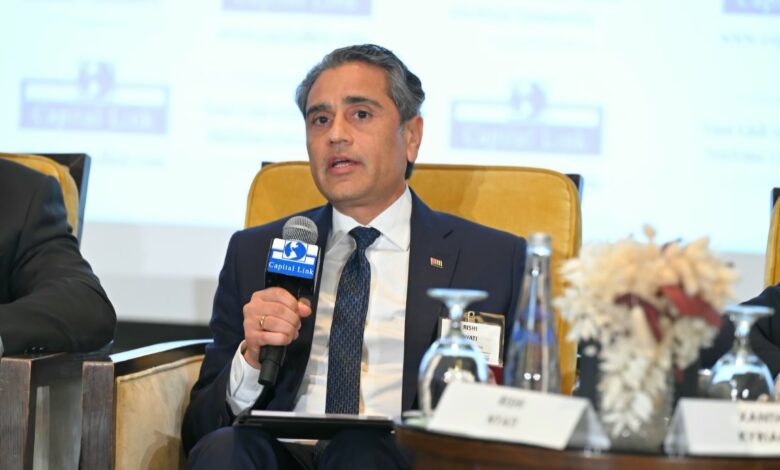
Shipping Arabia, November 23, 2026 – The UAE has established itself as a highly competitive maritime hub for shipbroking, chartering, and ship management. However, further progress in taxation and ship registration is needed to attract more vessel-owning businesses, according to Capt. Rishi Nyati, Managing Director and CEO of Emarat Maritime LLC.
Speaking at a Capital Link maritime forum in Dubai, Nyati highlighted the UAE’s competitive advantages and the challenges it faces in attracting shipowners with substantial physical assets. His remarks came during a panel discussion titled “The Middle East Maritime Hub: Operating & Managing the Global Fleet.”
Nyati, who also serves as a Board Member and Treasurer of the Emirates Shipping Association, identified taxation and flag registration as two important areas for further development. He also discussed fleet investment strategies, shipping market cycles, and the importance of diversification in managing commercial risks.
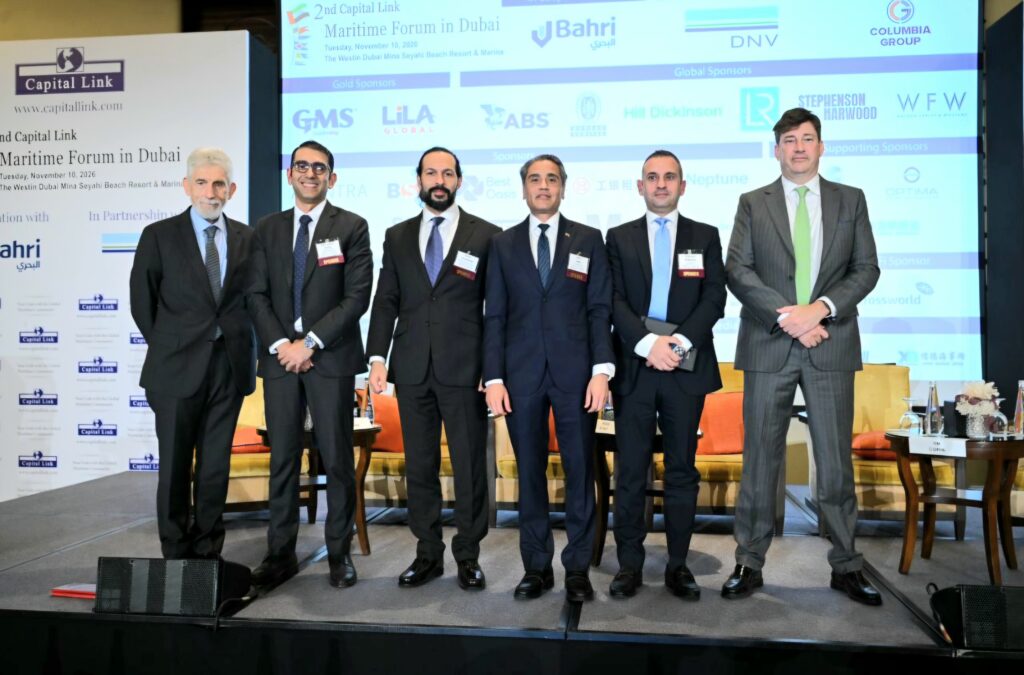
The forum marked the second consecutive year that Capital Link brought its maritime event to Dubai, gathering shipowners, operators, managers, and financiers from across the international shipping industry.
UAE Maritime Hub: Competitive Advantages and Remaining Challenges
Nyati highlighted the UAE’s position as one of the world’s most competitive maritime centers for asset-light businesses, including shipbrokers, chartering desks, and ship management companies.
According to the Emirates Shipping Association’s account of the discussion, he attributed this competitiveness to the country’s maritime talent, open immigration policies, and absence of personal income tax.
These advantages have helped establish the UAE as an attractive location for maritime professionals and businesses that provide shipping services without necessarily owning vessels.
However, Nyati distinguished between the requirements of asset-light maritime companies and those of shipowners operating substantial physical fleets.
He noted that the UAE continues to trail established maritime centers such as Singapore and Hong Kong in several areas important to vessel-owning businesses. These include ship registration, maritime finance, and dispute resolution.
The distinction highlights the different conditions needed to attract maritime service providers and companies that own and operate vessels.
Nyati identified taxation and flag registration as two areas requiring further attention if the UAE aims to attract more ship tonnage rather than primarily maritime professionals and service platforms.
The Emirates Shipping Association has also explored these issues in a dedicated white paper examining the country’s maritime development opportunities.
Fleet Investment Strategies and Shipping Market Cycles
Beyond the UAE’s maritime competitiveness, Nyati addressed investment strategies for shipowners operating in volatile international shipping markets.
He emphasized the importance of maintaining consistency in fleet investment decisions rather than attempting to predict the most favorable point in a shipping market cycle.
According to Nyati, shipping cycles cannot be timed reliably, making a consistent approach to fleet development preferable to strategies based on identifying the perfect investment opportunity.
He explained that Emarat Maritime follows a steady fleet expansion strategy instead of attempting to anticipate market turning points.
This approach reflects the company’s preference for consistency in fleet growth, despite the cyclical nature of the international shipping industry.
Nyati also highlighted diversification as an important strategy for managing market exposure.
He explained that shipowners generally face fixed operating costs while their revenues fluctuate according to market conditions. Consequently, concentrating investments in a single shipping segment can increase exposure to that segment’s commercial cycle.
Diversifying vessel investments across tankers, dry bulk carriers, gas carriers, and container vessels can help address this challenge.
Nyati noted that these shipping segments rarely experience identical market cycles. Therefore, maintaining exposure across different vessel categories can provide a degree of balance when market conditions vary between sectors.
His remarks emphasized the importance of disciplined investment decisions and portfolio diversification in managing the financial challenges associated with ship ownership.
Industry Leaders Discuss the Middle East’s Maritime Role
The discussion brought together senior representatives from several companies involved in international shipping and maritime services.
Alongside Nyati, the panel featured Faisal Al-Husseini of Bahri Chemicals & Products, Xanthos Kyriacou of Noatum CSM, and Tim Coffin of Tristar Group Eships.
Bureau Veritas Marine & Offshore moderated the session, which focused on the Middle East’s role in operating and managing the global fleet.
The event was organized by Nicolas Bornozis and the Capital Link team as part of the forum’s second year in Dubai.
According to the Emirates Shipping Association, the forum’s return to Dubai reflects the region’s growing importance as a global shipping hub. It also provided an opportunity for shipowners, operators, managers, and financiers to exchange perspectives on the maritime industry’s development.
Nyati’s contributions highlighted two central considerations for the sector: the importance of disciplined fleet investment and the need to strengthen the UAE’s attractiveness to vessel-owning companies.
While the country already offers competitive conditions for maritime service providers, his remarks identified taxation, flag registration, maritime finance, and dispute resolution as important considerations for the next phase of its development as an international maritime center.
Source: Emirates Shipping Association