Shipping Arabia, October 31, 2026 – The Port of Beirut is advancing an expansion project designed to increase its annual container capacity from approximately 1.2 million TEUs to 3 million TEUs. The development forms part of broader plans to modernize port operations, strengthen regional logistics connectivity and position Lebanon as a major trade gateway serving neighboring markets.
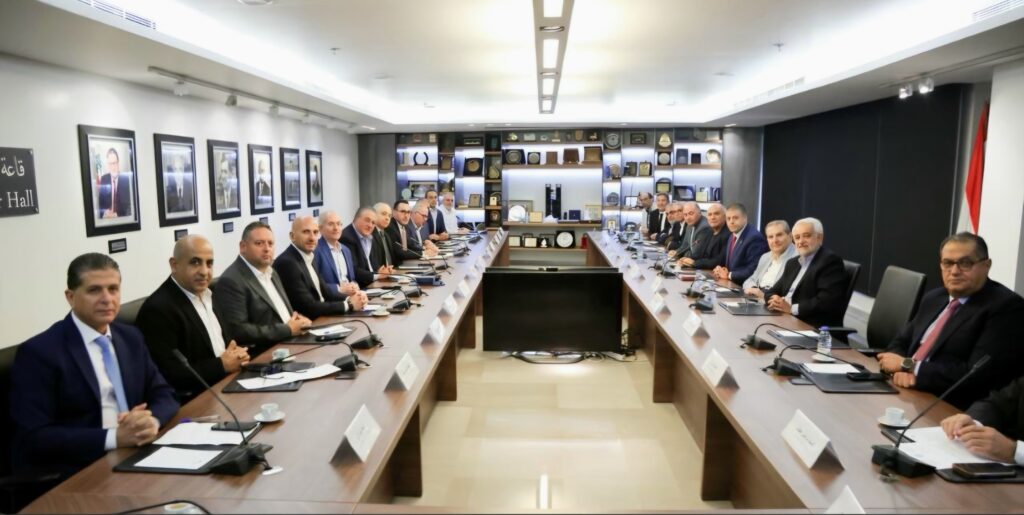
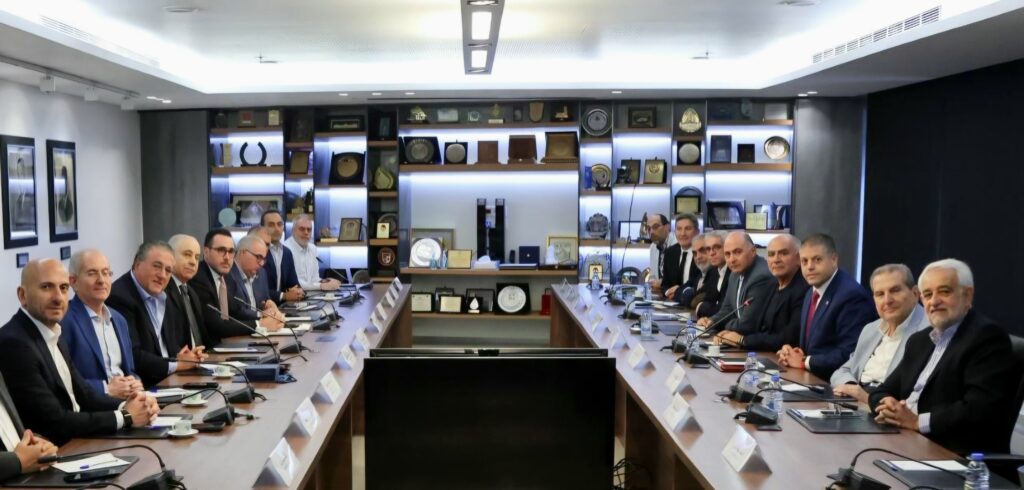
Port of Beirut Chairman and Director General Marwan Naffi outlined the development strategy during a meeting with Lebanon’s Economic Bodies, chaired by former Minister Mohamed Choucair. The discussions addressed port infrastructure, operational improvements, import and export procedures, and future development priorities.
The meeting took place at the Chamber of Commerce, Industry and Agriculture of Beirut and Mount Lebanon. Participants included representatives of commercial and industrial associations, importers, exporters and trade unions involved in port activities.
Discussions focused on simplifying procedures for port users, reducing operational burdens and improving cooperation between the port administration and Lebanon’s business community. Participants also reviewed expansion, reconstruction and modernization projects intended to strengthen the port’s long-term competitiveness.
Port of Beirut Expansion to Triple Container Capacity
Naffi identified the Port of Beirut expansion as one of the administration’s most significant development projects. The initiative aims to raise annual container handling capacity from approximately 1.2 million TEUs to 3 million TEUs.
According to Naffi, the planned expansion could place Beirut among the seven largest ports in the Mediterranean. It would also strengthen the port’s ability to support growing regional logistics requirements.
The expansion project, signed with global shipping group CMA CGM, was among the principal topics raised during the meeting. Choucair requested an update on its progress and its importance to the port’s future development.
Naffi emphasized that the port already plays a central role in Lebanon’s economy, accounting for approximately 80% of the country’s import and export traffic.
However, he stressed that its strategic importance extends beyond the Lebanese market. He described Beirut as a maritime gateway serving Lebanon, Syria, Jordan and Iraq, which together represent a market of approximately 100 million people.
The port administration is working with Lebanon’s Minister of Public Works and Transport, with government support, to prepare Beirut for a potential role in Syria’s reconstruction.
Naffi presented this regional opportunity as a key consideration in the port’s development strategy. Expanding capacity and strengthening logistics connections would support the administration’s ambition to serve markets beyond Lebanon.
Bekaa Dry Port and Rail Connection to Support Regional Trade
Another major component of the development strategy involves establishing an inland logistics facility in Lebanon’s Bekaa region.
Naffi described the proposed facility as a dry port that would function as an extension of the Port of Beirut. The inland terminal would support cargo storage and onward distribution to regional destinations.
Under the proposal, the facility could connect to Beirut through a railway or receive containers transported by truck. Both arrangements would allow cargo to move between the seaport and the inland logistics center.
Once operational, the proposed Bekaa facility would serve as a storage and distribution hub for goods destined for neighboring markets.
Naffi explained that the arrangement could reduce the time required to transport cargo to Syria, Iraq and Jordan, as well as destinations in the Arabian Gulf.
He emphasized the importance of establishing a clear and achievable strategy that takes advantage of Lebanon’s geographical position.
The proposed inland logistics project reflects the port administration’s ambition to expand Lebanon’s role beyond its domestic import and export requirements.
Naffi expressed confidence that developing Lebanon into a regional logistics center could contribute to economic recovery and support national economic activity.
Lebanon Joins IMEC Ports Club Through International Cooperation
Naffi also highlighted Lebanon’s participation as a founding member of the IMEC Ports Club, describing the development as an important step toward strengthening the country’s position in international trade.
He attributed the initiative to coordinated efforts involving the Lebanese government, the Ministry of Public Works and Transport and the Port of Beirut administration, with support from France.
According to Naffi, participation in the international ports initiative could reinforce Lebanon’s role within global trade networks and generate economic benefits.
He connected this international cooperation with the wider strategy to position Lebanon as a logistics gateway capable of serving multiple regional markets.
The port administration considers stronger international links and improved domestic infrastructure complementary priorities in developing Beirut’s future commercial role.
Port Digitalization, Security Upgrades and Operational Improvements
Alongside infrastructure expansion, the Port of Beirut is implementing operational and technological improvements intended to increase efficiency and improve services for port users.
Naffi highlighted the transition to electronic payments as an important modernization measure. The initiative forms part of wider efforts to simplify administrative processes and improve interactions with businesses using the port.
Security improvements were another major focus. Naffi referred to measures designed to meet demanding security requirements, including the installation of an advanced cargo scanner.
He described the scanner as one of the most modern systems of its kind in the Mediterranean.
The port administration has also worked to improve the performance of its CAMA system. In parallel, preparations are underway to launch a tender for a Port Community System (PCS).
The proposed PCS would represent another step in the port’s digital modernization program. Naffi identified the system as one of the advanced technological solutions used at major international ports.
Operational improvements also include opening the port at night to facilitate cargo release. The measure aims to improve services for businesses and provide greater flexibility in moving goods out of the port.
Together, these initiatives reflect the administration’s emphasis on improving operational performance, strengthening security and building closer relationships with port users.
Naffi also stressed the importance of improving the relationship between the port and the city of Beirut, as well as the wider community.
Business Community Supports Port Development and Reconstruction
During the meeting, Mohamed Choucair reaffirmed the support of Lebanon’s Economic Bodies for the Port of Beirut administration and its development priorities.
He praised the progress achieved under Naffi’s leadership and emphasized the port’s importance to economic activity in Beirut and across Lebanon.
Choucair expressed support for efforts to strengthen the port’s position among leading Mediterranean ports. He also stressed that successful modernization requires closer cooperation between port management and businesses.
According to Choucair, stronger partnerships with industrial companies, traders, importers and exporters could simplify procedures, accelerate commercial activities and reduce costs and administrative burdens.
He requested updates on several important development files, including the CMA CGM expansion project and efforts to clear the remaining consequences of the Beirut port explosion.
Other subjects included the proposed rail connection between Beirut and the Bekaa region, Lebanon’s participation in the IMEC Ports Club and the port administration’s five-year development plan.
Naffi welcomed the dialogue and emphasized that the Port of Beirut serves as a fundamental platform for Lebanon’s economy.
He stated that the administration’s responsibility is to facilitate the activities of traders, industrial companies, importers and exporters by ensuring that port services respond to their needs.
The discussions also covered issues affecting individual business sectors and organizations involved in port operations.
Participants agreed to organize a field visit to the Port of Beirut to inspect completed projects and continue discussions on matters of common interest.
At the conclusion of the meeting, Naffi presented Choucair with a commemorative plaque representing the foundation stone of the port expansion project. The gesture recognized Choucair’s contribution and the support provided by Lebanon’s Economic Bodies.
Choucair, in turn, presented Naffi with a medal from the Economic Bodies in recognition of development projects undertaken at the port.
The meeting underscored a shared focus on modernizing Beirut’s maritime infrastructure, improving services for importers and exporters, and developing the port’s capacity to support Lebanon’s position in regional logistics and international trade.
Source: Leb Economy