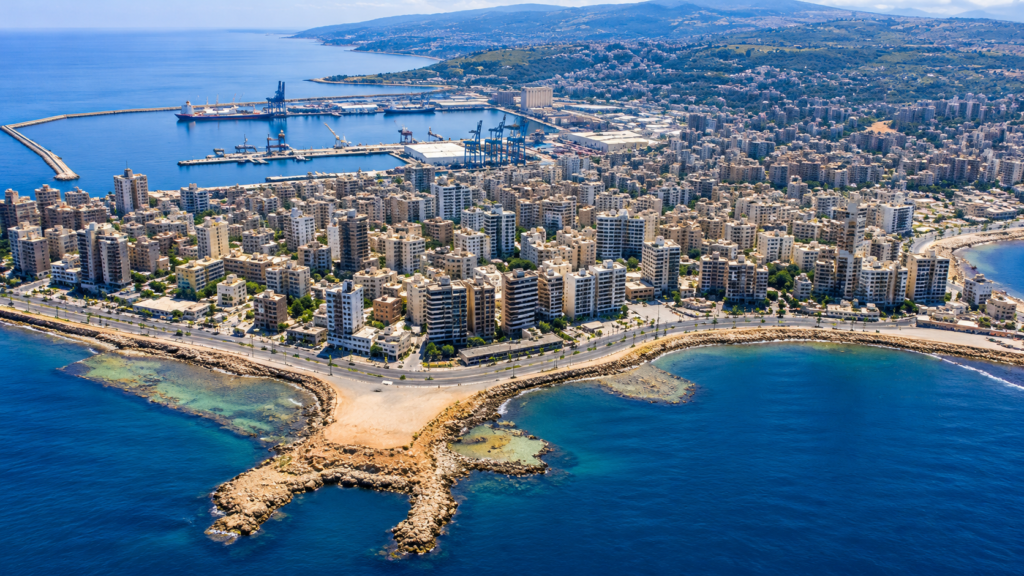
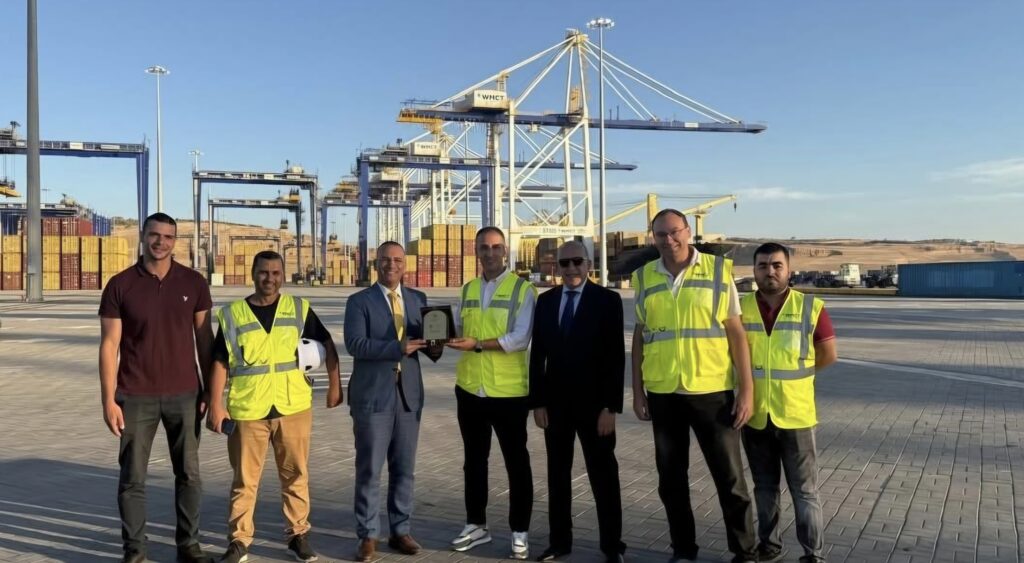
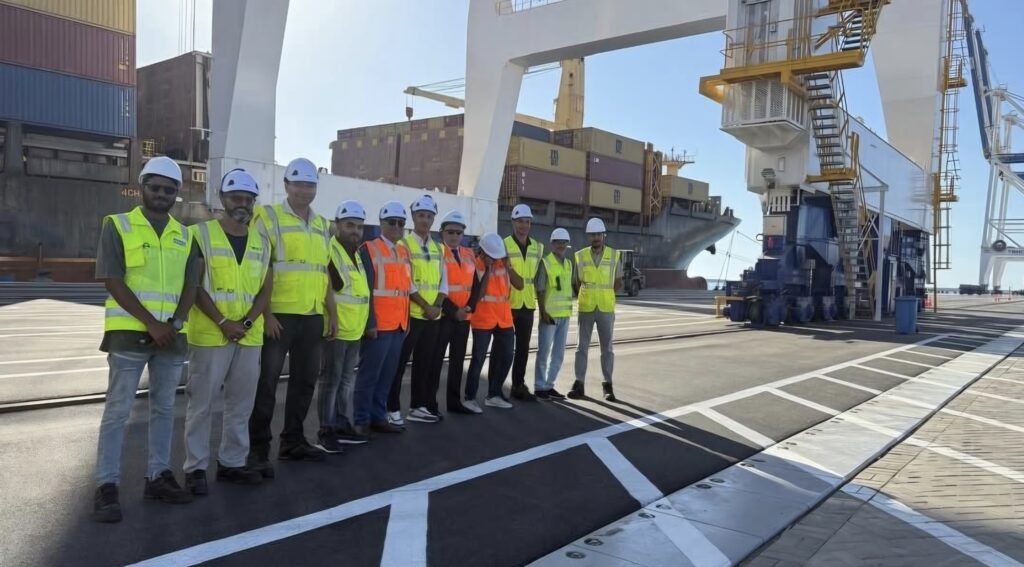
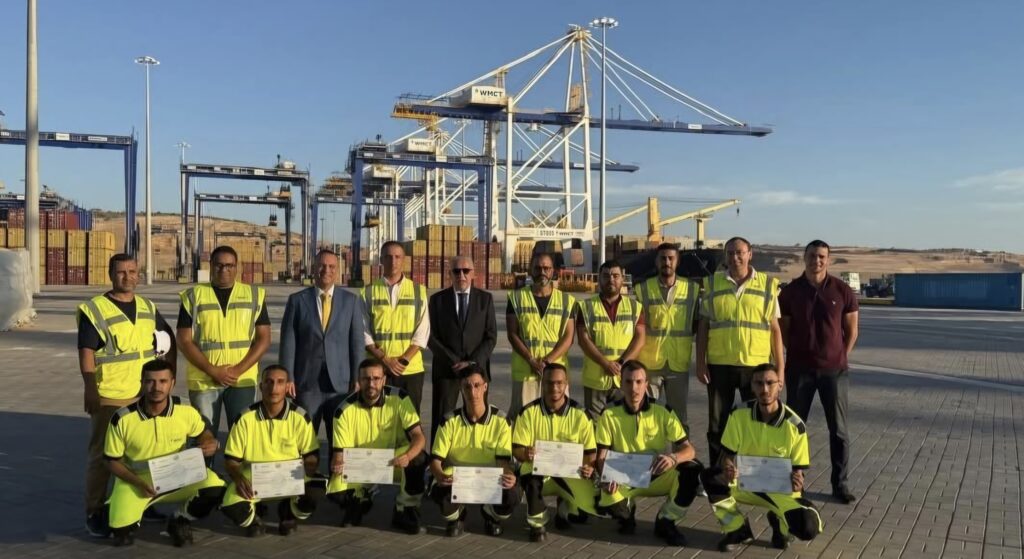
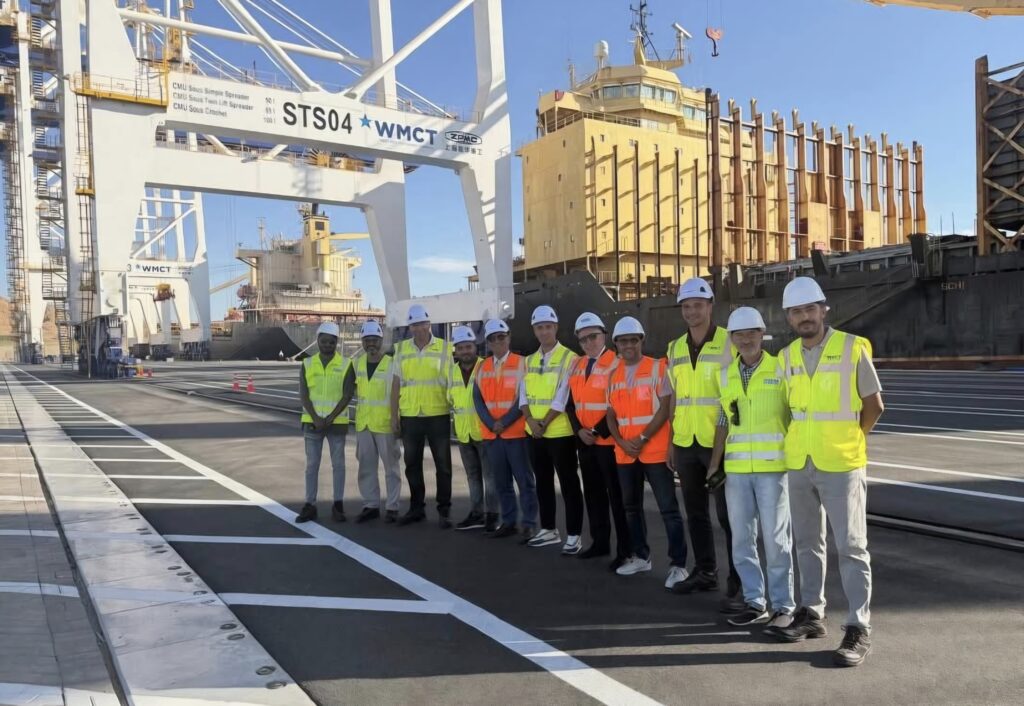
Shipping Arabia, November 13, 2026 – The Port of Tripoli expansion in northern Lebanon aims to increase annual container handling capacity from approximately 250,000 TEUs to more than 1.8 million TEUs. The development program includes expanding the existing container terminal, building a second terminal and upgrading port infrastructure to strengthen Tripoli’s position in regional trade and logistics.
Iskandar Bandali, Chairman of the Port of Tripoli, outlined the expansion plans during the Tripoli Economic Development Forum. The event was organized by the Tripoli Special Economic Zone Authority under the patronage of Prime Minister Nawaf Salam, represented by Information Minister Paul Morcos.
The announcement follows a record month for the port, which handled 18,714 containers in October 2026, according to figures released by the port administration.
Port of Tripoli Expansion to Increase Container Capacity
The first phase of the Port of Tripoli expansion will focus on enlarging the existing container terminal. Once completed, the project is expected to raise the terminal’s annual handling capacity to approximately 800,000 TEUs.
Bandali said the port expects to award the contract for the first phase of the terminal expansion soon, although he did not specify a date.
The longer-term development plan includes constructing a second container terminal. Together, the two terminals would increase the port’s total annual capacity to more than 1.8 million TEUs.
In addition to container handling infrastructure, the modernization program includes upgrading warehouses, logistics facilities, customs inspection equipment and digital systems.
These investments form part of the port administration’s efforts to improve infrastructure, modernize services and strengthen the port’s role in trade and logistics activities.
Integration with Tripoli Special Economic Zone and Railway Network
A major component of the development strategy involves closer integration between the Port of Tripoli and the adjacent Tripoli Special Economic Zone.
Bandali announced that the port administration had signed a memorandum of understanding to finance a study covering the economic zone’s operating model, legal and regulatory framework, licensing procedures and one-stop-shop services for investors.
The study aims to support the development of an investment framework that facilitates business activity and strengthens cooperation between the port and the economic zone.
Rail connectivity also forms part of the wider development plans. In cooperation with Lebanon’s Railway and Public Transport Authority, the port administration is financing a study to update the designs for the railway connection between Tripoli and Abboudieh, near the Syrian border.
The study is intended to prepare the railway project for future implementation.
Bandali emphasized the importance of connecting the port and economic zone with the railway network and René Mouawad Airport in Qlayaat, northern Lebanon.
According to Bandali, integrating these facilities could establish a multimodal transport network linking northern Lebanon with regional and international markets through maritime, land and air transport.
The port has also joined the grouping of ports associated with the India-Middle East-Europe Economic Corridor (IMEC) and signed the relevant declaration.
The initiative aims to strengthen Tripoli’s presence in international trade networks and support its integration into regional transport and logistics corridors.
International Tender Launched for Industrial and Logistics Center
Meanwhile, the Tripoli Special Economic Zone Authority has launched an international tender to develop, manage and operate an industrial and logistics center adjacent to the port.
Hassan Dannawi, Chairman of the Authority, announced that the project would follow a public-private partnership model.
Dannawi also confirmed that the Authority introduced a licensing system and one-stop-shop services in October 2026 to facilitate investor procedures. It has also begun developing the economic zone’s administrative building.
The industrial and logistics center aims to attract investment from Lebanon, other Arab countries and international markets. It also seeks to increase Lebanese exports and strengthen the port’s role in trade, logistics and reconstruction activities.
According to Dannawi, the project is expected to create thousands of direct and indirect employment opportunities, particularly for young people and women.
Information Minister Paul Morcos confirmed that Lebanon’s Cabinet had approved the studies related to the industrial and logistics center.
The government also authorized the Tripoli Special Economic Zone Authority to proceed with the qualification process for selecting an international developer and operator.
Morcos explained that activating the economic zone forms part of a broader development vision for northern Lebanon and Akkar.
The vision incorporates several strategic facilities, including the Port of Tripoli, Qlayaat Airport, railway infrastructure, the Rashid Karami International Fair and a proposed oil supply project through northern Lebanon.
He encouraged Lebanese private businesses, expatriates and regional and international partners to invest in the initiative.
Morcos emphasized that the project’s success should be measured through employment creation, participation by local suppliers, lower transport costs and faster access to markets.
United Nations Highlights Investment and Sustainable Development Opportunities
The United Nations also expressed support for the development of Tripoli’s economic potential.
Imran Riza, United Nations Resident Coordinator and Humanitarian Coordinator in Lebanon, highlighted the port, Tripoli’s location, industrial land and young workforce as economic assets that have not yet reached their full potential.
Riza explained that UN support would focus on institutional cooperation, vocational training and green economic development.
The proposed areas of cooperation include renewable energy, water efficiency, waste management and sustainable production.
These priorities align with the forum’s broader discussions on attracting investment, improving infrastructure and supporting economic activity across northern Lebanon.
The event brought together government officials, parliamentarians and representatives of economic, municipal and United Nations institutions.
Participants examined opportunities to strengthen integration between the economic zone, port, airport and transport networks. Discussions also focused on turning Tripoli’s major infrastructure facilities into a coordinated system supporting investment, production and exports.
The Port of Tripoli expansion forms a central part of this development vision, combining increased container handling capacity with improved logistics infrastructure and stronger connections to regional and international markets.
Source: Anadolu Agency