Shipping Arabia, October 28, 2026 – Shipping disruptions across the Middle East are reshaping regional maritime trade, increasing demand for Saudi Red Sea ports while driving up vessel operating costs and freight expenses. Red Sea Gateway Terminal (RSGT) has reported a 20% increase in demand for its services since the beginning of 2026, reflecting the diversion of cargo flows from disrupted regional shipping routes.
The changing trade patterns have created new operational and investment opportunities for Saudi port operators. However, shipping companies are facing higher fuel expenses, insurance premiums, longer voyages and congestion at some regional ports.
Executives from Red Sea Gateway Terminal and Folk Maritime outlined these developments during the Saudi Maritime & Logistics Congress 2026 in Jeddah. Their remarks highlighted the contrasting effects of regional disruptions on port operators, shipping lines and cargo owners.
Saudi Red Sea Ports Benefit From Shifting Cargo Flows
Badr Al-Otaibi, Chief Operating Officer of Red Sea Gateway Terminal, told Asharq Al-Awsat that demand for the company’s services had increased by approximately 20% since the beginning of 2026.
The growth has been driven by rising transshipment activity and cargo diversions from maritime routes and ports affected by regional instability. Al-Otaibi said demand continues to increase, with further growth expected in the coming period.
Previous infrastructure investments and capacity expansions at Saudi Red Sea ports have helped operators accommodate the additional cargo flows. According to Al-Otaibi, these improvements have enabled terminals to handle more vessels and containers while limiting operational delays.
He also highlighted the importance of Saudi port readiness in managing the effects of disruptions around the Strait of Hormuz. The availability of alternative maritime gateways has helped address some of the challenges facing importers and exporters.
To respond to the changing operating environment, Red Sea Gateway Terminal has invested approximately SAR 200 million ($53.3 million).
Al-Otaibi said the company had previously invested around SAR 3.6 billion ($960 million) in developing its operations and infrastructure.
He also outlined major development projects involving SAR 1.6 billion ($426.6 million) in multipurpose cargo facilities. A separate container terminal project, developed in partnership with a French company, involves investment of the same amount.
These investments aim to strengthen cargo-handling capabilities, improve operational efficiency and support the growing demands placed on Saudi maritime infrastructure.
Looking beyond its existing terminal operations, RSGT is also evaluating opportunities in warehousing and logistics services outside port boundaries. Al-Otaibi said any expansion would depend on market requirements and investment feasibility.
For now, the company’s investment activities remain focused on the development and operation of maritime terminals.
Rising Fuel and Insurance Costs Pressure Shipping Lines
While some Saudi ports are attracting additional cargo, shipping companies are experiencing significant cost increases.
Poul Hestbaek, CEO of Folk Maritime, told Asharq Al-Awsat that vessel fuel expenses had reached three times their normal levels during certain periods of the disruptions.
Although costs have moderated, he said they currently remain approximately 2.5 times their usual levels.
Insurance premiums have also increased substantially. In some cases, coverage for vessels operating in high-risk maritime areas has become several times more expensive than under normal conditions.
The changing shipping environment has introduced additional operational challenges, including congestion at certain ports, extended voyage distances and the redistribution of vessels between services.
Hestbaek said these factors had caused a limited reduction in Folk Maritime’s effective operating capacity. Cargo volumes transported since the beginning of the year have also been slightly below the company’s expectations.
Longer transportation times and more complex port operations have increased costs for cargo owners. Alternative routes can also involve additional inland transportation expenses.
Hestbaek explained that some shipments have been redirected through ports in the United Arab Emirates and Oman before continuing to their final destinations by road.
As cargo flows shift between regional gateways, shipping companies have had to adapt their vessel deployment strategies. Folk Maritime has consequently redistributed parts of its fleet to reflect changing trade patterns.
Despite higher operating expenses, Hestbaek said the company had passed most of the additional costs to customers and, ultimately, consumers.
Higher revenue has helped offset the increased expenditure while allowing the company to maintain satisfactory vessel utilization levels.
However, Al-Otaibi offered a different perspective on domestic logistics costs. He said road transportation and logistics expenses within Saudi Arabia had remained relatively stable and reasonable.
According to Al-Otaibi, the greatest cost pressures have been concentrated in ocean freight and marine insurance rather than domestic transportation.
Cargo Diversions Do Not Necessarily Mean Long-Term Port Growth
The contrasting experiences of port operators and shipping lines illustrate how maritime disruptions affect different parts of the logistics industry.
Hestbaek cautioned that increased cargo volumes at particular ports should not automatically be interpreted as sustainable growth in regional trade.
Some ports currently benefiting from redirected shipments may have previously lost cargo to competing gateways during earlier disruptions.
As a result, higher throughput can reflect temporary changes in shipping routes rather than a lasting increase in total trade volumes.
This distinction is particularly important as shipping companies continue adjusting services in response to developments around the Strait of Hormuz and the Red Sea.
Although some ports are gaining additional cargo, shipping lines must manage the financial and operational consequences of longer voyages, vessel redeployment and more complicated supply chains.
Cargo owners and consumers also face additional expenses, even when alternative transportation routes remain available.
Folk Maritime Launches Yanbu Service and Plans Fleet Expansion in 2027
Folk Maritime is adapting its network to changing regional trade patterns through new shipping services and planned investments in container vessels.
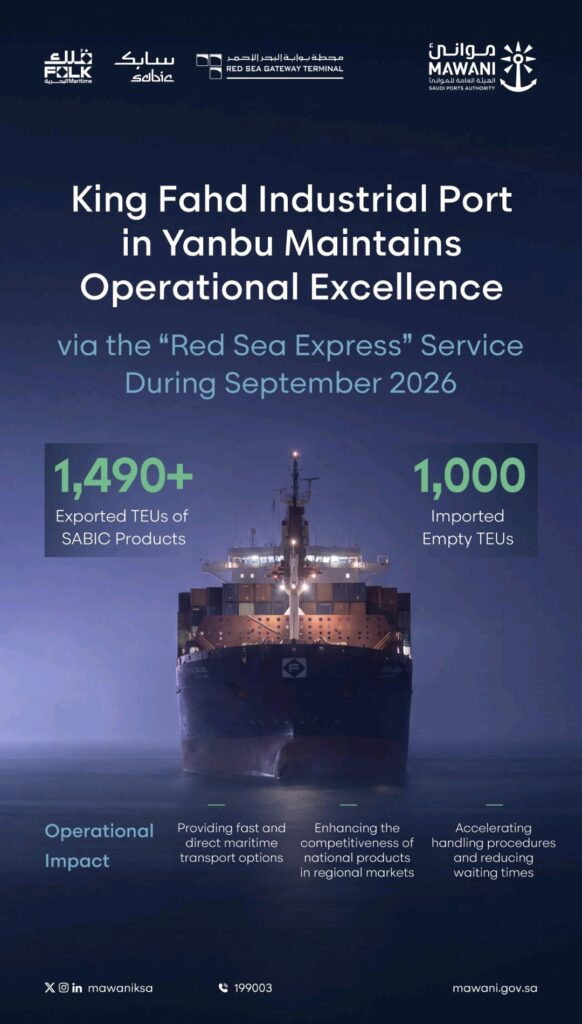
Hestbaek revealed that the company had launched a service during 2026 connecting the Saudi port of Yanbu with ports in Egypt and Jordan.
The service remains in its development phase but has delivered encouraging initial results.
According to Hestbaek, the new connection forms part of the company’s efforts to strengthen links between Red Sea ports and its wider international shipping network.
The company is also preparing to expand its container vessel fleet in 2027 through additional vessel acquisitions.
However, the expansion will depend on the availability of suitable ships that meet the company’s operational requirements.
The planned investments aim to strengthen Folk Maritime’s services connecting the Indian subcontinent, the Middle East, the Arabian Gulf and the Red Sea.
Hestbaek expects shipping challenges to continue into 2027, citing uncertainty surrounding stability in the Strait of Hormuz and the Red Sea.
He emphasized that ensuring the reliable delivery of essential goods to Saudi Arabia remains Folk Maritime’s highest operational priority.
The company continues adjusting its network and vessel deployment to maintain cargo flows despite the changing operating environment.
Saudi Maritime Industry Focuses on Supply Chain Resilience
The executives made their remarks during the Saudi Maritime & Logistics Congress 2026, held in Jeddah under the patronage of Saudi Minister of Transport and Logistic Services Saleh Al-Jasser.
The event brought together representatives from shipping companies, port operators and logistics service providers to discuss developments affecting maritime trade and regional supply chains.
Key topics included changing shipping routes, port competitiveness, maritime infrastructure investment and the challenges facing international logistics networks.
Industry participants also examined how companies can improve operational resilience through infrastructure development, flexible shipping networks and additional capacity.
The developments highlight a significant shift in the regional maritime sector. Saudi Red Sea ports are attracting additional cargo as trade routes change, while shipping companies continue managing higher operating expenses and uncertain trading conditions.
For terminal operators such as Red Sea Gateway Terminal, the shift is supporting new investments and increased demand for handling services. For shipping lines such as Folk Maritime, it is accelerating network adjustments, service development and fleet planning.
However, the longer-term impact on regional maritime trade will depend on how shipping routes evolve and whether current cargo diversions become lasting changes in supply chain patterns.
Source: Asharq Al-Awsat