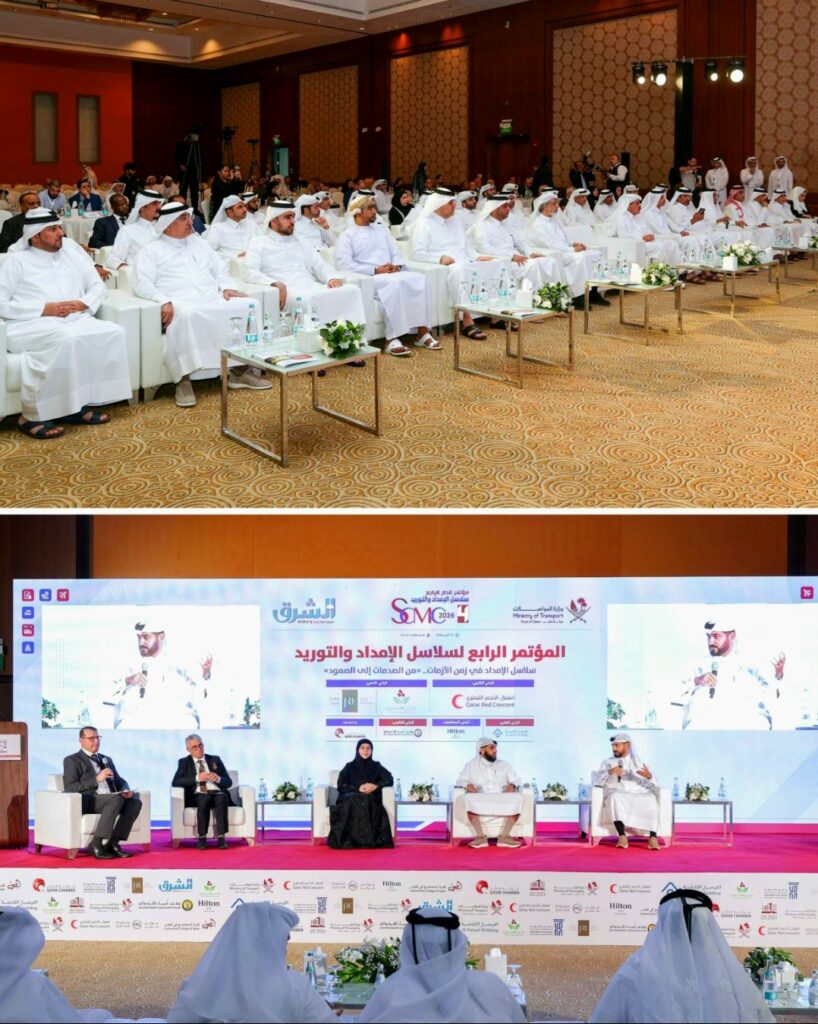
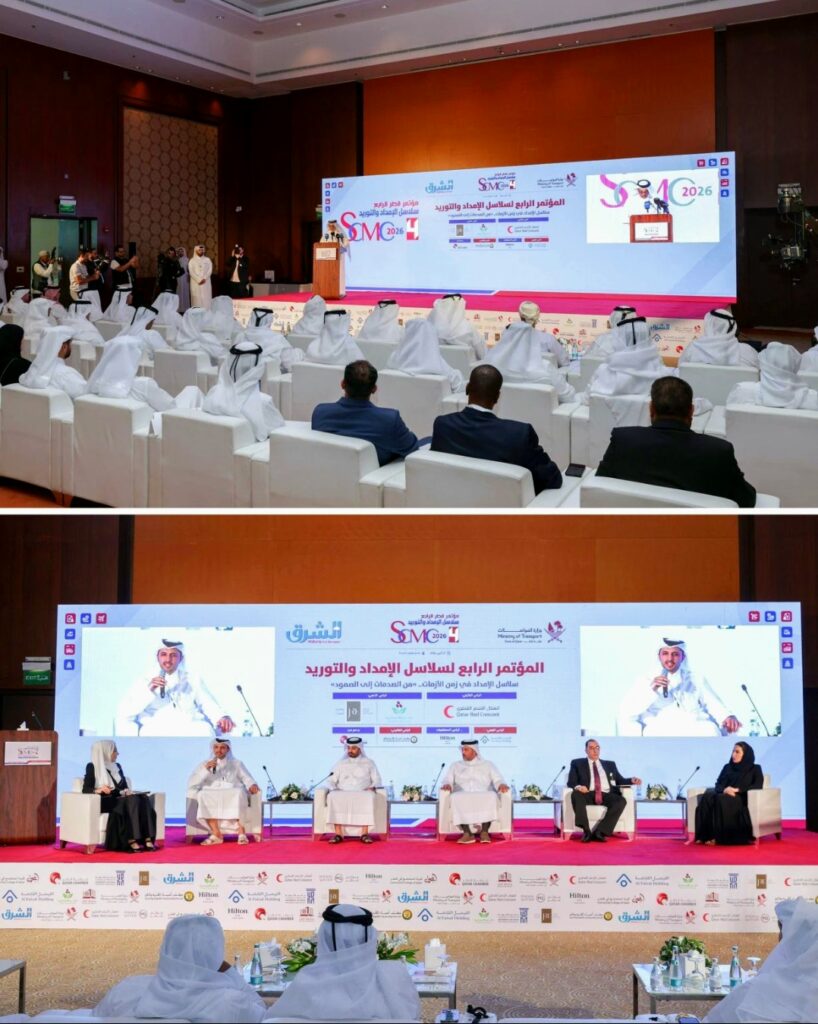
Shipping Arabia, November 1, 2026 – Mwani Qatar participated in the fourth Qatar Supply Chain Management Conference at Hilton Doha, joining industry leaders and experts to discuss supply chain resilience, operational efficiency and strategies to maintain trade flows amid emerging challenges affecting transport and logistics networks.
The conference focused on the challenges facing supply chains and opportunities to develop more resilient and adaptable logistics systems. Discussions also addressed the importance of maintaining trade continuity, strengthening food security and improving the ability of supply chains to respond to disruptions.
Mwani Qatar’s participation reflected its commitment to exchanging expertise and strengthening cooperation with stakeholders across the transport and logistics sectors. These efforts aim to improve the efficiency and resilience of supply chain operations while maintaining port readiness and facilitating the uninterrupted movement of goods.
Capt. Mohamed Hamad Al-Saiyari, Hamad Port Manager, represented Mwani Qatar in the opening session titled “Supply Chains in Times of Crisis: Shared Challenges and National Solutions.”
The session addressed challenges facing supply chains during periods of crisis, with particular emphasis on shared challenges and national solutions. The discussion formed part of the conference’s broader focus on developing more resilient supply chain ecosystems and safeguarding trade flows.
Abdulrahman Ibrahim Al-Marzooqi, HSSE Manager at Mwani Qatar, participated in the second session, titled “Operational Efficiency, Risk Management, and Enhancing Supply Chain Resilience.”
The session focused on operational efficiency, risk management and the importance of strengthening supply chain resilience. These themes aligned with the conference’s objective of identifying approaches to improve logistics performance and the ability to respond to operational challenges.
Through its participation, Mwani Qatar emphasized the importance of knowledge sharing and closer collaboration with partners across the transport and logistics industries. The company highlighted the role of cooperation in developing supply chain networks that can respond more effectively to disruptions while maintaining efficient operations.
The discussions also reinforced the importance of port readiness in supporting the continuity of cargo movements. Maintaining operational preparedness and strengthening coordination across the logistics sector remain central elements of Mwani Qatar’s approach to supporting reliable cargo flows.
Mwani Qatar’s involvement in the conference further reflected its focus on strengthening supply chain resilience through industry engagement, professional knowledge exchange and collaboration with logistics stakeholders.
These efforts support the development of a more efficient and adaptable supply chain ecosystem while enhancing the ability of ports to facilitate the smooth movement of goods and maintain continuity in maritime and logistics operations.
Source: Mwani Qatar