Hapag-Lloyd

  • Port of Salalah Container Throughput Sets Second Consecutive Monthly Record

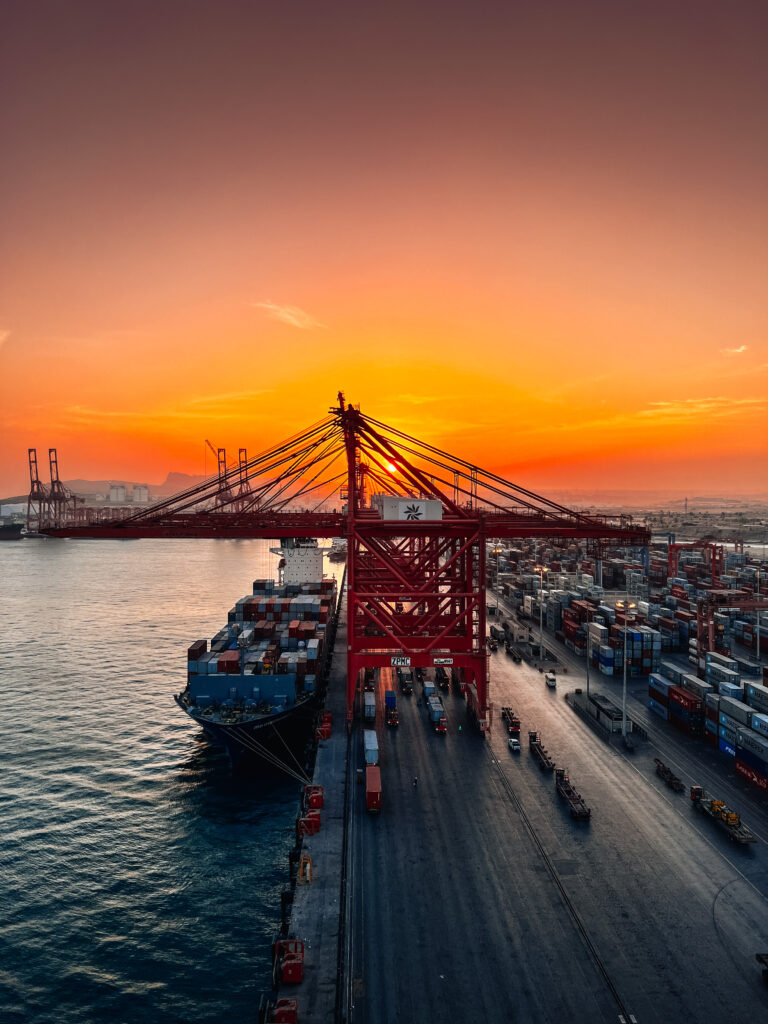
    Shipping Arabia, October 11, 2026 – Port of Salalah container throughput reached a record 511,209 TEUs in September 2026, marking the second consecutive monthly high at the Omani port. The latest performance pushed combined container volumes for August and September above 1 million TEUs, extending the port’s growth following a major terminal expansion completed in 2025.

    September throughput increased 4.1% from August’s previous record of 491,114 TEUs. Container-handling moves also rose 3.7%, reaching 301,113 compared with 290,418 in August.

    Josh Surdin, Chief Operating Officer of the Port of Salalah Container Terminal, disclosed the September figures in a LinkedIn post. He described the result as the highest monthly container volume recorded in the port’s history.

    Port of Salalah Container Throughput Exceeds 1 Million TEUs in Two Months

    The combined throughput for August and September reached 1,002,323 TEUs, equivalent to approximately 23% of the port’s total container volume for 2025.

    The consecutive monthly records follow significant annual growth in container traffic. In 2025, Port of Salalah handled 4.325 million TEUs, representing a 31% increase from the 3.305 million TEUs recorded in 2024.

    Growth continued into 2026. During the first six months of the year, the port handled 2.331 million TEUs, compared with 2.031 million TEUs during the corresponding period of 2025. This represented a year-on-year increase of approximately 14.8%.

    The September record therefore follows a period of sustained growth in container volumes, with both annual and first-half figures showing increases before the consecutive monthly highs in August and September.

    Transshipment Dominates Container Traffic

    Transshipment remains the largest component of Port of Salalah’s container business. During the first half of 2026, transshipment volumes reached approximately 2.034 million TEUs, accounting for around 87% of total container throughput.

    These volumes reflect the port’s principal role as an international transshipment hub, where containers are transferred between vessels as part of global shipping networks.

    Import and export containers accounted for a smaller share of overall traffic. Combined import and export throughput reached 190,304 TEUs during the first six months of 2026, representing just over 8% of total volume.

    Meanwhile, container restows contributed a further 106,586 TEUs to first-half throughput.

    The breakdown highlights the dominance of international transshipment activity compared with container traffic directly associated with cargo entering or leaving Oman.

    $300 Million Terminal Expansion Supports Container Operations

    The consecutive monthly records follow the completion of a $300 million expansion of the Port of Salalah Container Terminal in 2025.

    The project involved upgrades to all six container berths, expansion of the container yard, and installation of new ship-to-shore cranes and supporting infrastructure.

    The investment expanded the terminal’s infrastructure and was designed partly to accommodate container traffic associated with the Gemini Cooperation shipping network operated by Maersk and Hapag-Lloyd.

    The Gemini Cooperation forms an important part of the port’s operating environment, with the upgraded terminal infrastructure developed in part to serve traffic moving through the network.

    APM Terminals, part of A.P. Moller-Maersk, operates Port of Salalah and holds a 30% ownership stake in Salalah Port Services Company.

    The operator’s parent group is also one of the two shipping companies behind the Gemini Cooperation, alongside Hapag-Lloyd.

    With the terminal expansion completed in 2025, Port of Salalah has recorded growth in first-half 2026 container throughput, followed by successive monthly records in August and September.

    Source: Oman Observer
  • Hapag-Lloyd Confirms First SE1 Sailings Through Red Sea and Suez Canal

    Shipping Arabia, October 8, 2026 – Hapag-Lloyd has confirmed the first westbound and eastbound sailings of the Gemini Cooperation’s SE1 service through the Red Sea and Suez Canal, marking another step in the gradual rerouting of selected Gemini services away from the Cape of Good Hope.

    The German carrier said the container ship Umm Qarn will operate the two sailings. The first westbound voyage is scheduled for October 27, while the second sailing is planned for December 5.

    The announcement follows an earlier decision by Hapag-Lloyd and Maersk to shift some Gemini Cooperation services from the Cape of Good Hope route to the Red Sea and Suez Canal.

    Hapag-Lloyd SE1 Suez Canal sailings follow initial transits

    Hapag-Lloyd said initial transits through the Bab el-Mandeb Strait proceeded according to plan. Those movements also provided operational experience ahead of the upcoming SE1 transits.

    The confirmed SE1 sailings form part of a gradual approach by the Gemini partners as selected services return to the Red Sea and Suez Canal route.

    Rather than applying the change across the entire network, Hapag-Lloyd is assessing the return on a service-by-service basis.

    Security assessments planned for each voyage

    Security remains a central element of the planned SE1 operations. Hapag-Lloyd said each voyage will undergo a detailed security assessment before transit.

    The company also said the vessels will transit under naval protection and in coordination with the relevant authorities and security partners.

    These arrangements will accompany the first confirmed SE1 sailings as the service begins using the Red Sea and Suez Canal route.

    No full Gemini network return yet

    Hapag-Lloyd emphasized that the development should not be interpreted as a complete strategic return of the Gemini Cooperation network to the Red Sea.

    Instead, the carrier described the move as a gradual process tailored to individual services. The approach allows Hapag-Lloyd and Maersk to reroute selected Gemini services while continuing to assess each operation separately.

    The first Umm Qarn sailing on October 27 and the second voyage scheduled for December 5 will therefore represent specific SE1 movements through the Red Sea and Suez Canal rather than a network-wide change in Gemini routing.

    Source: Al Mal

  • Hapag-Lloyd and Damietta Port Discuss Expanding Cooperation and Shipping Activity

    Shipping Arabia, October 8, 2026 – Hapag-Lloyd and Damietta Port Authority have discussed expanding cooperation as the German shipping line looks to increase its business in Egypt and strengthen vessel calls and container handling activity through Damietta Port.

    Damietta Port Authority Chairman Rear Adm. Tarek Adly Abdallah received a Hapag-Lloyd delegation comprising Alper Tavukcu, Regional Managing Director for Egypt, Türkiye and Greece, and Amr Ismail, Operations Manager at Hapag-Lloyd Egypt.

    The meeting formed part of continuing coordination between the port authority and Hapag-Lloyd and focused on supporting the shipping line’s plans to increase its activity in the Egyptian market.

    Rear Adm. Dr. Ahmed Hamdy Abdelaziz, Vice Chairman of Damietta Port Authority, and Rear Adm. Rifaat El-Mardini, Head of the Central Administration for Traffic and Zones, also attended the discussions.

    Hapag-Lloyd and Damietta Port explore stronger coordination

    The talks covered several areas of cooperation between Damietta Port Authority and Hapag-Lloyd, including ways to strengthen coordination and facilitate the requirements of the shipping services operated by the line through Damietta Port.

    Both sides discussed measures aimed at supporting Hapag-Lloyd’s operations and ensuring that the port can continue meeting the requirements associated with the line’s maritime services.

    The Hapag-Lloyd delegation emphasized the importance of Damietta Port as one of the region’s strategic ports. The delegation pointed to the port’s operational capabilities and developed infrastructure as key factors supporting its role in the shipping line’s activities.

    Hapag-Lloyd also indicated that it intends to increase its business volume in Egypt. As part of this direction, the company plans to strengthen vessel activity and cargo handling through Damietta Port during the coming period.

    Role in Tahya Misr 1 Container Terminal

    Hapag-Lloyd is one of the members of the consortium operating the Tahya Misr 1 Container Terminal at Damietta Port.

    The shipping line’s participation in the terminal operating consortium reflects the importance of Damietta Port within container shipping and maritime transport services, as well as the port’s growing role in supporting international trade flows.

    The meeting therefore covered not only the shipping line’s current activity at the port but also continued coordination around its broader operational requirements and plans for increased activity in Egypt.

    Damietta Port Authority pledges operational support

    Abdallah reaffirmed Damietta Port Authority’s commitment to maintaining direct communication and coordination with shipping lines operating through the port.

    He said the authority aims to provide the necessary support to facilitate maritime and operational activities, while helping shipping lines meet their service requirements efficiently.

    The authority also views this cooperation as part of its efforts to support higher cargo handling volumes and strengthen Damietta Port’s competitiveness.

    These efforts are proceeding alongside development work at the port and measures to improve its infrastructure and operational capabilities.

    By maintaining close coordination with major shipping lines such as Hapag-Lloyd, Damietta Port Authority aims to support increased shipping activity while facilitating the operational requirements of carriers serving the Egyptian market.

    Source: Damietta Port Authority

    Hapag-Lloyd delegation meeting Damietta Port Authority officials to discuss expanded cooperation.
  • Premier Alliance Suez Canal Return Adds Momentum to Red Sea Reopening

    Shipping Arabia, October 4, 2026 – The Premier Alliance Suez Canal return is set to begin this month as ONE, HMM and Yang Ming restore their FE1 service between Southeast Asia and Northern Europe via the canal, adding further momentum to the container shipping sector’s gradual shift away from Cape of Good Hope diversions.

    According to consultancy Linerlytica, the move will mark Premier Alliance’s first departure from the Cape routing it adopted in January. The first sailing is expected to be operated by the 8,110-TEU ONE Continuity, which is scheduled to depart Laem Chabang on October 17.

    Premier Alliance had remained one of the more prominent holdouts from the Suez route while rival carriers gradually rebuilt services through the Red Sea. Its planned return now adds to the cumulative shift in container capacity back toward the canal.

    Premier Alliance Suez Canal Return Follows Other Service Changes

    The Gemini partners, Maersk and Hapag-Lloyd, are also increasing their use of the route. Hapag-Lloyd confirmed that its SE1 service will route the Umm Qarn toward Suez from Tanjung Pelepas on October 27.

    That change follows earlier route adjustments involving the NE4, SE2 and IEX services, according to the report.

    The scale of the broader return is becoming increasingly significant. Maritime Strategies International estimates that around 35% of Asia-Europe sailings are currently using the Red Sea.

    Meanwhile, Linerlytica calculates that more than 140 containerships representing over 2 million TEU of capacity have returned to Suez Canal routes since May.

    Security Remains Main Constraint on Faster Normalization

    Despite the accelerating return, security conditions remain the principal obstacle to a faster normalization of Red Sea shipping, according to Linerlytica.

    Demand for naval escorts through the southern Red Sea has risen to the point that the European Union’s Aspides mission has acknowledged that the available warships are insufficient to meet all escort requests.

    This security constraint continues to affect the pace at which carriers can restore services through the region, even as a growing share of Asia-Europe sailings returns to the Red Sea and Suez Canal.

    Suez Return Raises Container Capacity Concerns

    The gradual restoration of Suez routings is also increasing attention on the amount of vessel capacity that could return to the market.

    Cape of Good Hope diversions have helped absorb a substantial amount of containership capacity. Linerlytica said the containership orderbook has reached a record 15.6 million TEU, equivalent to more than 45% of the current fleet.

    As more services return to the shorter Suez routing, some of the effective capacity absorbed by longer voyages could be released back into the market.

    Freight markets are already showing early signs of pressure. Freightos reported that Asia-Northern Europe spot rates fell 9% in its latest weekly assessment to $3,376 per FEU.

    Asia-Mediterranean spot rates declined 7% to $3,620 per FEU. Part of the weakness was attributed to the gradual resumption of Red Sea shipping, which is restoring effective vessel capacity.

    MSI Flags Earnings Impact as Voyages Shorten

    Maritime Strategies International has also warned that a resumption of Suez Canal transits could weigh on earnings because shorter routings reduce vessel demand.

    However, its latest containership outlook continues to indicate strong charter markets through the first half of 2027, particularly for feeder and midsize vessels.

    Congestion is currently absorbing part of the potential capacity surplus. Linerlytica estimates that 3.76 million TEU, equivalent to 10.9% of the global fleet, is currently affected by congestion.

    Sea-Intelligence places the proportion at more than 8% and estimates that the disruption could take seven to 10 months to fully unwind.

    The Premier Alliance Suez Canal return, alongside other service restorations, therefore comes as the container shipping market faces a combination of easing route diversions, significant new vessel capacity and persistent congestion.

    Source: Al Mal News

  • Hapag-Lloyd Far East Freight Rates Rise to $5,200 per Container

    Shipping Arabia, October 3, 2026 – Hapag-Lloyd Far East freight rates will increase across routes to North Europe, the Mediterranean, Egypt, Türkiye and the Black Sea, with Freight All Kinds (FAK) rates reaching as high as $5,200 per 40-foot container. The new rates will apply to sailings from October 19, 2026, and remain in effect until further notice.

    The adjustment covers cargo shipped in 20-foot dry containers, 40-foot dry containers and 40-foot High Cube equipment. Hapag-Lloyd announced different rate levels according to destination region, with the highest charges applying to Black Sea markets.

    Hapag-Lloyd Far East Freight Rates to North Europe and Mediterranean

    For shipments from Far East ports to North Europe, Hapag-Lloyd set the FAK rate at $2,750 per 20-foot container and $4,200 per 40-foot container.

    Cargo moving from the Far East to the Western Mediterranean and Adriatic will face higher rates. The carrier set the rate at $3,200 for a 20-foot container and $4,600 for a 40-foot container.

    The announced increases form part of a broader adjustment covering several European and Mediterranean destination groups. The rates will apply to eligible sailings beginning October 19 and continue until Hapag-Lloyd issues a further change.

    Egypt, Türkiye and Eastern Mediterranean Rates Reach $5,100

    Hapag-Lloyd set rates for cargo moving from Far East ports to Egypt, Türkiye and the Eastern Mediterranean at $3,600 per 20-foot container and $5,100 per 40-foot container.

    Black Sea destinations carry the highest rates among the regions covered by the announcement. Shipments to Black Sea ports, including Bulgaria and Romania, will be charged $3,650 for a 20-foot container and $5,200 for a 40-foot container.

    The Hapag-Lloyd Far East freight rates therefore range from $2,750 to $3,650 for 20-foot containers across the listed destination groups, while 40-foot rates range from $4,200 to $5,200.

    Hapag-Lloyd Adds Tema Reefer Congestion Surcharge

    Separately, Hapag-Lloyd has introduced a destination congestion surcharge for refrigerated containers moving to Tema Port in Ghana. The surcharge, identified as CGD, has been set at $250 per TEU.

    The charge applies to reefer shipments arriving from Africa, Asia, Oceania, the Middle East and the Indian Subcontinent. It covers affected sailings beginning October 5, 2026.

    Hapag-Lloyd specified that the additional congestion charge applies to refrigerated containers destined for Tema Port, while the separate FAK adjustments cover dry container traffic from the Far East to the European and Mediterranean destination groups announced by the carrier.

    Source: Al Mal News

  • Damietta Port Ship Calls Rise 18% in August as Cargo Throughput Grows

    Shipping Arabia, October 2, 2026 – Damietta Port ship calls increased 18% year on year in August 2026, reaching 316 vessels compared with 267 in the same month of 2025. The increase came alongside a 6% rise in total cargo throughput to about 3.54 million tons, according to Damietta Port Authority data reviewed by Al Mal.

    Container vessel calls rose 21% to 104 ships from 86 a year earlier. Dry bulk vessel calls increased 28% to 95 from 74, while general cargo vessel calls declined 17% to 35 from 42.

    Liquid bulk vessel calls remained unchanged at 14 ships, while RoRo calls were also stable at four vessels. Meanwhile, the category covering regular and service vessels increased 36% to 64 ships from 47 in August 2025.

    Damietta Port Ship Calls Accompany Higher Cargo Volumes

    Total cargo handled at Damietta Port reached approximately 3.54 million tons during August, up from 3.34 million tons in the corresponding month last year. Performance varied significantly across individual cargo segments.

    Traditional general cargo declined 44% to about 268,000 tons from 480,000 tons. In contrast, dry bulk cargo increased 11% to 1.62 million tons, compared with 1.46 million tons in August 2025.

    Liquid bulk recorded the strongest growth among the major cargo categories, rising 113% to approximately 405,000 tons from 190,000 tons. RoRo cargo also increased sharply, reaching about 15,900 tons compared with 6,300 tons a year earlier, representing growth of 152%.

    Containerized cargo by weight reached approximately 1.23 million tons, up 3% from 1.19 million tons in August 2025.

    Container Numbers Decline Despite Higher Containerized Cargo Weight

    Although containerized cargo tonnage increased, the number of containers handled by Damietta Port fell 13% year on year. The port handled about 130,000 containers during August, compared with approximately 148,600 in the same month of 2025.

    Import containers declined 26% to about 50,000 from 67,600. Export container volumes moved in the opposite direction, increasing 2% to approximately 74,800 from 73,200 containers.

    Other additional container movements totaled about 5,000 containers, compared with 8,700 in August 2025, a decline of 35%.

    Regional Shipping Developments Support Vessel Traffic

    A Damietta Port Authority official attributed the strong increase in vessel calls to developments around Bab el-Mandeb and the Strait of Hormuz. According to the source, those developments prompted a significant number of vessels carrying cargo from the Arabian Gulf region to pass through Damietta on voyages to and from Europe.

    The official said August recorded the port’s highest increase in vessel calls, at 18%, adding that changes affecting international shipping routes had influenced vessel traffic patterns at transshipment ports.

    The source also said Hapag-Lloyd and Maersk had recently increased the frequency of their calls at Damietta Port as relative calm returned to the Bab el-Mandeb area.

    According to the official, the additional calls contributed to Damietta Port’s inclusion in services operated by the two shipping lines and strengthened maritime connectivity between Asia and Europe through the Suez Canal. The source said this development supports Damietta Port’s position within international trade routes.

    Source: Al Mal

  • Hapag-Lloyd Raises Pakistan–Europe Freight Rates From October 1

    Shipping Arabia, September 30, 2026 – Hapag-Lloyd will raise ocean freight rates from Pakistan to Northern Europe, the Mediterranean and Black Sea region from October 1, 2026, with the revised rates remaining in effect until further notice.

    The German container shipping line said the adjusted rates will apply to affected sailings beginning on October 1. The changes cover shipments originating in Pakistan and moving to the three European and Mediterranean trade regions.

    Pakistan to Northern Europe Rates

    For shipments from Pakistan to Northern European ports, Hapag-Lloyd will increase the rate for a 20-foot container from $5,200 to $5,420.

    The rate for a 40-foot container on the same trade will rise from $5,450 to $5,950. The revised levels will apply to sailings starting from the beginning of October and remain valid until further notice.

    Mediterranean Freight Rates Also Increase

    Hapag-Lloyd is also increasing rates for shipments moving from Pakistan to Mediterranean ports.

    The rate for a 20-foot container will rise from $5,200 to $5,420. Meanwhile, the rate for a 40-foot container will increase from $5,700 to $6,200.

    The company’s announcement also covers shipments from Pakistan to the Black Sea region, although the source article provides specific old and revised rate levels only for Northern Europe and Mediterranean destinations.

    Separate Increase for U.S.-Bound Shipments

    The Pakistan–Europe freight rate adjustment follows another Hapag-Lloyd rate decision announced on September 17. That measure covers services from the Indian Subcontinent, Pakistan and the Middle East to the U.S. East Coast and Houston.

    The separate adjustment will apply to fully loaded containers delivered into terminals from October 15, 2026. Hapag-Lloyd set the increase at $1,000 per container, and the revised level will also remain in effect until further notice.

    Source: Al Mal

  • Hapag-Lloyd Keeps Casablanca Coverage Through New Feeder Service

    Shipping Arabia, September 24, 2026 – Hapag-Lloyd has introduced a new feeder arrangement to maintain Casablanca coverage following changes to its West Africa Express (WAX) service, which now provides direct connections between Damietta and key West African ports.

    The carrier will market the new Casablanca Feeder (CSF) service using slots on X-Press Feeders’ SPX1 service, according to Alphaliner. The rotation covers Barcelona – Valencia – Algeciras – Casablanca – Barcelona, with cargo connecting to Hapag-Lloyd’s WAX network.

    The arrangement follows Hapag-Lloyd’s decision to remove Casablanca from the revised WAX rotation while maintaining access to the Moroccan port through a separate feeder connection via Valencia.

    Under the revised WAX structure, Hapag-Lloyd is strengthening links between the Mediterranean, Türkiye and West Africa, including direct connections from Damietta and Valencia to major West African ports. Damietta will also provide connections with other Hapag-Lloyd services calling at the Egyptian port.

    The revised WAX rotation is Damietta – Izmit – Gemlik – Istanbul – Valencia – Tangier – Lagos (Tincan/Apapa) – Onne – Cotonou – Tema – Lomé – Tangier – Barcelona – Damietta. It also provides a direct Türkiye-Valencia connection.

    The first announced sailing under the revised rotation was Merkur Ocean, voyage 2639S, with arrival at Damietta scheduled for September 21.

    Hapag-Lloyd said the network changes are intended to provide greater operational flexibility and improve schedule reliability, while the new feeder arrangement allows the carrier to retain Casablanca within its wider Mediterranean and West Africa network.

    Source: Almal News

  • MSC Becomes Largest Container Carrier at Damietta Port as Transshipment Drives Volumes

    Shipping Arabia, September 22, 2026 – Mediterranean Shipping Company (MSC) became the largest container carrier operating through Damietta Port in 2025, handling 29.3% of the port’s container traffic as transshipment remained a major component of carrier volumes.

    According to the latest Damietta Port Authority statistics, MSC handled approximately 375,800 TEUs, with transshipment accounting for 71.7% of its traffic through the port. The carrier had handled around 210,300 TEUs in 2024.

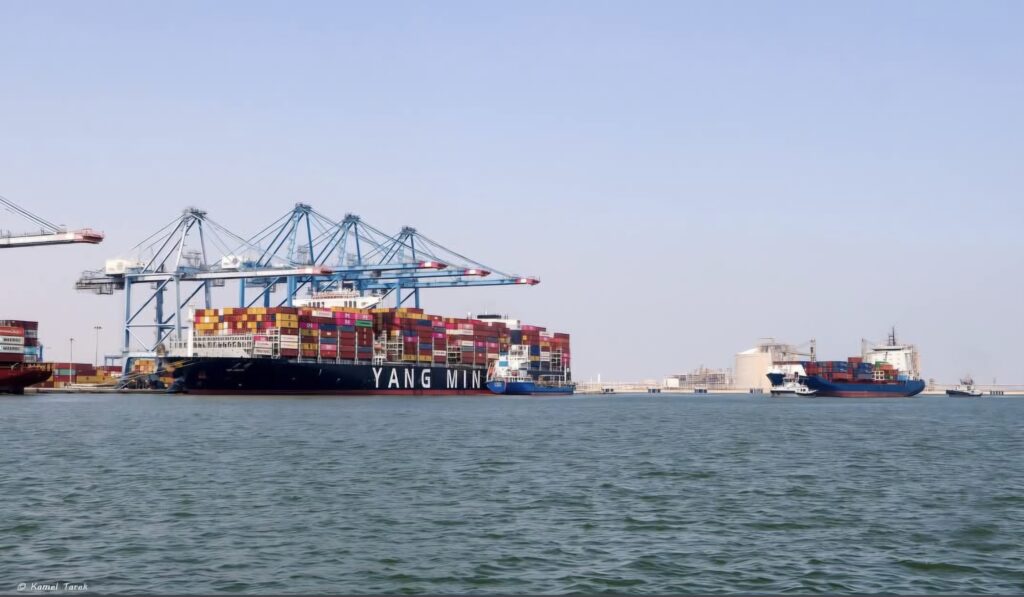
    Yang Ming ranked second, accounting for 18.5% of Damietta’s container activity with approximately 236,800 TEUs. Unlike several other major carriers, foreign trade imports and exports represented 51.3% of Yang Ming’s traffic through the port.

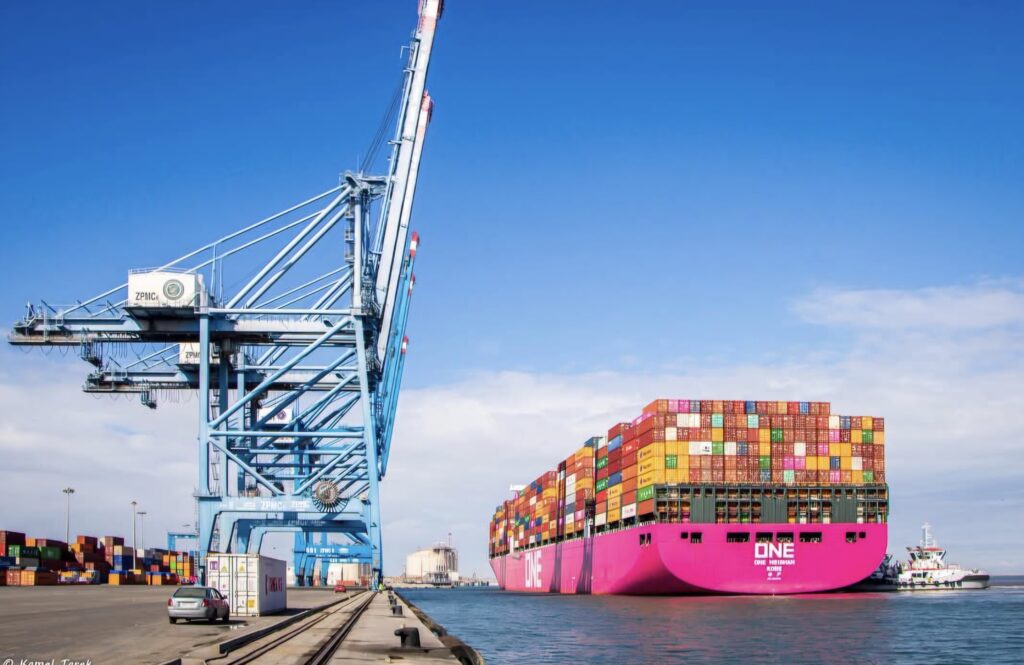
    Ocean Network Express (ONE) followed with a 9.4% share and approximately 120,000 TEUs, of which 61.9% was transshipment cargo. ONE had handled around 261,300 TEUs in 2024, when it accounted for 18.4% of the port’s container traffic.

    Hapag-Lloyd recorded a particularly sharp shift, handling approximately 65,900 TEUs, equivalent to 5.1% of Damietta’s container activity, with transshipment representing 71% of its volume. In 2024, the carrier had handled around 454,700 TEUs and accounted for 32.1% of the port’s container traffic.

    Other carriers serving Damietta included COSCO, CMA CGM, RCL and China Shipping.

    Overall, Damietta received 1,007 containership calls in 2025, compared with 1,020 in 2024. Containerized cargo declined 6% to around 13.4 million tonnes, while throughput fell 10% to approximately 1.42 million TEUs, from 1.58 million TEUs a year earlier.

    The figures highlight the importance of transshipment to Damietta’s container business, while also showing a significant redistribution of volumes among the major global carriers using the Egyptian Mediterranean gateway.

    Source: Almal News

  • Maersk, Hapag-Lloyd Return Four More Gemini Services to Suez Canal

    Shipping Arabia, September 21, 2026 – Maersk and Hapag-Lloyd are returning four additional Gemini Cooperation services to the Red Sea and Suez Canal, marking another significant step in the gradual restoration of Asia-Europe container shipping through the shorter trans-Suez corridor.

    The carriers announced that the AE5, AE11, AE12 and ME2 services — known respectively as NE4, SE2, SE1 and IEX in Hapag-Lloyd’s network — will shift from routing around the Cape of Good Hope to the Suez Canal following a further assessment of security conditions in the Red Sea.

    The changes expand the number of Gemini services returning to Suez following earlier resumptions. Maersk said the four services will join AE15 and AE19, which are already operating through the canal.

    The first westbound sailings include Antonia Maersk on AE11 and Cornelia Maersk on ME2, both departing their final Asian calls before Suez on September 19, followed by Marchen Maersk on AE5 on September 21. The first AE12 sailing will be announced separately.

    Eastbound implementation begins with Maastricht Maersk on AE5 on September 22, followed by Maersk Halifax on AE11 on September 28 and Cornelia Maersk on ME2 on October 31.

    The returning services connect major Asian gateways with Northern Europe and the Mediterranean, including London, Bremerhaven, Hamburg, Rotterdam, Algeciras, Valencia, Barcelona, La Spezia, Genoa, Koper and Rijeka.

    Maersk and Hapag-Lloyd said routing through the Red Sea and Suez Canal provides shorter and more efficient transit times between Asia and Europe compared with the diversion around the Cape of Good Hope.

    Both carriers stressed that further network decisions will remain dependent on security conditions in the region, with crew, vessel and cargo safety continuing to determine the pace of the return.

    The addition of four more Gemini services represents a further recovery of mainline container traffic through the Suez Canal, as carriers progressively restore capacity to the traditional Asia-Europe maritime corridor.

    Source: Almal News

Back to top button