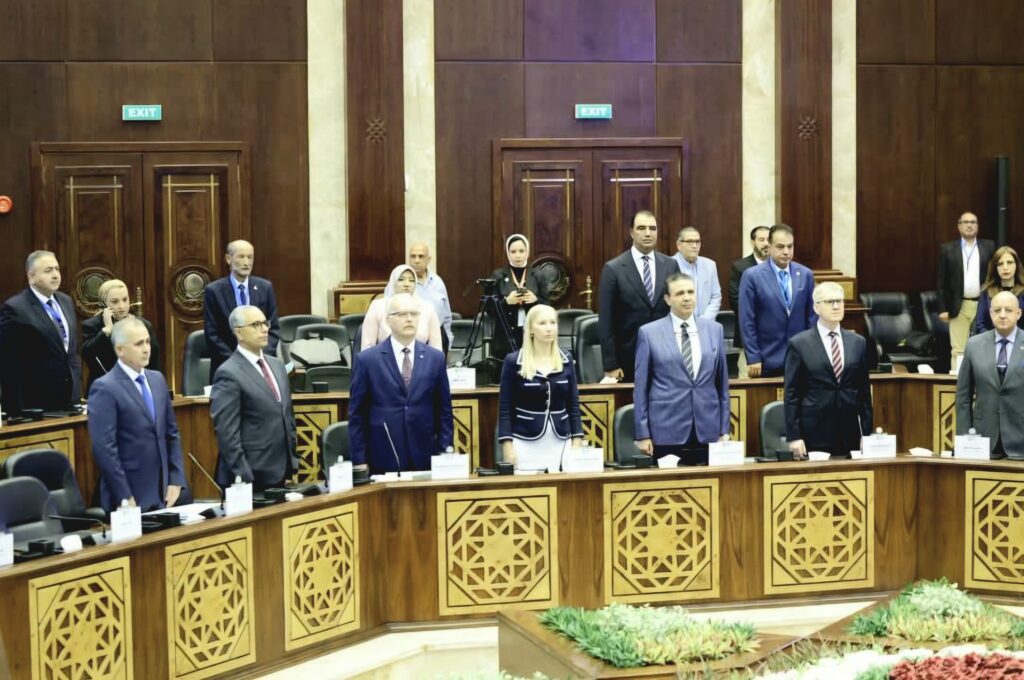
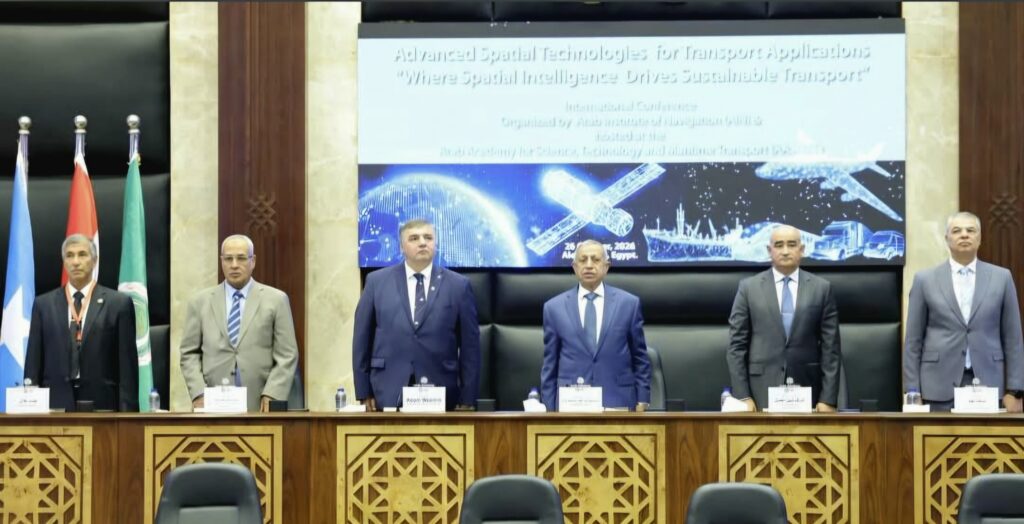
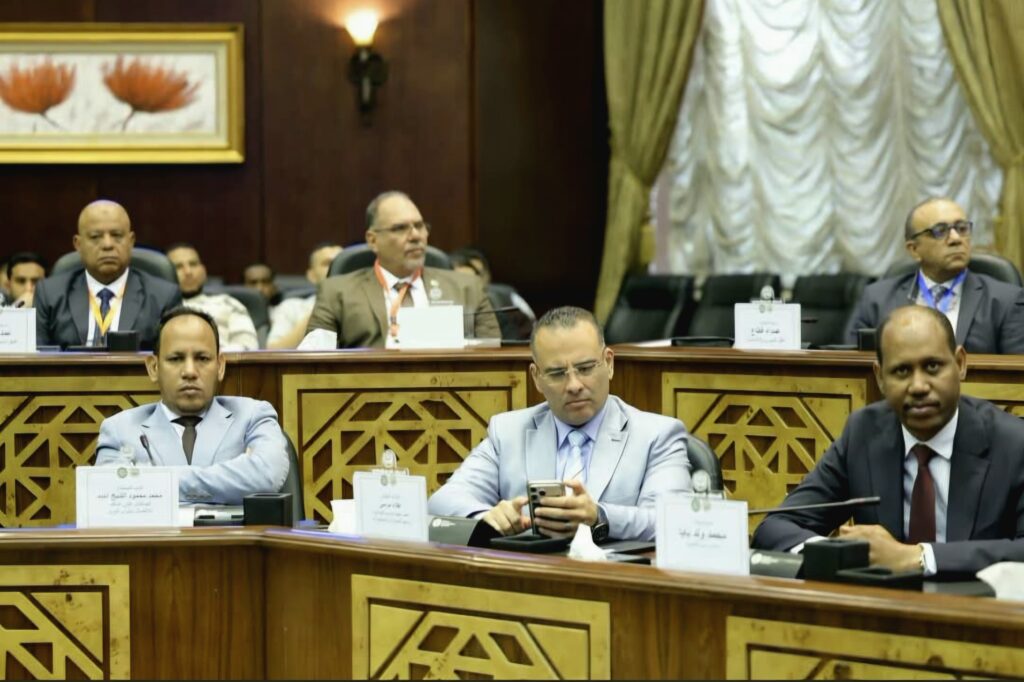
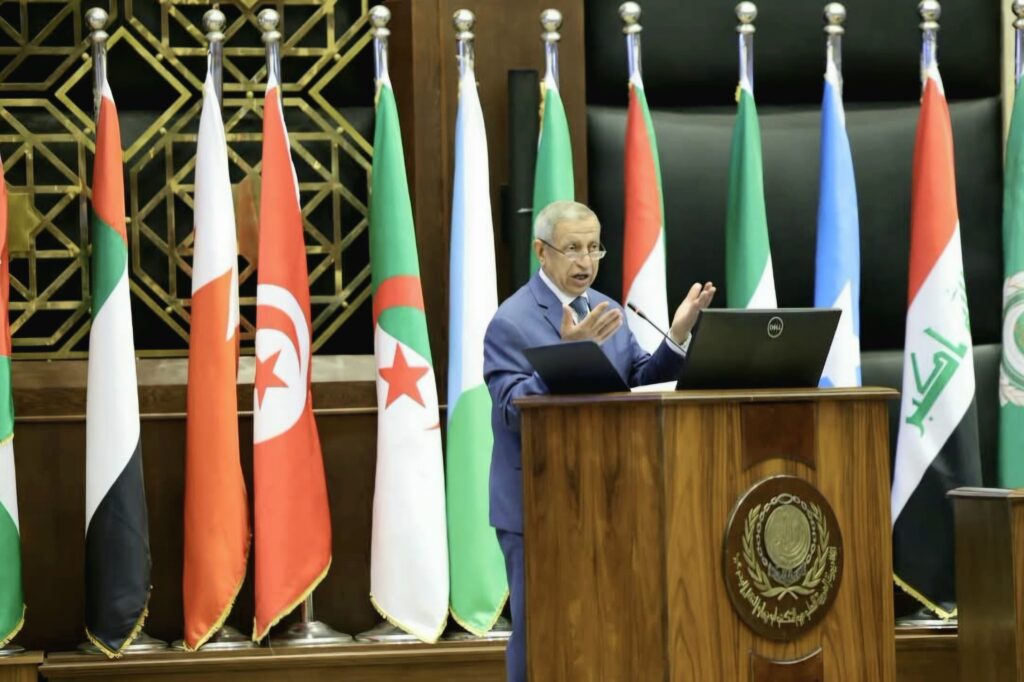
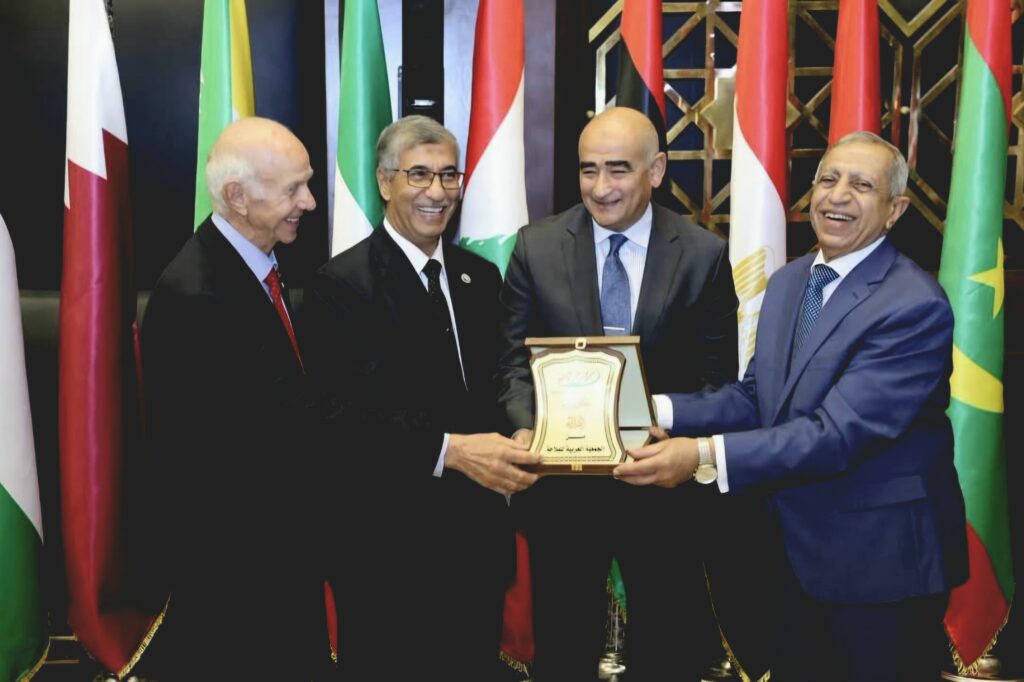
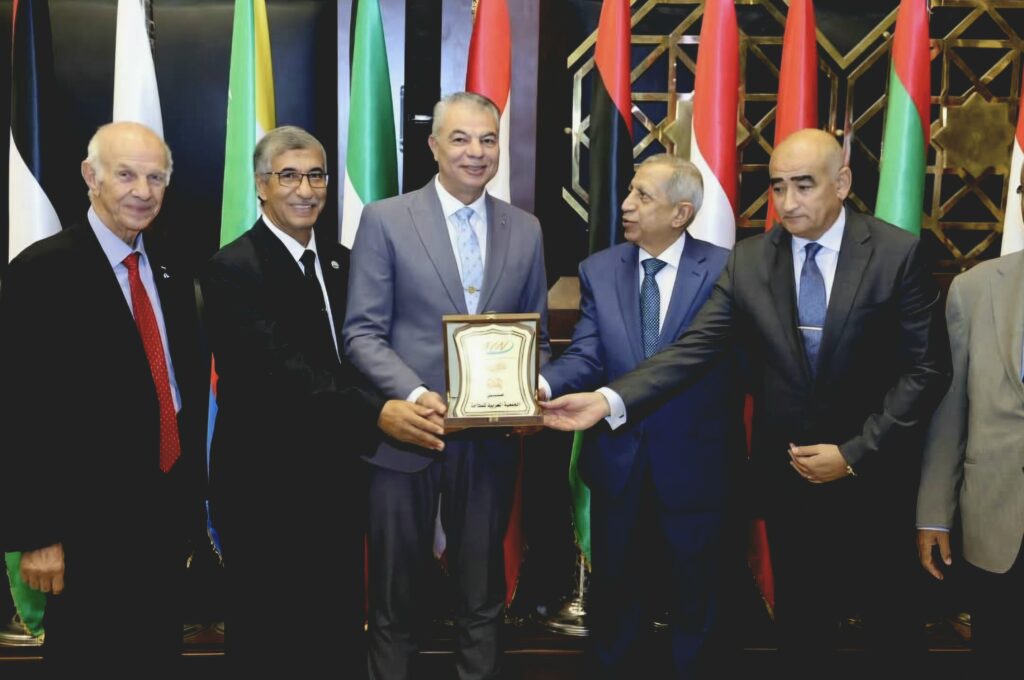
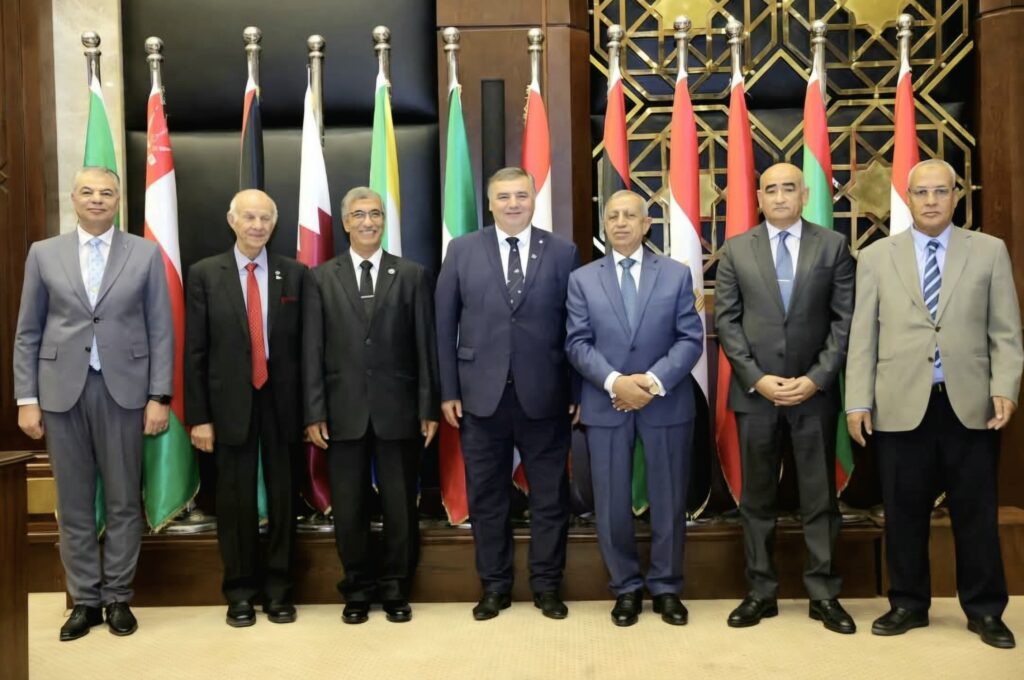
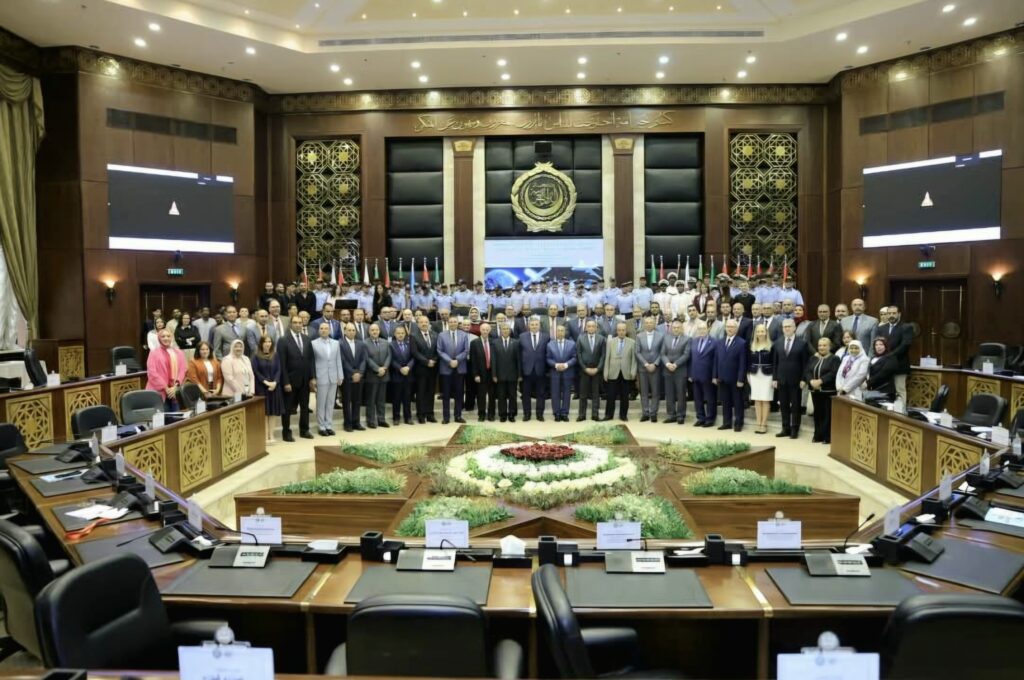
Shipping Arabia, October 31, 2026 – Maritime leaders, academics and industry experts gathered at the Arab Academy for Science, Technology and Maritime Transport (AASTMT) in Abu Qir, Alexandria, for the Melaha 2026 International Conference. The event focused on advanced navigation technologies, maritime safety, operational efficiency and sustainable transport development.
Organized by the Arab Institute of Navigation (AIN) in cooperation with AASTMT, the Melaha 2026 conference brought together Egyptian and international representatives, researchers and maritime professionals. Discussions addressed the future of navigation science, technological developments and stronger cooperation between academic institutions and the maritime industry.
The opening session included AASTMT President Prof. Ismail Abdel Ghaffar Ismail Farag and Arab Institute of Navigation President Prof. Hisham Helaly. Also attending were Rear Adm. Ashraf El Assal, Chairman of the Egyptian Authority for Maritime Safety, Rear Adm. Osama Negm, Deputy Head of the Transport Sector, and Sidi Ali Ould Sidi Boubacar, representing Mauritania’s fisheries ministry.
Prof. Adam Weintrit and other specialists in navigation science and maritime transport also participated in the conference.
Strengthening Maritime Education and International Research Partnerships
AASTMT President Prof. Ismail Abdel Ghaffar emphasized the importance of expanding academic and research partnerships to address the maritime industry’s evolving requirements. He called for joint educational programs that equip future maritime professionals with the knowledge and practical skills needed for careers in shipping and international business.
He explained that developing maritime education requires stronger cooperation between scientific institutions and greater exchange of expertise. Such collaboration would help universities improve academic programs, strengthen research capabilities and respond to changes across the maritime sector.
Abdel Ghaffar identified student and faculty exchanges, joint research projects and technology-focused education as essential priorities. He also stressed the importance of aligning academic programs with labor market requirements and technological developments.
Furthermore, he welcomed the maritime leaders and international experts attending the conference. He highlighted the need for continued collaboration between universities and professional organizations to expand training opportunities, strengthen maritime qualifications and develop human resources.
The academy president emphasized that cooperation should extend beyond academic exchanges to include practical training and research initiatives that support maritime sector development.
Translating Navigation Research into Practical Maritime Solutions
Prof. Hisham Helaly, President of the Arab Institute of Navigation, stressed the importance of strengthening communication among researchers, navigators, maritime specialists and decision-makers.
He explained that one of the institute’s principal objectives is to translate scientific research into practical applications that improve navigational safety and transport efficiency. Applied research, he noted, can help the maritime industry address emerging operational and technological challenges.
Helaly also called for broader professional and scientific partnerships to strengthen cooperation between academic institutions and maritime organizations.
He praised the institute’s cooperation with AASTMT and acknowledged the academy’s support for joint scientific and professional activities. According to Helaly, this partnership has created opportunities for knowledge exchange and the organization of specialized conferences.
Looking ahead, he emphasized the importance of building on existing cooperation, supporting young researchers and expanding the application of modern technologies in navigation, ports and transport networks.
These priorities formed part of the Melaha 2026 conference’s wider focus on connecting maritime research with operational requirements and technological development.
Maritime Training, Simulators and Long-Term Academic Cooperation
Prof. Adam Weintrit emphasized the value of international cooperation between universities and specialized maritime education institutions.
He advocated student and faculty exchanges, collaborative research projects and multiyear cooperation agreements. Such arrangements would provide an institutional framework for sustained cooperation in maritime education, professional training and scientific research.
Weintrit highlighted the practical training resources available across participating institutions, particularly maritime simulators and training vessels. He stressed that these facilities are important for developing the practical capabilities of students preparing for maritime careers.
He also expressed interest in establishing a structured framework for joint educational and research activities. This would support cooperation between universities and professional maritime organizations while expanding international academic networks.
Reflecting on his longstanding relationship with AASTMT and Alexandria, Weintrit recalled his first visit to the city in 2002. During that visit, he participated in a workshop organized by the World Maritime University. He subsequently attended a general assembly in 2003.
His remarks highlighted the role of sustained international academic relationships in developing maritime education and strengthening cooperation between institutions.
Egyptian Maritime Safety Authority Highlights Professional Development
Rear Adm. Ashraf El Assal, Chairman of the Egyptian Authority for Maritime Safety, praised AASTMT’s contribution to maritime education and professional training.
He highlighted the academic knowledge and practical expertise of the academy’s graduates, emphasizing their preparation for specialized careers within the maritime industry.
El Assal also stressed the importance of continued cooperation among maritime education institutions. He called for greater exchange of experience and expertise to support improvements in academic curricula and professional training programs.
Reflecting on his academic and professional career, he discussed his postgraduate education, including master’s studies and doctoral research undertaken through joint academic supervision involving Ryerson University in Canada. He completed his studies there in 2009.
He also referred to his professional experience with the Egyptian Authority for Maritime Safety, emphasizing the importance of combining academic qualifications with practical experience.
According to El Assal, this connection is essential for advancing maritime sciences and preparing qualified professionals for specialized responsibilities within the sector.
The conference also welcomed Rear Adm. Osama Negm, Deputy Head of the Transport Sector, as part of the official representation concerned with transport development and maritime safety.
Meanwhile, Sidi Ali Ould Sidi Boubacar participated as a representative of Mauritania’s fisheries ministry. His attendance reflected the conference’s broader Arab and international participation and the importance of knowledge exchange among organizations involved in navigation, transport and maritime activities.
Fifty Years of Navigation Research and Emerging Technologies
Prof. Refaat Rashad reviewed the Arab Institute of Navigation’s 50-year history and its contribution to navigation science and professional knowledge exchange.
He discussed the institutional, financial and organizational support that has helped sustain the institute’s activities. Rashad also highlighted cooperation with AASTMT as an important element in maintaining and expanding the institute’s work.
He addressed the institute’s connections with specialized international organizations and its role in promoting navigation knowledge and strengthening scientific and professional networks across the Arab region.
Rashad explained that navigation science extends beyond maritime transport. Its applications also cover aviation, land transportation and surveying, demonstrating the importance of technological development across different transport and positioning activities.
He emphasized the need to keep pace with technical advances and apply satellite-based navigation systems as navigation technologies continue to develop.
The Melaha 2026 conference brought these themes together through discussions on technological innovation, applied research, international academic partnerships and maritime professional development.
Participants emphasized the importance of strengthening cooperation between educational institutions, research organizations and maritime professionals to support safer navigation, more efficient transport operations and the development of qualified maritime personnel.
Source: Arab Academy for Science, Technology and Maritime Transport