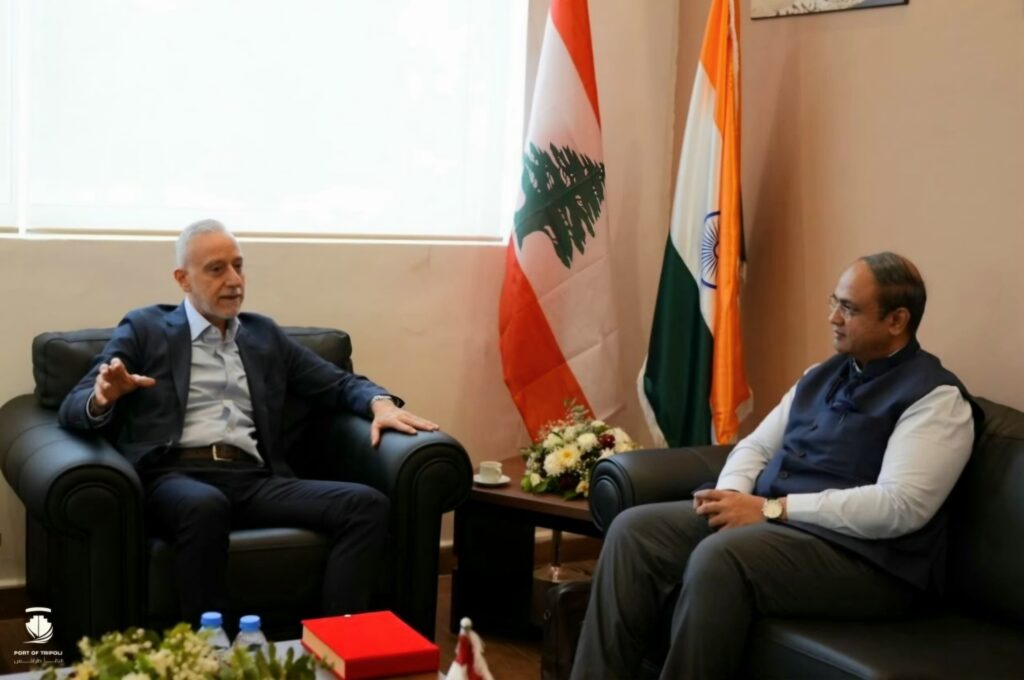
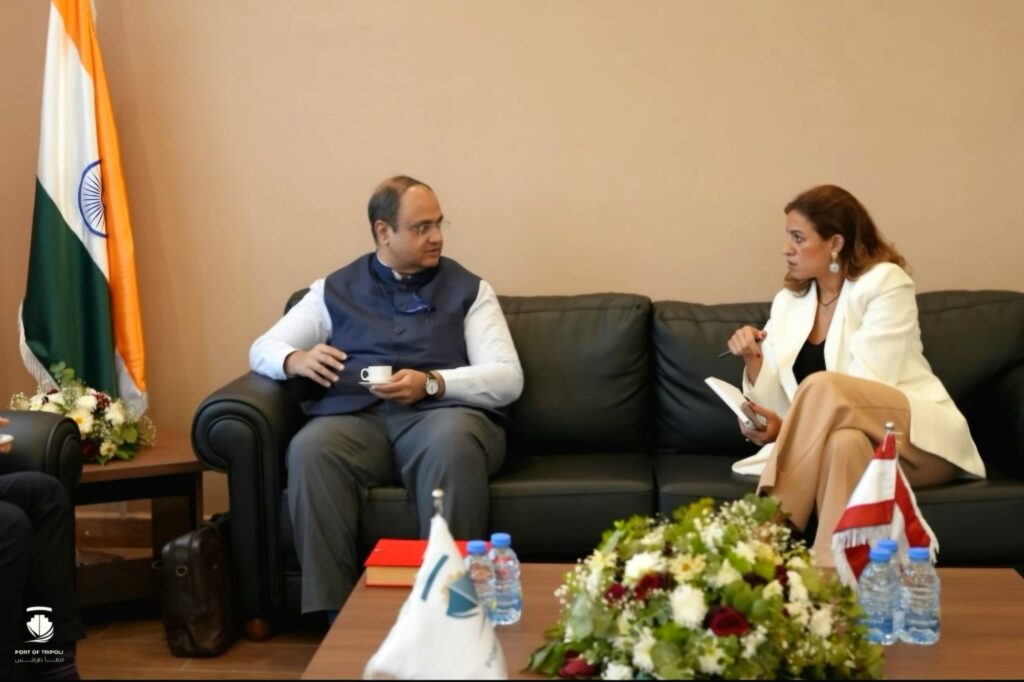
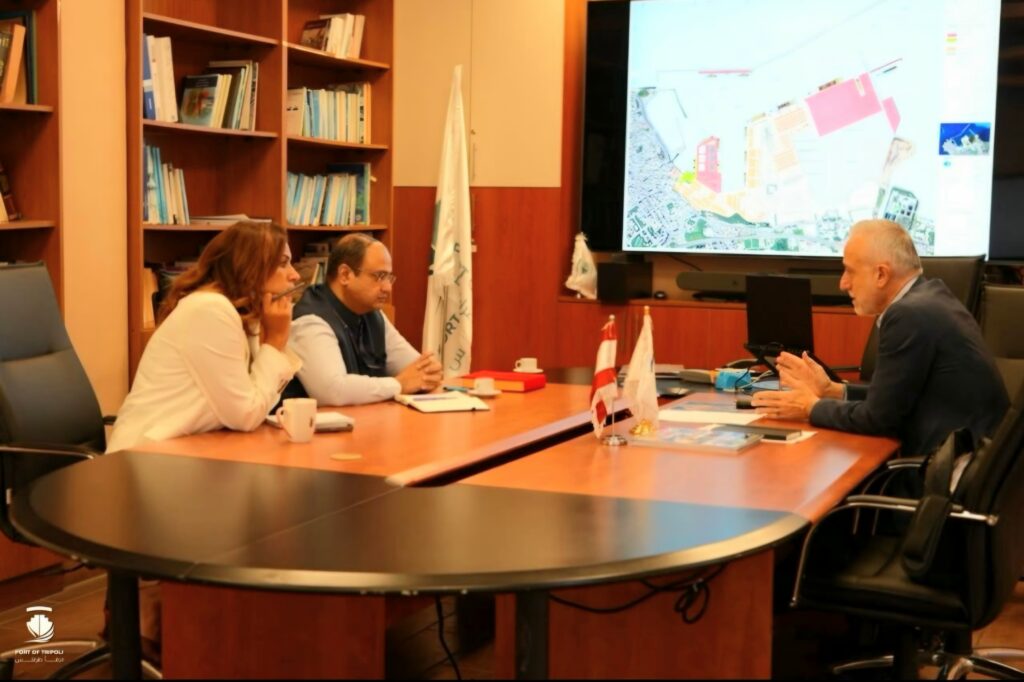
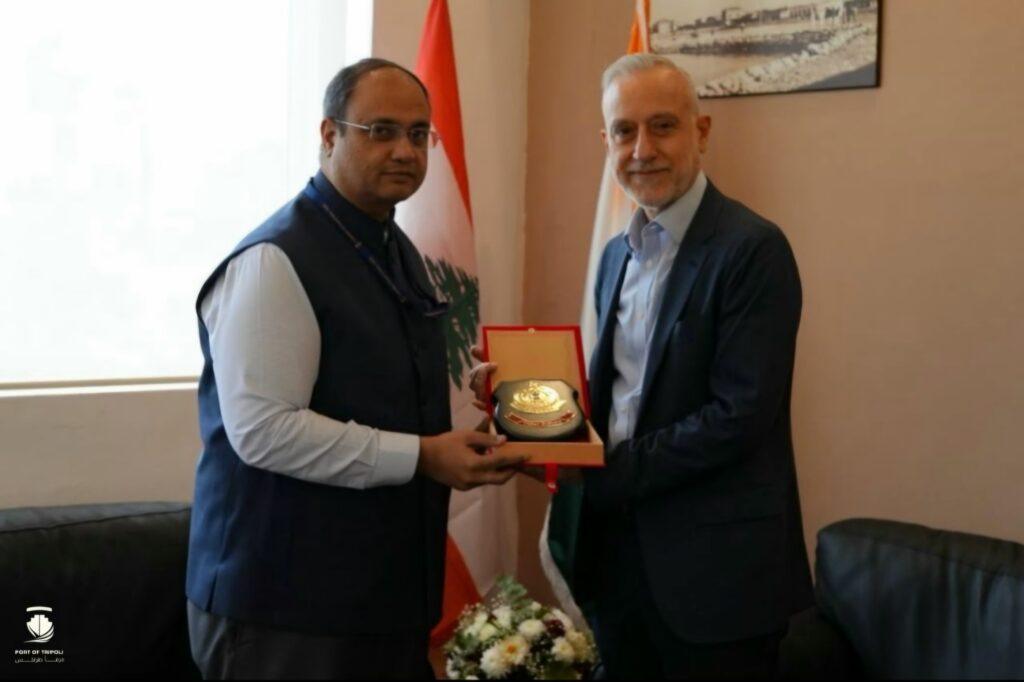
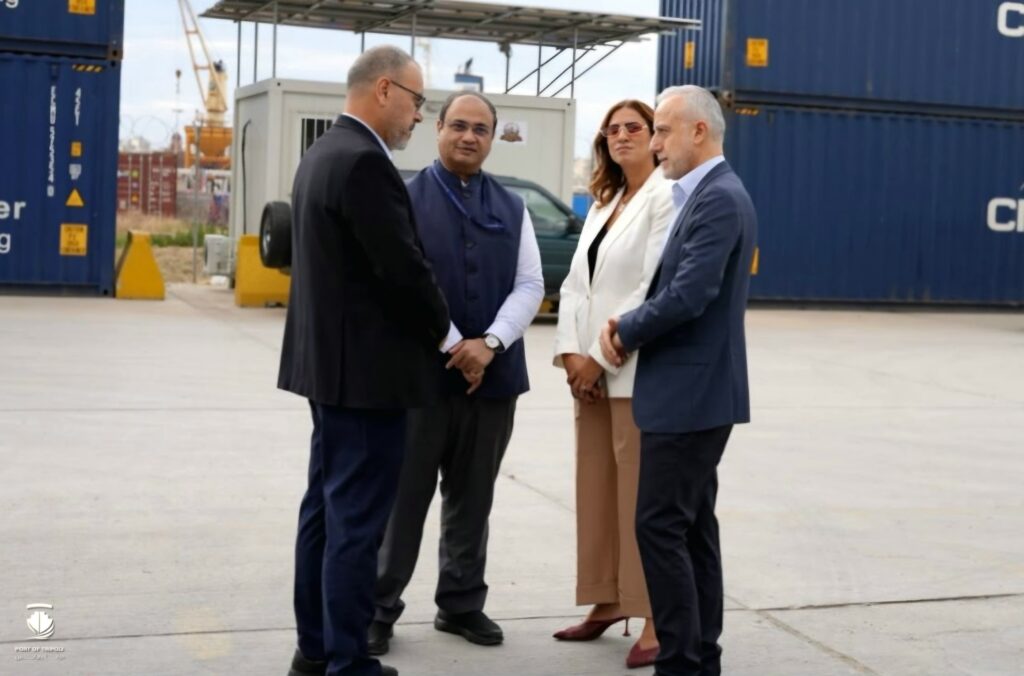
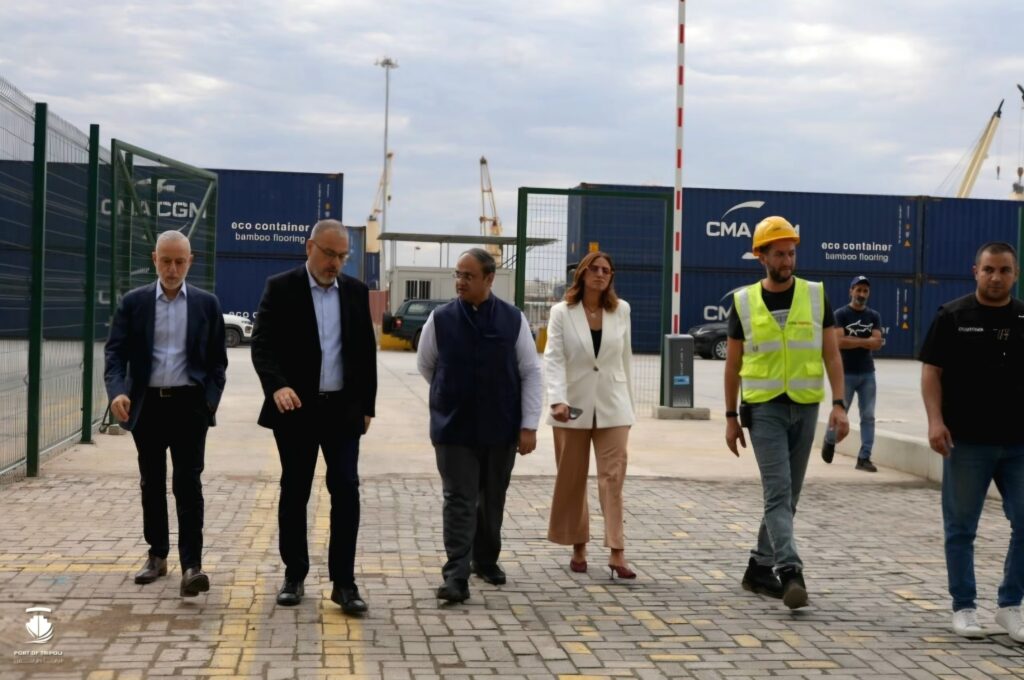
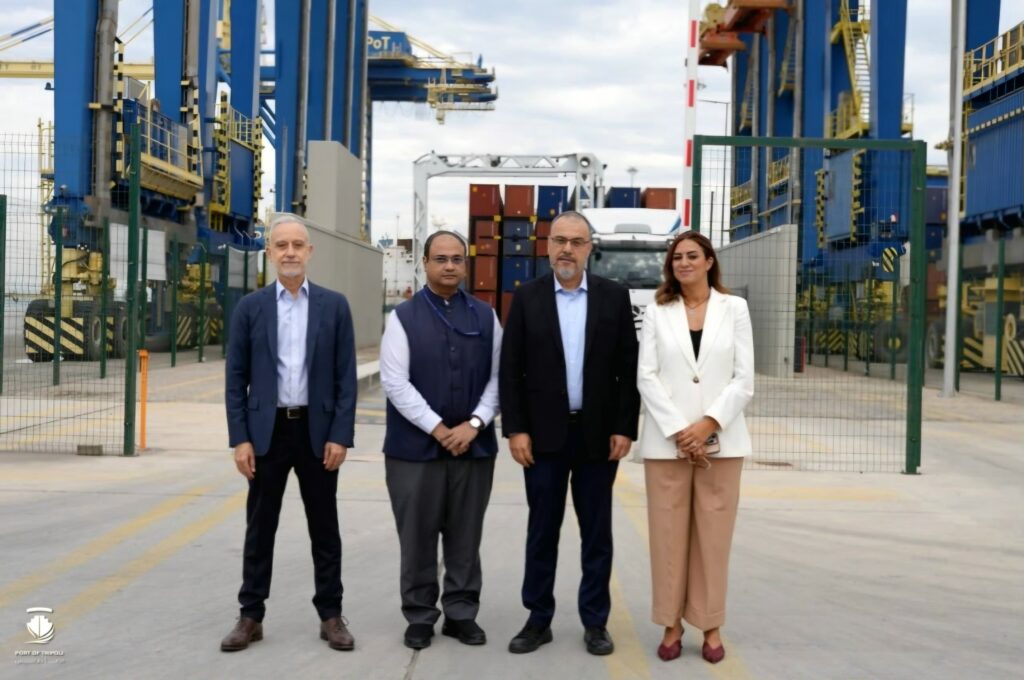
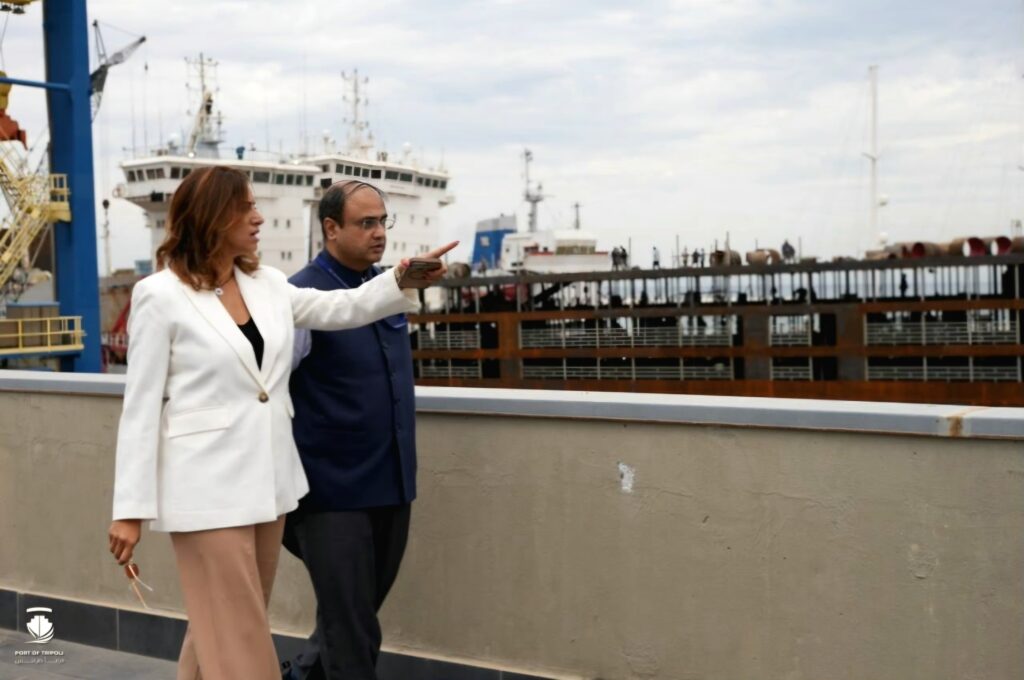
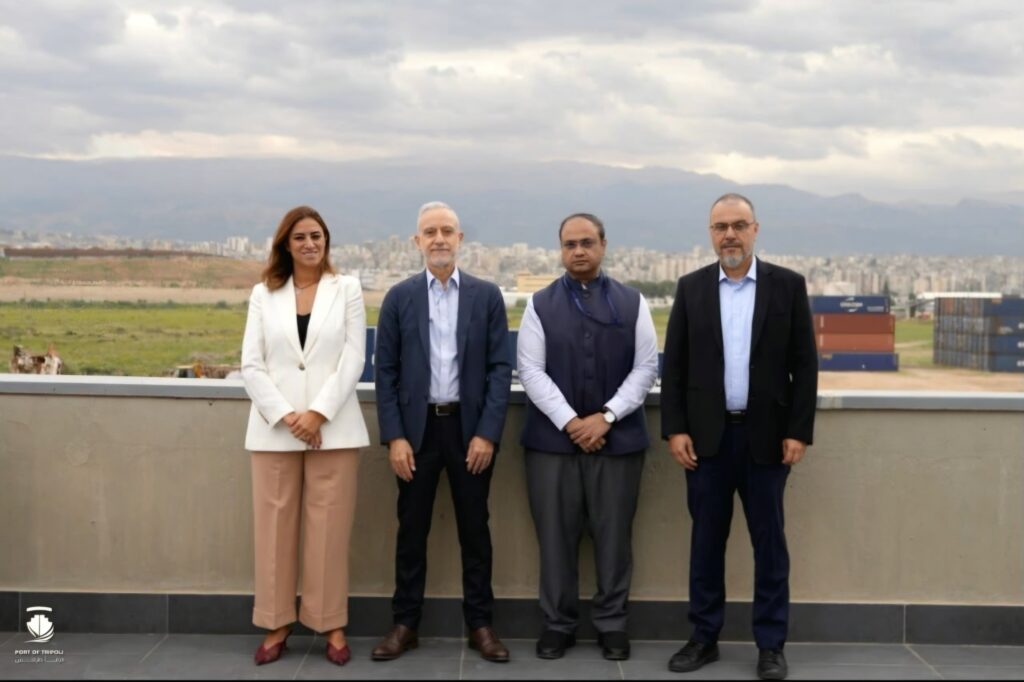
Shipping Arabia, November 8, 2026 – Lebanon’s Port of Tripoli has held strategic discussions with an Indian diplomatic and customs official on regional connectivity, trade facilitation, and potential cooperation under the India–Middle East–Europe Economic Corridor (IMEC). The meeting also highlighted the port’s plans to become a regional logistics hub through infrastructure development, multimodal connectivity, and digital transformation.
The discussions took place during a visit by Shri B.G. Krishnan, Consul for Economic, Trade, Commerce and Education at the Consulate General of India in Dubai, UAE. Krishnan also serves as the Nodal Officer for Indian Customs for the Middle East and Africa.
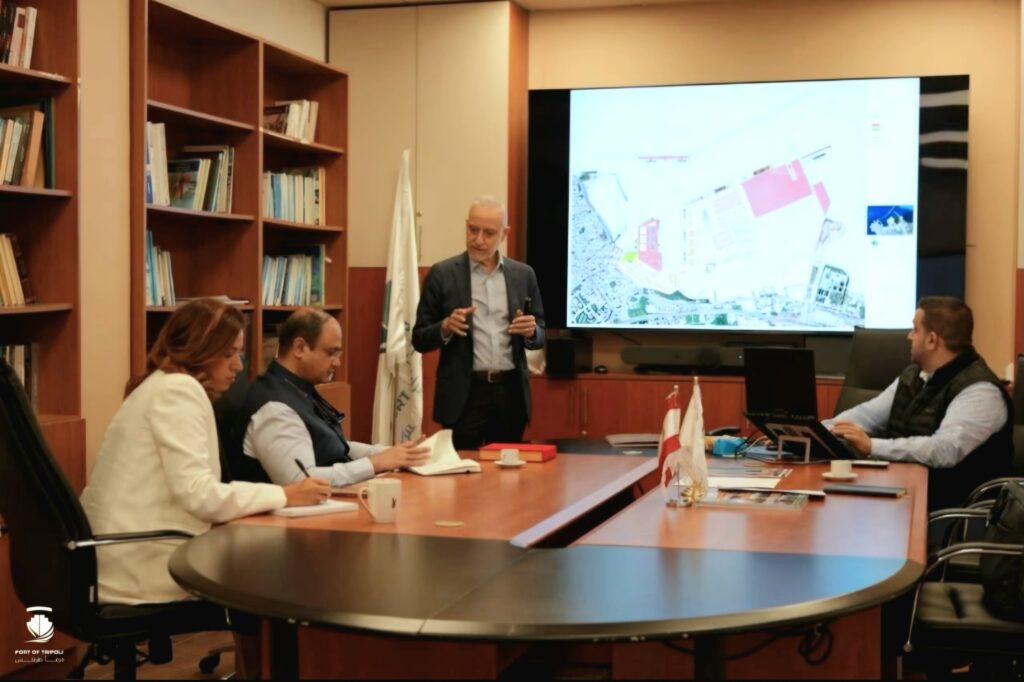
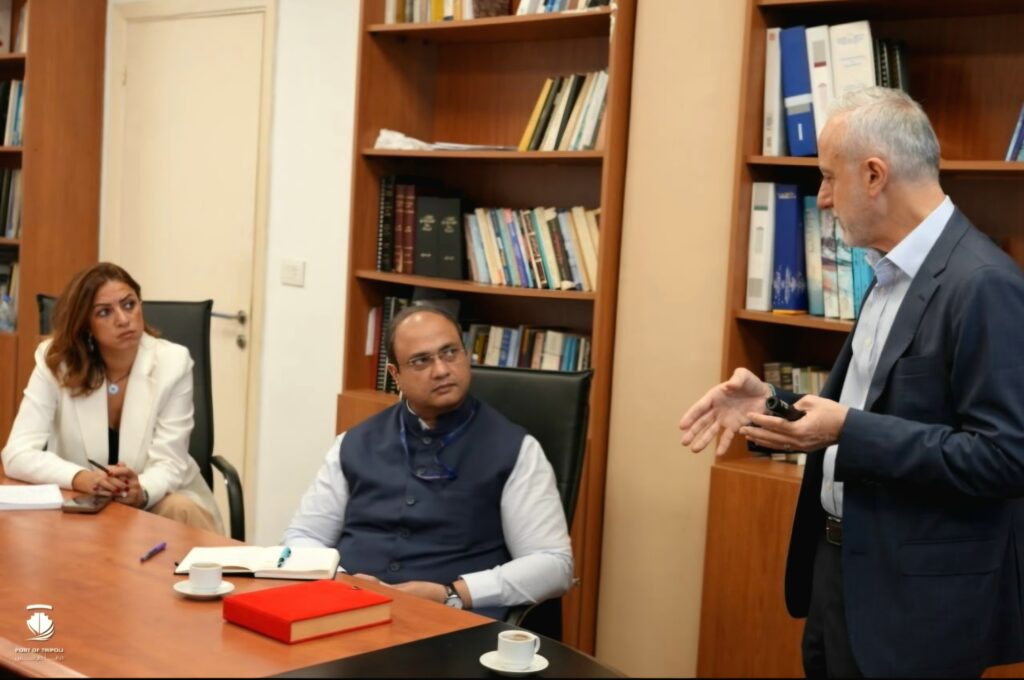
During the meeting, Port of Tripoli Chairman Eng. Iskandar Bandali presented the port’s strategic vision. The plan aims to transform Tripoli from a conventional cargo-handling facility into a regional logistics hub capable of supporting broader trade connectivity.
Port of Tripoli Outlines Four Strategic Development Priorities
The Port of Tripoli’s development vision focuses on four strategic pillars: multimodal connectivity, integration with the Tripoli Special Economic Zone, governance and digital transformation, and infrastructure and capacity expansion.
These priorities form the foundation of the port’s proposed transition toward a more integrated logistics model, combining physical infrastructure with improved trade facilitation and digital systems.
Among the key projects highlighted was the proposed revival of the Tripoli–Syrian border railway, which forms part of the port’s multimodal connectivity ambitions.
The presentation also outlined plans to expand container and general cargo terminals, alongside ongoing efforts to develop a Port Community System (PCS). The proposed digital platform forms part of the port’s broader strategy to modernize operations and strengthen coordination across the logistics chain.
Integration with the Tripoli Special Economic Zone represents another central element of the development strategy, linking port activities with the wider economic and logistics framework.
IMEC Connectivity and Digital Trade Facilitation
Discussions placed particular emphasis on the India–Middle East–Europe Economic Corridor as both a physical transport corridor and a framework for digital trade integration.
The meeting highlighted the importance of customs modernization and interoperable digital systems in facilitating cargo movements across borders. These capabilities were identified as important components of efforts to strengthen Lebanon’s participation in emerging regional and international trade corridors.
Specific areas discussed included the development of a National Single Window, the exchange of advance cargo information, and coordinated risk assessment procedures.
The discussions also addressed the need for digital interoperability between customs administrations and other trade-related institutions. Such coordination was presented as an important element of more efficient cross-border trade facilitation.
The Port of Tripoli’s interest in IMEC reflects its broader development vision, which combines improvements to transport infrastructure with customs modernization and institutional coordination.
India Shares Customs Digitalization Experience
During the meeting, Krishnan shared insights from India’s experience in customs digitalization and its integration efforts with the United Arab Emirates.
The discussion included India’s MAITRI initiative, which was presented as part of the exchange of experience relating to customs systems and international trade integration.
Both sides also explored potential avenues for technical cooperation, knowledge exchange, and specialized training for Lebanese customs officials.
These discussions focused on opportunities to strengthen technical capabilities and support modernization efforts through cooperation and the sharing of relevant expertise.
Institutional Cooperation and Regional Trade Integration
The meeting reaffirmed the importance of coordination between port authorities, customs administrations, and international partners in strengthening Lebanon’s connections with regional and global trade networks.
Participants emphasized that positioning the Port of Tripoli within future trade corridors requires more than investment in physical infrastructure. Digital integration, transport connectivity, and coordinated institutional reform were also identified as essential elements.
The discussions brought together the port’s infrastructure and capacity expansion ambitions with broader priorities involving customs modernization and international cooperation.
Through its proposed railway revival, terminal expansion plans, Port Community System development, and engagement on IMEC connectivity, the Port of Tripoli outlined its vision for a larger role in regional logistics and cross-border trade.
Source: Port of Tripoli