
Refrigerated Cargo

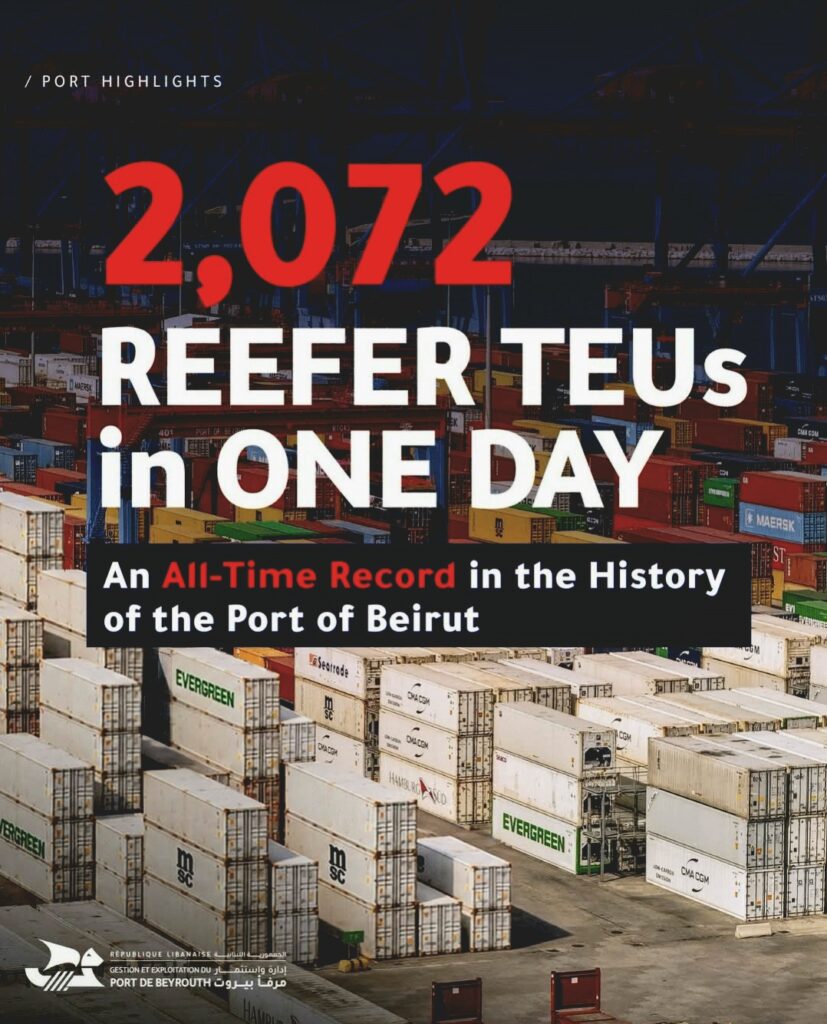
  • Port of Beirut Sets All-Time Reefer Record With 2,072 TEUs in One Day

    Shipping Arabia, November 7, 2026 – Lebanon’s Port of Beirut has established a new operational record after handling 2,072 refrigerated container TEUs (reefer TEUs) in a single day. The achievement represents the highest daily reefer volume ever recorded at the port’s container terminal.

    The Port of Beirut reefer record marks a milestone in its container-handling operations, particularly for refrigerated cargo requiring specialized technical conditions. According to the port, the figure reflects the volume of operations its facilities can accommodate while meeting the operational demands of temperature-sensitive shipments.

    Record Reefer Handling at Port of Beirut

    The daily throughput of 2,072 reefer TEUs represents an all-time high for refrigerated container handling at the Port of Beirut. The port confirmed that it had never previously recorded this volume of reefer traffic in a single day.

    Refrigerated container operations require particular technical conditions and efficient cargo-handling procedures. The port highlighted its ability to manage these requirements while maintaining the operational responsiveness needed to accommodate substantial reefer volumes.

    The record also reflects the scale of specialized container activity handled at the port’s facilities. In particular, it demonstrates the port’s capacity to manage refrigerated cargo operations that require dedicated technical attention.

    Supporting Traders and Exporters

    According to the Port of Beirut, the achievement reflects the readiness of its operations and its ability to respond efficiently to the requirements of traders and exporters.

    The port emphasized that handling refrigerated containers requires high operational efficiency, given the specialized technical conditions associated with this category of cargo. Its record daily performance demonstrates the level of operational activity it can accommodate while serving customers with specific cargo-handling requirements.

    The Port of Beirut reefer record therefore represents a significant milestone in the port’s operational history, highlighting its ability to handle substantial volumes of refrigerated containers in a single day.

    Source: Port of Beirut
  • Maersk Imposes Emergency Freight Surcharges Amid Strait of Hormuz Disruptions

    Shipping Arabia, September 26, 2026 – Maersk has introduced emergency freight surcharges on container shipments affected by disruptions surrounding the Strait of Hormuz, with total additional costs potentially reaching $4,800 per container depending on cargo type and whether the shipment moves aboard a vessel transiting the strait.

    The measures cover shipments loaded from or destined for ports in Iraq, Kuwait, Bahrain, Qatar and the UAE. They also apply to Dammam and Jubail in Saudi Arabia and ports in Oman, excluding Salalah.

    Maersk has set the emergency surcharge at $1,800 for a 20-foot dry container and $3,000 for a 40-foot dry container. Refrigerated containers, as well as equipment carrying special or dangerous cargo, will face a higher charge of $3,800 per container.

    Additional Charge Applies to Hormuz Transits

    Cargo moving aboard vessels that transit the Strait of Hormuz will be subject to an additional $1,000 per container. According to Maersk, the charge is intended to cover higher insurance premiums and crew risk compensation associated with operating through the affected area.

    When combined with the $3,800 emergency surcharge for refrigerated, special or dangerous cargo, the additional Hormuz transit charge can bring total extra costs to $4,800 per container.

    Maersk said the emergency freight surcharges also cover a wider range of expenses created by the disruption. These include alternative routings, storage costs, additional transportation and the movement of cargo from temporary storage locations to final destinations once onward transport can be carried out safely.

    Alternative Routes Used for Upper Gulf Cargo

    The carrier is also using alternative routings for shipments serving several Upper Gulf markets. Cargo moving to or from Kuwait, Iraq, Qatar, Bahrain and the UAE is being routed through Salalah and Khor Fakkan.

    Saudi Arabian import and export cargo will continue to move through Jeddah. The alternative arrangements form part of Maersk’s response to the disruption affecting normal cargo movements in the region.

    The emergency measures therefore combine additional charges with changes to cargo routing as the carrier manages shipments serving markets around the Strait of Hormuz.

    Booking Restrictions Remain in Place

    Maersk has also maintained booking restrictions across parts of the affected region. The carrier is applying tighter limitations to refrigerated cargo, dangerous goods, out-of-gauge shipments and other specialized cargo.

    At the same time, Maersk said particular attention will be given to essential food supplies, medicines and other perishable goods. These cargo types remain a priority as the carrier manages capacity and operational restrictions linked to the disruption.

    The emergency surcharges, alternative routings and booking restrictions remain part of Maersk’s measures for handling cargo flows affected by conditions around the Strait of Hormuz.

    Source: Al-Mal

Back to top button