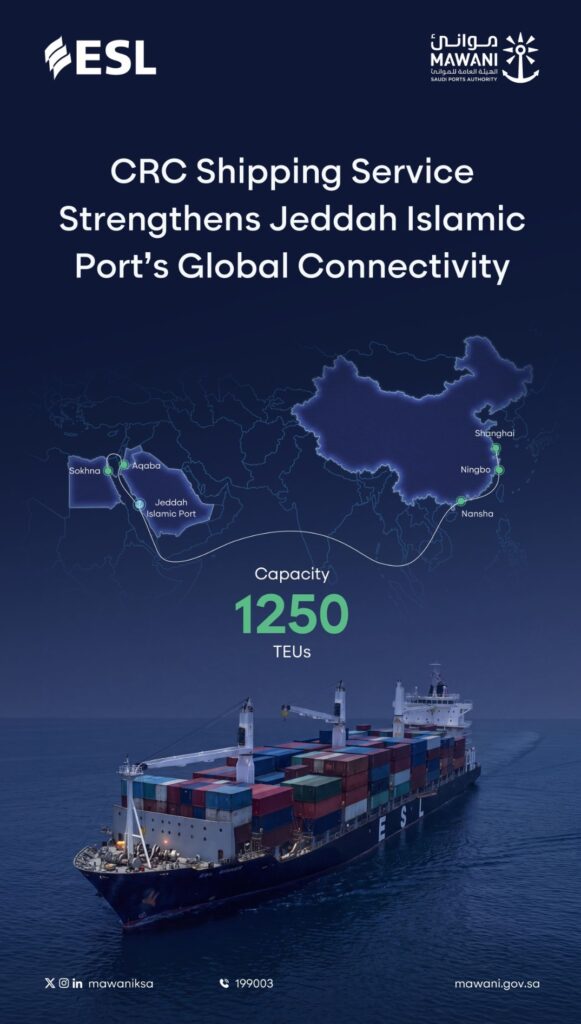
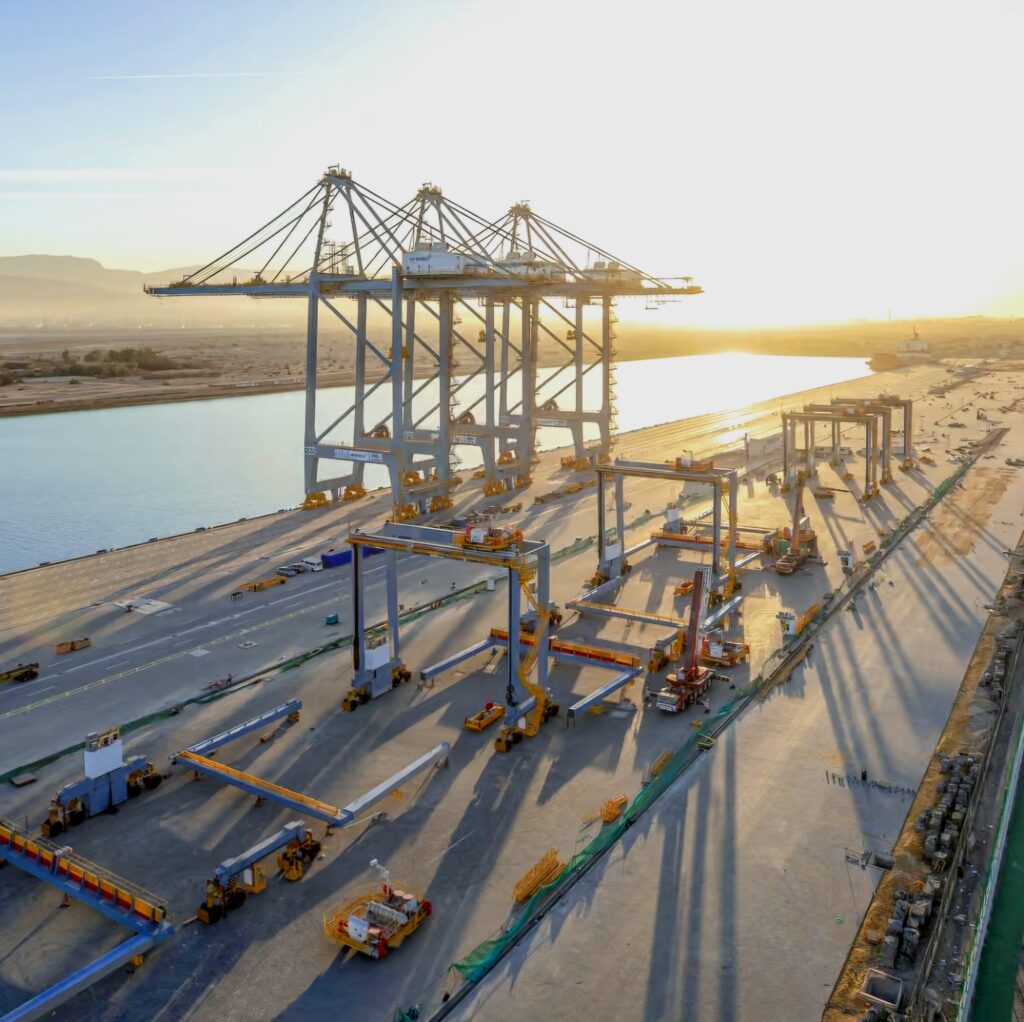
Shipping Arabia, November 14, 2026 – The Saudi Ports Authority (Mawani) has announced the addition of ESL’s CRC shipping service to Jeddah Islamic Port, strengthening the port’s maritime connectivity with international markets. The service links Saudi Arabia with ports in China, Egypt and Jordan, expanding shipping connections between Asia and the Red Sea region.
The addition forms part of Mawani’s efforts to enhance Jeddah Islamic Port’s international shipping connectivity and strengthen trade links with global markets. The announced service includes six ports across four countries, with a stated capacity of 1,250 twenty-foot equivalent units (TEUs).
ESL CRC Shipping Service Connects Six Ports
The CRC shipping service connects Jeddah Islamic Port with Shanghai, Ningbo and Nansha in China, alongside Sokhna in Egypt and Aqaba in Jordan.
The three Chinese ports provide the Asian connections within the announced service network. Meanwhile, Sokhna and Aqaba extend the service’s coverage to Egypt and Jordan, with Jeddah Islamic Port serving as the Saudi Arabian port of call.
According to the route information published by Mawani, the CRC service has a stated capacity of 1,250 TEUs. The announced network therefore establishes direct service coverage across the six listed ports, connecting Chinese maritime gateways with ports in the Red Sea region.
Strengthening Jeddah Islamic Port’s Global Connectivity
The addition of the CRC shipping service supports Mawani’s efforts to expand the international maritime connections available through Jeddah Islamic Port.
By incorporating ports in China, Egypt and Jordan into the announced service network, the CRC service broadens the port’s shipping links with Asian and regional markets.
The inclusion of three Chinese ports alongside Sokhna and Aqaba also highlights the geographical coverage of the new connection, linking major Asian shipping locations with Saudi Arabia and neighboring Red Sea markets.
Mawani presented the service addition as part of its ongoing efforts to strengthen trade connectivity with global markets and enhance Jeddah Islamic Port’s position within international shipping networks.
Shipping Arabia, November 9, 2026 – Emirates Shipping Line (ESL) is restructuring its container shipping network between India and the Red Sea, introducing revised service rotations and vessel deployments. The carrier is also preparing to launch a new China–Red Sea connection linking major Chinese ports with Egypt, Jordan and Saudi Arabia.
According to maritime shipping research firm DynaLiners, the restructuring will reorganize ESL’s South Red Sea Service (SRS) and North Red Sea Service (NRS). The revised operations will feature different port rotations, vessel capacities and sailing frequencies.
Separately, the carrier has announced the introduction of its China Red Sea Connector (CRC) service in November 2026, adding direct container shipping connections between China and key Red Sea ports.
South Red Sea Service to Operate Dedicated India–Jeddah Shuttle
Under the revised network, Emirates Shipping Line will convert its South Red Sea Service (SRS) into a dedicated shuttle operation connecting Nhava Sheva in India with Jeddah in Saudi Arabia.
The service will deploy two container vessels, each with a capacity ranging from 1,800 to 2,600 twenty-foot equivalent units (TEU). Sailings are scheduled to operate at nine-day intervals.
The revised SRS port rotation will follow the route Nhava Sheva – Jeddah – Nhava Sheva, establishing a dedicated connection between the two ports.
This arrangement will separate the India–Jeddah shuttle from the carrier’s wider North Red Sea operations, which will serve additional ports across the region.
North Red Sea Service to Connect India, Djibouti, Aqaba, Sokhna and Sohar
Meanwhile, Emirates Shipping Line will reorganize its North Red Sea Service (NRS) to provide connections between India and several ports in the Red Sea region and Oman.
The revised service will operate with two container vessels, each offering capacity between 1,700 and 2,500 TEU. The carrier plans to maintain a sailing frequency of approximately once every two weeks.
The NRS rotation will cover Nhava Sheva – Djibouti – Aqaba – Sokhna – Sohar – Nhava Sheva.
Under this arrangement, the service will connect Nhava Sheva with Djibouti, Jordan’s Port of Aqaba, Egypt’s Sokhna Port and Oman’s Port of Sohar before returning to India.
The revised rotation will maintain Emirates Shipping Line’s connections with multiple regional markets while the South Red Sea Service focuses on the dedicated Nhava Sheva–Jeddah route.
New China Red Sea Connector to Link Three Chinese Ports With the Red Sea
Alongside its India–Red Sea network restructuring, Emirates Shipping Line is introducing a new container shipping service connecting China with Egypt, Jordan and Saudi Arabia.
The carrier announced the China Red Sea Connector (CRC) on October 24, 2026, with the service scheduled for introduction during November.
ESL has allocated four container vessels to the new service, each with a capacity of approximately 2,500 TEU. The CRC will operate at roughly two-week intervals.
Its planned port rotation will be Shanghai – Ningbo – Nansha – Sokhna – Aqaba – Jeddah.
The service will establish direct container shipping connections from three major Chinese ports to Red Sea gateways in Egypt, Jordan and Saudi Arabia.
In Egypt, the CRC will call at Sokhna Port, while Aqaba will serve as its Jordanian port of call. The rotation will also include Jeddah in Saudi Arabia.
The introduction of the CRC will add a China–Red Sea service to ESL’s network alongside its reorganized India–Red Sea operations.
Together, the revised SRS and NRS rotations and the new CRC service represent changes to Emirates Shipping Line’s regional container shipping network, with dedicated vessel deployments and defined sailing frequencies across the three services.
Shipping Arabia, October 27, 2026 – Ocean Network Express (ONE) has announced plans to resume Suez Canal transits on its MD1 and MS2 container shipping services under the Premier Alliance, beginning with selected sailings in November 2026. The decision follows a review of regional security conditions and aims to reduce transit times between Asia and the Mediterranean.
In a customer advisory issued on October 22, ONE outlined revised port rotations for both services, confirming their planned return to the Red Sea and Suez Canal corridor. The changes will affect scheduled voyages linking major Asian container ports with destinations in Egypt, Türkiye and the wider Mediterranean.
The carrier said it will continue monitoring security developments in the Middle East and adjusting its operations when necessary. Crew safety, vessel security and the protection of customer cargo remain central to its routing decisions.
MD1 Service to Resume Suez Canal Route via Sokhna and Damietta
The MD1 service will introduce its revised rotation with the vessel YM Trust, scheduled to depart Ningbo, China, on November 10, 2026. The vessel is expected to arrive at Egypt’s Damietta Port on December 7.
Under the revised schedule, the service will connect several major Asian ports with Egypt and Türkiye through the Suez Canal.
The inclusion of Sokhna and Damietta places two Egyptian ports on the revised Asia-Mediterranean service. Following its Mediterranean calls, the service will return through Damietta and the Suez Canal before continuing toward Asia.
The revised routing is intended to shorten transit times between Asia and the Mediterranean compared with the alternative routing.
MS2 Service to Connect Asia and Mediterranean Ports via Suez Canal
ONE also confirmed that its MS2 service will resume Suez Canal transits with the vessel ONE Synergy. The vessel is scheduled to depart Qingdao, China, on November 16, 2026, with an expected arrival at Piraeus, Greece, on December 28.
The revised MS2 rotation will connect a network of major Asian container ports with destinations in the Mediterranean. Its Asian calls include Qingdao, Busan, Shanghai, Ningbo, Kaohsiung, Shekou and Singapore.
After transiting the Suez Canal, the service will continue to Piraeus, Valencia, Barcelona, Genoa, La Spezia and Fos. The return voyage will pass through the Suez Canal toward Singapore before continuing to ports in Southeast Asia.
The routing change will restore the Suez Canal corridor to the specified MS2 sailings, supporting ONE’s objective of reducing transit times between the two regions.
ONE Maintains Flexible Routing Amid Regional Security Concerns
Although ONE has announced the return of both services to the Red Sea and Suez Canal, the carrier emphasized that its routing plans remain subject to security and operational conditions.
The company will continue assessing developments in the Middle East and may revise vessel routes if circumstances change. These assessments will prioritize the safety of crews, vessels and customer shipments.
ONE also confirmed that it will update sailing schedules and booking confirmations to reflect the revised service rotations. However, the carrier cautioned that service details may change without prior notice in response to evolving security or operational developments.
The planned November sailings therefore mark the next scheduled step in restoring Suez Canal transits for the MD1 and MS2 services, while ONE retains the flexibility to adjust operations as conditions require.
Shipping Arabia, October 23, 2026 – Singapore-based container shipping company Jade Pacific Line (JPL) has launched a new India–Red Sea container service connecting ports in India and Pakistan with Sokhna Port in Egypt. The newly established carrier began operations in October 2026, deploying a 1,100 TEU container vessel on the route.
The service provides a maritime connection between the Indian subcontinent and Egypt’s Red Sea coast. It operates on an irregular schedule, with port calls at Mundra, Nhava Sheva, Karachi and Sokhna before returning to Mundra.
The launch marks the beginning of container shipping operations for Jade Pacific Line, which was established in Singapore earlier this year.
India–Red Sea Container Service Operates With 1,100 TEU Vessel
Jade Pacific Line has deployed the container vessel MEDKON SIA, with a capacity of 1,100 TEUs, to operate its new service between the Indian subcontinent and the Red Sea.
The rotation includes two Indian ports, Mundra and Nhava Sheva, followed by Karachi in Pakistan and Sokhna Port on Egypt’s Red Sea coast. The vessel then returns to Mundra to complete the rotation.
Unlike services operating on fixed weekly schedules, JPL’s new India–Red Sea container service currently follows an irregular sailing schedule, according to the published details.
Jade Pacific Line Established in Singapore in April 2026
Jade Pacific Line, officially registered as Jade Pacific Line Pte. Ltd., is a Singapore-based container shipping company established on April 30, 2026.
According to maritime research firm DynaLiners, the company was founded by Chinese interests associated with OVP Shipping and Ocean Silk Line.
The carrier commenced shipping operations in October 2026 with the deployment of MEDKON SIA on its India–Red Sea route.
Through the new service, Jade Pacific Line has established a container shipping connection linking Mundra, Nhava Sheva and Karachi with Egypt’s Sokhna Port.
Shipping Arabia, October 20, 2026 – Maersk has revised its container service charges for shipments moving to and from Egyptian ports, with the updated tariffs taking effect in October 2026 and remaining applicable until further notice. The revisions cover entry (FRI) and departure (FRO) service charges across several container categories, including dry, refrigerated, hazardous and special cargo.
According to a Maersk circular reviewed by Egyptian newspaper Al Mal, the revised charges vary by port, container size, cargo classification and shipment direction. The affected ports include Alexandria, Dekheila, Damietta, East Port Said, West Port Said and Sokhna.
Revised Charges for Containers Departing Egyptian Ports
For outbound dry 20-foot containers, Maersk has set charges of $150 at Alexandria, Dekheila and Damietta. The corresponding fees reach $160 at East Port Said, $175 at Sokhna and $195 at West Port Said.
Hazardous cargo moving in 20-foot containers faces higher charges. The applicable fee stands at $215 for shipments departing Sokhna, compared with $280 at Alexandria, Dekheila and Damietta. At East Port Said and West Port Said, the charge reaches $315 per container.
For refrigerated 20-foot containers, Maersk has established a charge of $280 at Sokhna, Alexandria, East Port Said and West Port Said. Damietta carries a slightly lower fee of $269 per container.
The revised schedule also covers larger dry containers. For outbound 40- and 45-foot units, the charges stand at $215 at Alexandria and Dekheila, $225 at East Port Said, $260 at Sokhna and $265 at West Port Said.
Meanwhile, hazardous shipments in 40-foot containers face charges of $280 at Sokhna and $325 at Alexandria. The fees increase to $370 at East Port Said, $380 at Damietta and $395 at West Port Said.
Refrigerated 40-foot containers are subject to charges of $325 at Alexandria, Dekheila and West Port Said. The corresponding fees reach $330 at Damietta and $335 at East Port Said.
Updated Charges for Shipments Arriving in Egypt
Maersk has also revised its service charges for containers arriving at Egyptian ports from international origins. The updated inbound tariffs cover general cargo, refrigerated shipments, hazardous cargo and special containers.
For refrigerated cargo arriving at East Port Said in 20- and 40-foot containers, the reported charge stands at $325. Al Mal also cites a $250 tariff for refrigerated shipments arriving at West Port Said, describing that particular rate on a per-ton basis.
For hazardous cargo arriving in 20-foot containers at East Port Said, the applicable charge reaches $280.
The source also reports charges of $310 for refrigerated containers imported through Sokhna, Alexandria, Dekheila and West Port Said. The corresponding figure for Damietta stands at $280.
For hazardous cargo arriving at Sokhna, Alexandria and West Port Said, the reported fee reaches $310 per container. At Damietta, the charge increases to $410. Meanwhile, general cargo imported in dry 20-foot containers through Alexandria and Dekheila faces a fee of $320 per container.
The revised tariffs extend to special cargo. At East Port Said, the charge reaches $565 per container for special shipments carrying either general or hazardous cargo.
For dry 40- and 45-foot containers arriving at East Port Said, the revised fee stands at $300. Hazardous cargo in containers of the same sizes faces a charge of $425 at East Port Said, $434 at Sokhna, $505 at West Port Said and $785 at Damietta.
In a further breakdown of inbound refrigerated cargo charges, Al Mal lists $390 per container at West Port Said, $430 at Alexandria and Dekheila, and $435 at Sokhna. The source reports these figures separately from the other refrigerated cargo tariffs without consistently specifying container sizes across the different entries.
Maersk Handled 2.7 Million TEUs at Egyptian Ports in 2025
The tariff revisions come against the backdrop of Maersk’s substantial container shipping activity at Egyptian ports.
According to figures from Egypt’s Maritime Transport Sector cited by Al Mal, Maersk handled approximately 2.7 million TEUs at Egyptian ports during 2025. This represented around 24% of the country’s total container throughput, placing the shipping line first among carriers operating through Egyptian ports by handled volume.
Transshipment cargo accounted for approximately 89.2% of Maersk’s Egyptian port throughput during 2025. Import and export containers serving the Egyptian domestic market represented the remaining 10.8%.
The figures also highlight a significant change from the previous year. In 2024, Maersk handled approximately 3.6 million TEUs at Egyptian ports, accounting for 40.2% of the country’s total container volumes.
Transshipment containers represented approximately 87% of Maersk’s Egyptian port throughput in 2024. Import and export cargo serving the domestic market accounted for approximately 10.3%, according to the figures cited in the report.
Consequently, Maersk’s reported Egyptian port throughput declined from 3.6 million TEUs in 2024 to 2.7 million TEUs in 2025, while its share of total national container throughput fell from 40.2% to approximately 24%.
Maersk’s Global Container Shipping Position
The Egyptian maritime transport data also identifies Maersk as the world’s second-largest container shipping company by fleet size and carrying capacity.
According to the figures cited by Al Mal, the company operated a fleet of 736 vessels with a combined carrying capacity exceeding 4.7 million TEUs as of 2025.
Maersk’s global market share stood at approximately 14.2%, while its regular shipping services connected around 374 ports across 116 countries.
These figures illustrate the scale of Maersk’s international container shipping network and its position among the principal carriers serving Egyptian ports.
Shipping Arabia, October 17, 2026 – Summit Shipping Line plans to launch the Bharat Red Sea Service (BRS), a new container shipping service connecting two major Indian ports with Egypt’s Sokhna Port on the Red Sea. The service will deploy two container vessels, each with a capacity of approximately 900 TEUs.
The new connection will link Nhava Sheva and Mundra in India directly with Sokhna Port in Egypt. However, Summit Shipping Line has not yet disclosed the service’s sailing frequency or announced a specific commencement date.
Bharat Red Sea Service Port Rotation and Vessel Deployment
The Bharat Red Sea Service will operate the following port rotation:
Nhava Sheva → Mundra → Sokhna → Nhava Sheva
Under the announced rotation, vessels will call at Nhava Sheva and Mundra before proceeding to Sokhna Port on Egypt’s Red Sea coast. They will then return to Nhava Sheva to complete the service loop.
The deployment of two container vessels, each offering approximately 900 TEUs of capacity, will establish a direct maritime connection between the two Indian container gateways and Egypt.
The BRS service represents an additional container shipping connection between India and Egypt within Summit Shipping Line’s regional feeder operations.
Summit Shipping Line’s Previous Partnership With Milaha
The new India–Egypt service follows Summit Shipping Line’s earlier cooperation with Qatar Navigation (Milaha), which introduced the Turkey Libya Express Service in August 2025.
The weekly feeder service was designed to serve mainline container shipping operators and non-vessel-operating common carriers (NVOCCs), providing connections across Mediterranean ports.
The announced port coverage included Alexandria’s Old Port in Egypt, Misrata, Ambarli, Izmit and Izmir. The service was scheduled to commence operations on August 22, 2025, according to a press statement referenced in the original announcement.
This earlier partnership formed part of Summit Shipping Line’s regional feeder activities, which serve container shipping operators through connections between ports in its network.
Summit Shipping Line’s Regional Feeder Network
Summit Shipping Line is a Singapore-registered shipping company specializing in regional feeder shipping and logistics services.
According to information published on the company’s website, its network spans approximately 20 ports across nine countries: the United Arab Emirates, China, India, South Korea, Vietnam, Singapore, Malaysia, Indonesia and Pakistan.
The company’s regional operations focus on feeder shipping services connecting ports within its established network.
The planned Bharat Red Sea Service will add a direct connection between Nhava Sheva, Mundra and Sokhna, extending the company’s announced service coverage to Egypt.
Shipping Arabia, October 16, 2026 – Egypt and Tanzania have explored opportunities for Sokhna–Dar es Salaam port cooperation to strengthen maritime transport, logistics connectivity and trade links between the two countries. The discussions took place during an official Tanzanian delegation’s visit to Sokhna Port, where both sides examined opportunities to expand transit trade and improve access to East African markets.
The delegation, led by Tanzania’s Minister of Transport, Prof. Makame Mbarawa, visited Sokhna Port, which operates under the Suez Canal Economic Zone (SCZONE). The visit focused on the port’s infrastructure development, operational capabilities and expanding role within Egypt’s multimodal transport network.
The Tanzanian delegation was received by Egypt’s Deputy Minister of Transport for Railways, the head of Sokhna Port’s Central Administration and the executive director of the Sokhna Port Development Project. Officials briefed the visitors on the port’s activities, operating terminals and ongoing infrastructure improvements.
Sokhna Port Expansion Strengthens Maritime and Logistics Capabilities
During the visit, Egyptian officials presented the major development and modernization projects undertaken at Sokhna Port. These investments aim to strengthen the port’s competitiveness and expand its ability to accommodate different vessel types and sizes.
The development program includes the addition of approximately 18 kilometers of quays, alongside cargo handling yards and logistics areas covering more than 9 million square meters. The project also involves extensive infrastructure improvements and the deepening of navigation channels, bringing water depths to 19 meters.
These upgrades are designed to enhance the port’s operational capabilities and its ability to handle a wider range of maritime traffic. The expansion of cargo handling and logistics facilities also supports Sokhna Port’s development as an integrated logistics hub serving international trade and investment.
The Tanzanian delegation also reviewed Sokhna Port’s connections with Egypt’s modern road network and high-speed electric railway project. The railway is designed to link Sokhna Port on the Red Sea with Alexandria Port on the Mediterranean, passing through industrial zones along the Sokhna–Alexandria Logistics Corridor.
This transport corridor is a key element of the port’s integration with Egypt’s wider multimodal logistics network. It aims to facilitate cargo movements between maritime gateways, industrial areas and inland transport infrastructure.
By combining maritime facilities with road and rail connectivity, the corridor is intended to strengthen Sokhna Port’s position as an integrated logistics center. It also supports the movement of goods, trade-related investment and the development of transit cargo operations.
The delegation received an overview of how these transport connections contribute to the port’s logistics capabilities and its role in facilitating trade flows.
Egypt and Tanzania Discuss Port Connectivity and East African Trade
A central focus of the visit was the potential for closer maritime and logistics cooperation between Egypt and Tanzania, particularly through connections between Sokhna Port and Tanzania’s Dar es Salaam Port.
The two sides discussed opportunities to establish stronger cooperation between the ports, with an emphasis on supporting bilateral trade and improving maritime transport and logistics links.
The proposed cooperation also aims to facilitate wider market access for products moving between Egypt and Tanzania. In addition, the discussions addressed opportunities to strengthen transit trade with East African countries through improved port and logistics connectivity.
The talks highlighted the potential role of Sokhna Port’s expanding infrastructure and multimodal transport connections in supporting future cooperation with Tanzania’s maritime sector.
The visit formed part of discussions aimed at identifying opportunities for practical cooperation in maritime transport and logistics, with particular attention to trade connectivity between Egypt, Tanzania and wider East African markets.
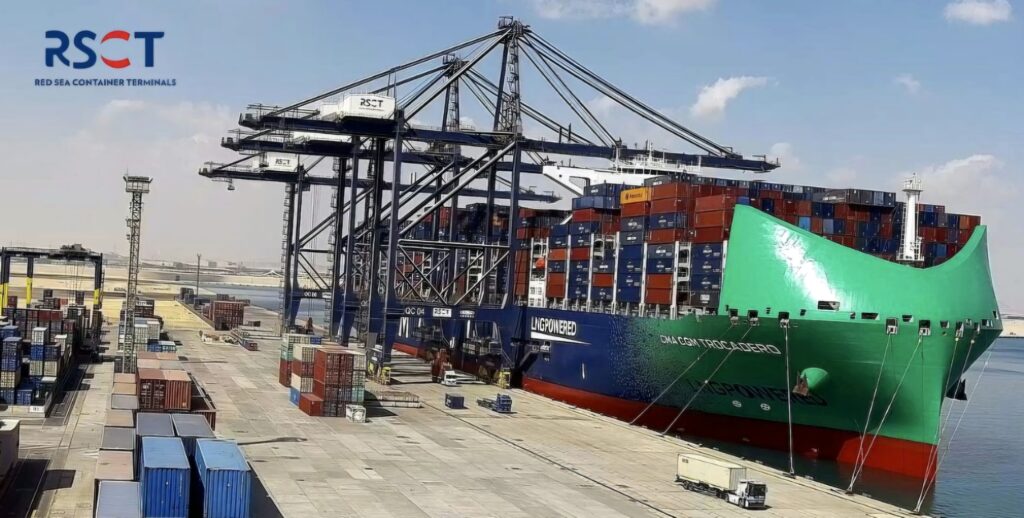
Shipping Arabia, October 14, 2026 – Red Sea Container Terminals (RSCT) has welcomed the ultra-large container vessel CMA CGM TROCADERO at its Sokhna terminal in Egypt, marking another significant vessel call and demonstrating the terminal’s ability to accommodate some of the world’s largest container ships.
Measuring 400 meters in length and offering a capacity of 23,104 TEU, CMA CGM TROCADERO is among the largest container vessels to call at RSCT Sokhna. The vessel’s arrival highlights the terminal’s operational capabilities and readiness to handle Ultra Large Container Vessels (ULCVs) safely and efficiently.
According to RSCT, the call reinforces the terminal’s position as a strategic maritime gateway supporting Egypt’s role in international trade and major East–West cargo flows through the Red Sea and Suez Canal.
The arrival of CMA CGM TROCADERO represents another demonstration of RSCT Sokhna’s capacity to receive ultra-large container vessels. With a carrying capacity exceeding 23,000 TEU, the vessel is among the largest container ships handled at the terminal.
RSCT emphasized that accommodating vessels of this size reflects its operational readiness to serve large-capacity container ships while maintaining safe and efficient terminal operations.
The terminal also highlighted the importance of continuing to welcome some of the world’s largest container vessels, underlining its focus on supporting shipping lines operating large-capacity fleets.
Supporting East–West Maritime Trade Through the Red Sea
Beyond the vessel’s dimensions and carrying capacity, RSCT views calls of this scale as important to strengthening its position within international maritime trade networks.
The terminal identified its strategic role in supporting cargo movements between major East–West markets through the Red Sea and Suez Canal. It also emphasized the contribution of large container vessel calls to Egypt’s growing role in global trade.
As shipping lines assess their maritime networks and vessel deployment strategies, RSCT has expressed its readiness to explore opportunities for future vessel calls and provide terminal services that support their operational requirements.
The arrival of CMA CGM TROCADERO adds to the terminal’s experience in accommodating ultra-large container vessels and reflects its continued focus on serving major international shipping operations through Sokhna.
Shipping Arabia, October 13, 2026 – DP World Sokhna in Egypt recorded its highest-ever monthly container throughput in August 2026, handling 141,041 TEUs, a 45% increase year-on-year. The performance exceeded the terminal’s previous monthly record of 103,752 TEUs, set in January 2026, by approximately 36%.
Alongside the container handling milestone, the terminal established a new daily discharge productivity record for iron ore pellet feed. The achievement reduced the discharge time of a bulk carrier by approximately 58 hours, highlighting the terminal’s operational capabilities across containerized and dry bulk cargo.
Transshipment Drives DP World Sokhna Container Throughput Growth
Transshipment operations played a major role in the terminal’s record container volumes during August. According to terminal data reported by Al Mal, transshipment throughput reached 87,149 TEUs, accounting for 61.9% of total monthly container handling.
The figures reflect growing demand for transshipment services through DP World Sokhna amid changes in international trade patterns. According to the company, the performance demonstrates the terminal’s ability to respond to changing cargo flows and customer requirements while maintaining operational efficiency.
To accommodate higher container volumes and changing traffic patterns, operational teams continued adapting yard management strategies based on occupancy levels and cargo movements. The terminal also redistributed equipment and operational resources to match fluctuations in container flows.
Additionally, DP World Sokhna used its digital systems to improve truck movements and support cargo handling efficiency. Equipment reliability and coordination between operations, engineering, commercial and customer teams helped maintain smooth operations as transshipment activity increased.
These operational adjustments supported the terminal’s ability to handle higher cargo volumes while responding to changes in the composition and movement of container traffic.
Iron Ore Discharge Operations Set New Productivity Record
In a separate operational achievement, DP World Sokhna established a new daily discharge productivity record for iron ore pellet feed during cargo handling operations involving the bulk carrier MV SEA PUMA.
The terminal discharged a total of 152,602 metric tons from the vessel, achieving a gross discharge rate of 41,619 metric tons per day. The net discharge rate reached 42,097 metric tons per day.
The new gross discharge rate represented a record for the terminal’s iron ore discharge operations involving this vessel category.
Higher productivity enabled the terminal to complete the vessel’s discharge operations in just 88 hours, reducing the unloading time by approximately 58 hours.
The achievement demonstrated the terminal’s capacity to maintain high productivity in dry bulk cargo handling alongside its growing container operations.
DP World Egypt Highlights Operational Flexibility
Mohammad Shehab, CEO of DP World Egypt, said the terminal’s August performance reflected the company’s ability to respond flexibly to changing trade patterns and customer requirements.
He emphasized that achieving the highest monthly container throughput in the terminal’s history, with transshipment accounting for 61.9% of total volumes, demonstrated the company’s ability to adapt its operations and management strategies to meet customer needs.
Shehab also highlighted the iron ore discharge productivity record as evidence of the terminal’s diverse operational capabilities and effective coordination between its teams.
He reaffirmed the company’s continued focus on operational efficiency, reliability and technology to support smoother trade flows and improve the customer experience at DP World Sokhna.
Container Growth and Bulk Cargo Performance
The two operational records illustrate the scale and diversity of cargo handling activities at DP World Sokhna.
The terminal’s record container volumes demonstrate its capacity to accommodate substantial throughput growth while adjusting to changes in transshipment patterns. Meanwhile, the iron ore discharge achievement reflects its ability to deliver high productivity in dry bulk cargo operations.
Together, the results highlight the terminal’s ability to serve different cargo categories and customer requirements while supporting efficient cargo movements through Sokhna Port.
Shipping Arabia, October 12, 2026 – Egypt and Tanzania are advancing plans to develop a multipurpose terminal at Dar es Salaam Port and establish a direct shipping service connecting Tanzania with Egypt’s Red Sea ports of Sokhna and Safaga. The proposed projects form part of a broader multimodal logistics corridor linking the two countries and improving trade connectivity between Egypt, East Africa and landlocked Central African markets.
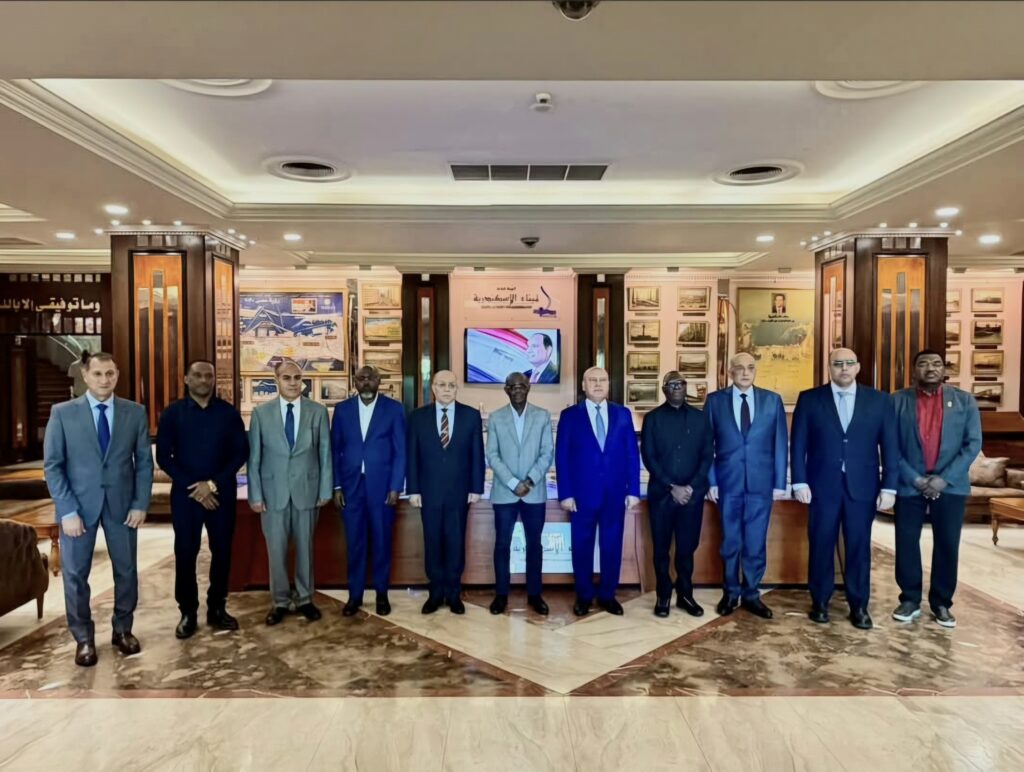
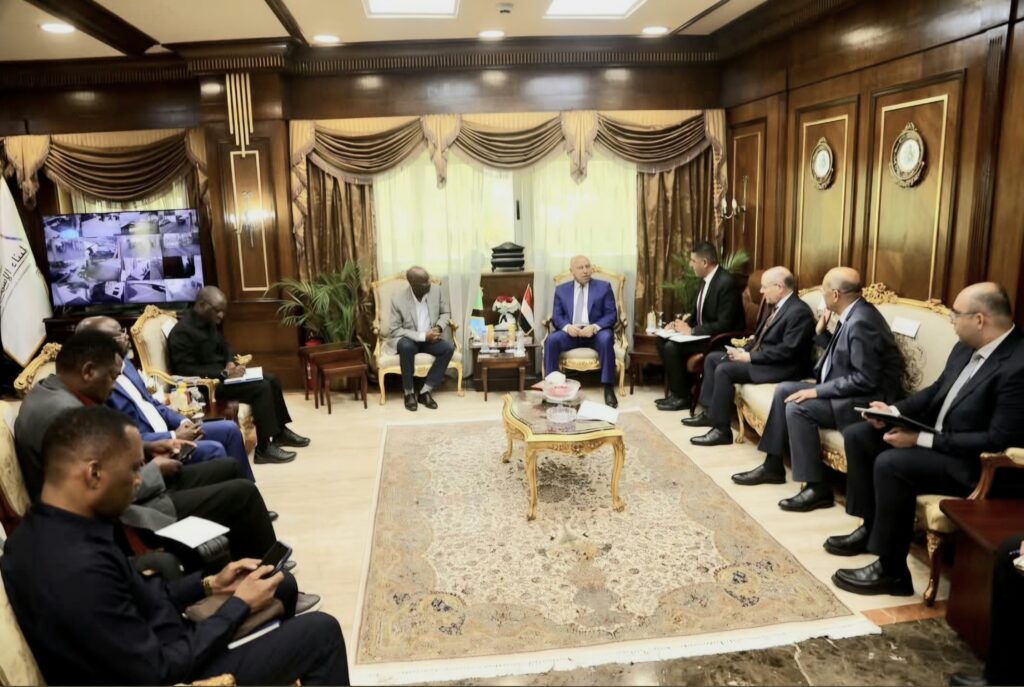
The plans were discussed during a meeting between Egyptian Minister of Transport Kamel El-Wazir and Tanzanian Minister of Transport Makame Mbarawa at Alexandria Port. The visit included extensive bilateral discussions and an inspection of the port’s maritime and logistics facilities.
El-Wazir emphasized Egypt’s commitment to expanding transport cooperation with Tanzania, increasing Egyptian exports to African markets and developing logistics zones to support regional trade.
Dar es Salaam Port Development and New Shipping Service
The proposed memorandum of understanding, which the two countries plan to sign in the coming period, outlines several major transport and logistics projects.
A central component involves developing a multipurpose terminal at Dar es Salaam Port through an Egyptian-Tanzanian-international consortium. The port serves approximately 90% of Tanzania’s domestic market and provides maritime access to six landlocked countries: Malawi, Zambia, the Democratic Republic of the Congo, Burundi, Rwanda and Uganda.
The agreement also envisages a direct maritime service connecting Egypt’s Red Sea ports of Sokhna and Safaga with Dar es Salaam. The proposed shipping link would support trade flows between Egypt and East Africa while providing connections to inland African markets.
In addition, the two countries plan to establish reciprocal logistics zones, including an Egyptian logistics zone in Tanzania and a Tanzanian logistics zone in Egypt.
The proposed cooperation extends to Tanzania Railways Corporation, with plans to connect the new facilities to the national railway network. This would support the integration of maritime, road and rail transport within the planned logistics corridor.
Cairo–Dar es Salaam Multimodal Logistics Corridor
The projects form part of the proposed Cairo–Dar es Salaam multimodal logistics corridor, which seeks to connect Egypt’s Red Sea ports and domestic logistics network with Tanzania and neighboring landlocked countries.
Under the proposed arrangement, maritime services would connect Egyptian ports with Dar es Salaam. Cargo would then move through Tanzania’s electric railway network toward inland destinations in Central Africa.
The corridor builds on an earlier memorandum of understanding on infrastructure cooperation between the Egyptian and Tanzanian transport ministries, signed during Egyptian President Abdel Fattah El-Sisi’s visit to Tanzania.
El-Wazir said Egypt has infrastructure companies with extensive experience and the capacity to participate in Tanzanian projects. He emphasized their readiness to deliver infrastructure works according to high-quality standards, competitive costs and accelerated implementation schedules.
Mbarawa welcomed the proposed cooperation and praised Egyptian expertise in transport and infrastructure development. He described the discussions as an important step toward launching joint projects between the two countries.
Technical committees from both sides are expected to hold further meetings to advance the projects included in the planned agreement.
The discussions also addressed maritime education and technical training. Mbarawa requested scholarships for Tanzanian students at the Arab Academy for Science, Technology and Maritime Transport (AASTMT).
In response, El-Wazir confirmed Egypt’s willingness to provide specialized training opportunities for the entire Tanzanian team expected to operate the proposed Dar es Salaam terminal. The programs would focus on developing technical capabilities and preparing personnel to operate the facility using modern terminal management systems.
Alexandria Port Showcases Maritime and Logistics Infrastructure
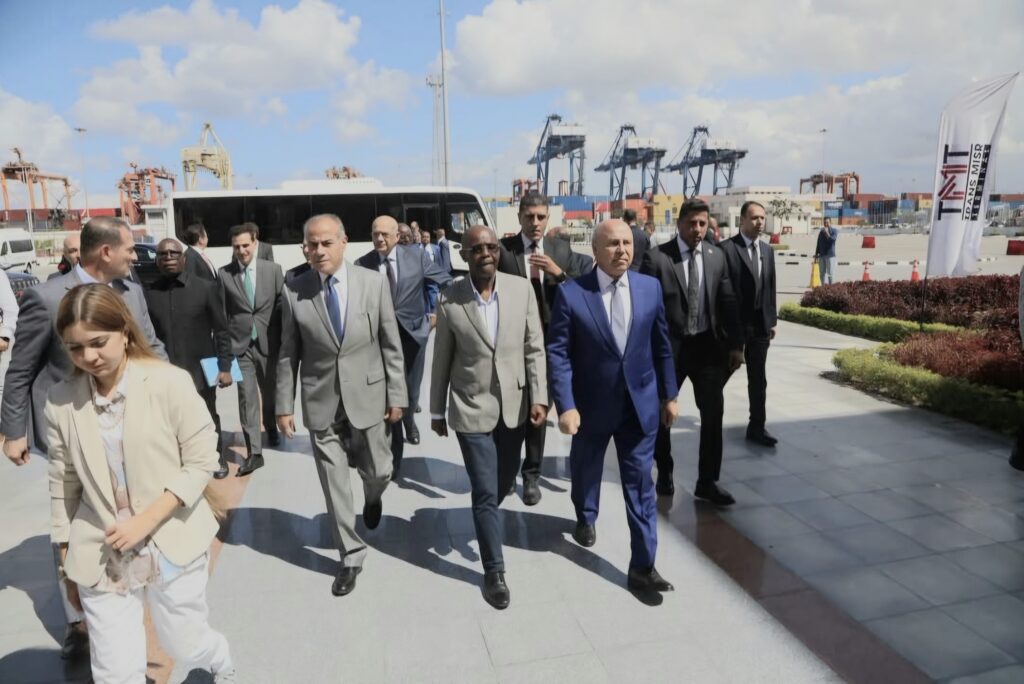
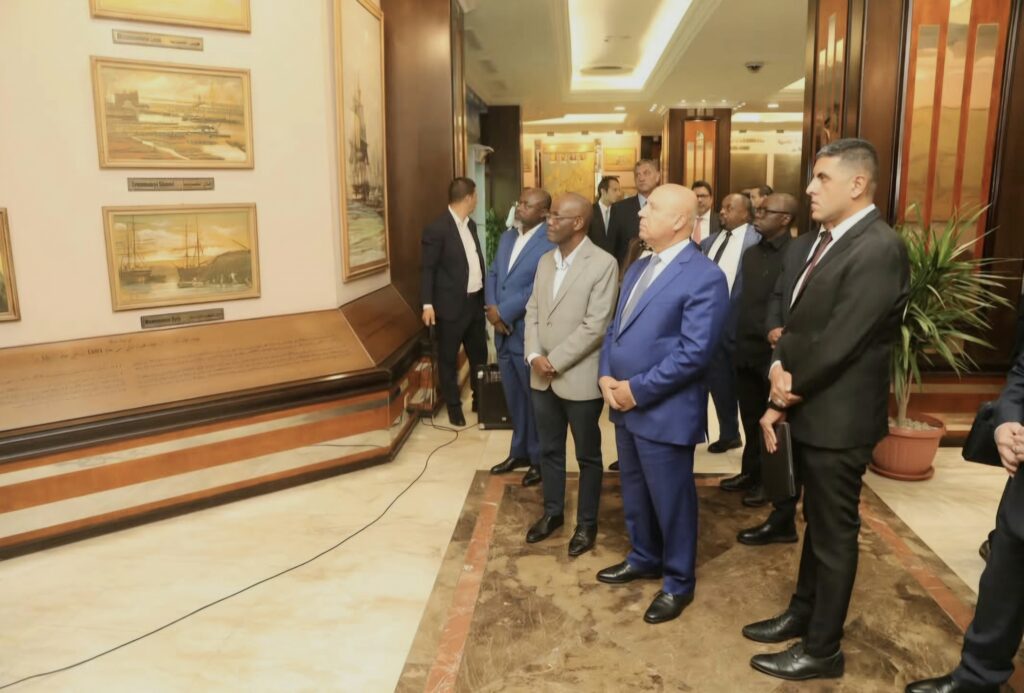
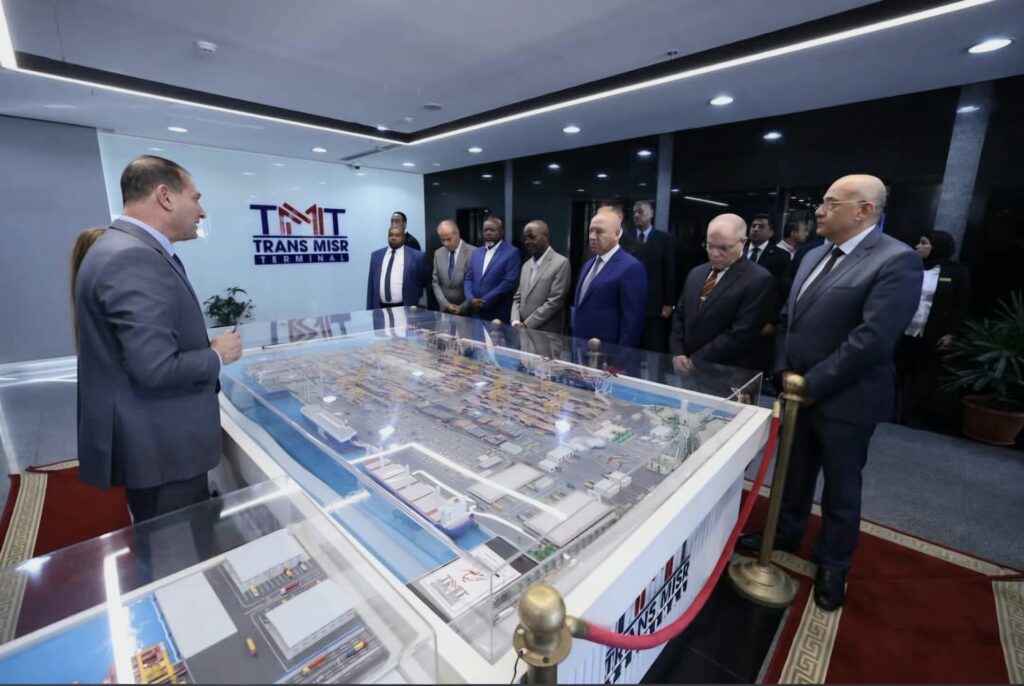
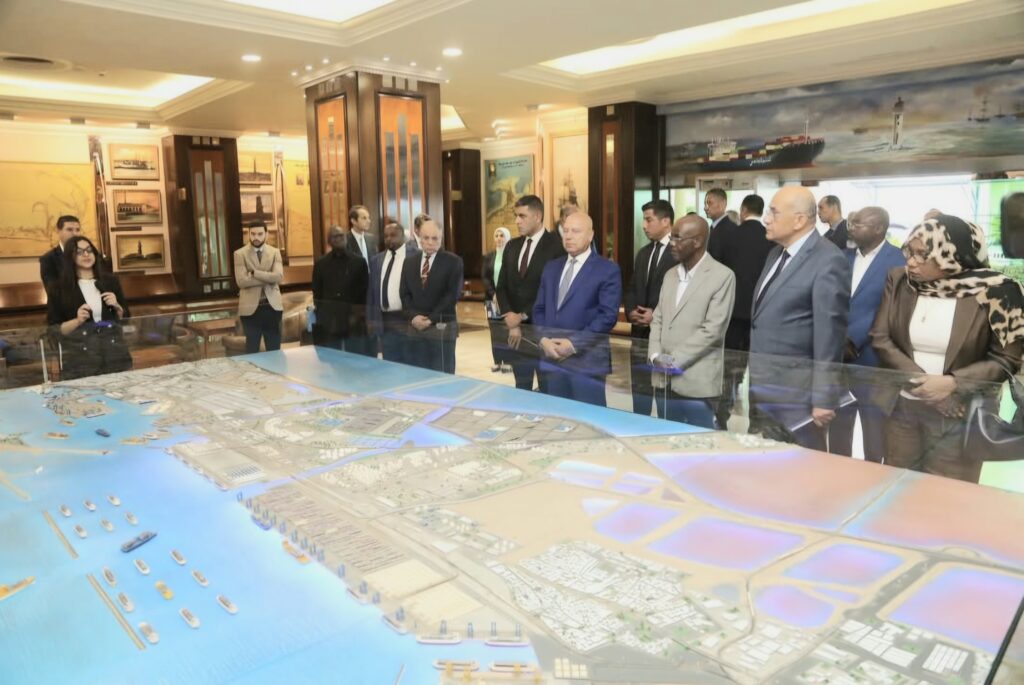
Following the discussions, the two ministers toured several facilities at Alexandria Port, including the historic port museum, passenger terminal, cargo berths and Tahya Misr Multipurpose Terminal.
The passenger terminal features a tourism complex covering more than 34,000 square meters, with capacity for up to 7,000 tourists. Its 820 meters of berths can accommodate four large cruise ships simultaneously, while the terminal building consists of three floors.
The delegation also inspected general cargo berths 10, 11 and 13, alongside berth 12, which serves roll-on/roll-off (RoRo) vessels.
The visit continued at Tahya Misr Multipurpose Terminal, which occupies approximately 500,000 square meters and features 2,500 meters of berths with depths reaching 17.5 meters.
The terminal can accommodate vessels up to 400 meters long with capacities reaching 24,000 TEUs. Its annual handling capacity stands at 1.5 million TEUs and 15 million tons of general cargo.
During the tour, terminal chairman Mahmoud Khodeir outlined the facility’s operational achievements. The terminal has handled approximately 2.6 million TEUs and received around 1,400 vessels, with transit cargo representing 38% of container volumes.
Rail operations have also supported cargo movements between the port and inland logistics facilities. The terminal has received approximately 403 trains, handling 39,000 TEUs through its rail connections.
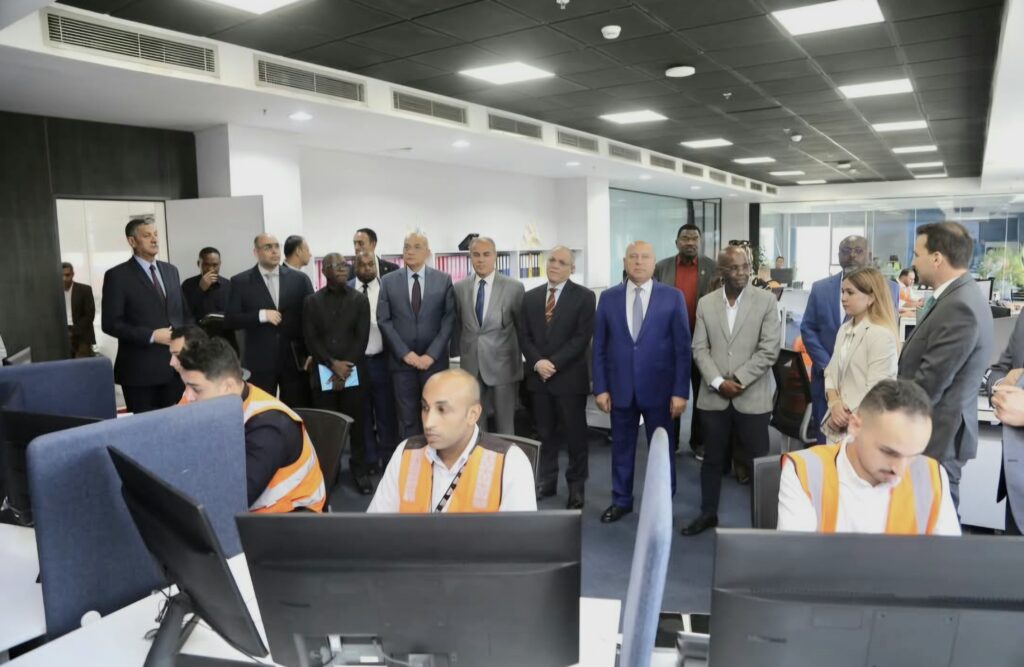
The ministers reviewed the terminal’s digital operating systems and control room. They also inspected the rail container loading facility serving trains bound for October Dry Port.
According to the presentation, Tahya Misr Multipurpose Terminal has generated approximately 1,000 direct jobs and 2,500 indirect employment opportunities.
Alexandria Port Handles Over 82 Million Tons in 2025/2026
During the visit, Egyptian officials presented the wider development of Alexandria Port and its contribution to the country’s maritime transport network.
Alexandria Port Authority handled more than 82 million tons of cargo during the 2025/2026 fiscal year and received 7,026 vessels.
The port forms an important part of the Sokhna–Alexandria logistics corridor, one of eight integrated international logistics corridors being developed by Egypt to connect maritime gateways with inland transport networks and international trade routes.
El-Wazir also outlined Egypt’s broader maritime development strategy, which aims to position the country as a regional hub for transport, logistics and transit trade.
The strategy includes constructing five new commercial ports, bringing the national total to 19. It also targets expanding port areas to 100 million square meters.
Planned infrastructure improvements include adding 70 kilometers of berths with depths ranging from 18 to 25 meters, bringing total berth lengths to more than 100 kilometers.
Egypt also plans to construct 35 kilometers of breakwaters, increasing the national total to 50 kilometers, while expanding its merchant fleet to 40 vessels by 2030.
The proposed cooperation with Tanzania forms part of these wider efforts to strengthen Egypt’s maritime connectivity and expand trade and logistics links with African markets.