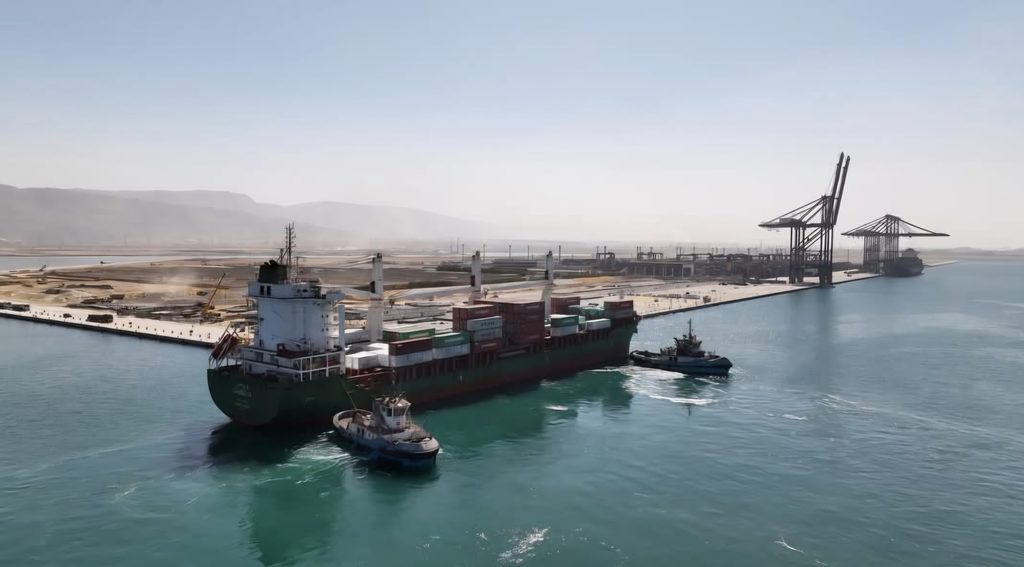
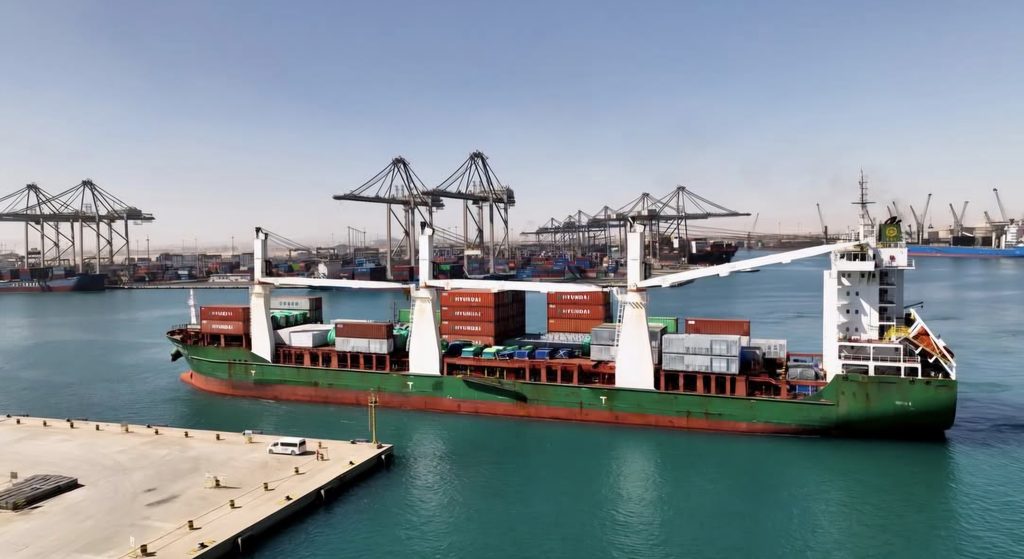
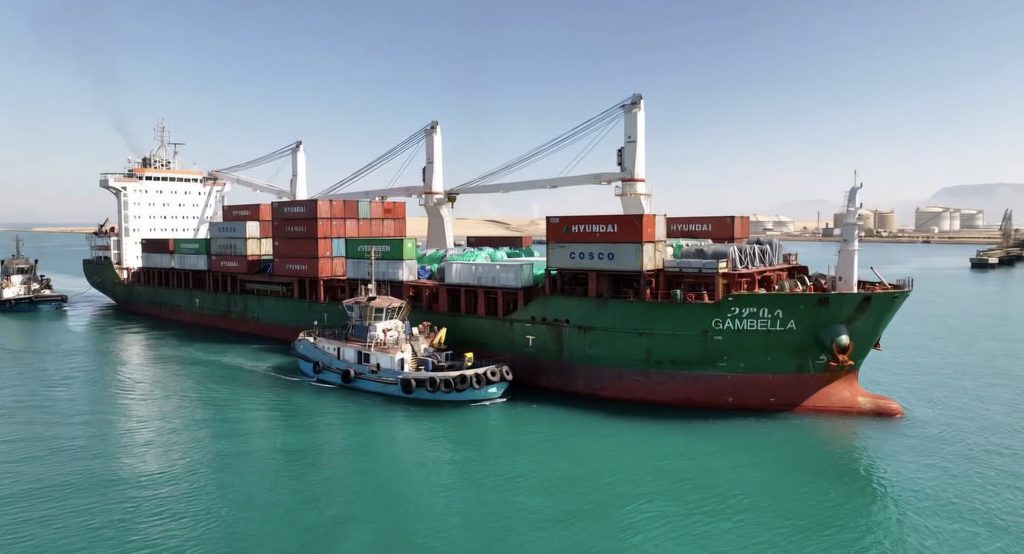
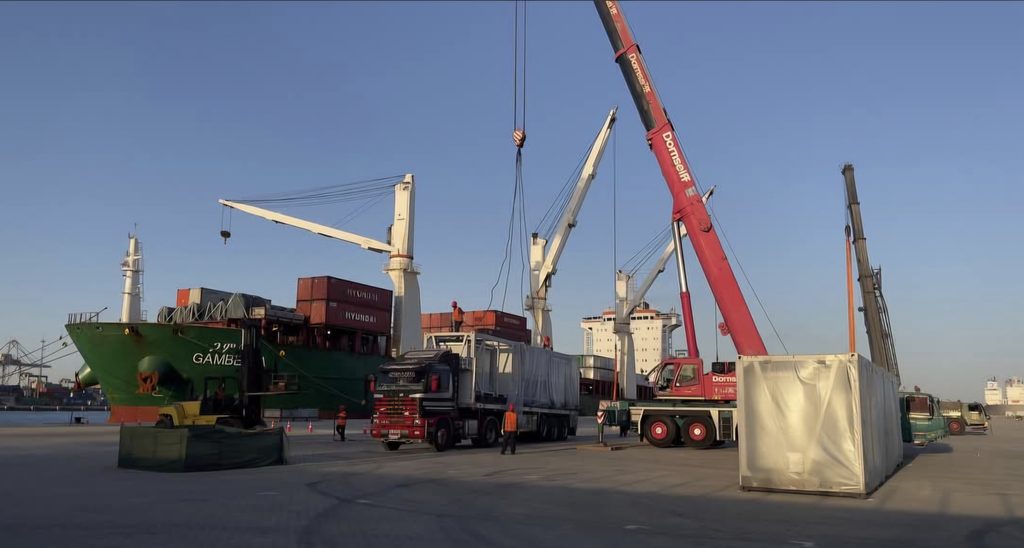
Shipping Arabia, October 23, 2026 – Oman’s decision not to renew the operating concessions of Salalah Port Services Company beyond November 1, 2028, has raised questions over approximately $200 million in leased port equipment and long-term commercial agreements. The Port of Salalah concession transition will bring a new operator to one of the country’s major maritime gateways, although the government has yet to announce its successor.
The Ministry of Transport, Communications and Information Technology confirmed that a new operator will take over following the expiration of the existing concessions. However, the ministry has not disclosed details of the selection process or arrangements for transferring operations.
Salalah Port Services confirmed receiving formal notification of the decision through a disclosure to the Muscat Stock Exchange. The company described the decision as final and unconditional, adding that its board would assess the implications and potential financial impact on its business.
The company has not yet provided an estimate of the financial consequences. Meanwhile, the ministry confirmed that port operations and development activities would continue throughout the remaining concession period.
Port of Salalah Concession Transition Raises $200 Million Equipment Question
One of the principal commercial issues surrounding the Port of Salalah concession transition concerns approximately $200 million worth of equipment leased during the port’s expansion program.
During discussions of the company’s 2025 financial results, reported in March 2026, Salalah Port Services executives explained that the equipment had been leased rather than purchased because of uncertainty surrounding the extension of the existing concession agreements.
Management indicated that clarity over a potential concession extension would help determine whether the company should purchase the equipment outright or extend the existing lease arrangements. Such clarity would also support decisions regarding further investment in port infrastructure and handling capacity.
However, the government’s decision not to extend the concessions introduces uncertainty over how these leased assets will be handled when the current agreements expire in November 2028.
Salalah Port Services has not disclosed whether the equipment could be purchased, transferred or otherwise incorporated into arrangements involving the incoming operator.
The outstanding equipment arrangements are particularly significant because they relate to a recently completed container terminal modernization program.
$300 Million Container Terminal Expansion Increased Capacity to 6.5 Million TEUs
The leased equipment forms part of the investment arrangements associated with a $300 million container terminal upgrade completed during the first quarter of 2025.
The project included improvements to six existing container berths, the installation of additional container-handling cranes and the expansion of container storage yards.
It also involved upgrades to electricity infrastructure and port access facilities, strengthening the terminal’s capacity to accommodate container traffic.
Following completion of the project, the Port of Salalah’s annual container-handling capacity increased from approximately 4.5 million TEUs to 6.5 million TEUs.
The expansion represents a substantial investment in the port’s container infrastructure ahead of the scheduled expiration of the existing operating concessions.
The future treatment of the leased equipment therefore remains an outstanding issue in the transition process. The company has not announced any agreement governing the assets after November 2028.
Long-Term LPG and Port Land Agreements Extend Beyond 2028
The Port of Salalah concession transition also raises questions about commercial agreements whose contractual terms extend well beyond the current operating concessions.
According to the 2025 audited financial statements of OQ Base Industries, the company entered into agreements with Salalah Port Services in May 2017 covering liquefied petroleum gas (LPG) storage and associated port facilities.
One agreement provides for the lease of 76,844 square meters of land within the port for an initial period of 30 years, extending to approximately 2047.
The agreement also includes provisions for a further 10-year extension.
Additional agreements cover access to port facilities and pipeline rights of way, with similarly long contractual periods.
These commitments extend considerably beyond November 2028, when Salalah Port Services’ existing operating concessions are scheduled to expire.
However, the published financial disclosures do not explain how these agreements would be treated following the appointment of a successor operator.
Importantly, the existence of agreements extending beyond the current concession period does not establish that they will be terminated or negatively affected by the change in operator.
The arrangements remain among the commercial matters for which the future treatment has not been publicly specified.
Existing Concession Structure and APM Terminals’ Role
Salalah Port Services operates the Port of Salalah’s container terminal and general cargo terminal under separate concession agreements.
According to the company’s financial statements, the concession arrangements require fixed annual payments that increase by 3% each year, alongside variable royalties.
Separate management agreements with APM Terminals govern the port’s day-to-day operations.
Under these agreements, management fees are linked to container terminal revenue and general cargo handling volumes.
APM Terminals, part of the A.P. Moller-Maersk group, holds approximately 30% of Salalah Port Services. Meanwhile, Oman’s government-owned Asyad Group holds a stake of approximately 20%.
The existing ownership and management arrangements form part of the operating structure that will be affected by the scheduled concession transition.
However, no details have been announced regarding the structure or identity of the incoming operator.
Salalah Port Handled 4.3 Million TEUs in 2025
The concession decision comes after a period of substantial cargo growth at the Port of Salalah.
The port handled approximately 4.3 million TEUs during 2025, representing a 31% increase compared with the previous year.
General cargo throughput also increased by 17%, reaching 26.4 million tons.
Located on Oman’s Arabian Sea coast, the Port of Salalah serves as a major container transshipment hub connecting maritime trade routes between Asia, Europe, the Middle East and East Africa.
Its recently expanded container terminal has an annual handling capacity of approximately 6.5 million TEUs, following completion of the $300 million modernization program.
These developments place the planned operating transition alongside substantial recent infrastructure investment and growing cargo volumes.
The Ministry of Transport, Communications and Information Technology has confirmed that port operations and development will continue until the existing concessions expire.
Nevertheless, several important details remain unresolved, including the selection of the successor operator, treatment of leased equipment, continuity of long-term commercial arrangements and operational handover procedures.
The government has not yet announced when it will identify the incoming operator or disclose further details of the transition process.
Source: Oman Observer