Transshipment

  • DP World Sokhna Container Throughput Rises 45% to Record High

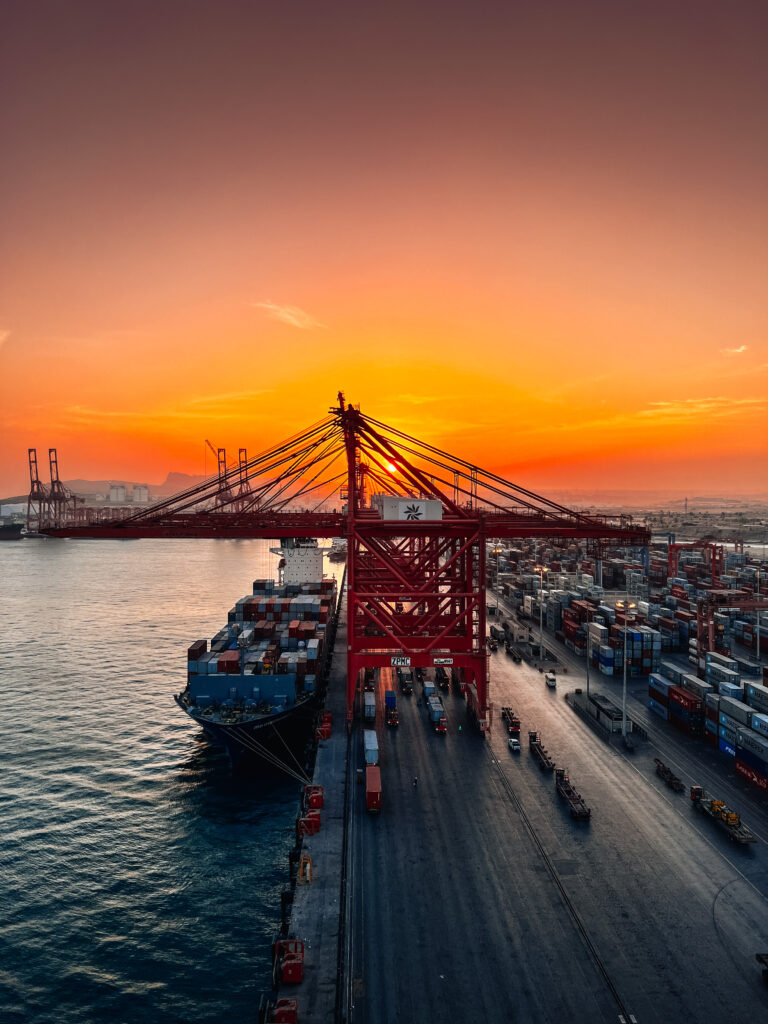
    Shipping Arabia, October 13, 2026 – DP World Sokhna in Egypt recorded its highest-ever monthly container throughput in August 2026, handling 141,041 TEUs, a 45% increase year-on-year. The performance exceeded the terminal’s previous monthly record of 103,752 TEUs, set in January 2026, by approximately 36%.

    Alongside the container handling milestone, the terminal established a new daily discharge productivity record for iron ore pellet feed. The achievement reduced the discharge time of a bulk carrier by approximately 58 hours, highlighting the terminal’s operational capabilities across containerized and dry bulk cargo.

    Transshipment Drives DP World Sokhna Container Throughput Growth

    Transshipment operations played a major role in the terminal’s record container volumes during August. According to terminal data reported by Al Mal, transshipment throughput reached 87,149 TEUs, accounting for 61.9% of total monthly container handling.

    The figures reflect growing demand for transshipment services through DP World Sokhna amid changes in international trade patterns. According to the company, the performance demonstrates the terminal’s ability to respond to changing cargo flows and customer requirements while maintaining operational efficiency.

    To accommodate higher container volumes and changing traffic patterns, operational teams continued adapting yard management strategies based on occupancy levels and cargo movements. The terminal also redistributed equipment and operational resources to match fluctuations in container flows.

    Additionally, DP World Sokhna used its digital systems to improve truck movements and support cargo handling efficiency. Equipment reliability and coordination between operations, engineering, commercial and customer teams helped maintain smooth operations as transshipment activity increased.

    These operational adjustments supported the terminal’s ability to handle higher cargo volumes while responding to changes in the composition and movement of container traffic.

    Iron Ore Discharge Operations Set New Productivity Record

    In a separate operational achievement, DP World Sokhna established a new daily discharge productivity record for iron ore pellet feed during cargo handling operations involving the bulk carrier MV SEA PUMA.

    The terminal discharged a total of 152,602 metric tons from the vessel, achieving a gross discharge rate of 41,619 metric tons per day. The net discharge rate reached 42,097 metric tons per day.

    The new gross discharge rate represented a record for the terminal’s iron ore discharge operations involving this vessel category.

    Higher productivity enabled the terminal to complete the vessel’s discharge operations in just 88 hours, reducing the unloading time by approximately 58 hours.

    The achievement demonstrated the terminal’s capacity to maintain high productivity in dry bulk cargo handling alongside its growing container operations.

    DP World Egypt Highlights Operational Flexibility

    Mohammad Shehab, CEO of DP World Egypt, said the terminal’s August performance reflected the company’s ability to respond flexibly to changing trade patterns and customer requirements.

    He emphasized that achieving the highest monthly container throughput in the terminal’s history, with transshipment accounting for 61.9% of total volumes, demonstrated the company’s ability to adapt its operations and management strategies to meet customer needs.

    Shehab also highlighted the iron ore discharge productivity record as evidence of the terminal’s diverse operational capabilities and effective coordination between its teams.

    He reaffirmed the company’s continued focus on operational efficiency, reliability and technology to support smoother trade flows and improve the customer experience at DP World Sokhna.

    Container Growth and Bulk Cargo Performance

    The two operational records illustrate the scale and diversity of cargo handling activities at DP World Sokhna.

    The terminal’s record container volumes demonstrate its capacity to accommodate substantial throughput growth while adjusting to changes in transshipment patterns. Meanwhile, the iron ore discharge achievement reflects its ability to deliver high productivity in dry bulk cargo operations.

    Together, the results highlight the terminal’s ability to serve different cargo categories and customer requirements while supporting efficient cargo movements through Sokhna Port.

    Source: Al Mal
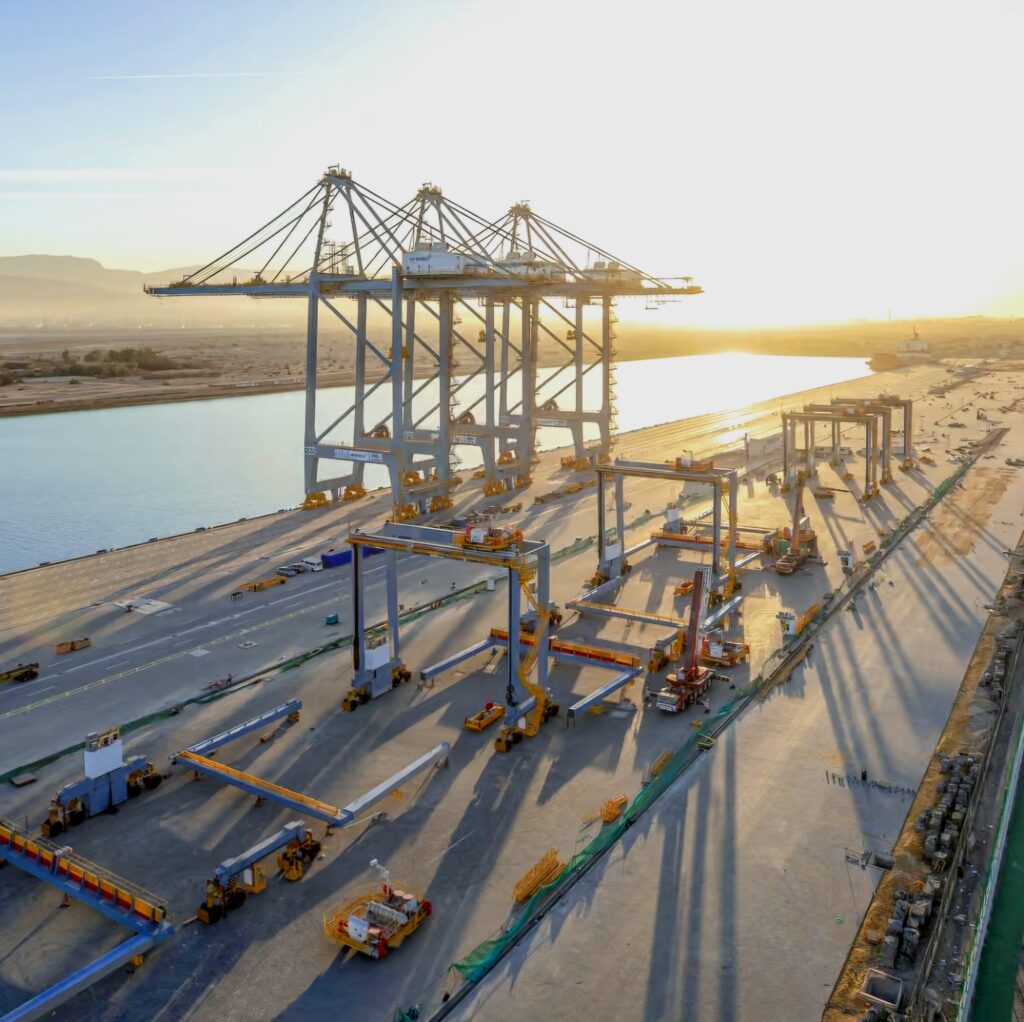
    DP World Sokhna container terminal in Egypt, where monthly container throughput reached a record high.
  • Port of Salalah Container Throughput Sets Second Consecutive Monthly Record

    Shipping Arabia, October 11, 2026 – Port of Salalah container throughput reached a record 511,209 TEUs in September 2026, marking the second consecutive monthly high at the Omani port. The latest performance pushed combined container volumes for August and September above 1 million TEUs, extending the port’s growth following a major terminal expansion completed in 2025.

    September throughput increased 4.1% from August’s previous record of 491,114 TEUs. Container-handling moves also rose 3.7%, reaching 301,113 compared with 290,418 in August.

    Josh Surdin, Chief Operating Officer of the Port of Salalah Container Terminal, disclosed the September figures in a LinkedIn post. He described the result as the highest monthly container volume recorded in the port’s history.

    Port of Salalah Container Throughput Exceeds 1 Million TEUs in Two Months

    The combined throughput for August and September reached 1,002,323 TEUs, equivalent to approximately 23% of the port’s total container volume for 2025.

    The consecutive monthly records follow significant annual growth in container traffic. In 2025, Port of Salalah handled 4.325 million TEUs, representing a 31% increase from the 3.305 million TEUs recorded in 2024.

    Growth continued into 2026. During the first six months of the year, the port handled 2.331 million TEUs, compared with 2.031 million TEUs during the corresponding period of 2025. This represented a year-on-year increase of approximately 14.8%.

    The September record therefore follows a period of sustained growth in container volumes, with both annual and first-half figures showing increases before the consecutive monthly highs in August and September.

    Transshipment Dominates Container Traffic

    Transshipment remains the largest component of Port of Salalah’s container business. During the first half of 2026, transshipment volumes reached approximately 2.034 million TEUs, accounting for around 87% of total container throughput.

    These volumes reflect the port’s principal role as an international transshipment hub, where containers are transferred between vessels as part of global shipping networks.

    Import and export containers accounted for a smaller share of overall traffic. Combined import and export throughput reached 190,304 TEUs during the first six months of 2026, representing just over 8% of total volume.

    Meanwhile, container restows contributed a further 106,586 TEUs to first-half throughput.

    The breakdown highlights the dominance of international transshipment activity compared with container traffic directly associated with cargo entering or leaving Oman.

    $300 Million Terminal Expansion Supports Container Operations

    The consecutive monthly records follow the completion of a $300 million expansion of the Port of Salalah Container Terminal in 2025.

    The project involved upgrades to all six container berths, expansion of the container yard, and installation of new ship-to-shore cranes and supporting infrastructure.

    The investment expanded the terminal’s infrastructure and was designed partly to accommodate container traffic associated with the Gemini Cooperation shipping network operated by Maersk and Hapag-Lloyd.

    The Gemini Cooperation forms an important part of the port’s operating environment, with the upgraded terminal infrastructure developed in part to serve traffic moving through the network.

    APM Terminals, part of A.P. Moller-Maersk, operates Port of Salalah and holds a 30% ownership stake in Salalah Port Services Company.

    The operator’s parent group is also one of the two shipping companies behind the Gemini Cooperation, alongside Hapag-Lloyd.

    With the terminal expansion completed in 2025, Port of Salalah has recorded growth in first-half 2026 container throughput, followed by successive monthly records in August and September.

    Source: Oman Observer

  • Algeria’s Djen Djen Port Handles Third Transshipment Operation of 2026

    Shipping Arabia, September 24, 2026 – Algeria’s Port of Djen Djen has completed its third transshipment operation of 2026, handling 5,700 tonnes of Chinese steel coils bound for Djibouti as the port expands its role in international transit and transshipment cargo.

    The operation, carried out on September 20, involved 537 steel coils arriving from China aboard MV Seadance. The cargo was handled at the port’s Algeria 2 quay before being re-forwarded toward its final destination in Djibouti.

    The cargo was not destined for the Algerian market, with Djen Djen instead serving as an intermediate logistics point connecting an Asian-origin shipment with an East African destination.

    The latest movement represents the third transshipment operation carried out at Djen Djen this year. The port completed its first operation in January, when a China-origin shipment of 800 TEUs arrived aboard Xin Yong Chang 19, with 200 containers subsequently forwarded to St. Petersburg.

    Djen Djen Port Enterprise said the latest operation demonstrates the port’s ability to receive, handle and redirect different cargo types while supporting its integration into international transport and logistics chains.

    The activity comes as Djen Djen continues developing infrastructure aimed at expanding its international role. Four new berths entered service in May, including facilities supporting export, import, transshipment and bunkering activities, while development of the port’s container terminal is also progressing.

    Located on Algeria’s Mediterranean coast in Jijel, Djen Djen is seeking to develop beyond its traditional import and export role by attracting transit and transshipment cargo connecting Asia, the Mediterranean and African markets.

    Source: Rass El Mal – Algerian Business Platform

  • MSC Becomes Largest Container Carrier at Damietta Port as Transshipment Drives Volumes

    Shipping Arabia, September 22, 2026 – Mediterranean Shipping Company (MSC) became the largest container carrier operating through Damietta Port in 2025, handling 29.3% of the port’s container traffic as transshipment remained a major component of carrier volumes.

    According to the latest Damietta Port Authority statistics, MSC handled approximately 375,800 TEUs, with transshipment accounting for 71.7% of its traffic through the port. The carrier had handled around 210,300 TEUs in 2024.

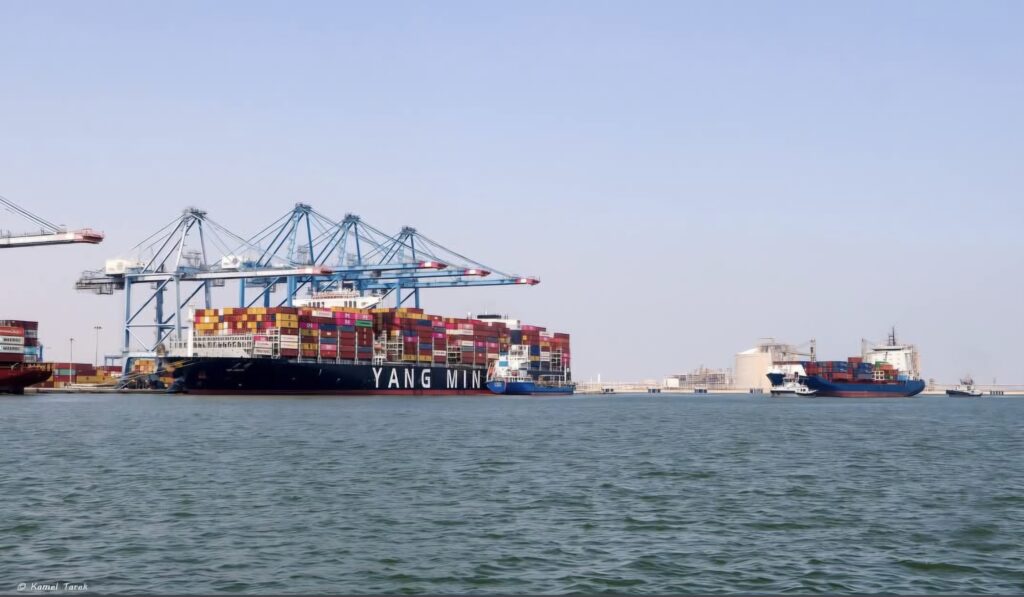
    Yang Ming ranked second, accounting for 18.5% of Damietta’s container activity with approximately 236,800 TEUs. Unlike several other major carriers, foreign trade imports and exports represented 51.3% of Yang Ming’s traffic through the port.

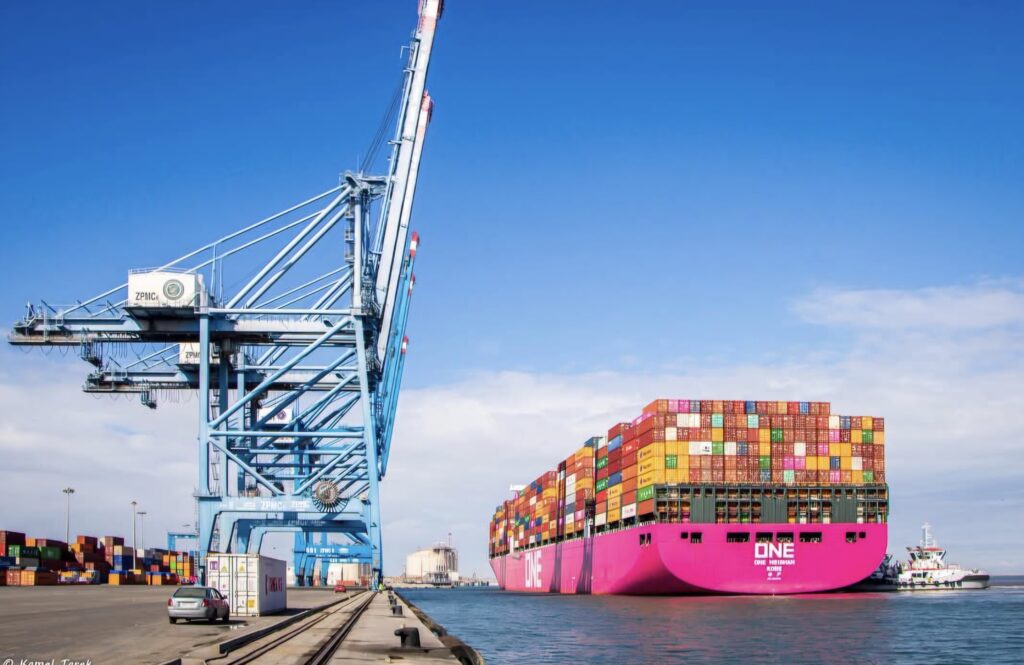
    Ocean Network Express (ONE) followed with a 9.4% share and approximately 120,000 TEUs, of which 61.9% was transshipment cargo. ONE had handled around 261,300 TEUs in 2024, when it accounted for 18.4% of the port’s container traffic.

    Hapag-Lloyd recorded a particularly sharp shift, handling approximately 65,900 TEUs, equivalent to 5.1% of Damietta’s container activity, with transshipment representing 71% of its volume. In 2024, the carrier had handled around 454,700 TEUs and accounted for 32.1% of the port’s container traffic.

    Other carriers serving Damietta included COSCO, CMA CGM, RCL and China Shipping.

    Overall, Damietta received 1,007 containership calls in 2025, compared with 1,020 in 2024. Containerized cargo declined 6% to around 13.4 million tonnes, while throughput fell 10% to approximately 1.42 million TEUs, from 1.58 million TEUs a year earlier.

    The figures highlight the importance of transshipment to Damietta’s container business, while also showing a significant redistribution of volumes among the major global carriers using the Egyptian Mediterranean gateway.

    Source: Almal News

  • Damietta Container Terminal Handles Four Ships in 6,395-Move Operation

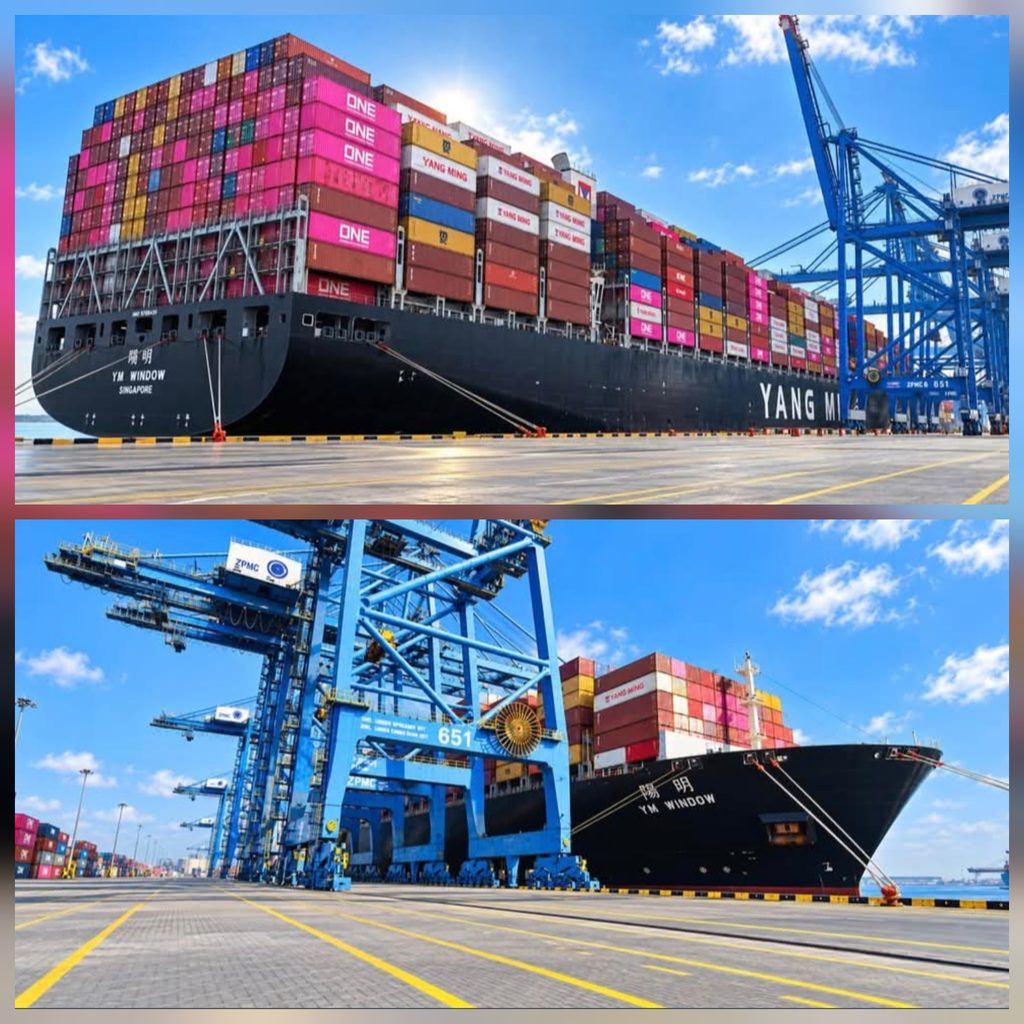
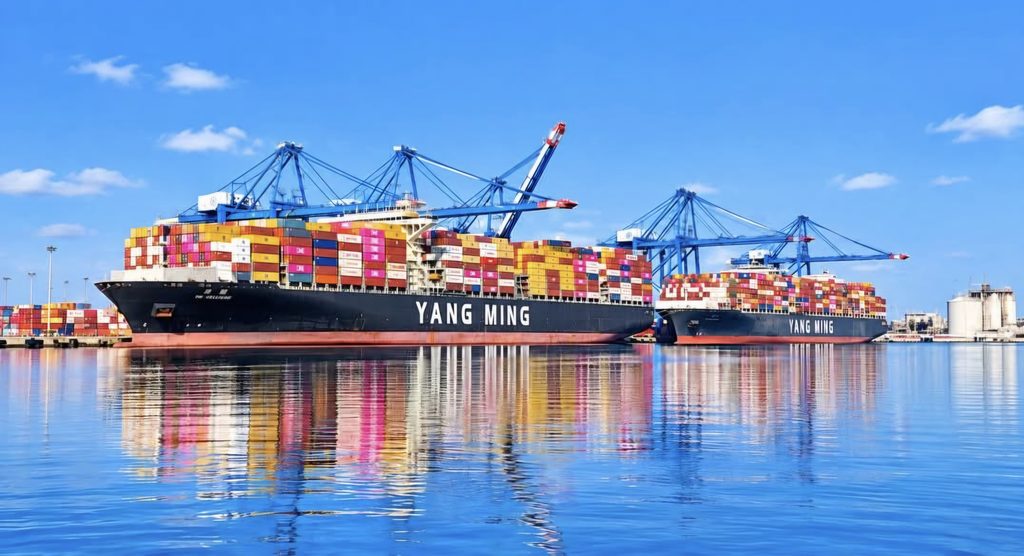
    Shipping Arabia, September 20, 2026 – Damietta Container & Cargo Handling Company is simultaneously handling four containerships involving 6,395 container moves, including two 368-meter Yang Ming mother vessels, highlighting the terminal’s capacity to manage large mainline ships alongside feeder operations.

    The four vessels are being worked across the terminal’s container berths 1 to 6, which extend for a combined 1,450 meters.

    Yang Ming’s YM Wellhead, measuring 368 meters with a draught of 15.8 meters, is alongside berths 1-2 for an operation involving 2,387 moves. Sister vessel YM Window, also 368 meters long and drawing 13.8 meters, is being handled at berths 2-3 with 2,386 moves.

    The two mother vessels are operating alongside feeder services. Maersk’s 175-meter AS Sara is at berth 4 for 1,122 moves, while the 140-meter Jona Sophie, operated by United Feeder Services (UFS), is at berth 5 for a further 500 moves.

    Together, the four operations represent 6,395 moves across the terminal, combining mainline and feeder activity within the same operational window.

    Rear Adm. Dr. Rafik Galal, Executive Managing Director of Damietta Container & Cargo Handling Company, said the dimensions of the vessels currently alongside remain below the terminal’s maximum operational capability.

    The terminal has previously handled containerships approaching 400 meters in length with draughts of up to 16.10 meters, supported by berth development and deepening works and investment in additional ship-to-shore (STS) and rubber-tyred gantry (RTG) cranes.

    Galal said the infrastructure and equipment programme is intended to improve handling efficiency and maintain the terminal’s ability to accommodate newer generations of ultra-large containerships.

    The continued development forms part of Egypt’s wider port and logistics strategy, with Damietta strengthening its capacity to serve mainline and feeder networks in the Eastern Mediterranean and support growing transshipment activity.

    Source: Damietta Container & Cargo Handling Company

  • Saudi Port Investments Top $1.46 Billion as Jeddah Handles Surge in Regional Cargo

    Shipping Arabia, September 19, 2026 – Saudi Arabia has invested more than SAR 5.5 billion ($1.46 billion) in its ports during the regional disruption, as Jeddah Islamic Port and the Kingdom’s western coast absorb sharply higher vessel, truck and cargo volumes and take on a wider role in regional supply chains.

    Saudi Ports Authority (Mawani) President Suliman bin Khalid Al-Mazroua said Jeddah and the western coast had developed into a major logistics platform serving Saudi Arabia and Gulf markets during the disruption.

    Truck traffic at Jeddah Islamic Port has risen from around 2,000–2,500 vehicles per day to more than 10,000, alongside increased vessel activity. More than 34 shipping services operated by major global carriers, including Maersk and MSC, now call at the port.

    Mawani has implemented 16 operational initiatives with government and customs authorities to increase the port’s readiness, while more than SAR 640 million has been invested in Jeddah over the past three months to strengthen its capacity to receive and handle containers moving by both sea and land.

    Al-Mazroua said the western coast is increasingly operating as an integrated port network. Yanbu supports food-security cargo flows, King Abdullah Port contributes additional container and logistics capacity, while NEOM Port supports traffic arriving from Egypt, expanding the ability of Saudi ports to respond to changing regional trade patterns.

    Transshipment activity has also increased, with volumes exceeding 370,000 containers over five months, while general and bulk cargo surpassed one million units. Mawani expects volumes to rise further by the end of the year as demand for port and logistics services continues to grow.

    The next phase will include further port investment alongside the development of special economic zones and logistics zones across Saudi Arabia’s eastern and western ports, strengthening the Kingdom’s maritime and logistics infrastructure and its role in regional supply chains.

    Source: Argaam

Back to top button