Alexandria Port

  • Trans Misr Terminal Begins Trial Operations of Two New Mobile Harbour Cranes at Alexandria Port

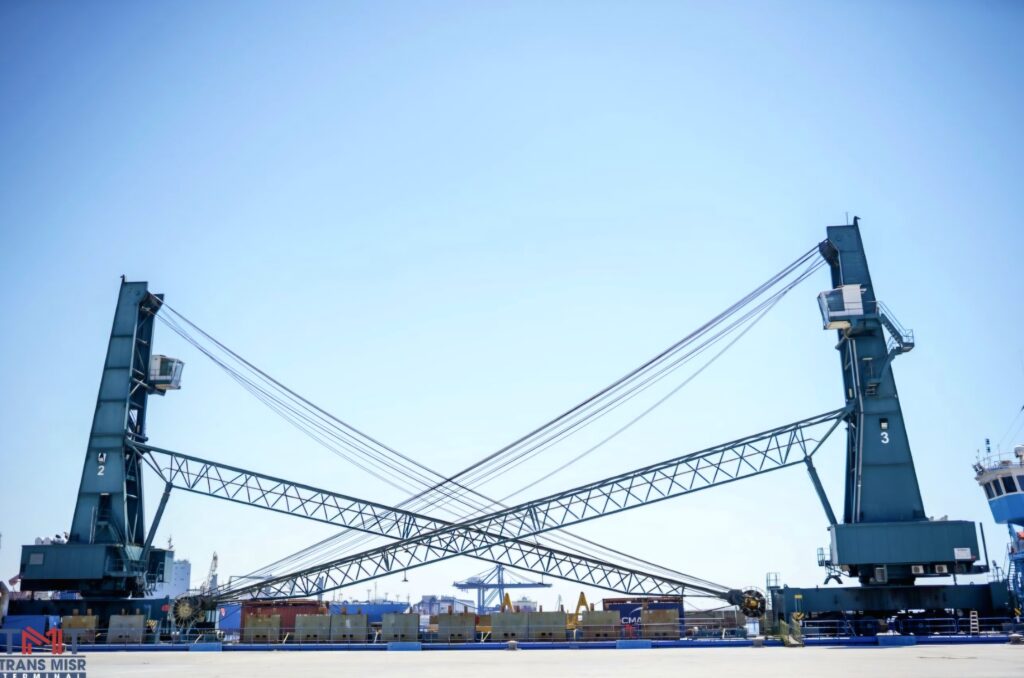
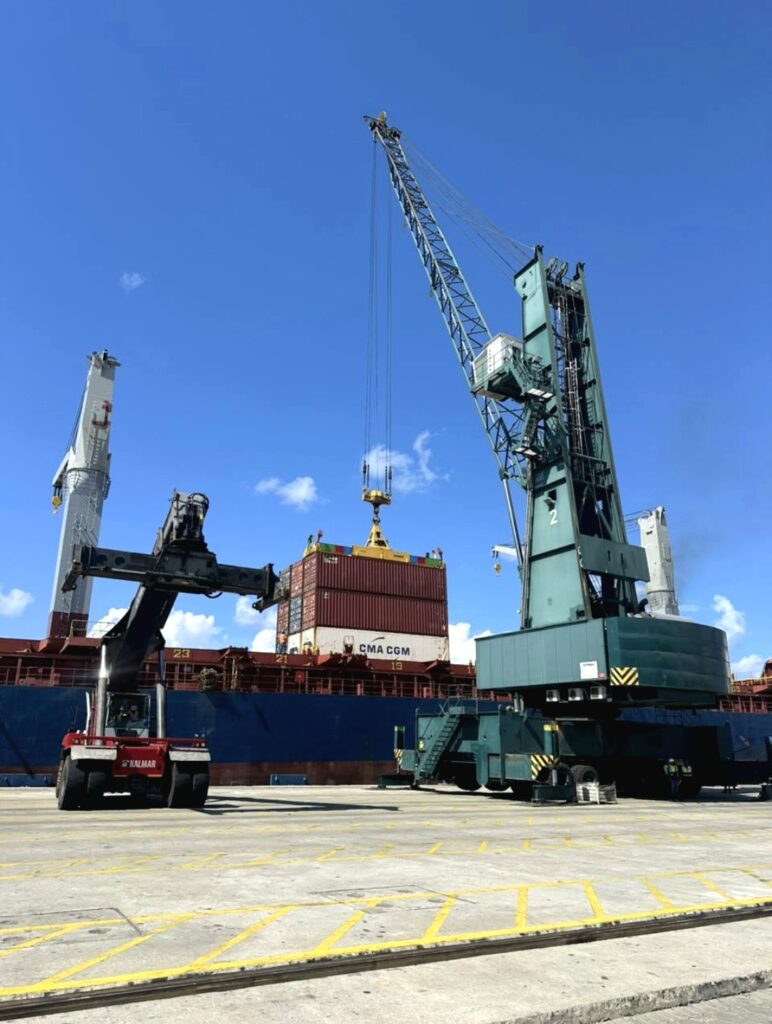
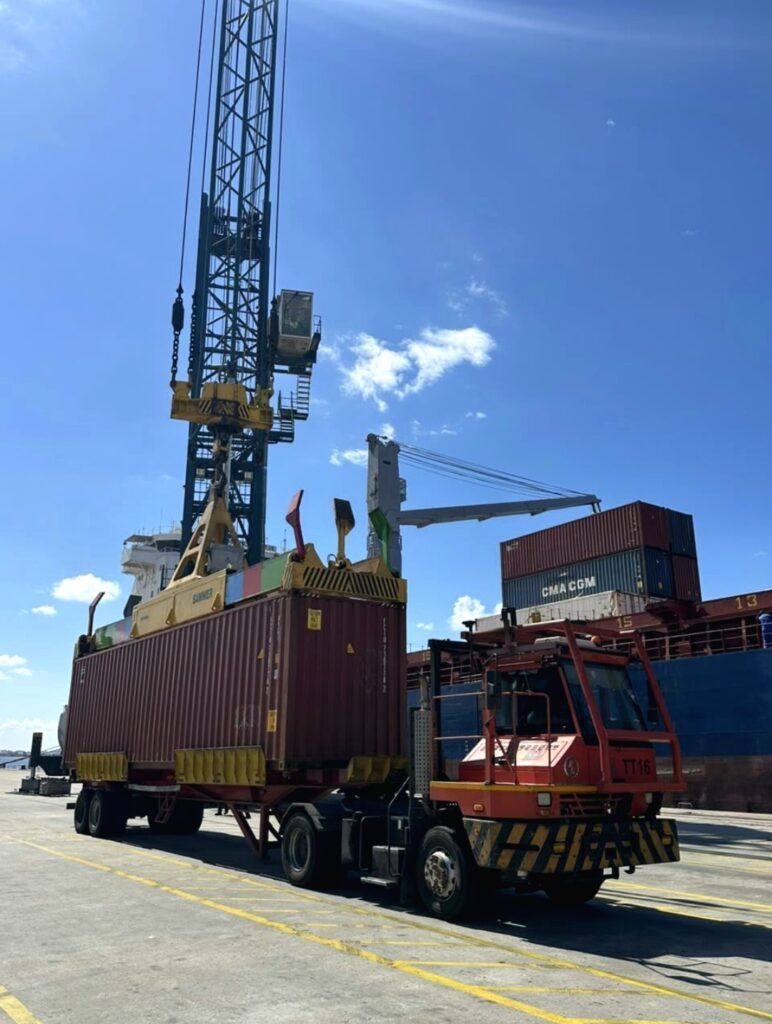
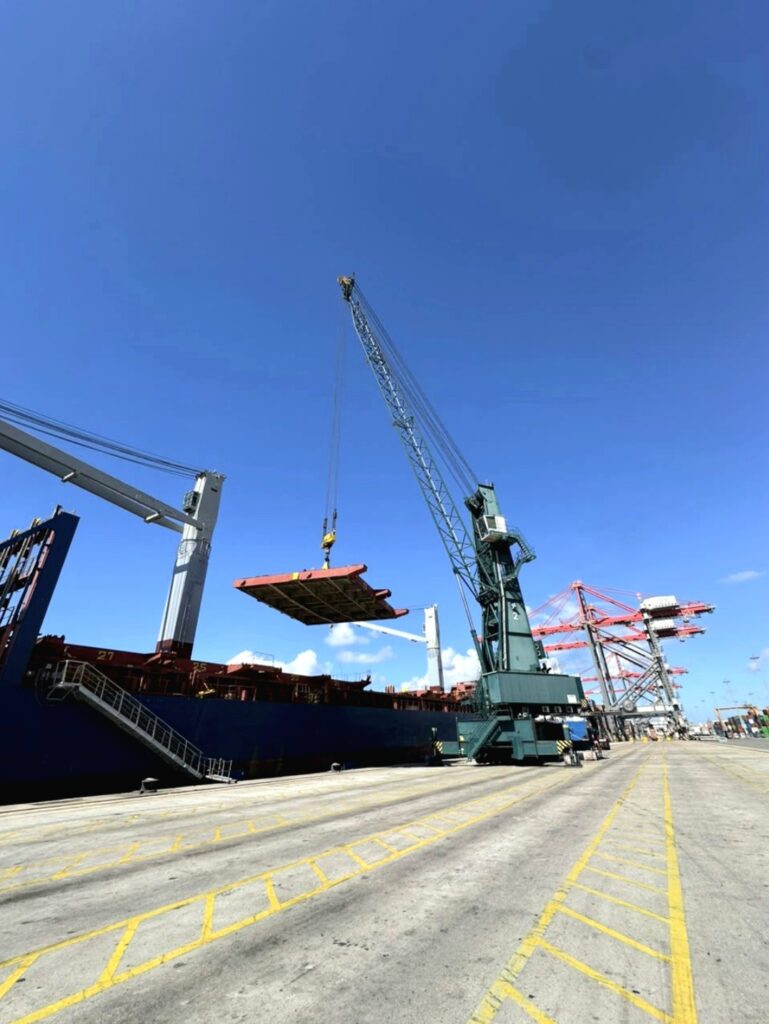
    Shipping Arabia, October 15, 2026 – Trans Misr Terminal (TMT) has commenced trial operations of two new mobile harbour cranes at Alexandria Port, Egypt. The additions bring the terminal’s quayside equipment fleet to four ship-to-shore (STS) cranes and two mobile harbour cranes (MHCs).

    The new equipment marks another milestone in TMT’s ongoing capacity expansion. It aims to strengthen cargo-handling capabilities, improve operational flexibility and support growing container volumes at the terminal.

    According to TMT, container traffic has increased rapidly since the terminal began commercial operations. This growth reflects rising customer demand and the terminal’s expanding role in the Egyptian and regional container shipping markets.

    New Cranes to Improve Vessel Turnaround and Handling Capacity

    The two mobile harbour cranes at Alexandria Port have been introduced to support TMT’s growing container operations. They form part of the terminal’s ongoing investment and development strategy, which focuses on expanding capacity and improving operational performance.

    TMT expects the additional cranes to improve vessel turnaround times for ships calling at the terminal. The equipment will also provide greater operational flexibility and strengthen the terminal’s overall cargo-handling capabilities.

    With four STS cranes and two MHCs now forming its quayside crane fleet, TMT is expanding the equipment available to support its operations. The newly added mobile harbour cranes have entered the trial phase as the terminal continues developing its operational capacity.

    The investment also supports TMT’s plans to strengthen its position as both a gateway and transshipment terminal serving Egypt and the Mediterranean region.

    Strengthening Alexandria Port’s Gateway and Transshipment Role

    Located at Alexandria Port, Egypt’s main gateway port, Trans Misr Terminal serves an important role in the country’s container shipping sector.

    The terminal handles container traffic associated with Egyptian trade while also serving as a transshipment hub in the Eastern Mediterranean. Its gateway and transshipment functions support its growing position in the Egyptian and regional container markets.

    According to the company, increasing container volumes and customer demand have driven the need for additional handling equipment. The two new mobile harbour cranes represent part of its response to that growth.

    Beyond the latest crane additions, TMT continues to invest in equipment, infrastructure and operational capabilities. These investments aim to accommodate increasing customer demand and support regional trade through Alexandria Port.

    The commencement of trial operations represents another step in the terminal’s capacity development program, with the new equipment expected to contribute to faster vessel handling, greater operational flexibility and continued growth in gateway and transshipment activities.

    Source: Trans Misr Terminal (TMT)

  • Egypt and Tanzania Advance Plans for Dar es Salaam Port Terminal and New Red Sea Shipping Link

    Shipping Arabia, October 12, 2026 – Egypt and Tanzania are advancing plans to develop a multipurpose terminal at Dar es Salaam Port and establish a direct shipping service connecting Tanzania with Egypt’s Red Sea ports of Sokhna and Safaga. The proposed projects form part of a broader multimodal logistics corridor linking the two countries and improving trade connectivity between Egypt, East Africa and landlocked Central African markets.

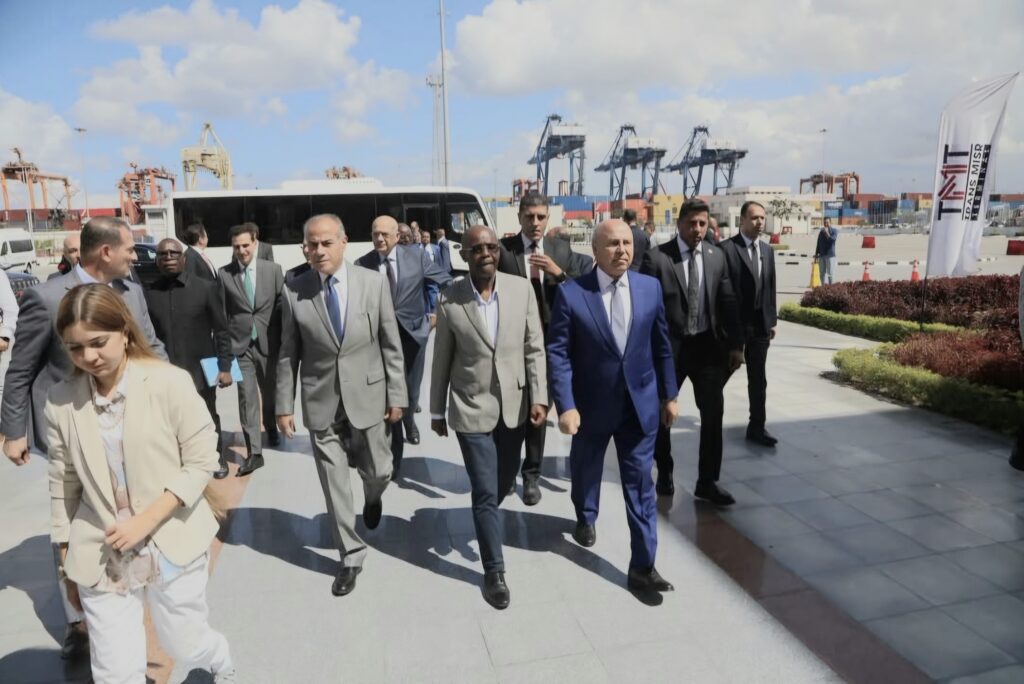
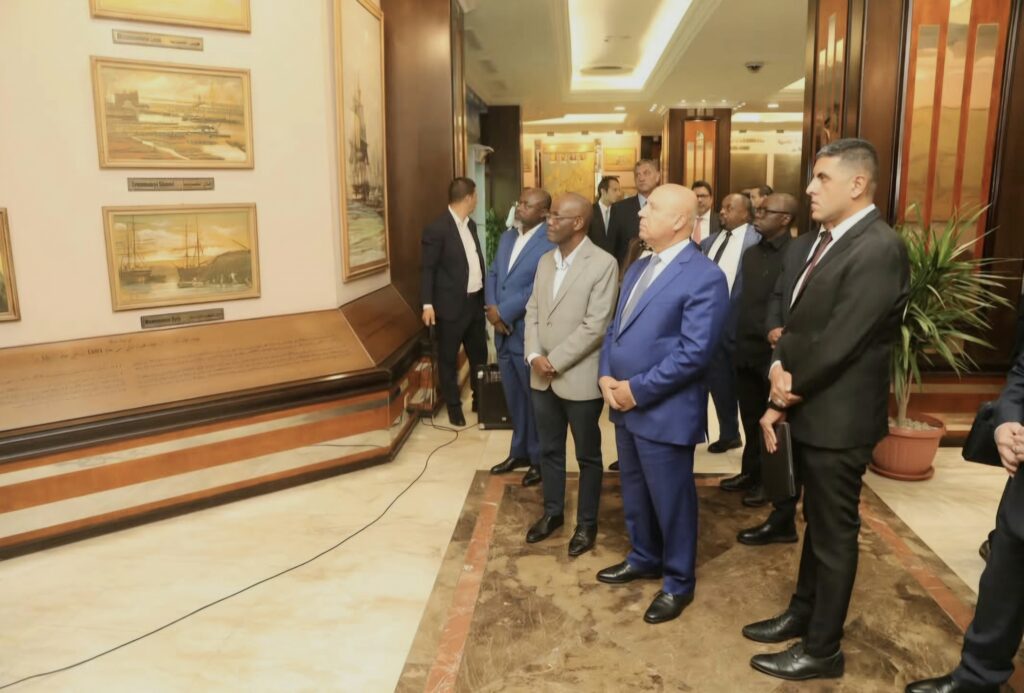
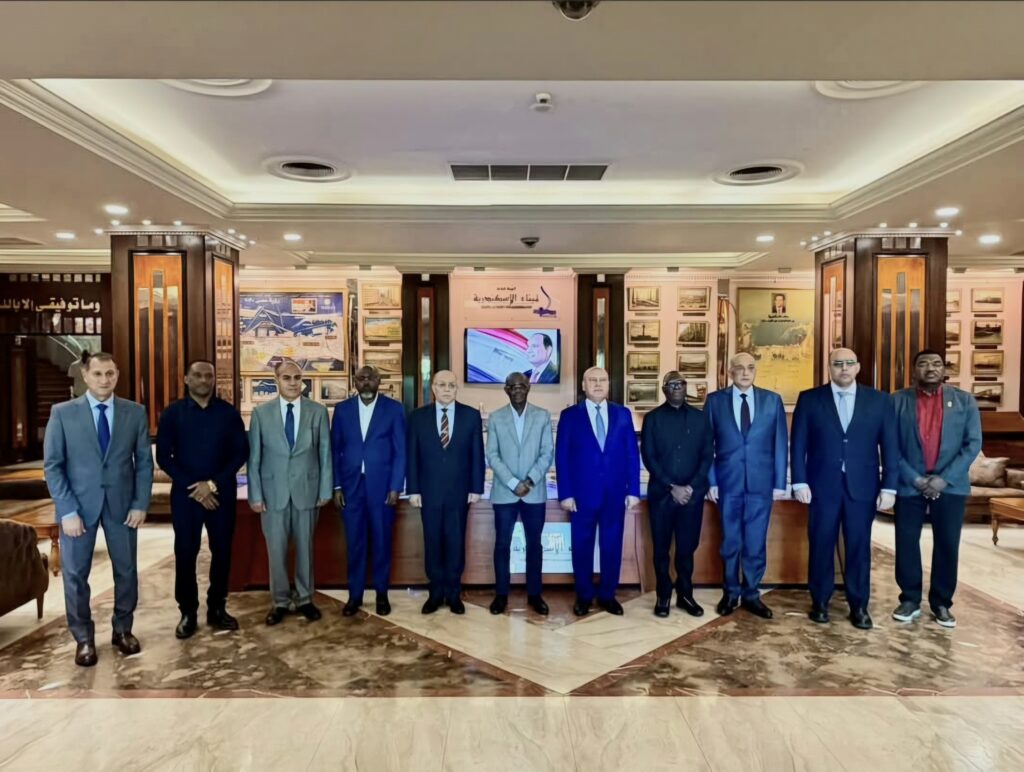
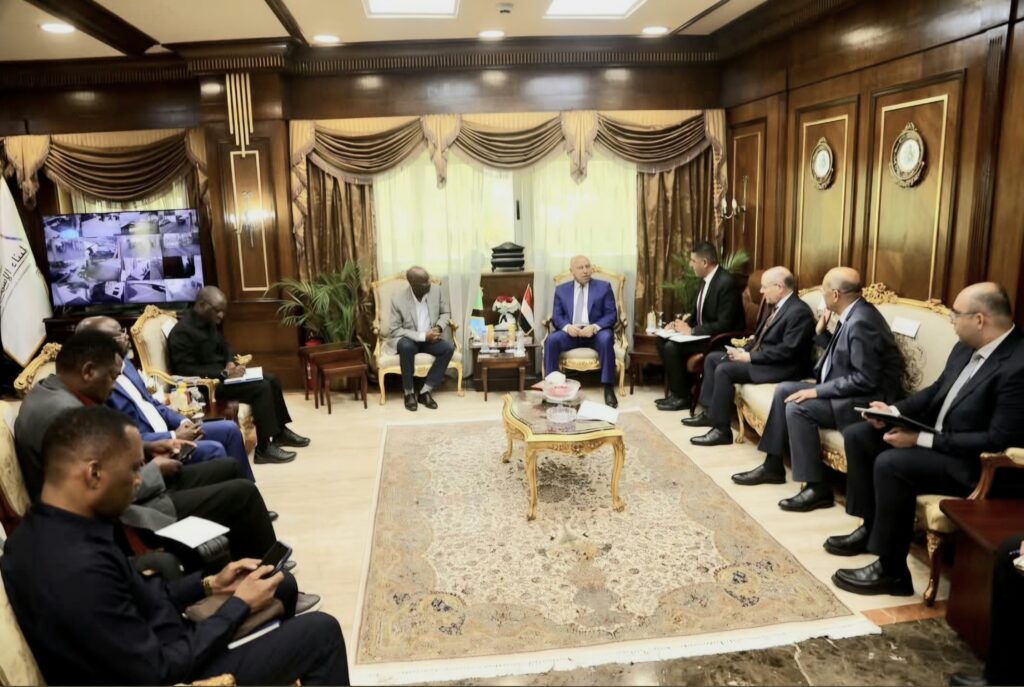
    The plans were discussed during a meeting between Egyptian Minister of Transport Kamel El-Wazir and Tanzanian Minister of Transport Makame Mbarawa at Alexandria Port. The visit included extensive bilateral discussions and an inspection of the port’s maritime and logistics facilities.

    El-Wazir emphasized Egypt’s commitment to expanding transport cooperation with Tanzania, increasing Egyptian exports to African markets and developing logistics zones to support regional trade.

    Dar es Salaam Port Development and New Shipping Service

    The proposed memorandum of understanding, which the two countries plan to sign in the coming period, outlines several major transport and logistics projects.

    A central component involves developing a multipurpose terminal at Dar es Salaam Port through an Egyptian-Tanzanian-international consortium. The port serves approximately 90% of Tanzania’s domestic market and provides maritime access to six landlocked countries: Malawi, Zambia, the Democratic Republic of the Congo, Burundi, Rwanda and Uganda.

    The agreement also envisages a direct maritime service connecting Egypt’s Red Sea ports of Sokhna and Safaga with Dar es Salaam. The proposed shipping link would support trade flows between Egypt and East Africa while providing connections to inland African markets.

    In addition, the two countries plan to establish reciprocal logistics zones, including an Egyptian logistics zone in Tanzania and a Tanzanian logistics zone in Egypt.

    The proposed cooperation extends to Tanzania Railways Corporation, with plans to connect the new facilities to the national railway network. This would support the integration of maritime, road and rail transport within the planned logistics corridor.

    Cairo–Dar es Salaam Multimodal Logistics Corridor

    The projects form part of the proposed Cairo–Dar es Salaam multimodal logistics corridor, which seeks to connect Egypt’s Red Sea ports and domestic logistics network with Tanzania and neighboring landlocked countries.

    Under the proposed arrangement, maritime services would connect Egyptian ports with Dar es Salaam. Cargo would then move through Tanzania’s electric railway network toward inland destinations in Central Africa.

    The corridor builds on an earlier memorandum of understanding on infrastructure cooperation between the Egyptian and Tanzanian transport ministries, signed during Egyptian President Abdel Fattah El-Sisi’s visit to Tanzania.

    El-Wazir said Egypt has infrastructure companies with extensive experience and the capacity to participate in Tanzanian projects. He emphasized their readiness to deliver infrastructure works according to high-quality standards, competitive costs and accelerated implementation schedules.

    Mbarawa welcomed the proposed cooperation and praised Egyptian expertise in transport and infrastructure development. He described the discussions as an important step toward launching joint projects between the two countries.

    Technical committees from both sides are expected to hold further meetings to advance the projects included in the planned agreement.

    The discussions also addressed maritime education and technical training. Mbarawa requested scholarships for Tanzanian students at the Arab Academy for Science, Technology and Maritime Transport (AASTMT).

    In response, El-Wazir confirmed Egypt’s willingness to provide specialized training opportunities for the entire Tanzanian team expected to operate the proposed Dar es Salaam terminal. The programs would focus on developing technical capabilities and preparing personnel to operate the facility using modern terminal management systems.

    Alexandria Port Showcases Maritime and Logistics Infrastructure

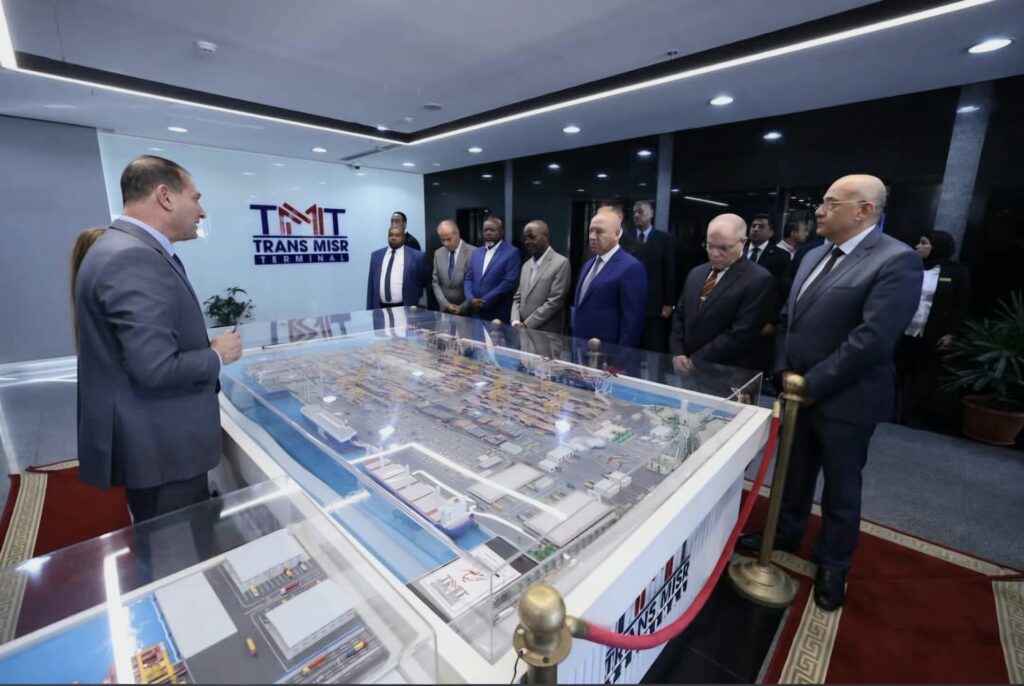
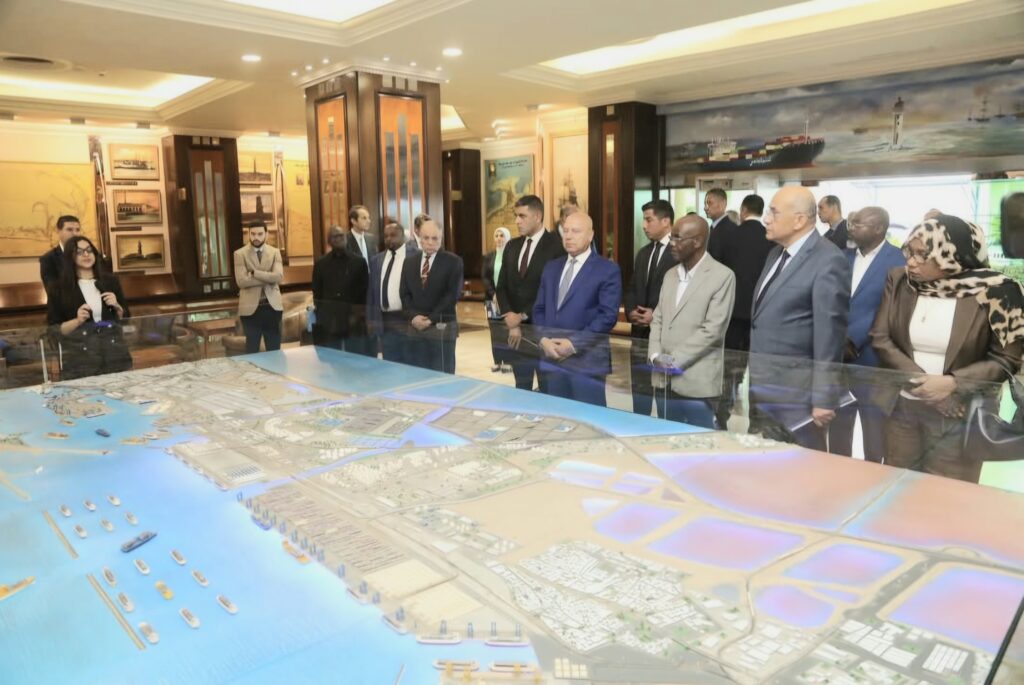
    Following the discussions, the two ministers toured several facilities at Alexandria Port, including the historic port museum, passenger terminal, cargo berths and Tahya Misr Multipurpose Terminal.

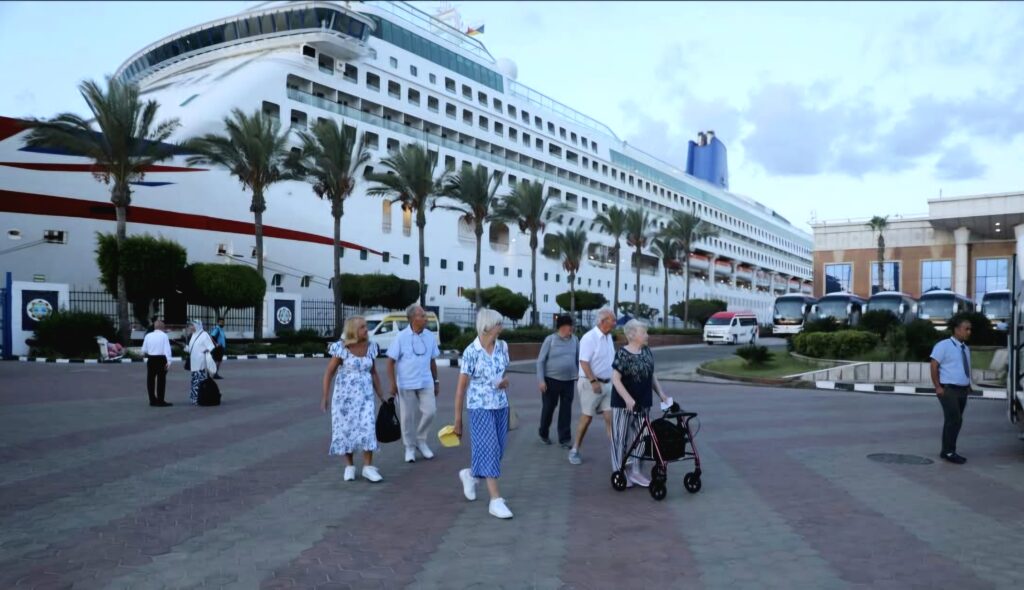
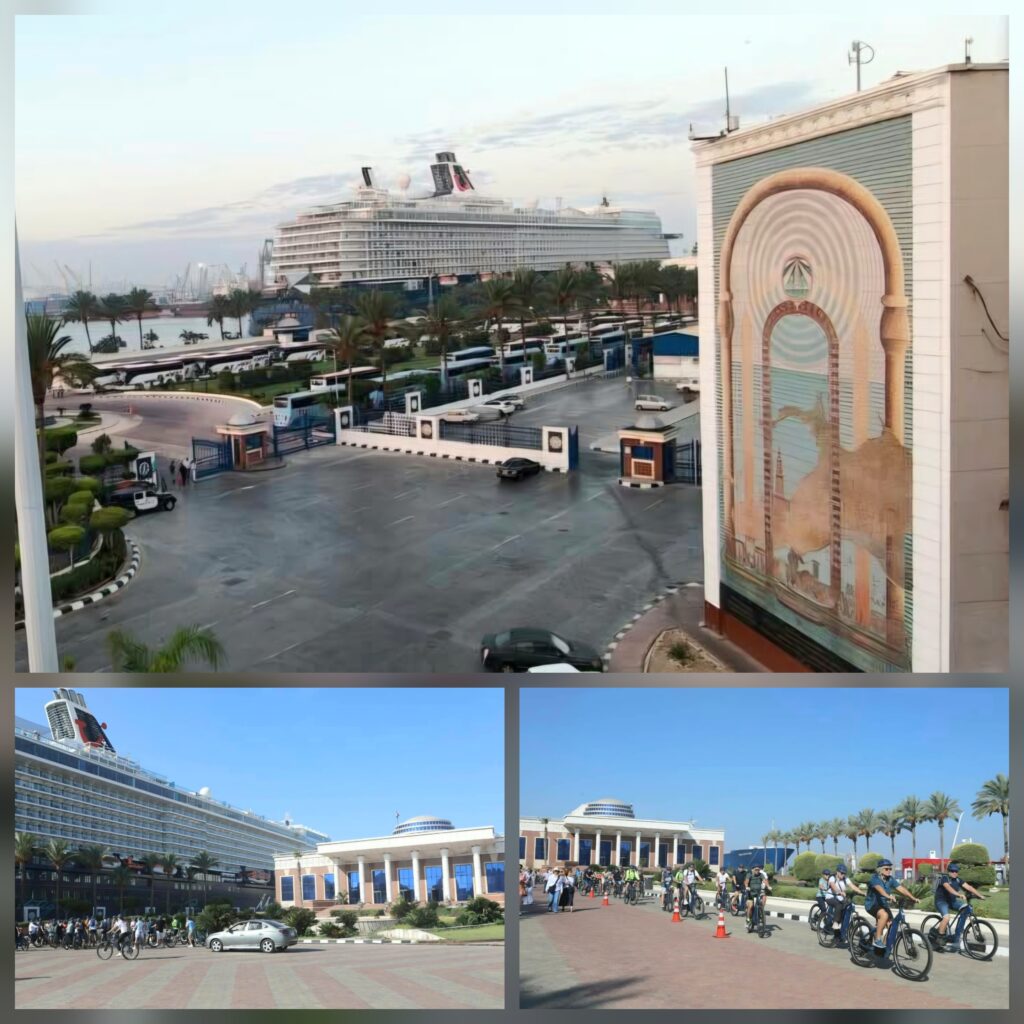
    The passenger terminal features a tourism complex covering more than 34,000 square meters, with capacity for up to 7,000 tourists. Its 820 meters of berths can accommodate four large cruise ships simultaneously, while the terminal building consists of three floors.

    The delegation also inspected general cargo berths 10, 11 and 13, alongside berth 12, which serves roll-on/roll-off (RoRo) vessels.

    The visit continued at Tahya Misr Multipurpose Terminal, which occupies approximately 500,000 square meters and features 2,500 meters of berths with depths reaching 17.5 meters.

    The terminal can accommodate vessels up to 400 meters long with capacities reaching 24,000 TEUs. Its annual handling capacity stands at 1.5 million TEUs and 15 million tons of general cargo.

    During the tour, terminal chairman Mahmoud Khodeir outlined the facility’s operational achievements. The terminal has handled approximately 2.6 million TEUs and received around 1,400 vessels, with transit cargo representing 38% of container volumes.

    Rail operations have also supported cargo movements between the port and inland logistics facilities. The terminal has received approximately 403 trains, handling 39,000 TEUs through its rail connections.

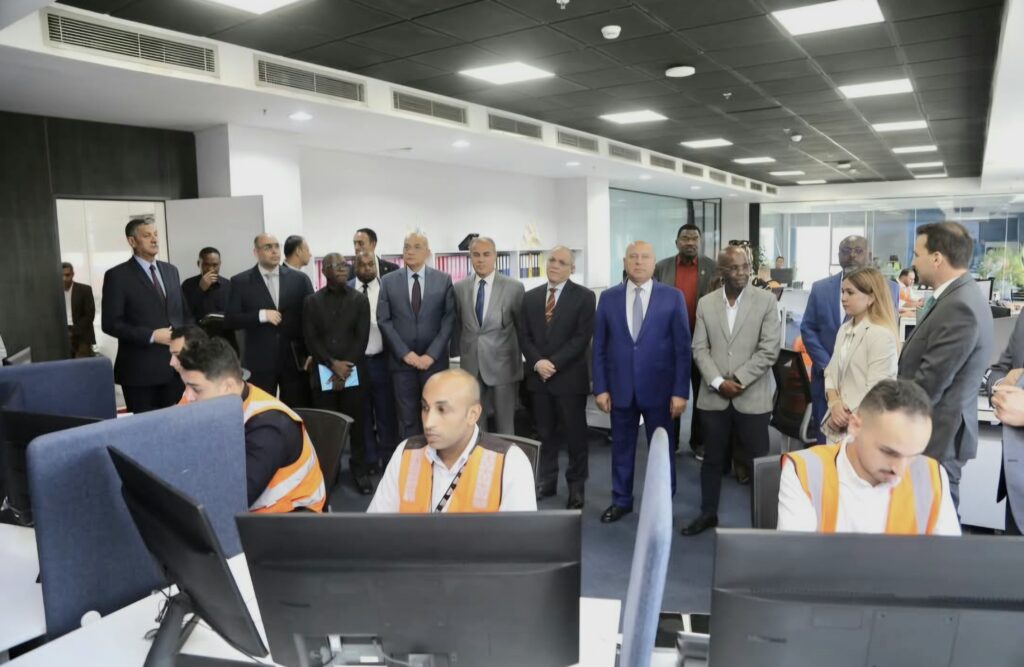
    The ministers reviewed the terminal’s digital operating systems and control room. They also inspected the rail container loading facility serving trains bound for October Dry Port.

    According to the presentation, Tahya Misr Multipurpose Terminal has generated approximately 1,000 direct jobs and 2,500 indirect employment opportunities.

    Alexandria Port Handles Over 82 Million Tons in 2025/2026

    During the visit, Egyptian officials presented the wider development of Alexandria Port and its contribution to the country’s maritime transport network.

    Alexandria Port Authority handled more than 82 million tons of cargo during the 2025/2026 fiscal year and received 7,026 vessels.

    The port forms an important part of the Sokhna–Alexandria logistics corridor, one of eight integrated international logistics corridors being developed by Egypt to connect maritime gateways with inland transport networks and international trade routes.

    El-Wazir also outlined Egypt’s broader maritime development strategy, which aims to position the country as a regional hub for transport, logistics and transit trade.

    The strategy includes constructing five new commercial ports, bringing the national total to 19. It also targets expanding port areas to 100 million square meters.

    Planned infrastructure improvements include adding 70 kilometers of berths with depths ranging from 18 to 25 meters, bringing total berth lengths to more than 100 kilometers.

    Egypt also plans to construct 35 kilometers of breakwaters, increasing the national total to 50 kilometers, while expanding its merchant fleet to 40 vessels by 2030.

    The proposed cooperation with Tanzania forms part of these wider efforts to strengthen Egypt’s maritime connectivity and expand trade and logistics links with African markets.

    Source: Egyptian Ministry of Transport

  • AROYA Cruise Ship Visits Sokhna Port With 1,327 Tourists

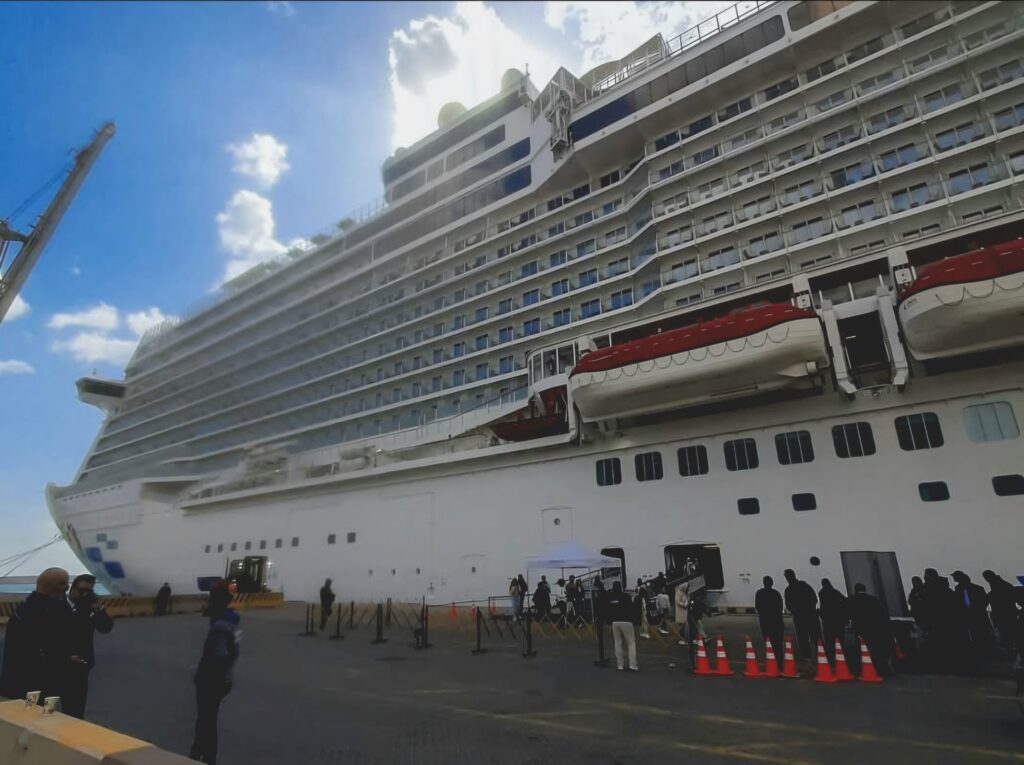
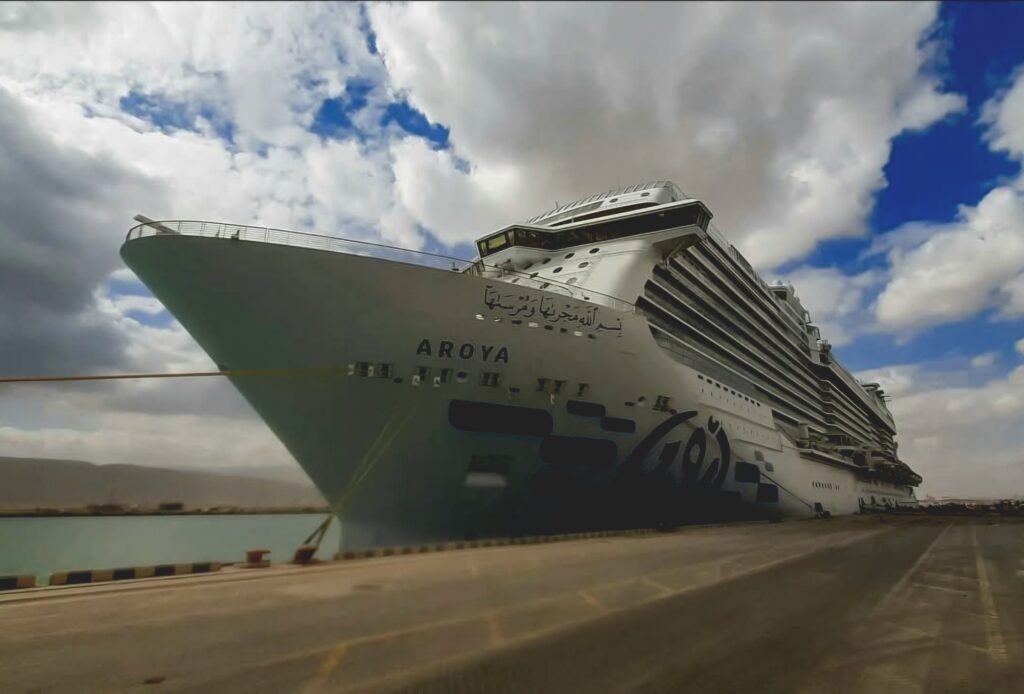
    Shipping Arabia, October 10, 2026 – The AROYA cruise ship visited Egypt’s Sokhna Port on Sunday, October 4, carrying 1,327 tourists of various nationalities. The vessel arrived from Sharm El Sheikh and berthed at the DP World terminal within Sokhna Port, which operates under the Suez Canal Economic Zone (SCZONE).

    The cruise ship is owned by Cruise Saudi, a subsidiary of Saudi Arabia’s Public Investment Fund (PIF). Its visit formed part of an Egyptian itinerary that included Sharm El Sheikh, Sokhna and Alexandria.

    During the Sokhna port call, passengers were scheduled to travel to Cairo for sightseeing excursions before returning to the vessel on the same day. The visit highlighted the port’s role in accommodating international cruise ships and facilitating access to Egypt’s tourism destinations.

    AROYA Cruise Ship Specifications and Sokhna Port Call

    The Malta-flagged AROYA measures 303 meters in length, with a beam of 39.2 meters and a draft of 8.2 meters. Rhapsody served as the vessel’s shipping agent during the visit.

    Following its arrival from Sharm El Sheikh, the cruise ship berthed at the terminal operated by DP World at Sokhna Port. The vessel was scheduled to depart later that evening for Alexandria Port, continuing its cruise itinerary along Egypt’s coastline.

    The port call brought 1,327 international tourists to Sokhna, with Cairo included in the planned shore excursion program. Passengers were expected to return aboard before the ship’s scheduled evening departure.

    SCZONE Highlights Sokhna Port’s Cruise Handling Capabilities

    According to the Suez Canal Economic Zone, the arrival of AROYA demonstrated Sokhna Port’s operational readiness and its ability to accommodate different types of vessels.

    SCZONE emphasized that the port maintains the operational capabilities required to handle vessel calls in accordance with high standards of efficiency and safety. The cruise ship’s visit also reflected the port’s role in supporting maritime tourism alongside its wider shipping activities.

    The economic zone continues to work on improving the efficiency and operational readiness of its ports. These efforts aim to strengthen their ability to receive vessels and support maritime traffic, international trade and tourism.

    Supporting Egypt’s Maritime and Cruise Tourism Activities

    SCZONE considers the development of its port infrastructure and operational capabilities an important component of strengthening Egypt’s position within regional and international maritime transport networks.

    The authority’s ongoing efforts focus on enhancing port readiness and improving services for different vessel categories, including cruise ships.

    AROYΑ’s visit to Sokhna Port formed part of these maritime activities, connecting a Red Sea port call with planned tourism excursions to Cairo and an onward voyage to Alexandria.

    By continuing to improve port capabilities and operational efficiency, SCZONE aims to support shipping, trade and tourism while reinforcing the position of its ports within the regional and international maritime industry.

    Source: Suez Canal Economic Zone (SCZONE)

  • Alexandria Port Cruise Activity Brings 3,359 Passengers in Two Ship Calls

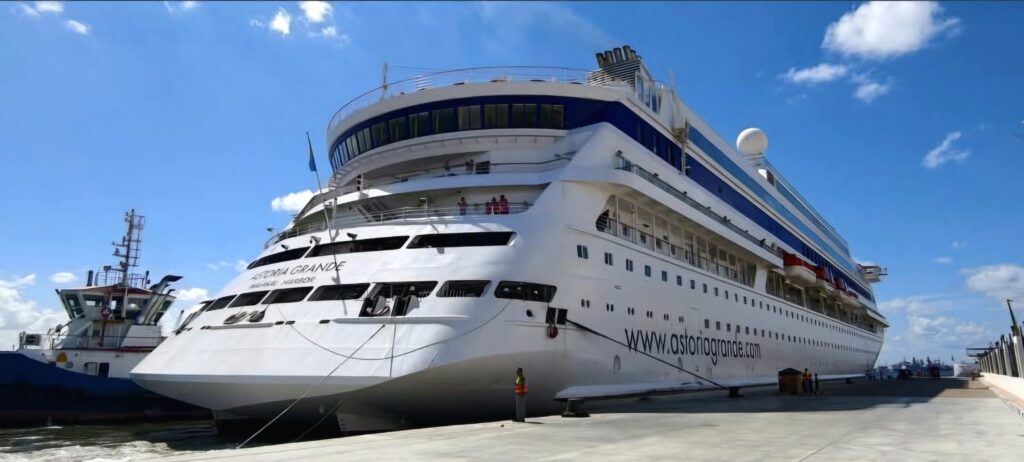
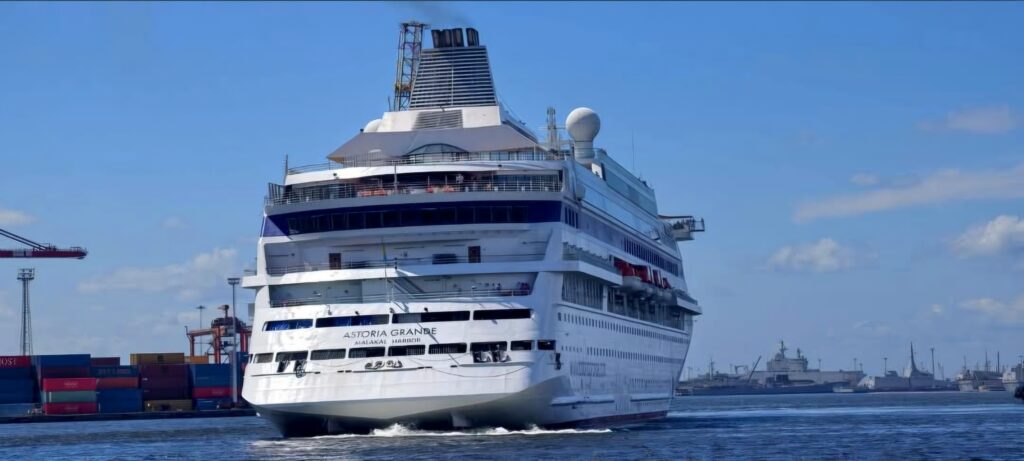
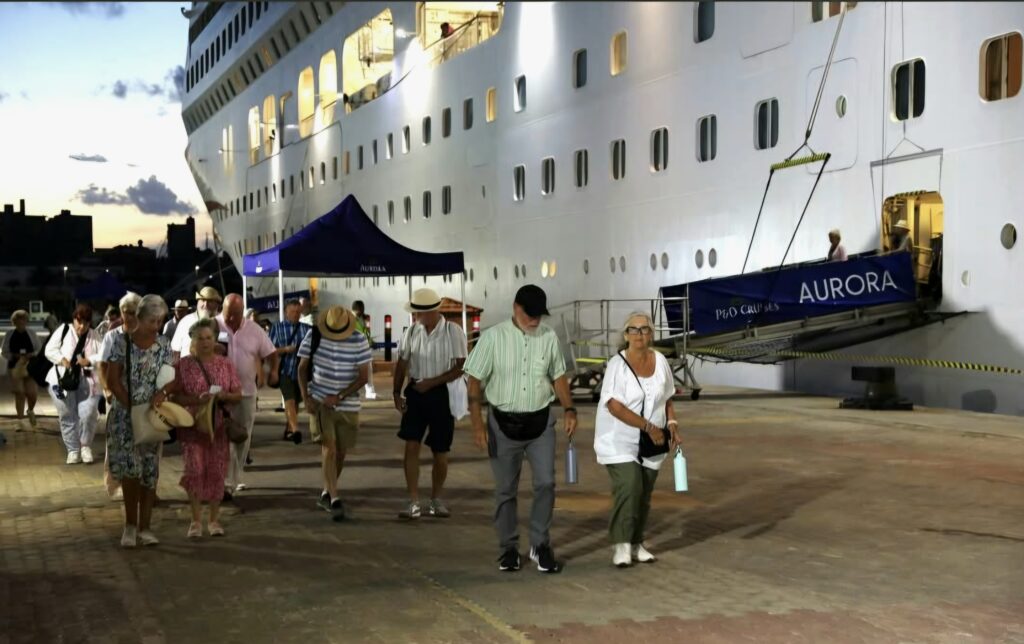
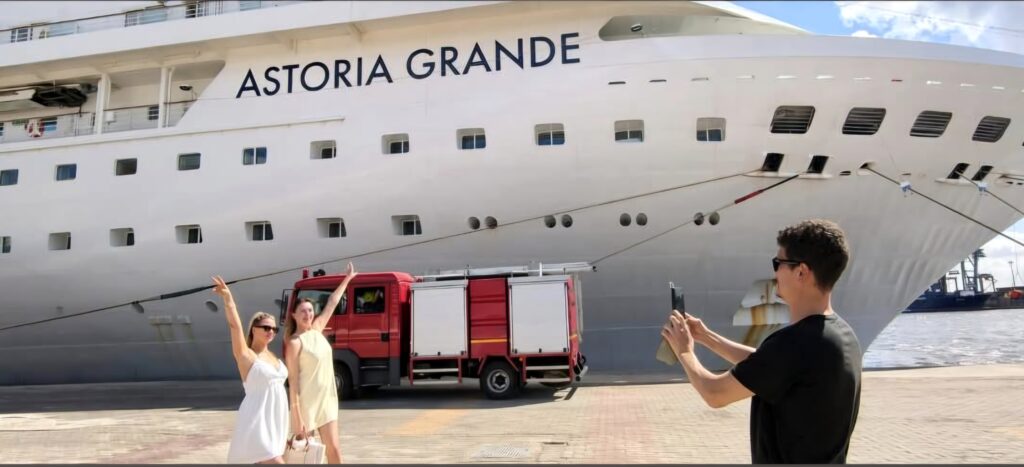
    Shipping Arabia, October 7, 2026 – Alexandria Port cruise activity included two consecutive cruise ship calls on September 28 and 29, bringing a combined 3,359 passengers to the Egyptian port. The two vessels, Astoria Grande and Aurora, carried 2,197 tourists and 1,162 crew members.

    The calls form part of the growing cruise traffic handled by Alexandria Port, which continues to receive international cruise vessels and large numbers of passengers through its maritime passenger facilities.

    Astoria Grande Arrives From Antalya

    On September 28, Alexandria Port received the Palau-flagged Astoria Grande from Antalya, Türkiye. The cruise ship arrived with 374 tourists and 352 crew members, bringing the total number of people on board to 726.

    The vessel completed its call at Alexandria and departed later the same day for Türkiye.

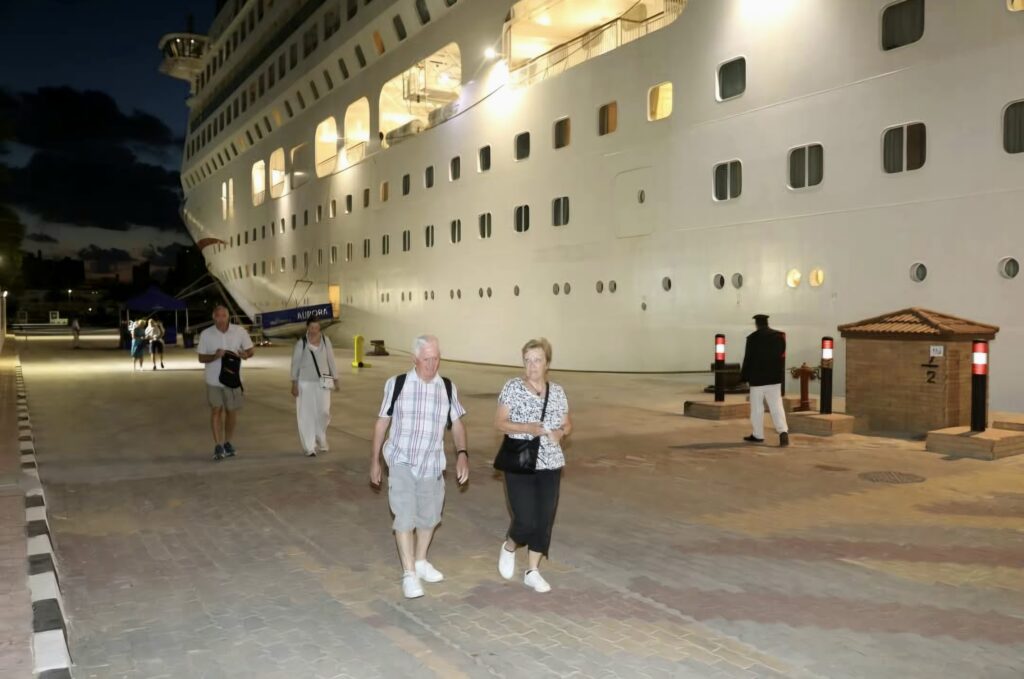
    The following day, September 29, the Bermuda-flagged Aurora arrived at Alexandria Port from Limassol, Cyprus. It carried 1,823 tourists and 810 crew members, for a total of 2,633 passengers and crew.

    Aurora was scheduled to leave Alexandria later that evening for Tunisia, completing the second cruise call handled by the port in two consecutive days.

    Alexandria Port Cruise Activity Supported by Coordinated Passenger Handling

    Representatives of Alexandria Port Authority received the two vessels in coordination with the relevant authorities. These included Egypt’s Ministry of Transport, Ministry of Tourism and Antiquities, tourism promotion bodies, Alexandria Governorate and the Ministry of Interior through the Alexandria Port Police.

    Passenger reception and processing took place through the port’s General Department for Passenger Movement at the maritime passenger terminal. According to the authority, the required procedures were completed smoothly to facilitate the movement of arriving cruise passengers.

    The authority said the two calls reflect the continued growth of marine tourism activity at Alexandria Port. It also highlighted the port’s ability to receive different types of cruise ships and handle large passenger volumes.

    Port Authority Reaffirms Support for Cruise Tourism

    Alexandria Port Authority said it will continue supporting and promoting marine tourism while strengthening coordination with the government and tourism bodies involved in cruise operations.

    The authority said these efforts are aimed at providing high-quality services to visiting tourists while increasing the benefits generated from Alexandria’s tourism and historical attractions, as well as other destinations across Egypt.

    The two cruise calls also underline the role of Alexandria Port cruise activity within Egypt’s broader marine tourism sector, with the port continuing to handle international vessels arriving from Mediterranean destinations.

    Source: Alexandria Port Authority

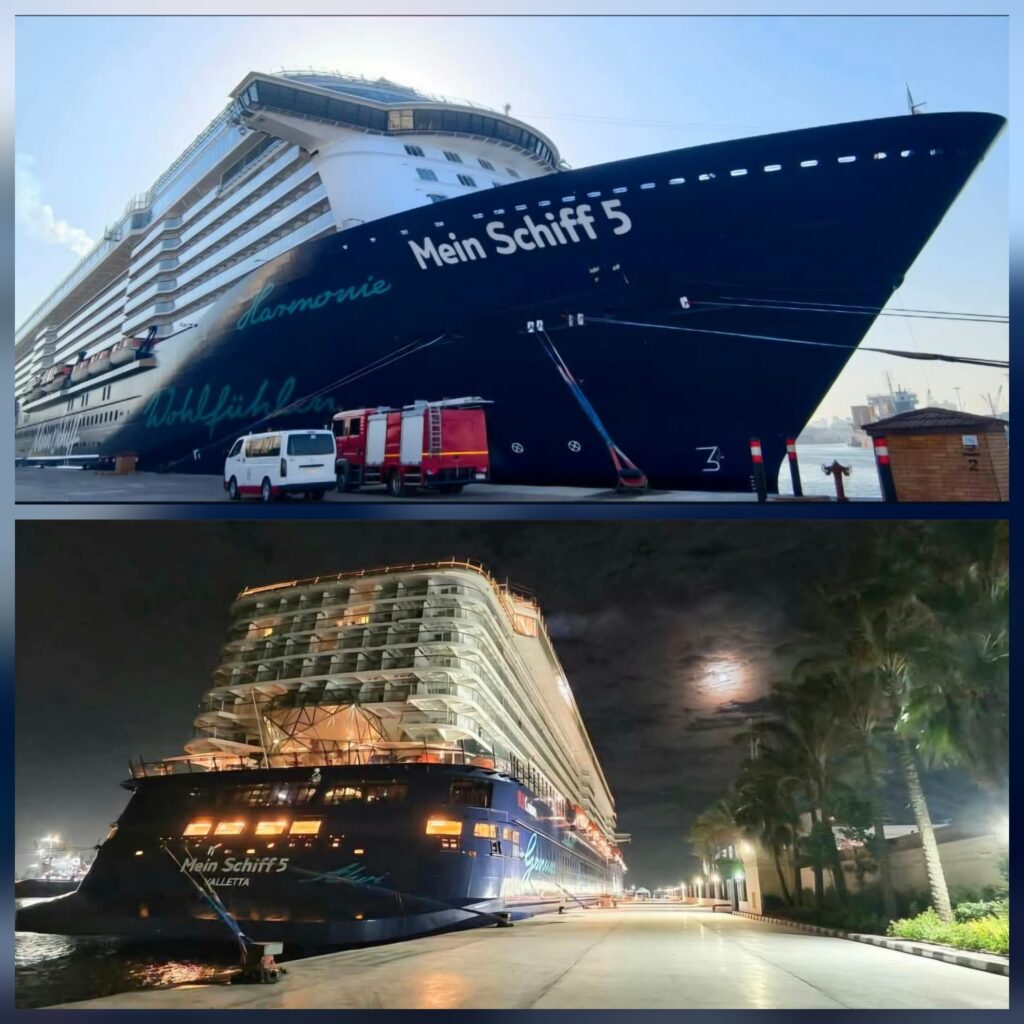
  • Mein Schiff 5 Brings 3,502 Passengers and Crew to Alexandria Port

    Shipping Arabia, October 4, 2026 – Alexandria Port received the cruise ship Mein Schiff 5 with 3,502 passengers and crew on board, as Alexandria cruise tourism continues to generate calls linking the Egyptian Mediterranean port with regional destinations.

    The vessel arrived at dawn on September 27 from Heraklion, Greece. Those on board included 2,560 tourists, mainly German nationals alongside visitors of other nationalities, as well as 942 crew members.

    Mein Schiff 5 was scheduled to depart Alexandria later the same day for Rhodes, Greece.

    Alexandria Cruise Tourism Connects Visitors with Egyptian Destinations

    Passengers were offered a tourism program covering archaeological and historical attractions in Alexandria, Cairo and Giza.

    The itinerary included ancient Egyptian, Greco-Roman and Islamic landmarks, giving passengers access to a range of cultural and historical sites during the port call.

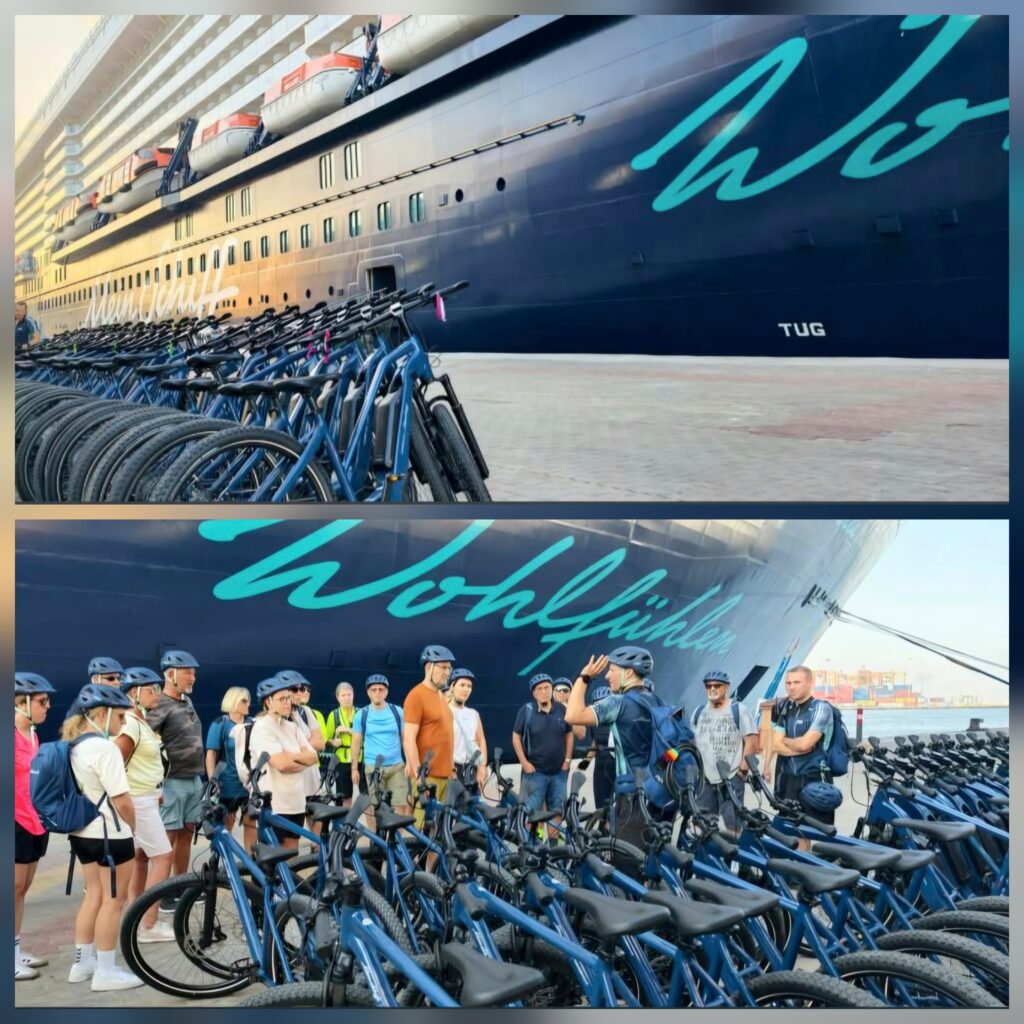
    A cycling tour was also organized for a number of passengers within Alexandria, providing another way to explore the city and its attractions.

    The visit formed part of the cruise ship activity handled by Alexandria Port, which the Alexandria Port Authority said reflects the port’s ability to receive different types of cruise vessels and provide the required passenger services.

    Authorities Coordinate Passenger Handling

    Representatives of the Alexandria Port Authority received the vessel in coordination with several government and tourism entities involved in the call.

    These included the Ministry of Transport, Ministry of Tourism and Antiquities, Egyptian Tourism Promotion Authority and Alexandria Governorate through the Regional Authority for Tourism Promotion. The Ministry of Interior was also represented through the General Administration of Alexandria Port Police.

    The General Administration for Passenger Movement at the marine passenger terminal handled passenger reception and coordinated entry and exit procedures with the various entities operating at the port.

    According to the authority, the arrangements were intended to ensure smooth passenger movement and speed up the completion of formalities during the vessel’s stay.

    Alexandria Port Targets Stronger Mediterranean Cruise Role

    The Alexandria Port Authority said it will continue supporting and promoting maritime tourism while strengthening cooperation with relevant government and tourism bodies.

    These efforts are aimed at reinforcing the role of Alexandria cruise tourism and consolidating the port’s position as an important destination on the Mediterranean cruise map.

    The authority is also seeking to build on Alexandria’s tourism and historical assets, together with other Egyptian destinations included in cruise passenger programs.

    The Mein Schiff 5 call illustrates how cruise visits to Alexandria can connect port operations with tourism activity across Alexandria, Cairo and Giza while serving wider Mediterranean itineraries.

    Source: Alexandria Port Authority

  • Alexandria Container Tariffs Put Mediterranean Transit Competitiveness Under Scrutiny

    Shipping Arabia, September 29, 2026 – New Alexandria container tariffs introduced by Alexandria Container & Cargo Handling Company have raised the cost of several handling services, prompting industry concerns over their impact on import and export costs and the competitiveness of Egyptian ports in Mediterranean transit trade.

    The revised tariff took effect at the beginning of September and comes as Egyptian ports experience increased transit activity following changes in regional shipping routes. Industry experts said the impact will depend partly on whether higher charges are accompanied by improvements in operational efficiency and service quality.

    The company introduced four new charges and increased a fifth. The changes cover several container handling activities at its terminals in Alexandria and El Dekheila.

    Alexandria Container Tariffs Add New Service Charges

    The new charges include $15–$20 for the entry of full export containers, $10–$20 for empty-container ageing, $10–$20 for retaining containers in inspection yards, and $30–$60 for containers sent outside the terminal for weighing.

    Inspection and examination charges were also increased to between $32 and $64, compared with a previous range of $30–$60.

    All charges are collected in Egyptian pounds at the equivalent value of their dollar-denominated rates. The revised tariff will be reviewed every six months.

    Alexandria Container & Cargo Handling Company is the largest container terminal operator at Alexandria Port. Its terminals have annual capacity of approximately 1.5 million TEU.

    According to Alexandria Port Authority data cited by Al Borsa, the company’s capacity represents about three-quarters of the combined container capacity at Alexandria and El Dekheila ports, which totals around 2 million TEU.

    Alexandria Port accounts for approximately 60% of Egypt’s foreign trade. During fiscal year 2024–2025, the port handled a record 82 million tonnes of cargo, including around 28.3 million tonnes of containerized cargo.

    Transit Traffic Seen as Particularly Sensitive to Costs

    Ahmed Saber Salem, an international transport expert and supply chain consultant, said the tariff increase should be assessed from two perspectives: its potential to strengthen the terminal operator’s revenues and its effect on regional competitiveness.

    He said Egyptian ports had benefited from increased transit activity as geopolitical developments altered regional shipping routes and encouraged some vessels to avoid areas affected by disruption. This redirected part of the cargo flow toward Mediterranean ports.

    Salem said the higher fees could support Alexandria Container & Cargo Handling Company’s revenues and profitability in local currency over the short term. The additional income could help offset rising operating costs, inflation, equipment replacement requirements and infrastructure development needs.

    However, he said the increases could also place pressure on the company’s regional competitiveness, particularly in the Eastern Mediterranean. Higher overall costs for shipping lines and agents could make Egyptian terminals more expensive than competing alternatives.

    Transit cargo is especially sensitive to both cost and operational performance because it is not destined for the domestic market. Shipping lines can therefore redirect containers to another transshipment hub if they find lower costs or more efficient services elsewhere.

    Salem said the additional charges would also affect domestic trade by increasing costs borne by importers and exporters for services including storage, shipping and handling. Part of those additional costs could ultimately feed into imported goods prices.

    Service Improvements and Transit Incentives Proposed

    Salem called for any increase in Alexandria container tariffs to be linked with measurable improvements in terminal services.

    He highlighted loading and discharge productivity, crane efficiency, shorter vessel waiting times outside the port and reduced time alongside the berth as areas where improved performance could help preserve the terminal’s attractiveness to shipping lines.

    Faster and more efficient operations, he said, would mean shipping lines assess Alexandria not only on charges but also on the time required to complete port calls.

    Salem also proposed a more flexible pricing system that distinguishes between transit and direct cargo. This could include discounts or incentives for transshipment containers while maintaining increases on selected other services.

    He further suggested longer free-storage periods for containers, potentially extending to 21 days or more, as another measure to attract transit traffic and maintain competitiveness.

    Importers and Exporters Assess Cost Impact

    Mohamed Hussein, Chairman of IMEX Egypt, said the revised charges would increase the cost of handling imported and exported goods. However, he noted that the full impact remains unclear because the new tariff has only recently taken effect.

    The additional costs would be borne by the party responsible for the shipment, whether the importer or exporter, depending on the commercial arrangement.

    Hussein said other container terminals could gradually increase their service charges during the coming period, although he did not expect all terminals to implement increases simultaneously.

    He warned that continuously rising service costs could eventually affect cargo volumes and said increases should remain within levels that do not negatively affect trade.

    Hussein also said Alexandria’s container transit activity could be affected by the new charges. However, he expected transit volumes to continue amid regional conditions that have contributed to higher transshipment activity at Egyptian ports.

    He argued that Alexandria Port remains competitive against other ports in the region and that the level of fees alone is not sufficient to determine a port’s overall competitiveness.

    Exporters Weigh Logistics Costs Against Market Competition

    Maher Abou Gabal, Regional Director of The Gate Group for fertilizer production and trading, said the new container service charges form part of an exporter’s overall product cost, although their impact on export competitiveness varies according to the destination market and customer demand.

    An exporter may incorporate logistics costs into the final selling price. However, those costs become more significant when a customer can choose between several suppliers and compare competing offers from different countries.

    Abou Gabal estimated that transport and related services from the factory to the port account for around 4% of the value of an exported shipment. A shipment worth approximately $50,000, for example, could incur about $2,000 in transport and associated service costs before reaching the port.

    Any additional service cost therefore enters the exporter’s pricing calculations and negotiations with overseas customers.

    He said Egyptian export competitiveness depends on more than a single service charge. Production costs, logistics, transport, government policies and export incentives collectively influence the final price offered in overseas markets.

    Reducing transport and shipping costs, he added, is an important factor in supporting trade and expanding commercial exchange, particularly as Egyptian exporters seek new markets and opportunities arising from trade agreements.

    Import Costs Already Face Freight and Risk Pressures

    Osama Gaafar, a member of the General Division of Importers at the Federation of Egyptian Chambers of Commerce and Chairman of Pioneer Import & Export, said the revised Alexandria charges would add to import costs and could ultimately affect consumers.

    The increase comes while maritime freight costs are already elevated, particularly for goods shipped from China to Egypt, amid disruptions affecting navigation around the Red Sea and Bab el-Mandeb.

    Gaafar said risks affecting vessels in the region had prompted some shipping companies to avoid Bab el-Mandeb until conditions improve. Higher freight rates and risk premiums have consequently added to the overall cost of imports.

    He said it was difficult to calculate a single percentage impact from the new terminal fees because shipment values and costs vary widely by commodity.

    Gaafar also expected other container terminals, including Damietta, to review their service charges over time, with increases potentially spreading gradually across the market.

    He said shipping and service costs could decline if security conditions around Bab el-Mandeb and regional maritime routes improve sufficiently to allow vessels to return to their normal routes, easing some of the current cost pressures.

    The debate over the new Alexandria container tariffs therefore comes at a time when Egyptian ports are seeking to capitalize on shifting regional cargo flows while maintaining their appeal to shipping lines, importers, exporters and transit operators.

    Source: Al Borsa

  • Egypt, Senegal Explore Alexandria-Dakar Shipping Service to Expand West Africa Trade

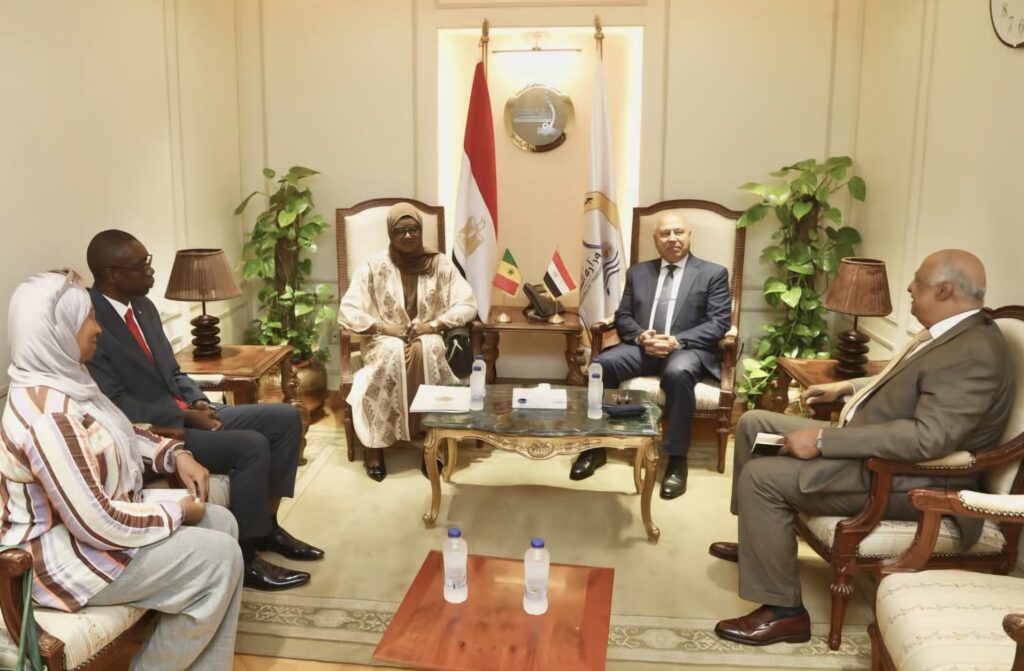
    Shipping Arabia, September 23, 2026 – Egypt and Senegal are studying the launch of a commercial shipping service between Alexandria and Dakar, aimed at strengthening maritime trade between Egypt and West Africa and creating more efficient routes for cargo moving between the two markets.

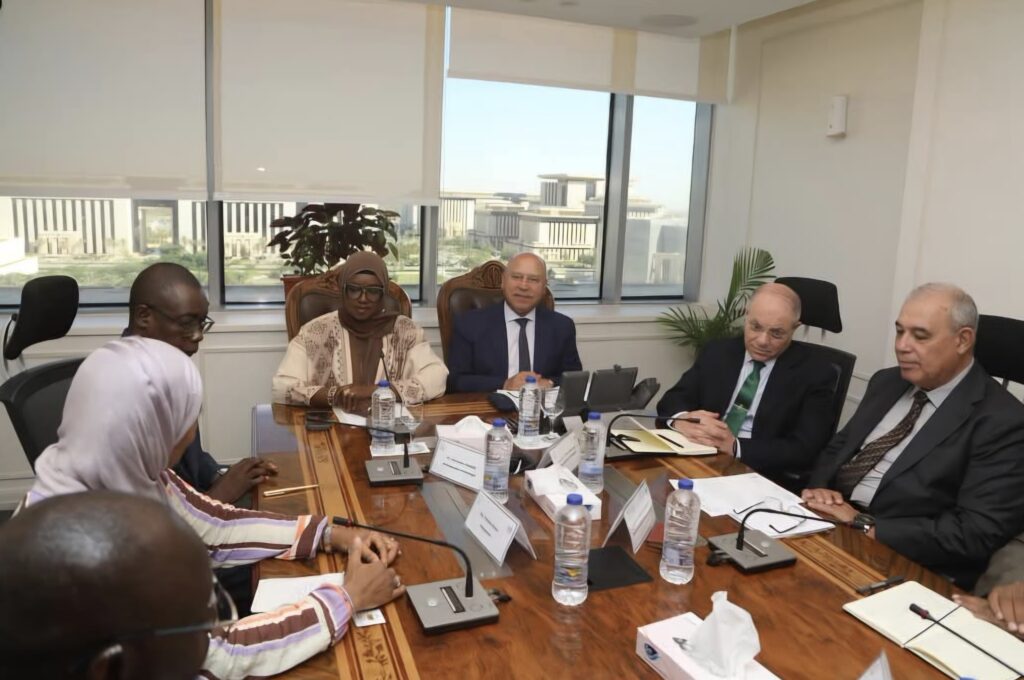
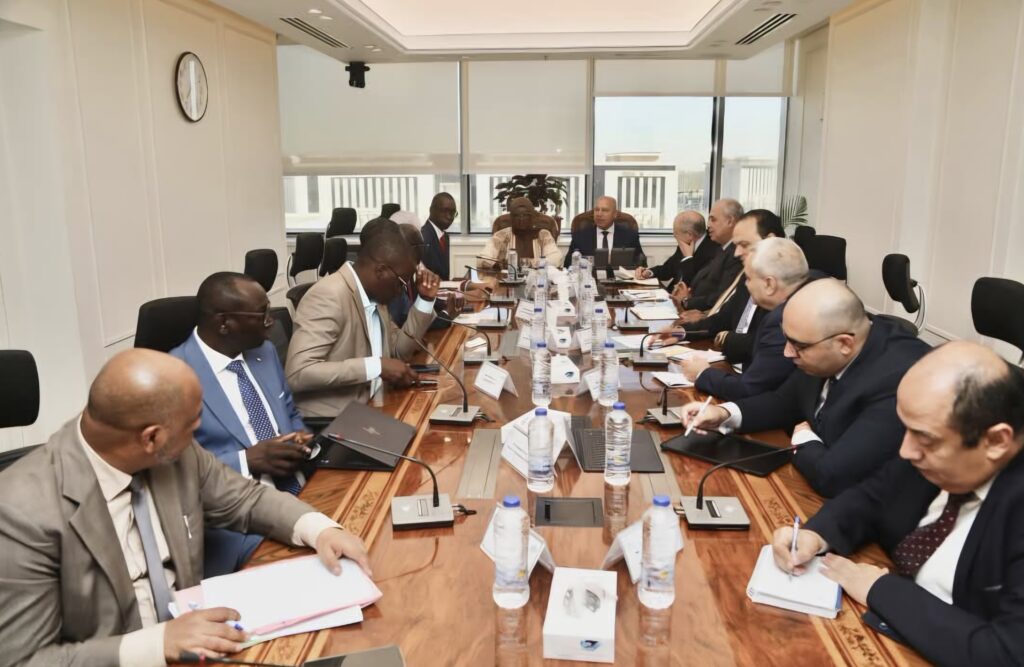
    The proposal was discussed during a meeting between Egyptian Transport Minister Kamel El-Wazir and Senegalese Minister of Fisheries, Maritime Transport, Infrastructure and Ports Amy Mara Deye, alongside officials from both countries.

    The proposed Alexandria-Dakar maritime link is intended to increase bilateral trade while providing Egyptian exporters with improved access to West African markets and supporting the movement of Senegalese products toward Middle Eastern and Arab markets.

    Discussions also covered cooperation in the construction of fishing vessels and boats, drawing on the shipbuilding and repair capabilities of Egyptian shipyards.

    Maritime training and workforce development formed another part of the talks, with the two countries considering programmes through specialized institutions including the Arab Academy for Science, Technology and Maritime Transport (AASTMT) to train Senegalese personnel in maritime transport, port infrastructure and related activities.

    El-Wazir said Egypt is seeking to translate its maritime relationship with Senegal into commercial projects, with the proposed Alexandria-Dakar service potentially serving as a starting point for broader cooperation in shipping, trade and investment between Egypt and West Africa.

    Deye expressed Senegal’s interest in expanding transport cooperation with Egypt and drawing on Egyptian experience in maritime infrastructure, shipbuilding and training.

    The two sides agreed to establish a joint working committee involving officials from both transport ministries to develop the final framework for a maritime cooperation agreement, which is expected to be prepared for signature at a later stage.

    If implemented, the Alexandria-Dakar service would add a new direct maritime connection between the Eastern Mediterranean and West Africa, supporting efforts to expand intra-African shipping connectivity and diversify regional trade corridors.

    Source: Ministry of Transport – Egypt

  • Egypt Expands Port Development Pipeline Across Damietta, Alexandria, Arish and Red Sea Corridors

    Shipping Arabia, September 20, 2026 – Egypt is advancing a broad portfolio of port, terminal, ship repair and maritime infrastructure projects across the Mediterranean and Red Sea, as the country seeks to expand cargo-handling capacity and strengthen multimodal trade corridors linking its seaports with rail and inland logistics networks.

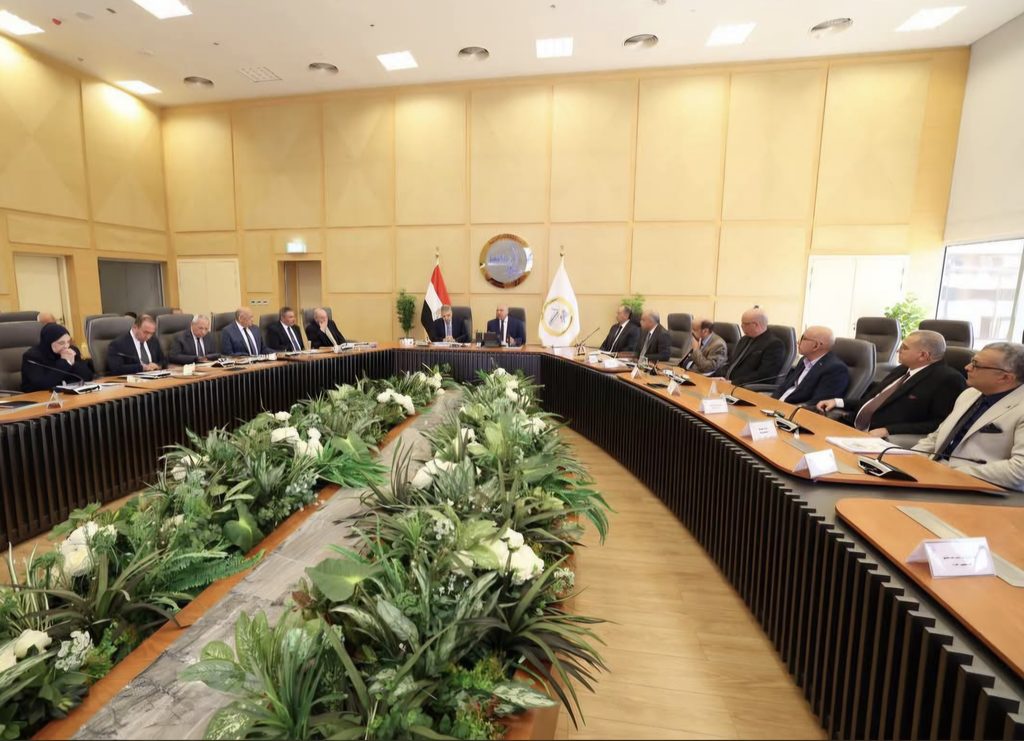
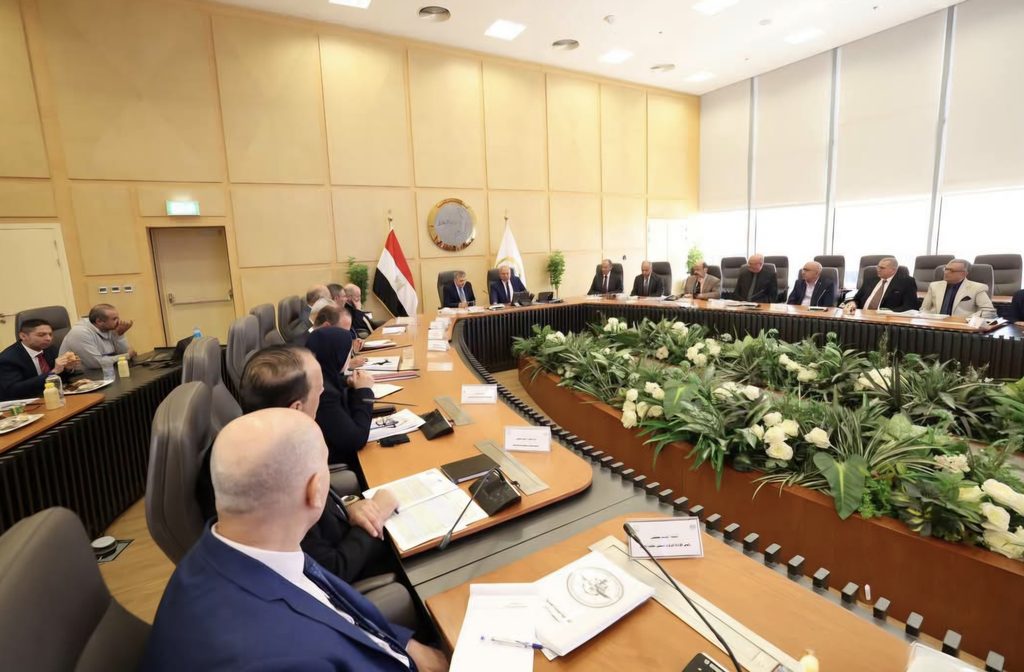
    Transport Minister Kamel El-Wazir reviewed the programme during the ordinary and extraordinary general assemblies of the Suez Canal Company for Marine Ports Development, attended by Suez Canal Authority Chairman and Managing Director Adm. Ossama Rabiee.

    Company Chairman and Managing Director Maj. Gen. Mohamed Farag presented progress on projects including dredging, reclamation and berth construction for a dry bulk terminal at El-Max Port, reclamation works at Damietta Port and development of a cement plant at Arish Port.

    The company is also involved in the Ferdan-Taba railway, a logistics terminal for handling raw materials and pellets at Adabiya, construction of an 850-meter marine berth covering a total area of 270,000 square meters, and reclamation works supporting the Tahya Misr 2 terminal.

    Other projects include Taba Port, which forms part of the Arish-Taba logistics corridor, alongside dredging and reclamation for a ship repair and recycling area at Damietta and construction of the port’s 6,920-meter western breakwater.

    El-Wazir called for the projects to remain on schedule while directing the company to expand into additional maritime infrastructure and operational activities.

    He said the company’s future role should extend beyond port construction to the management, operation and maintenance of cargo, container and multipurpose terminals and marine berths inside and outside Egypt.

    The strategy also calls for greater integration between maritime, road and rail transport, positioning port infrastructure as part of wider logistics corridors rather than standalone facilities.

    El-Wazir described the company as a key arm of Egypt’s port development programme, with a larger role expected in expanding maritime capacity and strengthening the country’s position in regional and international trade.

    Source: Ministry of Transport – Egypt

Back to top button