Aqaba

  • Aqaba Ports Cargo Handling Rises 14.3% as Iraq Transit Trade Surges

    Shipping Arabia, October 24, 2026 – Aqaba ports cargo handling increased by 14.3% during the first nine months of 2026, reaching 20.51 million tons, as container throughput, vehicle movements and transit trade recorded substantial growth. The expansion was driven by higher imports, increased handling of essential commodities and growing cargo flows to regional markets, particularly Iraq, according to figures released by the Jordan Shipping Association.

    Total cargo handling, excluding vehicles and containers, rose from approximately 17.95 million tons during the corresponding period of 2025. Import volumes exceeded 12.4 million tons, compared with around 9 million tons a year earlier, reflecting stronger cargo flows through Jordan’s maritime gateway.

    Capt. Mohammad Al-Dalabih, Secretary General of the Jordan Shipping Association, said the figures demonstrate sustained maritime and commercial activity through Aqaba. He emphasized the importance of developing port infrastructure and improving operational efficiency to accommodate rising cargo volumes and transit traffic.

    Aqaba Container Terminal Records Growth in Iraq-Bound Transit Traffic

    Aqaba Container Terminal (ACT) handled 786,948 twenty-foot equivalent units (TEU) between January and September 2026, an increase of 6.6% compared with 738,349 TEU during the same period last year.

    Transit container volumes recorded significantly stronger growth, rising 151.8% to 115,762 TEU, compared with approximately 45,000 TEU in the corresponding period of 2025. The increase highlights Aqaba’s expanding role in facilitating containerized trade to neighboring markets.

    Iraq emerged as one of the main drivers of this expansion. Container traffic destined for the Iraqi market surged 1,040.5% to 56,286 TEU, compared with only 4,935 TEU during the first nine months of 2025.

    Refrigerated import container traffic also increased, reflecting growing demand for temperature-controlled logistics services. Reefer imports rose 25.2% to 15,846 containers, compared with 12,129 containers a year earlier.

    According to the Jordan Shipping Association, the increase underscores the importance of strengthening cold chain infrastructure, refrigerated storage facilities and supporting logistics services.

    RoRo Vehicle Traffic Records Exceptional Growth

    Aqaba’s roll-on/roll-off (RoRo) sector registered substantial increases in both vehicle imports and exports during the reporting period.

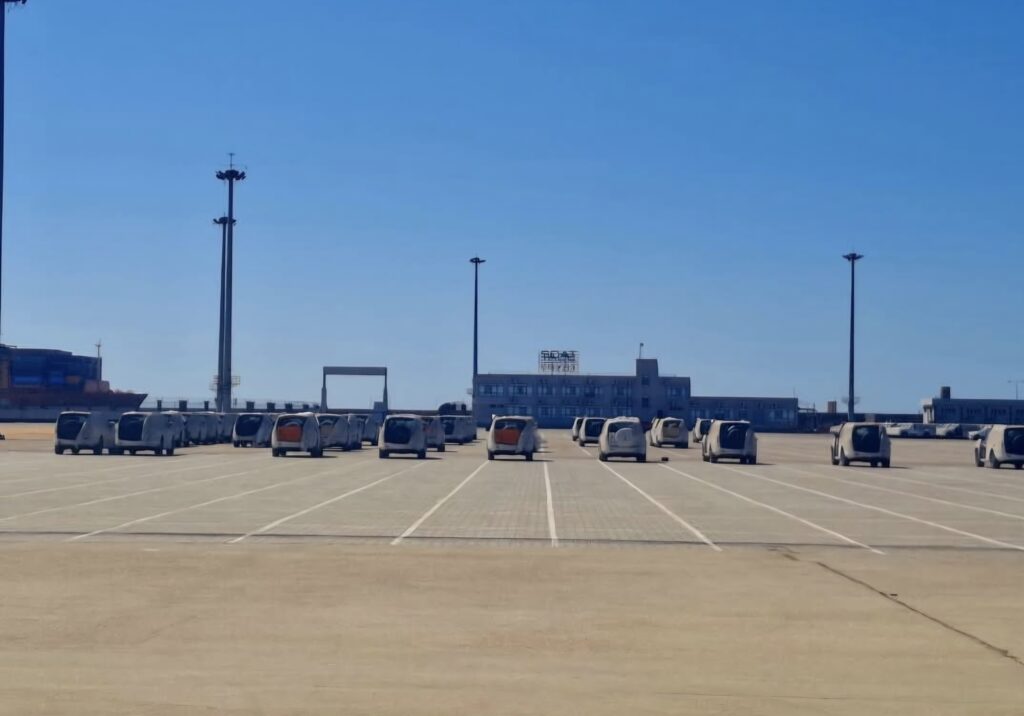
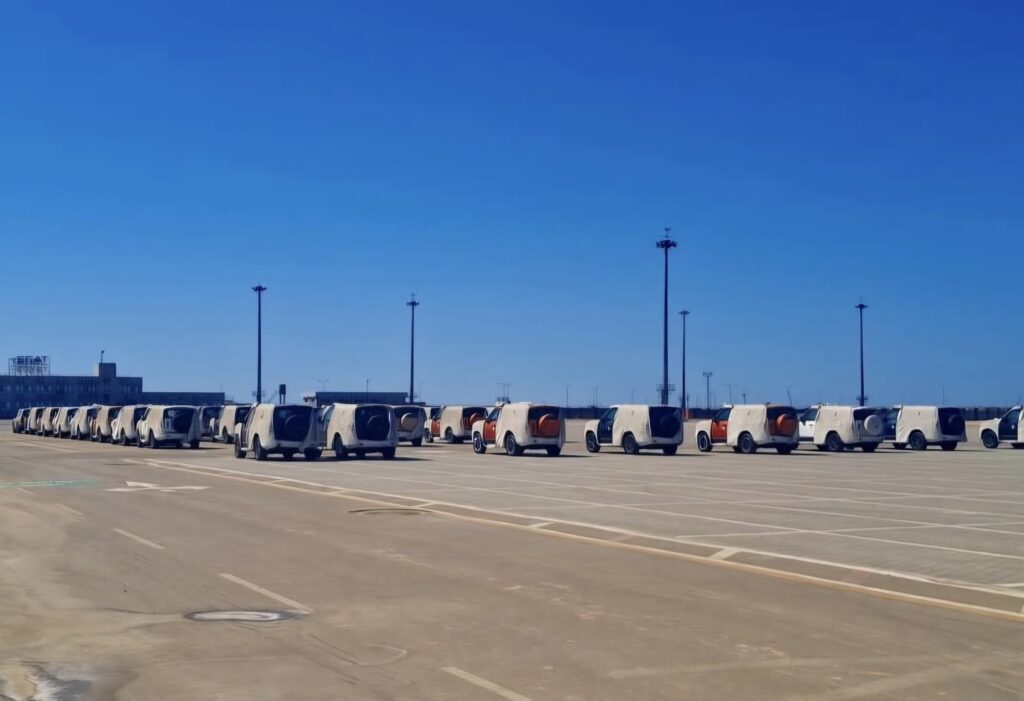
    Vehicle imports rose 114.9% to 142,955 units, compared with 66,513 vehicles during the first nine months of 2025.

    Meanwhile, vehicle exports increased by more than 1,245%, reaching 18,568 units, compared with just 1,380 vehicles during the corresponding period last year.

    Al-Dalabih attributed much of this growth to expanding vehicle transit traffic through Aqaba toward Saudi Arabia and other Arabian Gulf markets.

    The increase reinforces the importance of specialized vehicle-handling facilities, storage yards and associated logistics infrastructure in supporting regional automotive trade.

    It also places greater emphasis on maintaining efficient vehicle handling and onward transportation as transit volumes continue to expand.

    Grain Imports Increase as Iraqi Demand Strengthens

    Bulk grain and essential food commodity imports recorded substantial growth during the first nine months of 2026, supported largely by increased demand from the Iraqi market.

    Bulk corn imports increased 108.1%, exceeding 1.1 million tons, compared with approximately 552,000 tons during the corresponding period of 2025.

    Soybean imports rose 72.9% to approximately 500,000 tons, compared with 288,000 tons a year earlier. Barley imports also increased 15.6%, reaching around 972,000 tons, up from approximately 841,000 tons.

    Wheat imports recorded a 30.1% increase, reaching approximately 1.1 million tons, compared with 846,000 tons during the first nine months of 2025.

    Al-Dalabih explained that the growth was closely linked to stronger Iraqi demand for grain and other essential commodities, which increased cargo movements through Aqaba’s ports.

    He stressed the importance of maintaining efficient supply chains and ensuring that ports and border crossings have sufficient operational capacity to handle rising volumes.

    According to the association, greater coordination between port operations, transportation providers and customs clearance procedures will be essential to maintaining cargo flows and meeting the requirements of domestic and regional markets.

    Energy Cargo Expands While Livestock and Phosphate Decline

    Beyond containers, vehicles and grain, Aqaba recorded mixed performance across several other cargo segments.

    Handling of petroleum products, gas and mineral oils increased 19% to approximately 3.78 million tons during the first nine months of 2026, compared with around 3.1 million tons during the corresponding period last year.

    The increase occurred alongside expanding transit cargo movements, highlighting the importance of Aqaba’s port facilities in supporting energy supply flows and regional distribution activities.

    However, livestock imports declined significantly. The number of imported animals fell 39% to approximately 543,000 head, compared with around 890,000 during the first nine months of 2025.

    According to the reported figures, the decline was partly attributable to livestock carriers shifting their operations to Syrian ports instead of Aqaba.

    Phosphate exports also decreased, falling 18.2% to approximately 4 million tons, compared with around 4.9 million tons during the corresponding period last year.

    The decline came amid challenges affecting maritime trade, including higher shipping, transportation and insurance costs. These pressures have increased overall export expenses and affected competitiveness in international markets.

    In contrast, bulk potash exports increased 5.7% to approximately 1.9 million tons, compared with 1.8 million tons in the corresponding period of 2025.

    The figures demonstrate differing performance across Aqaba’s commodity segments despite the overall increase in cargo handling.

    Aqaba Ports Cargo Handling Growth Highlights Infrastructure Requirements

    Al-Dalabih emphasized that the continued expansion of cargo, container and vehicle traffic reinforces Aqaba’s position as a regional logistics and commercial gateway.

    The growth in Iraq-bound transit cargo and vehicle movements toward Saudi Arabia and other Arabian Gulf countries has increased the importance of maintaining efficient connections between port facilities and inland transportation networks.

    He called for continued development of port infrastructure, expansion of handling and storage capacity, and improvements to supporting logistics services.

    Particular attention should be given to strengthening coordination between ports and land border crossings, ensuring that growing cargo volumes can move efficiently toward their final destinations.

    Al-Dalabih also highlighted the need to improve customs and operational procedures, enhance transportation efficiency and expand storage facilities to support increasing trade volumes.

    According to the Jordan Shipping Association, these measures are essential to strengthening Aqaba’s competitiveness as a regional transportation and logistics hub.

    The association stressed that improving integration between port operations, border crossings and supporting logistics infrastructure will help maintain supply chain continuity amid regional and international developments.

    With container throughput approaching 787,000 TEU, vehicle traffic rising sharply and Iraq-bound transit shipments recording exceptional growth, Aqaba’s performance during the first nine months of 2026 reflects the increasing importance of its ports in regional trade.

    Source: Al Ghad
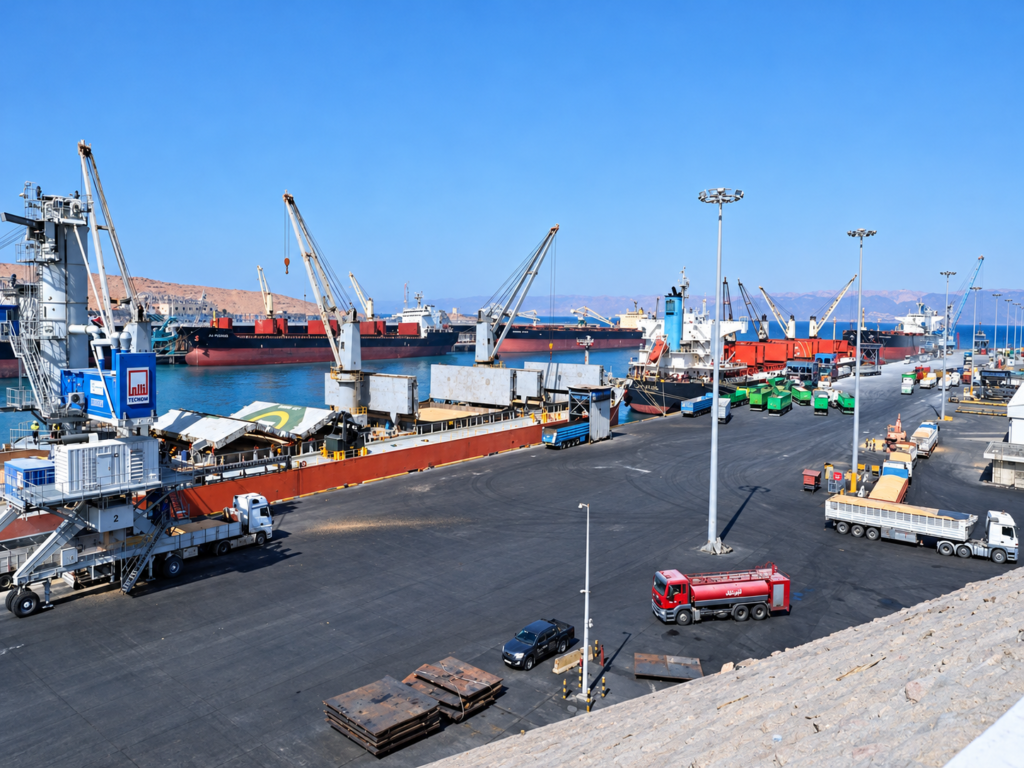
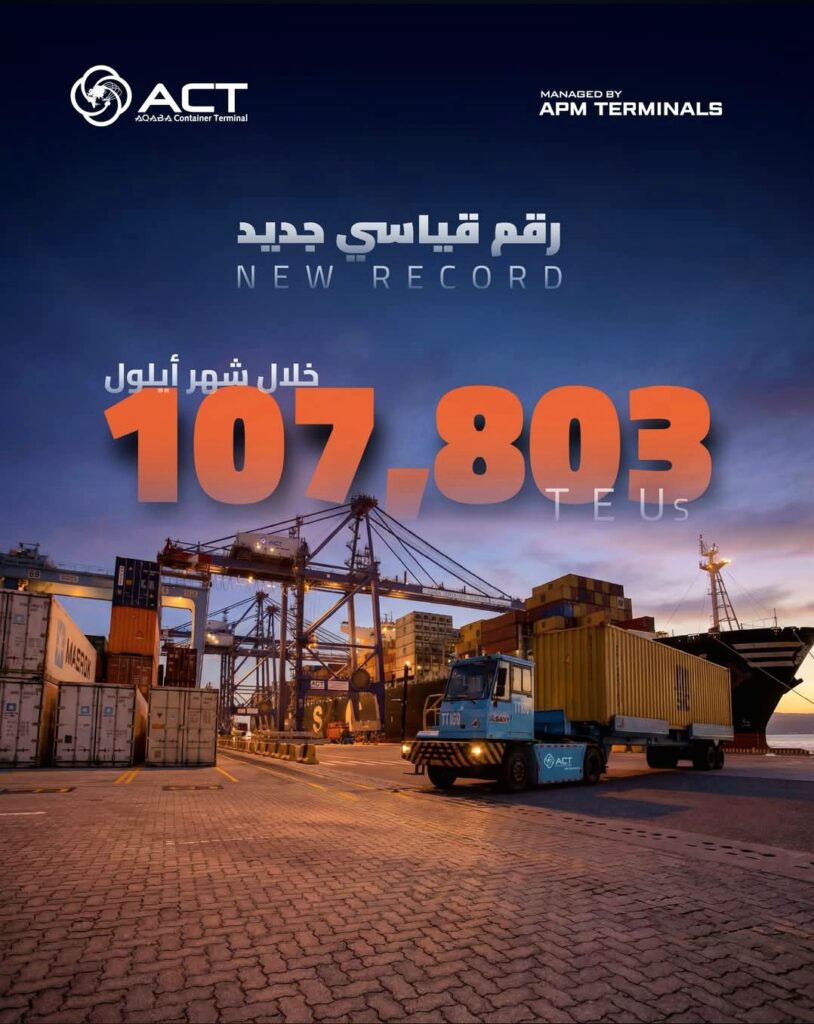
  • Aqaba Container Terminal Sets Third Consecutive Monthly Record with 107,803 TEUs in September 2026

    Shipping Arabia, October 12, 2026 – Aqaba Container Terminal (ACT) in Jordan achieved its third consecutive monthly throughput record in September 2026, handling 107,803 twenty-foot equivalent units (TEUs) across 53 vessels. The milestone marked the third straight month in which container volumes exceeded 100,000 TEUs, highlighting sustained operational momentum at Jordan’s principal container terminal.

    The September performance followed record throughput levels in July and August, extending ACT’s run of consecutive monthly records. The results reflect the terminal’s continued role in facilitating Jordan’s international trade and supporting cargo movements between the country and regional markets.

    Aqaba Container Terminal Throughput Maintains Record Levels

    ACT’s September container throughput of 107,803 TEUs represented another milestone in a period of sustained high-volume operations. The terminal surpassed the 100,000-TEU threshold for the third consecutive month, maintaining the momentum established during July and August.

    The latest figures also highlight the scale of marine activity at the terminal, with 53 vessels handled during September. ACT maintained its focus on accommodating sustained container volumes while delivering efficient and reliable services to shipping customers and supply chain partners.

    The sequence of monthly records reflects the continued importance of Aqaba within regional maritime trade flows. It also demonstrates the terminal’s capacity to handle significant container volumes as it serves Jordan and the wider regional market.

    Transit Cargo Reaches 14,712 TEUs as Truck Activity Remains Strong

    Transit cargo continued to represent an important component of ACT’s operations during September. The terminal handled 14,712 TEUs of transit shipments, reinforcing its role in facilitating the movement of goods between Jordan and regional markets.

    The transit figures highlight the importance of Aqaba’s connectivity to surrounding markets and its function as a maritime gateway for cargo moving beyond Jordan’s domestic market.

    Meanwhile, landside operations maintained high activity levels. ACT recorded 45,901 truck visits at its terminal gates during September, reflecting the substantial flow of containers between the port and inland transport networks.

    The combination of strong vessel activity, high container throughput and sustained truck movements demonstrated the terminal’s ability to manage cargo volumes across both marine and landside operations.

    According to ACT, maintaining efficient and reliable services remains essential to supporting customers and supply chain partners as the terminal handles sustained operational demand.

    ACT Reinforces Its Position as a Regional Logistics Gateway

    Commenting on the September performance, José Rueda, Chief Executive Officer of Aqaba Container Terminal, said the three consecutive months of record throughput reflected the strength and resilience of Aqaba’s position within regional trade flows.

    He emphasized that the terminal’s performance demonstrated its ability to accommodate those trade flows at scale, while maintaining the operational standards required by its customers and partners.

    Rueda also highlighted ACT’s focus on strengthening its position as a trusted regional gateway as the logistics landscape continues to evolve.

    The terminal aims to combine strong operational performance with improved connectivity, service reliability and consistent customer service standards. These priorities remain central to supporting the needs of shipping lines, logistics providers and other supply chain partners.

    According to Rueda, the sustained performance provides a strong foundation for ACT to continue contributing to the growth and competitiveness of Jordan’s logistics sector.

    The September results consolidate three consecutive months of record container throughput, reinforcing Aqaba Container Terminal’s role in facilitating regional trade and supporting Jordan’s maritime and logistics activities.

    Source: APM Terminals

    Aqaba Container Terminal in Jordan, which achieved its third consecutive monthly container throughput record in September 2026.
  • Aqaba Maritime Training Center Reports Nearly 90% Graduate Employment Rate

    Shipping Arabia, October 3, 2026 – Aqaba maritime training programs at Al-Balqa Applied University are recording graduate employment rates approaching 90%, according to Dr. Hassan Rafea Shaheen, director of the Aqaba Maritime Education and Training Center. The center combines academic study with practical maritime training and serves students as well as working seafarers seeking professional qualifications and certificate renewals.

    Maritime Programs Linked to Industry Demand

    The center currently has 112 students in Maritime Transport Technology and 114 in Marine Engineering. Since the programs were introduced, 336 students have graduated in Maritime Transport Technology and 155 in Marine Engineering. Marine Engineering runs for three years and comprises 105 credit hours, while graduates must also complete practical cadet training aboard ships before obtaining the required maritime certification.

    Simulators and Safety Training

    Training facilities include a 3D ship-engine simulator and a high-voltage systems simulator, each capable of accommodating about 12 students. Construction of a semi-Olympic swimming pool for rescue and lifeboat training has reached about 90%, while the center also operates shipboard firefighting training facilities.

    The center has trained participants from 35 nationalities and maintains agreements with maritime companies and academies. Aqaba University College is also preparing a bachelor’s program in Logistics and Supply Chain Management.

    Source: Hala News / Petra

  • Aqaba Maritime Excellence Moves From Policy to Practice on World Maritime Day

    Shipping Arabia, September 30, 2026 – Aqaba maritime excellence is increasingly being measured through practical improvements in port infrastructure, cargo handling, maritime safety, digitalization and logistics integration as Jordan seeks to strengthen its only maritime gateway and expand its role in regional transit trade.

    World Maritime Day highlights how international maritime conventions, standards and policies translate into operational results at sea and across port terminals. This year’s theme, which for the first time extends across 2026 and 2027, is “From Policy to Practice: Powering Maritime Excellence.”

    For Aqaba, the theme carries particular significance because the city serves as Jordan’s sole maritime outlet on the Red Sea and a gateway for national trade, while also supporting transit flows to regional markets.

    Maritime excellence in Aqaba therefore depends not only on international compliance, but also on effective inspections, tested emergency plans, safe pilotage and towage, efficient vessel and cargo handling, smooth truck movements and stronger connections between ports, logistics zones and transport networks.

    Aqaba Maritime Excellence Built on Port and Logistics Capacity

    Shadi Ramzi Al-Majali, Chairman of the Aqaba Special Economic Zone Authority, said World Maritime Day provides an opportunity to reaffirm Aqaba’s strategic role as Jordan’s maritime gateway and an integrated logistics platform serving national trade and regional transit flows.

    He said the 2026-2027 theme reflects the Authority’s approach of converting plans and regulations into tangible outcomes for investors and port users through more efficient services, more flexible procedures and an investment environment capable of supporting sustainable employment.

    According to Al-Majali, Aqaba has developed an integrated network of specialized ports, logistics areas and supporting marine services. The port system comprises 12 specialized terminals and 32 operational berths covering a broad range of cargo and maritime activities.

    These facilities handle containers, oil and gas, liquefied natural gas, phosphates, fertilizers, sulfur, ammonia, grain, livestock and general cargo. Aqaba also has a dedicated passenger and tourism terminal, while the new port alone contains nine multipurpose berths.

    Al-Majali said this range of terminals and berths gives Aqaba advanced operational and logistics capabilities and strengthens its readiness to accommodate different ship types and cargoes. It also supports the requirements of trade, industry and energy while reinforcing Aqaba’s position as a safe and reliable corridor for regional commerce.

    He added that coordination among port stakeholders has helped Aqaba maintain the continuity of supply chains despite regional challenges.

    Transit Growth Creates New Logistics Opportunity

    The expansion of transit traffic represents a strategic opportunity for Aqaba to strengthen its position on the regional maritime and logistics map, Al-Majali said.

    However, he stressed that capturing this opportunity requires continued investment in infrastructure, faster procedures and better connections between ports, logistics zones and transport networks.

    These measures are intended to reduce time and cost while improving the competitiveness of services offered to investors, shipping lines and other port users.

    The wider maritime system also places increasing importance on faster transaction processing, lower waiting times for vessels and cargo, and more efficient data exchange between relevant entities. These factors are central to strengthening confidence among carriers, importers and exporters using Aqaba.

    Al-Majali also said environmental protection must remain a fundamental consideration in every development or expansion project in Aqaba. Maritime excellence, he noted, should be judged not only by cargo volumes or vessel numbers, but also by the ability to combine economic growth, operational efficiency, navigational safety and environmental sustainability.

    He emphasized the importance of protecting the distinctive marine environment of the Gulf of Aqaba while maintaining the city’s role as a maritime and logistics gateway for Jordan and the wider region.

    Port Operations Focus on Berths, Equipment and Cargo Flow

    Mahmoud Khalifat, General Manager of Aqaba Ports Management and Operation Company, said World Maritime Day also recognizes the employees working across berths, yards and operations rooms to maintain cargo flows around the clock.

    He said the 2026-2027 theme directly reflects the nature of port operations because standards and plans achieve their purpose only when they become daily procedures followed by employees, supervisors and management.

    According to Khalifat, the company has strengthened the readiness of berths, equipment and yards. It has also improved cargo-handling arrangements, truck movements, safety procedures and coordination with partner institutions.

    These measures have given port operations greater flexibility in managing higher workloads and changes affecting supply chains.

    Khalifat said the continued growth of transit traffic represents an important opportunity for Aqaba. He added that continuous training, occupational safety and the modernization of operating methods remain among the company’s leading priorities as Jordanian personnel prepare to manage the next phase of port activity.

    Jordan Maritime Commission Strengthens Safety and Regulation

    Ahmad Al-Assasleh, Director General of the Jordan Maritime Commission, said World Maritime Day reinforces Jordan’s commitment to international maritime conventions and standards, navigational safety, maritime security and protection of the marine environment.

    He said these responsibilities support the reliability of Aqaba’s ports and their role in serving national trade and regional transit movements.

    Al-Assasleh said the theme of moving from policy to practice reflects the Commission’s role in converting international commitments into operational measures. These include ship inspections, regulation of navigation, verification of safety requirements and preparedness for maritime emergencies.

    The Commission is also continuing to review and update maritime legislation and instructions while developing regulatory, technical and digital services in line with international best practices.

    According to Al-Assasleh, these measures aim to improve performance and accelerate transactions without compromising maritime safety and security, particularly as vessel, cargo and transit activity through Aqaba increases.

    The Commission’s responsibilities also extend to Jordanian seafarers working aboard vessels around the world. It verifies their qualifications, documentation and certificates, follows their professional conditions and contributes to protecting their rights.

    Al-Assasleh said investment in the training and qualification of Jordanian seafarers supports their presence in the international maritime labor market. The Commission is also continuing to strengthen emergency preparedness and reduce pollution risks to protect the Gulf of Aqaba.

    Aqaba Container Terminal Advances Operational and Digital Systems

    José Rueda, General Manager of Aqaba Container Terminal, said World Maritime Day highlights the terminal’s responsibility at the center of Jordan’s national supply chain and recognizes employees who maintain the flow of containers through the facility.

    He said the terminal translates development plans into practical improvements in equipment performance, yard management, vessel services and data exchange with partners.

    Development of operational and digital systems, together with improved management of equipment and resources, has strengthened the terminal’s operational flexibility and its ability to respond to changes in vessel schedules and demand volumes.

    Rueda said operating teams have also demonstrated their ability to maintain service continuity under exceptional conditions, reflecting the accumulated experience of Jordanian personnel.

    Marine Services Strengthen Pilotage, Towage and Emergency Response

    Frederik Rutgers, General Manager of Aqaba Port Marine Services Company, said maritime excellence also begins before a vessel reaches the berth.

    He highlighted the role of marine pilots, tug crews, engineers and operations-room personnel in applying safety standards from the moment a vessel approaches Jordanian waters until it berths and later departs safely.

    Rutgers said the company has strengthened its capabilities in pilotage, towage, mooring, maneuvering and emergency response since its establishment. It has also improved coordination with ports and specialized maritime authorities.

    Training and joint exercises have increased the ability of operational teams to respond to fires, pollution incidents and other potential emergencies, helping protect people, infrastructure and the marine environment.

    As vessel numbers grow and ship sizes become more diverse, Rutgers said the efficiency of tugs and pilots and the speed of operational response become increasingly important in reducing waiting times without compromising safety.

    He added that the company will continue investing in training Jordanian maritime personnel and in technologies that support accurate and efficient marine operations.

    Across Aqaba’s maritime sector, the move from policy to practice is being reflected in inspections, training, operational readiness, port equipment, digital systems and daily safety procedures. The continued development of infrastructure, technology and human capital remains central to strengthening Aqaba’s role as a safe, efficient and competitive maritime gateway.

    Source: Al Ghad

  • Aqaba Port Cargo Handling Jumps 49% to 9.48 Million Tonnes

    Shipping Arabia, September 25, 2026 – Cargo handling at Aqaba’s main port surged 49% year-on-year to 9.48 million tonnes during the first eight months of 2026, accompanied by a sharp increase in truck traffic as Jordan’s only seaport handles growing domestic and regional trade flows.

    Dr. Mahmoud Khleifat, Director General of Aqaba Company for Ports Operation and Management, said throughput reached approximately 9.482 million tonnes through the end of August, compared with 6.382 million tonnes during the same period in 2025.

    Truck movements increased even faster, rising 51% to around 129,900 trucks, from 85,551 during the corresponding period last year.

    The increase reflects stronger activity at Aqaba as the port serves both Jordan’s domestic economy and growing cargo flows involving neighboring markets. Khleifat said coordination among stakeholders in the Aqaba Special Economic Zone and government agencies has helped streamline procedures and improve the movement of cargo to and from the port.

    The main port handles a broad range of cargoes and vessel types, providing an important component of Aqaba’s wider maritime and logistics infrastructure alongside the kingdom’s container, Ro-Ro and specialized terminal facilities.

    Khleifat said the port is continuing to develop its operations with a focus on safety, operational efficiency and sustainability while maintaining handling services capable of supporting changing trade and supply chain requirements.

    The growth further strengthens Aqaba’s role as Jordan’s maritime gateway and an increasingly important regional logistics and transit corridor, particularly as changing regional trade patterns generate additional cargo flows through the kingdom.

    Source: Addustour

  • Jordan Shipping Association Reviews Aqaba Port Capacity as Vehicle and Cargo Volumes Rise

    Shipping Arabia, September 22, 2026 – The Jordan Shipping Association has reviewed operational and logistics pressures at Aqaba following a sharp increase in vehicle and cargo volumes moving through Jordan’s principal maritime gateway.

    A delegation headed by JSA Chairman Zaid Al-Kalaldeh conducted a field visit to Aqaba on September 15, meeting port and development officials and inspecting vehicle storage areas and measures being taken to accommodate higher cargo volumes.

    The delegation included Secretary-General Capt. Mohammad Al-Dalabieh and Board Members Mashhoor Al-Jazi, AbdulRahman Ali and Mohammad Abdelhadi.

    At the Aqaba Cruise Terminal, the delegation met Rashad Al Maslat, AD Ports Country Operations Manager, and Amer Al Hammouri, Operations and Planning Lead at Aqaba Cruise Terminal, reviewing measures to address growing operational pressure, including preparation of additional yard capacity and reinforcement of personnel to maintain vehicle flows and operational efficiency.

    The delegation also met Dr. Mahmoud Khleifat, Director General of Aqaba Company for Ports Operation and Management, and Operations Manager Capt. Mohammad Al-Halawi. Discussions focused on current operations and efforts to expand storage yards and increase capacity despite constraints involving available equipment and resources.

    During a separate meeting with Hussein Al-Safadi, CEO of Aqaba Development Corporation, and Abdessalam Obeidat, Chief Transport and Logistics Officer, the two sides discussed closer coordination with the maritime sector and proposals aimed at improving port efficiency and maintaining smoother cargo flows.

    JSA said direct engagement with port stakeholders is increasingly important as Aqaba handles growing trade volumes and associated pressure on yards, equipment and inland cargo movements.

    The association said it will continue coordinating with government and operational stakeholders, including Jordan Customs, to facilitate vehicle and cargo movements, address emerging operational constraints and strengthen Aqaba’s role as Jordan’s maritime gateway.

    Source: Jordan Shipping Association

  • East Port Said Handles 235 Vehicles for Aqaba as SCAT Ro-Ro Activity Grows

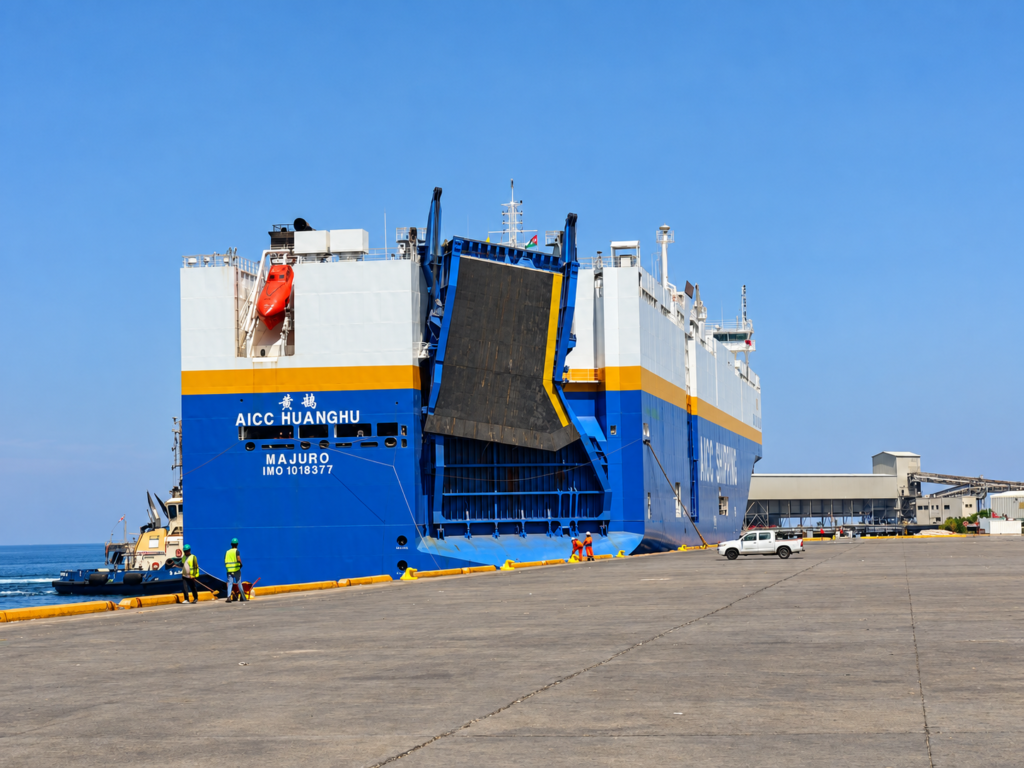
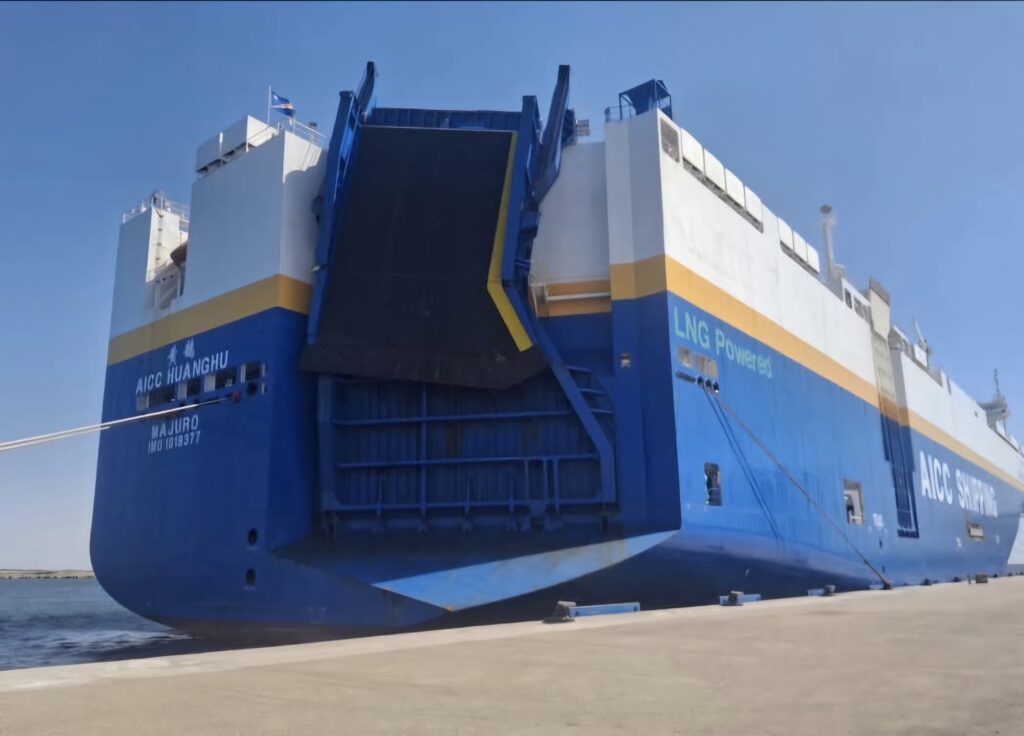
    Shipping Arabia, September 22, 2026 – East Port Said Port has received the vehicle carrier AICC HUANGHU at the Suez Canal Automotive Terminal (SCAT), where the vessel is loading 235 vehicles for onward shipment to Aqaba.

    The Ro-Ro vessel arrived from Alexandria and will depart for Aqaba following completion of loading operations, highlighting the developing vehicle shipping connection between Egypt’s Mediterranean ports and Jordan’s principal maritime gateway on the Red Sea.

    AICC HUANGHU is a specialized vehicle carrier measuring 200 meters in length and 38 meters in beam, with a draught of 9 meters.

    The Suez Canal Economic Zone said the call forms part of continued vehicle-handling activity across its ports and the growing use of SCAT for automotive and transit cargo.

    Since beginning official operations in November 2025, SCAT has handled seven specialized vehicle carriers carrying a combined 4,735 vehicles. AICC HUANGHU was among the first vessels handled by the terminal and has now returned for another call.

    The latest operation demonstrates SCAT’s developing role in Ro-Ro and automotive logistics, while the onward movement to Aqaba reflects the integration of regional maritime routes linking Mediterranean and Red Sea gateways.

    SCAT forms part of the wider development of East Port Said’s logistics and cargo-handling capabilities, with vehicle transit operations adding another segment to the port’s growing maritime activity.

    Source: Suez Canal Economic Zone

  • Jordan Supply Chain Committee Reviews Bab el-Mandeb and Hormuz Impact as Pressure Builds on Aqaba

    Shipping Arabia, September 21, 2026 – Jordan’s Supply Chain, Provisioning and Food Security Follow-up Committee has reviewed the impact of shipping disruptions through the Bab el-Mandeb and Strait of Hormuz on cargo flows, freight and insurance costs, as rising regional demand continues to place pressure on Aqaba ports and border crossings.

    The committee met at the Jordan Shipping Association with representatives from the country’s shipping, logistics, customs clearance and commercial sectors to assess changing sailing routes, longer transit times, higher transport and insurance costs and their impact on the movement of goods into Jordan.

    The meeting was attended by Jordan Chamber of Commerce Chairman Khalil Al-Haj Tawfiq; Amman Chamber of Commerce First Vice Chairman Nabil Al-Khatib; Jordan Shipping Association Chairman Zaid Al-Kalaldeh; Clearance Companies and Cargo Transporters Syndicate President Dr. Deifallah Abu Aqoula; Jordan Logistics Association Chairman Nizar Saleh; JSA Secretary-General Capt. Mohammad Al-Dalabieh; and Assistant General Manager Raad Hakouz, alongside representatives of the shipping, logistics and clearance sectors.

    Discussions focused on growing operational pressure across Aqaba, border crossings and inland transport corridors, including challenges affecting truck and cargo movements as regional maritime disruption changes established trade routes.

    Participants also reviewed measures adopted following earlier committee meetings and their impact on cargo flows and operational procedures. Several implemented measures were reported to have improved conditions, but other recommendations remain under implementation.

    The committee said the significant increase in demand on Aqaba ports and Jordan’s border crossings makes faster completion of the remaining measures increasingly important to ease bottlenecks and improve supply chain efficiency.

    Members stressed the need for continuous exchange of operational information between the public and private sectors and stronger readiness to respond quickly to further changes in regional shipping and overland transport.

    The committee will continue monitoring implementation of its recommendations as Jordan works to maintain uninterrupted cargo flows and strengthen the ability of Aqaba and the country’s land corridors to serve both domestic supply chains and growing regional trade movements.

    Source: Jordan Shipping Association

  • Jordan Pushes Supply Chain Resilience as Aqaba Takes Center Stage in Logistics Security

    Shipping Arabia, September 20, 2026 – Jordan is moving to strengthen supply chain resilience, strategic inventories and alternative logistics routes, with industry representatives calling for faster customs clearance and continued coordination with global shipping lines to safeguard cargo flows through Aqaba.

    The discussions follow directives by Crown Prince Al Hussein bin Abdullah II, while chairing part of a Cabinet session on September 16, to treat supply chains as a national priority and take measures to maintain strategic stocks of essential goods amid regional economic and logistics pressures.

    Nabil Al-Khatib, First Vice Chairman of the Amman Chamber of Commerce, said Jordan should move beyond the traditional concept of strategic stockpiles toward a broader national logistics security framework. He proposed establishing a national council bringing together the public and private sectors to oversee supply chain continuity, strategic inventories and measurable implementation plans.

    Al-Khatib said priorities should include diversifying supply sources and transport routes, accelerating cargo clearance and release, improving logistics efficiency and developing an integrated national database covering inventories and supply chains.

    Dr. Deifallah Abu Aqoula, President of the Clearance Companies and Cargo Transporters Syndicate, called for greater use of pre-arrival clearance and green-lane procedures for essential goods, alongside incentives to expand private-sector storage capacity. He also stressed the need to diversify import origins and transport corridors rather than relying on a single route.

    Abu Aqoula said rising freight and insurance costs and disruption to international logistics corridors have increased the importance of coordinated contingency planning, data sharing and faster decision-making between government agencies and the private sector.

    Hamza Al-Halaika, Board Member of the General Syndicate of Foodstuff Traders, highlighted the maritime dimension of the strategy, calling for closer coordination with global shipping lines to maintain the priority and continuity of cargo arrivals at Aqaba Port, alongside faster movement through customs and other regulatory procedures.

    The proposals place Aqaba, Jordan’s principal maritime gateway, at the center of efforts to build a more resilient national logistics system, supported by diversified transport routes, faster cargo flows, strategic storage and closer public-private coordination.

    Source: Jordan News Agency – Petra

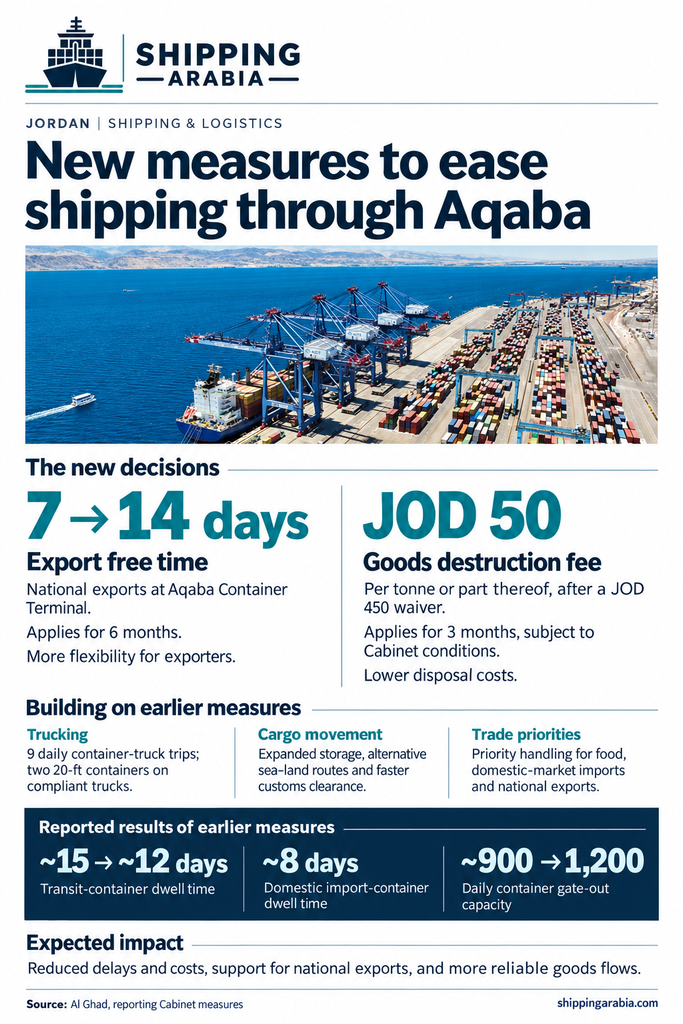
  • Jordan Extends Aqaba Export Free Time as Government Moves to Ease Port and Supply Chain Pressure

    Shipping Arabia, September 19, 2026 – Jordan has approved a new package of measures to ease operational pressure across Aqaba’s port and logistics system, including doubling the free period for national exports at Aqaba Container Terminal from seven to 14 days for six months, as the kingdom moves to strengthen supply chain resilience and maintain cargo flows.

    The measures were approved by the Cabinet, chaired by Prime Minister Dr. Jaafar Hassan, and build on earlier steps to expand storage capacity, develop logistics centers and supporting infrastructure, accelerate customs clearance and provide alternative sea-land multimodal corridors.

    The government also reduced the charge associated with the destruction of cargo from JOD 450 to JOD 50 per tonne or part thereof for three months, subject to specified conditions and coordination with the Ministry of Finance.

    Operational measures already introduced include transferring part of customs clearance activity to Amman Customs, exempting transit truck movements through border crossings from existing trip limits for three months and increasing the permitted number of daily container-truck trips to nine.

    Trucks meeting technical and safety requirements are also being permitted to carry two 20-foot containers on a single vehicle, while priority in handling, clearance and gate-out is being given to food cargo, imports destined for the domestic market and Jordanian exports.

    The measures are already being reflected in port performance. Average dwell time for transit containers has fallen from around 15 days to 12 days, while inbound local containers are averaging around eight days. Daily container gate-out capacity has increased from approximately 900 to 1,200 containers, helping reduce pressure on the port and accelerate cargo movement.

    The latest measures reinforce Aqaba’s role as Jordan’s principal maritime gateway and an increasingly important regional transit corridor, with the government seeking to increase port capacity and logistics flexibility while limiting additional costs caused by shipping delays and regional supply chain disruption.

    Source: Alghad

Back to top button