Aqaba Ports Cargo Handling Rises 14.3% as Iraq Transit Trade Surges

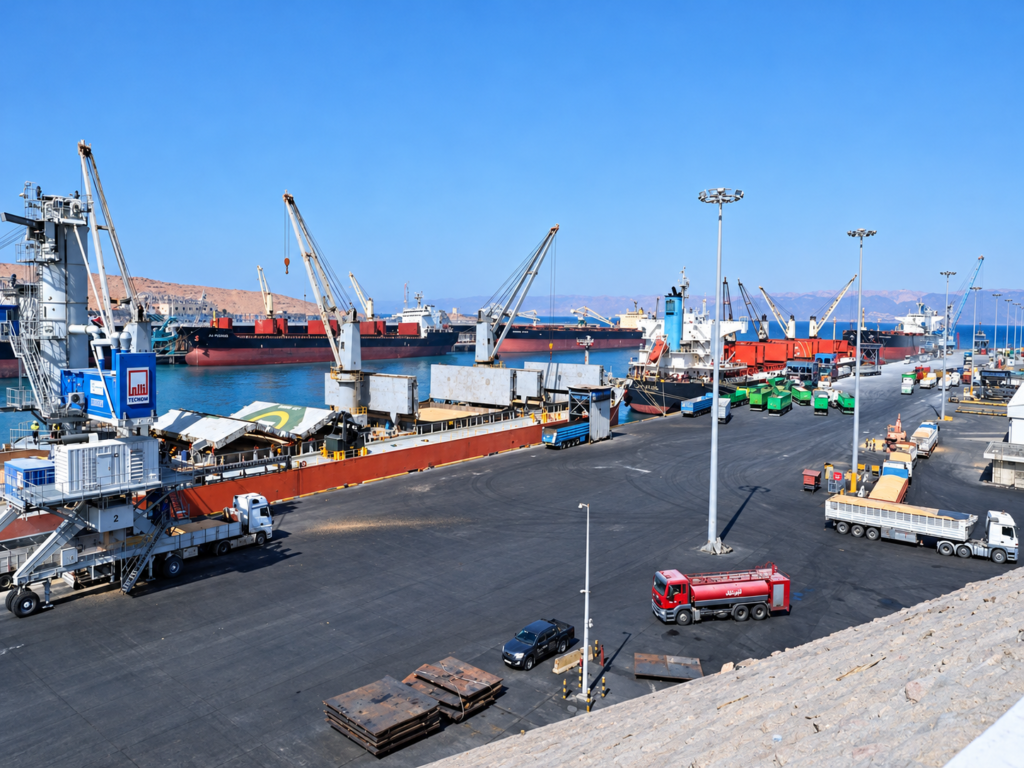
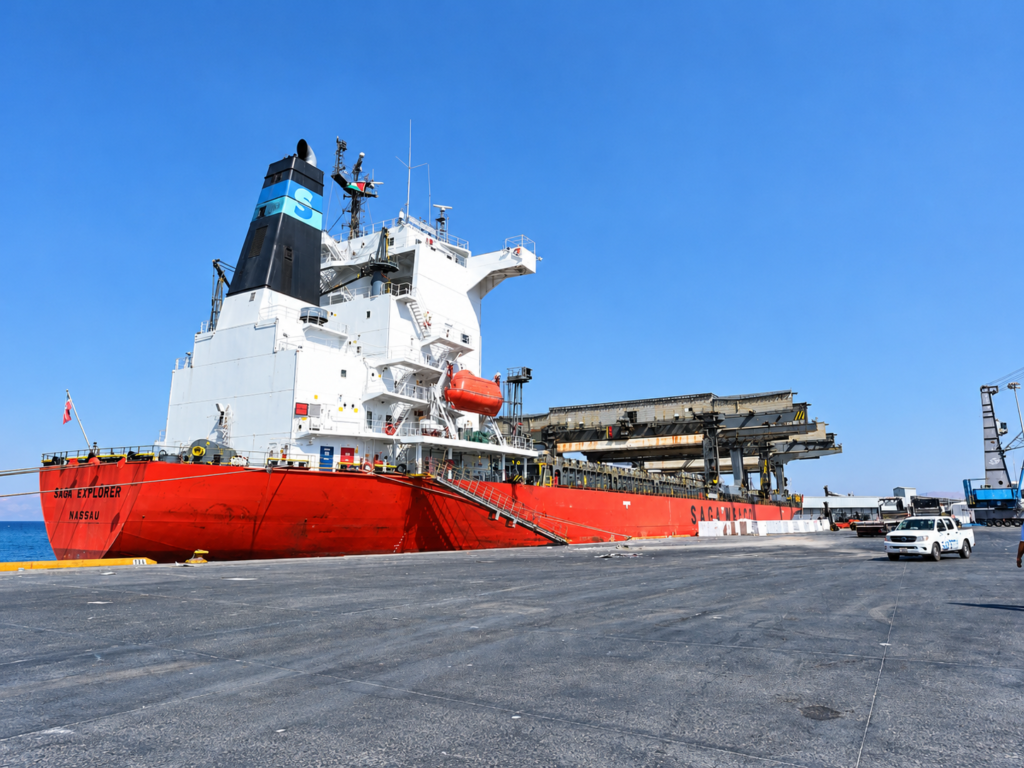
Shipping Arabia, October 24, 2026 – Aqaba ports cargo handling increased by 14.3% during the first nine months of 2026, reaching 20.51 million tons, as container throughput, vehicle movements and transit trade recorded substantial growth. The expansion was driven by higher imports, increased handling of essential commodities and growing cargo flows to regional markets, particularly Iraq, according to figures released by the Jordan Shipping Association.
Total cargo handling, excluding vehicles and containers, rose from approximately 17.95 million tons during the corresponding period of 2025. Import volumes exceeded 12.4 million tons, compared with around 9 million tons a year earlier, reflecting stronger cargo flows through Jordan’s maritime gateway.
Capt. Mohammad Al-Dalabih, Secretary General of the Jordan Shipping Association, said the figures demonstrate sustained maritime and commercial activity through Aqaba. He emphasized the importance of developing port infrastructure and improving operational efficiency to accommodate rising cargo volumes and transit traffic.
Aqaba Container Terminal Records Growth in Iraq-Bound Transit Traffic
Aqaba Container Terminal (ACT) handled 786,948 twenty-foot equivalent units (TEU) between January and September 2026, an increase of 6.6% compared with 738,349 TEU during the same period last year.
Transit container volumes recorded significantly stronger growth, rising 151.8% to 115,762 TEU, compared with approximately 45,000 TEU in the corresponding period of 2025. The increase highlights Aqaba’s expanding role in facilitating containerized trade to neighboring markets.
Iraq emerged as one of the main drivers of this expansion. Container traffic destined for the Iraqi market surged 1,040.5% to 56,286 TEU, compared with only 4,935 TEU during the first nine months of 2025.
Refrigerated import container traffic also increased, reflecting growing demand for temperature-controlled logistics services. Reefer imports rose 25.2% to 15,846 containers, compared with 12,129 containers a year earlier.
According to the Jordan Shipping Association, the increase underscores the importance of strengthening cold chain infrastructure, refrigerated storage facilities and supporting logistics services.
RoRo Vehicle Traffic Records Exceptional Growth
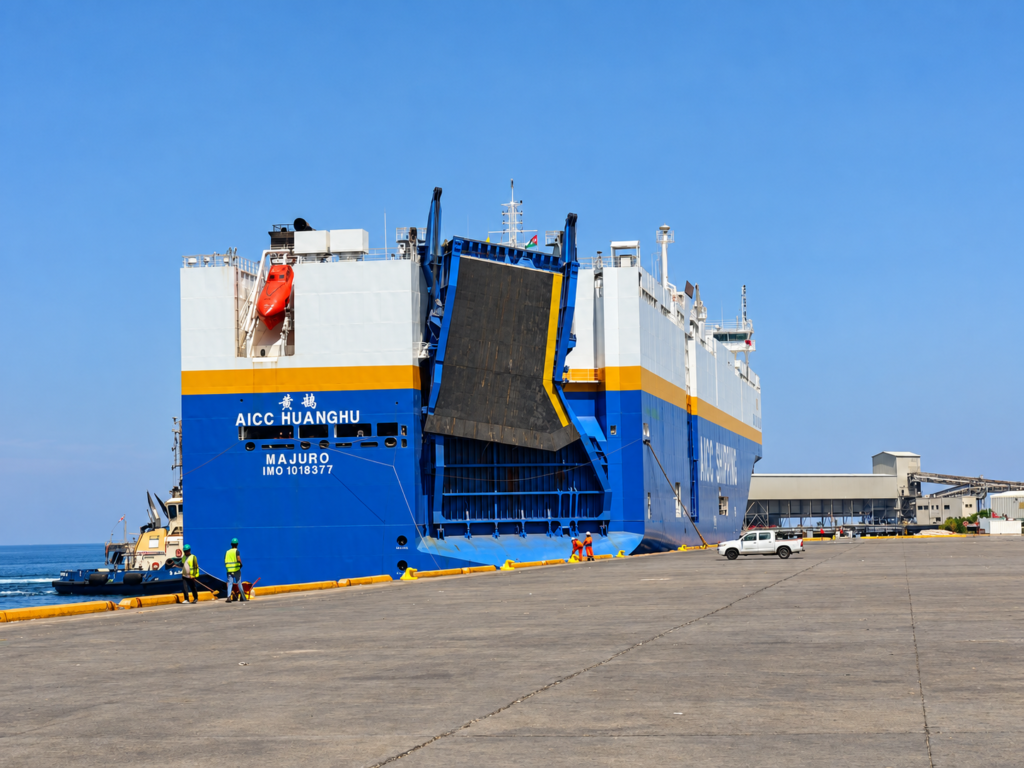
Aqaba’s roll-on/roll-off (RoRo) sector registered substantial increases in both vehicle imports and exports during the reporting period.
Vehicle imports rose 114.9% to 142,955 units, compared with 66,513 vehicles during the first nine months of 2025.
Meanwhile, vehicle exports increased by more than 1,245%, reaching 18,568 units, compared with just 1,380 vehicles during the corresponding period last year.
Al-Dalabih attributed much of this growth to expanding vehicle transit traffic through Aqaba toward Saudi Arabia and other Arabian Gulf markets.
The increase reinforces the importance of specialized vehicle-handling facilities, storage yards and associated logistics infrastructure in supporting regional automotive trade.
It also places greater emphasis on maintaining efficient vehicle handling and onward transportation as transit volumes continue to expand.
Grain Imports Increase as Iraqi Demand Strengthens
Bulk grain and essential food commodity imports recorded substantial growth during the first nine months of 2026, supported largely by increased demand from the Iraqi market.
Bulk corn imports increased 108.1%, exceeding 1.1 million tons, compared with approximately 552,000 tons during the corresponding period of 2025.
Soybean imports rose 72.9% to approximately 500,000 tons, compared with 288,000 tons a year earlier. Barley imports also increased 15.6%, reaching around 972,000 tons, up from approximately 841,000 tons.
Wheat imports recorded a 30.1% increase, reaching approximately 1.1 million tons, compared with 846,000 tons during the first nine months of 2025.
Al-Dalabih explained that the growth was closely linked to stronger Iraqi demand for grain and other essential commodities, which increased cargo movements through Aqaba’s ports.
He stressed the importance of maintaining efficient supply chains and ensuring that ports and border crossings have sufficient operational capacity to handle rising volumes.
According to the association, greater coordination between port operations, transportation providers and customs clearance procedures will be essential to maintaining cargo flows and meeting the requirements of domestic and regional markets.
Energy Cargo Expands While Livestock and Phosphate Decline
Beyond containers, vehicles and grain, Aqaba recorded mixed performance across several other cargo segments.
Handling of petroleum products, gas and mineral oils increased 19% to approximately 3.78 million tons during the first nine months of 2026, compared with around 3.1 million tons during the corresponding period last year.
The increase occurred alongside expanding transit cargo movements, highlighting the importance of Aqaba’s port facilities in supporting energy supply flows and regional distribution activities.
However, livestock imports declined significantly. The number of imported animals fell 39% to approximately 543,000 head, compared with around 890,000 during the first nine months of 2025.
According to the reported figures, the decline was partly attributable to livestock carriers shifting their operations to Syrian ports instead of Aqaba.
Phosphate exports also decreased, falling 18.2% to approximately 4 million tons, compared with around 4.9 million tons during the corresponding period last year.
The decline came amid challenges affecting maritime trade, including higher shipping, transportation and insurance costs. These pressures have increased overall export expenses and affected competitiveness in international markets.
In contrast, bulk potash exports increased 5.7% to approximately 1.9 million tons, compared with 1.8 million tons in the corresponding period of 2025.
The figures demonstrate differing performance across Aqaba’s commodity segments despite the overall increase in cargo handling.
Aqaba Ports Cargo Handling Growth Highlights Infrastructure Requirements
Al-Dalabih emphasized that the continued expansion of cargo, container and vehicle traffic reinforces Aqaba’s position as a regional logistics and commercial gateway.
The growth in Iraq-bound transit cargo and vehicle movements toward Saudi Arabia and other Arabian Gulf countries has increased the importance of maintaining efficient connections between port facilities and inland transportation networks.
He called for continued development of port infrastructure, expansion of handling and storage capacity, and improvements to supporting logistics services.
Particular attention should be given to strengthening coordination between ports and land border crossings, ensuring that growing cargo volumes can move efficiently toward their final destinations.
Al-Dalabih also highlighted the need to improve customs and operational procedures, enhance transportation efficiency and expand storage facilities to support increasing trade volumes.
According to the Jordan Shipping Association, these measures are essential to strengthening Aqaba’s competitiveness as a regional transportation and logistics hub.
The association stressed that improving integration between port operations, border crossings and supporting logistics infrastructure will help maintain supply chain continuity amid regional and international developments.
With container throughput approaching 787,000 TEU, vehicle traffic rising sharply and Iraq-bound transit shipments recording exceptional growth, Aqaba’s performance during the first nine months of 2026 reflects the increasing importance of its ports in regional trade.
Source: Al Ghad