Asia-Europe Trade

  • Maersk, Hapag-Lloyd Return Four More Gemini Services to Suez Canal

    Shipping Arabia, September 21, 2026 – Maersk and Hapag-Lloyd are returning four additional Gemini Cooperation services to the Red Sea and Suez Canal, marking another significant step in the gradual restoration of Asia-Europe container shipping through the shorter trans-Suez corridor.

    The carriers announced that the AE5, AE11, AE12 and ME2 services — known respectively as NE4, SE2, SE1 and IEX in Hapag-Lloyd’s network — will shift from routing around the Cape of Good Hope to the Suez Canal following a further assessment of security conditions in the Red Sea.

    The changes expand the number of Gemini services returning to Suez following earlier resumptions. Maersk said the four services will join AE15 and AE19, which are already operating through the canal.

    The first westbound sailings include Antonia Maersk on AE11 and Cornelia Maersk on ME2, both departing their final Asian calls before Suez on September 19, followed by Marchen Maersk on AE5 on September 21. The first AE12 sailing will be announced separately.

    Eastbound implementation begins with Maastricht Maersk on AE5 on September 22, followed by Maersk Halifax on AE11 on September 28 and Cornelia Maersk on ME2 on October 31.

    The returning services connect major Asian gateways with Northern Europe and the Mediterranean, including London, Bremerhaven, Hamburg, Rotterdam, Algeciras, Valencia, Barcelona, La Spezia, Genoa, Koper and Rijeka.

    Maersk and Hapag-Lloyd said routing through the Red Sea and Suez Canal provides shorter and more efficient transit times between Asia and Europe compared with the diversion around the Cape of Good Hope.

    Both carriers stressed that further network decisions will remain dependent on security conditions in the region, with crew, vessel and cargo safety continuing to determine the pace of the return.

    The addition of four more Gemini services represents a further recovery of mainline container traffic through the Suez Canal, as carriers progressively restore capacity to the traditional Asia-Europe maritime corridor.

    Source: Almal News
  • Suez Canal Container Ship Tonnage Jumps 54.2% as COSCO Returns

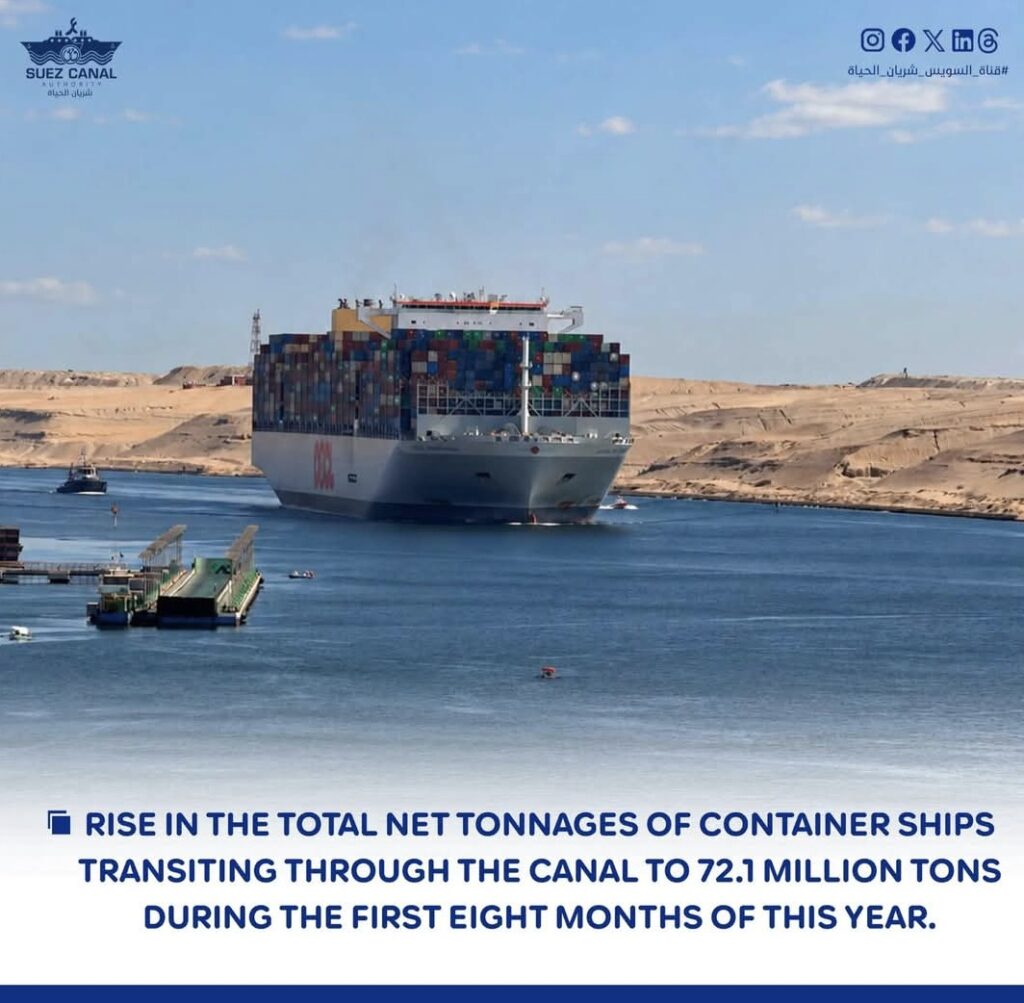
    Shipping Arabia, September 21, 2026 – Container ship traffic through the Suez Canal is showing a significant recovery, with total net tonnage rising 54.2% during the first eight months of 2026, as major carriers gradually restore services through the waterway.

    The Suez Canal Authority said container ships transiting the canal recorded approximately 72.1 million tonnes of net tonnage between January and August, compared with 46.7 million tonnes during the same period of 2025.

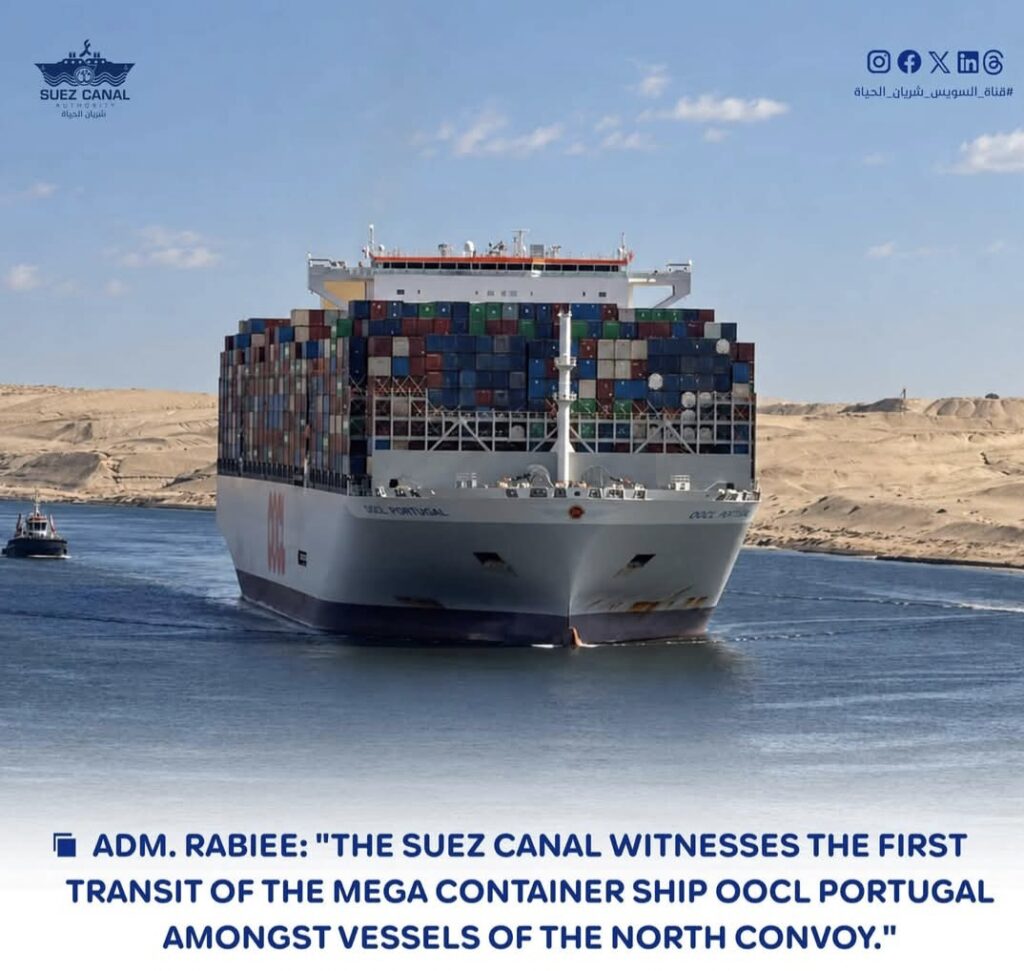
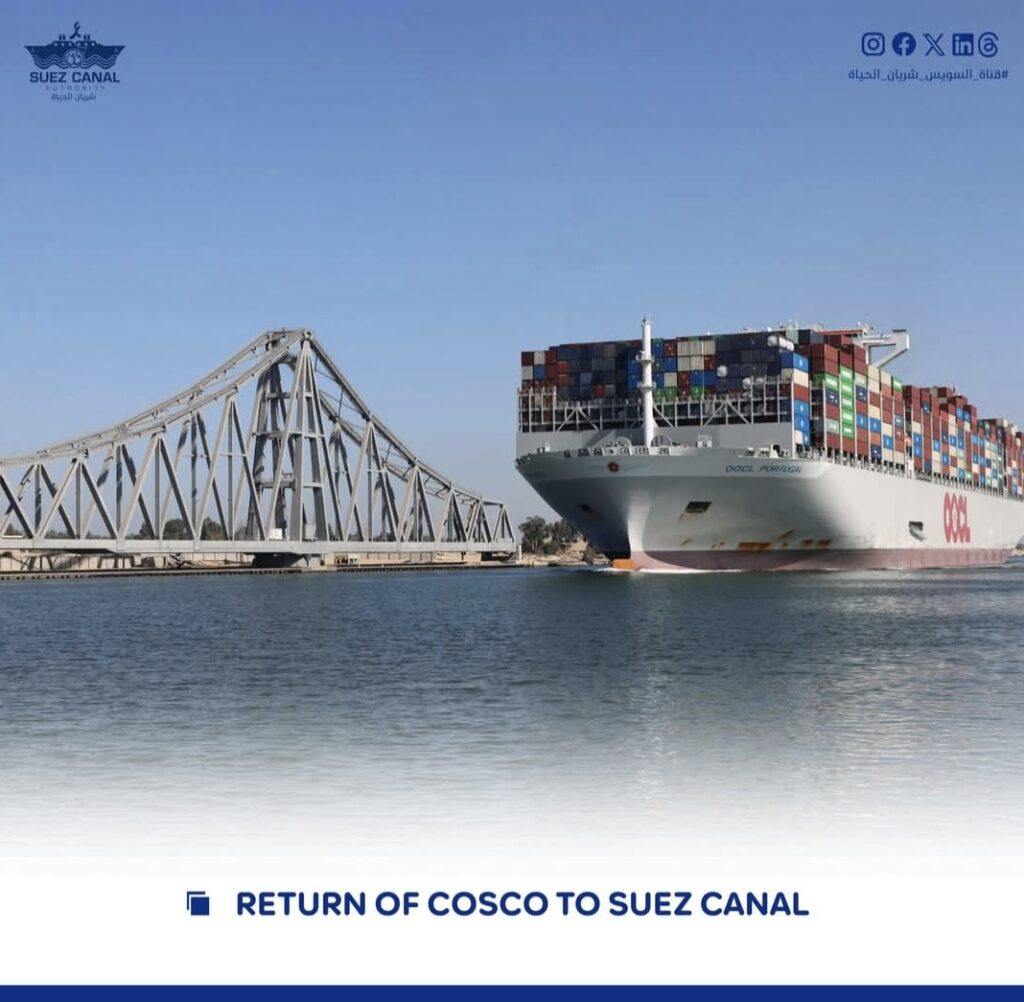
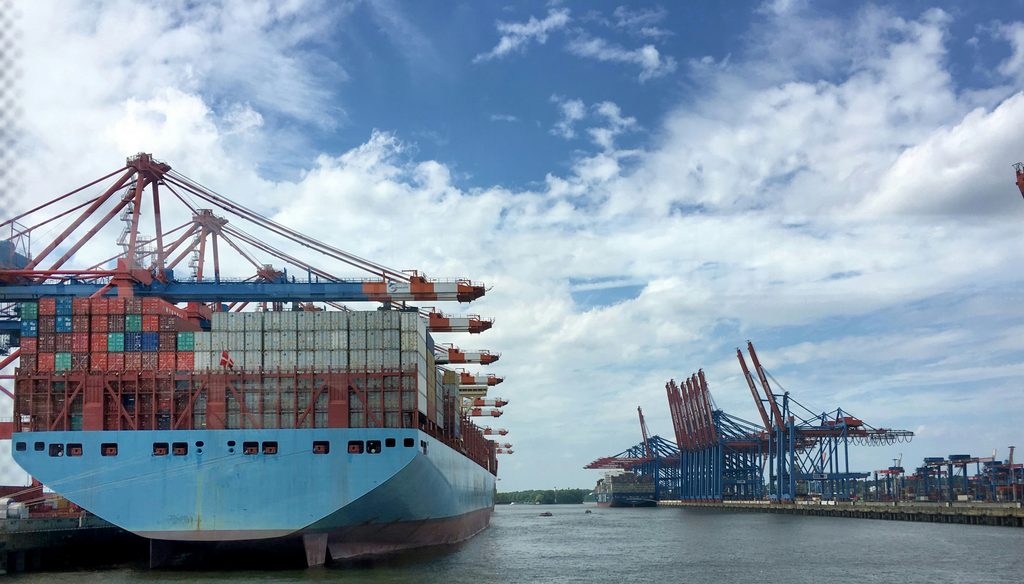
    The recovery was highlighted by the first Suez Canal transit of the 24,000-TEU OOCL Portugal, which sailed through the waterway on September 16 during a voyage from Belgium to China.

    The approximately 400-meter vessel, with a beam of 61.3 meters and gross tonnage of 247,000 tonnes, operates on the NEU2 service under the OCEAN Alliance, directly connecting major ports in the Far East and Northwest Europe.

    Suez Canal Authority Chairman and Managing Director Adm. Ossama Rabiee said the voyage was particularly significant as it marked COSCO SHIPPING Lines’ first southbound transit through the Suez Canal since the Red Sea and Bab el-Mandeb disruption.

    Rabiee said several major shipping lines have now restored maritime services through the canal on Asia-Europe trades, including CMA CGM, Maersk, MSC, Hapag-Lloyd and COSCO.

    The return of additional mainline services is beginning to translate into higher containership tonnage through Suez after prolonged diversions around the Cape of Good Hope disrupted traditional Asia-Europe routing.

    On September 16 alone, 39 vessels with combined net tonnage of 2.3 million tonnes transited the canal, according to the authority.

    The figures provide a further indication of the gradual recovery of Suez Canal container traffic as carriers reassess Red Sea operations and progressively return capacity to the shorter Asia-Europe route.

    Source: Suez Canal Authority

Back to top button