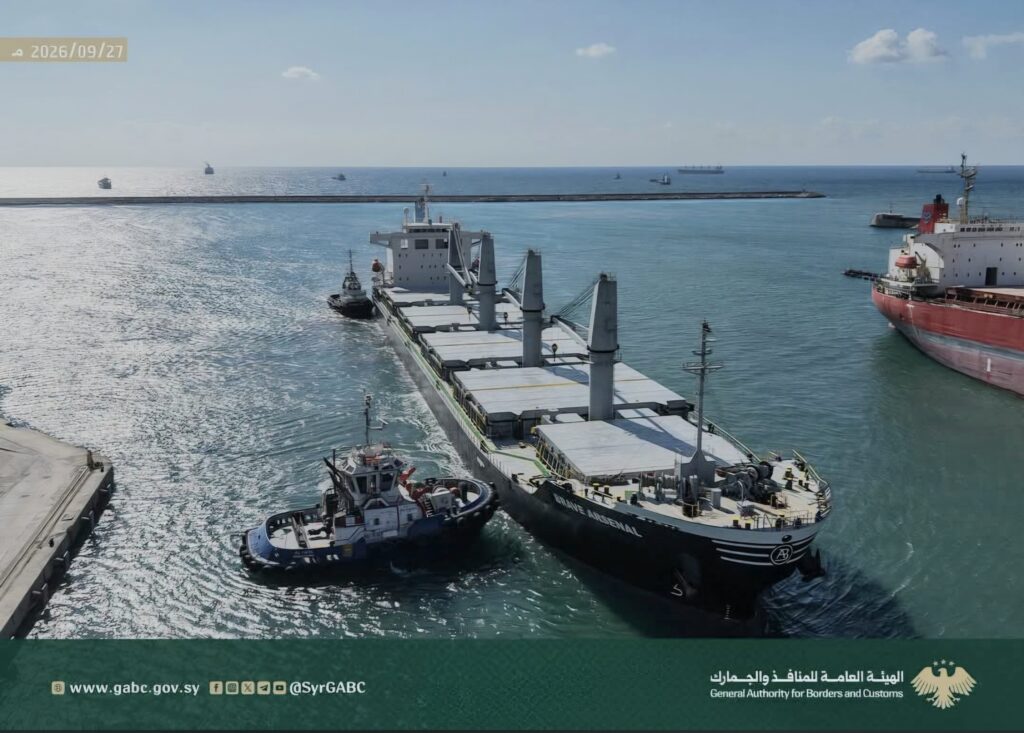
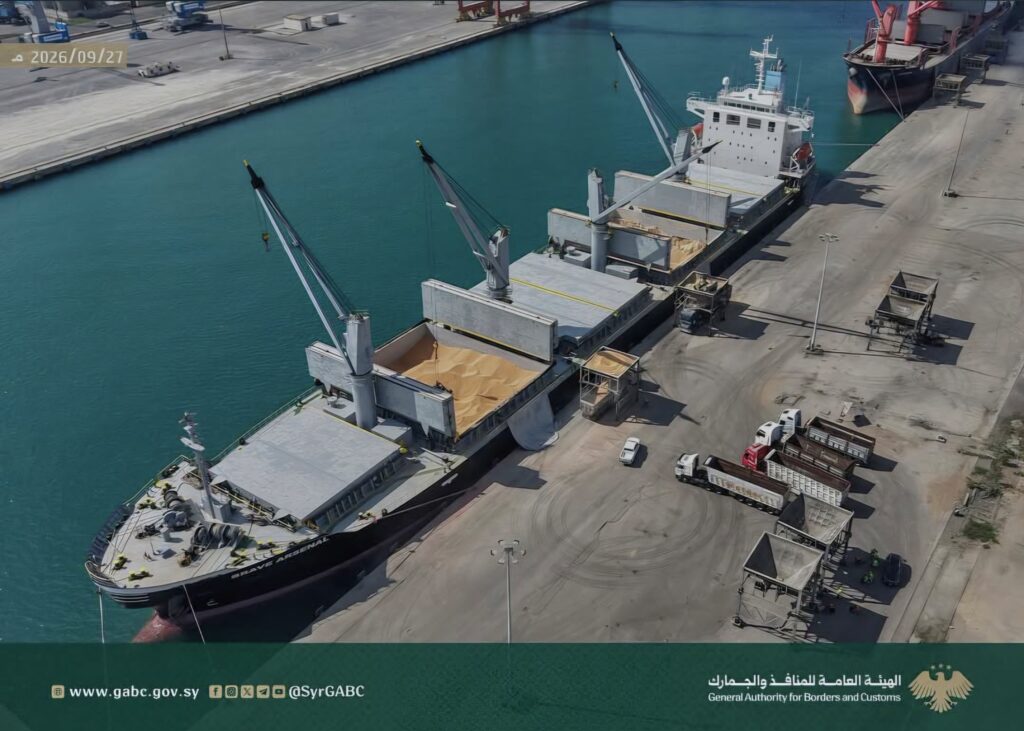
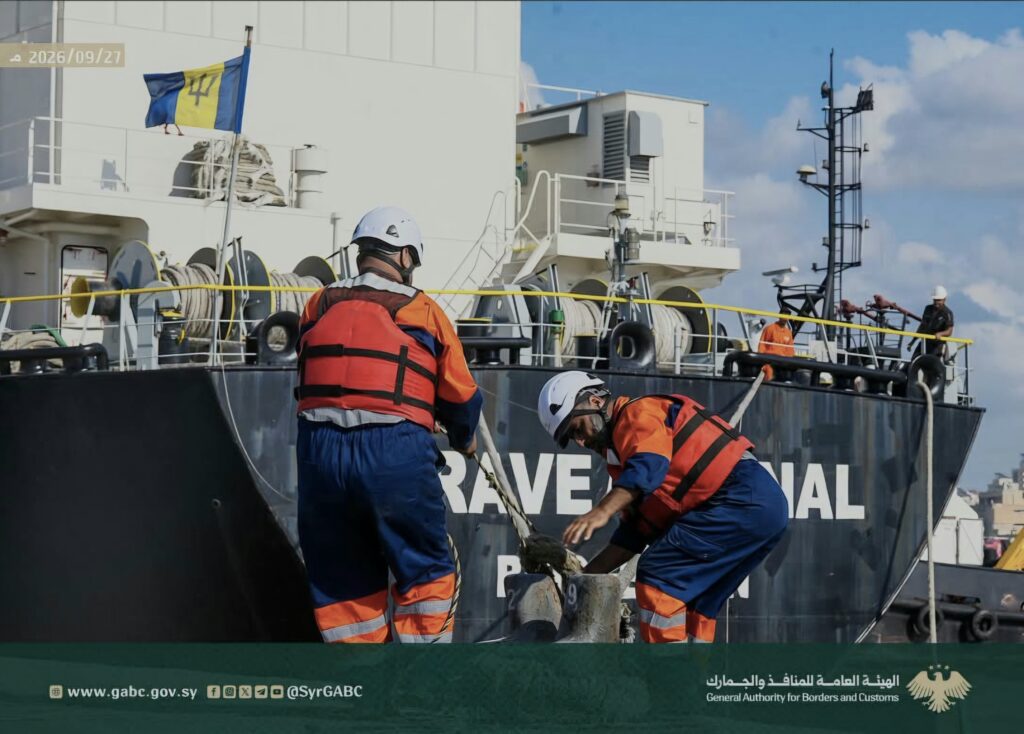
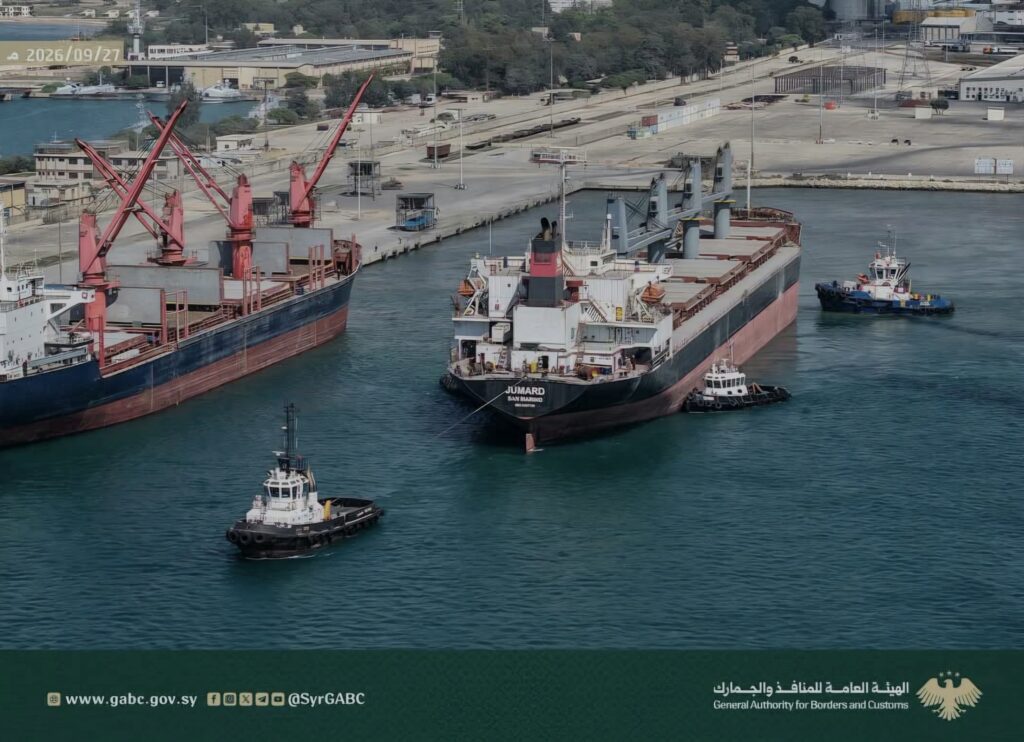
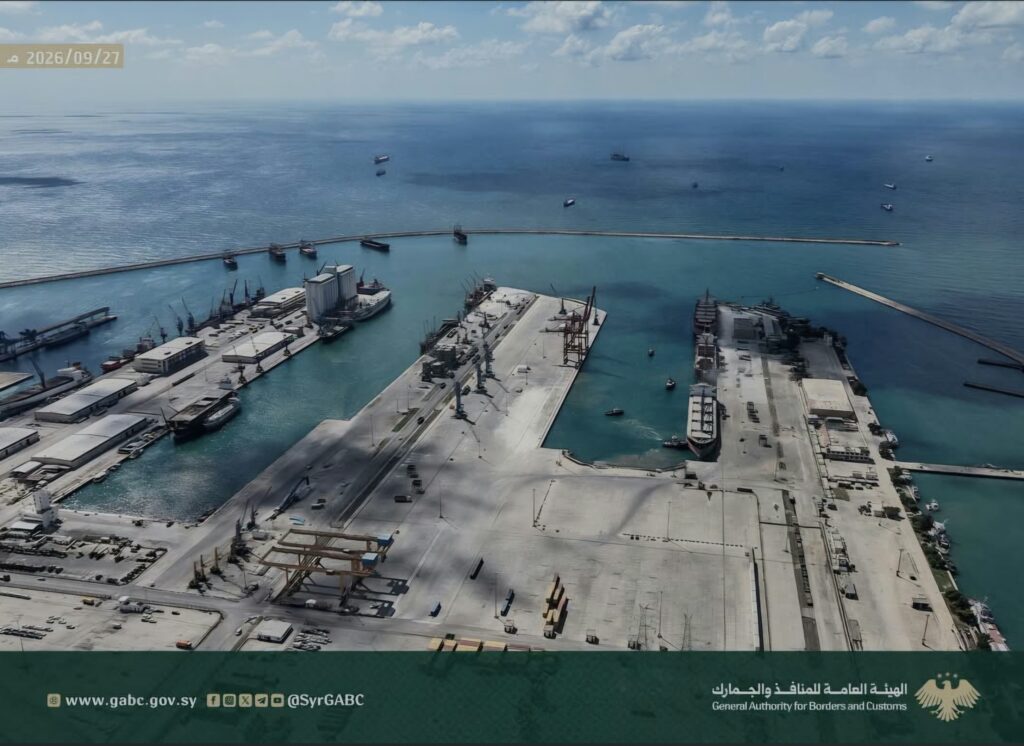
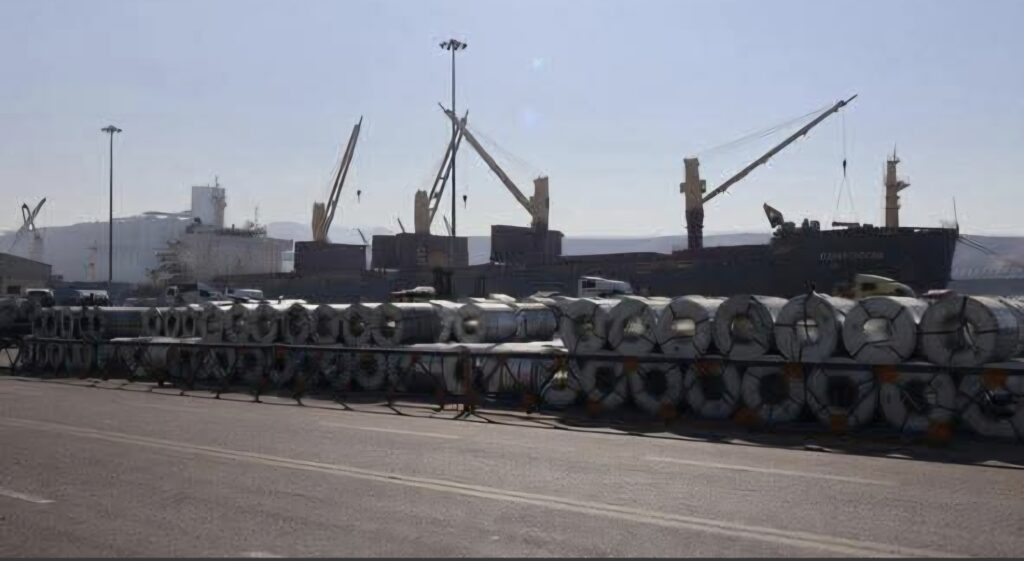
Shipping Arabia, October 4, 2026 – Cargo handling and unloading operations are continuing at an accelerated pace at Tartous Port Berth 4, with active movement of cargo-handling equipment supporting faster operations and smoother cargo flows within the Syrian port.
The ongoing activity follows the start of commercial operations at Berth 4 on August 11, when the berth received its first vessels. Its operation has added to the port’s handling and storage capabilities while supporting efforts to increase capacity and accelerate cargo movements.
Tartous Port Berth 4 Returns to Commercial Operations
The General Authority for Ports and Customs took over the commercial areas previously occupied by the Russian side at Tartous Port in August. The handover included Berth 4 as well as its associated facilities, installations and storage yards.
Commercial operations subsequently began at the berth on August 11. Since then, Tartous Port Berth 4 has been used for cargo-handling and unloading activities, with machinery and equipment deployed to move cargo and support the flow of operations within the port.
The additional berth capacity is intended to strengthen Tartous Port’s operational and storage capabilities. It also supports faster cargo handling and increases the port’s capacity to accommodate commercial activity.
Authority Targets Higher Port Readiness and Efficiency
The operation of Berth 4 forms part of the General Authority for Borders and Customs’ efforts to develop Syrian ports and improve their operational readiness.
The authority is also seeking to raise the efficiency of port services to meet the requirements of trade flows and support maritime transport activity.
The continuing cargo operations at Tartous Port Berth 4 therefore represent part of the wider effort to make greater use of the port’s infrastructure, storage areas and commercial facilities.
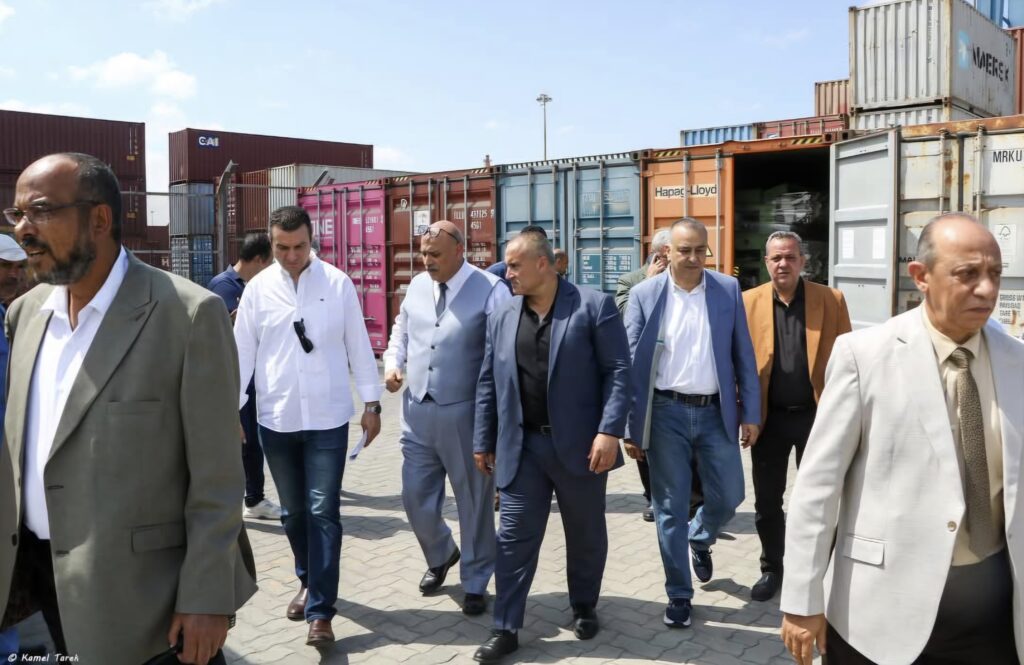
Shipping Arabia, September 30, 2026 – A Damietta Port safety review has examined cargo handling and storage procedures, marine pollution preparedness, civil protection measures and emergency response capabilities as part of periodic inspections carried out across Egyptian ports.
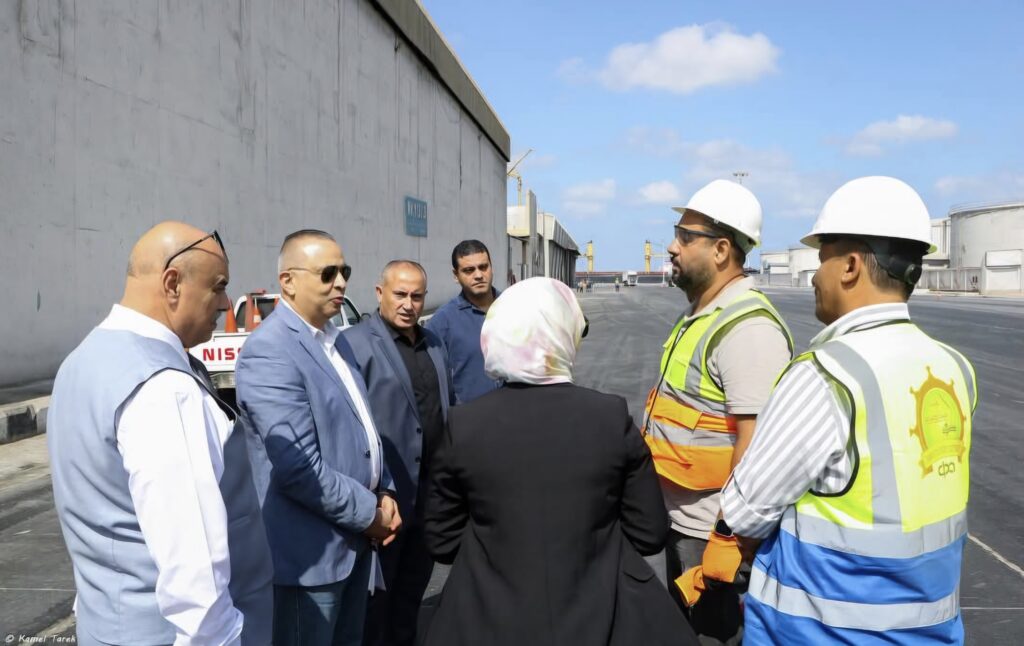
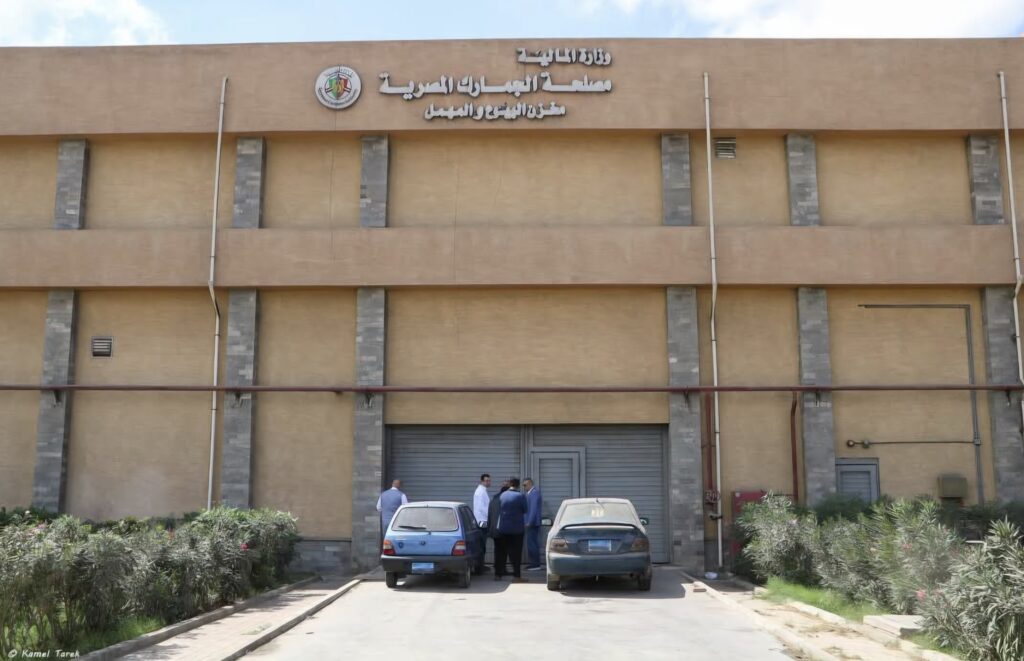
Damietta Port Authority received the committee responsible for inspecting and reviewing the safety of procedures at Egyptian ports. The committee was headed by Brig. Gen. Eng. Maged El-Bedewe, Director of Strategic Planning at the Maritime Transport and Logistics Sector.
The visit formed part of regular monitoring activities aimed at ensuring that work procedures remain safe and orderly and that ports comply with the applicable requirements and operating controls.
Damietta Port Safety Review Begins With Operational Assessment
The committee began its work with a coordination meeting at Damietta Port Authority headquarters. Representatives of the relevant authorities attended alongside directors of departments connected to the review within the port authority.
During the meeting, Damietta Port Authority presented the efforts undertaken by the Authority and other parties within the port community to develop operating systems and strengthen safety and discipline across the port.
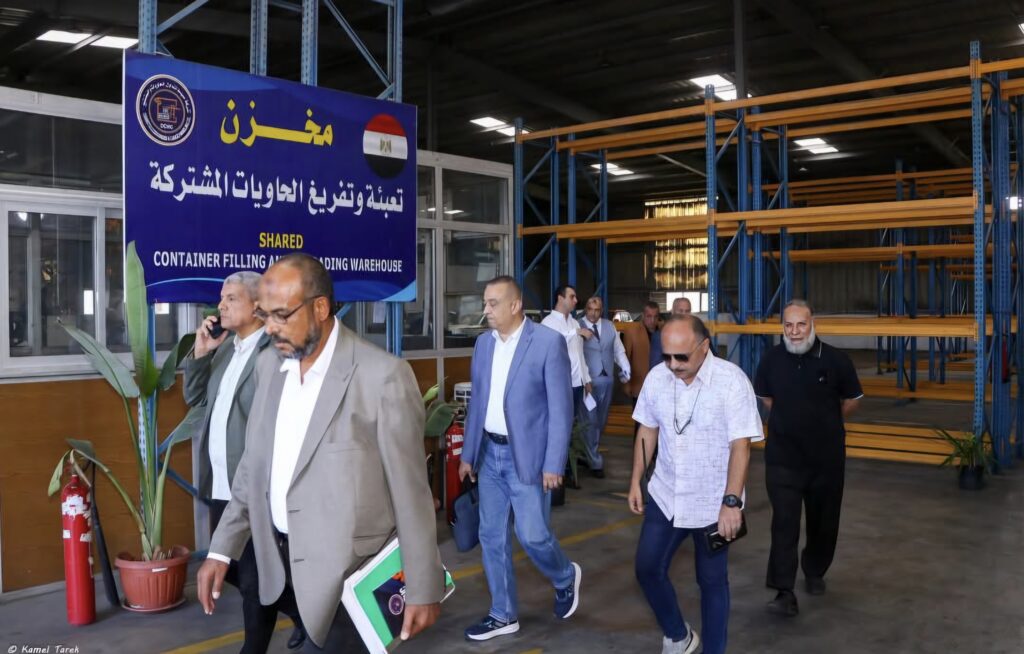
The committee then conducted a series of field visits to operational areas. These inspections focused on verifying the procedures used to maintain the security and safety of cargo handling and storage activities.
The review also covered procedures for dealing with abandoned cargo and its disposal. Inspectors examined the extent to which the applicable controls governing such cargo are being implemented.
Marine Pollution and Civil Protection Measures Reviewed
Environmental protection formed another part of the inspection program. The committee reviewed the port’s environmental protection system, including its marine pollution response plan.
Inspectors also assessed the efficiency of civil protection procedures in place throughout the port and examined their operational readiness. Particular attention was given to whether these measures are implemented in practice and whether employees have received effective training to respond to different emergency scenarios.
The review therefore combined an examination of documented procedures with practical checks on preparedness and staff capabilities.
Firefighting Drill Tests Emergency Readiness
As part of the assessment of Damietta Port’s firefighting capabilities, the committee supervised a practical fire-response drill at one of the companies operating within the port.
The exercise was designed to assess the effectiveness of emergency response procedures under practical conditions. It also tested coordination between the relevant parties involved in managing an emergency.
The committee additionally reviewed the level of training provided to employees at companies operating inside the port. The Authority highlighted the importance of workforce preparedness because employees represent the first line of response when emergency situations arise.
The drill provided a practical means of evaluating how established procedures, inter-agency coordination and employee training perform together during a simulated incident.
Damietta Port Authority Emphasizes Safe Operations
Rear Admiral Tarek Adly Abdallah, Chairman of Damietta Port Authority, said the Authority continues to take the necessary measures to develop its operating system and raise its efficiency.
He stressed the Authority’s commitment to applying high standards of safety and environmental protection. These efforts are intended to strengthen the port’s readiness and its ability to respond to different situations, in line with directives from Minister of Transport Kamel El-Wazir.
Abdallah said regular inspection and monitoring activities are an essential part of supporting port operations. They allow authorities to assess the actual implementation of procedures, identify observations and address them.
According to the chairman, this process contributes to maintaining safe and efficient operations at Damietta Port while improving the level of services provided in accordance with the applicable standards and regulatory requirements.
The latest Damietta Port safety review covered operational, environmental and emergency-response measures across several areas of port activity, combining procedural checks, field inspections and a practical firefighting exercise.
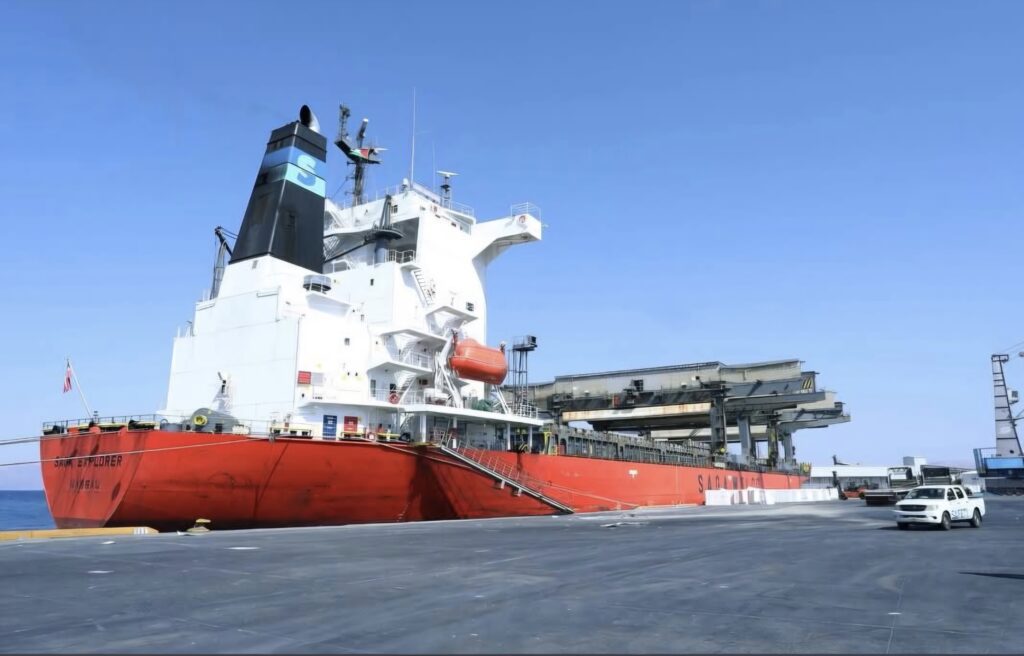
Shipping Arabia, September 25, 2026 – Cargo handling at Aqaba’s main port surged 49% year-on-year to 9.48 million tonnes during the first eight months of 2026, accompanied by a sharp increase in truck traffic as Jordan’s only seaport handles growing domestic and regional trade flows.
Dr. Mahmoud Khleifat, Director General of Aqaba Company for Ports Operation and Management, said throughput reached approximately 9.482 million tonnes through the end of August, compared with 6.382 million tonnes during the same period in 2025.
Truck movements increased even faster, rising 51% to around 129,900 trucks, from 85,551 during the corresponding period last year.
The increase reflects stronger activity at Aqaba as the port serves both Jordan’s domestic economy and growing cargo flows involving neighboring markets. Khleifat said coordination among stakeholders in the Aqaba Special Economic Zone and government agencies has helped streamline procedures and improve the movement of cargo to and from the port.
The main port handles a broad range of cargoes and vessel types, providing an important component of Aqaba’s wider maritime and logistics infrastructure alongside the kingdom’s container, Ro-Ro and specialized terminal facilities.
Khleifat said the port is continuing to develop its operations with a focus on safety, operational efficiency and sustainability while maintaining handling services capable of supporting changing trade and supply chain requirements.
The growth further strengthens Aqaba’s role as Jordan’s maritime gateway and an increasingly important regional logistics and transit corridor, particularly as changing regional trade patterns generate additional cargo flows through the kingdom.