Container Shipping

  • Egyptian Ports Handle 233 Million Tonnes as Maritime Connectivity Ranking Rises to 19th Globally

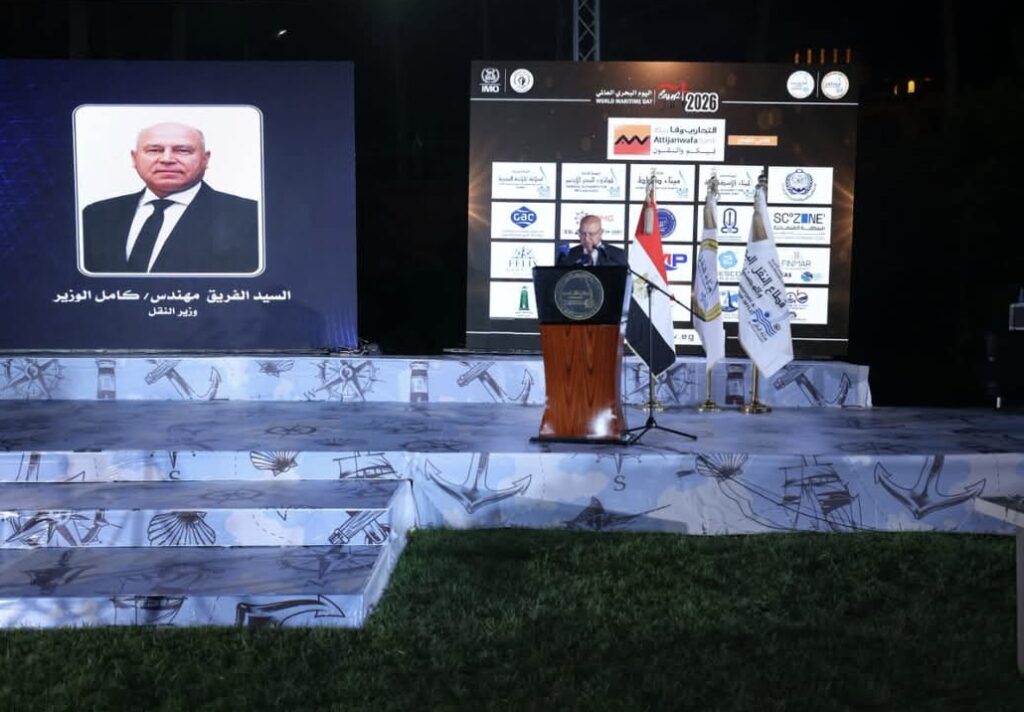
    Shipping Arabia, September 24, 2026 – Egyptian ports handled 233 million tonnes of cargo and 11.1 million TEUs in 2025, as the country advances a major port and logistics expansion programme aimed at strengthening its position in regional transport, transshipment and global shipping networks.

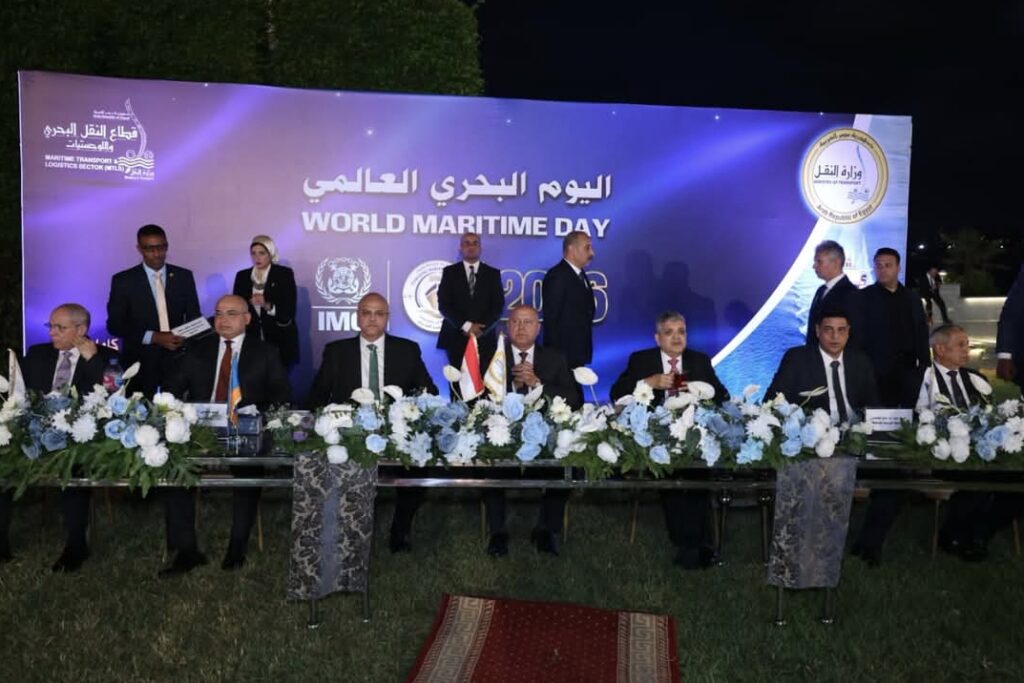
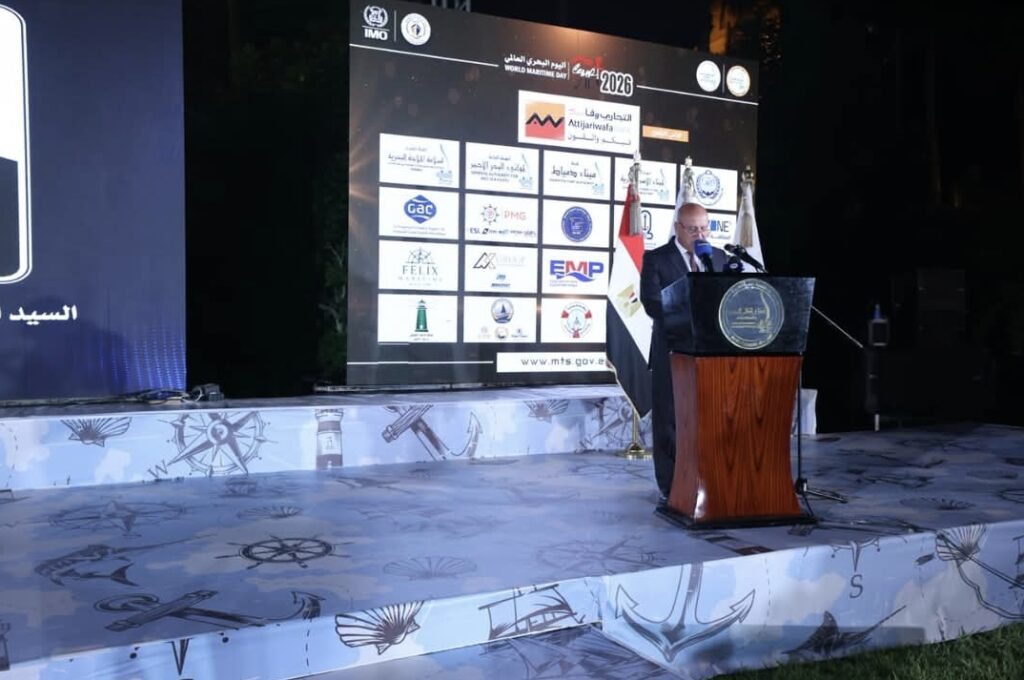
    The figures were announced by Transport Minister Kamel El-Wazir during Egypt’s World Maritime Day 2026 event in Alexandria, held under the theme “From Policy to Practice: Powering Maritime Excellence.”

    Cargo throughput increased 12% year-on-year, while container volumes rose 25%. Egypt also advanced to 19th globally in the Liner Shipping Connectivity Index (LSCI), from 23rd in 2024, ranking first in Africa and second among Arab countries. The government is targeting a position among the global top 15 by 2030.

    Egypt is developing eight integrated international logistics corridors connecting Mediterranean and Red Sea ports and the Suez Canal corridor with dry ports, industrial, agricultural and mining areas through railways, express roads and the high-speed electric rail network.

    Its maritime development programme includes expanding the commercial port network to 19 ports, increasing port areas to 100 million square meters and adding 70 kilometers of new berths with depths of 18 to 25 meters, taking total quay length beyond 100 kilometers. Plans also include expanding breakwaters and increasing the marine tug fleet to 80 units.

    New container and multipurpose terminals are being developed with international operators and shipping lines including Maersk, MSC and CMA CGM, supporting additional capacity and stronger integration into global liner networks.

    Egypt is also targeting a commercial fleet of around 40 vessels by 2030, capable of carrying 30 million tonnes annually through its state-affiliated shipping companies.

    Alongside capacity expansion, the maritime strategy includes digitalization, green ports, shore power, lower-emission marine fuels and green hydrogen projects as Egypt seeks to combine infrastructure growth with environmental and operational efficiency.

    The World Maritime Day event brought together senior maritime and port officials, including Suez Canal Authority Chairman and Managing Director Adm. Ossama Rabiee, port executives and representatives of Egypt’s maritime community.

    Source: Ministry of Transport – Egypt

  • Hapag-Lloyd Keeps Casablanca Coverage Through New Feeder Service

    Shipping Arabia, September 24, 2026 – Hapag-Lloyd has introduced a new feeder arrangement to maintain Casablanca coverage following changes to its West Africa Express (WAX) service, which now provides direct connections between Damietta and key West African ports.

    The carrier will market the new Casablanca Feeder (CSF) service using slots on X-Press Feeders’ SPX1 service, according to Alphaliner. The rotation covers Barcelona – Valencia – Algeciras – Casablanca – Barcelona, with cargo connecting to Hapag-Lloyd’s WAX network.

    The arrangement follows Hapag-Lloyd’s decision to remove Casablanca from the revised WAX rotation while maintaining access to the Moroccan port through a separate feeder connection via Valencia.

    Under the revised WAX structure, Hapag-Lloyd is strengthening links between the Mediterranean, Türkiye and West Africa, including direct connections from Damietta and Valencia to major West African ports. Damietta will also provide connections with other Hapag-Lloyd services calling at the Egyptian port.

    The revised WAX rotation is Damietta – Izmit – Gemlik – Istanbul – Valencia – Tangier – Lagos (Tincan/Apapa) – Onne – Cotonou – Tema – Lomé – Tangier – Barcelona – Damietta. It also provides a direct Türkiye-Valencia connection.

    The first announced sailing under the revised rotation was Merkur Ocean, voyage 2639S, with arrival at Damietta scheduled for September 21.

    Hapag-Lloyd said the network changes are intended to provide greater operational flexibility and improve schedule reliability, while the new feeder arrangement allows the carrier to retain Casablanca within its wider Mediterranean and West Africa network.

    Source: Almal News

  • MSC Expands Suez Return With Indusa Service Resumption

    Shipping Arabia, September 23, 2026 – Mediterranean Shipping Company (MSC) is expanding its gradual return to the Suez Canal and Red Sea, with the carrier restoring westbound sailings on its Indusa service as part of a broader, service-by-service resumption of East-West traffic through the region.

    The Indusa service, linking the Indian subcontinent with the United States and Mexico, will resume Red Sea routing for westbound cargo beginning with MSC Domna X, voyage IV637A, departing Colombo on September 23.

    Eastbound Indusa sailings will continue to operate around the Cape of Good Hope, reflecting MSC’s cautious approach as it continues to assess security and operational conditions in the Red Sea.

    The move follows MSC’s August decision to partially restore Suez Canal transits on selected East-West services. The carrier had identified sailings on its Jade, Albatros, Himalaya and Tiger services for the initial phase, covering Asia-Mediterranean, Asia-North Europe and India-Mediterranean trades.

    MSC said the transition is being implemented on a case-by-case basis, with individual booking confirmations and online schedules updated progressively as voyage plans change.

    The carrier is maintaining contingency arrangements that allow individual vessels to be rerouted if conditions require, while continuing to monitor developments with relevant authorities and security partners.

    The addition of Indusa represents another step in the progressive restoration of container services through Suez, as major carriers reassess Cape of Good Hope diversions and gradually return capacity to the shorter maritime corridor linking Asia, the Mediterranean, Europe and the Americas.

    Source: Almal News

  • Jordan Shipping Association, Aqaba Container Terminal Move Toward Regular Carrier Coordination Meetings

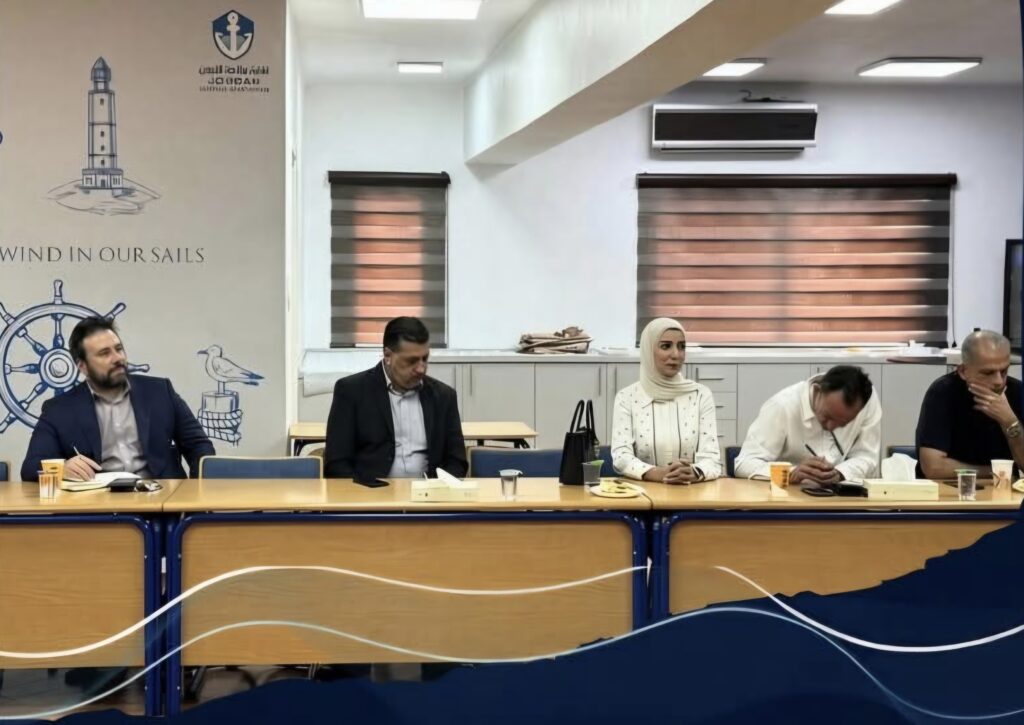
    Shipping Arabia, September 23, 2026 – The Jordan Shipping Association and Aqaba Container Terminal are moving toward regular coordination meetings with shipping lines as both sides seek to address operational and commercial challenges and improve container flows through Jordan’s principal maritime gateway.

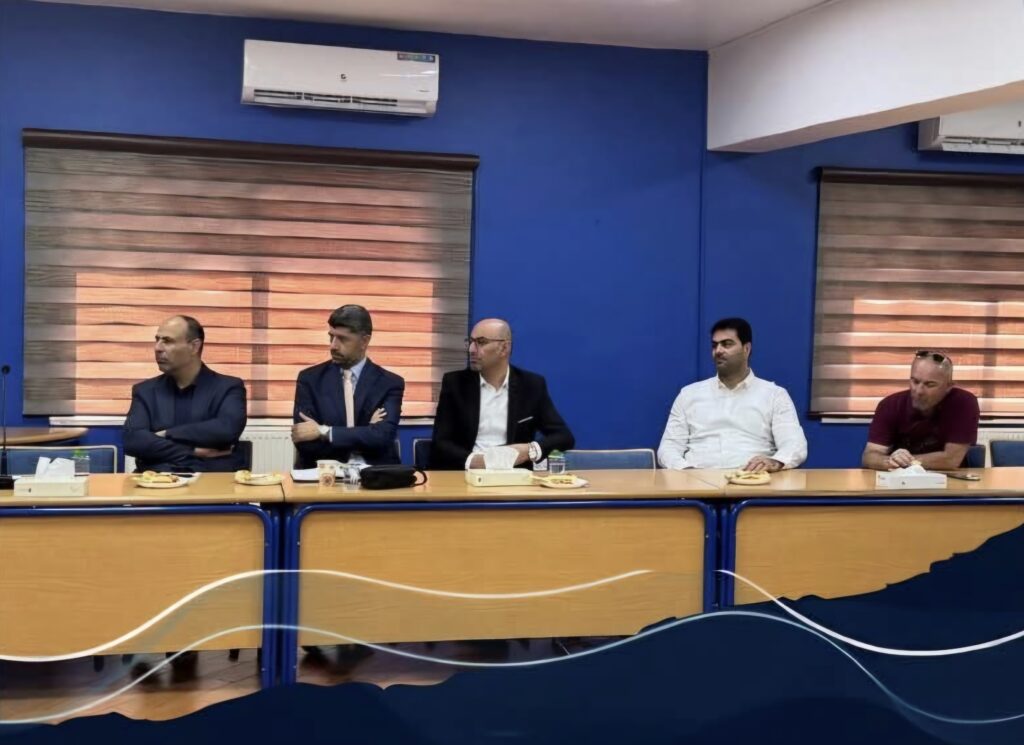
    ACT CEO José Rueda, Chief Commercial Officer Angshuman Mustafi and members of the terminal’s management team met JSA Board members and the association’s Container Committee, including representatives of shipping lines operating through Aqaba.

    JSA Vice Chairman Mashhoor Al-Jazi said direct engagement between the association and terminal management is important for addressing operational and commercial issues affecting carriers and improving the overall maritime business environment.

    Discussions covered container handling and movement, challenges facing shipping lines, port procedures and measures that could improve cargo flows and service levels for terminal users.

    Rueda called for regular meetings between ACT management, JSA and shipping line representatives, allowing operational issues and carrier feedback to be reviewed continuously while providing a platform to jointly address emerging challenges and opportunities.

    ACT expressed its readiness to maintain the dialogue and work with the association and its members on practical solutions aimed at improving operational efficiency and container flows.

    JSA said continued direct coordination among stakeholders across Aqaba’s maritime sector is essential to resolving operational challenges, improving services to shipping lines and strengthening the competitiveness of Aqaba Container Terminal.

    The discussions come as Aqaba handles growing regional cargo activity, increasing the importance of close coordination between the terminal, shipping lines and other stakeholders in maintaining efficient container flows and reinforcing Aqaba’s role as Jordan’s maritime gateway and a regional logistics hub.

    Source: Jordan Shipping Association

  • Folk Maritime CEO Highlights Shift Toward Regional Trade and Greater Shipping Resilience

    Shipping Arabia, September 22, 2026 – Global trade is moving toward a more regional and resilient structure as geopolitical risks, sanctions and changing shipping patterns increasingly influence maritime investment and operations, according to Folk Maritime CEO Poul Hestbaek.

    Hestbaek discussed the changing trade environment during a panel at the 18th Annual Capital Link Shipping & Marine Services Forum in London, addressing the theme of global trade in a changing world, including sanctions, risks, maritime corridors and the reshaping of trade routes.

    He highlighted what Folk Maritime described as a strategic transition away from unrestricted globalisation toward a more sustainable and regional trading environment, with geopolitical considerations playing a growing role in shipping routes and investment decisions.

    The discussion also addressed the pricing of risk. Hestbaek highlighted the importance of clearly incorporating risks associated with international sanctions into freight rates and chartering terms as shipping companies navigate an increasingly complex regulatory and geopolitical environment.

    Another area of focus was supply chain security. The sector is moving beyond a traditional emphasis on just-in-time delivery toward greater operational flexibility and an increased ability to respond to disruptions, according to the discussion.

    Hestbaek also pointed to the emergence of new regional maritime alliances as a development that will require shipping companies to take a more proactive approach to risk management and prepare for further changes across the industry.

    The discussion reflects the broader challenges facing maritime transport as shipping companies adapt their networks, commercial strategies and operational models to changing trade patterns and increasingly complex global risks.

    Saudi Arabia-based Folk Maritime operates regional liner services and is backed by the Public Investment Fund.

    Source: Folk Maritime

  • MSC Becomes Largest Container Carrier at Damietta Port as Transshipment Drives Volumes

    Shipping Arabia, September 22, 2026 – Mediterranean Shipping Company (MSC) became the largest container carrier operating through Damietta Port in 2025, handling 29.3% of the port’s container traffic as transshipment remained a major component of carrier volumes.

    According to the latest Damietta Port Authority statistics, MSC handled approximately 375,800 TEUs, with transshipment accounting for 71.7% of its traffic through the port. The carrier had handled around 210,300 TEUs in 2024.

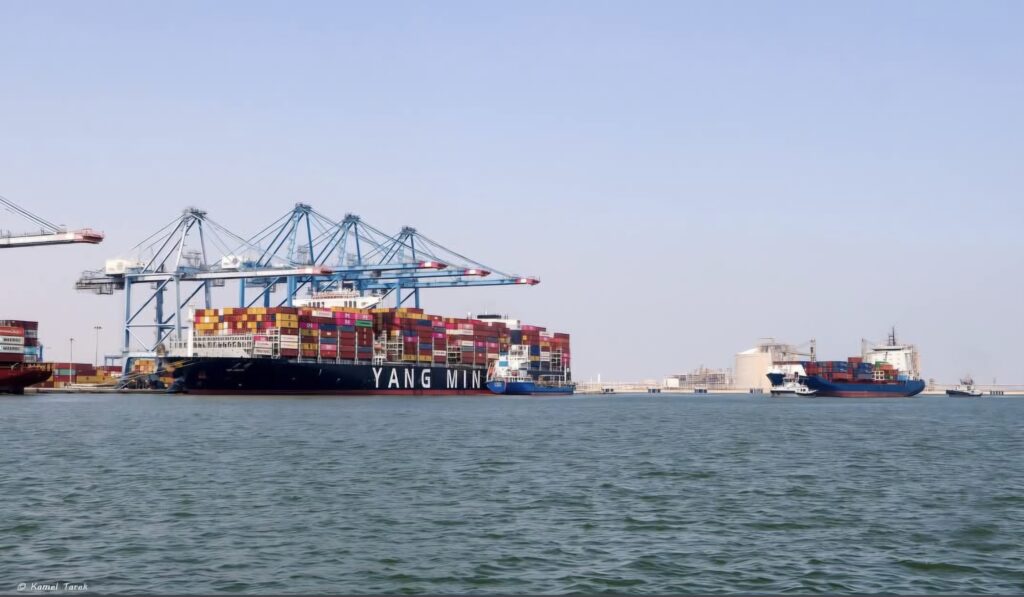
    Yang Ming ranked second, accounting for 18.5% of Damietta’s container activity with approximately 236,800 TEUs. Unlike several other major carriers, foreign trade imports and exports represented 51.3% of Yang Ming’s traffic through the port.

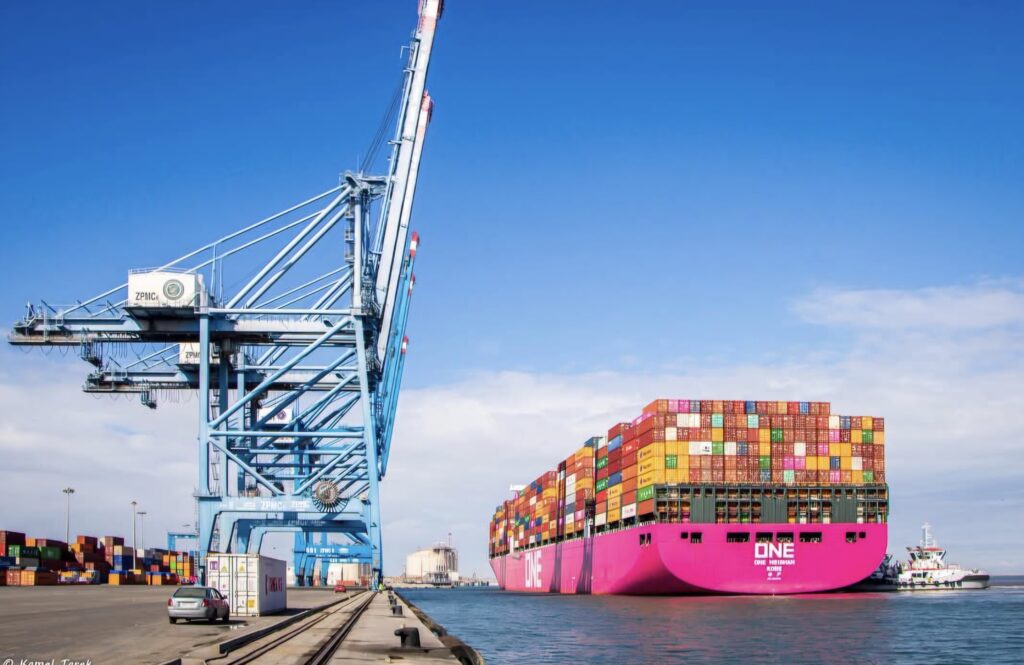
    Ocean Network Express (ONE) followed with a 9.4% share and approximately 120,000 TEUs, of which 61.9% was transshipment cargo. ONE had handled around 261,300 TEUs in 2024, when it accounted for 18.4% of the port’s container traffic.

    Hapag-Lloyd recorded a particularly sharp shift, handling approximately 65,900 TEUs, equivalent to 5.1% of Damietta’s container activity, with transshipment representing 71% of its volume. In 2024, the carrier had handled around 454,700 TEUs and accounted for 32.1% of the port’s container traffic.

    Other carriers serving Damietta included COSCO, CMA CGM, RCL and China Shipping.

    Overall, Damietta received 1,007 containership calls in 2025, compared with 1,020 in 2024. Containerized cargo declined 6% to around 13.4 million tonnes, while throughput fell 10% to approximately 1.42 million TEUs, from 1.58 million TEUs a year earlier.

    The figures highlight the importance of transshipment to Damietta’s container business, while also showing a significant redistribution of volumes among the major global carriers using the Egyptian Mediterranean gateway.

    Source: Almal News

  • Maersk, Hapag-Lloyd Return Four More Gemini Services to Suez Canal

    Shipping Arabia, September 21, 2026 – Maersk and Hapag-Lloyd are returning four additional Gemini Cooperation services to the Red Sea and Suez Canal, marking another significant step in the gradual restoration of Asia-Europe container shipping through the shorter trans-Suez corridor.

    The carriers announced that the AE5, AE11, AE12 and ME2 services — known respectively as NE4, SE2, SE1 and IEX in Hapag-Lloyd’s network — will shift from routing around the Cape of Good Hope to the Suez Canal following a further assessment of security conditions in the Red Sea.

    The changes expand the number of Gemini services returning to Suez following earlier resumptions. Maersk said the four services will join AE15 and AE19, which are already operating through the canal.

    The first westbound sailings include Antonia Maersk on AE11 and Cornelia Maersk on ME2, both departing their final Asian calls before Suez on September 19, followed by Marchen Maersk on AE5 on September 21. The first AE12 sailing will be announced separately.

    Eastbound implementation begins with Maastricht Maersk on AE5 on September 22, followed by Maersk Halifax on AE11 on September 28 and Cornelia Maersk on ME2 on October 31.

    The returning services connect major Asian gateways with Northern Europe and the Mediterranean, including London, Bremerhaven, Hamburg, Rotterdam, Algeciras, Valencia, Barcelona, La Spezia, Genoa, Koper and Rijeka.

    Maersk and Hapag-Lloyd said routing through the Red Sea and Suez Canal provides shorter and more efficient transit times between Asia and Europe compared with the diversion around the Cape of Good Hope.

    Both carriers stressed that further network decisions will remain dependent on security conditions in the region, with crew, vessel and cargo safety continuing to determine the pace of the return.

    The addition of four more Gemini services represents a further recovery of mainline container traffic through the Suez Canal, as carriers progressively restore capacity to the traditional Asia-Europe maritime corridor.

    Source: Almal News

  • Suez Canal Container Ship Tonnage Jumps 54.2% as COSCO Returns

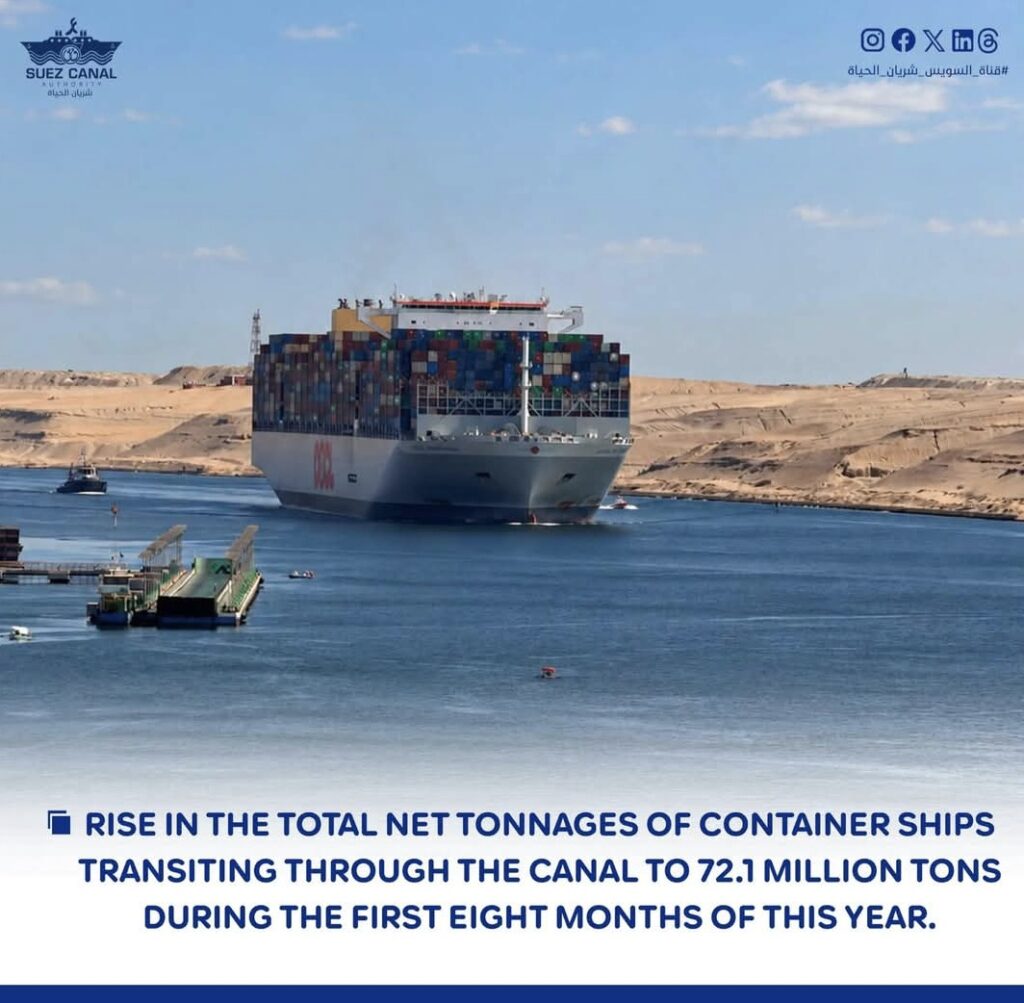
    Shipping Arabia, September 21, 2026 – Container ship traffic through the Suez Canal is showing a significant recovery, with total net tonnage rising 54.2% during the first eight months of 2026, as major carriers gradually restore services through the waterway.

    The Suez Canal Authority said container ships transiting the canal recorded approximately 72.1 million tonnes of net tonnage between January and August, compared with 46.7 million tonnes during the same period of 2025.

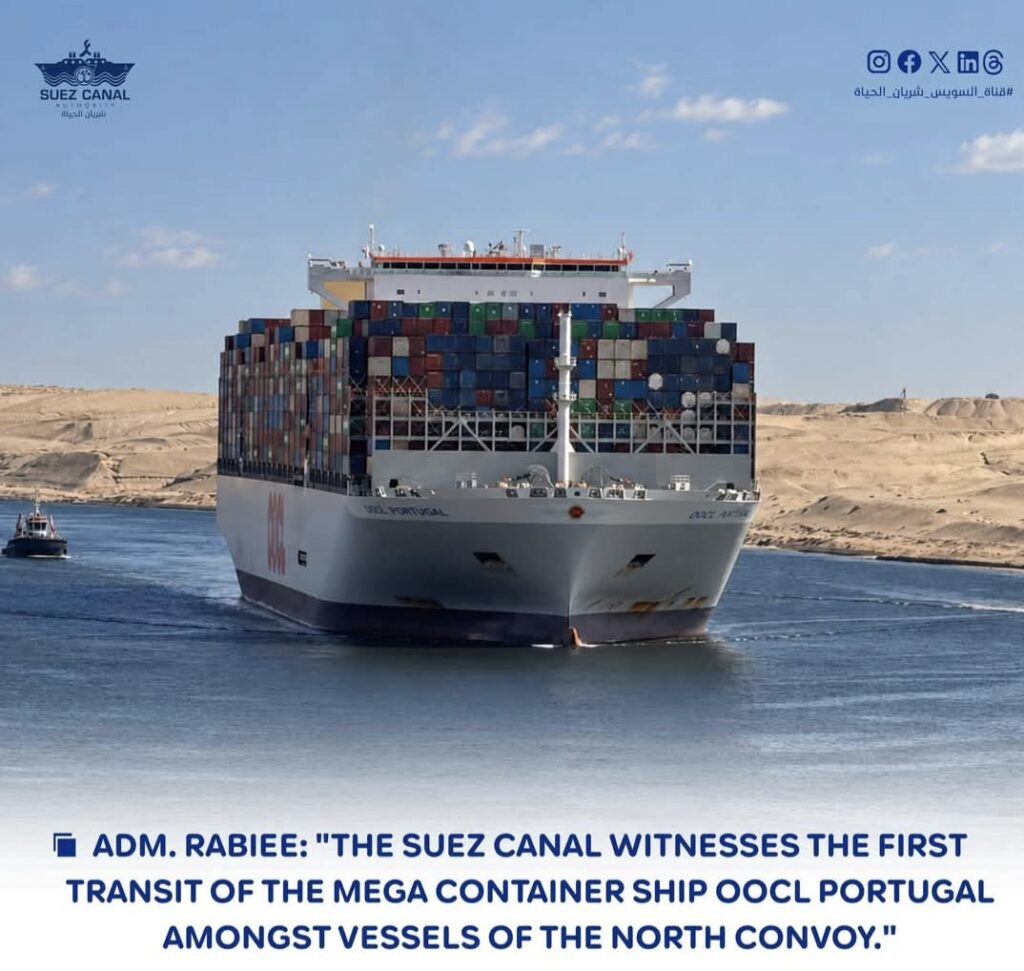
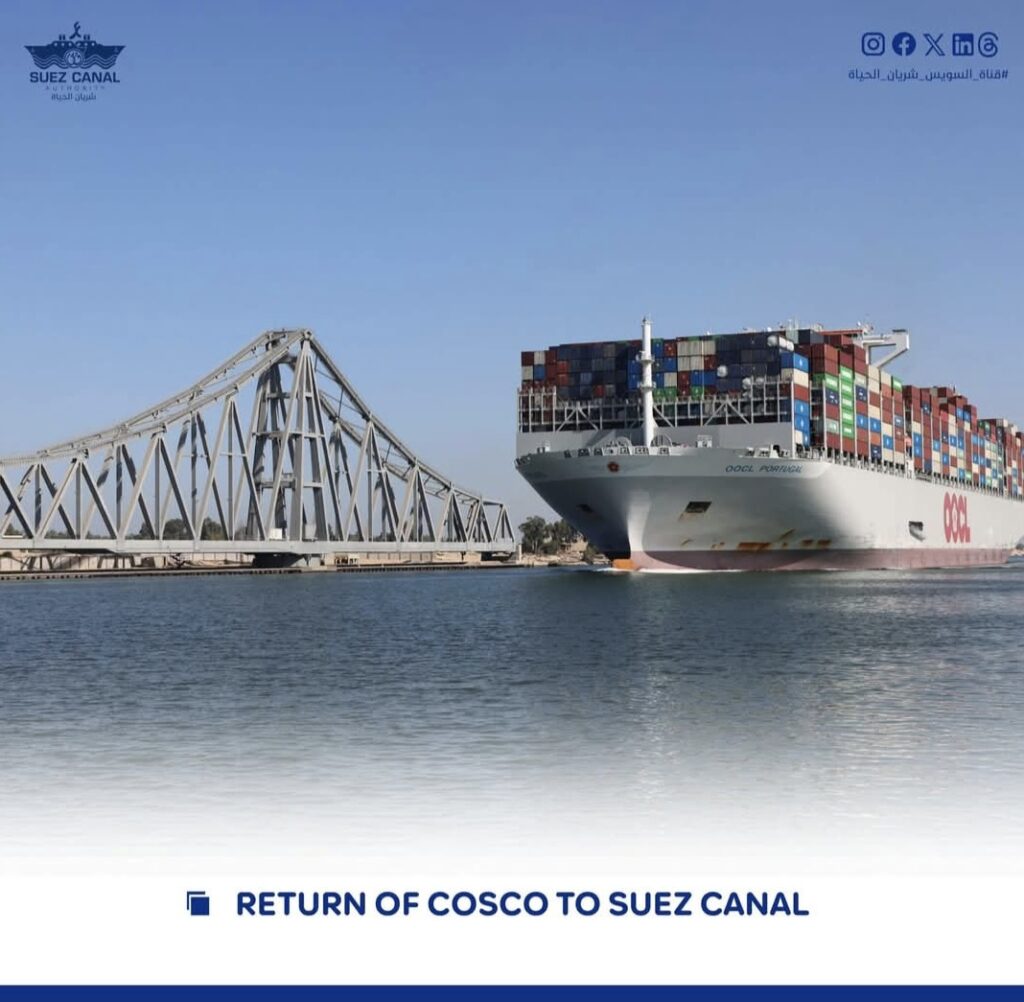
    The recovery was highlighted by the first Suez Canal transit of the 24,000-TEU OOCL Portugal, which sailed through the waterway on September 16 during a voyage from Belgium to China.

    The approximately 400-meter vessel, with a beam of 61.3 meters and gross tonnage of 247,000 tonnes, operates on the NEU2 service under the OCEAN Alliance, directly connecting major ports in the Far East and Northwest Europe.

    Suez Canal Authority Chairman and Managing Director Adm. Ossama Rabiee said the voyage was particularly significant as it marked COSCO SHIPPING Lines’ first southbound transit through the Suez Canal since the Red Sea and Bab el-Mandeb disruption.

    Rabiee said several major shipping lines have now restored maritime services through the canal on Asia-Europe trades, including CMA CGM, Maersk, MSC, Hapag-Lloyd and COSCO.

    The return of additional mainline services is beginning to translate into higher containership tonnage through Suez after prolonged diversions around the Cape of Good Hope disrupted traditional Asia-Europe routing.

    On September 16 alone, 39 vessels with combined net tonnage of 2.3 million tonnes transited the canal, according to the authority.

    The figures provide a further indication of the gradual recovery of Suez Canal container traffic as carriers reassess Red Sea operations and progressively return capacity to the shorter Asia-Europe route.

    Source: Suez Canal Authority

  • Asia-Mediterranean Container Rates Fall 12% as Red Sea Capacity Returns

    Shipping Arabia, September 20, 2026 – Container freight rates from Asia to the Mediterranean fell 12% to around $4,200 per FEU last week, as shipping lines continued restoring capacity through the Red Sea and Suez Canal despite renewed uncertainty around the Bab el-Mandeb.

    Latest estimates from Sea-Intelligence indicate that more than a quarter of Asia-Europe capacity will operate through the Red Sea during September. Around 35% of headhaul capacity from Asia to the Mediterranean and 50% to 60% of return capacity has been restored through the Suez Canal.

    The recovery has been slower on the Asia-North Europe trade, where only 6% of headhaul and 30% of backhaul capacity has returned to the route.

    According to Freightos, the additional capacity and shorter transit times provided by returning to the Red Sea, combined with easing demand following the peak season, are contributing to downward pressure on freight rates.

    Asia-Mediterranean rates dropped 12% to about $4,200 per FEU, while Asia-North Europe rates declined 3% to approximately $4,300. Daily rates on both trades have since fallen to around $3,800 per FEU.

    The Mediterranean market has recorded the sharper correction. Rates from Asia are now around $3,000 per FEU below their July peak, compared with a decline of about $2,000 on the North Europe trade, reflecting the faster restoration of Red Sea capacity.

    Rates nevertheless remain significantly above pre-peak-season levels, with congestion at Far East origin ports and North European hubs continuing to affect schedules and available capacity. Higher fuel costs and operational uncertainty could also influence carriers’ decisions over the pace of further Red Sea and Suez deployments.

    Transpacific rates, meanwhile, moved slightly higher as strong demand and congestion continued to support spot markets. US import volumes are expected to begin easing, with October shipments forecast to fall 9% from September before declining further in November.

    The contrasting trends underline how the gradual restoration of Red Sea and Suez Canal services is beginning to reshape capacity and freight-rate dynamics on Asia-Mediterranean trades, even as carriers continue to manage operational risks and congestion across major east-west networks.

    Source: Almal News

  • Jordan Maritime and Trade Bodies Review Aqaba Container Terminal Readiness Amid Traffic Growth

    Shipping Arabia, July 18, 2026 – Representatives of Jordan’s maritime, logistics and trade sectors have met Aqaba Container Terminal’s new management to assess the terminal’s readiness for a sharp rise in container traffic, particularly transit volumes driven by changing regional trade patterns.

    The joint delegation included Jordan Shipping Association Chairman Zaid Al-Khalaldeh, Secretary-General Capt. Mohammad Al-Dalabih and association representative Munir Muammar, along with Jordan Logistics Association Chairman Nizar Saleh and Amman Chamber of Commerce Vice Chairman Nabil Al-Khatib.

    During the visit, the delegation met Aqaba Container Terminal’s newly appointed managing director, José Rueda, and congratulated him on assuming the role.

    Discussions focused on recent developments affecting the maritime transport sector and the significant increase in containers arriving through Aqaba, with transit cargo accounting for a growing share of activity as regional conditions redirect additional trade flows through Jordan.

    The two sides reviewed the terminal’s capacity to accommodate the accelerated growth and discussed operational plans and measures aimed at maintaining efficient performance as volumes increase.

    Attention was given to speeding up container handling, preserving the smooth flow of vessels and cargo, and preventing operational pressure from affecting supply chains and logistics services.

    Participants emphasized the importance of sustained coordination between Aqaba Container Terminal and private-sector representatives to identify emerging challenges early and develop practical operational responses.

    They also highlighted the need to capitalize on the opportunities created by higher trade and transit volumes while ensuring that terminal capacity, equipment, procedures and landside cargo flows remain aligned with demand.

    Closer cooperation between the terminal and maritime, logistics and commercial stakeholders was described as essential to reinforcing Aqaba’s position as a regional logistics hub serving Jordan and neighboring markets.

    Source: Jordan Shipping Association

    #ShippingArabia #Aqaba #Jordan #TransitTrade #Maritime #Logistics #SupplyChain

Back to top button