DP World

  • Dubai Leads Middle East in 2026 Maritime City Rankings, Places 12th Globally

    Shipping Arabia, November 15, 2026 – Dubai has retained its position as the Middle East’s leading maritime city, ranking 12th globally in the 2026 Leading Maritime Cities (LMC) report published by DNV and Menon Economics. The emirate also secured fifth place worldwide for maritime resilience, second for attracting maritime headquarters and third for expected maritime leadership over the next five years.

    The results come amid significant disruption to regional shipping routes and supply chains. Despite these challenges, Dubai’s maritime sector and Jebel Ali Port maintained operations and supported cargo movements through coordinated government and industry efforts.

    The report highlighted Dubai’s integrated logistics infrastructure, including bonded corridors, road and rail connections, and free zones. These capabilities have supported the emirate’s ability to maintain trade flows and adapt to changing regional shipping conditions.

    Dubai’s Performance in the 2026 Maritime City Rankings

    The 2026 maritime city rankings assessed 50 cities selected from more than 15,000 worldwide. The study evaluated five pillars: shipping centres, maritime finance and law, maritime technology, ports and logistics, and attractiveness and competitiveness.

    DNV and Menon Economics combined objective performance data with assessments from 208 senior maritime industry experts. The methodology examined both established maritime capabilities and the factors influencing future competitiveness.

    Dubai achieved one of its strongest improvements in attractiveness and competitiveness, advancing nine positions from 15th in 2024 to sixth in 2026. This represented the largest improvement among cities that appeared in the top 15 in both editions.

    The emirate also ranked second globally for human capital and joint fourth for world competitiveness. In entrepreneurship, Dubai shared the leading position with Abu Dhabi.

    Industry experts placed Dubai second worldwide as a destination for relocating maritime headquarters. They highlighted its international connectivity and strategic location between major regions as important factors supporting its attractiveness to maritime businesses.

    Looking ahead, the report ranked Dubai third among cities expected to lead the global maritime industry within five years, ahead of Rotterdam and London.

    Maritime Resilience and Jebel Ali Port Operations

    The 2026 edition introduced a new assessment of maritime resilience, in which Dubai ranked fifth globally. This placed the emirate among leading international maritime centres, including Singapore, Rotterdam, Shanghai and London.

    The assessment recognized Dubai’s infrastructure, strategic location and increasingly diversified maritime business environment. It also emphasized the importance of coordinating operations, recovering from disruption and redirecting commercial activity.

    These capabilities gained particular relevance during the recent challenges affecting Middle Eastern shipping routes. Dubai’s maritime sector and Jebel Ali Port continued supporting regional cargo movements through cooperation between government authorities and industry stakeholders.

    H.E. Abdulla Bin Damithan, Chairman of the Ports, Customs and Free Zone Corporation (PCFC), said Dubai’s standing reflected sustained investment in its maritime capabilities and infrastructure.

    He emphasized that the latest rankings demonstrated international shipping companies’ continued confidence in Dubai as a location for establishing maritime operations, even during periods of regional uncertainty.

    Bin Damithan also reaffirmed Dubai’s commitment to strengthening its maritime foundations and supporting businesses and international trade under changing market conditions.

    DP World Moves Nearly 1 Million TEUs Through Alternative Routes

    DP World highlighted its operational response to regional trade disruptions as an example of Dubai’s maritime resilience.

    Ahmad Yousef Al-Hassan, CEO and Managing Director of DP World GCC, said the company had moved nearly 1 million twenty-foot equivalent units (TEUs) across the region using new routes and its multimodal logistics network.

    The response relied on the connectivity of DP World’s regional operations, allowing the company to maintain cargo movements despite disruption to established shipping routes.

    Al-Hassan also confirmed that DP World is investing in additional terminal capacity in Fujairah and strengthening its regional network. These investments aim to provide customers with more routing options and improved connectivity into Dubai.

    The developments reflect the importance of integrated port and logistics networks in responding to supply chain challenges and maintaining regional trade movements.

    Seatrade Maritime UAE Summit Hosts Report Launch

    The 2026 Leading Maritime Cities report was unveiled during the inaugural Seatrade Maritime UAE Summit in Dubai.

    The event was held under the theme Navigating the Future: The UAE and the New Era of Global Maritime Leadership and brought together senior representatives from the international shipping and logistics industry.

    The report’s findings reinforced Dubai’s position as the Middle East’s leading maritime centre while highlighting its performance in resilience, business attractiveness and future maritime leadership.

    They also underscored the role of port infrastructure, logistics connectivity and industry coordination in supporting Dubai’s competitiveness within the global maritime sector.

    Source: DP World

  • DP World Launches Weekly China–Africa Shipping Service Amid $665 Million in African Port Investments

    Shipping Arabia, November 6, 2026 – DP World has announced the launch of a new weekly China–Africa shipping service, scheduled to begin operations in late November 2026. The service will strengthen maritime connectivity between major Chinese export hubs and growing markets in East and Southern Africa, while providing customers with more shipping options and greater supply chain flexibility.

    The new service will be operated by DP World’s Shipping Solutions business across Asia, the Middle East, and Africa. It forms part of the group’s strategy to improve market access and develop integrated trade networks connecting maritime services, ports, and inland transportation.

    The launch also coincides with DP World’s investments exceeding $665 million in port infrastructure development projects in Mozambique and Tanzania.

    DP World China–Africa Shipping Service Connects Seven Ports

    The new China–Africa shipping service will operate on a weekly basis, linking major Chinese export centers with ports serving East and Southern African markets.

    The service will follow this port rotation:

    Shanghai → Ningbo → Nansha → Port Klang (West Port) → Dar es Salaam → Maputo → Singapore → Shanghai.

    The route connects three major Chinese ports with Port Klang in Malaysia, Dar es Salaam in Tanzania, and Maputo in Mozambique. It also includes Singapore on the return voyage to Shanghai.

    According to DP World, the service will provide additional maritime connections between China’s principal export hubs and African markets. It aims to support cargo movements across established and emerging trade routes while improving shipping options for businesses.

    The service is expected to accommodate a diverse range of commodities. Shipments from China will include machinery, electronics, construction materials, and automotive components.

    Meanwhile, African exports are expected to include agricultural products, minerals, and other commodities. These cargo flows will contribute to expanding trade connections between the participating markets.

    By introducing additional shipping routes, DP World aims to improve market accessibility, strengthen regional and international trade flows, and support growing South–South trade.

    Integrating Maritime Services, Ports and Inland Transport

    The new service represents a practical application of DP World’s integrated trade corridor strategy, which combines maritime transportation, port infrastructure, and inland logistics to create more connected and resilient supply chains.

    Rather than focusing solely on shipping capacity, the approach seeks to provide customers with reliable transport connections, greater routing flexibility, and integrated logistics solutions.

    Ganesh Raj, Global Chief Operating Officer of Marine Services at DP World, highlighted the rapid changes taking place in international trade and the need for shipping solutions that can adapt to evolving market requirements.

    He explained that customers increasingly require more than additional shipping capacity. Reliable connections, a broader range of transport options, and operational flexibility are becoming essential as global trade patterns evolve.

    Raj indicated that the new China–Africa service would strengthen maritime connectivity and create additional opportunities for businesses. By developing more efficient and resilient shipping networks, DP World aims to support the continued movement of goods between international markets.

    The service also reflects the group’s wider efforts to connect maritime transportation with its port and logistics infrastructure, helping customers access regional and international markets through integrated trade networks.

    DP World Invests Over $665 Million in African Port Development

    The launch of the China–Africa shipping service comes alongside significant investments by DP World in African port infrastructure.

    In Mozambique, the group is investing $165 million to expand the container terminal at the Port of Maputo. The project aims to more than double the terminal’s existing handling capacity, strengthening its ability to accommodate containerized trade.

    In Tanzania, DP World has committed more than $500 million to modernize the Port of Dar es Salaam and develop its operational capabilities.

    Together, the two investment commitments exceed $665 million and support the group’s broader approach to developing maritime and trade infrastructure across Africa.

    Both Maputo and Dar es Salaam are included in the new China–Africa shipping service rotation. Their inclusion connects DP World’s maritime network expansion with its ongoing port infrastructure development activities in the region.

    The combination of port capacity improvements and additional shipping services is intended to provide customers with greater transport options and support trade connectivity between China and African markets.

    Supporting China–Africa and South–South Trade

    DP World’s latest shipping service reflects its strategy of combining port infrastructure development with maritime network expansion to strengthen regional and international trade corridors.

    The weekly service will provide additional transport options for Chinese exports destined for African markets while supporting the movement of agricultural products, minerals, and other commodities from Africa.

    At the same time, the group’s investments in Maputo and Dar es Salaam aim to increase port capacity and enhance operational capabilities at two destinations included in the new service.

    Through these combined initiatives, DP World seeks to improve supply chain resilience, expand market access, and support the continued growth of trade between countries of the Global South.

    Source: CNN Business Arabic

  • DP World Container Throughput Reaches 64.27 Million TEUs in First Nine Months of 2026

    Shipping Arabia, November 3, 2026 – DP World handled 64.27 million twenty-foot equivalent units (TEUs) across its global terminal network during the first nine months of 2026, with growth in Asia Pacific, India, the Americas and Australia contrasting with declining volumes in Europe, the Middle East and Africa.

    The Dubai-based port and logistics group recorded third-quarter container throughput of 21.5 million TEUs, compared with approximately 24 million TEUs during the corresponding period of 2025.

    The results reflect contrasting regional performance across DP World’s international terminal portfolio amid geopolitical uncertainty and challenges affecting global trade and supply chains.

    According to figures reported by Al Mal News, DP World highlighted the geographical diversity of its operations and the flexibility of its business model as important factors supporting its ability to navigate changing global trade conditions.

    Asia Pacific and India Lead DP World Container Throughput

    Asia Pacific and India remained the largest contributors to DP World’s global container volumes during the first nine months of 2026.

    The region handled 34.35 million TEUs, compared with 33.32 million TEUs during the corresponding period of 2025, representing year-on-year growth of 3.1%.

    Third-quarter throughput also increased, reaching 11.73 million TEUs against 11.6 million TEUs in the same quarter of 2025, an increase of 1.3%.

    Meanwhile, the Americas and Australia recorded positive performance during both reporting periods.

    Container throughput across these markets reached 10.8 million TEUs in the first nine months, compared with 10.39 million TEUs a year earlier, reflecting growth of 3.9%.

    During the third quarter, the region handled 3.7 million TEUs, up from approximately 3.6 million TEUs in the corresponding period of 2025. The reported growth rate stood at 2%.

    Together, these regions contributed to the group’s operating volumes despite weaker performance elsewhere in its global terminal network.

    Europe, Middle East and Africa Record Lower Volumes

    In contrast, DP World’s Europe, Middle East and Africa region experienced a substantial decline in container throughput.

    The region handled 19.12 million TEUs during the first nine months of 2026, compared with approximately 25.7 million TEUs during the same period of 2025.

    Third-quarter volumes also decreased significantly, reaching approximately 6 million TEUs against 8.8 million TEUs in the corresponding quarter of the previous year.

    The figures highlight the considerable differences in regional performance across DP World’s global operations, with growth in Asia Pacific, India, the Americas and Australia contrasting with reduced throughput across Europe, the Middle East and Africa.

    Jebel Ali Port Handles 3.5 Million TEUs

    At Jebel Ali Port in Dubai, container throughput totaled approximately 3.5 million TEUs during the first nine months of 2026.

    Third-quarter volumes reached 403,000 TEUs, according to the reported operating figures.

    Jebel Ali forms part of DP World’s wider international port network, which also includes operations in Egypt at Sokhna Port.

    The company’s geographical presence across multiple markets remains a central element of its operating model, allowing it to maintain activities across different regions and respond to changing conditions in international trade.

    Consolidated Terminal Throughput Falls to 35.4 Million TEUs

    Beyond the regional figures, DP World also reported lower container volumes across its consolidated terminals.

    Total consolidated throughput reached 35.4 million TEUs during the first nine months of 2026, compared with approximately 41.7 million TEUs during the corresponding period of 2025.

    During the third quarter, consolidated terminals handled 11.6 million TEUs, down from 14.3 million TEUs in the same quarter of the previous year.

    These results underline the difference between the performance of DP World’s consolidated terminal operations and the wider geographical distribution of container volumes across its global network.

    According to the company, its diversified terminal portfolio and integrated international network support operational flexibility and cargo flows across major trading markets.

    DP World also emphasized the importance of its geographical reach in responding to geopolitical developments and global supply chain challenges.

    While several regions recorded lower volumes during the reporting period, growth in Asia Pacific, India, the Americas and Australia remained a significant component of the group’s global container throughput performance.

    Source: Al Mal News

    DP World container terminal operations amid global container throughput developments in 2026
  • Dubai to Host Over 250 Maritime Leaders at Seatrade Maritime UAE Summit

    Shipping Arabia, November 1, 2026 – Dubai will host more than 250 senior maritime leaders on November 12 for the inaugural Seatrade Maritime UAE Summit, bringing together industry executives and decision-makers to address global trade resilience, shifting shipping patterns and innovation across the maritime sector.

    Organized by Seatrade Maritime in partnership with host partner DP World, the summit will examine how geopolitical disruptions, changing trade flows and technological developments are reshaping global shipping and maritime logistics. Discussions will also explore opportunities arising from digitalization, infrastructure investment and operational innovation.

    Held under the theme “Navigating the Future: The UAE and the New Era of Global Maritime Leadership,” the event will bring together port operators, shipping companies, maritime service providers and international trade stakeholders. A major highlight will be the launch of the 2026 Leading Maritime Cities Report by Menon Economics and DNV.

    Maritime Resilience and Global Trade Connectivity

    The Seatrade Maritime UAE Summit comes as regional geopolitical disruptions continue to influence shipping decisions and supply chain operations. Maintaining reliable trade corridors, managing operational risks and strengthening coordination among industry stakeholders have become increasingly important for global maritime trade.

    The UAE’s strategic position connecting Asia, Europe and Africa, combined with its extensive port network and advanced logistics infrastructure, provides a foundation for international trade connectivity. Continued investment in maritime services, infrastructure and innovation also supports the country’s role in global shipping and logistics.

    H.E. Abdulla Bin Damithan, Chairman of the Ports, Customs and Free Zone Corporation (PCFC), will deliver a keynote address examining Dubai’s approach to maintaining trade connectivity and responding to maritime challenges.

    Bin Damithan said Dubai’s strength extends beyond its geographic location and infrastructure to its ability to connect markets, coordinate institutions and strengthen cross-border cooperation. He emphasized that disruptions affecting regional shipping routes this year demonstrated the importance of coordinated action among government authorities, logistics operators and regional partners.

    He also stressed that no individual port, operator or government can independently address the challenges facing global maritime trade. Instead, maintaining cargo flows and developing practical solutions require sustained cooperation across the industry, particularly as decisions shaping the future of maritime trade continue to emerge.

    Ahmad Yousef Al-Hassan, CEO and Managing Director of DP World GCC, highlighted Dubai’s ability to maintain trade flows during regional disruptions. He attributed this resilience to long-term infrastructure investment and the UAE’s commitment to developing maritime connectivity and integrated logistics services.

    Al-Hassan explained that resilient supply chains depend on connected infrastructure, collaboration among industry stakeholders and the ability to respond quickly to changing conditions. He added that DP World’s partnership with Seatrade Maritime provides an opportunity to exchange practical experience, strengthen partnerships and advance discussions on innovation, resilience and sustainable growth.

    Leading Maritime Cities 2026 Report to Examine Global Competitiveness

    A central feature of the summit will be the launch of the 2026 Leading Maritime Cities Report, developed by Menon Economics and DNV.

    The report will provide insights into the competitiveness, performance and international positioning of maritime centers worldwide. Its findings will support discussions on the factors influencing the ability of maritime cities to attract investment, strengthen trade connectivity and develop competitive maritime and logistics ecosystems.

    The report will also provide a basis for examining how changes in global trade flows, increasing sustainability requirements and accelerating digital transformation affect maritime hubs. Discussions will consider infrastructure efficiency, international market access, innovation and the ability to manage operational risks.

    Chris Morley, Group Director of Seatrade Maritime, part of Informa Markets, said the summit was created to connect senior maritime leaders at a time of significant transformation across the industry.

    Morley highlighted the UAE’s strategic location, advanced maritime infrastructure and international trade connections as important factors supporting its role as a venue for industry dialogue. He said the launch of the Menon Economics and DNV report would provide a foundation for discussions on the trends, challenges and opportunities shaping the next phase of maritime leadership.

    Three Strategic Themes to Shape Maritime Industry Discussions

    The Seatrade Maritime UAE Summit will structure its agenda around three principal themes: global trends, resilience and innovation in maritime operations.

    Global Trends will examine how changing international trade patterns, decarbonization and digitalization are creating new requirements for shipping companies, ports and maritime service providers. Discussions will consider the implications of these developments for maritime operations and the industry’s evolving competitive environment.

    Resilience will focus on maintaining trade continuity amid regional disruptions and changing international conditions. Industry participants will examine operational preparedness, risk management and the leadership capabilities needed to sustain high performance and reliable cargo movements.

    The discussions will also address the importance of cooperation among port operators, shipping companies, logistics providers and other stakeholders. Coordinated responses and the ability to adapt operational strategies will form an important part of the agenda.

    Innovation in Maritime Operations will explore practical examples and case studies demonstrating improvements in operational efficiency and performance. The sessions will focus on measurable applications of innovation across different maritime activities, highlighting approaches that can improve operational outcomes.

    Panel discussions will feature senior representatives from DP World, Menon Economics, DNV, Maersk, Tristar, Oldendorff and Emirates Shipping Line, alongside other maritime organizations.

    Their participation will bring together perspectives from port operations, shipping, maritime services and international trade, providing opportunities to exchange operational experience and examine the industry’s emerging priorities.

    Seatrade Maritime Club Expands Executive Industry Dialogue

    The summit forms part of the broader activities of the Seatrade Maritime Club, an initiative established to bring senior maritime executives together to address industry challenges, encourage innovation and strengthen collaboration.

    Building on more than 50 years of the Seatrade brand’s industry presence, the club works alongside Seatrade events, Seatrade Maritime News and the wider Informa Markets maritime portfolio.

    Since 2023, the Seatrade Maritime Club has organized exclusive, closed-door discussions alongside Seatrade Maritime events in the United Kingdom, United States, UAE, Qatar, Saudi Arabia and the Philippines.

    These gatherings have provided opportunities for maritime executives to exchange expertise, discuss operational and strategic challenges, and strengthen relationships across the international shipping community.

    Through its inaugural UAE summit, Seatrade Maritime aims to extend this dialogue by connecting senior decision-makers around shared priorities, including the resilience of international trade, maritime innovation and sustainable industry growth.

    Source: Al Bayan

  • GFS Feeder Capacity Growth Narrows Gap With DP World as X-Press Feeders Retains Global Lead

    Shipping Arabia, October 24, 2026 – Global Feeder Shipping (GFS) has increased its deployed container capacity by 30.9% year on year, narrowing the gap with DP World to fewer than 2,700 TEU. Meanwhile, X-Press Feeders has retained its position as the world’s largest feeder operator despite a decline in capacity, according to Alphaliner data as of September 21.

    The latest figures highlight contrasting developments among the three leading feeder operators as the Middle East conflict continues to affect regional shipping networks. While X-Press Feeders and DP World reduced their exposure to certain regional services, GFS expanded its operations across the Middle East and Indian subcontinent.

    Singapore-based X-Press Feeders remained the largest operator, with deployed capacity of 182,776 TEU. However, its fleet capacity declined by 7.1%, or approximately 13,987 TEU, compared with September 2025. The company ranked 14th in Alphaliner’s global Top 100 container carrier rankings.

    DP World’s Shipping Solutions division retained second place with 147,807 TEU, down 2.5% year on year. The division, previously operating under the Unifeeder name, was rebranded as Shipping Solutions at the end of 2025.

    Dubai-based GFS, in which AD Ports Group holds an 81% stake, reached 145,116 TEU. This reduced its capacity gap with DP World to just 2,691 TEU, compared with more than 40,000 TEU a year earlier.

    Middle East Disruptions Reshape X-Press Feeders’ Network

    X-Press Feeders recorded its largest capacity reductions on routes serving the Middle East and Indian subcontinent. Deployed capacity in these markets declined by approximately 38,000 TEU, representing a 34.2% contraction.

    Alphaliner attributed much of the decline to the consequences of the Middle East conflict, which forced the company to reduce several regional services.

    Among the affected operations was the suspension of the Jebel Ali–Far East JFX service. The service had operated jointly with Heung-A, Sinokor and TS Lines, with X-Press Feeders contributing approximately 16,700 TEU.

    Following the suspension, the company redeployed part of that capacity to a loop connecting the Far East and Indian subcontinent.

    Despite these reductions, X-Press Feeders expanded its operations in other regions. Its intra-European capacity increased by 7.4%, equivalent to approximately 2,900 TEU. In Latin America, deployed capacity rose by 17.7%, adding around 5,100 TEU.

    The Latin American expansion included the launch of the NCX service connecting northern Colombia and Panama. The new service added approximately 2,600 TEU.

    Additionally, X-Press Feeders became the sole operator of the Caribbean TGX feeder service. The service expanded from one vessel contributed by the company a year earlier to three vessels, adding another 2,600 TEU.

    The carrier also entered the Far East–Europe trade during 2026 through the deployment of the 4,785-TEU X-PRESS Odyssey. The vessel operates on a Mediterranean service jointly with China United Lines and GFS.

    DP World Reduces Regional Capacity While Deploying Larger Vessels

    DP World’s Shipping Solutions division also adjusted its feeder network in response to the Middle East conflict.

    Its deployed capacity on routes serving the Middle East and Indian subcontinent declined by approximately 7,500 TEU. Meanwhile, capacity across other regions remained relatively stable.

    The operator withdrew several services associated with the Arabian Gulf. However, it partially offset these reductions by introducing new vessels and deploying larger ships across its network.

    The Shipping Solutions fleet currently comprises 85 vessels, compared with 94 in 2025. Despite the reduction in vessel numbers, average vessel capacity increased from 1,613 TEU to 1,739 TEU.

    These changes reflect a reduction in the number of vessels deployed alongside an increase in average vessel size.

    GFS Feeder Capacity Growth Strengthens Regional Leadership

    In contrast to its two main competitors, GFS expanded its deployed capacity across the Middle East and Indian subcontinent.

    The company’s regional capacity increased by 26.9%, equivalent to approximately 21,600 TEU, reaching slightly more than 100,000 TEU. This represented nearly 70% of its total deployed fleet capacity.

    Four newly introduced services contributed a combined 28,000 TEU to the company’s network expansion.

    According to Alphaliner, GFS maintained its regional network largely intact while its principal competitors reduced their presence.

    The company also modified its service coverage by replacing some Arabian Gulf port calls with Red Sea ports. At the same time, it expanded its network to include adjacent trade routes.

    Consequently, GFS overtook both X-Press Feeders and DP World in deployed capacity across the Middle East and Indian subcontinent.

    X-Press Feeders deployed approximately 73,500 TEU in the region, while DP World’s corresponding capacity stood at around 70,500 TEU.

    GFS therefore established the largest regional capacity among the three operators, even as it remained third in their overall global feeder rankings.

    Africa Records GFS’ Strongest Percentage Growth

    Beyond the Middle East and Indian subcontinent, GFS also expanded its operations in Africa.

    Although Africa represents a smaller portion of the company’s overall network, it recorded the highest percentage growth among its regional operations.

    Deployed capacity in Africa increased by 74.9%, equivalent to approximately 6,480 TEU, reaching around 15,100 TEU.

    This expansion added to GFS’ overall capacity growth and helped narrow its global ranking gap with DP World’s Shipping Solutions division.

    The latest Alphaliner figures show three distinct capacity trends among the leading feeder operators. X-Press Feeders remains the global market leader despite regional reductions, DP World retains second place with a smaller fleet, and GFS continues to expand its deployed capacity.

    With only 2,691 TEU separating GFS and DP World, the two operators now hold closely matched fleet capacities, compared with a substantially wider gap in September 2025.

    Source: Al Mal

  • DP World Sokhna Container Throughput Rises 45% to Record High

    Shipping Arabia, October 13, 2026 – DP World Sokhna in Egypt recorded its highest-ever monthly container throughput in August 2026, handling 141,041 TEUs, a 45% increase year-on-year. The performance exceeded the terminal’s previous monthly record of 103,752 TEUs, set in January 2026, by approximately 36%.

    Alongside the container handling milestone, the terminal established a new daily discharge productivity record for iron ore pellet feed. The achievement reduced the discharge time of a bulk carrier by approximately 58 hours, highlighting the terminal’s operational capabilities across containerized and dry bulk cargo.

    Transshipment Drives DP World Sokhna Container Throughput Growth

    Transshipment operations played a major role in the terminal’s record container volumes during August. According to terminal data reported by Al Mal, transshipment throughput reached 87,149 TEUs, accounting for 61.9% of total monthly container handling.

    The figures reflect growing demand for transshipment services through DP World Sokhna amid changes in international trade patterns. According to the company, the performance demonstrates the terminal’s ability to respond to changing cargo flows and customer requirements while maintaining operational efficiency.

    To accommodate higher container volumes and changing traffic patterns, operational teams continued adapting yard management strategies based on occupancy levels and cargo movements. The terminal also redistributed equipment and operational resources to match fluctuations in container flows.

    Additionally, DP World Sokhna used its digital systems to improve truck movements and support cargo handling efficiency. Equipment reliability and coordination between operations, engineering, commercial and customer teams helped maintain smooth operations as transshipment activity increased.

    These operational adjustments supported the terminal’s ability to handle higher cargo volumes while responding to changes in the composition and movement of container traffic.

    Iron Ore Discharge Operations Set New Productivity Record

    In a separate operational achievement, DP World Sokhna established a new daily discharge productivity record for iron ore pellet feed during cargo handling operations involving the bulk carrier MV SEA PUMA.

    The terminal discharged a total of 152,602 metric tons from the vessel, achieving a gross discharge rate of 41,619 metric tons per day. The net discharge rate reached 42,097 metric tons per day.

    The new gross discharge rate represented a record for the terminal’s iron ore discharge operations involving this vessel category.

    Higher productivity enabled the terminal to complete the vessel’s discharge operations in just 88 hours, reducing the unloading time by approximately 58 hours.

    The achievement demonstrated the terminal’s capacity to maintain high productivity in dry bulk cargo handling alongside its growing container operations.

    DP World Egypt Highlights Operational Flexibility

    Mohammad Shehab, CEO of DP World Egypt, said the terminal’s August performance reflected the company’s ability to respond flexibly to changing trade patterns and customer requirements.

    He emphasized that achieving the highest monthly container throughput in the terminal’s history, with transshipment accounting for 61.9% of total volumes, demonstrated the company’s ability to adapt its operations and management strategies to meet customer needs.

    Shehab also highlighted the iron ore discharge productivity record as evidence of the terminal’s diverse operational capabilities and effective coordination between its teams.

    He reaffirmed the company’s continued focus on operational efficiency, reliability and technology to support smoother trade flows and improve the customer experience at DP World Sokhna.

    Container Growth and Bulk Cargo Performance

    The two operational records illustrate the scale and diversity of cargo handling activities at DP World Sokhna.

    The terminal’s record container volumes demonstrate its capacity to accommodate substantial throughput growth while adjusting to changes in transshipment patterns. Meanwhile, the iron ore discharge achievement reflects its ability to deliver high productivity in dry bulk cargo operations.

    Together, the results highlight the terminal’s ability to serve different cargo categories and customer requirements while supporting efficient cargo movements through Sokhna Port.

    Source: Al Mal

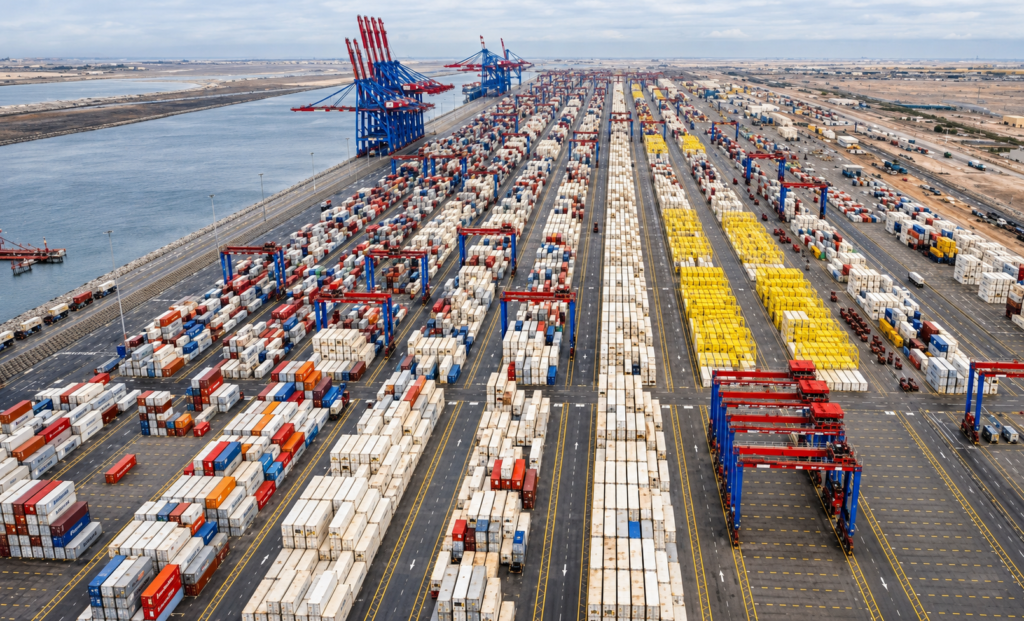
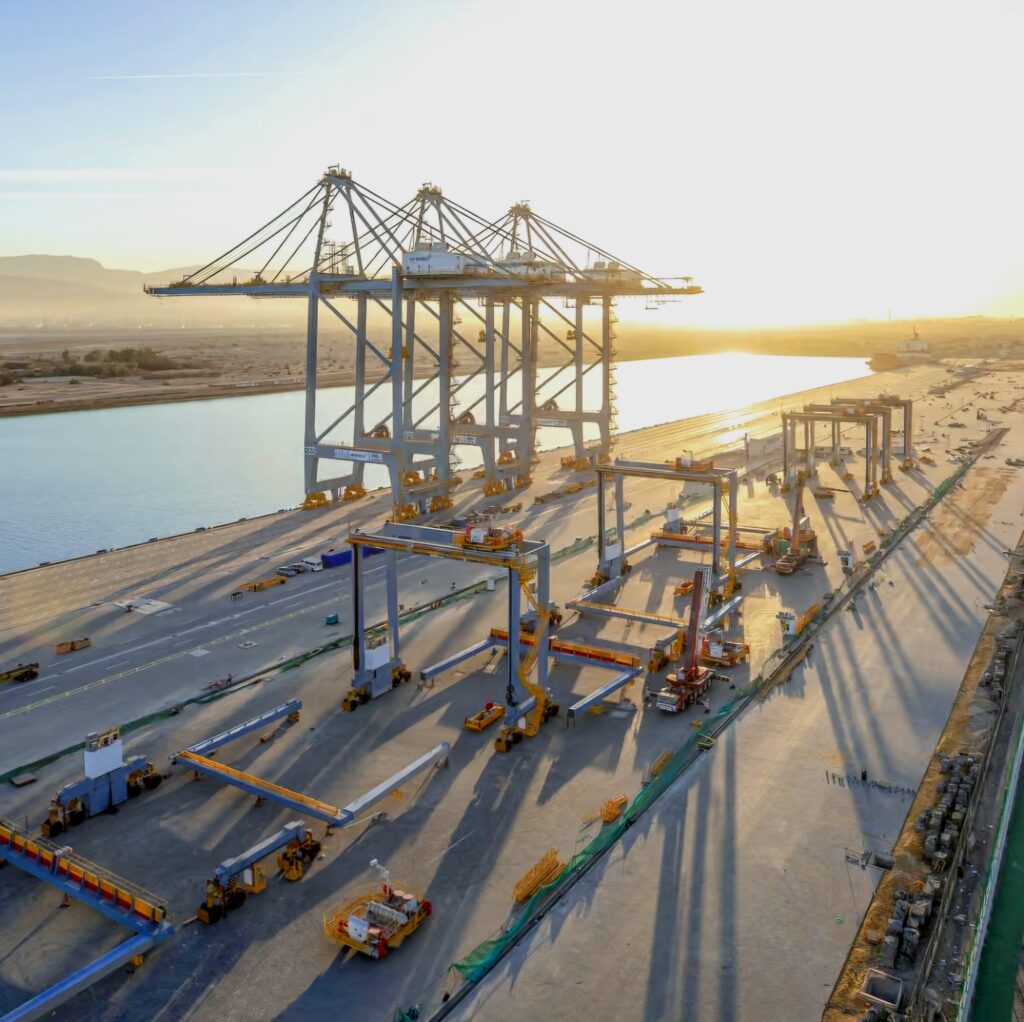
    DP World Sokhna container terminal in Egypt, where monthly container throughput reached a record high.
  • DP World and MOL Plan New Automotive Logistics Facility at Jebel Ali Port

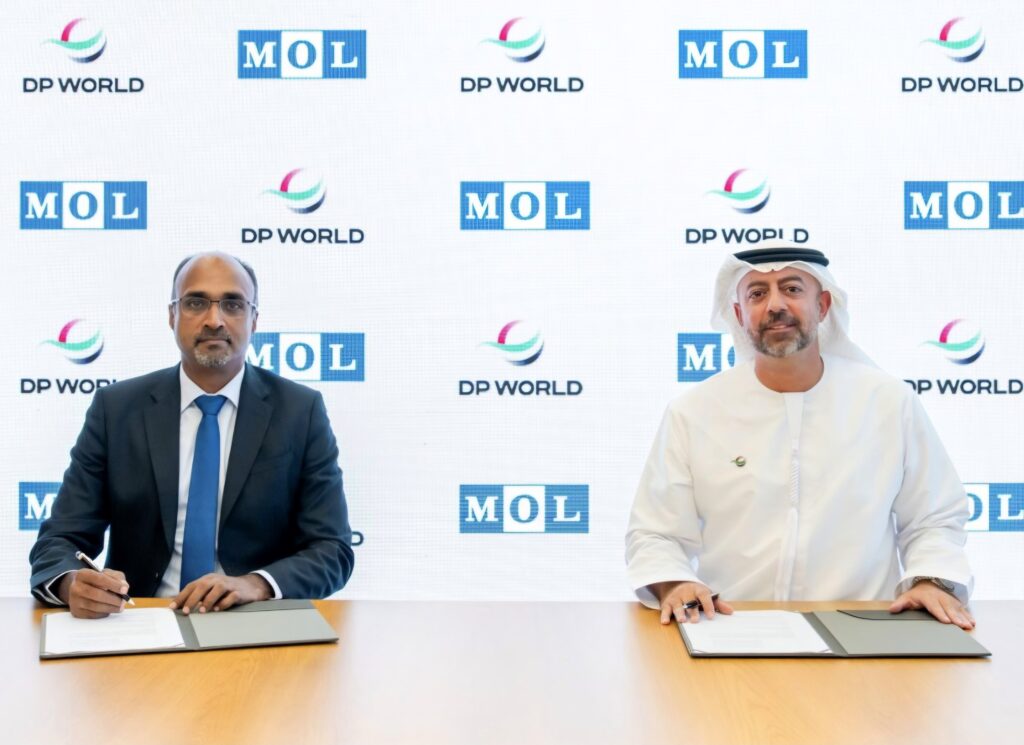
    Shipping Arabia, October 11, 2026 – DP World and Mitsui O.S.K. Lines (MOL) have signed a term sheet outlining the framework for a proposed automotive logistics and processing facility at Jebel Ali Port in Dubai, United Arab Emirates. The planned development would consolidate vehicle storage, pre-delivery inspection and other value-added services at a single port-side location, supporting automotive trade between Asia, the Middle East and Africa.

    The agreement marks the next step in the longstanding collaboration between the two companies. The proposed Jebel Ali automotive logistics facility aims to expand vehicle storage capacity and strengthen the port’s role in regional automotive supply chains.

    Proposed Automotive Logistics Facility to Integrate Vehicle Services

    Under the proposed development, DP World and MOL would bring several automotive logistics and processing activities together within a dedicated facility at Jebel Ali Port.

    The facility would combine vehicle storage, pre-delivery inspection and other value-added automotive services in one location. This integrated approach is intended to expand storage capacity while supporting more efficient vehicle logistics operations through the port.

    The development would also strengthen automotive trade flows connecting major vehicle manufacturing centers in Asia with growing markets across the Middle East and Africa.

    By bringing these services together at a port-side location, the companies aim to support the long-term development of automotive trade through Jebel Ali.

    Jebel Ali Port Handled Nearly 1.1 Million Vehicles in 2025

    The proposed Jebel Ali automotive logistics facility follows a year of substantial vehicle handling activity at the port.

    According to DP World and MOL, Jebel Ali Port handled nearly 1.1 million vehicles in 2025, highlighting its role as a major automotive trade gateway serving regional and international markets.

    The planned facility is intended to support the continued growth of automotive trade through the port, particularly vehicle movements between Asian manufacturing centers and markets in the Middle East and Africa.

    Expanding storage capacity and consolidating vehicle processing services form central elements of the proposed development.

    DP World and MOL Continue Partnership Discussions

    The signing of the term sheet establishes a framework for the proposed facility and represents a further step in the existing relationship between DP World and MOL.

    Both companies have indicated their intention to continue discussions on the development, building on their longstanding cooperation in the maritime and logistics sectors.

    The project remains at the proposal stage, with the companies outlining the intended scope of the facility and its role in supporting automotive logistics at Jebel Ali Port.

    The proposed development would bring additional vehicle storage and processing capabilities to a port that already handles significant automotive volumes, supporting the companies’ shared objective of strengthening vehicle trade connections between Asia, the Middle East and Africa.

    Source: DP World and Mitsui O.S.K. Lines (MOL)

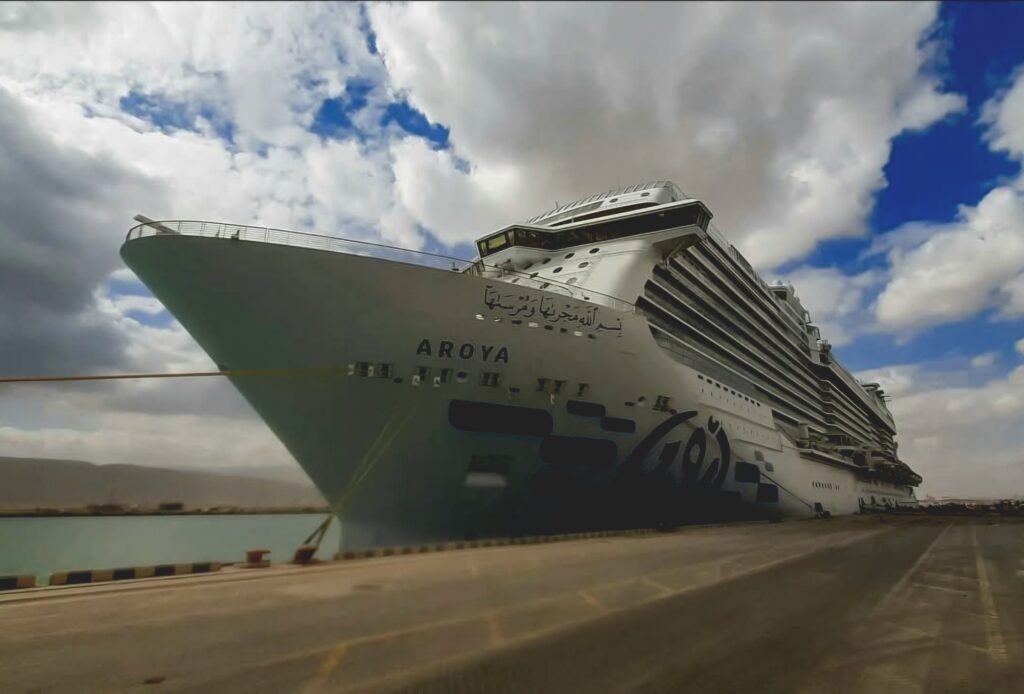
  • AROYA Cruise Ship Visits Sokhna Port With 1,327 Tourists

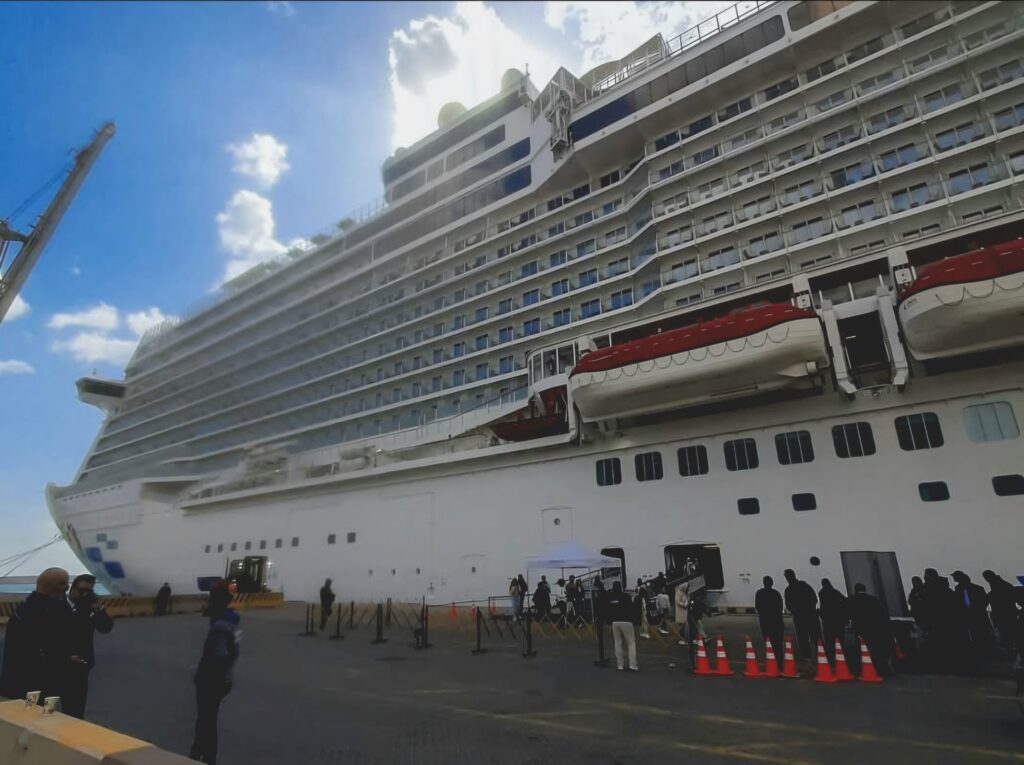
    Shipping Arabia, October 10, 2026 – The AROYA cruise ship visited Egypt’s Sokhna Port on Sunday, October 4, carrying 1,327 tourists of various nationalities. The vessel arrived from Sharm El Sheikh and berthed at the DP World terminal within Sokhna Port, which operates under the Suez Canal Economic Zone (SCZONE).

    The cruise ship is owned by Cruise Saudi, a subsidiary of Saudi Arabia’s Public Investment Fund (PIF). Its visit formed part of an Egyptian itinerary that included Sharm El Sheikh, Sokhna and Alexandria.

    During the Sokhna port call, passengers were scheduled to travel to Cairo for sightseeing excursions before returning to the vessel on the same day. The visit highlighted the port’s role in accommodating international cruise ships and facilitating access to Egypt’s tourism destinations.

    AROYA Cruise Ship Specifications and Sokhna Port Call

    The Malta-flagged AROYA measures 303 meters in length, with a beam of 39.2 meters and a draft of 8.2 meters. Rhapsody served as the vessel’s shipping agent during the visit.

    Following its arrival from Sharm El Sheikh, the cruise ship berthed at the terminal operated by DP World at Sokhna Port. The vessel was scheduled to depart later that evening for Alexandria Port, continuing its cruise itinerary along Egypt’s coastline.

    The port call brought 1,327 international tourists to Sokhna, with Cairo included in the planned shore excursion program. Passengers were expected to return aboard before the ship’s scheduled evening departure.

    SCZONE Highlights Sokhna Port’s Cruise Handling Capabilities

    According to the Suez Canal Economic Zone, the arrival of AROYA demonstrated Sokhna Port’s operational readiness and its ability to accommodate different types of vessels.

    SCZONE emphasized that the port maintains the operational capabilities required to handle vessel calls in accordance with high standards of efficiency and safety. The cruise ship’s visit also reflected the port’s role in supporting maritime tourism alongside its wider shipping activities.

    The economic zone continues to work on improving the efficiency and operational readiness of its ports. These efforts aim to strengthen their ability to receive vessels and support maritime traffic, international trade and tourism.

    Supporting Egypt’s Maritime and Cruise Tourism Activities

    SCZONE considers the development of its port infrastructure and operational capabilities an important component of strengthening Egypt’s position within regional and international maritime transport networks.

    The authority’s ongoing efforts focus on enhancing port readiness and improving services for different vessel categories, including cruise ships.

    AROYΑ’s visit to Sokhna Port formed part of these maritime activities, connecting a Red Sea port call with planned tourism excursions to Cairo and an onward voyage to Alexandria.

    By continuing to improve port capabilities and operational efficiency, SCZONE aims to support shipping, trade and tourism while reinforcing the position of its ports within the regional and international maritime industry.

    Source: Suez Canal Economic Zone (SCZONE)

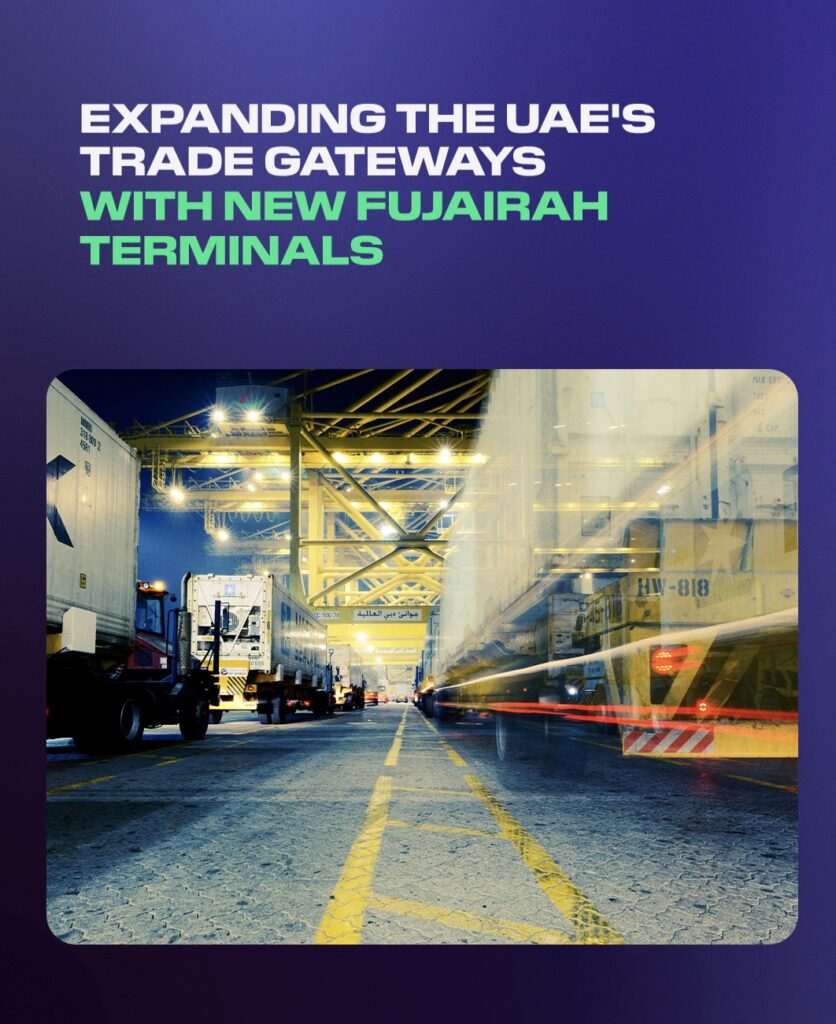
  • DP World to Develop New Fujairah Terminals at Al Rugaylat and Dibba

    Shipping Arabia, September 23, 2026 – DP World is set to develop new port terminals at Al Rugaylat and Dibba in Fujairah under an agreement with the Fujairah Ports Authority, expanding cargo-handling capacity along the UAE’s east coast.

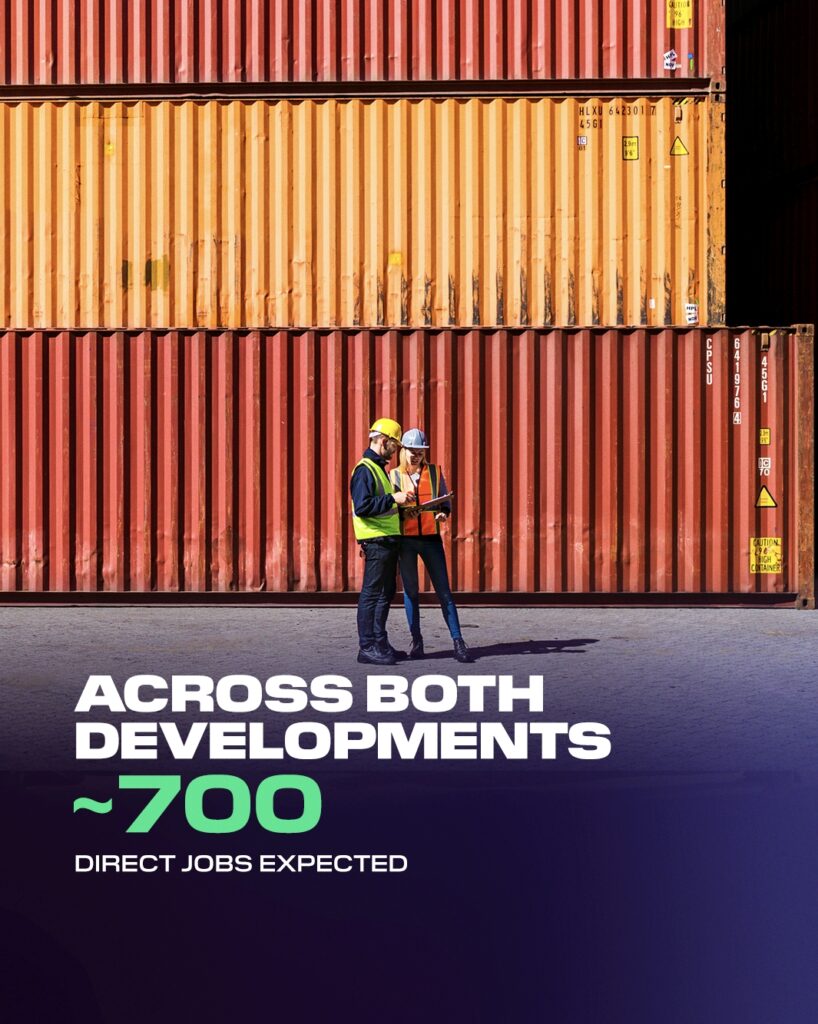
    The developments will add new capacity for containers, general cargo and roll-on/roll-off (RoRo) traffic while creating approximately 700 direct maritime jobs across the two projects.

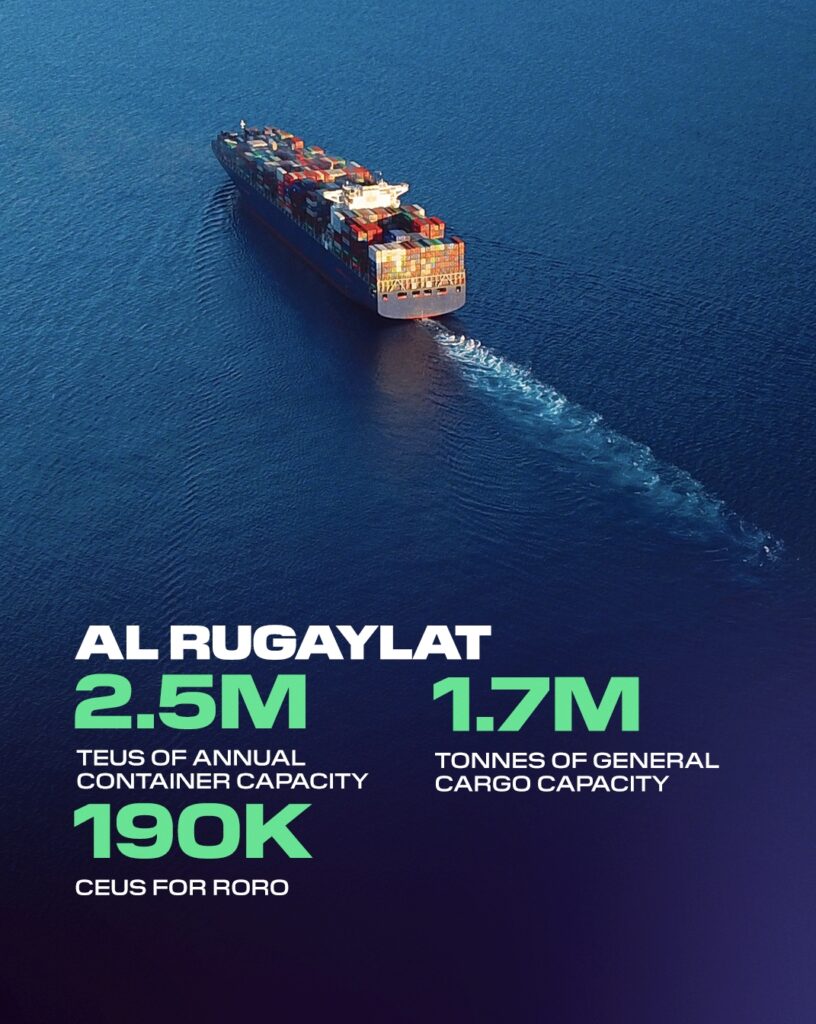
    At Al Rugaylat, the planned terminal will have an annual container-handling capacity of 2.5 million TEUs, alongside capacity for 1.7 million tonnes of general cargo and 190,000 car equivalent units (CEUs) of RoRo cargo annually.

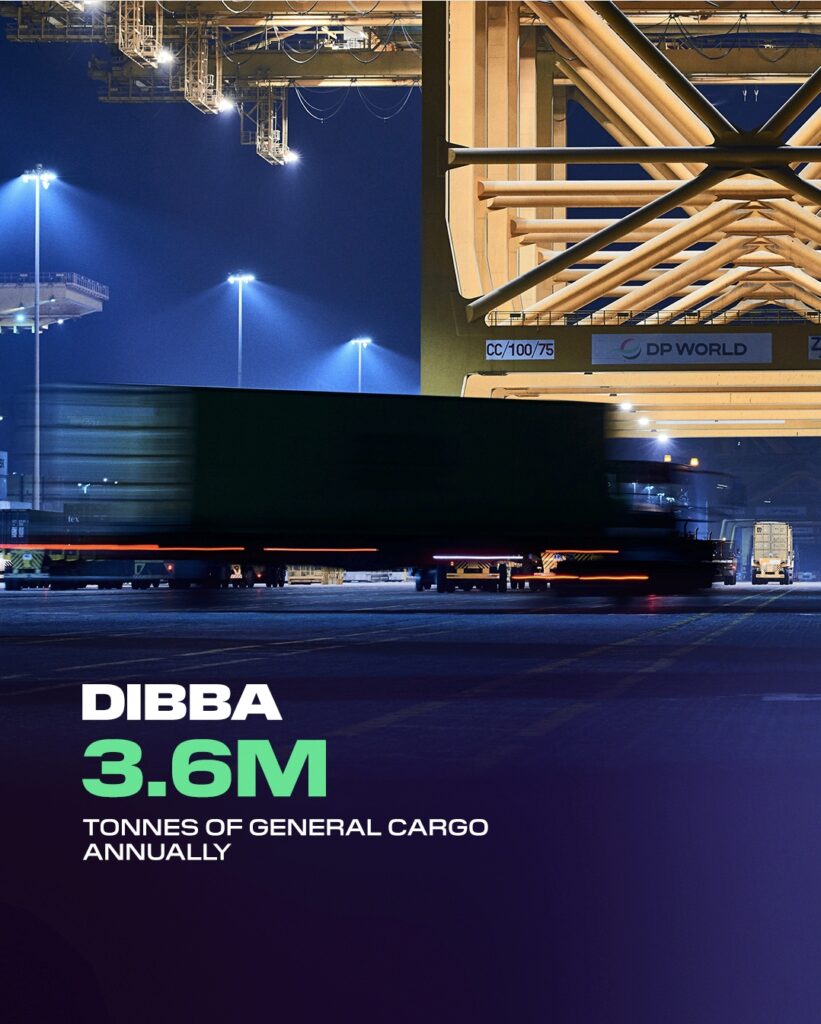
    The Dibba development will focus on general cargo, with planned capacity reaching 3.6 million tonnes per year.

    The projects will expand the range and scale of port infrastructure available on the UAE’s east coast, complementing the country’s existing maritime and logistics network and providing additional gateways for international trade.

    Fujairah’s location on the Gulf of Oman gives its east coast ports direct access to major shipping routes outside the Strait of Hormuz, making the emirate strategically important within the UAE’s wider maritime and logistics network.

    DP World said the new terminals will strengthen the UAE’s global connectivity while providing additional infrastructure to support growing cargo flows.

    Once developed, the two facilities will add substantial container, RoRo and general cargo capacity to Fujairah while broadening the UAE’s network of maritime trade gateways.

    Source: DP World

Back to top button