Shipping Arabia, November 8, 2026 – Sidra Line is returning to Red Sea container shipping operations with two regional services connecting ports across the Eastern Mediterranean and Red Sea. According to shipping research firm DynaLiners, the carrier will operate the Red Sea Express (RSA) service alongside a separate intra-Red Sea service known as IRS.
The two services will restore Sidra Line’s presence in the Red Sea container shipping market, connecting regional ports in Türkiye, Egypt, Jordan, Saudi Arabia, Djibouti, and Syria. The network will feature both monthly and weekly sailings, with different vessel capacities and port rotations.
Red Sea Express Connects Eastern Mediterranean and Red Sea Ports
The Red Sea Express (RSA) service will provide maritime connections between the Eastern Mediterranean and the Red Sea, deploying a single container vessel with a capacity of 270 twenty-foot equivalent units (TEUs).
According to DynaLiners, the service will operate on a monthly frequency, linking ports in Türkiye, Egypt, Jordan, Djibouti, and Syria.
The announced RSA port rotation is:
Adana – Alexandria – Ain Sokhna – Aqaba – Djibouti – Aqaba – Damietta – Latakia – Adana.
The rotation includes three Egyptian ports: Alexandria, Ain Sokhna, and Damietta. It also features two calls at Aqaba, connecting Jordan with the Eastern Mediterranean and Djibouti through the same service.
The inclusion of Latakia and Adana extends the service’s coverage to Syria and Türkiye, establishing maritime connections between these markets and the Red Sea.
Sidra Line Introduces Weekly Intra-Red Sea Service
Alongside RSA, Sidra Line will operate a separate intra-Red Sea container service under the name IRS, providing weekly connections between Jordan, Egypt, and Saudi Arabia.
According to DynaLiners, the IRS service is understood to be offered in cooperation with Samsun Shipping. It will deploy one container vessel with a capacity of 450 TEUs.
The announced IRS port rotation is:
Aqaba – Ain Sokhna – Jeddah – Aqaba.
Unlike the monthly RSA service, IRS will offer weekly sailings along a shorter regional route. The service will connect Aqaba with Ain Sokhna on Egypt’s Red Sea coast and Jeddah in Saudi Arabia.
Two Services Restore Sidra Line’s Red Sea Presence
The introduction of RSA and IRS marks Sidra Line’s return to container shipping activity in the Red Sea through two distinct regional operating patterns.
RSA will provide monthly connections between the Eastern Mediterranean and Red Sea markets, while IRS will focus on weekly sailings linking Aqaba, Ain Sokhna, and Jeddah.
Both services include Aqaba and Ain Sokhna in their rotations, giving the two ports a presence in Sidra Line’s wider regional network.
Together, the services will restore the carrier’s Red Sea operations while connecting regional markets with ports in Türkiye, Egypt, and Syria.
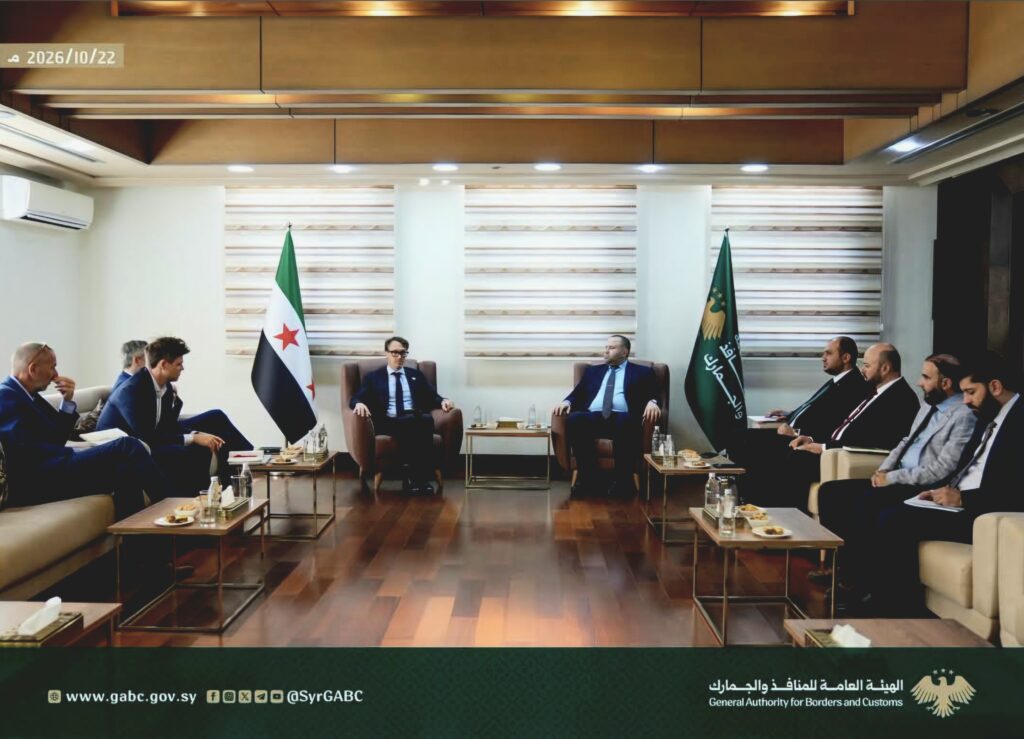
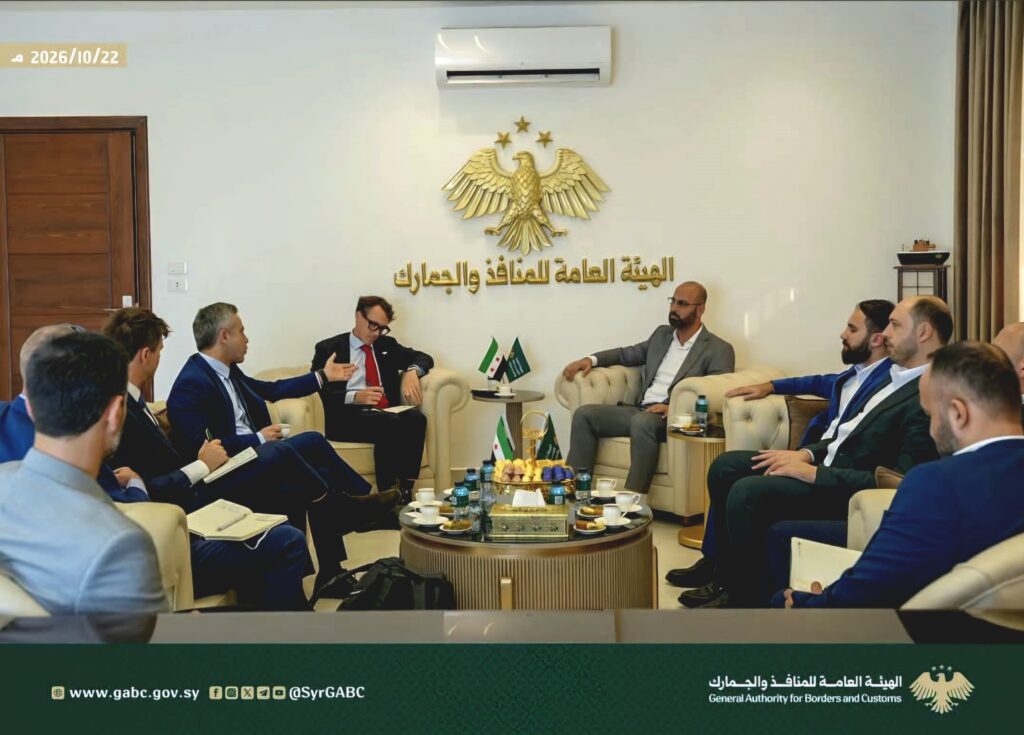
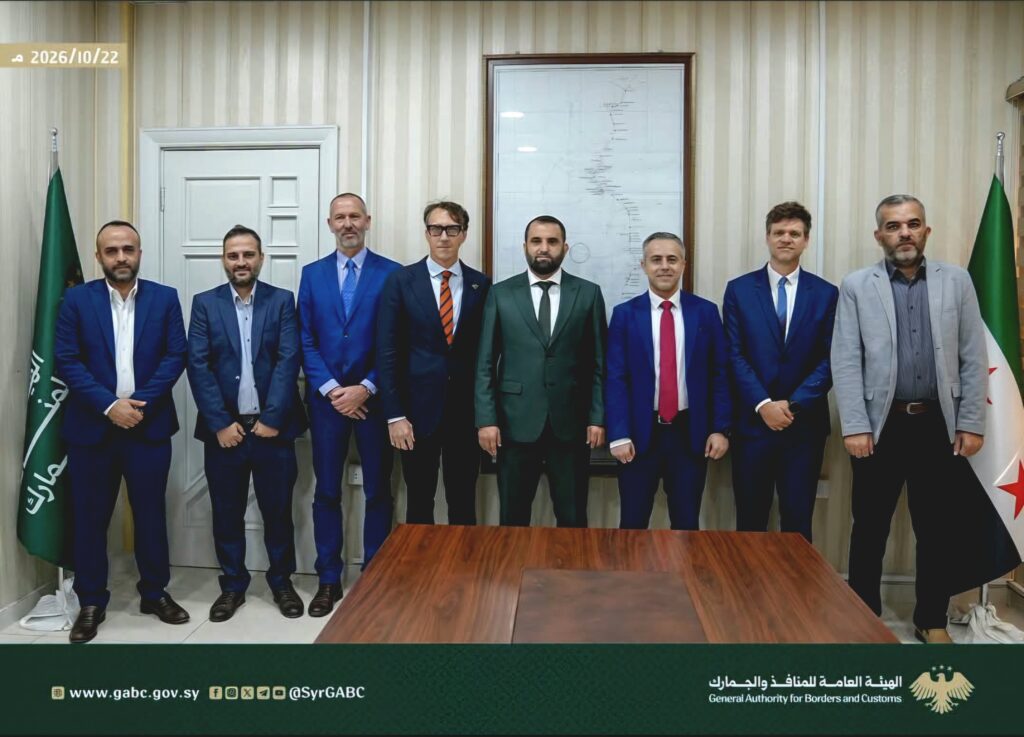
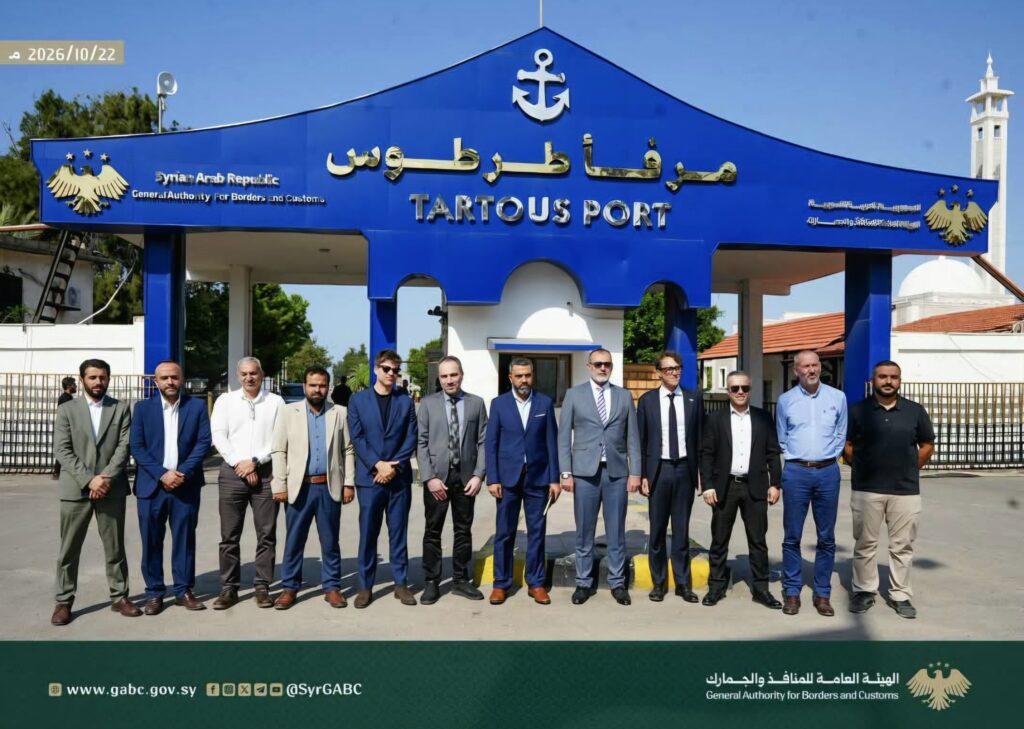
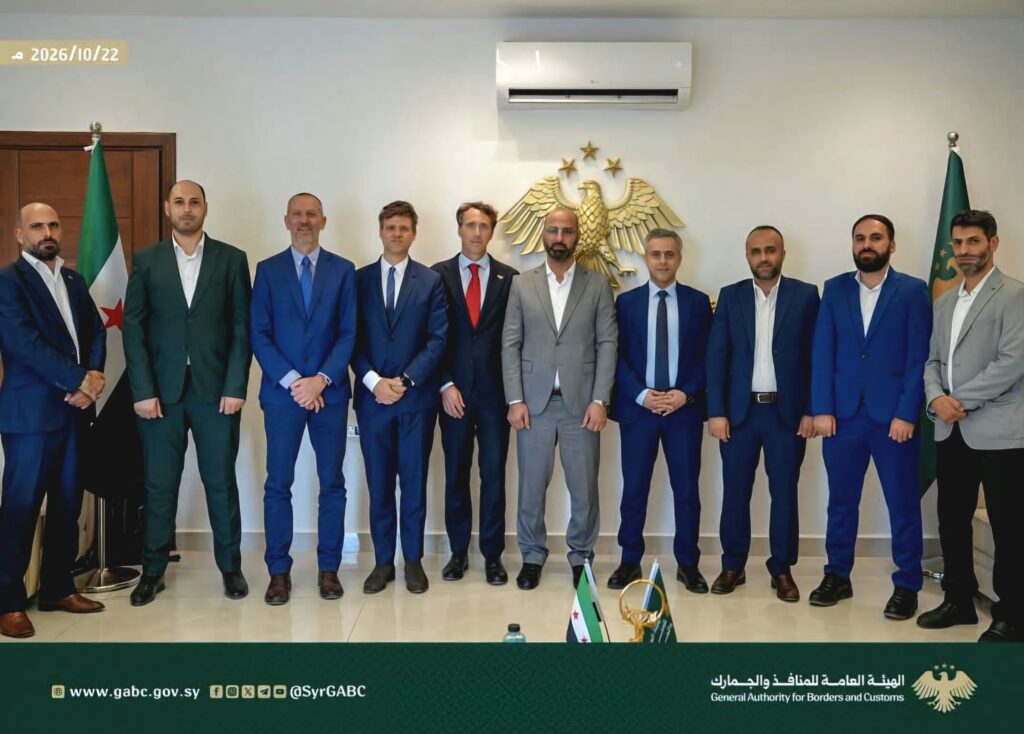
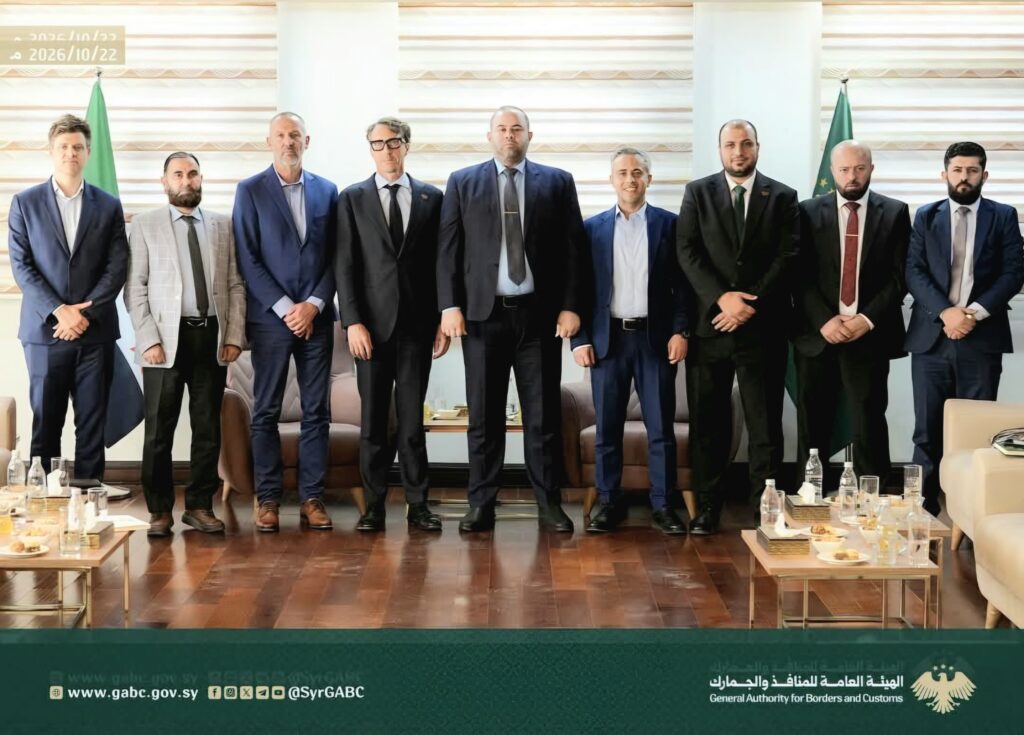
Shipping Arabia, October 26, 2026 – The Syrian General Authority for Borders and Customs has held discussions with the Belgian development agency Enabel to explore technical and institutional cooperation on Syrian port modernization, following field assessments at Latakia Port, Tartus Port and the General Directorate of Ports.
Mazen Alloush, Director of International Relations and Cooperation at the authority, received a Belgian delegation led by Patrick Gaudissart, Enabel’s Regional Director for the Middle East, North Africa and Eastern Neighbourhood. The meeting concluded a multi-day working visit focused on assessing the condition of Syrian ports and identifying opportunities to improve their infrastructure, operations and institutional capabilities.
The discussions form part of the authority’s efforts to expand cooperation with specialized international institutions and benefit from international expertise in port management, maritime operations and infrastructure development.
Belgian Delegation Assesses Latakia and Tartus Ports
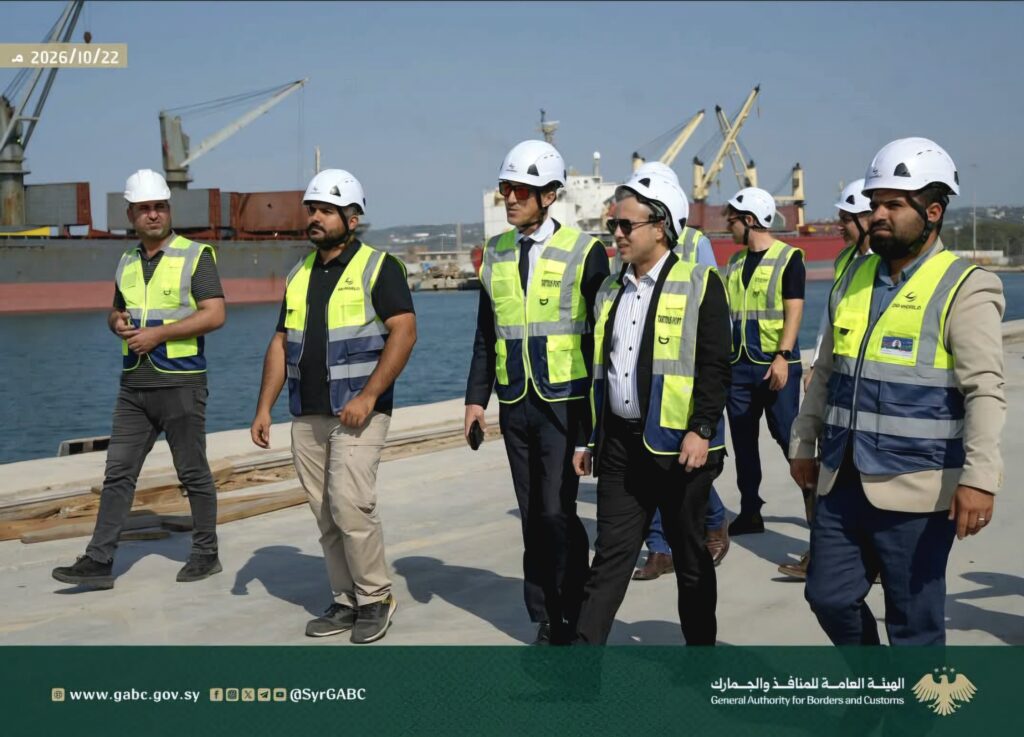
The Belgian delegation conducted meetings and field visits between October 19 and 21, covering Latakia Port, Tartus Port and the General Directorate of Ports.
During the visits, delegation members met with officials and maritime sector representatives to examine existing port infrastructure, equipment and operational processes. They also reviewed the modernization plans adopted by the relevant Syrian authorities and discussed priorities for improving port services.
The assessments provided an opportunity to identify operational and institutional requirements that could form the basis of future technical cooperation between the Syrian authority and Enabel.
The discussions covered several areas of Syrian port modernization, including improvements to port governance, digital systems and vessel traffic management. Participants also examined measures to strengthen operational efficiency and modernize maritime safety and security arrangements.
Another priority involved developing the technical and administrative capabilities of port personnel through specialized training and capacity-building programs. The meetings also addressed the modernization of regulatory and legislative frameworks to bring port management and maritime activities into closer alignment with international standards.
Syrian Port Modernization Could Benefit From Belgian Expertise
The Syrian and Belgian representatives examined opportunities to benefit from Belgium’s experience in port management and development, particularly the operational practices and technical capabilities of the Port of Antwerp-Bruges.
Discussions focused on potential cooperation in port administration, operational management, digital transformation and specialized maritime training. These areas were identified as possible avenues for transferring technical knowledge and strengthening the capabilities of Syrian port institutions.
The two sides also explored opportunities to develop maritime surveillance systems and exchange technical expertise related to port operations and maritime activities.
The potential cooperation would draw on Belgian experience while addressing the operational and institutional requirements identified during the visits to Syrian ports.
The discussions also highlighted the importance of combining infrastructure and equipment improvements with stronger governance, modern operating systems and qualified personnel.
From Port Assessments to Practical Cooperation Programs
During the concluding meeting, Alloush and the Belgian delegation reviewed the main findings of the field visits and discussions with port officials.
The meeting focused on identifying how the requirements observed at Latakia and Tartus could be translated into specific areas of technical cooperation aligned with the authority’s priorities and port modernization plans.
Alloush emphasized the importance of moving beyond preliminary consultations and needs assessments toward developing clear, practical technical proposals and actionable work programs.
He reaffirmed the Syrian General Authority for Borders and Customs’ commitment to establishing effective and sustainable international partnerships that facilitate knowledge transfer, strengthen national capabilities and improve the competitiveness of Syrian ports.
The authority also aims to enhance the role of Syrian ports in regional and international trade through improvements to infrastructure, operational performance and institutional capacity.
For his part, Gaudissart expressed appreciation for the cooperation and assistance provided to the Belgian delegation throughout its visit.
He confirmed Enabel’s readiness to continue technical coordination with the Syrian authority and develop cooperation proposals based on the findings of the field assessments and the actual requirements identified at the ports.
Such proposals would provide a foundation for potential joint programs supporting the development and modernization of Syria’s port sector.
Expanding International Partnerships for Syrian Ports
The discussions reflect the Syrian General Authority for Borders and Customs’ wider approach to strengthening relationships with specialized international organizations and drawing on global experience in port development.
The authority is seeking to use international cooperation to support improvements in maritime infrastructure, port services, institutional governance and operational efficiency.
The engagement with Enabel places particular emphasis on identifying practical cooperation opportunities that respond to the needs of Syrian ports rather than limiting discussions to general areas of partnership.
The next steps will focus on continued technical coordination and the preparation of potential cooperation programs based on the priorities established during the October field visits.
Through these efforts, the authority aims to strengthen the competitiveness of Syrian ports, improve their operational capabilities and support their contribution to regional and international trade and investment.
Source: Syrian General Authority for Borders and Customs
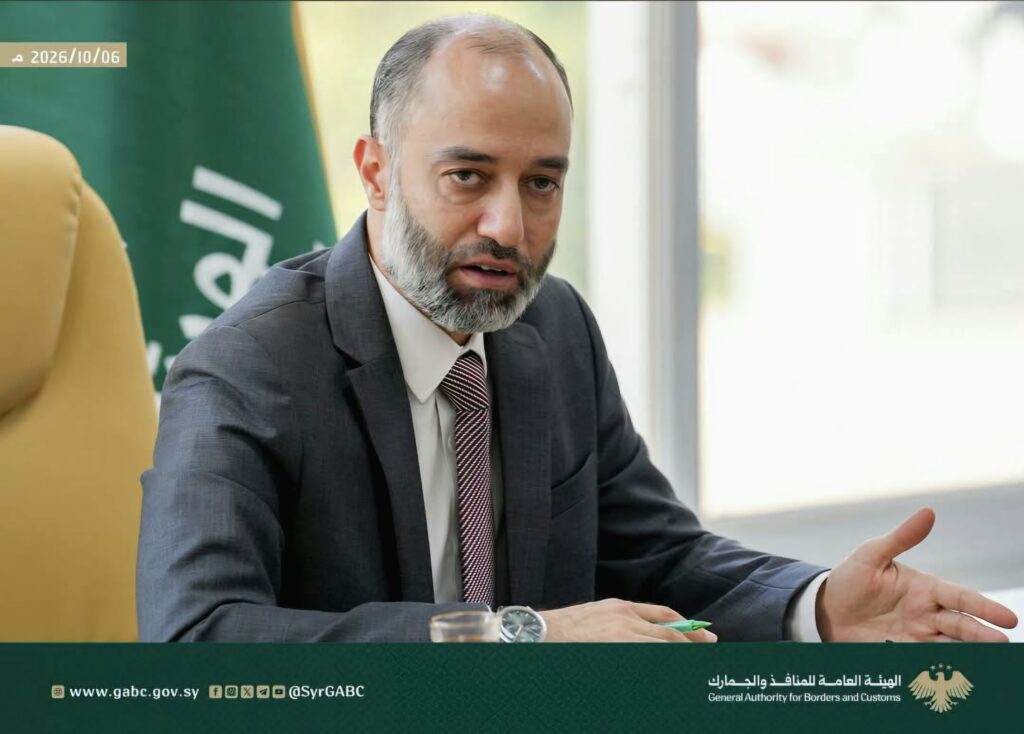
Shipping Arabia, October 14, 2026 – Syria’s General Authority for Borders and Customs (GABC) has held an extensive meeting at Latakia Port to review maritime operations, development plans and key operational challenges. The discussions focused on improving port services, advancing digital transformation and strengthening coordination among the authority’s affiliated entities.
The meeting was chaired by Qutaiba Badawi, Head of the General Authority for Borders and Customs, with the participation of directors from the authority’s central departments and directorates.
Officials examined current operational conditions, identified challenges affecting various departments and discussed measures to improve institutional coordination and service efficiency across Syria’s maritime sector.
Port Operations and Maritime Service Development
A major focus of the meeting was the performance of Syrian ports and the development of services provided by the authority’s maritime entities.
Discussions covered port operations, Coast Guard activities, maritime transport and the Syrian Shipping Agencies Company. Officials reviewed opportunities to improve service delivery, increase operational efficiency and address challenges affecting these activities.
The meeting also examined the requirements of the Maritime Training and Qualification Establishment, particularly its role in preparing qualified personnel for the maritime sector.
Participants emphasized the importance of developing the workforce needed to support improvements in maritime services and strengthen the capabilities of institutions operating under the authority.
These discussions formed part of a broader review of how the authority’s various departments and affiliated organizations can coordinate their activities more effectively.
Digital Transformation and Administrative Modernization
Digital transformation was another central topic, with officials reviewing projects to modernize administrative and operational systems across the authority.
The discussions addressed measures to accelerate official correspondence, simplify working procedures and improve the efficiency of administrative processes.
Participants also examined the standardization of administrative forms and legal procedures to establish more consistent working practices across departments.
In addition, the meeting addressed staffing requirements and improvements to the working environment, reflecting the authority’s focus on ensuring that its departments have the personnel and organizational resources needed to perform their responsibilities.
Performance Monitoring and Service Quality
During the meeting, Badawi emphasized the importance of adopting clear action plans supported by measurable key performance indicators (KPIs).
He called for systematic monitoring of assigned tasks, closer follow-up on implementation and measures to overcome obstacles that could delay progress.
Badawi also directed the authority’s departments to prioritize improvements in service quality while strengthening confidence among customers and investors.
Furthermore, he stressed the importance of institutional working practices and closer integration among the authority’s different departments and affiliated entities.
The meeting brought together the operational, administrative and training priorities of Syria’s maritime sector, with an emphasis on coordinated development, improved performance monitoring and more efficient service delivery.
Shipping Arabia, October 11, 2026 – Latakia Port cargo throughput reached approximately 3.8 million tons during the first nine months of 2026, covering general and containerized cargo. The Syrian port also received 532 vessels between January and September, according to figures released by the General Authority for Borders and Customs.
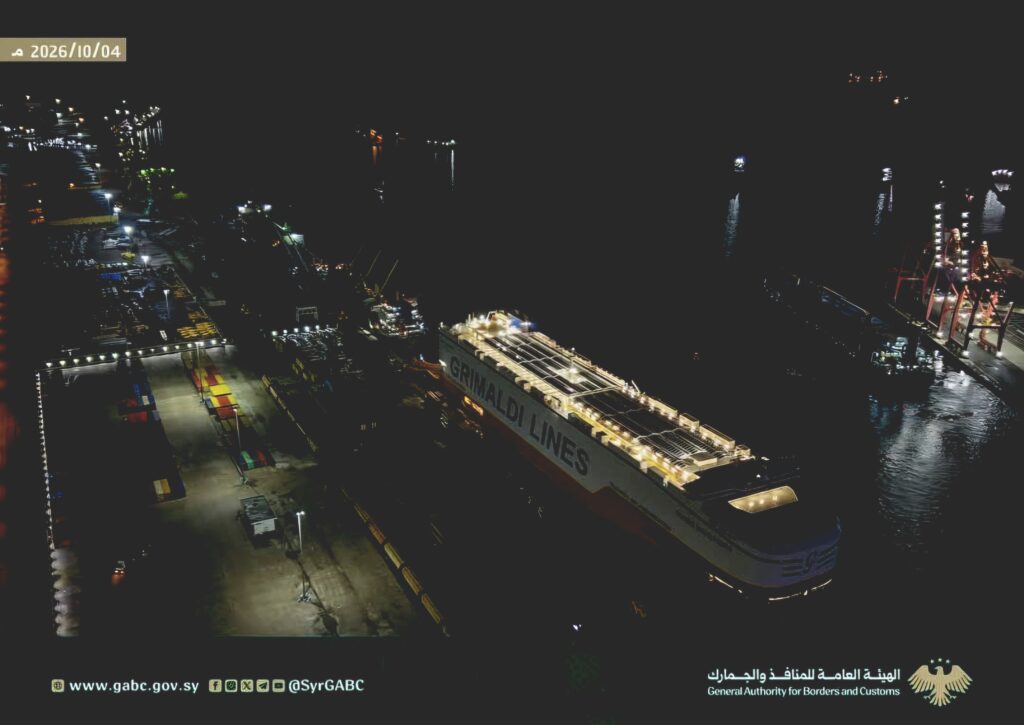
The port continues to maintain round-the-clock maritime and cargo handling operations, with vessels arriving and loading and unloading activities taking place across its berths and storage yards.
Latakia Port Cargo Throughput and Container Volumes
General cargo accounted for approximately 2 million tons of the total volume handled during the reporting period. Meanwhile, container traffic reached around 219,000 containers, carrying nearly 1.8 million tons of cargo.
Together, these figures brought Latakia Port cargo throughput to approximately 3.8 million tons through the end of September 2026.
Containerized cargo and general cargo operations continued throughout the reporting period, supported by ongoing loading and unloading activities at the port’s operational facilities.
Vessel Calls Reach 532 Across Different Maritime Activities
Latakia Port received 532 vessels during the first nine months of 2026, reflecting activity across several maritime service categories.
General cargo vessels accounted for 250 calls, while container ships represented another 247 calls. The remaining traffic included 22 vessels arriving for repair work and 13 passenger ships.
The breakdown highlights the variety of maritime activities taking place at the port, including commercial cargo handling, vessel repair services and passenger vessel operations.
Continuous Operations and Port Efficiency
Alongside its cargo handling and vessel reception activities, Latakia Port continues to focus on maintaining operational efficiency and improving service readiness.
Technical and operational teams are working to ensure the smooth movement of cargo and accelerate handling procedures across the port’s berths and storage areas.
These efforts include maintaining continuous operations, strengthening the port’s operational readiness and improving the efficiency of services provided to vessels and cargo operators.
The ongoing activities aim to support Latakia Port’s role in maritime transportation and commercial trade, while ensuring the continued movement of goods through one of Syria’s maritime gateways.
Shipping Arabia, October 9, 2026 – Syria is advancing Latakia Port infrastructure upgrades and operational improvements aimed at strengthening cargo-handling capabilities, accelerating cargo movements and simplifying administrative procedures. The ongoing rehabilitation program includes new port equipment, improvements to operational facilities and measures to facilitate trade-related transactions.
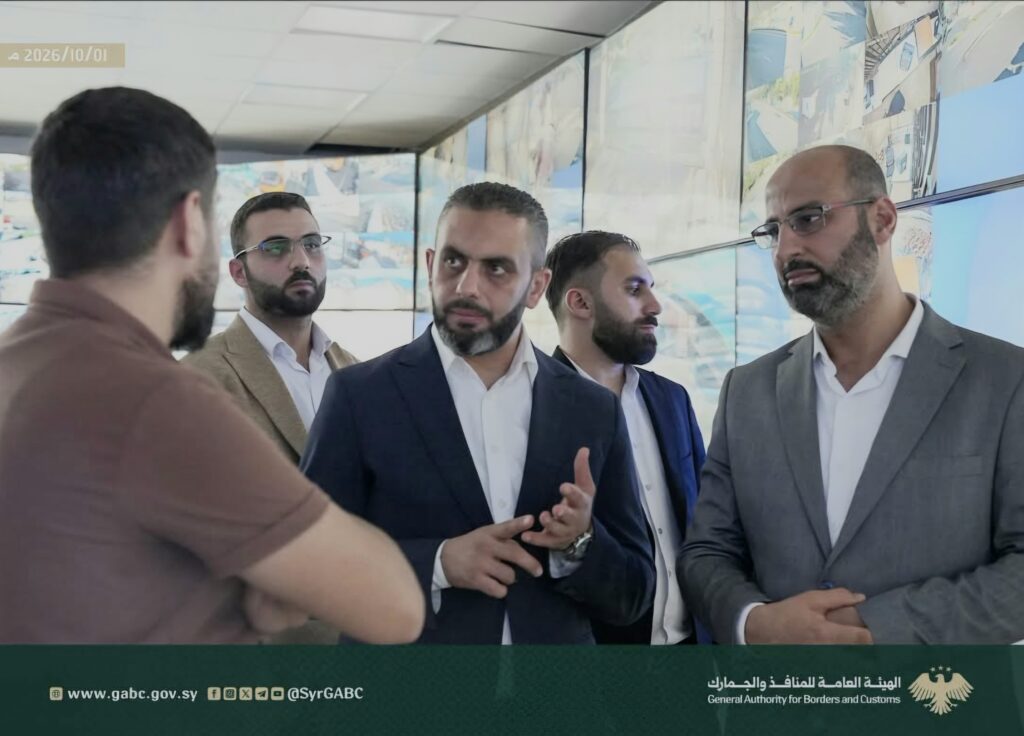
Tamim Sawaghi, Deputy Head of the General Authority for Borders and Customs for Port Affairs, conducted an inspection visit to Latakia Port to review ongoing development projects and assess operational performance.
The visit focused on infrastructure rehabilitation, cargo movement efficiency and procedures designed to improve services for traders and transport operators. Officials also reviewed measures to facilitate cargo reception, unloading and transportation within the port.
Latakia Port Infrastructure Upgrades and Cargo-Handling Equipment
During the inspection, Latakia Port Director Abdul Hamid Al-Wahb briefed Sawaghi on the rehabilitation and equipment modernization activities currently underway.
The projects include upgrading port infrastructure and introducing new machinery to support cargo-handling operations. These improvements aim to strengthen the port’s operational capacity and increase the efficiency of cargo reception, unloading and transportation.
The addition of handling equipment forms part of efforts to improve service quality and facilitate cargo movements through the port. The rehabilitation work also addresses the operational requirements of port facilities and cargo-handling areas.
Officials reviewed the organization of cargo yards and other port facilities during the visit. This assessment focused on maintaining orderly operations and improving the movement of goods through different sections of the port.
The General Authority for Borders and Customs is overseeing these improvements as part of its efforts to develop the performance of Syria’s maritime ports.
One-Stop Service System Aims to Accelerate Port Procedures
Administrative efficiency represents another important component of the operational improvements at Latakia Port.
During the inspection, Sawaghi reviewed the port’s one-stop service system and its role in simplifying procedures for traders and transport operators.
The system aims to improve coordination between the departments responsible for processing port-related transactions. By bringing together relevant administrative services, the initiative seeks to reduce processing times and facilitate the completion of required procedures.
Greater coordination between port departments is also intended to improve the flow of transactions associated with cargo movements. These measures complement the infrastructure and equipment improvements currently underway.
The inspection therefore addressed both the physical handling of cargo and the administrative processes that support commercial operations.
Strengthening Syria’s Maritime Port Operations
The inspection visit forms part of the General Authority for Borders and Customs’ ongoing field supervision of maritime port operations and rehabilitation activities.
Through these visits, the authority aims to monitor progress, assess operational requirements and support improvements in the quality of port services.
At Latakia Port, the current development efforts focus on improving cargo-handling efficiency, organizing operational areas and reducing administrative processing times.
Together, these measures are intended to strengthen the port’s ability to accommodate cargo movements and provide more efficient services to shipping-related businesses, traders and transport operators.
The authority emphasized that developing maritime port performance and improving service quality remain important objectives in supporting trade activity and meeting the needs of Syria’s economic sectors.
Source: General Authority for Borders and Customs – Syria
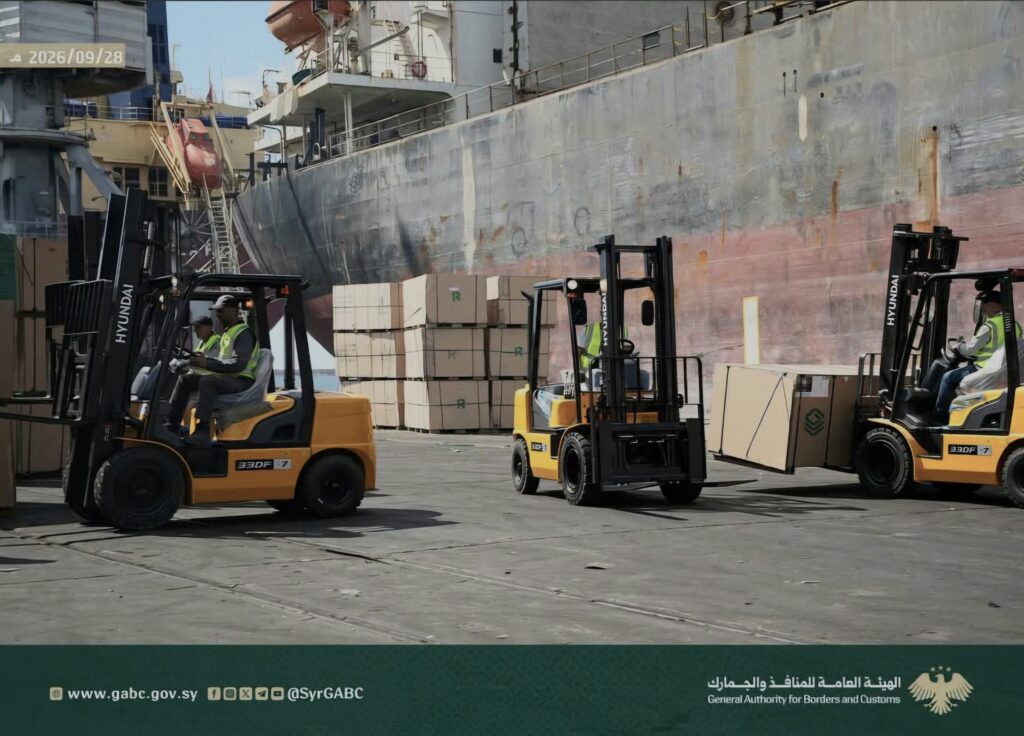
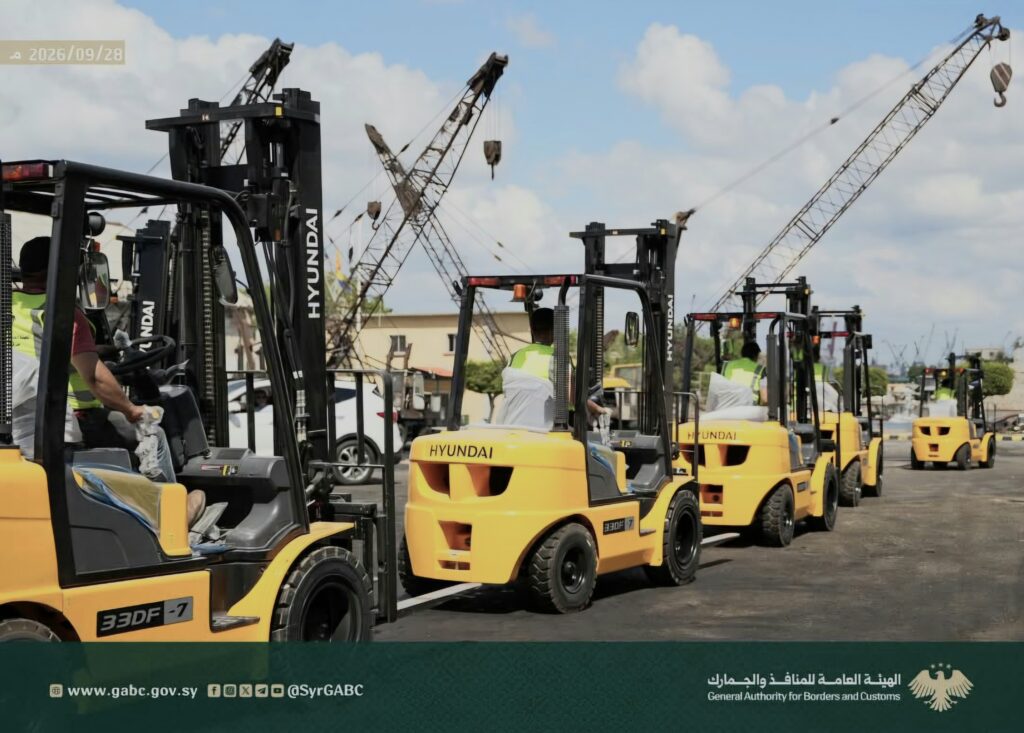
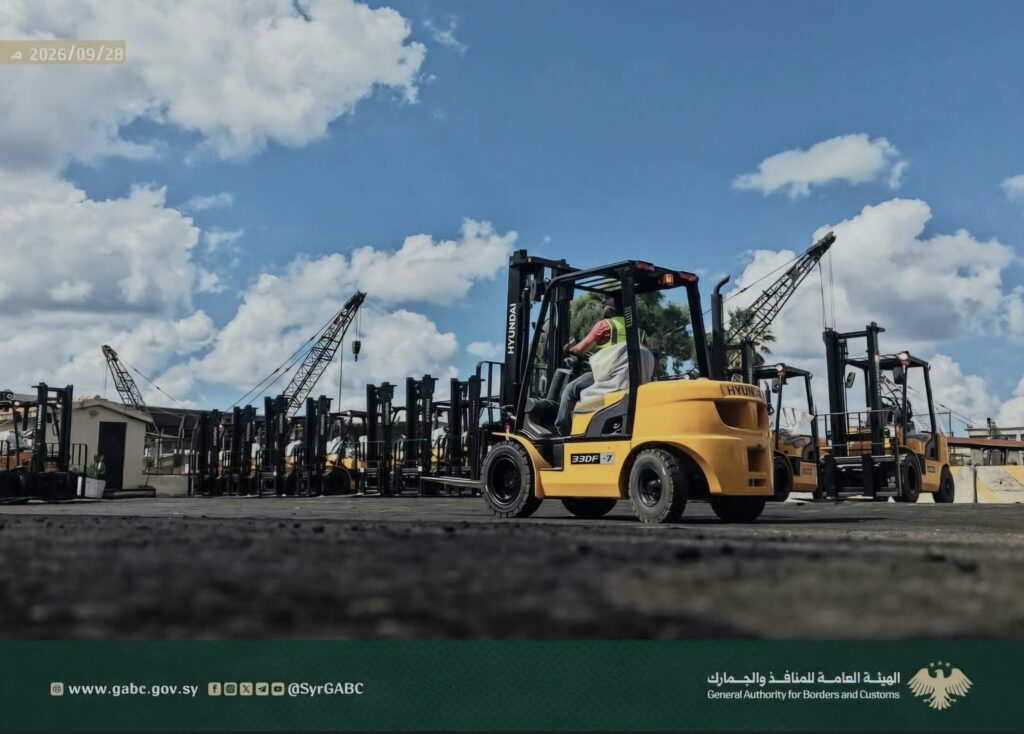
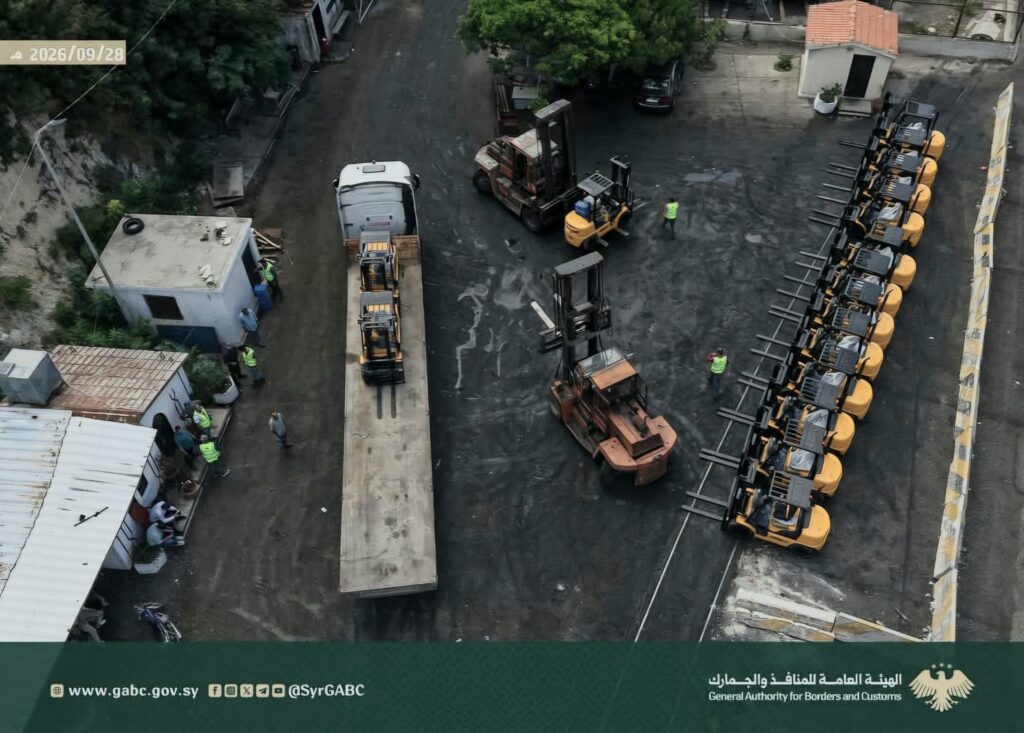
Shipping Arabia, October 5, 2026 – Latakia Port has received 16 new forklifts, each with a lifting capacity of up to three tonnes, as part of ongoing efforts to strengthen operational efficiency and accelerate cargo-handling activities at the Syrian port.
The new forklifts will join the port’s existing fleet of machinery and equipment. Their deployment is intended to support loading and discharge operations while improving the flow of cargo through the port.
New Equipment to Support Cargo Handling
The addition of the 16 forklifts is expected to improve the port’s ability to respond to operational requirements more efficiently. By supporting cargo movement across port operations, the equipment will help streamline handling activities and improve the movement of goods.
The new machinery is also intended to contribute to reducing the amount of time vessels remain alongside the port’s berths. This forms part of wider efforts to improve operational performance at Latakia Port.
Infrastructure and Service Development Continue
The equipment delivery comes as rehabilitation work on port infrastructure and service development continues at Latakia Port.
These efforts include improving the working environment, facilitating procedures and raising the level of services provided to port users. The new forklifts form part of this broader program to upgrade the port’s operational capabilities.
General Authority for Borders and Customs Continues Port Upgrades
The General Authority for Borders and Customs continues to implement plans to rehabilitate Syria’s ports and border facilities and modernize their equipment.
According to the authority, the ongoing program aims to strengthen operational readiness while supporting the role of Syrian ports in stimulating trade and maritime transport activity.
The arrival of the 16 forklifts at Latakia Port therefore forms part of a wider effort to upgrade equipment, rehabilitate infrastructure and improve the efficiency of port services.
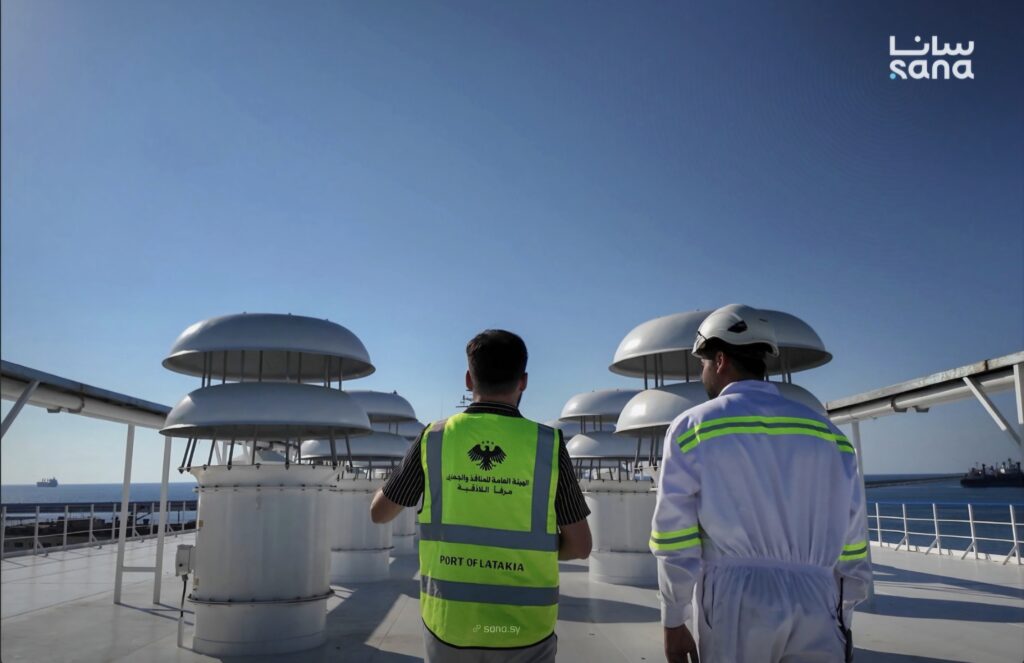
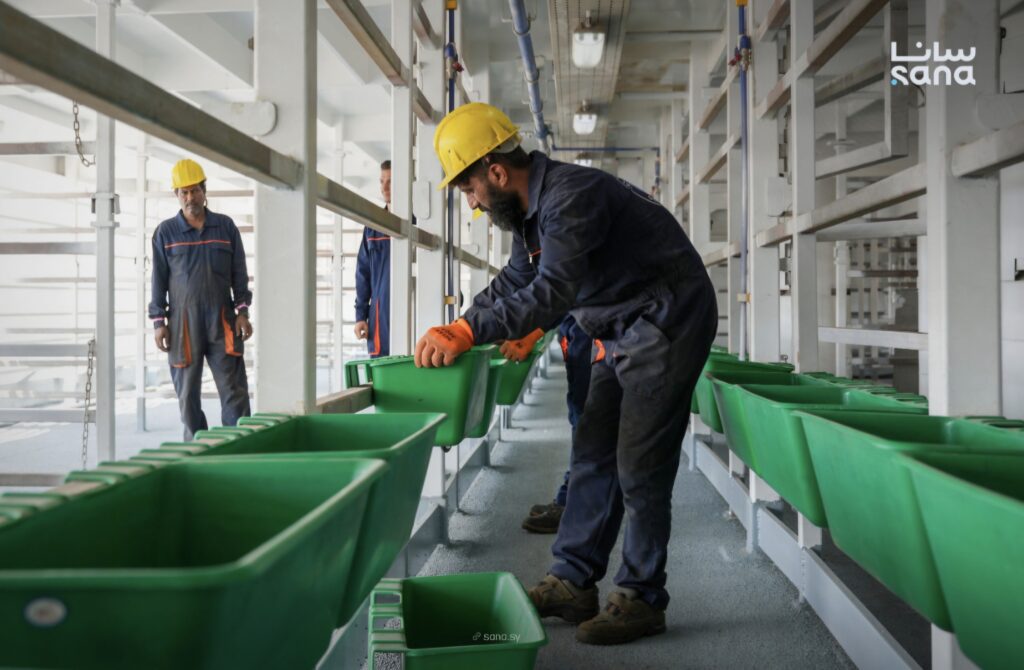
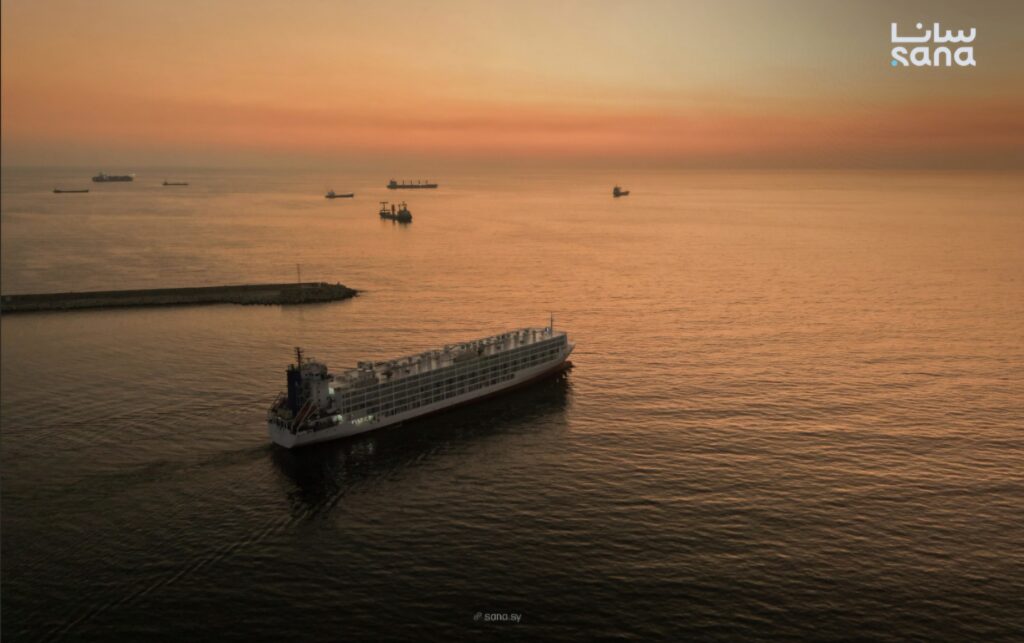
Shipping Arabia, September 25, 2026 – Technical teams at Syria’s Port of Latakia have completed the conversion of Transporter into a specialized livestock carrier capable of carrying around 8,000 animals, highlighting growing ship conversion and marine engineering capabilities at the port.
The project involved several technical departments and workshops at Latakia, with the vessel fitted with integrated systems required for livestock transportation. Capt. Mohammad Shweihna said the conversion was carried out using Syrian technical expertise and labor.
Following the conversion, Transporter provides approximately 11,000 square meters of livestock space across nine decks.
The General Authority for Borders and Customs facilitated the transit of imported materials required for the conversion, allowing equipment and components to enter the port and be installed within the project schedule.
Latakia Port also allocated a berth to the vessel for a full year while maintaining normal maritime and commercial traffic. Port support included pilotage and towage services, approximately 4,000 square meters of storage space, and heavy and light equipment required for the conversion work.
Around 200 workers entered the port daily during the project to support the technical workshops and installation activities.
The conversion expands the scope of specialized maritime work undertaken at Latakia and demonstrates the potential for Syrian port workshops and technical teams to support further vessel conversion and marine engineering projects.