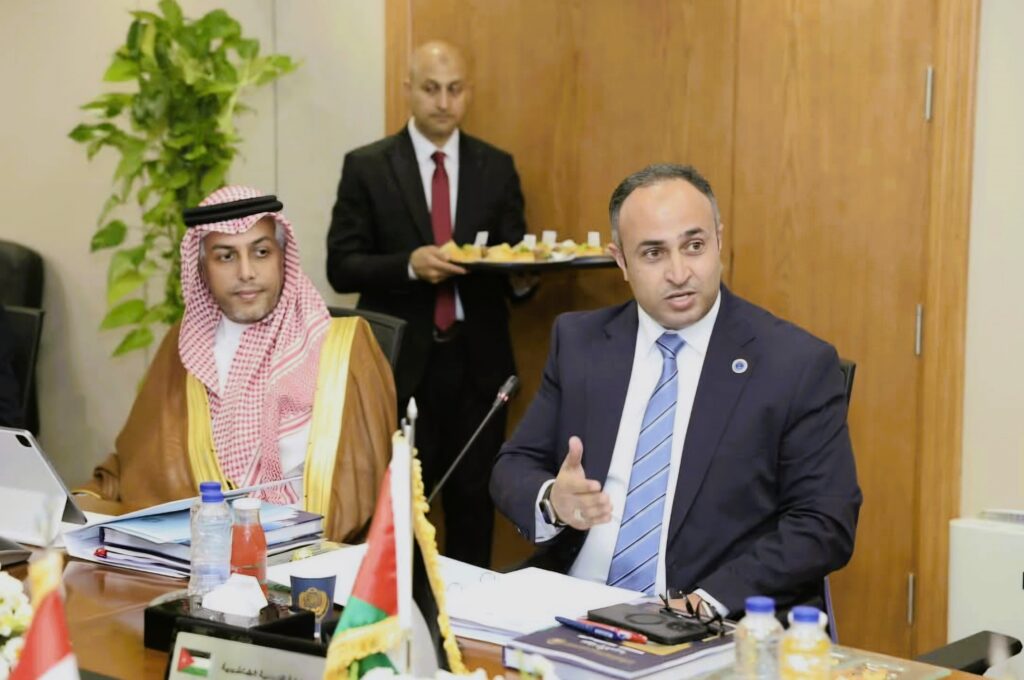
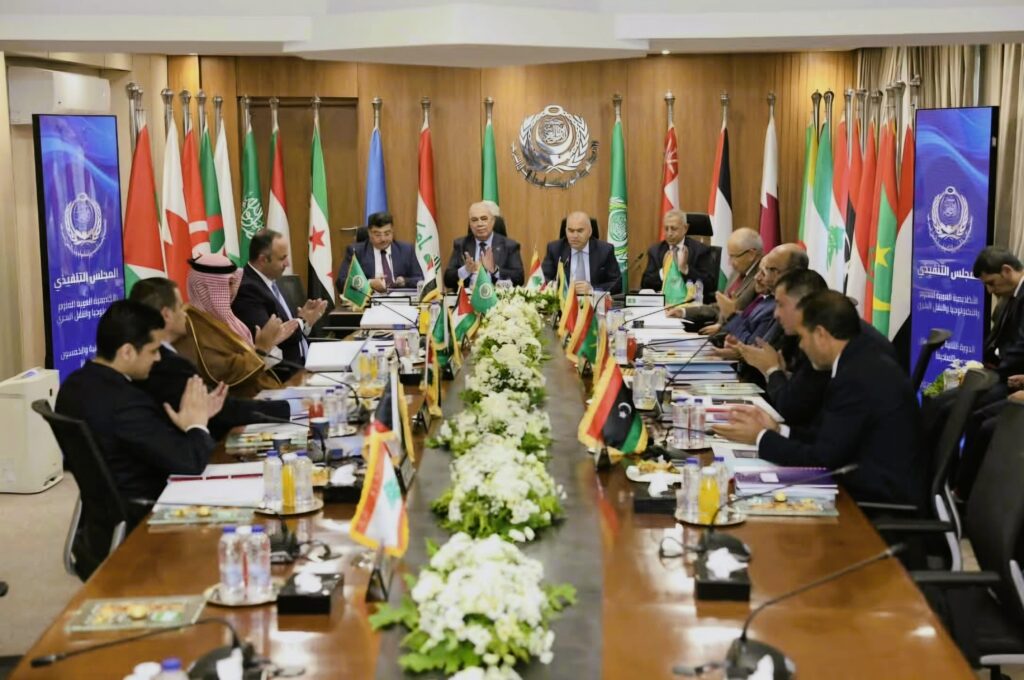
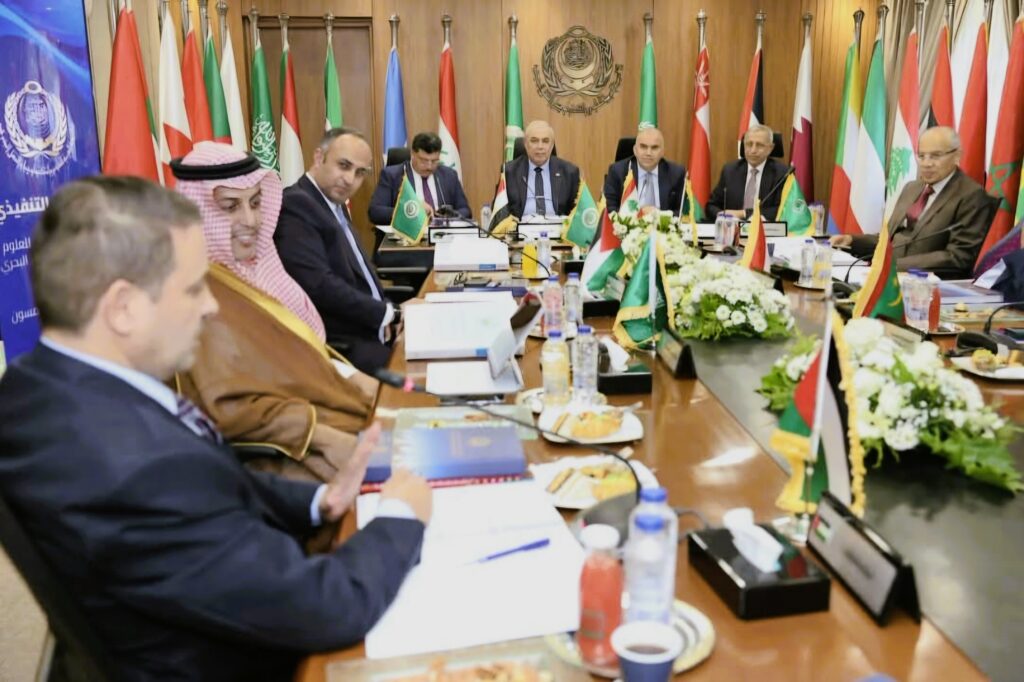
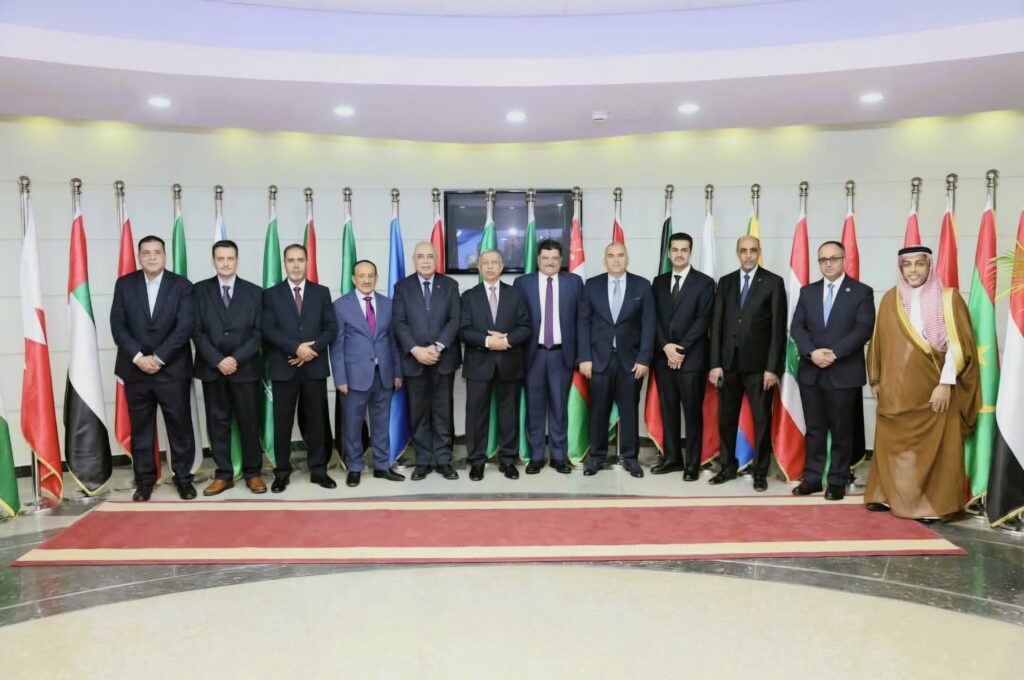
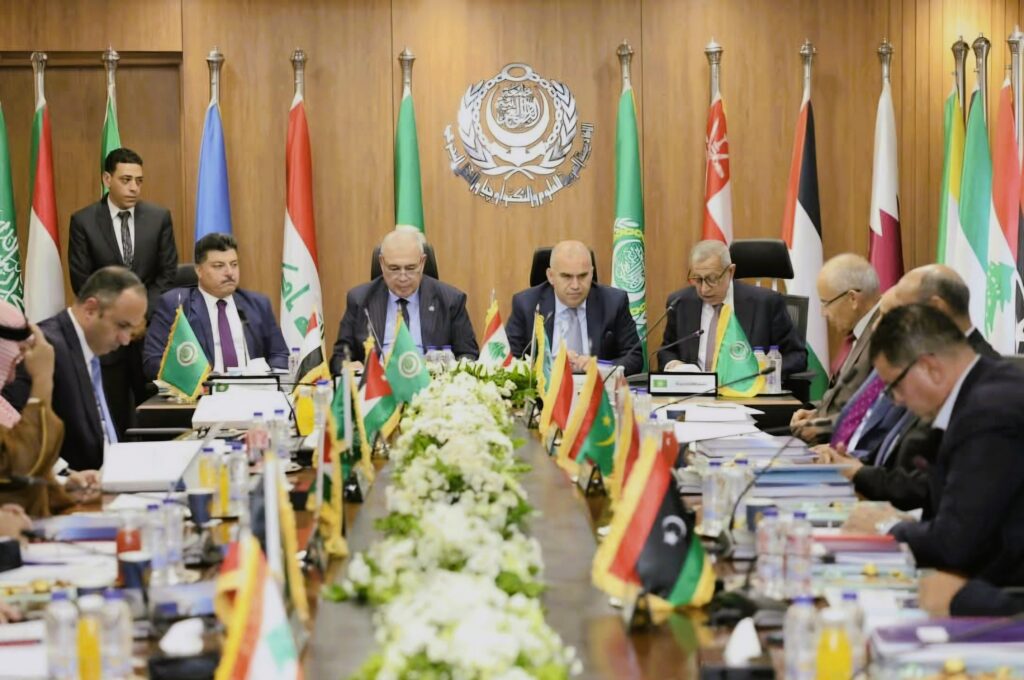
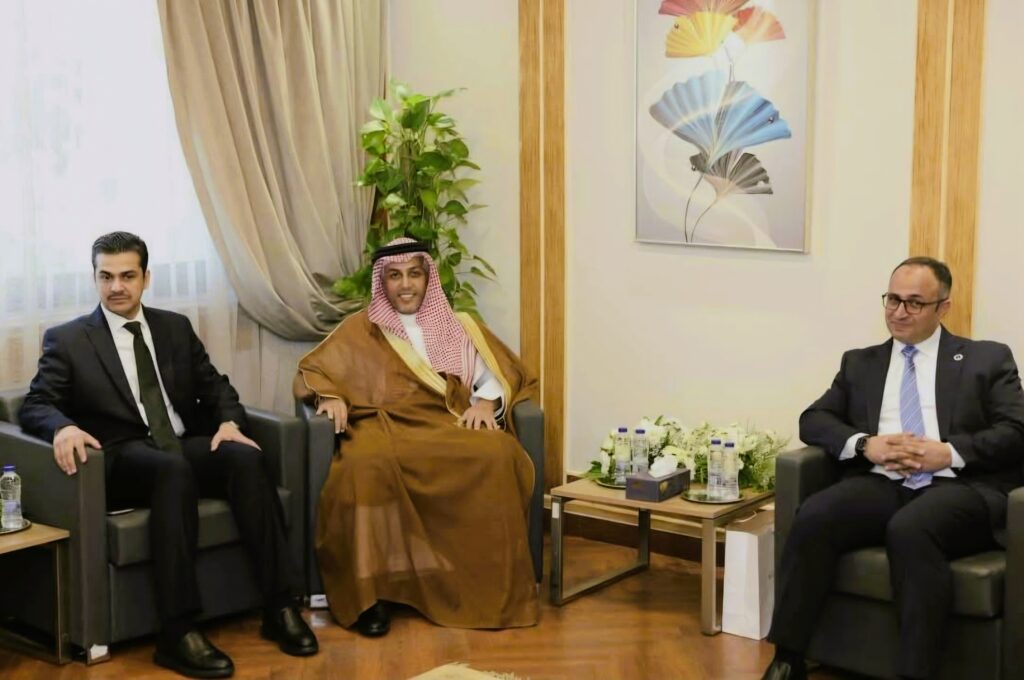
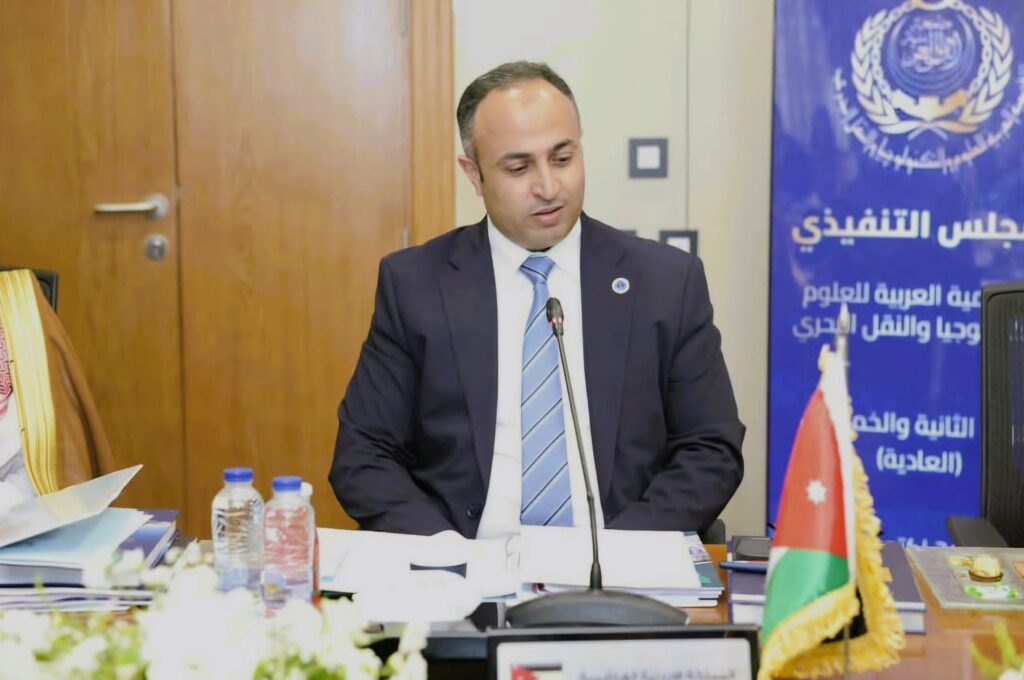
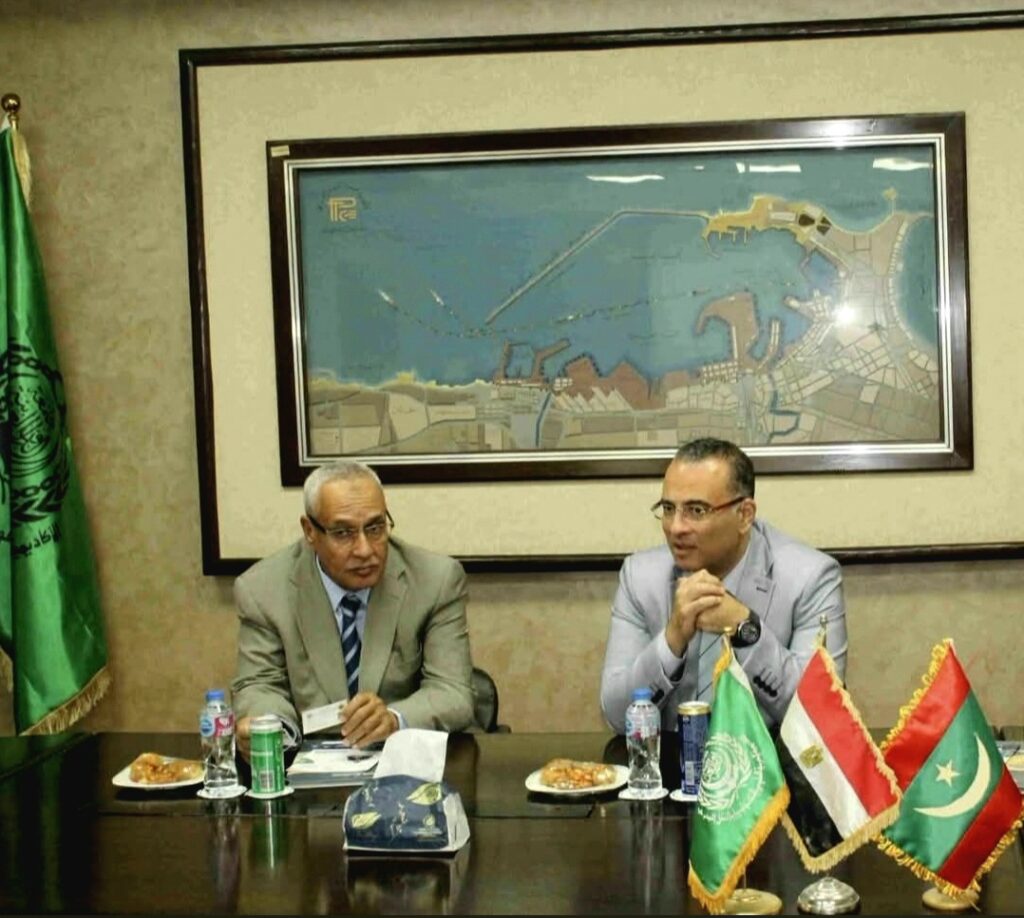
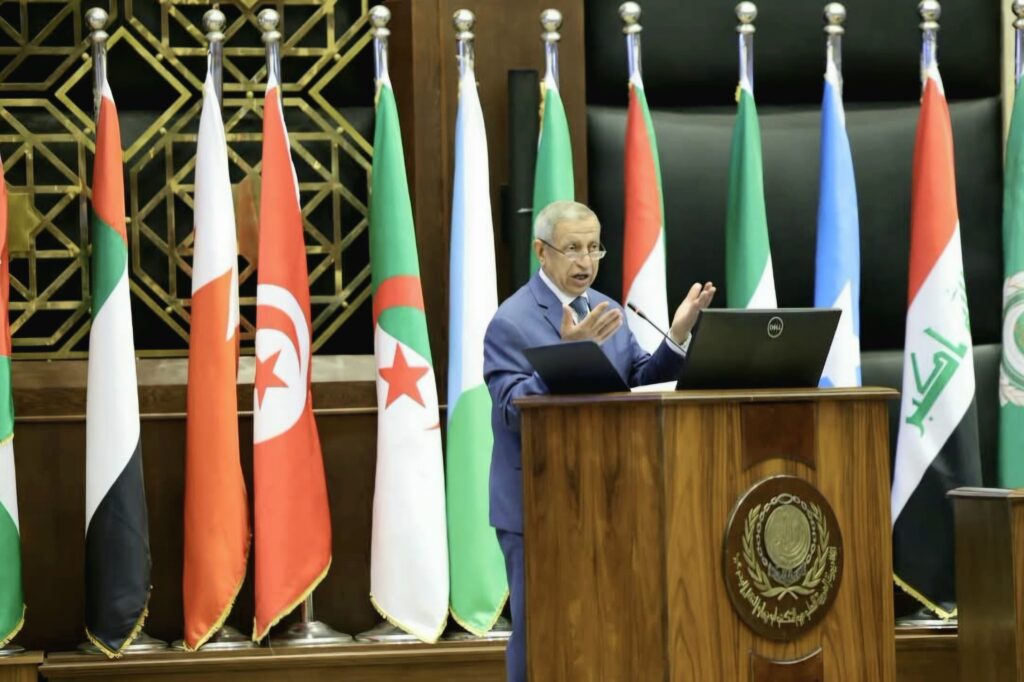
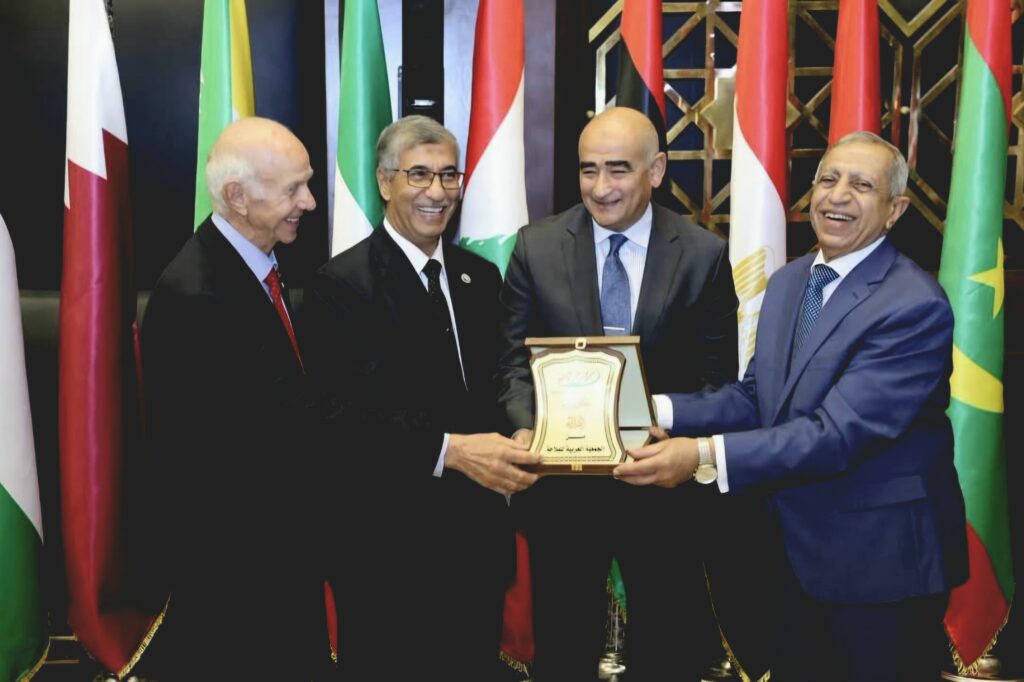
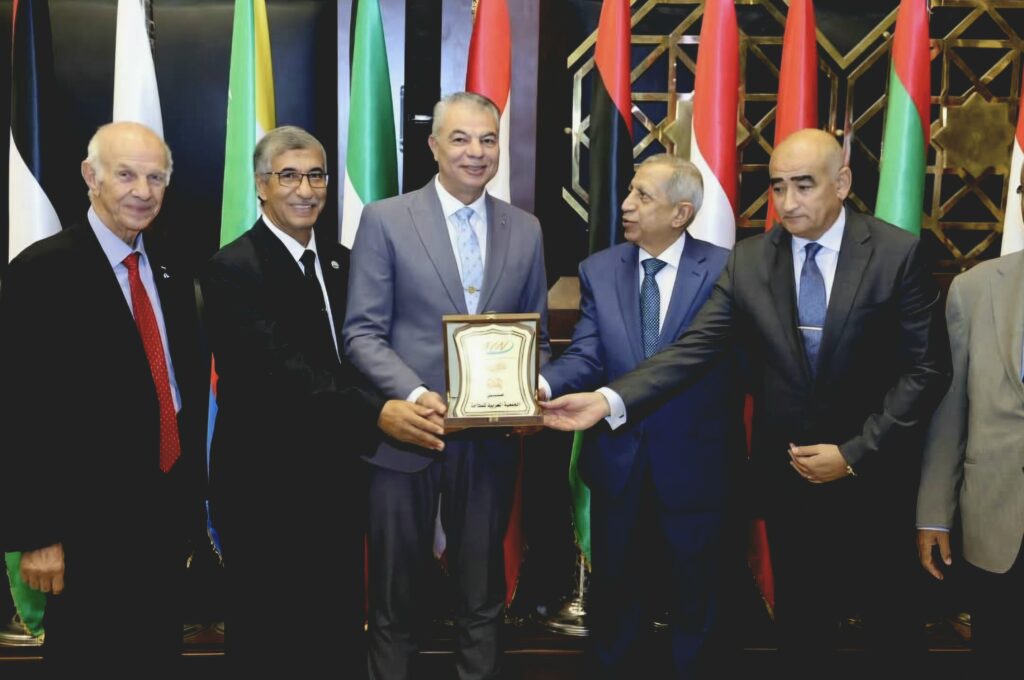
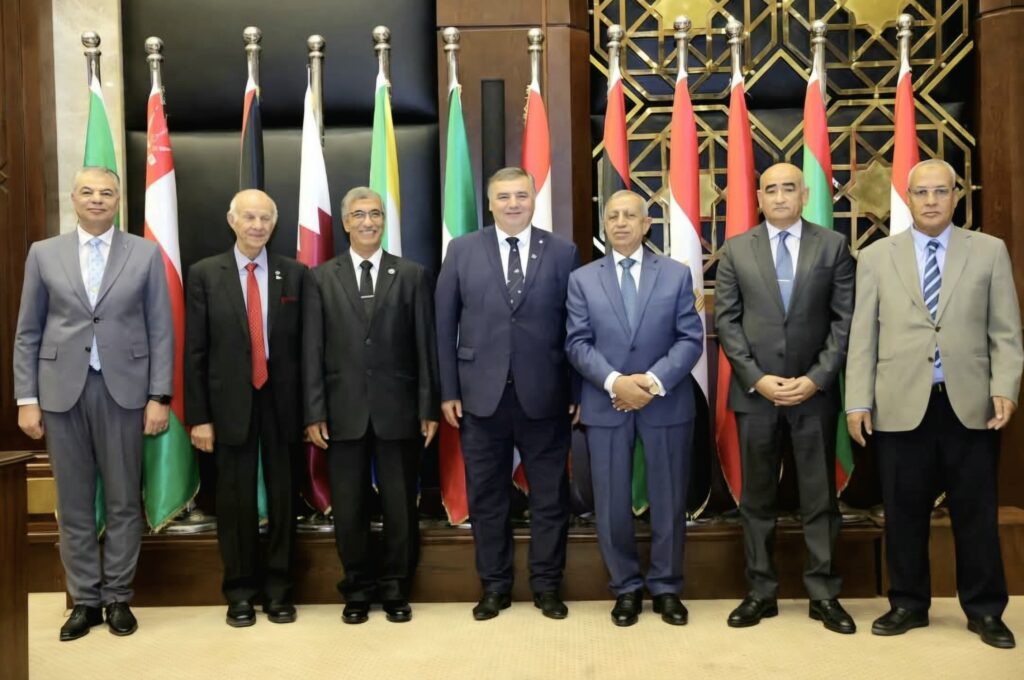
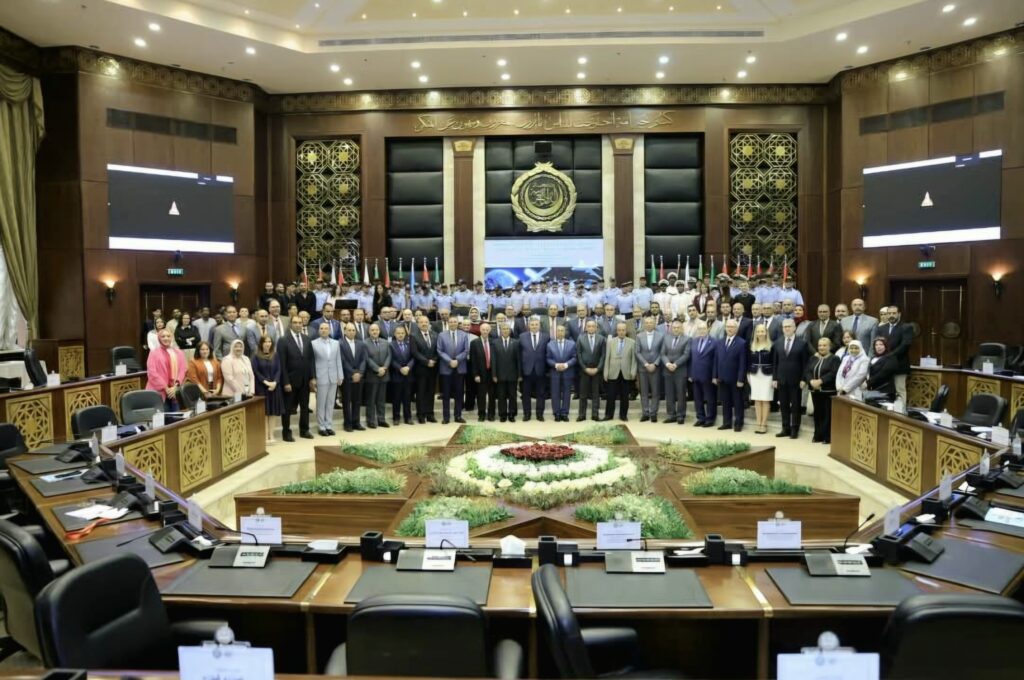
Shipping Arabia, November 3, 2026 – Ahmad Mohammad Al-Assasleh, Director General of the Jordan Maritime Commission (JMC), represented Jordan at the 52nd Ordinary Session of the Executive Council of the Arab Academy for Science, Technology and Maritime Transport (AASTMT), held in Cairo, Egypt, on October 31, 2026.
The meeting took place at the academy’s Heliopolis branch headquarters, bringing together representatives of Arab member states to discuss matters concerning the academy’s activities in education, training, scientific research, maritime transport and logistics.
Al-Assasleh’s participation formed part of Jordan’s continued engagement in joint Arab cooperation initiatives and its commitment to contributing to the development of the regional maritime sector.
Arab Member States Participate in AASTMT Executive Council Meeting
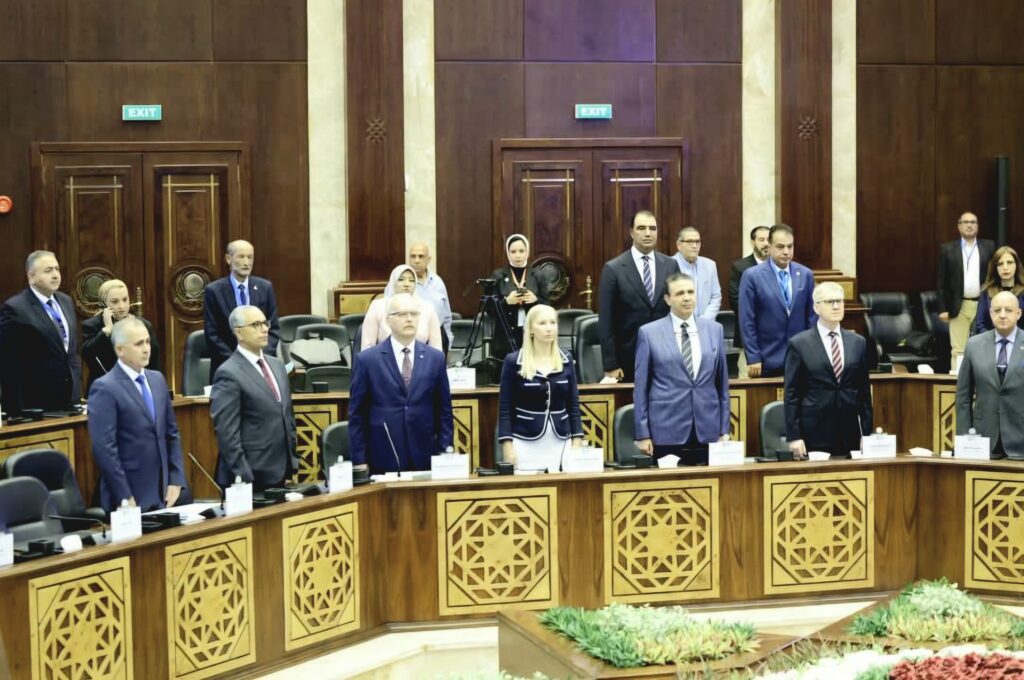
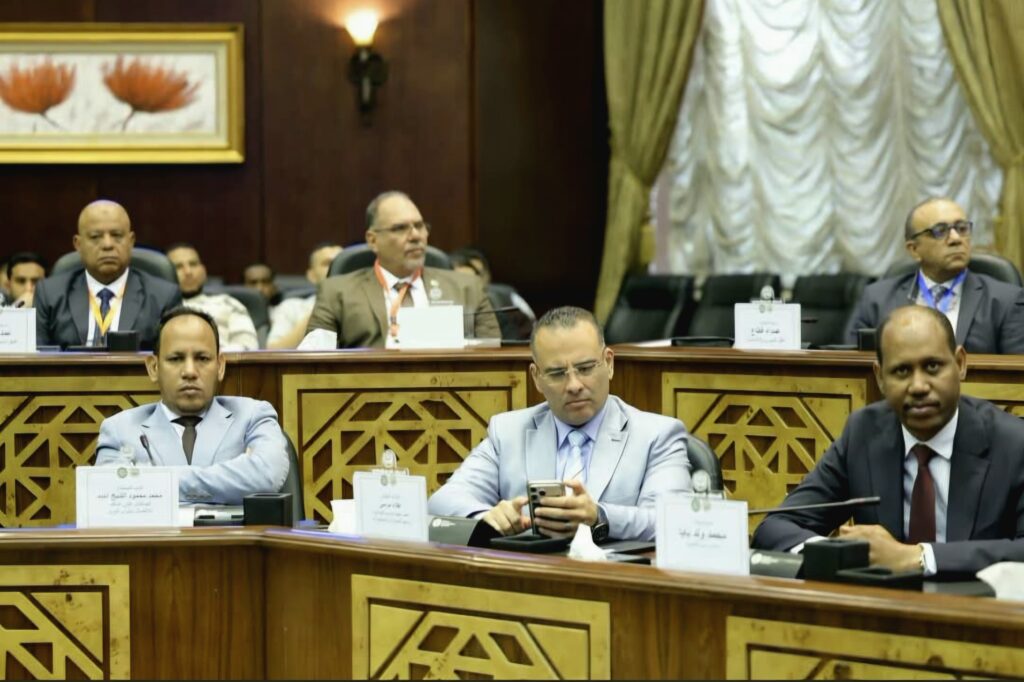
The 52nd Ordinary Session of the AASTMT Executive Council brought together senior officials and representatives from Arab countries participating in the council’s activities.
Attendees included the president and vice president of the Executive Council, the president of AASTMT, and a representative of the League of Arab States.
The participating countries included Jordan, Saudi Arabia, Palestine, Kuwait, Libya, Egypt, Yemen and Mauritania.
The meeting provided a forum for member states to address matters related to the academy’s activities and its role in maritime education, professional training, scientific research, maritime transport and logistics.
Representing the Hashemite Kingdom of Jordan, Al-Assasleh participated in the council’s proceedings as part of the country’s efforts to maintain an active presence in regional institutional cooperation.
His participation also reflected Jordan’s interest in following the academy’s activities and contributing to discussions concerning its educational, technical and maritime programs.
Jordan Maritime Commission Emphasizes Regional Cooperation
The Jordan Maritime Commission highlighted the importance of strengthening cooperation and coordination with Arab institutions and organizations involved in maritime transport.
The commission’s participation in the AASTMT Executive Council meeting reflected its commitment to supporting collaboration among Arab maritime authorities and exchanging professional expertise and institutional experience.
Such cooperation forms part of the commission’s stated efforts to contribute to the development of the Arab maritime sector and enhance its operational efficiency and professional capabilities.
The commission also emphasized the importance of closer coordination among Arab countries in maritime affairs, with particular attention to strengthening regional integration and cooperation.
Through its participation in the council’s 52nd session, the Jordan Maritime Commission reaffirmed its commitment to engaging with regional maritime institutions and supporting initiatives aimed at developing maritime education, training and sector capabilities across the Arab world.
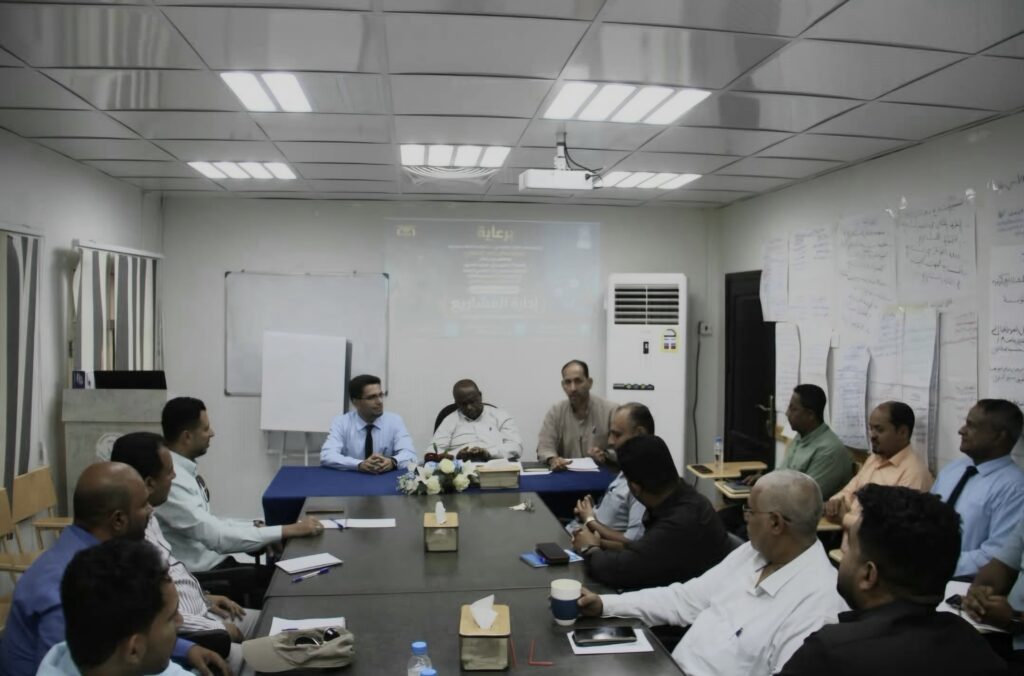
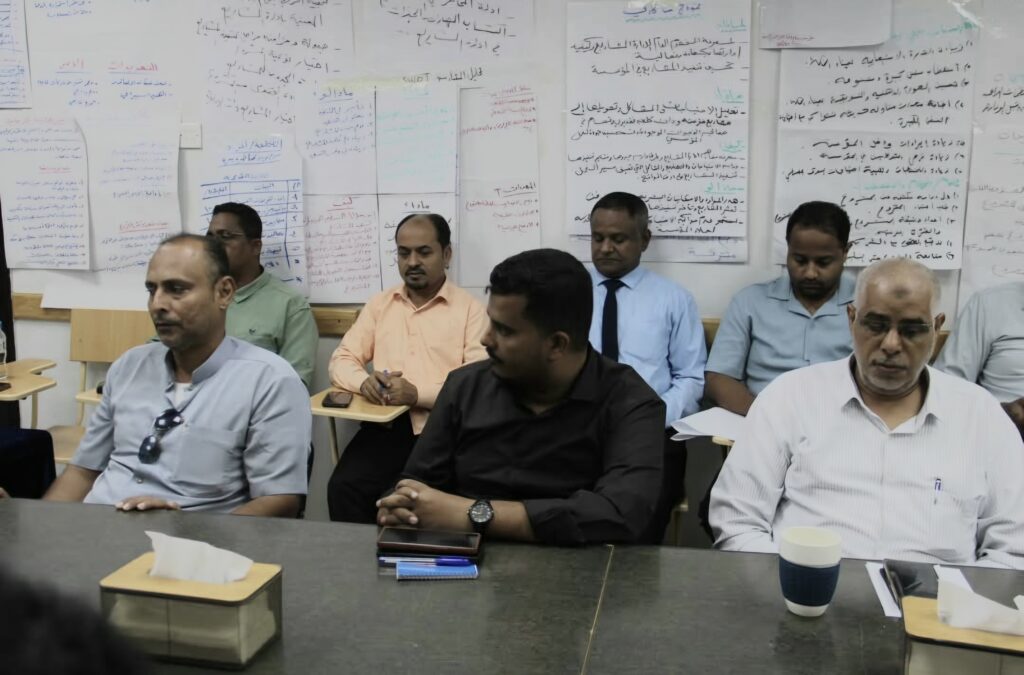
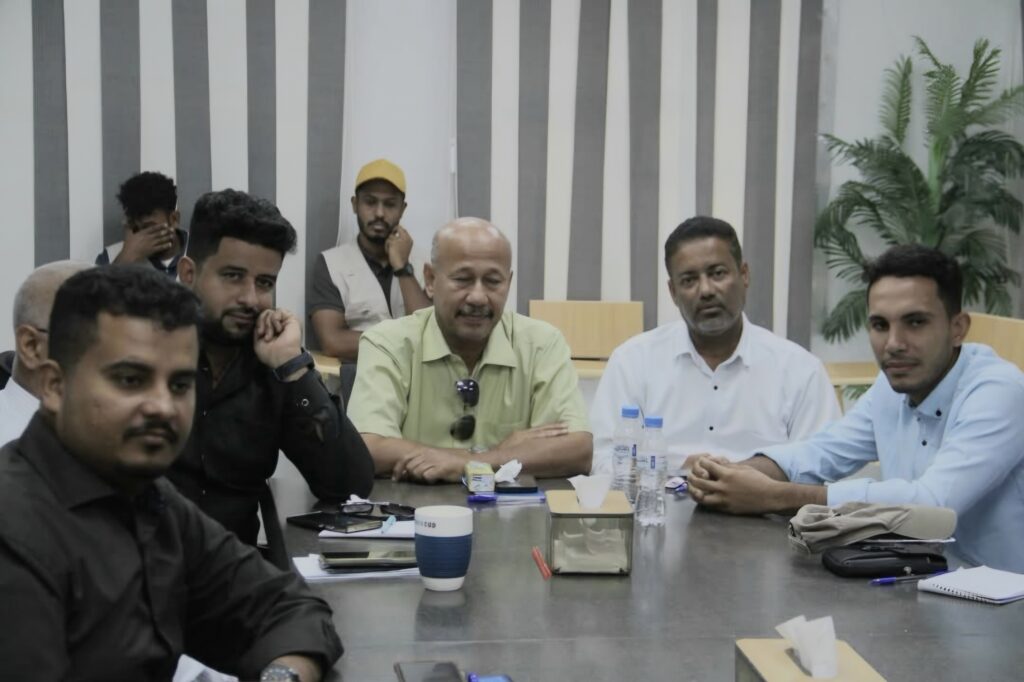
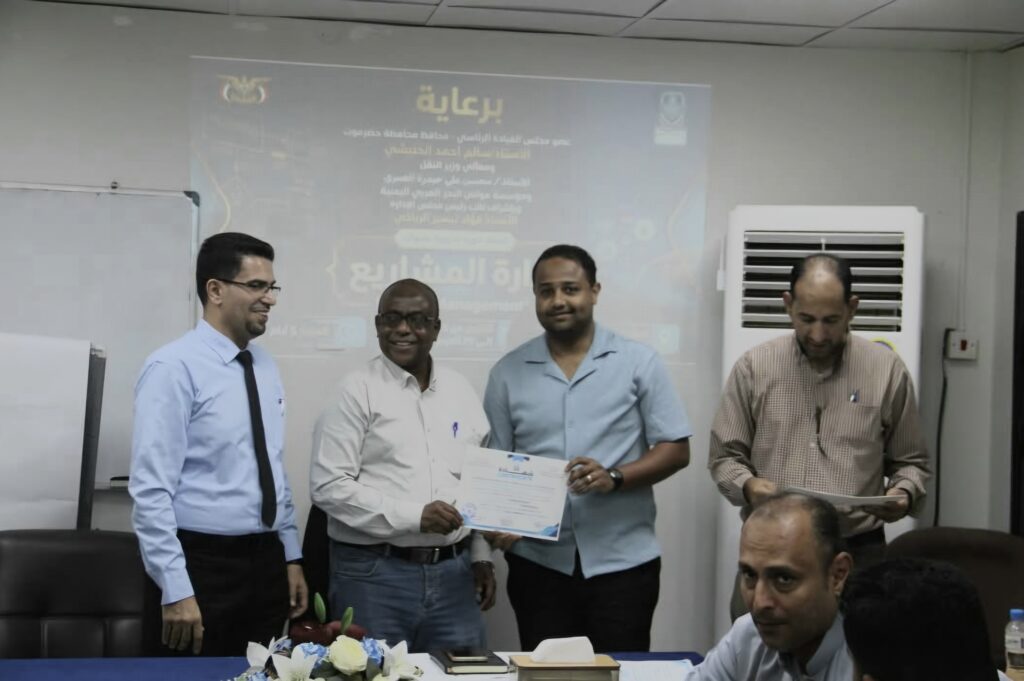
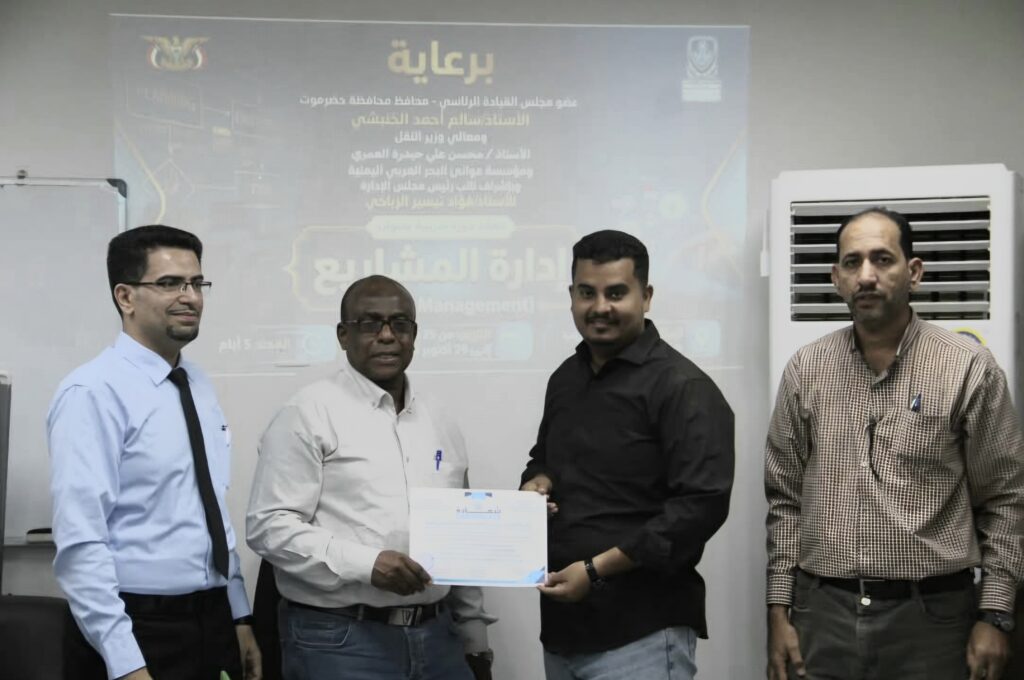
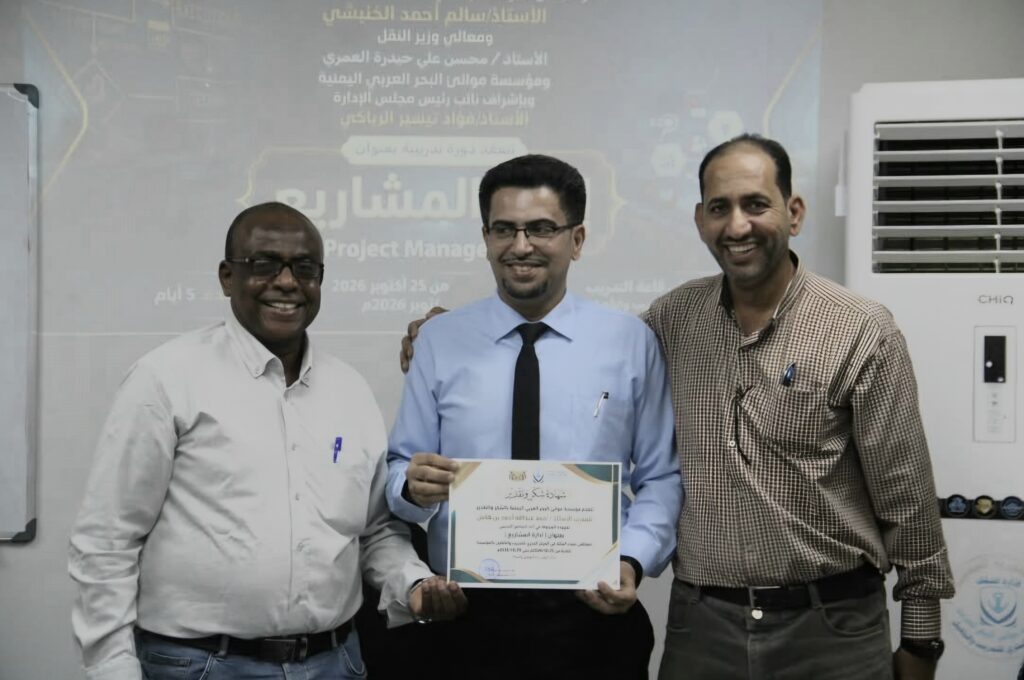
Shipping Arabia, November 3, 2026 – Yemen Arabian Sea Ports Corporation (YASPC) has concluded a five-day project management training program at its Maritime Training Center in Mukalla, aimed at strengthening the administrative capabilities and professional skills of employees across the corporation’s departments.
The program brought together staff from various departments and focused on developing the knowledge and skills needed to support effective project management within the corporation.
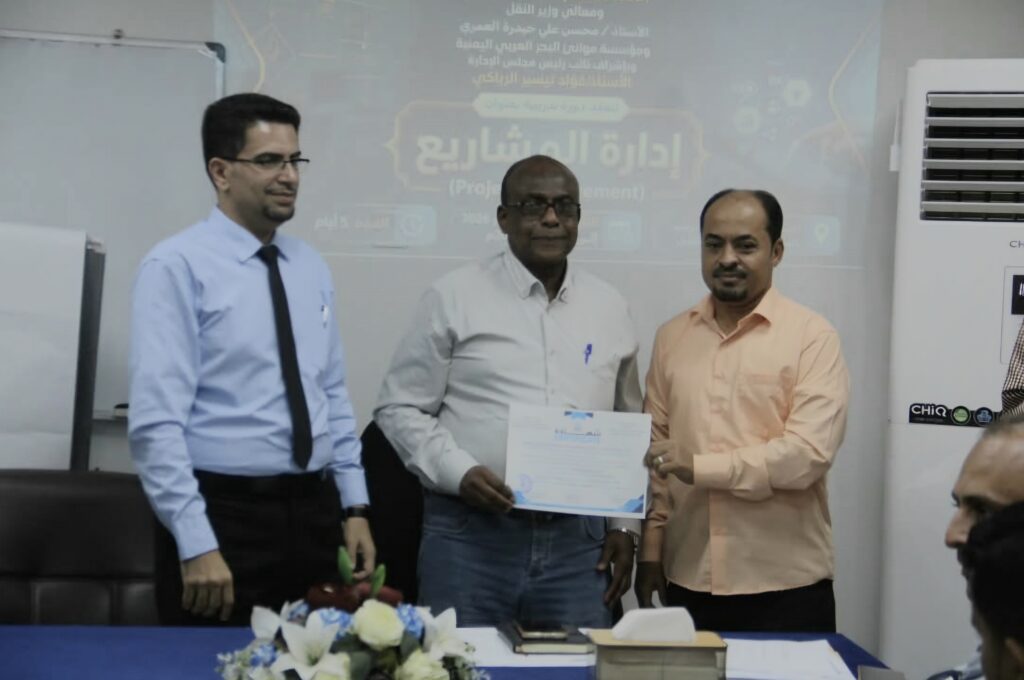
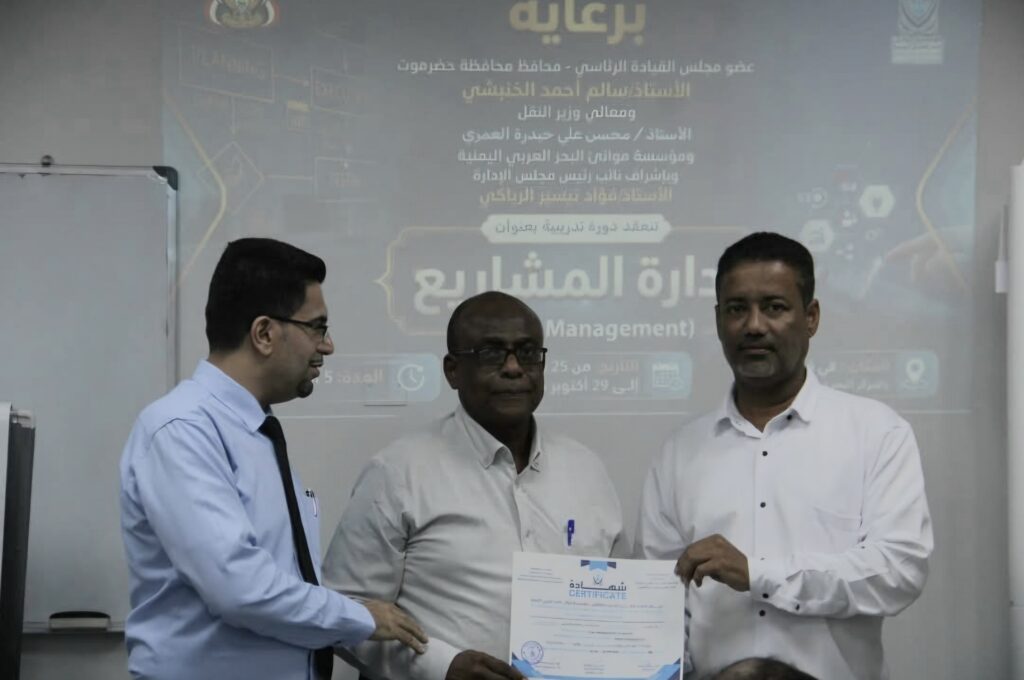
The closing ceremony was attended by Fouad Taysir Al-Rabaki, Deputy Chairman of YASPC, who highlighted the importance of professional training in improving employee performance and strengthening institutional capabilities.
Al-Rabaki emphasized that the course provided participants with new skills and competencies that would enhance their administrative efficiency in their respective positions. He also praised their commitment and active participation throughout the program, while commending the trainer’s preparation and organization of the course materials.
Project Management Training Covers Key Operational Skills
The five-day project management training program addressed several essential aspects of project planning, organization and implementation.
Participants received instruction on project management fundamentals, including the concept of project management, objective setting and needs assessment.
The curriculum also covered the six stages of project management, providing participants with an understanding of the different phases involved in managing projects.
Another key component focused on establishing project implementation teams according to quality standards. The training addressed the importance of organizing project teams and ensuring that implementation activities meet established requirements.
In addition, participants examined the legal procedures applicable when projects fail to comply with required specifications and standards.
These topics formed part of the corporation’s efforts to equip its employees with the knowledge necessary to manage projects and fulfill their administrative responsibilities.
Ahmed Abdullah Bin Hamel, the program’s trainer, and Majed Salem Al-Qayti, Director of the Maritime Training Center, emphasized the importance of continuing professional development programs for the corporation’s workforce.
Both officials highlighted the role of training in strengthening human resource capabilities and supporting the corporation’s objective of achieving self-sufficiency in managing its projects.
Their remarks reflected the importance placed on developing internal expertise and enabling employees to undertake project management responsibilities within the organization.
The training program also demonstrated the Maritime Training Center’s role in supporting employee development through specialized courses addressing the corporation’s administrative needs.
At the conclusion of the program, participation certificates were distributed to trainees in recognition of their commitment and successful completion of the course requirements.
The five-day initiative forms part of Yemen Arabian Sea Ports Corporation’s efforts to strengthen employee competencies and develop the internal capabilities required for effective project management.
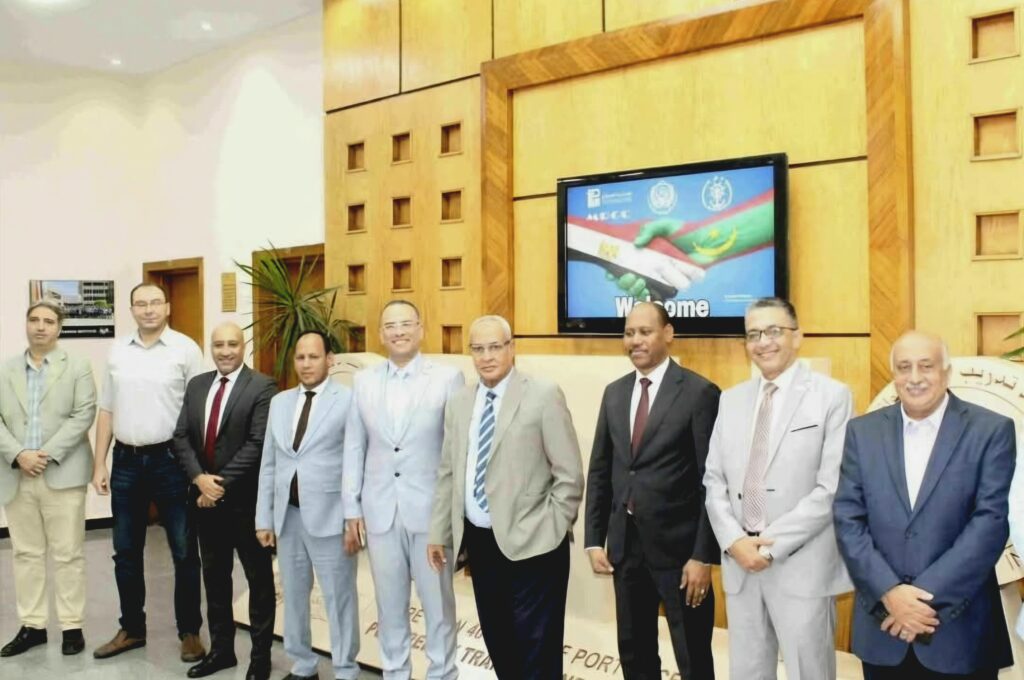
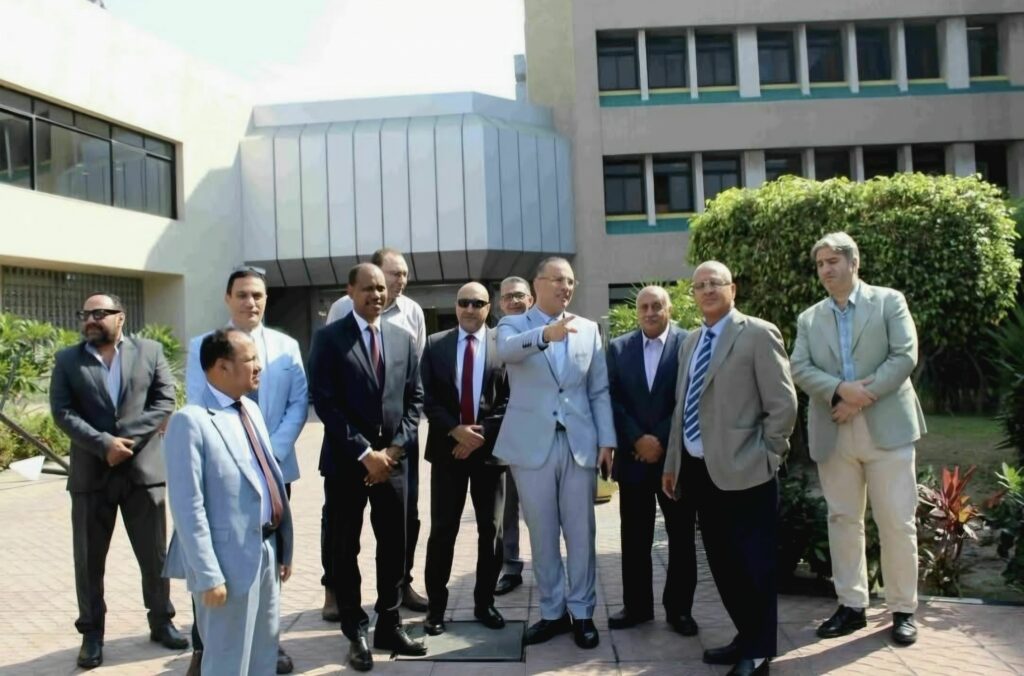
Shipping Arabia, November 1, 2026 – A delegation from Mauritania’s Ministry of Fisheries and Marine and Port Infrastructure visited the Port Training Institute (PTI) at the Arab Academy for Science, Technology and Maritime Transport (AASTMT) in Alexandria, Egypt, to explore maritime training cooperation, port workforce development and technical consultancy.
The visit focused on strengthening cooperation between the two sides and exchanging expertise in maritime and port training. Discussions also addressed opportunities to develop specialized professional capabilities and support the modernization of Mauritania’s maritime transport sector and port infrastructure.
Mauritanian Delegation Reviews Port Training Capabilities
The Mauritanian delegation was led by Sidi Ali Sidi Boubacar, Secretary-General of the Ministry of Fisheries and Marine and Port Infrastructure. He was accompanied by Mohamed Mahmoud Cheikh Ahmed, Technical Adviser for Communications at the Minister’s Office.
Prof. Alaa Mahmoud Morsy, Dean of the Port Training Institute and the Maritime Transport Research and Consultation Center at AASTMT, received the delegation alongside senior institute officials. Mohamed Babah Ahmed Babou, Adviser to the AASTMT President, also attended the meeting.
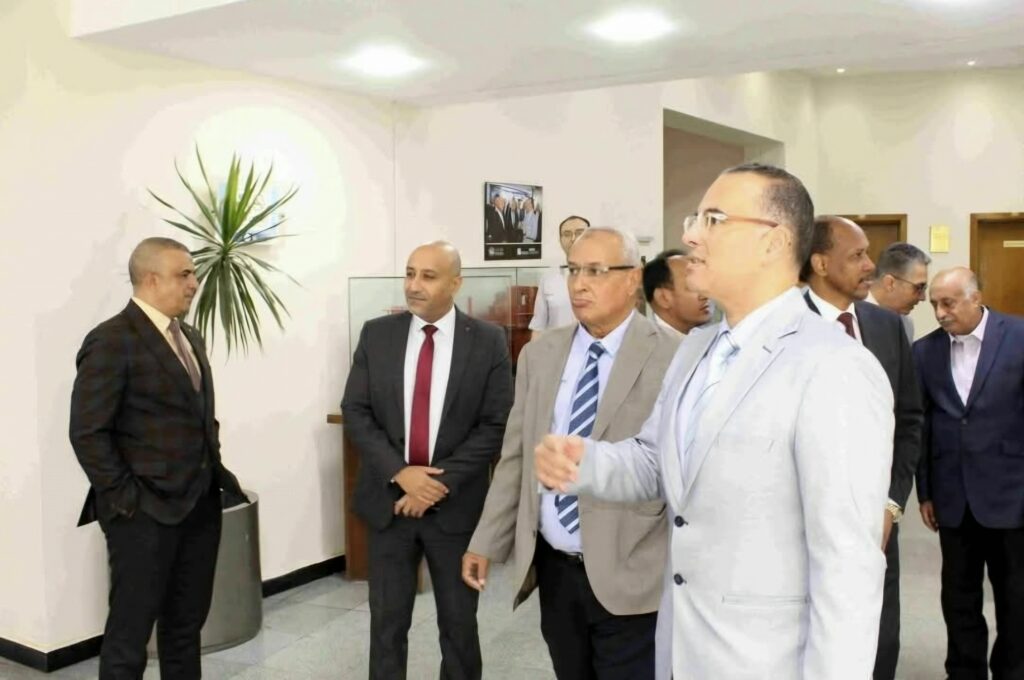
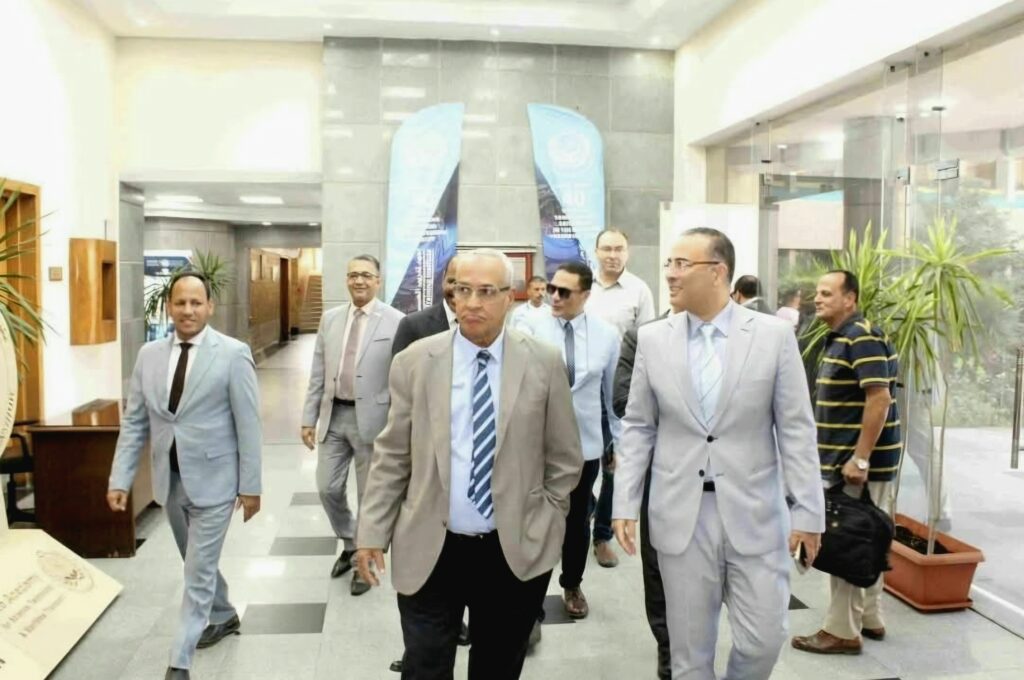
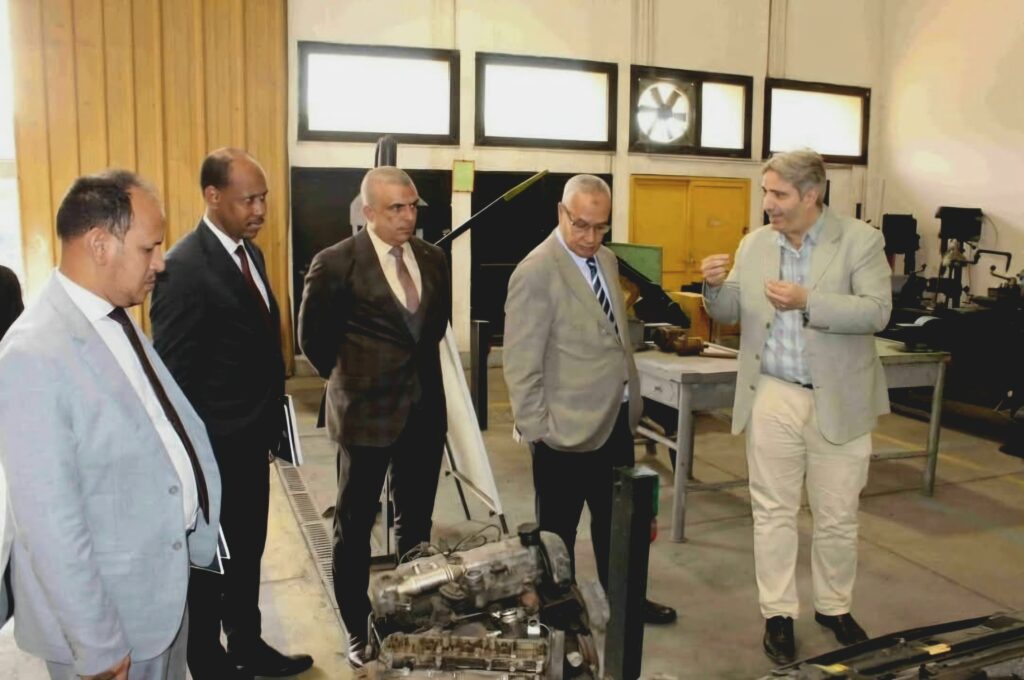
During the visit, the delegation reviewed the Port Training Institute’s advanced training facilities and technological capabilities. Institute representatives outlined their role in preparing and developing specialized maritime and port personnel in accordance with international standards and industry practices.
The delegation also received an overview of the institute’s professional training programs and technical consultancy services. These services support workforce development and operational capabilities across the maritime transport and port sectors.
Maritime Training Cooperation to Support Mauritania’s Port Development
Discussions explored opportunities for future maritime training cooperation, particularly in specialized professional development, technical knowledge exchange and institutional capacity building.
Both sides examined how Mauritania could benefit from AASTMT’s expertise, training facilities and consultancy capabilities to support the development and modernization of its ports and maritime infrastructure.
The discussions also highlighted the importance of strengthening human capital and improving professional competencies within the maritime transport sector. Developing qualified personnel remains a central objective of the proposed cooperation, alongside exchanging practical experience and technical knowledge.
Prof. Morsy welcomed the Mauritanian delegation and reaffirmed the Port Training Institute’s commitment to expanding cooperation with Arab maritime and port institutions.
He emphasized the institute’s willingness to share its training and consultancy expertise to strengthen workforce capabilities and help maritime professionals respond to developments across the shipping and port industries.
The visit took place within the framework of directives issued by AASTMT President Prof. Ismail Abdel Ghaffar Ismail Farag to strengthen cooperation among Arab institutions and encourage the exchange of expertise in maritime education, training and professional development.
Strengthening Arab Maritime Institutional Cooperation
The engagement reflects AASTMT’s continued efforts to promote cooperation among Arab maritime institutions through specialized training, technical consultancy and professional knowledge exchange.
Through the Port Training Institute and its associated research and consultancy capabilities, the academy provides training and professional development services designed to support the maritime transport and port sectors.
The Mauritanian delegation’s visit provided an opportunity to examine potential areas of collaboration and identify how the academy’s technical and institutional expertise could contribute to Mauritania’s maritime and port development objectives.
The discussions also reinforced the importance of building sustainable professional partnerships among Arab maritime institutions, particularly in workforce qualification, specialized training and the exchange of operational expertise.
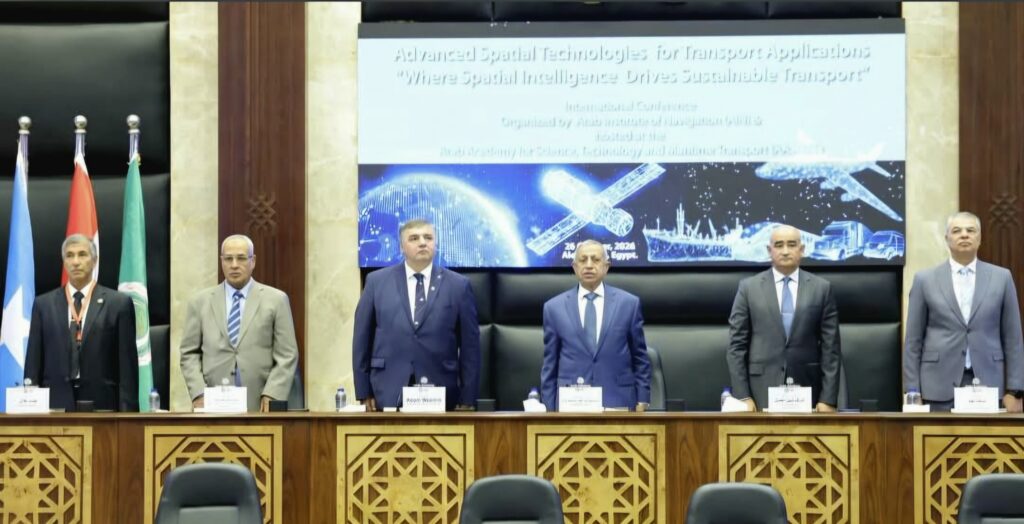
Shipping Arabia, October 31, 2026 – Maritime leaders, academics and industry experts gathered at the Arab Academy for Science, Technology and Maritime Transport (AASTMT) in Abu Qir, Alexandria, for the Melaha 2026 International Conference. The event focused on advanced navigation technologies, maritime safety, operational efficiency and sustainable transport development.
Organized by the Arab Institute of Navigation (AIN) in cooperation with AASTMT, the Melaha 2026 conference brought together Egyptian and international representatives, researchers and maritime professionals. Discussions addressed the future of navigation science, technological developments and stronger cooperation between academic institutions and the maritime industry.
The opening session included AASTMT President Prof. Ismail Abdel Ghaffar Ismail Farag and Arab Institute of Navigation President Prof. Hisham Helaly. Also attending were Rear Adm. Ashraf El Assal, Chairman of the Egyptian Authority for Maritime Safety, Rear Adm. Osama Negm, Deputy Head of the Transport Sector, and Sidi Ali Ould Sidi Boubacar, representing Mauritania’s fisheries ministry.
Prof. Adam Weintrit and other specialists in navigation science and maritime transport also participated in the conference.
Strengthening Maritime Education and International Research Partnerships
AASTMT President Prof. Ismail Abdel Ghaffar emphasized the importance of expanding academic and research partnerships to address the maritime industry’s evolving requirements. He called for joint educational programs that equip future maritime professionals with the knowledge and practical skills needed for careers in shipping and international business.
He explained that developing maritime education requires stronger cooperation between scientific institutions and greater exchange of expertise. Such collaboration would help universities improve academic programs, strengthen research capabilities and respond to changes across the maritime sector.
Abdel Ghaffar identified student and faculty exchanges, joint research projects and technology-focused education as essential priorities. He also stressed the importance of aligning academic programs with labor market requirements and technological developments.
Furthermore, he welcomed the maritime leaders and international experts attending the conference. He highlighted the need for continued collaboration between universities and professional organizations to expand training opportunities, strengthen maritime qualifications and develop human resources.
The academy president emphasized that cooperation should extend beyond academic exchanges to include practical training and research initiatives that support maritime sector development.
Translating Navigation Research into Practical Maritime Solutions
Prof. Hisham Helaly, President of the Arab Institute of Navigation, stressed the importance of strengthening communication among researchers, navigators, maritime specialists and decision-makers.
He explained that one of the institute’s principal objectives is to translate scientific research into practical applications that improve navigational safety and transport efficiency. Applied research, he noted, can help the maritime industry address emerging operational and technological challenges.
Helaly also called for broader professional and scientific partnerships to strengthen cooperation between academic institutions and maritime organizations.
He praised the institute’s cooperation with AASTMT and acknowledged the academy’s support for joint scientific and professional activities. According to Helaly, this partnership has created opportunities for knowledge exchange and the organization of specialized conferences.
Looking ahead, he emphasized the importance of building on existing cooperation, supporting young researchers and expanding the application of modern technologies in navigation, ports and transport networks.
These priorities formed part of the Melaha 2026 conference’s wider focus on connecting maritime research with operational requirements and technological development.
Maritime Training, Simulators and Long-Term Academic Cooperation
Prof. Adam Weintrit emphasized the value of international cooperation between universities and specialized maritime education institutions.
He advocated student and faculty exchanges, collaborative research projects and multiyear cooperation agreements. Such arrangements would provide an institutional framework for sustained cooperation in maritime education, professional training and scientific research.
Weintrit highlighted the practical training resources available across participating institutions, particularly maritime simulators and training vessels. He stressed that these facilities are important for developing the practical capabilities of students preparing for maritime careers.
He also expressed interest in establishing a structured framework for joint educational and research activities. This would support cooperation between universities and professional maritime organizations while expanding international academic networks.
Reflecting on his longstanding relationship with AASTMT and Alexandria, Weintrit recalled his first visit to the city in 2002. During that visit, he participated in a workshop organized by the World Maritime University. He subsequently attended a general assembly in 2003.
His remarks highlighted the role of sustained international academic relationships in developing maritime education and strengthening cooperation between institutions.
Egyptian Maritime Safety Authority Highlights Professional Development
Rear Adm. Ashraf El Assal, Chairman of the Egyptian Authority for Maritime Safety, praised AASTMT’s contribution to maritime education and professional training.
He highlighted the academic knowledge and practical expertise of the academy’s graduates, emphasizing their preparation for specialized careers within the maritime industry.
El Assal also stressed the importance of continued cooperation among maritime education institutions. He called for greater exchange of experience and expertise to support improvements in academic curricula and professional training programs.
Reflecting on his academic and professional career, he discussed his postgraduate education, including master’s studies and doctoral research undertaken through joint academic supervision involving Ryerson University in Canada. He completed his studies there in 2009.
He also referred to his professional experience with the Egyptian Authority for Maritime Safety, emphasizing the importance of combining academic qualifications with practical experience.
According to El Assal, this connection is essential for advancing maritime sciences and preparing qualified professionals for specialized responsibilities within the sector.
The conference also welcomed Rear Adm. Osama Negm, Deputy Head of the Transport Sector, as part of the official representation concerned with transport development and maritime safety.
Meanwhile, Sidi Ali Ould Sidi Boubacar participated as a representative of Mauritania’s fisheries ministry. His attendance reflected the conference’s broader Arab and international participation and the importance of knowledge exchange among organizations involved in navigation, transport and maritime activities.
Fifty Years of Navigation Research and Emerging Technologies
Prof. Refaat Rashad reviewed the Arab Institute of Navigation’s 50-year history and its contribution to navigation science and professional knowledge exchange.
He discussed the institutional, financial and organizational support that has helped sustain the institute’s activities. Rashad also highlighted cooperation with AASTMT as an important element in maintaining and expanding the institute’s work.
He addressed the institute’s connections with specialized international organizations and its role in promoting navigation knowledge and strengthening scientific and professional networks across the Arab region.
Rashad explained that navigation science extends beyond maritime transport. Its applications also cover aviation, land transportation and surveying, demonstrating the importance of technological development across different transport and positioning activities.
He emphasized the need to keep pace with technical advances and apply satellite-based navigation systems as navigation technologies continue to develop.
The Melaha 2026 conference brought these themes together through discussions on technological innovation, applied research, international academic partnerships and maritime professional development.
Participants emphasized the importance of strengthening cooperation between educational institutions, research organizations and maritime professionals to support safer navigation, more efficient transport operations and the development of qualified maritime personnel.
Source: Arab Academy for Science, Technology and Maritime Transport
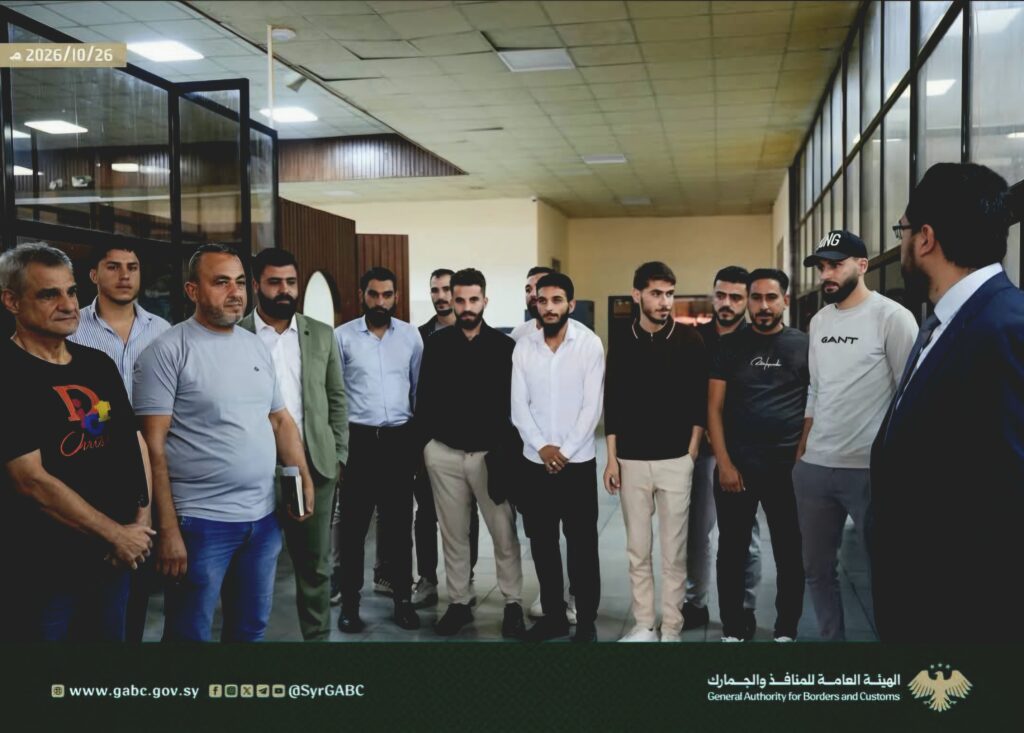
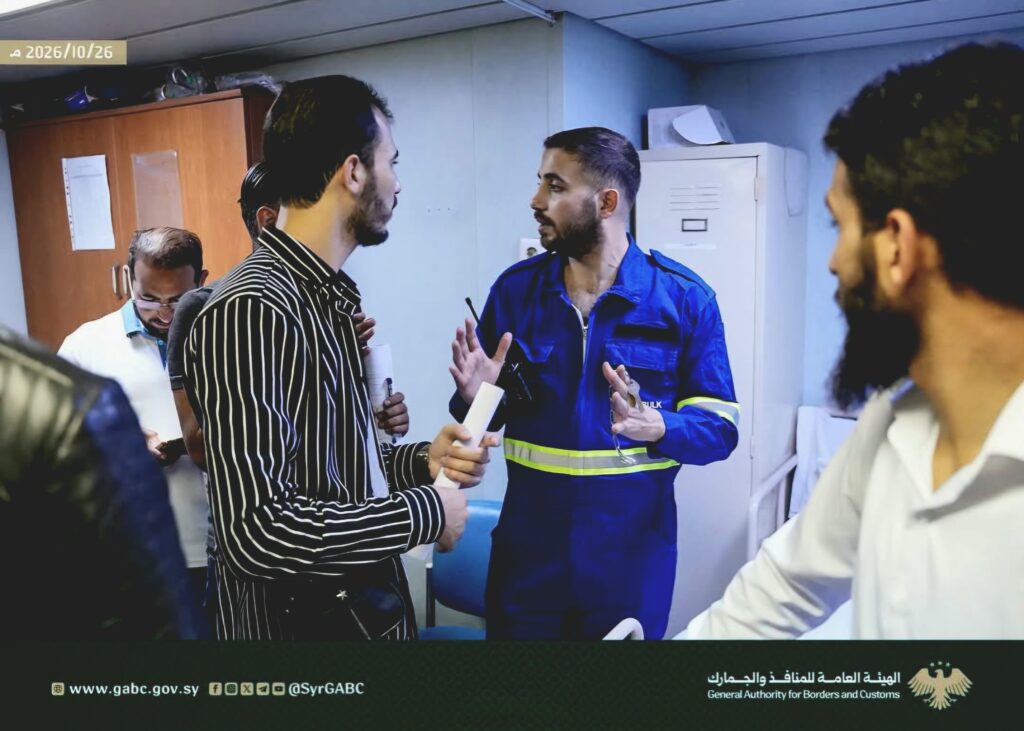
Shipping Arabia, October 30, 2026 – Syria’s Maritime Training and Qualification Foundation has conducted a specialized training program to strengthen Syrian port health inspections and improve free pratique procedures for vessels arriving at the country’s seaports. The initiative focused on developing the technical and professional capabilities of healthcare personnel responsible for maritime health clearance.
Organized in coordination with the Medical Services Directorate of the General Authority for Borders and Customs, the program targeted healthcare personnel serving on port committees responsible for free pratique procedures.
The training aimed to improve the efficiency of vessel health inspections, strengthen compliance with established health regulations and ensure the proper verification of medical documents and certificates.
Strengthening Syrian Port Health Inspections and Free Pratique Procedures
The specialized program addressed the responsibilities of medical personnel involved in vessel arrival and health clearance procedures at Syrian ports.
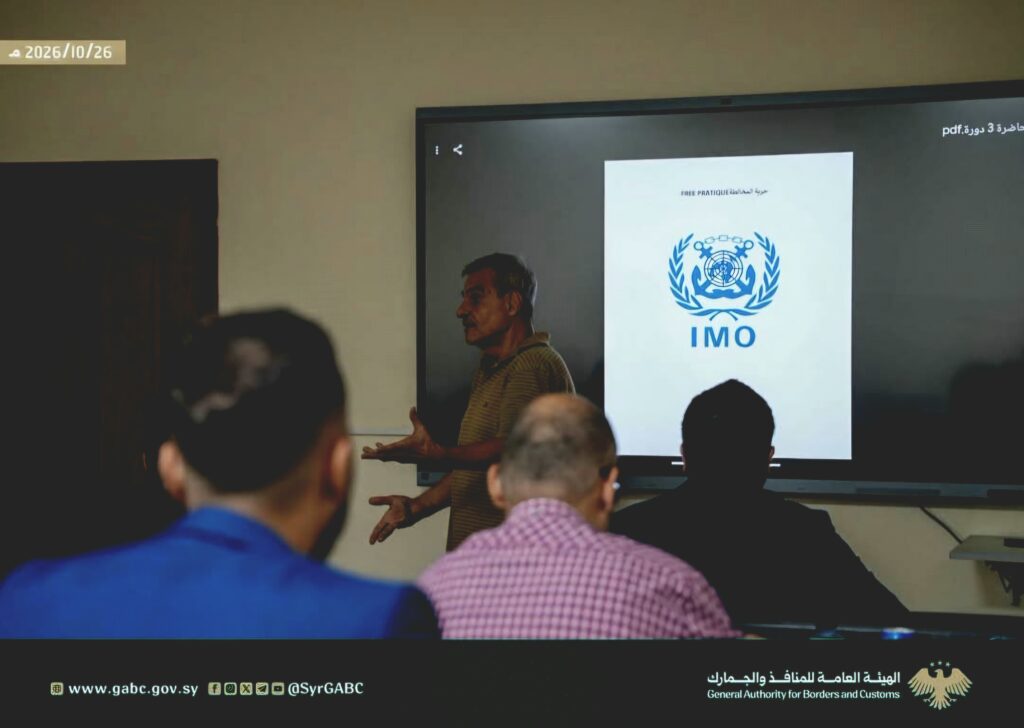
Classroom sessions covered the duties of medical teams within free pratique committees, including the examination and verification of health documentation relating to ships and their crews.
Participants also received instruction on the procedures required when receiving vessels at port, with particular attention to checking compliance with applicable health regulations and standards.
The training sought to improve the consistency and effectiveness of Syrian port health inspections by developing the practical skills required to carry out these responsibilities.
Practical Training Aboard a Vessel
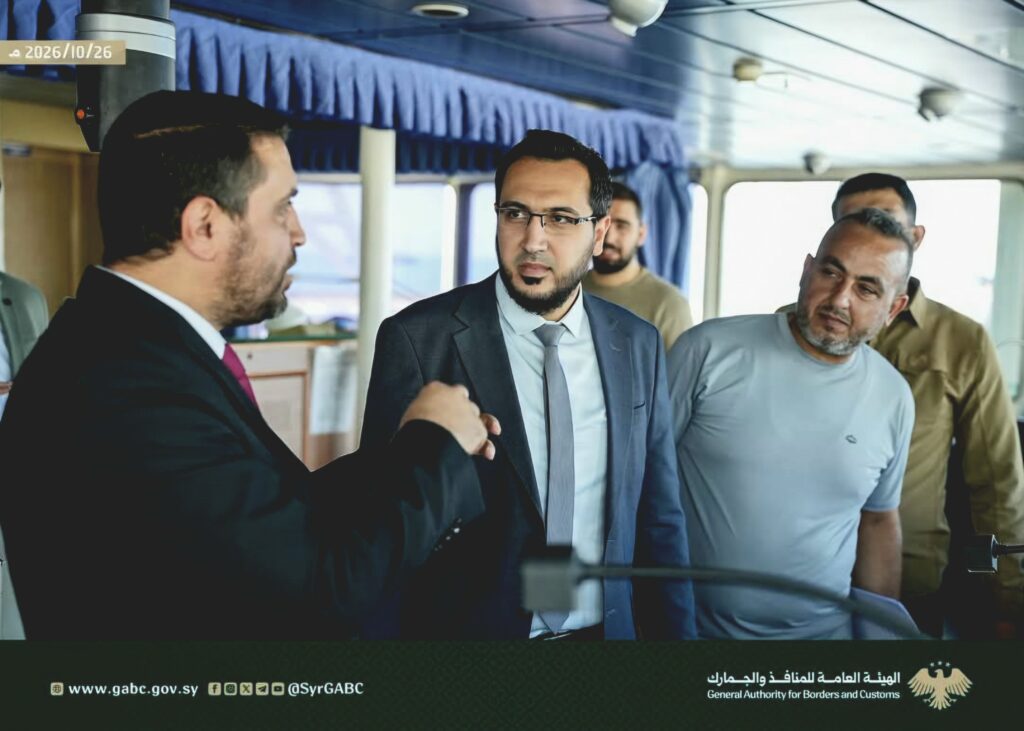
In addition to theoretical instruction, the program included practical training aboard a vessel, providing participants with an opportunity to apply their newly acquired knowledge in a maritime environment.
The onboard component allowed healthcare personnel to gain direct experience in implementing inspection procedures and reviewing the practical requirements of their responsibilities.
Participants also examined potential challenges that could arise during vessel health inspections and explored appropriate ways to address them.
By combining classroom instruction with practical exercises, the initiative aimed to strengthen the professional readiness of medical personnel involved in free pratique procedures and improve their ability to perform their duties effectively.
Developing Medical Services at Syrian Ports and Border Crossings
The training forms part of broader cooperation between institutions and directorates operating under the General Authority for Borders and Customs.
These efforts focus on developing medical services, improving the readiness of specialized personnel and strengthening preventive health procedures at Syrian seaports and border crossings.
The authority’s Medical Services Directorate plays a central role in this framework through its network of medical points at border crossings.
These facilities provide medical services and healthcare to travelers and personnel working at border crossings. They also respond to medical emergencies, contributing to public safety and improving the quality of healthcare services.
The authority continues to prioritize workforce development across its various departments and operational sectors. Its initiatives include expanding training programs and strengthening technical, administrative and professional competencies.
Through these efforts, the authority aims to improve institutional performance, enhance service quality and promote greater culo7⁷⁷ime health training reflects this approach by supporting the development of a more integrated system of medical and preventive services across Syrian ports, border crossings and facilities operated by the authority.
Shipping Arabia, October 29, 2026 – The General Company for Ports of Iraq (GCPI) and Germany’s international cooperation agency GIZ have discussed plans to advance modern port management in Iraq through improved management strategies, institutional capacity building and workforce development.
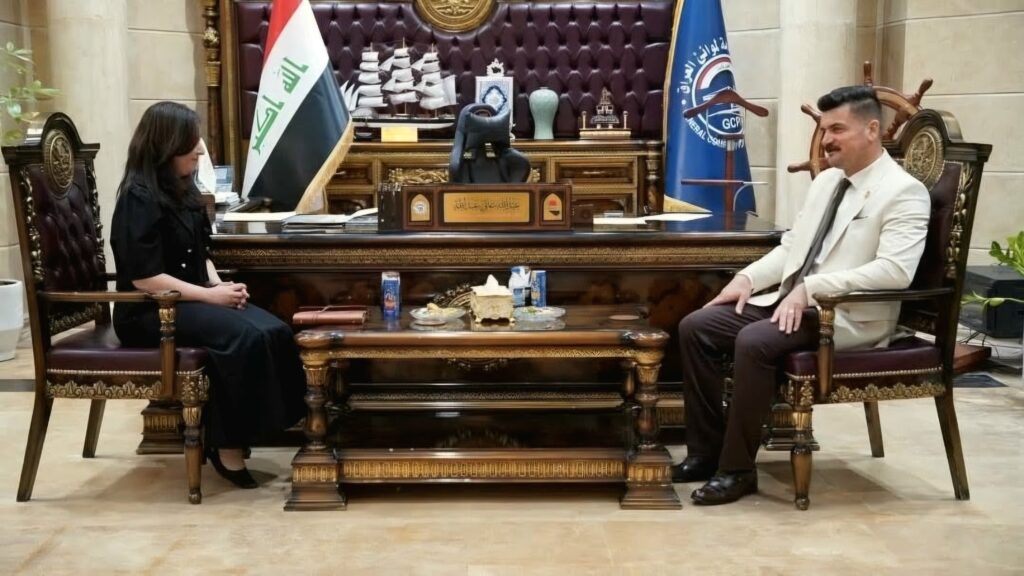
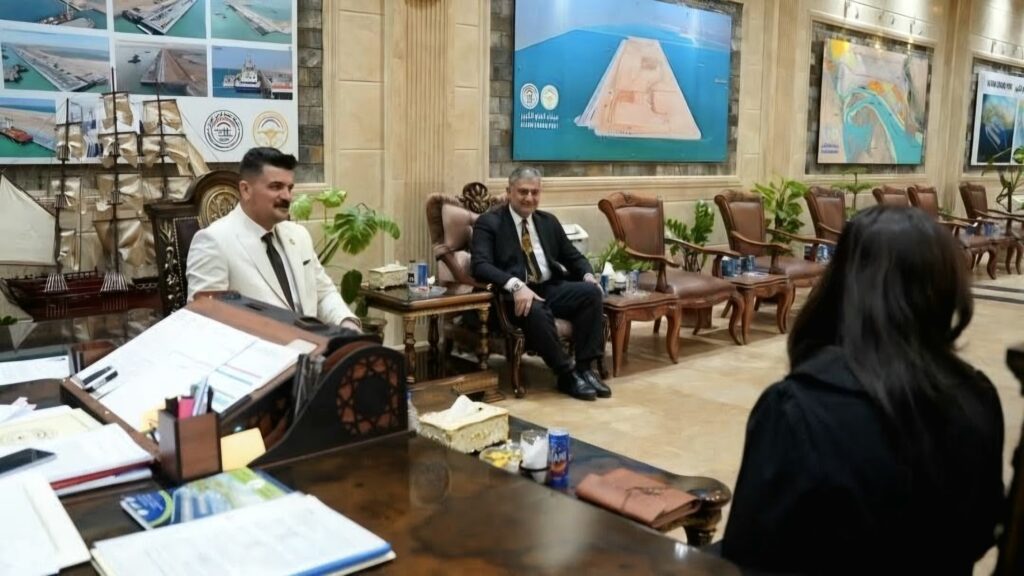
GCPI Director General Chief Engineer Abdullah Ati Abdullah received an official delegation from the Deutsche Gesellschaft für Internationale Zusammenarbeit (GIZ) to explore opportunities for cooperation. The discussions focused on strengthening port administration, improving operational efficiency and developing the capabilities of technical and administrative personnel.
Modern Port Management Strategies and Training Programs
During the meeting, the GIZ delegation delivered a detailed presentation outlining proposed plans and future cooperation programs with GCPI. The initiatives would focus on developing modern port management strategies aligned with international standards.
The proposals also included advanced programs for training, qualifying and developing technical and administrative personnel. These programs aim to strengthen professional capabilities and support improvements in port management and operational performance.
The discussions highlighted the importance of combining modern management practices with structured workforce development. Both areas formed central elements of the proposed cooperation between GCPI and GIZ.
International Expertise and Institutional Development
Abdullah reaffirmed GCPI’s commitment to drawing on international expertise and adopting modern technologies and port management practices. He emphasized that strengthening institutional capabilities requires continued investment in workforce skills and professional development.
The director general identified human capital development as a fundamental pillar of GCPI’s efforts to improve performance. He also stressed the importance of establishing a sustainable development roadmap to support the advancement of Iraq’s port sector.
For its part, the GIZ delegation welcomed GCPI’s institutional readiness and development vision. Representatives also reaffirmed the agency’s commitment to providing comprehensive advisory and training support to improve operational efficiency and port administration.
The proposed cooperation places modern port management in Iraq alongside workforce development as complementary priorities, with both organizations focusing their discussions on strengthening the company’s operational and administrative capabilities.
Source: Iraqi Ministry of Transport and General Company for Ports of Iraq
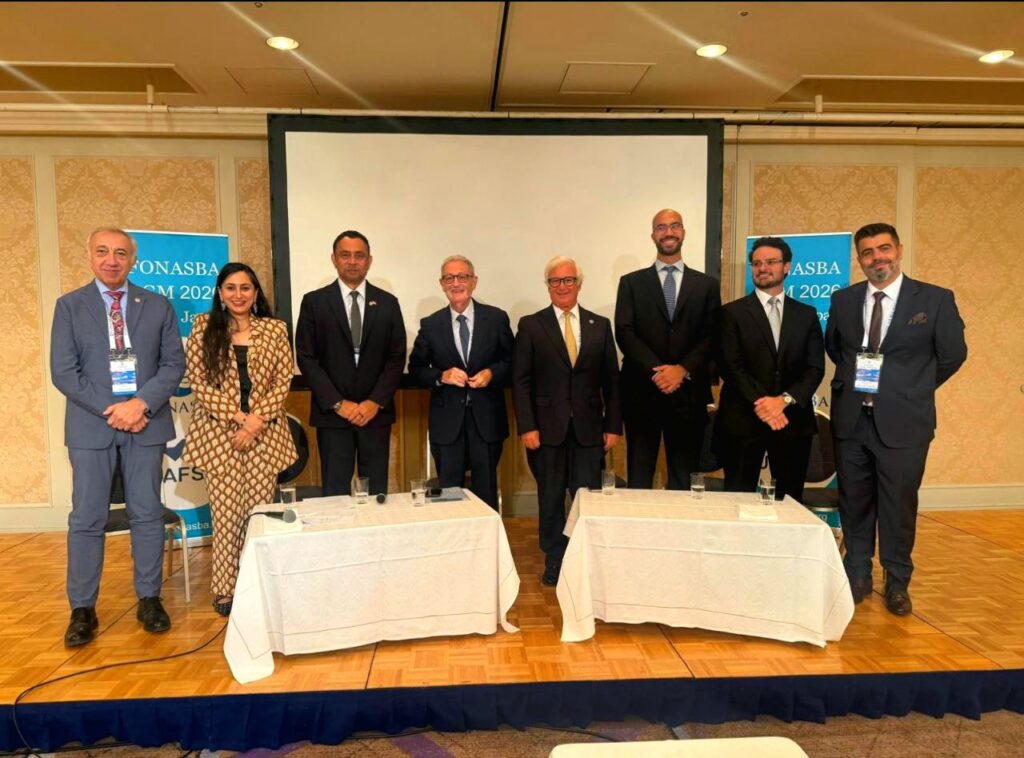
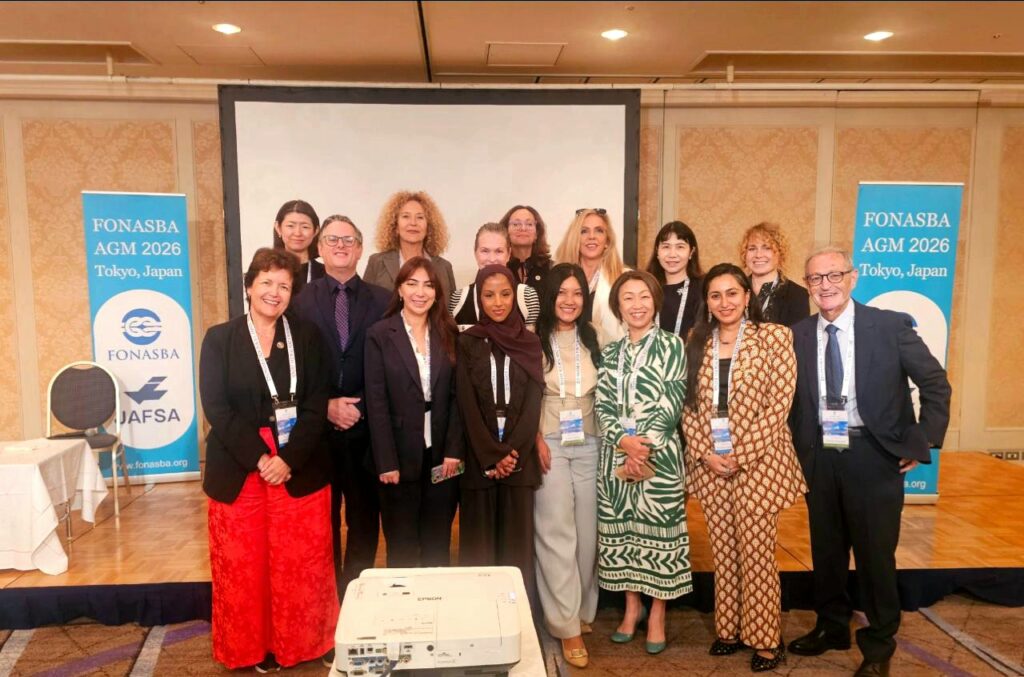
Shipping Arabia, October 27, 2026 – Dr. Dureid Mahasneh, FONASBA Regional Vice President for the Middle East and Chief Executive Officer of Jordan’s Gargour Shipping Company, participated in the Federation of National Associations of Ship Brokers and Agents (FONASBA) 2026 Annual Meeting, held in Tokyo, Japan, from October 11 to 14. The international gathering brought together maritime industry leaders, shipping agents, shipbrokers and representatives of national maritime associations to discuss developments affecting the global shipping industry.
Hosted by the Japan Association of Foreign-Trade Ship Agencies (JAFSA), the annual meeting provided a platform for dialogue on maritime trade, professional standards and international industry cooperation. Discussions also examined the evolving responsibilities of shipping agents and shipbrokers amid changing global operating conditions.
Dr. Mahasneh participated as a speaker in the conference’s Education and Quality panel, contributing to discussions on professional competence, maritime training and the importance of maintaining trust and recognized standards within the ship agency profession.
Dr. Dureid Mahasneh Joins International Panel on Maritime Education and Professional Standards
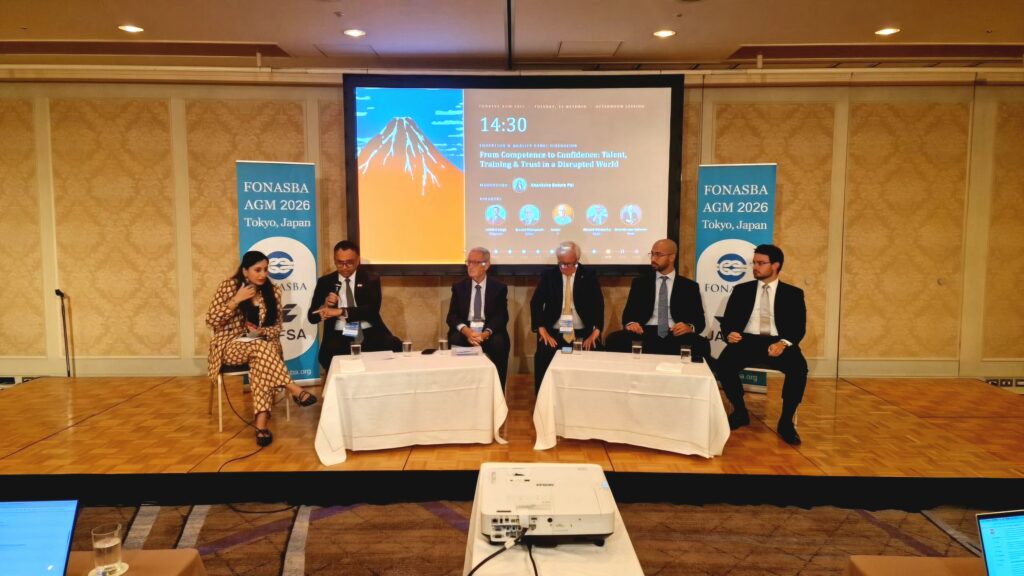
On October 13, Dr. Mahasneh participated in the Education and Quality panel titled “From Competence to Confidence: Talent, Training & Trust in a Disrupted World.”
Moderated by Akanksha Batura Pai of Singapore, the discussion brought together maritime industry representatives from Jordan, Singapore, Portugal, Egypt and Brazil. Other panelists included Lakhbir Singh, Antonio Belmar, Ahmed Mouselhy and Ricardo von Sohsten.
The session explored the role of professional competence, structured training and maritime education in strengthening ship agency services. Participants examined how the industry can maintain professional standards while developing the skills required to respond to changing international shipping demands.
Another central theme was the relationship between practical maritime experience, local market knowledge and recognized professional standards. Discussions highlighted how these elements contribute to professional development and help establish confidence and trust in maritime services.
Dr. Mahasneh’s participation brought Jordanian and Middle Eastern representation to the international discussion on maritime education and professional development.
In addition to his responsibilities as FONASBA Regional Vice President for the Middle East and CEO of Gargour Shipping Company, Dr. Mahasneh serves as Chairman of EDAMA, the Jordanian Association for Energy, Water and Environment.
His professional background spans maritime operations, port management, marine sciences and environmental sustainability. These areas are increasingly interconnected with the development of shipping, port operations and logistics infrastructure.
FONASBA 2026 Annual Meeting Addresses Global Shipping Challenges
The FONASBA 2026 Annual Meeting featured an extensive program examining developments and challenges across the international maritime industry. Discussions covered maritime trade corridors, international shipbroking, shipping and logistics integration, regional resilience and the future of ship agency services.
Among the conference sessions were “Maritime Corridors: Insights from Our Members” and “Shipbroking Across East and West: Lessons from Asia.” These discussions provided opportunities for representatives from different maritime markets to exchange perspectives on industry developments and regional operating conditions.
Other sessions included “Shipping and Logistics: A Marriage Made in Heaven” and “The Future of the Ship Agent.” The discussions addressed the relationship between shipping and logistics activities and examined the changing role of maritime service providers.
The conference also featured a keynote address by Sakura Kuma, Executive Officer of Mitsui O.S.K. Lines (MOL), Managing Director of MOL (Asia Oceania) and President of WISTA Japan.
Additional presentations addressed maritime authorities, EU-Japan industrial cooperation and regional challenges affecting shipping and logistics. Together, the sessions provided a forum for exchanging industry knowledge and discussing matters of common interest to FONASBA’s international membership.
Japan Maritime Industry Seminars and FONASBA Council Meeting
The final day of the annual gathering included host-country seminars examining developments across Japan’s maritime and transport sectors.
These sessions focused on Japan’s intermodal transport systems, container shipping developments and the country’s wider maritime industry. They provided international participants with insights into the Japanese market and its approach to maritime and logistics activities.
The Federation’s Council Meeting took place on October 14, concluding the four-day program in Tokyo.
Throughout the event, FONASBA members had opportunities to exchange professional knowledge, strengthen international relationships and discuss cooperation across the ship agency and shipbroking sectors.
Dr. Mahasneh’s participation, both as FONASBA Regional Vice President for the Middle East and as a speaker in the Education and Quality session, reflected Jordan’s involvement in international maritime dialogue.
The gathering also highlighted the importance of professional education, industry cooperation and internationally recognized standards in supporting the continued development of maritime services.
Shipping Arabia, October 25, 2026 – Hapag-Lloyd expects additional shipping services to return to the Suez Canal in the coming period, beyond the two Asia-Europe services already operating through the waterway. The carrier is closely monitoring Red Sea security conditions and maritime safety indicators as it evaluates further adjustments to its sailing schedules.
The development emerged during a meeting on October 20 between Suez Canal Authority (SCA) Chairman Adm. Ossama Rabiee and Juan Pablo Richards, Hapag-Lloyd’s Senior Managing Director for Region South Europe. The meeting took place at the Authority’s headquarters in the Irshad Building in Ismailia, where both sides discussed strengthening cooperation and the potential return of more shipping services.
The discussions also addressed the SCA’s ongoing development of navigation services, fleet modernization and opportunities for future cooperation in maritime training.
Hapag-Lloyd Expects Additional Suez Canal Services to Return
During the meeting, Richards confirmed that Hapag-Lloyd continues to monitor developments in the Red Sea region and maritime safety indicators. These assessments will guide the shipping line’s decisions on adjusting and updating its sailing schedules.
He indicated that the gradual return of vessel transits through the Bab el-Mandeb Strait and the Suez Canal could support further changes to the carrier’s service network.
According to Richards, additional Hapag-Lloyd Suez Canal services are expected to return in the coming period. These would complement the two existing Asia-Europe services already operating through the waterway.
However, the discussions did not establish a specific timetable for the return of additional services.
Richards also expressed appreciation for the longstanding cooperation between Hapag-Lloyd and the Suez Canal Authority. He acknowledged the notable improvements in services provided by the SCA to the maritime transport industry and expressed hope that navigation indicators would continue to improve.
His remarks reflected the importance of maritime safety conditions in determining the pace at which Hapag-Lloyd adjusts its operations through the Red Sea and Suez Canal.
Suez Canal Authority Reaffirms Readiness for Returning Shipping Services
Adm. Rabiee reaffirmed the Suez Canal’s readiness to accommodate shipping services seeking to resume transits through the waterway.
He highlighted the Authority’s continued efforts to develop navigation services and modernize its fleet to meet the operational requirements of shipping lines and other maritime customers.
The SCA Chairman also expressed hope for the full return of Hapag-Lloyd’s services to the Canal.
Rabiee emphasized the importance of the Suez Canal to the sustainability of global supply chains, particularly amid geopolitical challenges and rapid changes affecting the international shipping industry.
His remarks underscored the Authority’s commitment to maintaining the Canal’s operational capabilities and service standards as shipping lines reassess their transit arrangements.
The meeting provided an opportunity for both parties to review the prospects for additional Hapag-Lloyd Suez Canal services while discussing the Authority’s preparations to accommodate returning traffic.
SCA and Hapag-Lloyd Explore Maritime Training Cooperation in Damietta
Beyond vessel transits, the meeting explored opportunities to expand cooperation between the Suez Canal Authority and Hapag-Lloyd into new areas.
Richards highlighted a potential collaboration between the SCA’s Maritime Training and Simulation Academy and the Damietta Alliance Container Handling “Tahya Misr 1” Terminal at Damietta Port.
The proposed cooperation would focus on providing training for ship masters, drawing on the Academy’s maritime training and simulation capabilities.
Hapag-Lloyd is a major investor in the Damietta Alliance Terminal, creating an opportunity to explore training cooperation involving the terminal and the SCA’s specialized maritime training facilities.
The discussions identified maritime training as a possible additional area of cooperation between the shipping line and the Authority. No specific implementation arrangements or timetable for the proposed initiative were announced.
Senior Officials Attend Cooperation Discussions
The meeting was attended by Eng. Marwan El-Sammak, Chairman of Hapag-Lloyd’s Egypt operations, alongside senior officials from the Suez Canal Authority.
SCA representatives included Dr. Fathy Abdel Bary, Director of the Planning, Research and Studies Department, and Eng. Abdel Rahman Ramadan, Director of the Transit Department.
Their participation brought together officials responsible for commercial relations, planning and vessel transit operations as the two organizations examined opportunities to strengthen their cooperation.
The discussions covered both the potential return of additional Hapag-Lloyd shipping services and future collaboration in maritime training, reflecting the broader scope of the relationship between the Suez Canal Authority and the carrier.
Shipping Arabia, October 21, 2026 – The Port Training Institute (PTI) and Maritime Transport Research and Consultation Center of the Arab Academy for Science, Technology and Maritime Transport (AASTMT) participated in the 65th Board of Directors meeting of the Arab Sea Ports Federation. Held in Alexandria, Egypt, on October 14–15, 2026, the meeting brought together representatives of Arab maritime institutions to discuss cooperation, port development, and organizational matters.
The meeting took place at the Hilton Green Plaza Hotel in Alexandria. AASTMT’s participation reflected its commitment to supporting maritime transport development, strengthening cooperation with Arab ports, and advancing professional training across the regional port sector.
Under the direction of AASTMT President Prof. Ismail Abdel Ghafar Ismail Farag, Prof. Alaa Mahmoud Morsy, Dean of the Port Training Institute and Maritime Transport Research and Consultation Center, represented the academy at the meeting.
Morsy led the delegation in his capacity as Rapporteur of the federation’s Human Resources Development Committee. The delegation also included Dr. Essam Mostafa, Director of Business Development; Ahmed Shari, Head of Public Relations; and Mahmoud Farhat, Director of the Dean’s Office.
AASTMT Port Training Institute Highlights Maritime Training Capabilities
During the meeting, Morsy delivered a presentation outlining the activities of the Port Training Institute and its contribution to supporting Arab maritime ports.
The presentation highlighted the institute’s training and educational capabilities, along with its experience in preparing and qualifying maritime professionals. It also addressed the institute’s role in developing port personnel in accordance with modern professional standards and practices across the ports and maritime transport sectors.
Through its specialized training activities, the institute seeks to strengthen workforce capabilities and support improvements in port operations. Its programs focus on equipping maritime personnel with the professional knowledge and practical skills required by the industry.
The participation also provided an opportunity to emphasize closer cooperation between the institute and Arab ports and maritime organizations. Key areas of cooperation include exchanging professional expertise, developing specialized training programs, and strengthening human resources development initiatives.
These efforts aim to improve workforce efficiency and support the competitiveness of Arab ports. They also reflect AASTMT’s broader commitment to advancing maritime education, research, and professional development through cooperation with regional maritime institutions.
Arab Sea Ports Federation Announces Leadership Appointments
The federation’s 65th Board of Directors meeting also witnessed several important leadership developments, including the transfer of its presidency to the Hashemite Kingdom of Jordan, represented by the leadership of the Port of Aqaba.
The leadership transition formed part of the federation’s ongoing efforts to strengthen coordination and cooperation among member countries and their maritime institutions.
During the meeting, the Board of Directors appointed Tarek Abdallah as Secretary-General of the Arab Sea Ports Federation, succeeding Essam Badawi.
Badawi was appointed an adviser to the federation, allowing him to continue contributing to the organization’s activities in a new capacity.
The board also appointed Prof. Khawla Al Akhdar, head of Tunisia’s Merchant Marine and Ports Authority, as Vice President of the federation.
These appointments were among the organizational decisions taken during the meeting, alongside discussions and activities supporting closer cooperation across the Arab maritime sector.
AASTMT Leadership and Port Training Institute Receive Recognition
The meeting also included recognition of AASTMT’s contributions to maritime transport development and professional training.
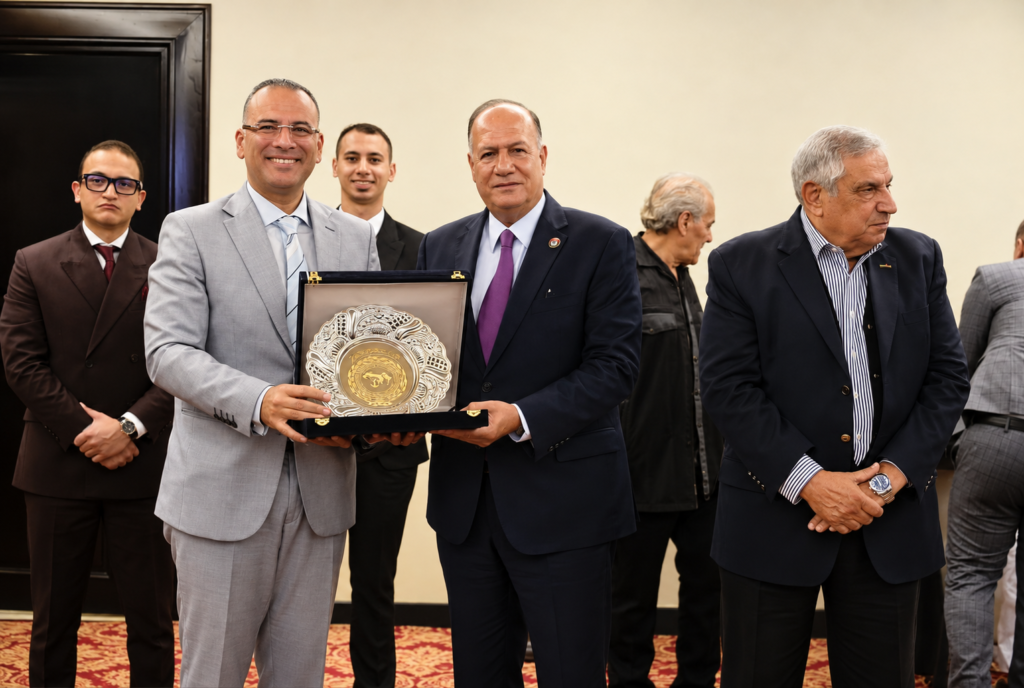
During the closing session, Essam Badawi honored AASTMT President Prof. Ismail Abdel Ghafar Ismail Farag in appreciation of the academy’s role and contributions to developing the maritime transport sector.
Prof. Alaa Mahmoud Morsy accepted the recognition on behalf of the academy’s president.
Morsy was also honored in recognition of the contributions made by the Port Training Institute and Maritime Transport Research and Consultation Center to professional training, workforce qualification, maritime research, and consultancy services.
The recognition highlighted the role of AASTMT and its specialized institutions in supporting the development of maritime professionals and strengthening technical expertise within the Arab maritime industry.
The institute’s participation in the Arab Sea Ports Federation meeting reaffirmed its commitment to promoting institutional cooperation, exchanging knowledge, and developing specialized training capabilities.
Through its educational, research, and consultancy activities, AASTMT continues to support Arab maritime integration and the development of human resources across the region’s ports and maritime transport sector.
Source: Arab Academy for Science, Technology and Maritime Transport (AASTMT)
Shipping Arabia, October 16, 2026 – The Suez Canal Authority (SCA) and Sri Lanka have discussed opportunities to strengthen maritime cooperation with Sri Lanka across shipbuilding, port operations, marine construction, logistics and specialized training. The discussions also covered potential partnerships between SCA-affiliated companies and Sri Lankan maritime businesses, alongside investment opportunities in the Suez Canal region.
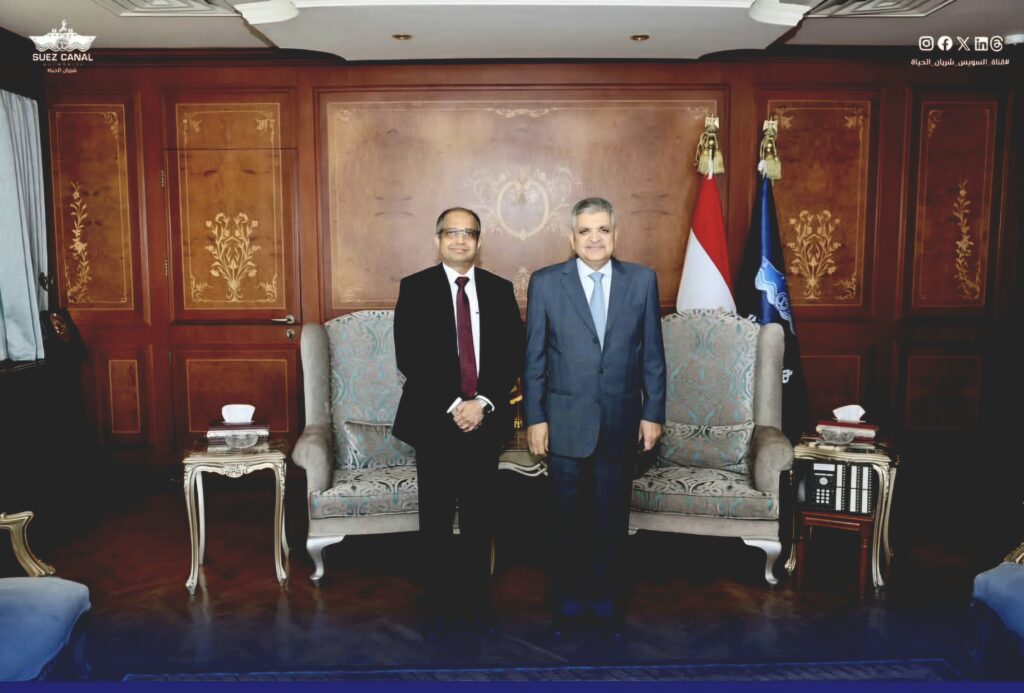
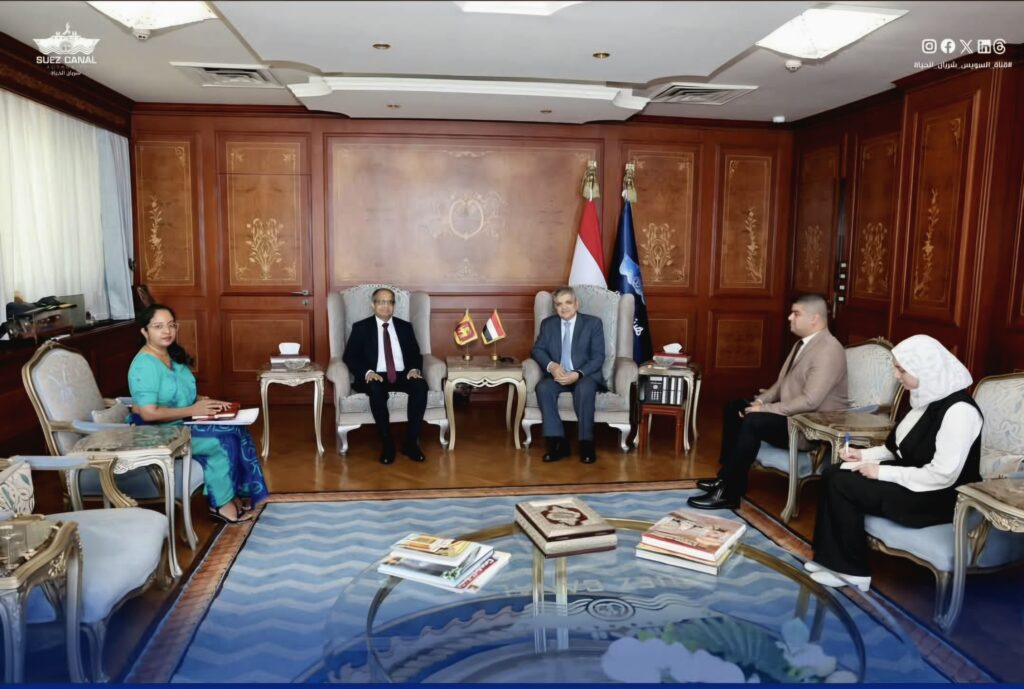
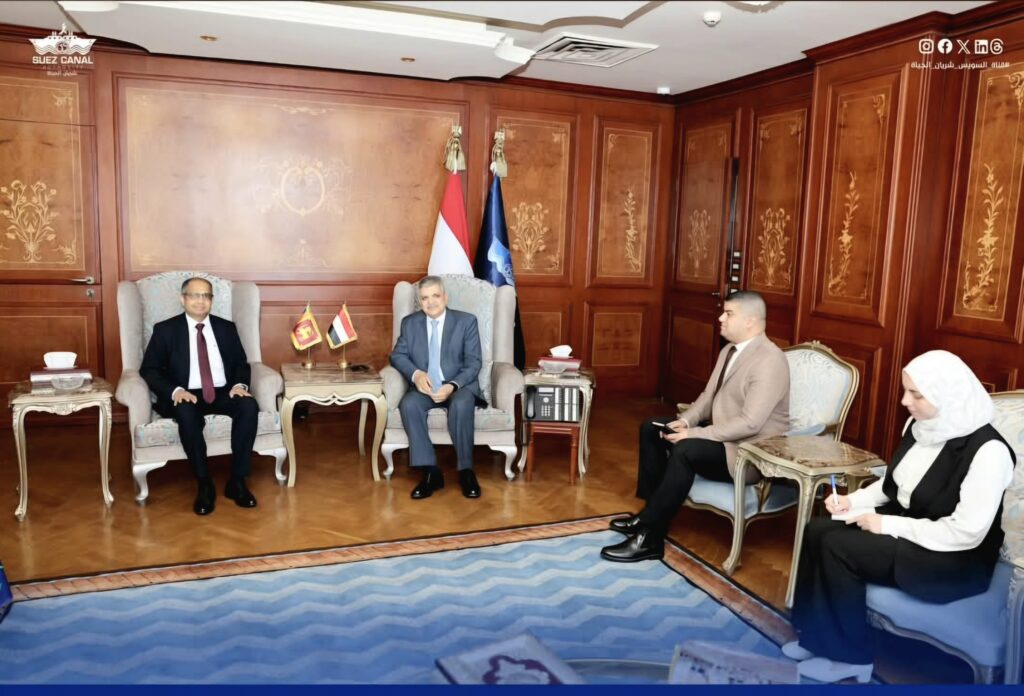
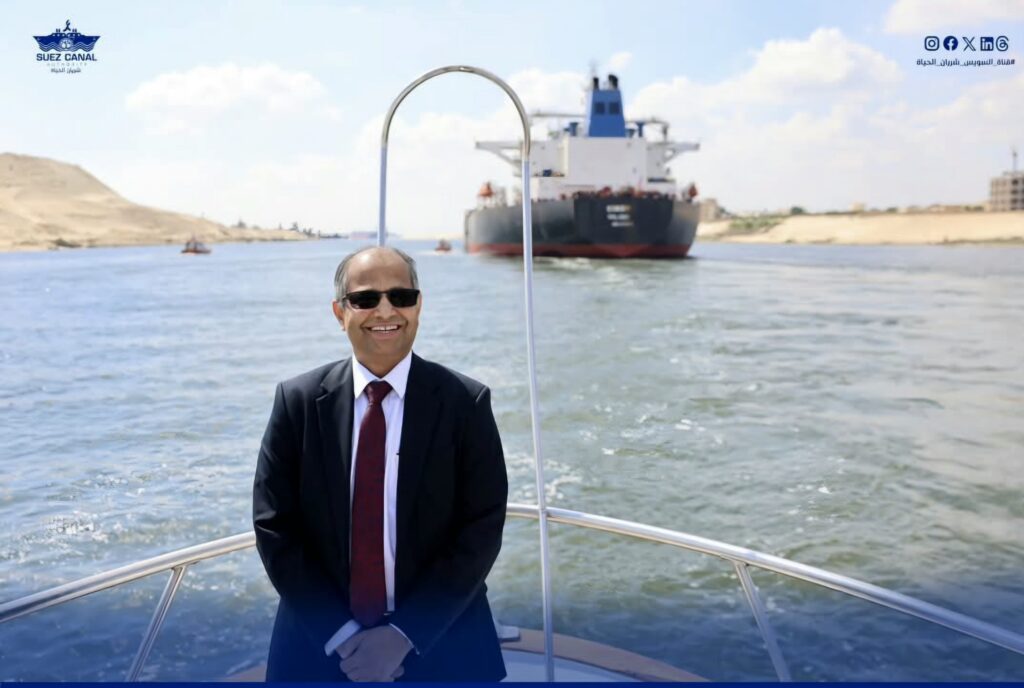
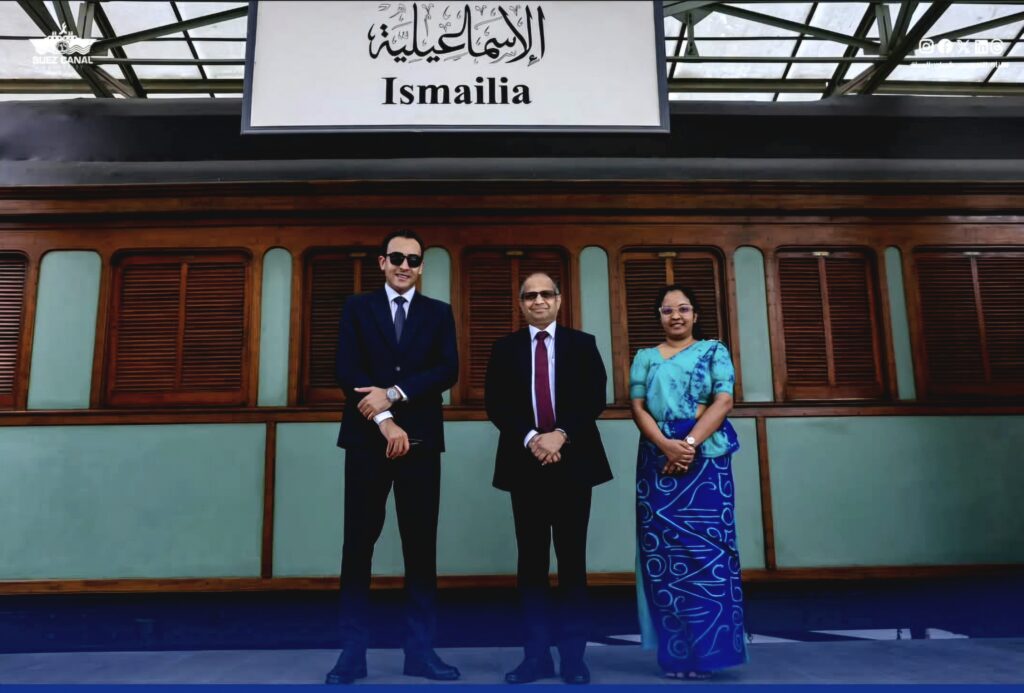
SCA Chairman Adm. Ossama Rabiee met with Sri Lanka’s Ambassador to Egypt, Sisira Senavirathne, on October 7 at the authority’s Pilotage Building in Ismailia. The meeting focused on expanding bilateral cooperation and exchanging expertise in areas of mutual interest.
Rabiee welcomed the growing ties between Egypt and Sri Lanka, noting that both countries share a strong interest in maritime affairs. He said this common focus creates opportunities for collaboration in maritime industries, logistics, training and other related activities.
Expanding Maritime Cooperation With Sri Lanka
During the meeting, Rabiee confirmed that the SCA’s affiliated companies and shipyards are ready to explore cooperation with Sri Lankan maritime companies and institutions. Potential areas include marine construction, port works, the construction of different types of marine vessels and units, fishing activities and logistics services.
The SCA chairman also highlighted the capabilities of the authority’s Maritime Training and Simulation Academy. He identified maritime training and specialized consultancy services as additional areas where Egyptian and Sri Lankan organizations could exchange expertise and develop cooperation.
These opportunities form part of wider discussions aimed at strengthening institutional and commercial links between the two countries’ maritime sectors. The talks addressed both industrial activities and services supporting maritime operations.
Suez Canal Strategy Focuses on Maritime Industries and Logistics
Rabiee outlined the SCA’s strategy to diversify revenue sources and improve the canal’s competitiveness. He said the authority has significantly expanded its activities and services as part of an integrated approach to developing its maritime business.
The strategy focuses on localizing maritime industries while developing and modernizing marine and logistics services. According to Rabiee, these initiatives aim to broaden the authority’s activities and strengthen the range of services available within the Suez Canal sector.
He also addressed the geopolitical challenges affecting maritime trade in the region. The SCA continues to engage with stakeholders across the shipping industry to coordinate efforts and reduce the impact of regional tensions on trade passing through the canal.
Rabiee emphasized that these efforts also support the continuity of global supply chains. Maintaining communication and cooperation with the maritime community remains part of the authority’s approach to addressing current challenges.
Sri Lanka Eyes Investment Opportunities and Maritime Partnerships
Ambassador Senavirathne expressed appreciation for Egypt’s efforts to manage the Suez Canal efficiently despite the challenges affecting the region. He also acknowledged the canal’s important role in facilitating international maritime trade.
The ambassador emphasized Sri Lanka’s interest in opening new channels for maritime cooperation and exchanging expertise with Egyptian institutions and businesses. He also highlighted his country’s interest in exploring investment opportunities associated with development projects in the Suez Canal region.
Senavirathne pointed to Egypt’s strategic geographical location and developing infrastructure as factors supporting its investment attractiveness. He noted that these advantages contribute to the country’s important position in global trade.
As part of efforts to strengthen business connections, the ambassador invited the SCA and its affiliated companies and shipyards to participate in Sri Lanka Expo 2027, scheduled for mid-January 2027.
The exhibition, focused on exports, international trade and industry, was presented as an opportunity for Egyptian and Sri Lankan companies to establish partnerships and exchange technical and commercial expertise.
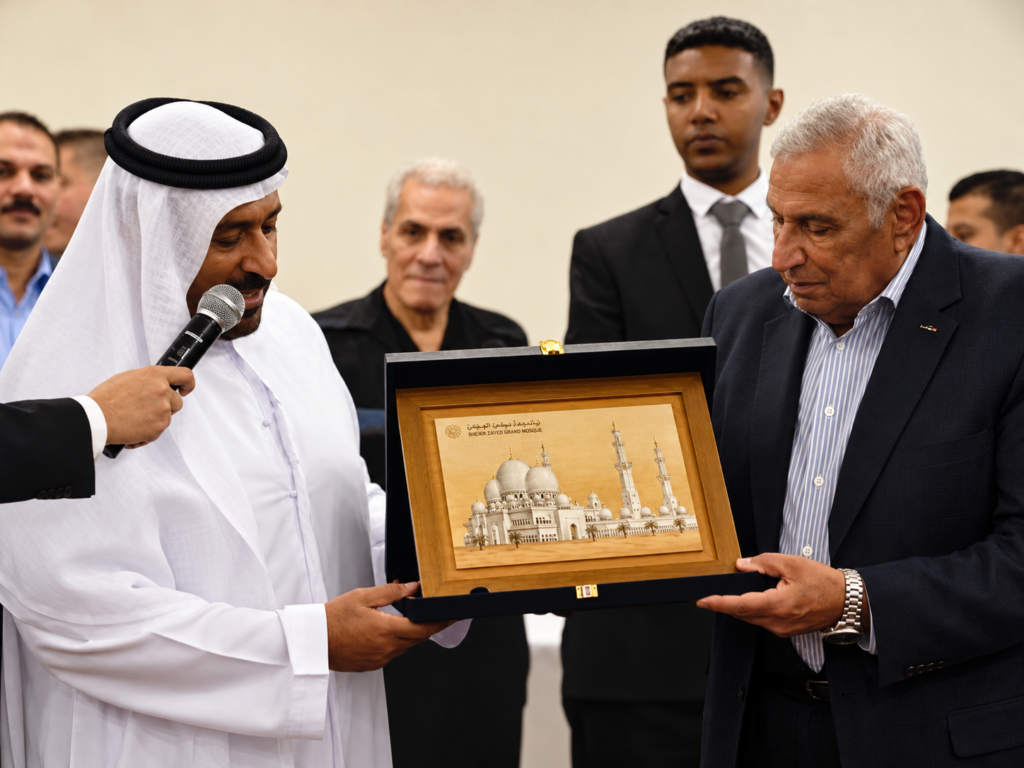
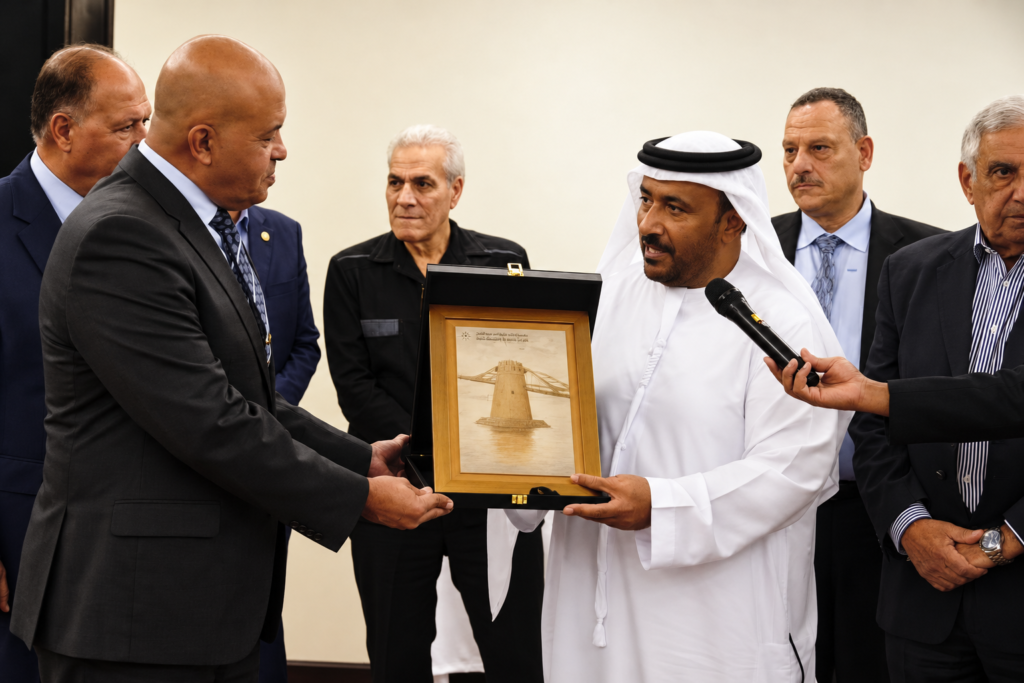
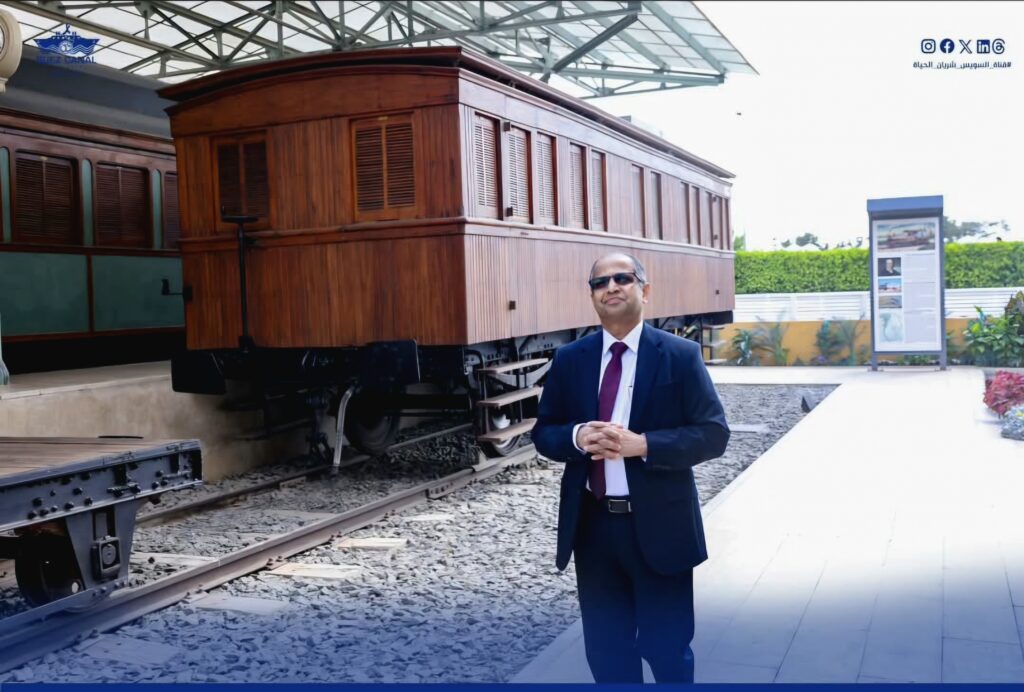
At the conclusion of the meeting, Rabiee presented the Suez Canal Shield to the Sri Lankan ambassador. He also invited Senavirathne to take a maritime tour of the New Suez Canal and visit the Suez Canal Museum to learn more about the canal’s development achievements.