Shipping Arabia, September 24, 2026 – Hapag-Lloyd has introduced a new feeder arrangement to maintain Casablanca coverage following changes to its West Africa Express (WAX) service, which now provides direct connections between Damietta and key West African ports.
The carrier will market the new Casablanca Feeder (CSF) service using slots on X-Press Feeders’ SPX1 service, according to Alphaliner. The rotation covers Barcelona – Valencia – Algeciras – Casablanca – Barcelona, with cargo connecting to Hapag-Lloyd’s WAX network.
The arrangement follows Hapag-Lloyd’s decision to remove Casablanca from the revised WAX rotation while maintaining access to the Moroccan port through a separate feeder connection via Valencia.
Under the revised WAX structure, Hapag-Lloyd is strengthening links between the Mediterranean, Türkiye and West Africa, including direct connections from Damietta and Valencia to major West African ports. Damietta will also provide connections with other Hapag-Lloyd services calling at the Egyptian port.
The revised WAX rotation is Damietta – Izmit – Gemlik – Istanbul – Valencia – Tangier – Lagos (Tincan/Apapa) – Onne – Cotonou – Tema – Lomé – Tangier – Barcelona – Damietta. It also provides a direct Türkiye-Valencia connection.
The first announced sailing under the revised rotation was Merkur Ocean, voyage 2639S, with arrival at Damietta scheduled for September 21.
Hapag-Lloyd said the network changes are intended to provide greater operational flexibility and improve schedule reliability, while the new feeder arrangement allows the carrier to retain Casablanca within its wider Mediterranean and West Africa network.
Source: Almal News
Morocco
-
Hapag-Lloyd Keeps Casablanca Coverage Through New Feeder Service
-
Nador West Med Container Terminal Begins First Vessel Handling Operation
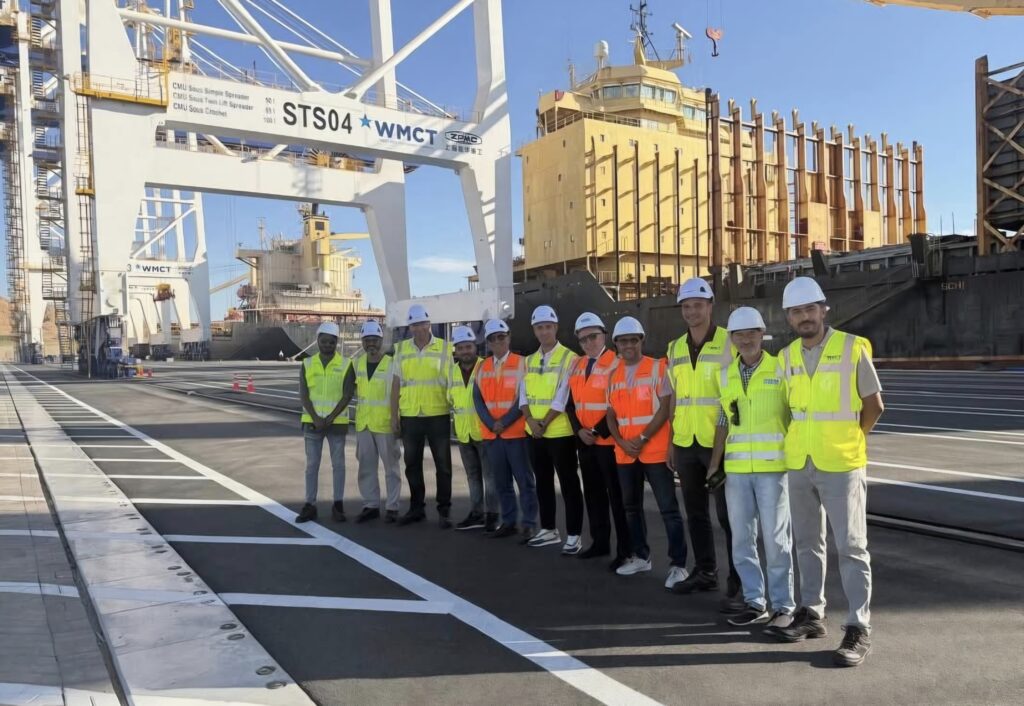
Shipping Arabia, September 22, 2026 – Morocco’s Nador West Med Container Terminal has carried out its first vessel handling operation, marking an important operational milestone for the new Mediterranean port complex as it prepares its workforce and systems for container operations.
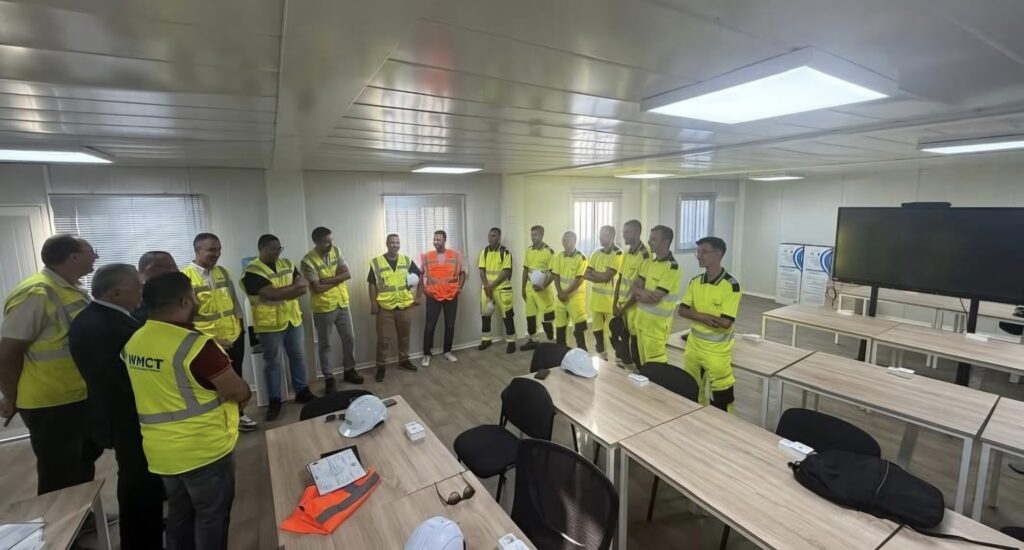
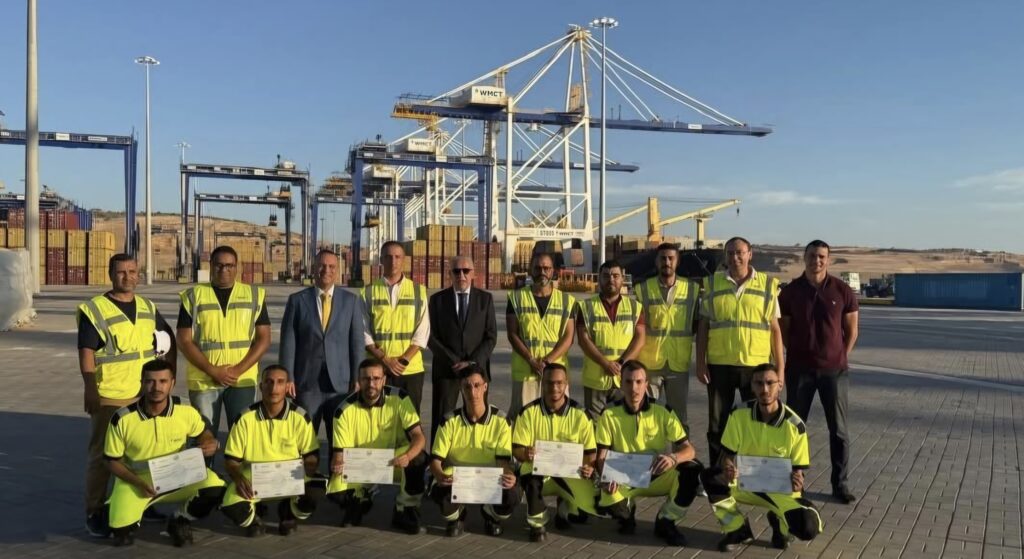
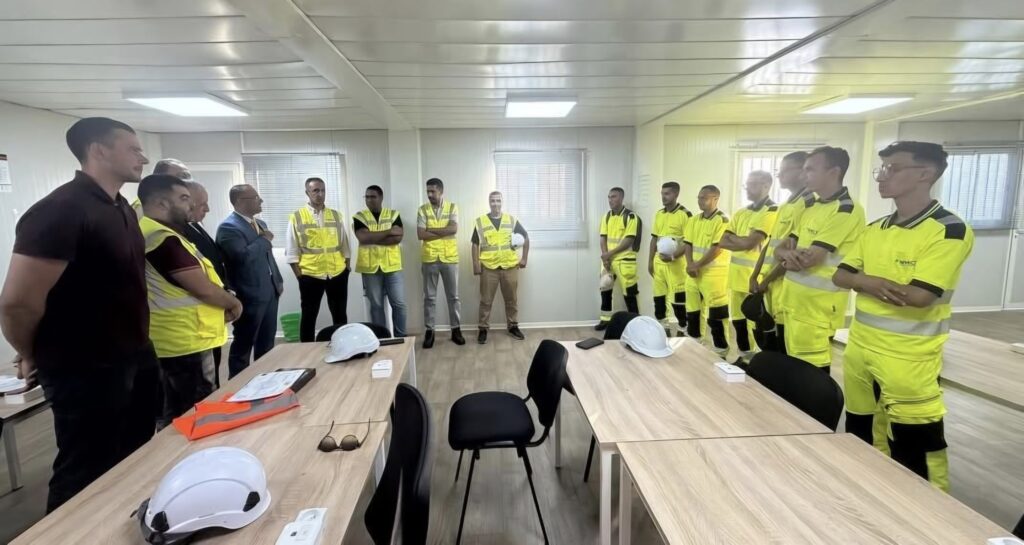
The first vessel arrival coincided with the completion of a specialized practical training programme for Moroccan personnel conducted by the Port Training Institute of the Arab Academy for Science, Technology and Maritime Transport (AASTMT).
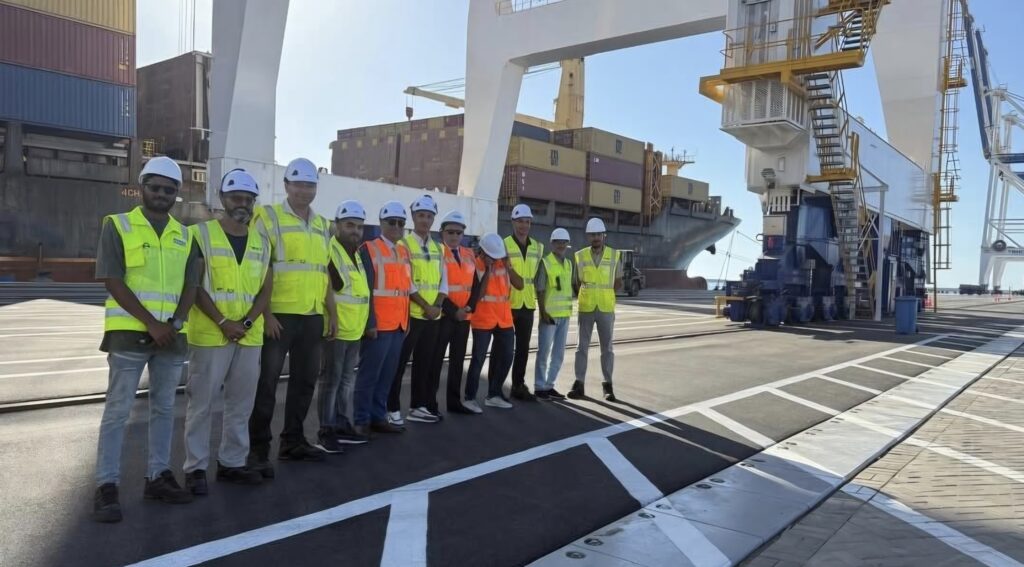
Trainees participated directly in the terminal’s inaugural handling operation, applying skills developed during the programme to live container terminal activities. The practical training focused on preparing personnel for the operational requirements of modern container facilities, including crane operations and cargo-handling procedures.
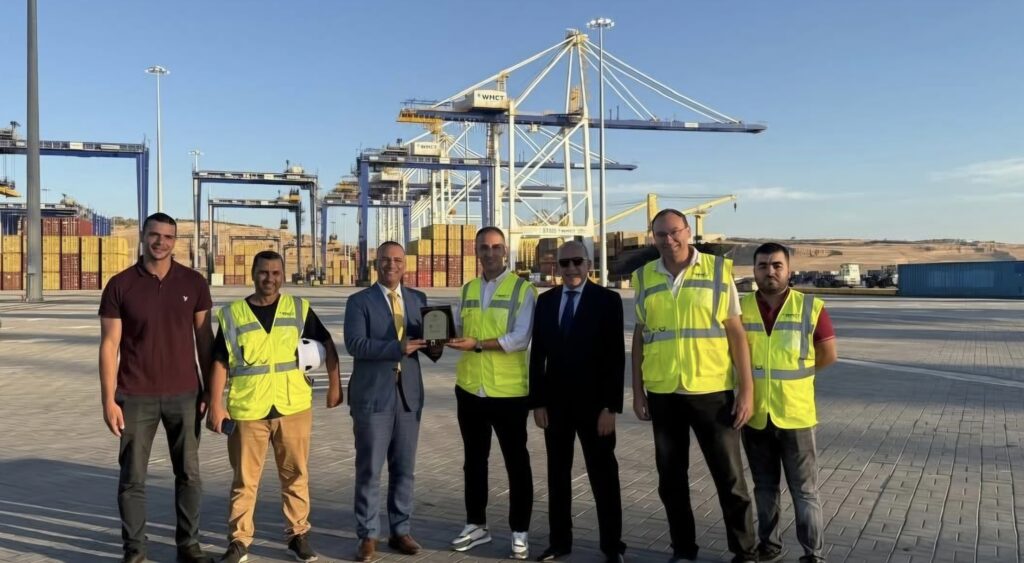
Prof. Alaa Mahmoud Morsi, Dean of the Port Training Institute and Maritime Transport Research and Consultation Center, visited the terminal with Assistant Dean Ehab Hamdy as the programme concluded and the first vessel operation began.
Practical training was supervised by Hisham Hamdy, Head of the Crane Simulators Department, and Mohamed Gamal, Head of the Cranes Unit, with the programme combining technical instruction and operational preparation for container terminal activities.
Terminal management said the trainees demonstrated the ability to apply their training during the live operation, providing an early test of workforce readiness as Nador West Med moves toward wider terminal operations.
The programme forms part of cooperation between AASTMT and the Moroccan terminal to develop specialized port personnel and transfer operational expertise ahead of the facility’s ramp-up.
At the conclusion of the visit, Morsi presented the Port Training Institute shield to Najib Chikhi, CEO of West Med Container Terminal, recognizing the cooperation between the two organizations in delivering the training programme.
The milestone adds an important operational dimension to the development of Nador West Med as a new container and logistics gateway on Morocco’s Mediterranean coast, with trained personnel now participating in live vessel and terminal operations.
Source: Port Training Institute