MSC

  • Saudi Ports Container Throughput Rises 14% as Gulf Cargo Shifts to Red Sea Routes

    Shipping Arabia, November 13, 2026 – Saudi ports container throughput increased 14% year over year in October 2026, reaching approximately 866,000 TEUs as shipping companies increasingly use the Kingdom’s Red Sea ports to serve Gulf markets. The growth comes amid disruptions to navigation through the Strait of Hormuz, prompting major container carriers to adopt alternative shipping and logistics routes across the region.

    According to data published by the Saudi Ports Authority (Mawani), inbound container volumes increased by 8.53%, while outbound container volumes rose by 4.83%. Meanwhile, transshipment activity reached approximately 186,000 TEUs during October.

    The figures highlight growing activity across Saudi Arabia’s port network as international shipping companies adjust their transportation arrangements in response to regional maritime disruptions.

    Shipping Lines Redirect Gulf Cargo Through Saudi Arabia

    Restrictions affecting navigation through the Strait of Hormuz have prompted international shipping companies to explore alternative routes for transporting cargo to Gulf markets.

    MSC, the world’s largest container shipping company, introduced a new logistics route in May 2026 connecting Europe with Gulf destinations through Saudi Arabia’s Red Sea ports.

    Under the arrangement, cargo arrives at Jeddah Islamic Port and King Abdullah Port before continuing overland by truck to Dammam on the Kingdom’s eastern coast. From there, shipments are transported by sea to destinations in the United Arab Emirates, Bahrain, Kuwait and Iraq.

    The route provides an alternative transportation arrangement for cargo moving between Europe and Gulf markets while avoiding direct maritime passage through the Strait of Hormuz.

    Other major carriers have also adjusted their logistics arrangements. Maersk and Hapag-Lloyd have adopted alternative transportation solutions through Saudi Arabia and Oman to maintain access to regional markets.

    These developments reflect the growing role of Saudi Arabia’s Red Sea ports in supporting cargo movements traditionally associated with Gulf shipping routes.

    Saudi Arabia Expands Red Sea Port Capacity and Maritime Connectivity

    Saudi Arabia has introduced its Logistics Corridors Program to accommodate cargo redirected from eastern and Gulf ports to facilities along the Red Sea.

    The Kingdom’s Red Sea ports have a combined annual container handling capacity exceeding 18 million TEUs, providing infrastructure to support alternative regional trade routes.

    Alongside the logistics corridor initiative, Saudi Arabia has expanded maritime connectivity along its western coast.

    Mawani has introduced more than 27 additional shipping services, providing extra monthly container handling capacity exceeding 200,000 TEUs.

    The expanded network aims to facilitate the movement of cargo through Saudi ports and maintain trade flows to regional markets amid disruptions affecting established maritime routes.

    By combining maritime connections through Red Sea ports with overland transportation to eastern Saudi Arabia, the Kingdom is developing alternative logistics arrangements for cargo destined for Gulf countries.

    Jeddah Islamic Port Receives SAR 641 Million Infrastructure Investment

    Mawani has also invested approximately SAR 641 million in upgrading Jeddah Islamic Port over a three-month period.

    The investments include expanding container terminals and introducing additional cargo-handling equipment to strengthen the port’s operational capacity.

    These improvements form part of wider efforts to accommodate growing demand for port services and support the movement of redirected cargo.

    In parallel, Saudi Arabia has established a truck staging facility in Jeddah capable of accommodating 40,000 trucks daily.

    The facility supports the management of road transport movements associated with cargo entering and leaving the port area.

    Furthermore, agreements have been signed to develop logistics centers with investments exceeding SAR 1 billion.

    These projects aim to strengthen the Kingdom’s logistics infrastructure and increase its capacity to handle transportation, storage and distribution requirements.

    The combined investments in container terminals, cargo-handling equipment, truck facilities and logistics centers reflect Saudi Arabia’s efforts to improve its infrastructure in response to changes in regional shipping patterns.

    Saudi Arabia and UAE Expected to Increase Transport Infrastructure Investment in 2027

    Regional geopolitical risks are also influencing longer-term investment priorities across the Gulf.

    Ihsan Khoman, an economist at the BlackRock Investment Institute, expects Saudi Arabia and the United Arab Emirates to increase their focus on port and transportation infrastructure projects during 2027.

    In earlier comments to Asharq Bloomberg, Khoman indicated that developing alternative transportation routes would become an increasingly important priority as regional countries seek to strengthen supply chain resilience.

    Such investments are intended to provide additional logistics options and reduce the vulnerability of trade flows to disruptions affecting strategic maritime passages.

    For Saudi Arabia, the development of Red Sea port infrastructure and logistics corridors forms part of its response to changing regional cargo movements.

    The 14% increase in Saudi ports container throughput during October 2026 comes as international carriers continue adjusting their services and transportation arrangements.

    Meanwhile, additional maritime services, investments in Jeddah Islamic Port and expanded logistics infrastructure are strengthening the Kingdom’s capacity to accommodate redirected cargo and support trade flows to Gulf markets.

    Source: Asharq Bloomberg
  • Nador West Med Operations Begin as Morocco Launches East Container Terminal

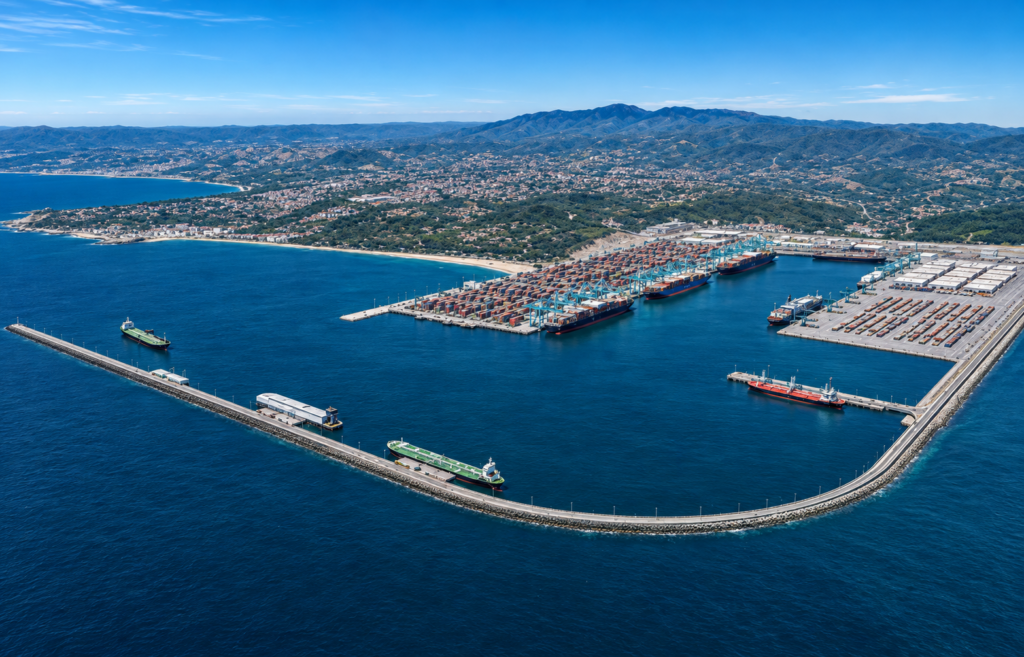
    Shipping Arabia, November 5, 2026 – Morocco has officially launched operations at the East Container Terminal of Nador West Med Port, marking the first operational milestone in bringing the port complex into service. The terminal, operated by Marsa Maroc in partnership with Terminal Investment Limited (TIL), is expected to reach a handling capacity of 3.5 million containers by 2030.

    Crown Prince Moulay El Hassan inaugurated the terminal’s operations under the instructions of King Mohammed VI. During the inauguration, the Crown Prince initiated the first unloading of a container from a commercial vessel, marking the beginning of operational activities at the facility.

    The launch represents a significant step in the development of Nador West Med as a container transshipment hub, supported by investments and partnerships with major international shipping groups.

    East Container Terminal Begins Operations With MAD 5 Billion Investment

    The East Container Terminal features 1,520 linear meters of quay, an 18-meter draft and a land area covering 70 hectares. These facilities form part of the infrastructure developed to support container handling operations at Nador West Med.

    The terminal represents an investment of approximately MAD 5 billion and is designed to reach a handling capacity of 3.5 million containers by 2030.

    Marsa Maroc will operate the facility alongside Terminal Investment Limited, a subsidiary of Mediterranean Shipping Company (MSC).

    The partnership brings together Morocco’s port operator and an international container terminal investment company associated with MSC, one of the world’s leading container shipping groups.

    The start of operations at the East Container Terminal marks the initial phase of the broader Nador West Med port complex becoming operational.

    Marsa Maroc Plans West Container Terminal Operations With CMA CGM in 2027

    Beyond the East Container Terminal, Marsa Maroc confirmed that it will operate all terminals within the Nador West Med port complex, with an investment program valued at MAD 10 billion.

    The company’s development plans include operating the West Container Terminal beginning in 2027 through a partnership with CMA CGM Group, another major international container shipping company.

    The West Container Terminal will represent the next stage in the port’s operational development, following the launch of the eastern facility.

    Marsa Maroc also plans to begin operating a general cargo terminal at Nador West Med in 2029, further expanding the types of cargo handling activities available within the port complex.

    Together, these projects establish a phased operational program extending from the initial container terminal launch through the planned introduction of additional terminal facilities.

    Nador West Med Development Targets Container Transshipment

    The launch of the East Container Terminal represents an important step toward Marsa Maroc’s objective of developing Nador West Med into an efficient transshipment hub.

    The company’s partnerships with Terminal Investment Limited and CMA CGM form part of this strategy, bringing major international container shipping groups into the port’s terminal operations.

    Marsa Maroc stated that its teams remain engaged alongside their partners to support the development of Nador West Med and advance its future operational objectives.

    With the East Container Terminal now entering service, attention will turn to the next stages of the port complex, including the planned West Container Terminal operations in 2027 and general cargo terminal operations in 2029.

    Source: Marsa Maroc

    Nador West Med
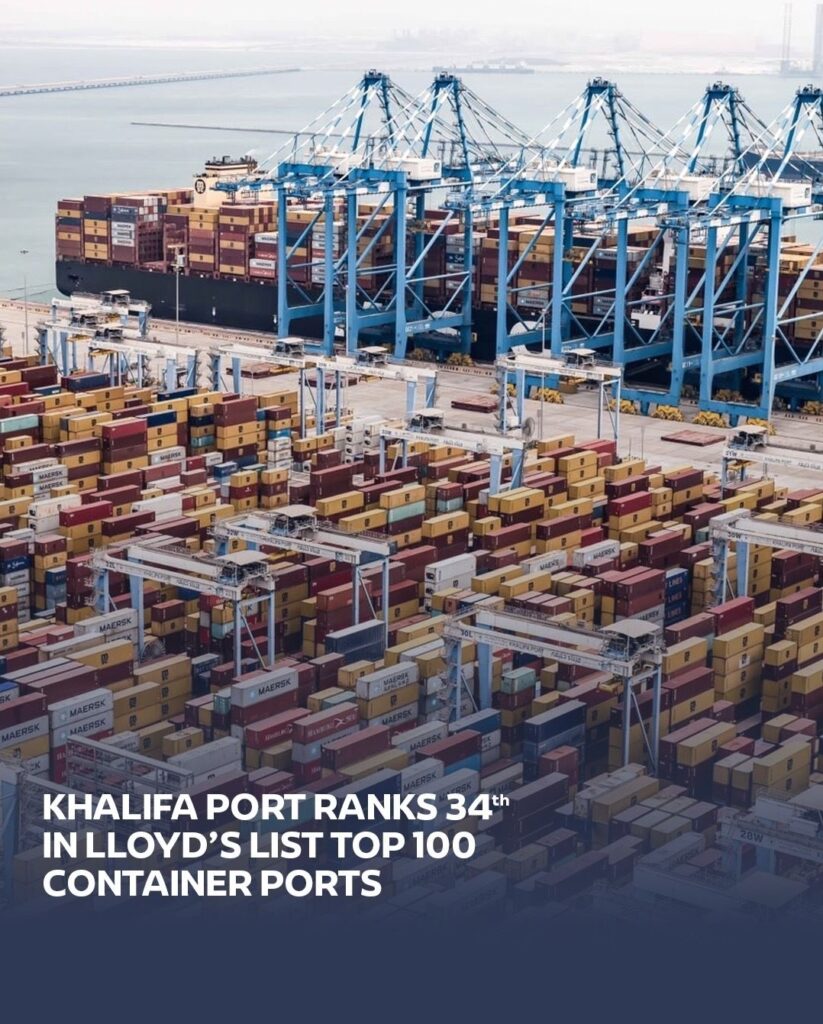
  • Khalifa Port Climbs to 34th Globally as Container Throughput Reaches 6.6 Million TEUs

    Shipping Arabia, October 29, 2026 – Khalifa Port in Abu Dhabi has climbed five positions to rank 34th globally in the Lloyd’s List Top 100 Container Ports 2026, following a 21.6% increase in container throughput during 2025. The port handled 6.6 million TEUs, recording the highest year-on-year percentage growth among the world’s top 40 container ports in the latest ranking.

    According to AD Ports Group, Khalifa Port’s container throughput increased from 5.42 million TEUs in 2024 to 6.6 million TEUs in 2025. The latest results reflect the combined performance of three container terminals operated through partnerships with major international shipping lines CMA CGM, COSCO and MSC.

    Khalifa Port Container Throughput Drives Global Ranking

    Khalifa Port advanced from 39th position in the previous Lloyd’s List ranking to 34th in the 2026 edition. The ranking evaluates the world’s leading container ports based on their annual container throughput.

    Since entering the global top 100 in 95th position in 2019, Khalifa Port has climbed 61 places. AD Ports Group attributed this progress to sustained investments in port infrastructure, additional handling capacity, advanced technology and operational efficiency.

    The company also highlighted the importance of expanding international shipping connections and maintaining long-term partnerships with global terminal operators.

    Strong market demand, increased terminal utilization and newly added capacity contributed to the port’s performance in 2025.

    A major contributor was CMA Terminals Khalifa Port, developed through a partnership between AD Ports Group and CMA CGM. The terminal handled more than 1.3 million TEUs during its first full year of operations following its inauguration in January 2025.

    Three Container Terminals Support Growing Capacity

    Khalifa Port operates three advanced container terminals through partnerships with leading global shipping companies. These include Abu Dhabi Terminals with MSC, CSP Abu Dhabi Terminal with COSCO, and CMA Terminals Khalifa Port.

    Together, the terminals provide shipping customers with connectivity to major international markets, scalable handling capacity and access to AD Ports Group’s integrated logistics network.

    Further expansion is underway at CMA Terminals Khalifa Port. The development will increase the terminal’s annual container-handling capacity by almost 50%, bringing it to 2.7 million TEUs.

    Once the expansion is completed, Khalifa Port’s total annual container-handling capacity will reach 10.5 million TEUs, further strengthening its ability to accommodate container traffic.

    The additional capacity forms part of AD Ports Group’s continued investments in port infrastructure and international maritime connectivity.

    AD Ports Group Emphasizes Infrastructure and Connectivity Investments

    Saif Al Mazrouei, Chief Executive Officer of the Ports Cluster at AD Ports Group, described Khalifa Port’s rise in the Lloyd’s List ranking as a reflection of the group’s long-term development strategy and commitment to operational excellence.

    He emphasized that the 21.6% increase in container throughput and five-position improvement in the global ranking demonstrate the results of investments in infrastructure, capacity, technology and connectivity.

    Al Mazrouei also acknowledged the contribution of the group’s workforce, customer confidence and strategic partnerships to the port’s performance.

    Looking ahead, he reaffirmed AD Ports Group’s commitment to further investments in handling capacity, maritime connectivity and innovative solutions. These investments aim to strengthen Khalifa Port’s role as an international trade gateway and support the UAE’s position within global supply chains.

    Integrated Logistics Network Strengthens Trade Connectivity

    Beyond its container terminals, Khalifa Port serves as an integrated logistics gateway connecting maritime transport with road and rail networks.

    The port also connects with AD Ports Group’s inland logistics network, dry ports, cargo-handling facilities and industrial zones. This integrated infrastructure supports cargo movements within the UAE while providing businesses with greater flexibility across regional and international supply chains.

    AD Ports Group considers these connections an important element of its strategy to improve logistics efficiency and strengthen the competitiveness of its port operations.

    With container throughput reaching 6.6 million TEUs in 2025 and additional terminal capacity under development, Khalifa Port continues to expand its role in international container shipping.

    The group reaffirmed its commitment to infrastructure investment, strategic partnerships and integrated trade and logistics solutions as part of its efforts to strengthen global competitiveness and support the UAE’s long-term economic diversification.

    Source: AD Ports Group

  • Suez Canal Container Shipping Capacity Exceeds 50% of Pre-Crisis Levels for First Time

    Shipping Arabia, October 17, 2026 – Suez Canal container shipping capacity has exceeded half of its pre-Red Sea crisis levels for the first time, reaching its highest level since maritime disruptions began. The recovery follows a series of routing decisions by major container shipping lines, which have accelerated their return to the canal after nearly three years of widespread diversions around the Cape of Good Hope.

    According to BIMCO, citing data from Clarksons Research, average weekly container vessel capacity transiting the Suez Canal reached 753,000 TEUs during the first two weeks of October 2026. This compares with 1.46 million TEUs during the corresponding period in 2023, before the Red Sea disruptions significantly affected international shipping routes.

    The latest figures indicate a substantial recovery in container shipping activity through the waterway, although transit capacity remains below its pre-crisis level.

    Suez Canal Container Shipping Share Rises to 36%

    BIMCO reported that 36% of container shipping capacity routed through either the Suez Canal or the Cape of Good Hope used the canal during the first two weeks of October.

    This represents a considerable improvement from the average of just 8% recorded between 2024 and mid-2026. However, the figure remains significantly below the approximately 80% share recorded before the Red Sea attacks disrupted shipping operations.

    The increase reflects a gradual shift back toward the Suez Canal as container shipping lines revise their service networks. Nevertheless, the figures show that a substantial proportion of capacity continues to operate via the Cape of Good Hope.

    Major Shipping Lines Accelerate Return to Suez Canal

    The recovery in Suez Canal container shipping began accelerating in July 2026, when Maersk and Hapag-Lloyd announced that their AE15/SE3 Asia–Mediterranean service would return to the canal.

    Additional adjustments subsequently followed within the Gemini Cooperation network. Meanwhile, members of the Ocean Alliance and Premier Alliance, together with Mediterranean Shipping Company (MSC), announced revised vessel routings.

    According to BIMCO, container shipping lines have announced routing changes affecting a total of 16 services since the beginning of July 2026.

    These developments have contributed to the recovery in container vessel capacity transiting the Suez Canal, bringing more services back to the waterway after an extended period of diversions.

    The recovery has also become more balanced between northbound and southbound sailings.

    During the third quarter of 2026, northbound container shipping capacity represented approximately 75% of southbound capacity. That proportion increased to 81% during the first two weeks of October, indicating a narrowing difference between the two sailing directions.

    Return to Shorter Routes Could Affect Global Container Capacity

    Beyond the increase in canal transits, the return of container shipping services to shorter routes could have significant implications for global vessel capacity and the balance between shipping supply and demand.

    BIMCO estimates that widespread diversions around the Cape of Good Hope increased global demand for container shipping capacity by approximately 10%.

    The longer routes required additional vessel capacity to maintain shipping operations. However, as more services return to the Suez Canal, the additional capacity demand associated with those diversions is declining.

    Niels Rasmussen, Chief Shipping Analyst at BIMCO, highlighted the scale of this change, explaining that the approximately 10% increase in global container shipping capacity demand caused by Suez Canal diversions is now reversing rapidly.

    This development could influence the availability of container vessels as shipping lines progressively restore services through the canal.

    However, BIMCO cautioned that congestion at Asian ports could delay the full impact of shorter shipping routes on vessel availability and the overall balance between global container shipping supply and demand.

    Suez Canal Recovery Remains Incomplete

    Despite the improvement recorded during the first half of October, container shipping activity through the Suez Canal has not returned to its pre-disruption levels.

    The increase to 753,000 TEUs in average weekly transit capacity, together with the recovery in the canal’s share of container shipping routes, demonstrates the progress made since shipping lines began adjusting their networks in July.

    Nevertheless, the comparison with 2023 highlights the remaining gap between current traffic and the levels recorded before the Red Sea crisis.

    The latest BIMCO figures therefore point to a continuing recovery in Suez Canal container shipping, while confirming that the industry’s return to its traditional routing patterns remains incomplete.

    Source: Al Mal

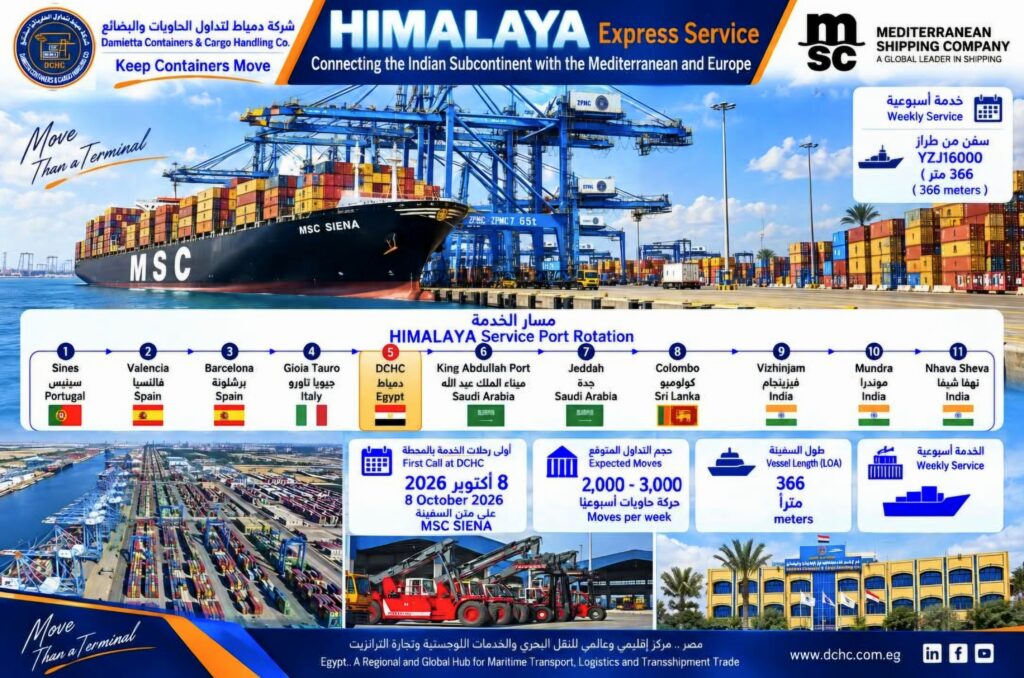
  • MSC Launches Weekly HIMALAYA Service at Damietta Container Terminal, Linking India and Europe

    Shipping Arabia, October 13, 2026 – Damietta Container & Cargo Handling Co. (DCHC) has welcomed MSC Mediterranean Shipping Company’s new HIMALAYA service, establishing a weekly shipping connection linking India with the Eastern Mediterranean through Damietta Container Terminal and extending to Western European ports in Spain and Portugal. The service adds to the terminal’s expanding network of international container shipping connections and supports its efforts to attract additional cargo volumes.

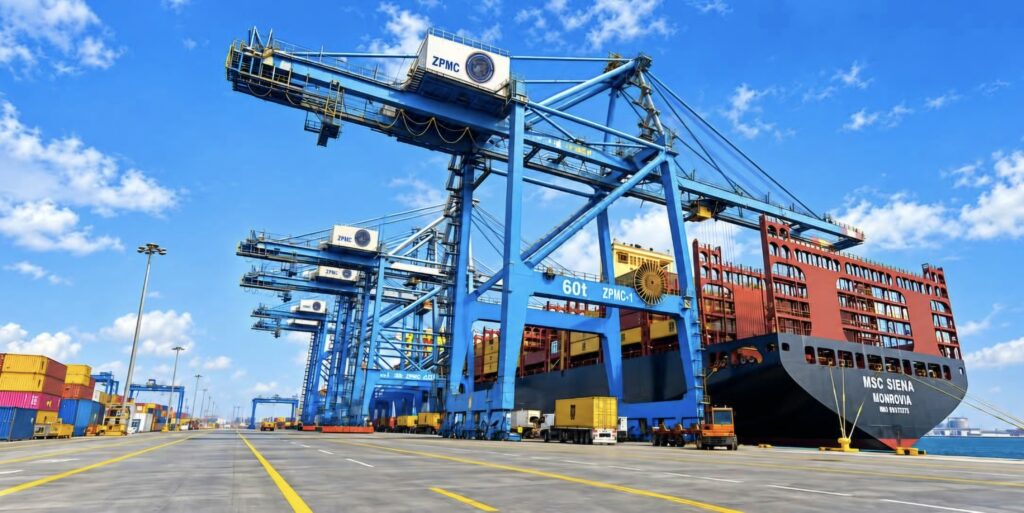
    The first vessel operating under the new service, MSC SIENA, arrived at Damietta Container Terminal on Thursday, October 8, 2026, marking the inaugural call of HIMALAYA at the facility. The service will operate on a weekly basis, strengthening the terminal’s connections with international shipping markets.

    The introduction of HIMALAYA follows continued marketing efforts by DCHC to attract global shipping lines and expand its portfolio of regular maritime services. According to the company, the addition reflects its operational capabilities, modern infrastructure and ability to accommodate larger container vessels.

    MSC Expands Its Service Network at Damietta Container Terminal

    The launch of the MSC HIMALAYA service represents a further expansion of cooperation between Damietta Container & Cargo Handling Co. and MSC, one of the international shipping lines operating at the terminal.

    HIMALAYA is the second new MSC service recently introduced at DCHC, following the addition of the EMUSA service. Together, these developments expand the range of MSC shipping services calling at Damietta Container Terminal and strengthen the commercial relationship between the terminal operator and the shipping line.

    DCHC highlighted that the continued expansion of MSC’s services reflects confidence in the terminal’s operational infrastructure and its ability to accommodate the requirements of international container shipping.

    The company has continued developing its service network through marketing initiatives aimed at attracting additional global shipping lines and scheduled services. These efforts seek to increase container handling volumes and improve the utilization of the terminal’s infrastructure and operational resources.

    The new HIMALAYA connection adds India, the Eastern Mediterranean and Western European ports in Spain and Portugal to the service’s geographical coverage through Damietta.

    With weekly calls now scheduled, the service represents another addition to the terminal’s regular shipping activities and its role in handling international container traffic.

    MSC SIENA Marks Inaugural HIMALAYA Service Call

    The inaugural HIMALAYA service call took place on October 8, when MSC SIENA berthed at Damietta Container Terminal.

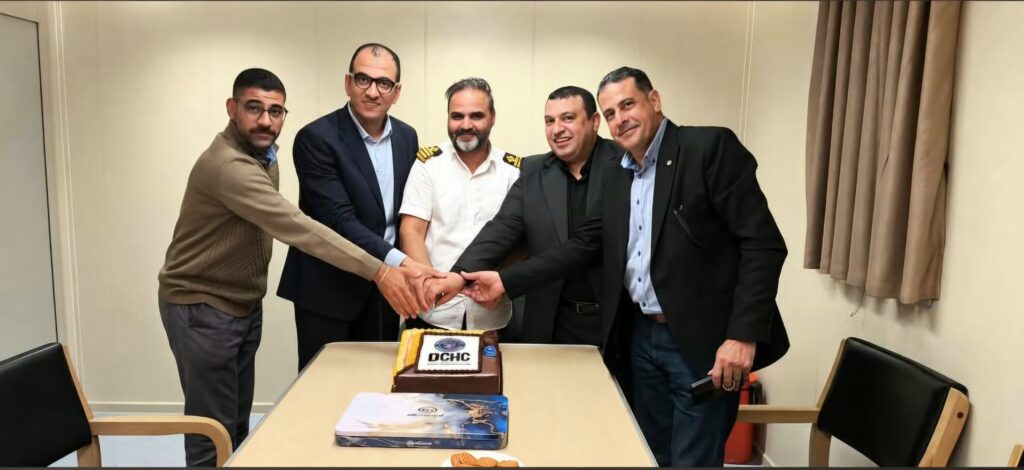
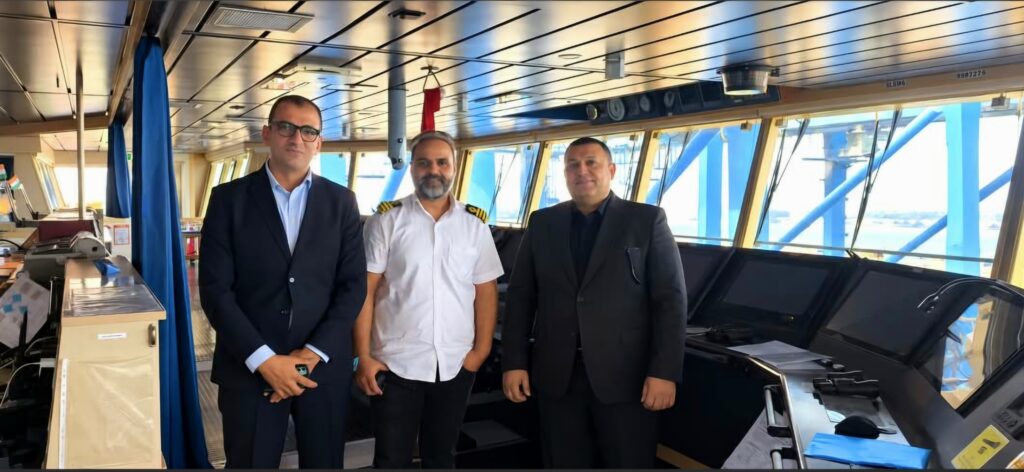
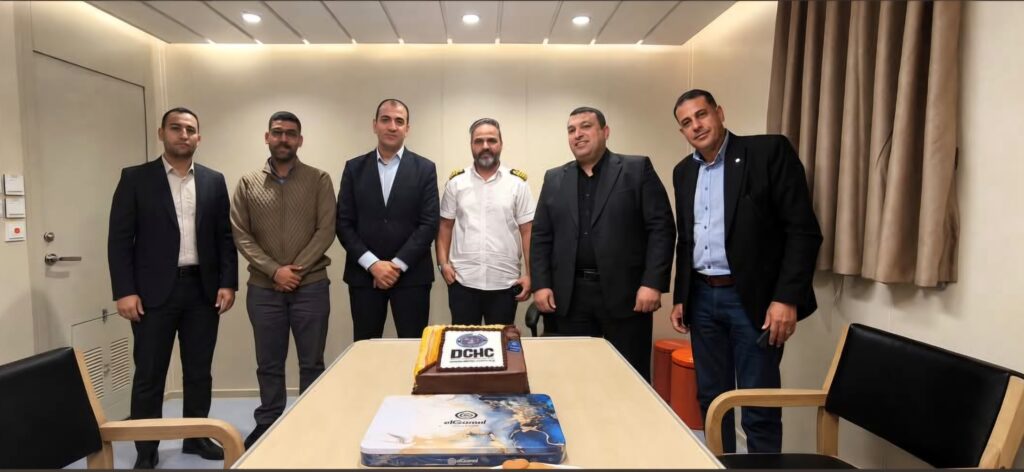
    To mark the occasion, a delegation from Damietta Container & Cargo Handling Co. boarded the vessel and met with its master and crew. The visit formed part of the company’s efforts to maintain close communication and cooperation with shipping lines and the crews of vessels calling at the terminal.

    During the visit, the delegation conveyed greetings from Rear Admiral Dr. Rafik Galal, Executive Managing Director of DCHC, and the company’s employees. The delegation welcomed the arrival of MSC SIENA and the introduction of the new weekly service.

    The company described the inaugural call as an important addition to the terminal’s maritime service network, supporting its ongoing cooperation with MSC and efforts to expand container handling activities.

    DCHC Highlights Infrastructure and Large-Vessel Handling Capabilities

    Commenting on the new service, Rafik Galal said the introduction of HIMALAYA represents an important development in the terminal’s shipping network.

    He emphasized that DCHC continues to focus on developing its services and maximizing the use of its operational capabilities and modern infrastructure. These efforts are intended to keep pace with changes in vessel sizes and the evolving operational requirements of international shipping lines.

    Galal also highlighted the continued expansion of MSC’s services at Damietta Container Terminal as evidence of the strong cooperation between the two companies.

    According to the executive managing director, the terminal’s ability to accommodate and operate services involving larger container vessels supports its efforts to attract more shipping connections and increase container throughput.

    He added that expanding the terminal’s service portfolio would contribute to strengthening DCHC’s competitiveness and supporting its position as a regional hub for container handling in the Eastern Mediterranean.

    The company views the continued development of its maritime services as an important part of its strategy to enhance operational performance and attract additional container traffic.

    Supporting Egypt’s Maritime Transport and Logistics Strategy

    DCHC stated that its efforts to expand international shipping connections form part of wider initiatives to develop Egypt’s maritime transport and logistics sector.

    The company linked its service expansion and infrastructure development activities to the directives of Egypt’s Minister of Transport, Kamel El-Wazir, and the government’s vision of positioning Egypt as a regional and global hub for maritime transport, logistics services and transshipment trade.

    Within this framework, DCHC continues working to strengthen the capabilities of Damietta Container Terminal and expand its relationships with international shipping lines.

    The addition of HIMALAYA, following the recently introduced EMUSA service, reflects the ongoing development of MSC’s operational presence at the terminal.

    Through these new services, Damietta Container & Cargo Handling Co. aims to increase container handling volumes, improve the utilization of its facilities and strengthen its competitive position within the Eastern Mediterranean container shipping market.

    Source: Damietta Container & Cargo Handling Co.

  • MSC Extends Piracy Risk and Suez Canal Surcharges to More Mediterranean and North African Ports

    Shipping Arabia, October 11, 2026 – Mediterranean Shipping Company (MSC) has announced an extension of its piracy risk surcharge and Suez Canal surcharge to additional destinations across the Mediterranean and North Africa. The expanded charges will take effect on October 19, 2026, and remain applicable until further notice, bringing the combined surcharges to $91 per TEU on affected shipments originating in Asia.

    MSC attributed the decision to continuing piracy risks around the Arabian Peninsula. According to the carrier, these risks continue to affect vessel operations and shipping routes, prompting the expansion of surcharge coverage to additional destinations.

    MSC Piracy Risk Surcharge and Suez Canal Charges

    Under the revised geographical coverage, MSC will apply two separate surcharges to shipments moving from Asia to the specified destinations.

    The piracy risk surcharge will amount to $55 per TEU, while the Suez Canal surcharge will be $36 per TEU. Together, the two charges total $91 per TEU.

    Both surcharges will apply from October 19, 2026, and remain in effect until MSC issues further notice.

    The announcement expands the geographical application of the charges across several Mediterranean and North African markets, covering a range of container shipping destinations.

    Eastern Mediterranean and North African Ports Included

    The MSC piracy risk surcharge extension covers all shipments originating in Asia and destined for Derince in Turkey and West Port Said in Egypt.

    Beyond these Eastern Mediterranean destinations, the carrier has expanded coverage to numerous ports across North Africa.

    The affected North African destinations include Agadir, Algiers, Annaba, Béjaïa, Benghazi, Casablanca, Al Khums, Misrata, Nador, Oran, Skikda, Tripoli and Tunis.

    These locations form part of the wider geographical extension announced by MSC for its piracy risk and Suez Canal surcharges.

    Western Mediterranean, Adriatic and Other Destinations

    The expanded surcharge coverage also includes several major container shipping destinations in the Western Mediterranean and Adriatic regions.

    Among the Spanish destinations covered are Alicante, Barcelona, Cartagena, Málaga and Valencia. The extension also includes Arrecife de Lanzarote, Las Palmas, Puerto del Rosario and Santa Cruz de Tenerife in the Canary Islands.

    In Italy, the affected destinations include Ancona, Augusta, Bari, Cagliari, Civitavecchia, Genoa, Gioia Tauro, La Spezia, Livorno, Naples, Palermo, Pozzallo, Ravenna, Salerno, Trapani and Venice.

    Additional destinations include Fos-sur-Mer in France, Marsaxlokk in Malta, Bar in Montenegro, Durrës in Albania and Ploče in Croatia.

    The expanded list extends the application of the charges across a broad network of ports serving Mediterranean, North African and Adriatic container shipping markets.

    Surcharges to Remain Effective Until Further Notice

    MSC confirmed that the expanded charges will apply from October 19, 2026, with no specified expiration date.

    The decision extends the application of the piracy risk and Suez Canal surcharges to additional shipments originating in Asia and moving to the designated destinations.

    For affected cargo, the combined charge of $91 per TEU will remain applicable until the shipping line announces a further revision.

    Source: Al Mal

  • MSC Far East Freight Rates Updated for Europe, Mediterranean and North Africa

    Shipping Arabia, October 7, 2026 – MSC Far East freight rates will be updated from October 19, 2026, covering shipments from ports across the Far East to Northern Europe, the Mediterranean, North Africa and the Black Sea. The new Freight All Kinds (FAK) rates will remain valid until further notice, but no later than October 31, 2026.

    The scope of origin covers all Far East ports, including those in Japan, South Korea and Southeast Asia. MSC has set different rates for 20-foot and 40-foot containers across the covered destination regions.

    MSC Far East Freight Rates to Europe and the Mediterranean

    For shipments from the Far East to Northern Europe, MSC has set the new FAK rate at $3,150 for a 20-foot container and $4,500 for a 40-foot container.

    West Mediterranean destinations will carry rates of $3,750 for a 20-foot container and $4,500 for a 40-foot container. The same rates will apply to Adriatic ports.

    For the East Mediterranean, MSC has set rates at $3,800 for a 20-foot container and $4,800 for a 40-foot container.

    Shipments from the Far East to Black Sea ports will be priced at $3,900 for a 20-foot container and $5,000 for a 40-foot container.

    North Africa Rates Cover Algeria, Libya, Morocco and Tunisia

    MSC’s updated pricing also covers several North African markets, with rates varying by destination.

    For Algeria, the new freight rate will be $5,550 for a 20-foot container and $6,900 for a 40-foot container. Shipments to Libya will be priced at $5,500 for a 20-foot container and $6,500 for a 40-foot container.

    For Morocco, via Casablanca, MSC has set rates of $4,550 for a 20-foot container and $5,500 for a 40-foot container.

    Tunisia-bound cargo will carry rates of $5,550 for a 20-foot container and $6,500 for a 40-foot container.

    These rates form part of the broader MSC Far East freight rates update taking effect on October 19 across the covered European, Mediterranean, Black Sea and North African destinations.

    Fuel, Emissions and Suez Canal Surcharges

    In addition to the announced FAK rates, MSC specified a series of surcharges applicable to the covered shipments.

    The Global Fuel Surcharge for October 2026 will be $253 per TEU. An Emission Control Area surcharge of $15 per TEU will apply to Mediterranean destinations and selected destinations in Northern Europe.

    For other destinations in the Nordic and Baltic countries, the Emission Control Area surcharge will be $52 per TEU.

    MSC will also apply a carbon-related surcharge of $20 per TEU. Carbon review charges will amount to $88 per TEU for Northern Europe and $128 per TEU for the Mediterranean.

    Services transiting the Suez Canal will additionally be subject to a piracy risk surcharge of $55 per TEU and a Suez Canal surcharge of $36 per TEU.

    The revised pricing structure takes effect on October 19, with the announced rates valid until further notice and, at the latest, through October 31, 2026.

    Source: Al Mal News

  • MSC Introduces Regional Cost Recovery Surcharge on Europe–Middle East Cargo

    Shipping Arabia, October 6, 2026 – Mediterranean Shipping Company (MSC) has introduced a Regional Cost Recovery surcharge on cargo moving from Europe to the Middle East, covering the United Arab Emirates and the Upper Gulf. MSC attributed the measure to continued demand growth on the trade.

    The MSC Regional Cost Recovery surcharge took effect on October 1, 2026, based on the booking date, and will remain in force until further notice.

    MSC set the surcharge at $1,000 for both 20-foot and 40-foot dry containers. For refrigerated cargo, the charge rises to $2,000 for either 20-foot or 40-foot reefer containers.

    MSC Regional Cost Recovery Surcharge Targets Europe–Middle East Trade

    The new charge applies to shipments moving from Europe to Middle Eastern markets covered by the announcement, specifically the UAE and the Upper Gulf region. The carrier introduced the measure as demand continues to grow on the trade route.

    The surcharge structure differentiates between dry and refrigerated equipment while applying the same amount regardless of whether the container is 20 feet or 40 feet within each equipment category. Dry containers face a $1,000 charge, while reefers are subject to $2,000.

    Himalaya Express Expanded to Red Sea and Saudi Ports

    The surcharge announcement follows an expansion of MSC’s Himalaya Express service in August. The carrier extended the service linking the Indian Subcontinent with Europe, the Red Sea and other markets, including a call at Gioia Tauro.

    The expanded network added King Abdullah Port and Jeddah in Saudi Arabia, as well as Abu Qir in Egypt. MSC also adjusted the service rotation to include Turkey.

    According to maritime consultancy DynaLiners, vessels operating the service will not transit Bab el-Mandeb. Instead, they will continue routing via the Cape of Good Hope.

    The published rotation is Valencia, Barcelona, Gioia Tauro, Abu Qir, King Abdullah Port, Jeddah, Aliaga, Valencia, Sines, Las Palmas, Colombo, Nhava Sheva, Mundra, Vizhinjam, Las Palmas, Sines and Valencia.

    Source: Al Mal

  • Libya Advances PTS E-Logistics System at Tripoli and Khoms Ports

    Shipping Arabia, September 30, 2026 – Libya Trade Network and the Libyan Ports Company are advancing the PTS e-logistics system at the ports of Tripoli and Khoms, including further development and operational testing for the electronic transfer of shipment data in XML format.

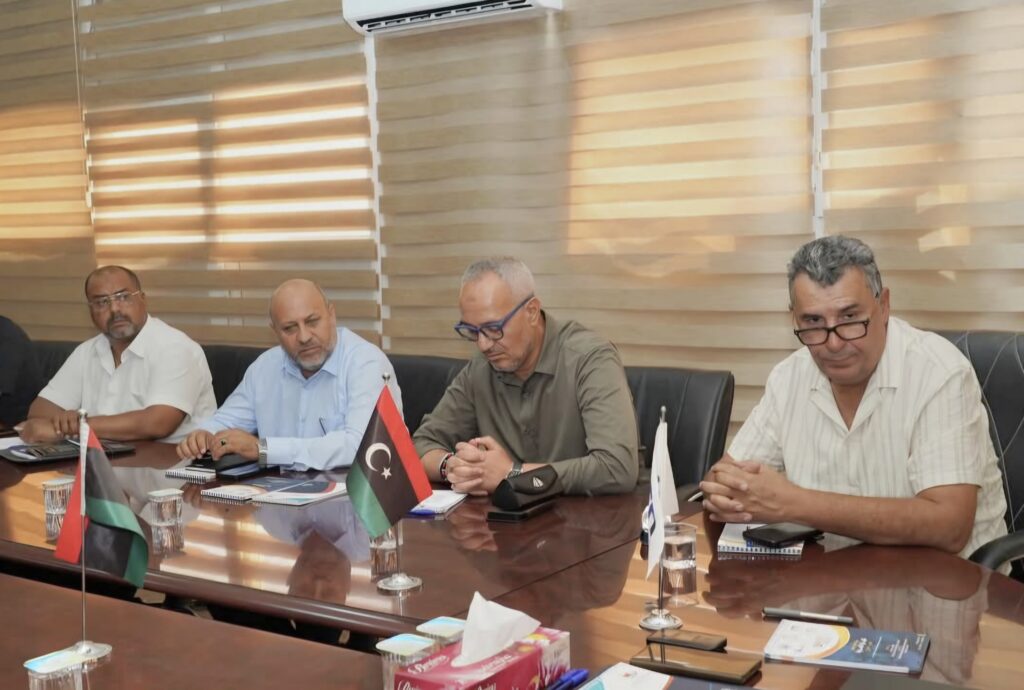
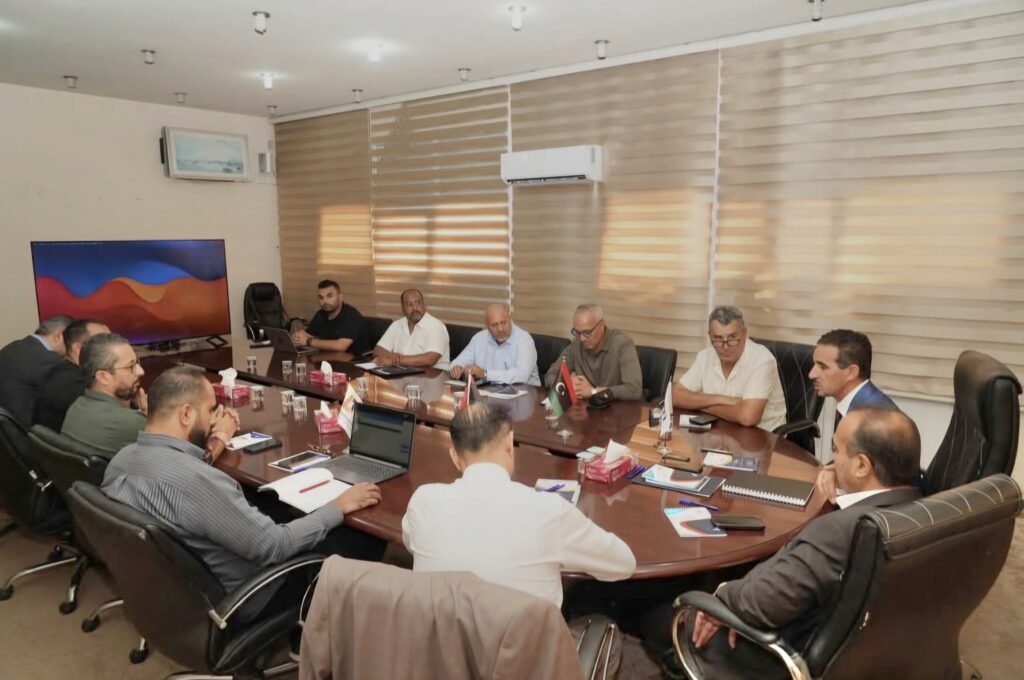
    The latest steps were discussed during a meeting held on September 23 at Libya Trade Network headquarters with representatives of scheduled shipping companies operating in Libya. The meeting focused on observations and questions raised by shipping companies regarding the unified trade system, known as PTS, and arrangements to strengthen data exchange through its logistics sector.

    The chairmen of Libya Trade Network and the Libyan Ports Company attended the meeting, alongside representatives of shipping agencies serving MSC, CMA and Messina. Delegates from both Libya Trade Network and the Libyan Ports Company also participated.

    Shipping Companies Review PTS E-Logistics System

    Participants received a detailed presentation on the PTS platform and its operating procedures. The discussion covered the submission of vessel arrival notifications and cargo manifests, as well as the exchange and connection of data between the relevant parties.

    The system is intended to support foreign trade movements and accelerate logistics processes at Libyan ports by improving the flow of information between stakeholders involved in vessel and cargo handling.

    Shipping company representatives were invited to present their observations and questions about using the platform. The meeting also provided an opportunity to exchange proposals aimed at improving working procedures and the quality of services provided through the system.

    Discussions focused on supporting smoother cargo movement and addressing challenges encountered by companies and other users interacting with the platform.

    XML Cargo Data Exchange Moves Toward Wider Implementation

    A key outcome of the meeting was confirmation that development work and operational testing will continue for transmitting shipment data in XML format through PTS.

    The process is being developed according to the requirements of shipping agencies. Participants confirmed that implementation will be completed at the ports of Tripoli and Khoms.

    The parties also agreed to arrange for the Libyan Ports Company to issue a circular concerning the process once the required arrangements are completed.

    The XML-based exchange forms part of the wider effort to strengthen electronic integration between the parties involved in port and shipping operations and improve the handling of cargo-related information through the unified trade system.

    Continued Coordination With Shipping Stakeholders

    The meeting formed part of efforts to strengthen communication with partners and users of the PTS platform. Libya Trade Network and the Libyan Ports Company used the session to receive direct feedback from shipping companies operating regular services in the country.

    Participants also stressed the importance of continuing periodic meetings with all relevant parties. The aim is to support common interests, improve coordination and strengthen integration between stakeholders involved in Libya’s maritime trade and logistics processes.

    Representatives attending the meeting included shipping agencies associated with MSC, CMA and Messina, together with officials from Libya Trade Network and the Libyan Ports Company.

    The continuing development of the PTS e-logistics system at Tripoli and Khoms is centered on improving electronic cargo-data exchange, refining operating procedures and supporting more efficient logistics processes at Libya’s ports.

    Source: Libya Trade Network

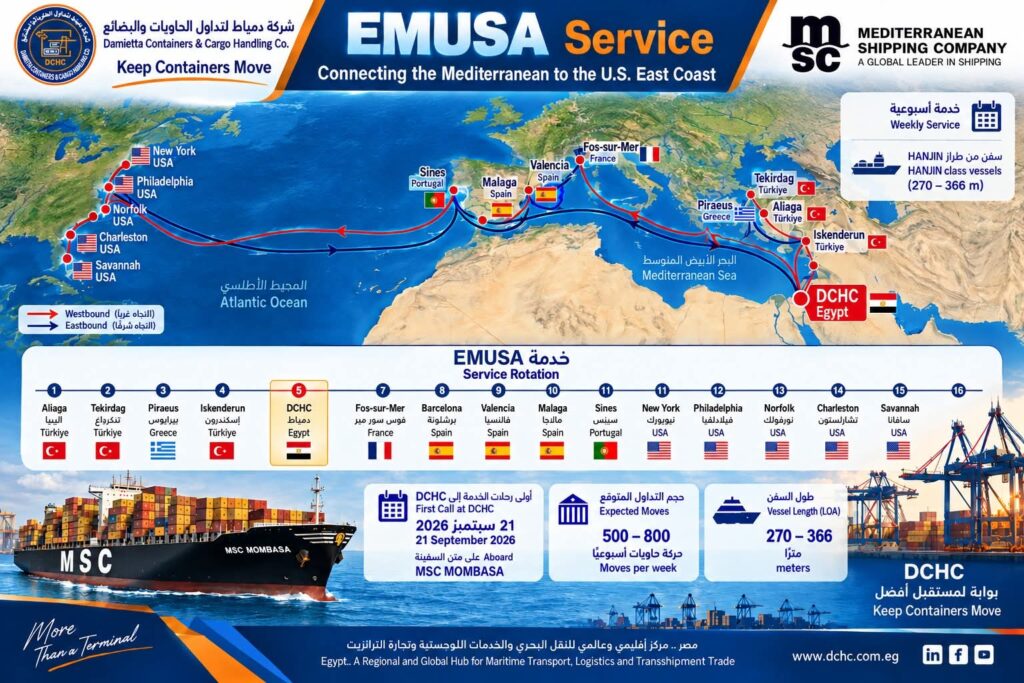
  • Damietta Container Terminal Adds MSC EMUSA Weekly Service

    Shipping Arabia, September 28, 2026 – Damietta Container & Cargo Handling Co. has added MSC’s EMUSA service to its weekly schedule, strengthening maritime connectivity between the Eastern Mediterranean, Europe and the United States.

    The agreement with MSC Mediterranean Shipping Co. will see the EMUSA service call at the terminal every week. The development forms part of the company’s efforts to diversify its maritime and logistics services and attract additional global shipping lines and liner services.

    Damietta Container & Cargo Handling Co. said it continues to pursue commercial and operational initiatives aimed at expanding the range of services calling at the terminal. The company is supporting those efforts with its infrastructure, operational capabilities and capacity to handle large vessels in line with the requirements of global shipping lines.

    MSC MOMBASA Marks First EMUSA Call

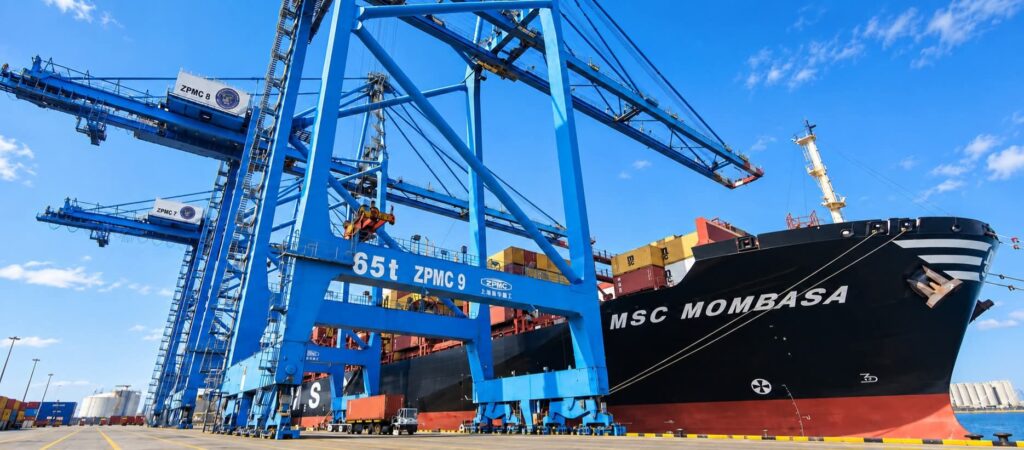
    The first EMUSA service call took place on Monday, September 21, 2026, when MSC MOMBASA berthed at Container Berth No. 1.

    Adm. Dr. Rafik Galal Ibrahim, CEO of Damietta Container & Cargo Handling Co., said the call marked the start of weekly EMUSA operations at the terminal and represented a new addition to its network of liner services.

    He said the new service would support the company’s efforts to increase handling volumes and broaden cooperation with major global shipping lines.

    Terminal Records Strong Vessel Productivity

    Operations on MSC MOMBASA began at 3:30 a.m. on September 21 and were completed at 11:00 p.m. the same day.

    The terminal deployed ship-to-shore gantry cranes for the operation and recorded average productivity of around 27 container moves per crane per hour. Overall vessel productivity reached approximately 85 containers per hour.

    The company said the results reflected the terminal’s operational efficiency and its ability to achieve vessel-handling performance levels that meet the requirements of international shipping lines.

    Expanding Damietta’s Liner Service Network

    Damietta Container & Cargo Handling Co. said it will continue its marketing and operational efforts to attract additional maritime services.

    The company said its infrastructure and operational capabilities support its ability to receive large vessels and meet the evolving requirements of global carriers. It also linked the expansion of its service network to efforts to strengthen its competitiveness and its role in container handling across the Eastern Mediterranean.

    The development comes in implementation of directives from Egypt’s Minister of Transport, Kamel El-Wazir, and in line with the national vision of strengthening Egypt’s position as a regional and global center for maritime transport, logistics services and transit trade.

    Source: Damietta Container & Cargo Handling Co.

Back to top button