Suez Canal Container Shipping Capacity Exceeds 50% of Pre-Crisis Levels for First Time
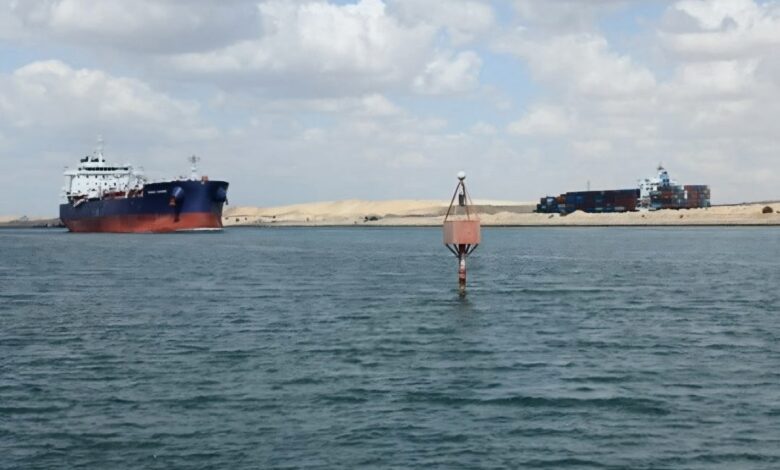
Shipping Arabia, October 17, 2026 – Suez Canal container shipping capacity has exceeded half of its pre-Red Sea crisis levels for the first time, reaching its highest level since maritime disruptions began. The recovery follows a series of routing decisions by major container shipping lines, which have accelerated their return to the canal after nearly three years of widespread diversions around the Cape of Good Hope.
According to BIMCO, citing data from Clarksons Research, average weekly container vessel capacity transiting the Suez Canal reached 753,000 TEUs during the first two weeks of October 2026. This compares with 1.46 million TEUs during the corresponding period in 2023, before the Red Sea disruptions significantly affected international shipping routes.
The latest figures indicate a substantial recovery in container shipping activity through the waterway, although transit capacity remains below its pre-crisis level.
Suez Canal Container Shipping Share Rises to 36%
BIMCO reported that 36% of container shipping capacity routed through either the Suez Canal or the Cape of Good Hope used the canal during the first two weeks of October.
This represents a considerable improvement from the average of just 8% recorded between 2024 and mid-2026. However, the figure remains significantly below the approximately 80% share recorded before the Red Sea attacks disrupted shipping operations.
The increase reflects a gradual shift back toward the Suez Canal as container shipping lines revise their service networks. Nevertheless, the figures show that a substantial proportion of capacity continues to operate via the Cape of Good Hope.
Major Shipping Lines Accelerate Return to Suez Canal
The recovery in Suez Canal container shipping began accelerating in July 2026, when Maersk and Hapag-Lloyd announced that their AE15/SE3 Asia–Mediterranean service would return to the canal.
Additional adjustments subsequently followed within the Gemini Cooperation network. Meanwhile, members of the Ocean Alliance and Premier Alliance, together with Mediterranean Shipping Company (MSC), announced revised vessel routings.
According to BIMCO, container shipping lines have announced routing changes affecting a total of 16 services since the beginning of July 2026.
These developments have contributed to the recovery in container vessel capacity transiting the Suez Canal, bringing more services back to the waterway after an extended period of diversions.
The recovery has also become more balanced between northbound and southbound sailings.
During the third quarter of 2026, northbound container shipping capacity represented approximately 75% of southbound capacity. That proportion increased to 81% during the first two weeks of October, indicating a narrowing difference between the two sailing directions.
Return to Shorter Routes Could Affect Global Container Capacity
Beyond the increase in canal transits, the return of container shipping services to shorter routes could have significant implications for global vessel capacity and the balance between shipping supply and demand.
BIMCO estimates that widespread diversions around the Cape of Good Hope increased global demand for container shipping capacity by approximately 10%.
The longer routes required additional vessel capacity to maintain shipping operations. However, as more services return to the Suez Canal, the additional capacity demand associated with those diversions is declining.
Niels Rasmussen, Chief Shipping Analyst at BIMCO, highlighted the scale of this change, explaining that the approximately 10% increase in global container shipping capacity demand caused by Suez Canal diversions is now reversing rapidly.
This development could influence the availability of container vessels as shipping lines progressively restore services through the canal.
However, BIMCO cautioned that congestion at Asian ports could delay the full impact of shorter shipping routes on vessel availability and the overall balance between global container shipping supply and demand.
Suez Canal Recovery Remains Incomplete
Despite the improvement recorded during the first half of October, container shipping activity through the Suez Canal has not returned to its pre-disruption levels.
The increase to 753,000 TEUs in average weekly transit capacity, together with the recovery in the canal’s share of container shipping routes, demonstrates the progress made since shipping lines began adjusting their networks in July.
Nevertheless, the comparison with 2023 highlights the remaining gap between current traffic and the levels recorded before the Red Sea crisis.
The latest BIMCO figures therefore point to a continuing recovery in Suez Canal container shipping, while confirming that the industry’s return to its traditional routing patterns remains incomplete.
Source: Al Mal