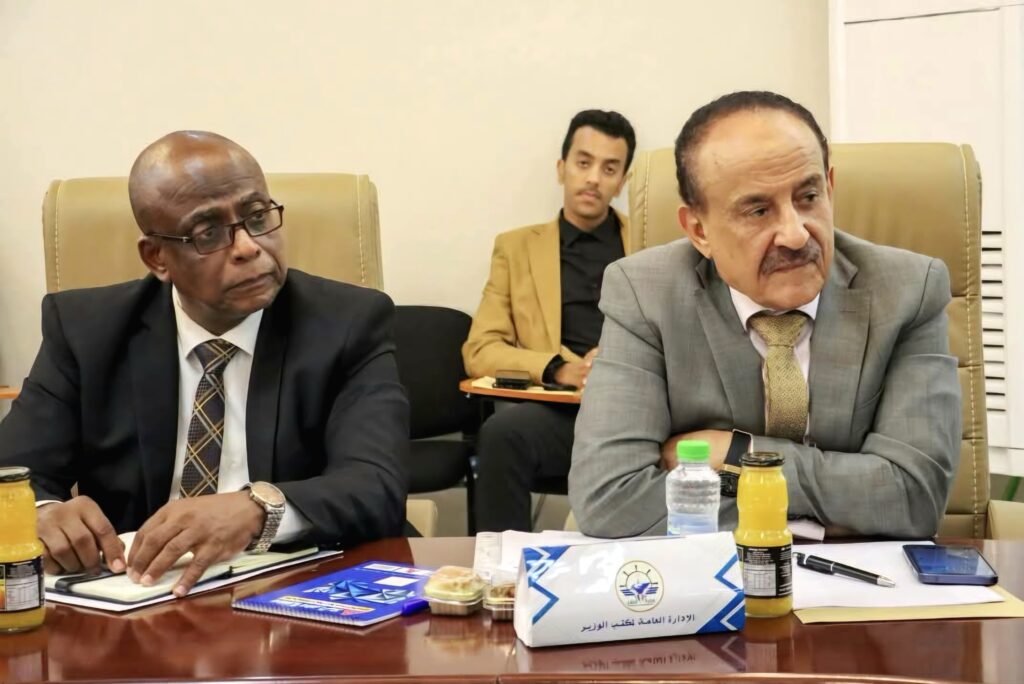
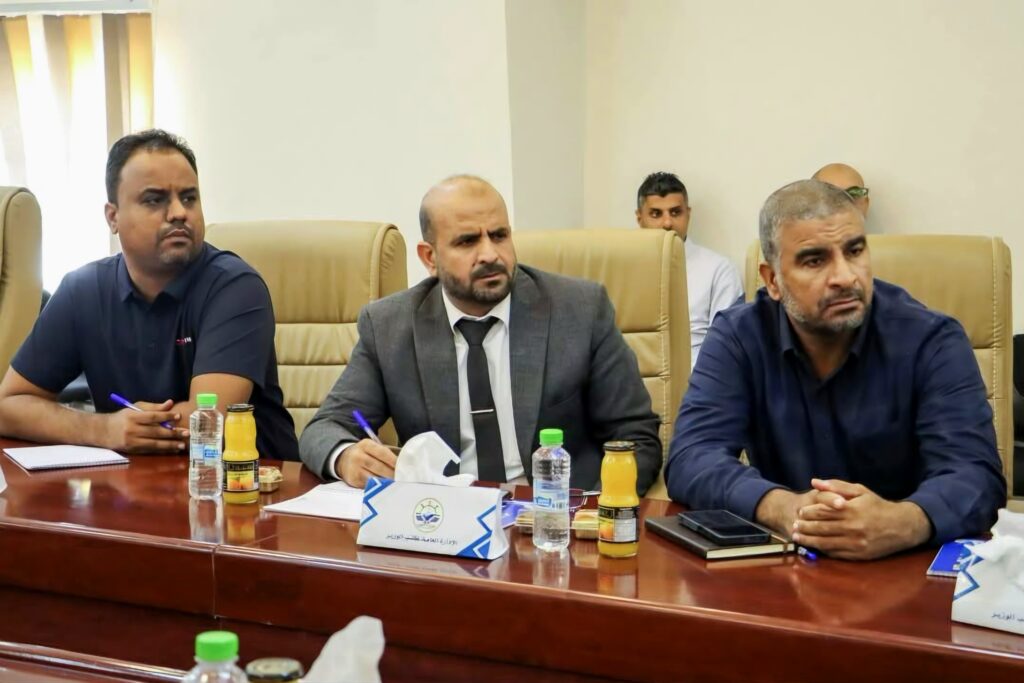
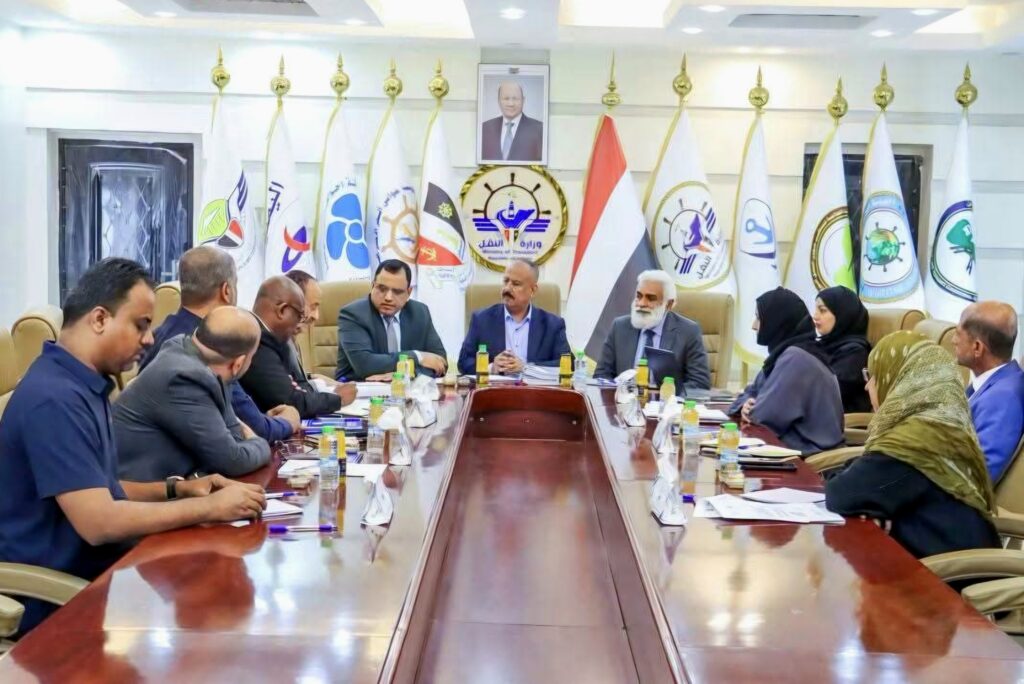
Shipping Arabia, October 29, 2026 – The General Company for Ports of Iraq (GCPI) and Germany’s international cooperation agency GIZ have discussed plans to advance modern port management in Iraq through improved management strategies, institutional capacity building and workforce development.
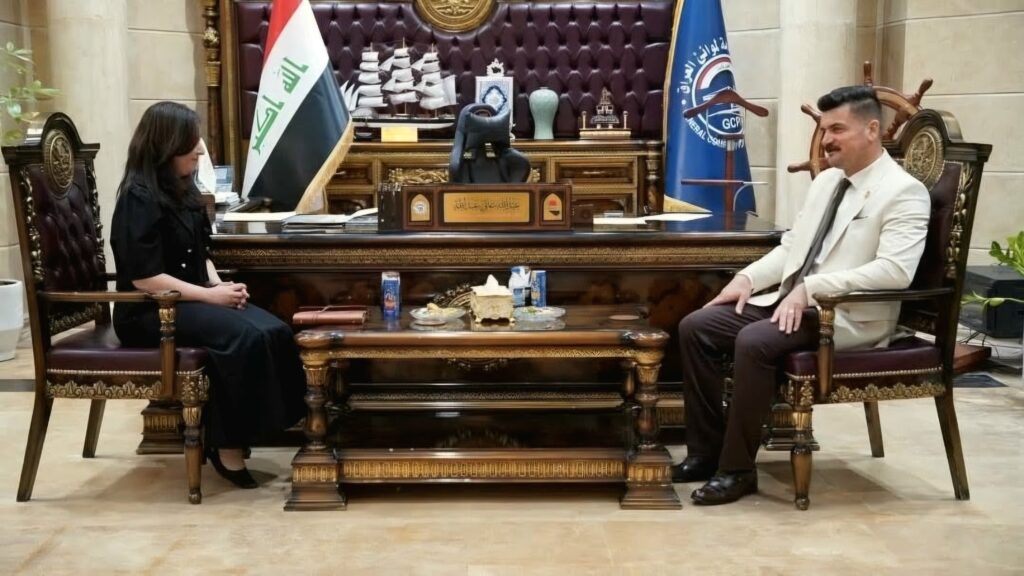
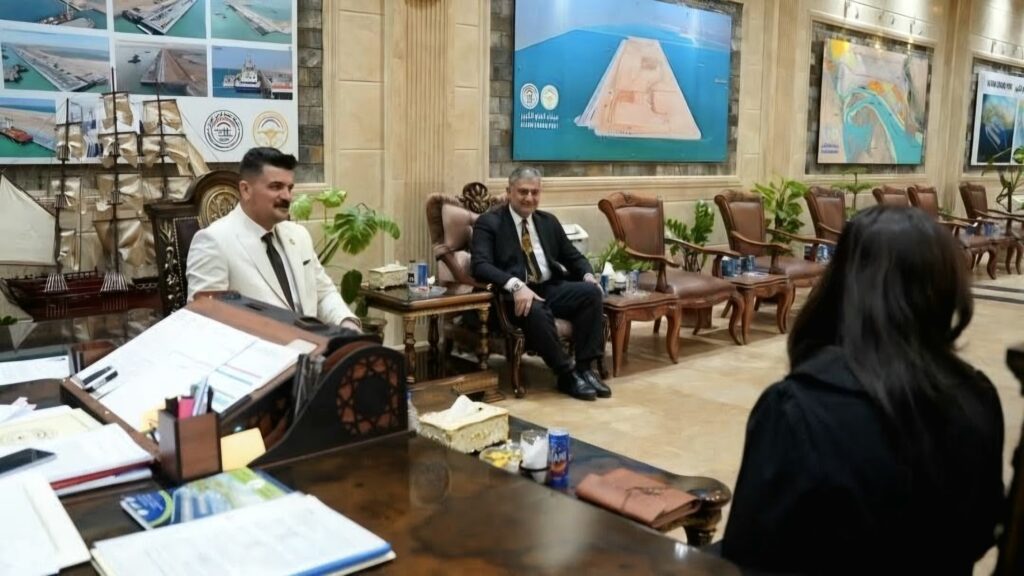
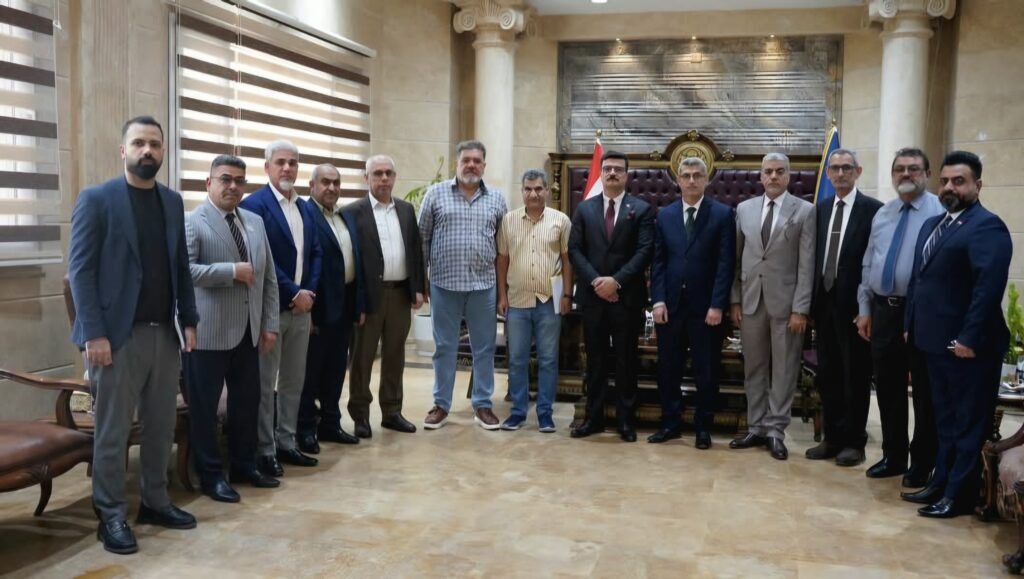
GCPI Director General Chief Engineer Abdullah Ati Abdullah received an official delegation from the Deutsche Gesellschaft für Internationale Zusammenarbeit (GIZ) to explore opportunities for cooperation. The discussions focused on strengthening port administration, improving operational efficiency and developing the capabilities of technical and administrative personnel.
Modern Port Management Strategies and Training Programs
During the meeting, the GIZ delegation delivered a detailed presentation outlining proposed plans and future cooperation programs with GCPI. The initiatives would focus on developing modern port management strategies aligned with international standards.
The proposals also included advanced programs for training, qualifying and developing technical and administrative personnel. These programs aim to strengthen professional capabilities and support improvements in port management and operational performance.
The discussions highlighted the importance of combining modern management practices with structured workforce development. Both areas formed central elements of the proposed cooperation between GCPI and GIZ.
International Expertise and Institutional Development
Abdullah reaffirmed GCPI’s commitment to drawing on international expertise and adopting modern technologies and port management practices. He emphasized that strengthening institutional capabilities requires continued investment in workforce skills and professional development.
The director general identified human capital development as a fundamental pillar of GCPI’s efforts to improve performance. He also stressed the importance of establishing a sustainable development roadmap to support the advancement of Iraq’s port sector.
For its part, the GIZ delegation welcomed GCPI’s institutional readiness and development vision. Representatives also reaffirmed the agency’s commitment to providing comprehensive advisory and training support to improve operational efficiency and port administration.
The proposed cooperation places modern port management in Iraq alongside workforce development as complementary priorities, with both organizations focusing their discussions on strengthening the company’s operational and administrative capabilities.
Source: Iraqi Ministry of Transport and General Company for Ports of Iraq
Shipping Arabia, October 27, 2026 – Grand Faw Port construction has reached advanced stages, with Iraq reporting 98% completion of the immersed tunnel, 100% completion of breakwater works and 94% progress on infrastructure development. The General Company for Ports of Iraq (GCPI) has also installed the first navigation buoy in the port’s approach channel, marking another step toward preparing the facility for vessel traffic and future trial operations.
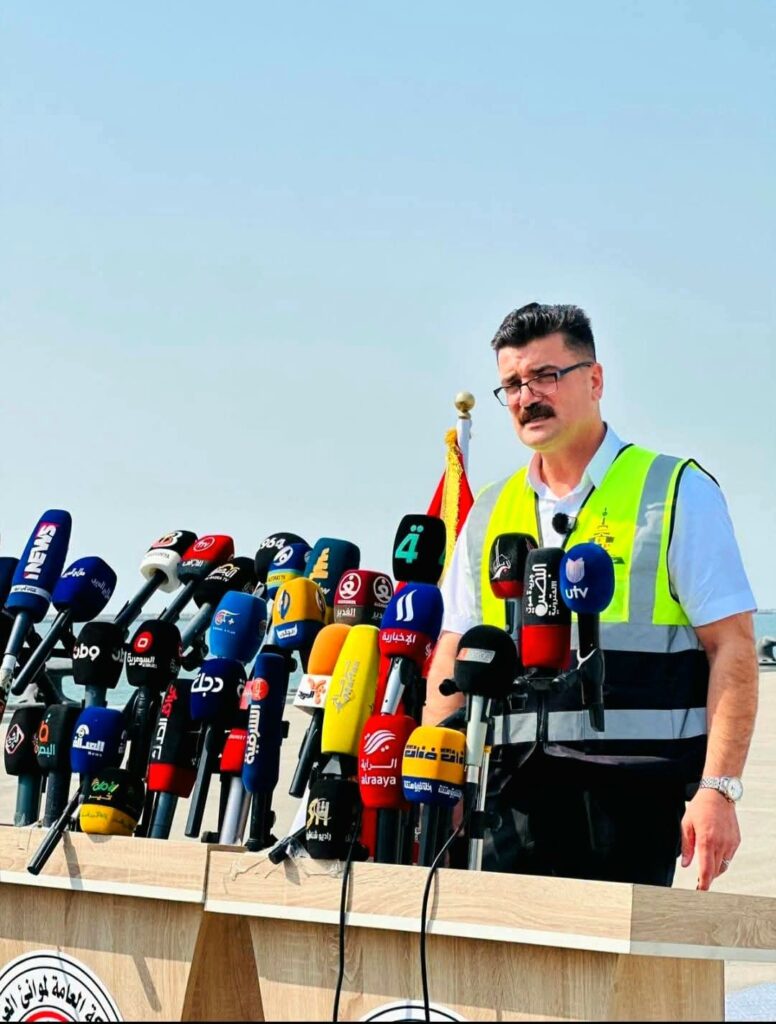
GCPI Director General Abdullah Ati Abdullah announced the construction milestones during a press conference. He confirmed that work continues across the port’s major infrastructure projects, with preparations advancing for the next development phases.
The latest progress reflects ongoing efforts to complete one of Iraq’s major strategic infrastructure projects, which aims to strengthen maritime transport and trade activity.
Grand Faw Port Construction Reaches Key Milestones
According to Abdullah, the immersed tunnel has reached 98% completion, while construction of the port’s breakwater has been completed. Infrastructure development has also advanced to 94%, bringing several major project components closer to completion.
The director general emphasized that construction activities remain ongoing with support from Iraq’s prime minister and Minister of Transport Wahab Al-Hassani. He also acknowledged the efforts of technical and engineering personnel and the companies executing the projects.
With major infrastructure works approaching completion, attention is shifting toward the next stage of development. Abdullah indicated that this phase will focus on constructing the superstructure of the port’s berths.
He also stated that trial operations are expected during the coming period as GCPI continues preparations for the port’s operational development.
First Navigation Buoy Installed in Approach Channel
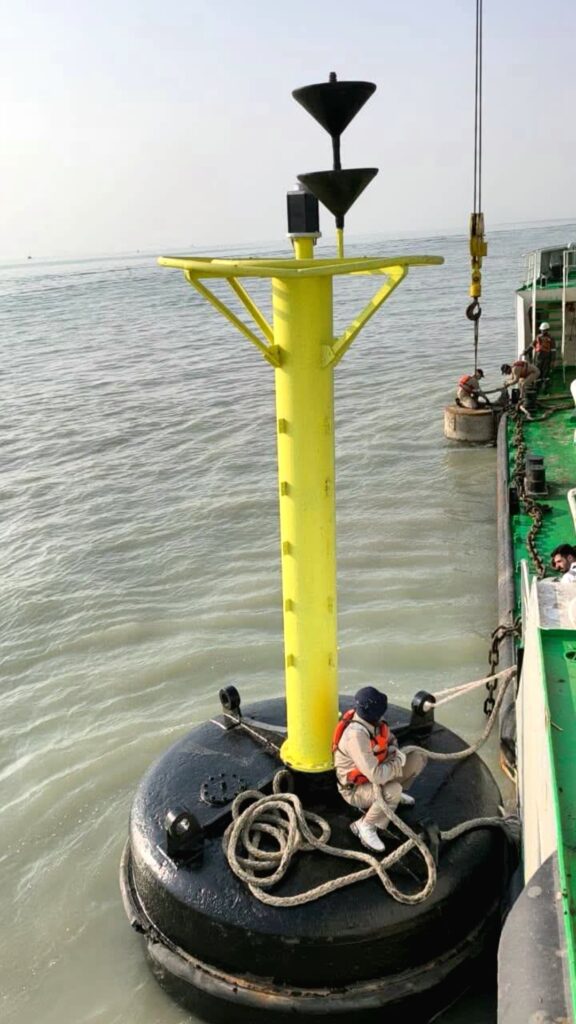
In a separate development, GCPI announced the successful installation of the first navigation buoy in Grand Faw Port’s approach channel. The installation forms part of the ongoing work to prepare the waterway for maritime navigation and vessel arrivals.
Minister of Transport Wahab Al-Hassani confirmed that the milestone coincides with progress across several major projects associated with the port. He highlighted the completion of the breakwater and the advanced construction stages of the immersed tunnel and infrastructure works.
GCPI Director General Abdullah Ati Abdullah described the first buoy installation as the beginning of efforts to equip the navigation channel with advanced maritime safety and navigational guidance systems.
Technical and engineering teams are continuing work to install the remaining navigation buoys and associated systems. These activities are intended to meet maritime navigation requirements and prepare the channel to receive vessels.
The company is also continuing work on other project requirements as it prepares for the transition toward trial operations.
Iraqi Ports Address Regional Maritime Challenges
Alongside the Grand Faw Port construction updates, Abdullah addressed the impact of the Strait of Hormuz crisis on maritime traffic in the region.
He acknowledged that the situation has affected regional shipping activity, creating challenges for maritime operations.
Nevertheless, Abdullah emphasized that Iraqi ports are continuing efforts to increase cargo handling and storage activities. He also indicated that work remains underway to support a gradual recovery in port operations.
The developments at Grand Faw Port remain an important part of Iraq’s broader maritime infrastructure priorities. With the immersed tunnel and other major works approaching completion, GCPI is continuing preparations for the next construction stages, navigational readiness and eventual trial operations.
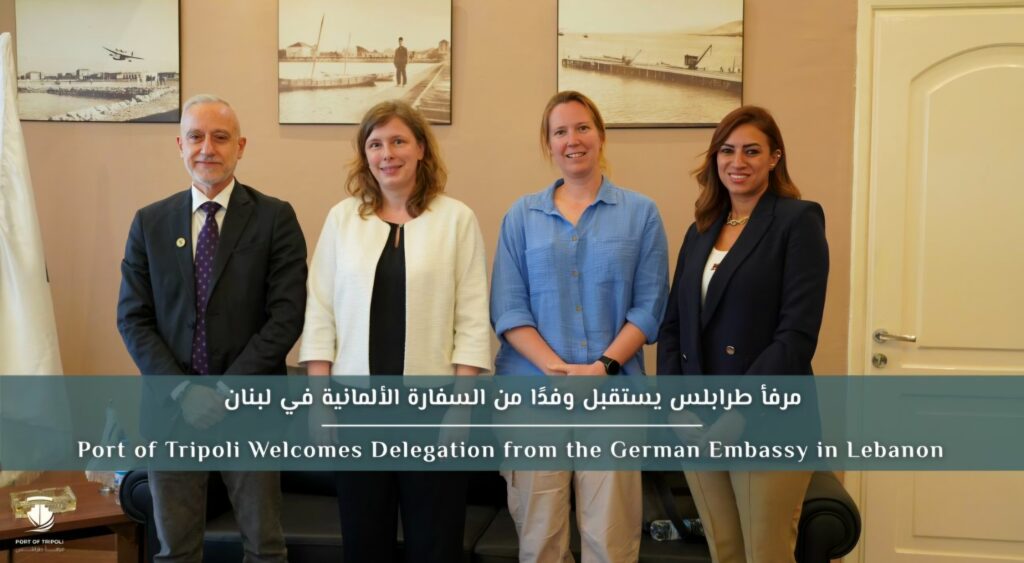
Shipping Arabia, October 27, 2026 – Lebanon’s Port of Tripoli is exploring opportunities to attract German investment and strengthen maritime and logistics cooperation with Germany. The initiative follows a visit by senior representatives of the German Embassy in Lebanon to discuss potential partnerships, infrastructure development and private sector engagement.
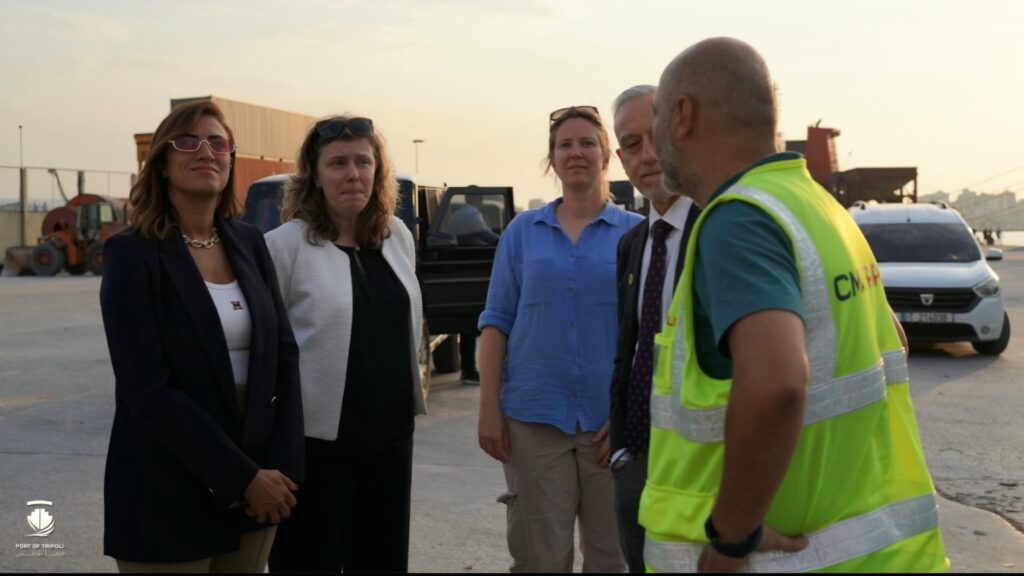
The port welcomed Yasmin Raya, Deputy Head of Mission at the German Embassy, and Caroline Tiurat, Director of the Cultural and Economic Section. Their visit focused on identifying areas of mutual cooperation and strengthening engagement with German businesses and institutions.
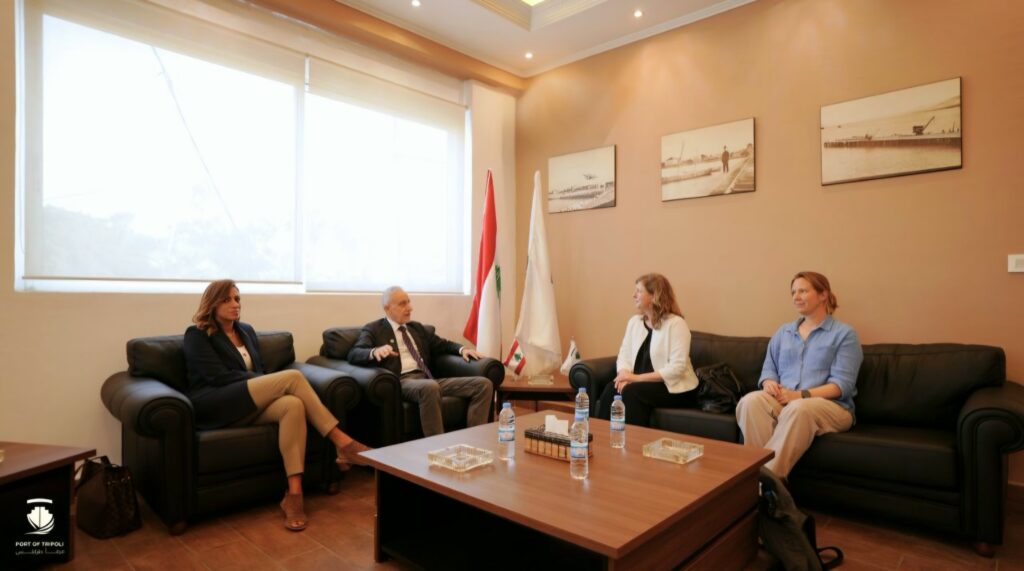
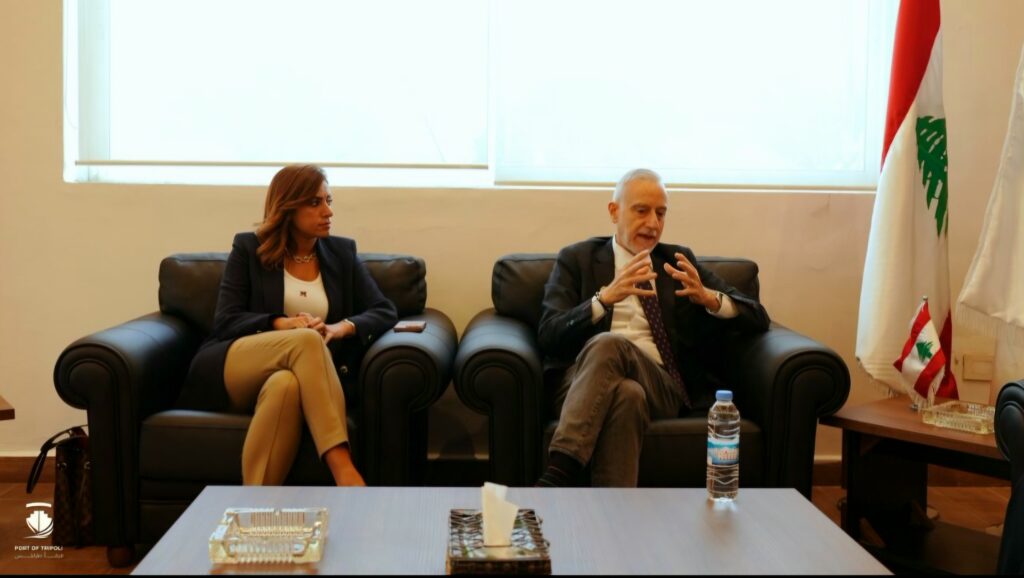
During the meeting, port officials presented their strategic vision, development priorities and key initiatives planned over the short, medium and long term. They also highlighted the port’s potential to serve as a strategic maritime and logistics gateway, supporting economic development in Tripoli and Lebanon.
German Investment and Technical Cooperation Opportunities
Discussions explored several avenues for cooperation between the Port of Tripoli and the German private sector. These included technical assistance, knowledge exchange, capacity building, investment and potential operational partnerships.
Particular attention was given to opportunities for German companies to participate in the port’s development activities. The discussions also addressed ways to strengthen private sector engagement and encourage interest in future maritime and logistics projects.
A key priority was establishing direct communication channels with German companies and relevant institutions. These connections would help raise awareness of the port’s ongoing developments, upcoming projects, investment opportunities and future tenders.
By improving communication with potential German partners, the port aims to increase the visibility of its development plans and create opportunities for cooperation across maritime operations, logistics and infrastructure.
German Delegation Tours Port of Tripoli Terminals
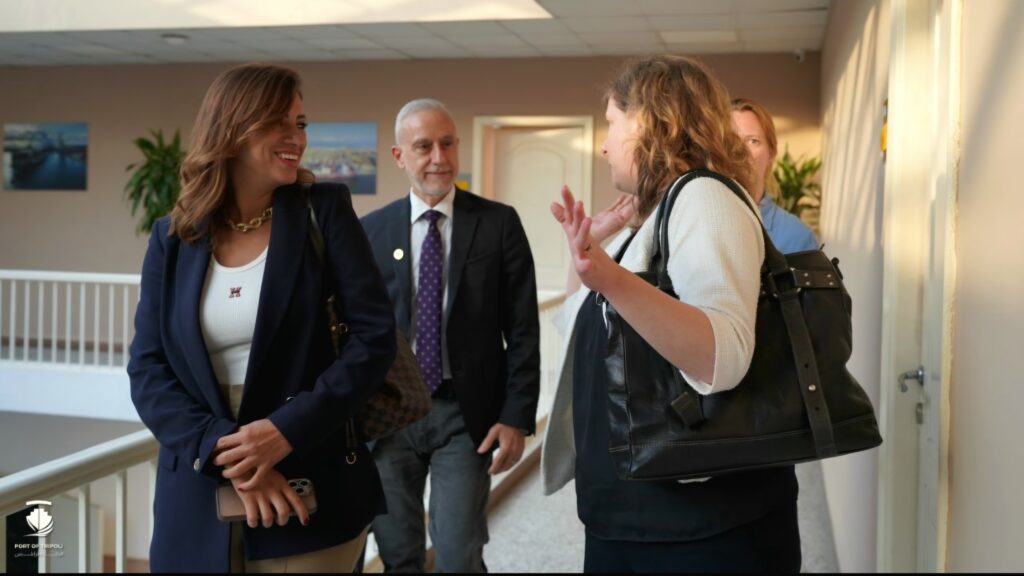
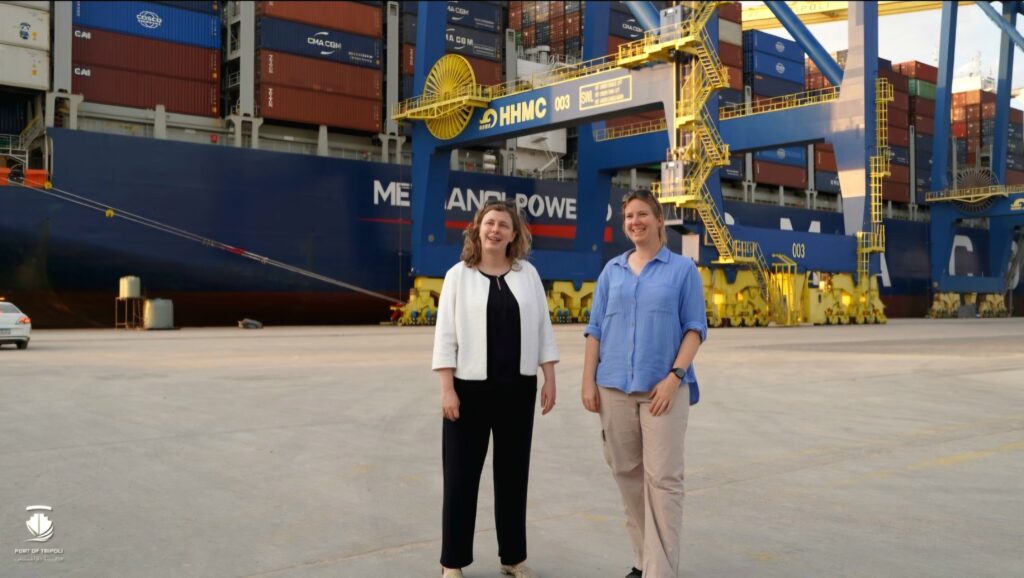
Following the discussions, the German delegation conducted a field visit to three major facilities at the Port of Tripoli: the Passenger Terminal, General Cargo Terminal and Container Terminal.
The tour provided an opportunity to examine the port’s existing infrastructure and gain a better understanding of its operational capabilities. It also allowed the delegation to assess the facilities and explore their potential for future development and cooperation.
The terminal visits complemented the strategic discussions by providing firsthand exposure to the port’s maritime operations and infrastructure.
The visit forms part of the Port of Tripoli’s efforts to develop relationships with international partners and promote its maritime and logistics potential.
Port officials expressed interest in building on the discussions and exploring further cooperation with German businesses and institutions. Potential areas of engagement include maritime services, logistics activities, infrastructure development and operational opportunities.
The Port of Tripoli aims to use this engagement to support its development priorities while strengthening its potential contribution to economic activity in Tripoli and Lebanon.
Shipping Arabia, October 26, 2026 – Alexandria Port Authority has signed a memorandum of understanding (MoU) with Hassan Allam Utilities and Al Tarek Capital Real Estate Asset Management to study the establishment, development and operation of an integrated Dekheila Port logistics hub covering 273,008 square meters in the port’s western hinterland.
The proposed facility will serve as a regional and international center for distribution, re-export and value-added logistics services. It forms part of Egypt’s strategy to strengthen its position as a regional hub for transport, logistics and transit trade while expanding private-sector participation in port development and investment.
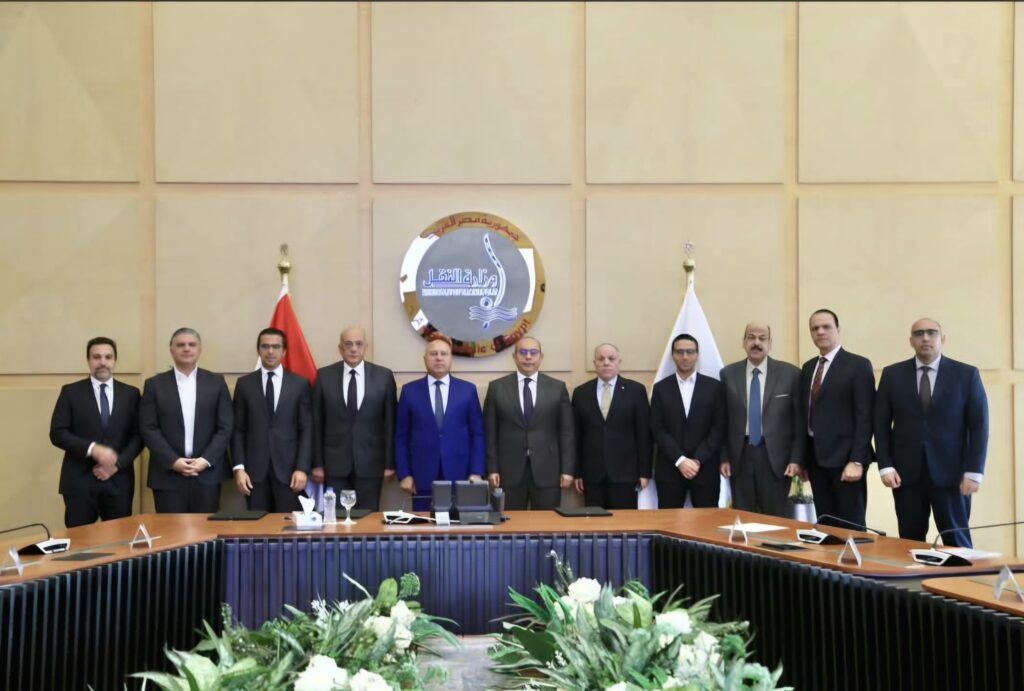
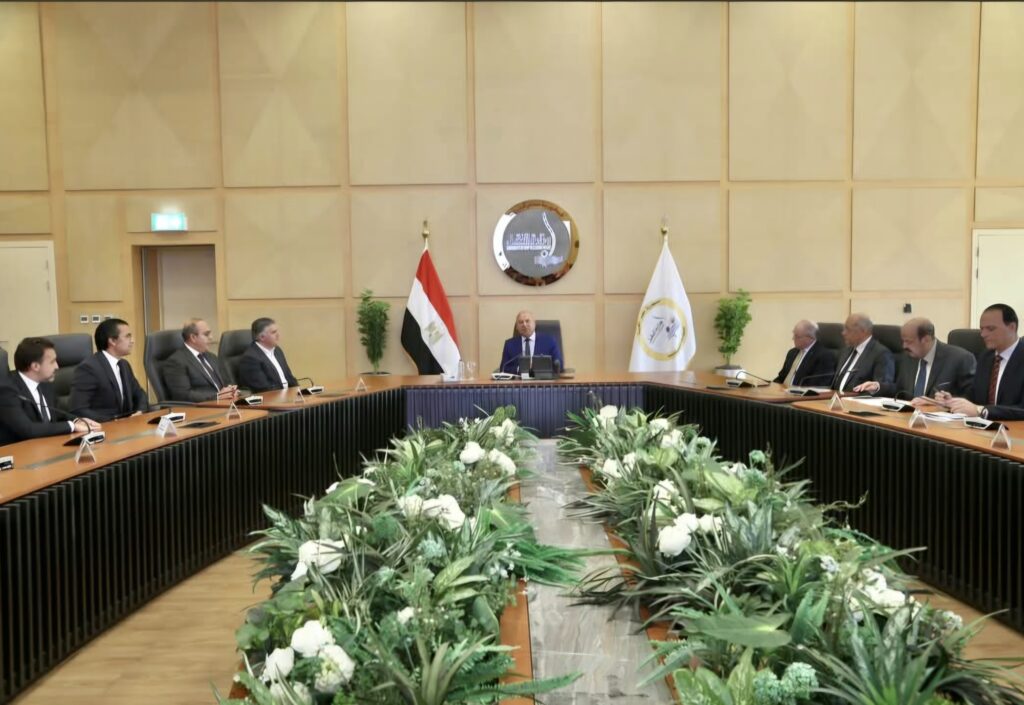
Egypt’s Minister of Transport, Kamel El-Wazir, witnessed the signing ceremony, which brought together senior government officials and representatives of Hassan Allam Holding. The project is intended to strengthen Dekheila Port’s competitiveness and support its role as a regional trade and logistics gateway in the Eastern Mediterranean.
Dekheila Port Logistics Hub to Provide Integrated Services
The proposed Dekheila Port logistics hub will combine cargo handling and storage operations with distribution, re-export and other value-added activities. The project aims to create an integrated platform that supports trade movements and provides additional services for cargo passing through the port.
According to the Ministry of Transport, the planned facility will offer warehousing, cargo handling, distribution, re-export, final product preparation and light industrial activities. These services are intended to generate added value for traded goods while improving the efficiency of logistics operations.
The project will also seek to improve services available to exporters and importers, attract new investments and increase regional and international cargo flows through Dekheila Port.
By integrating logistics and industrial activities with port operations, the development is expected to support Egypt’s participation in international supply chains and provide businesses with wider opportunities to access regional and global markets.
The planned facility will occupy 273,008 square meters within the western hinterland of Dekheila Port, providing space for the proposed range of logistics, distribution and value-added services.
Ministry of Transport Advances Port Development Strategy
El-Wazir said the agreement supports directives from President Abdel Fattah El-Sisi to establish Egypt as a regional center for transport, logistics and transit trade while maximizing the advantages of the country’s strategic geographic location.
The minister explained that the initiative forms part of the Ministry of Transport’s wider program to develop Egyptian ports, improve the utilization of their assets and operational capabilities, and expand cooperation with private-sector investors.
He emphasized that the proposed logistics center would create new investment opportunities at Dekheila Port and strengthen its ability to attract trade and logistics activities.
According to El-Wazir, developing integrated logistics centers represents one of the main pillars of the ministry’s strategy to maximize the economic contribution of Egyptian ports.
The strategy seeks to transform ports from facilities primarily focused on receiving vessels and handling cargo into integrated centers offering trade, distribution and logistics services.
The minister added that this approach would strengthen Egypt’s role as a regional transport and trade hub, particularly within the Eastern Mediterranean, while supporting sustainable economic development.
Following the signing, El-Wazir instructed the parties involved to intensify their meetings and accelerate preparations for a terms and conditions agreement. The agreement would establish the next contractual framework ahead of implementation of the proposed project.
Hassan Allam Highlights Port and Supply Chain Integration
Amr Allam, Co-CEO of Hassan Allam Holding and Chairman of Hassan Allam Utilities, described transport and logistics as central components of the group’s investment strategy.
He highlighted opportunities to strengthen integration between ports, distribution networks and industrial activities, explaining that closer coordination between these sectors could improve cargo movement efficiency and expand market access for businesses.
Allam said the proposed Dekheila Port logistics hub reflects this investment direction through its connection to the port and its planned provision of value-added logistics services.
He emphasized that combining maritime connectivity with distribution and industrial capabilities could contribute to more efficient and competitive supply chains.
According to Allam, the project also supports Egypt’s ambitions to become a regional center for transport, logistics and transit trade.
The proposed investment therefore aligns with Hassan Allam’s focus on infrastructure and logistics activities while supporting broader efforts to improve the integration of port services with commercial and industrial operations.
MoU Signed in Presence of Senior Transport Officials
The memorandum was signed by Rear Admiral Ehab Salah El-Din, Chairman of Alexandria Port Authority, and Amr Allam, Co-CEO of Hassan Allam Holding and Chairman of Hassan Allam Utilities.
The ceremony was attended by Nehad Shaheen, Deputy Minister of Transport for Maritime Transport; Ashraf El-Lozy, Assistant Minister for Authorities and Companies; and Mohamed Fathy, Head of the Central Administration for Investment and Assistant to the Minister for Maritime Transport.
Hassan Allam, Chairman and CEO of Hassan Allam Holding, also attended the signing ceremony.
The agreement establishes a basis for studying the proposed logistics development and defining the arrangements required for its establishment, development and operation.
The next phase will focus on discussions between the parties and the preparation of the terms and conditions agreement, as directed by the Minister of Transport.
The project represents another initiative within Egypt’s efforts to expand integrated logistics activities around its ports, encourage private-sector investment and strengthen the country’s position in regional and international trade and supply chains.
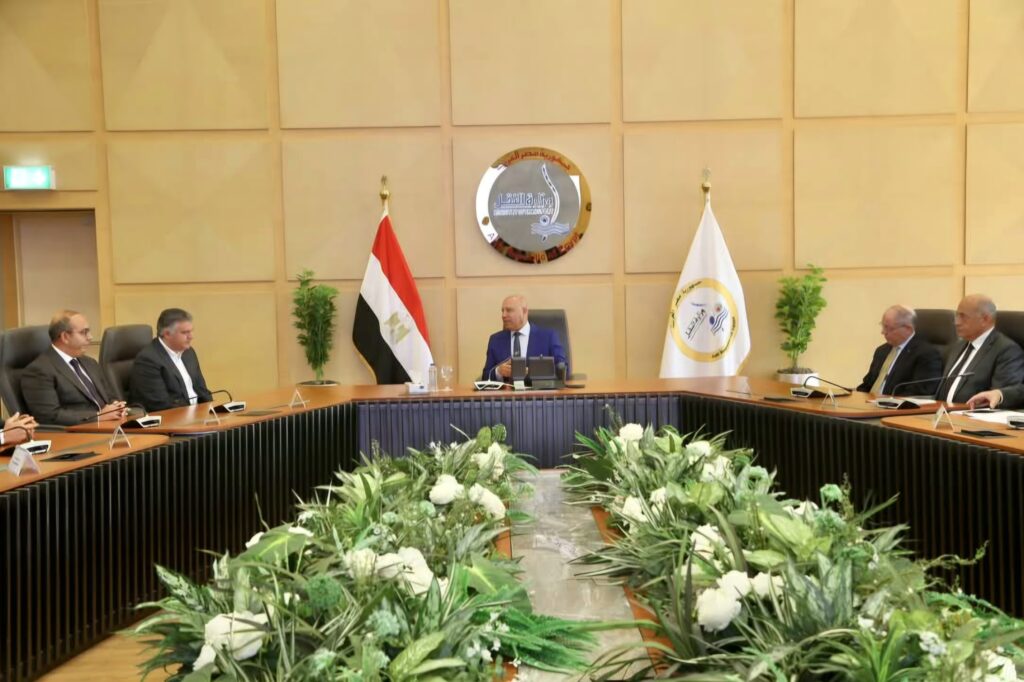
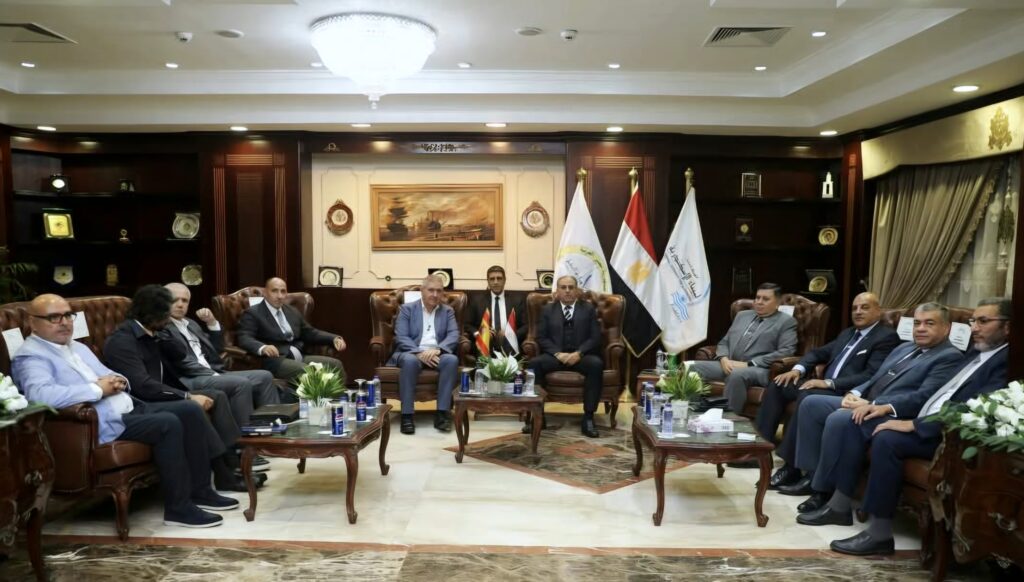
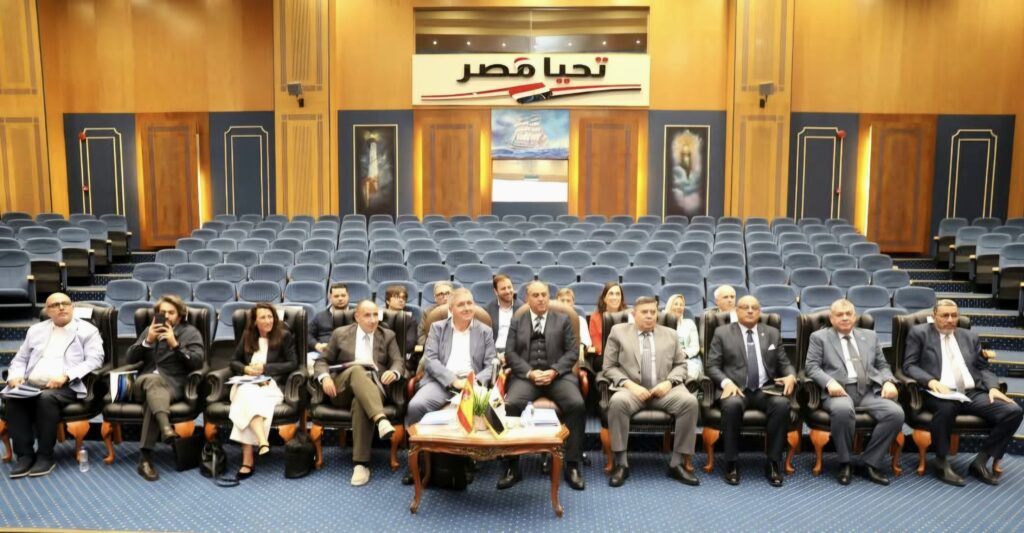
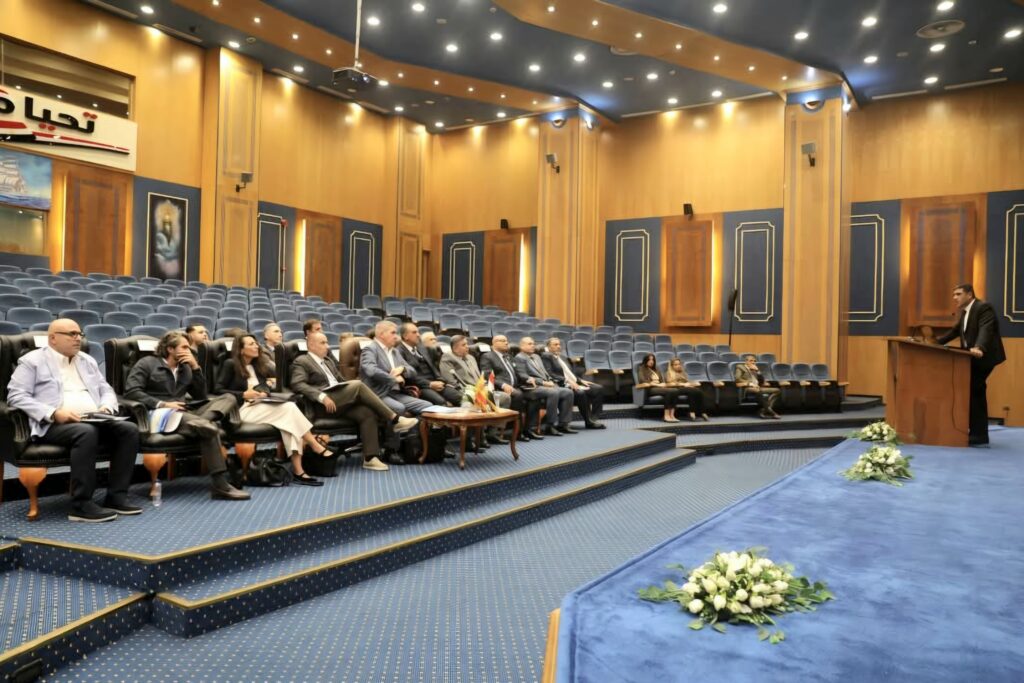
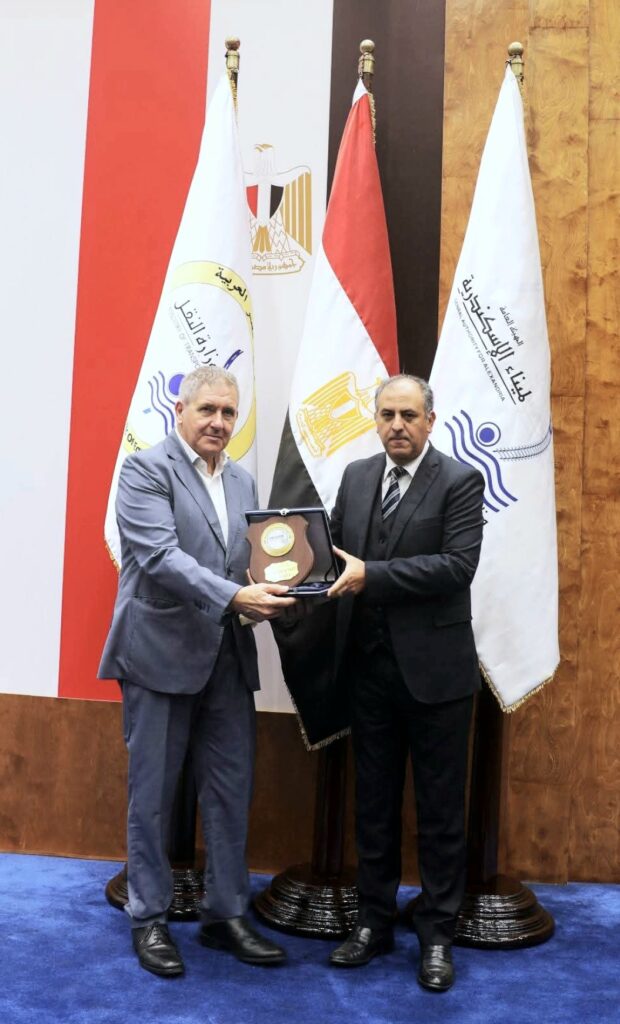
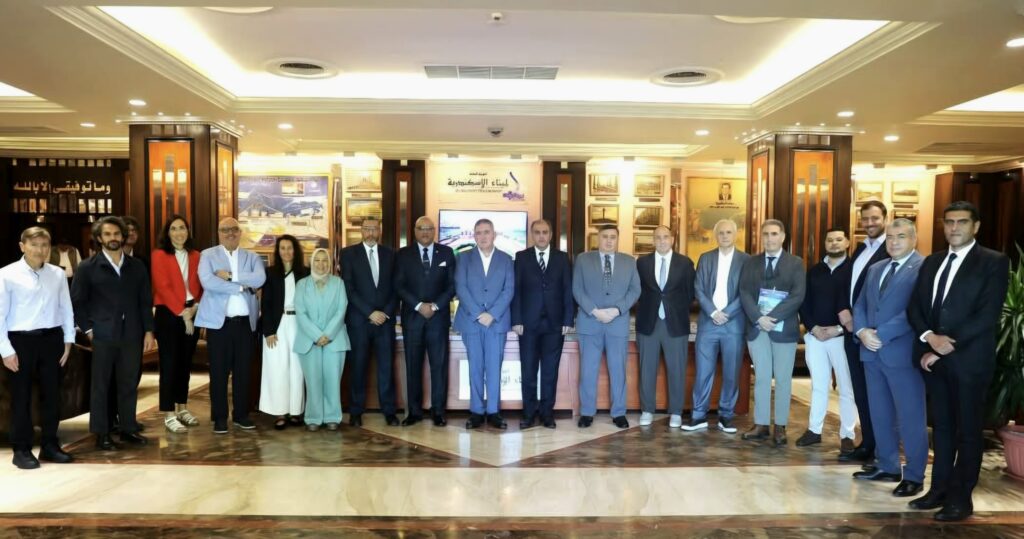
Shipping Arabia, October 26, 2026 – Alexandria Port Authority has held discussions with a Spanish delegation representing the Port of Barcelona, Barcelona Chamber of Commerce and Mercabarna to explore closer cooperation in maritime transport, trade, investment and logistics between Egypt and Spain. The talks included a proposal to establish a memorandum of understanding between Alexandria Port and the Port of Barcelona.
The meeting took place under the directives of Egypt’s Minister of Transport, Kamel El-Wazir, as part of efforts to strengthen Egyptian-Spanish relations and expand cooperation in maritime and logistics activities. Representatives of the Alexandria Chamber of Commerce and senior officials from Alexandria Port Authority also participated.
The authority’s Deputy Chairman for Operations welcomed the delegation on behalf of its Chairman, alongside the Deputy Chairman for Investment and other senior officials. During the meeting, the Egyptian side emphasized the longstanding relationship between Egypt and Spain and the importance of strengthening cooperation between ports and business institutions across the Mediterranean.
Alexandria Port and Port of Barcelona Discuss Potential Cooperation Agreement
A central topic of the discussions was the possibility of concluding a memorandum of understanding between Alexandria Port Authority and the Port of Barcelona. The proposed agreement would identify specific areas of cooperation, establish implementation mechanisms and support knowledge exchange between the two ports.
Egyptian officials emphasized the importance of building on existing cooperation with the Port of Barcelona and developing a more structured partnership. Such an arrangement would provide a framework for exploring joint initiatives and strengthening institutional ties between the Egyptian and Spanish maritime sectors.
The discussions also addressed opportunities to expand bilateral trade, exchange operational and logistics expertise, and identify potential joint projects. Both sides examined how closer coordination between port authorities and business organizations could support economic interests and strengthen logistics integration across the Mediterranean.
Spanish Business Institutions Explore Trade and Logistics Opportunities
The participation of the Barcelona Chamber of Commerce and Mercabarna extended the discussions beyond port-to-port cooperation to include wider commercial and logistics activities.
Participants explored ways to strengthen communication between maritime institutions and business organizations in both countries. They also discussed opportunities to leverage the operational and logistics capabilities of Egyptian and Spanish ports to facilitate trade flows, encourage investment and develop services supporting maritime transport and supply chains.
The talks highlighted the importance of connecting port operations with commercial activities and identifying opportunities for joint initiatives involving maritime and business stakeholders.
The involvement of representatives from the Alexandria Chamber of Commerce provided an additional platform for discussing trade and investment opportunities between Egyptian and Spanish business communities.
Alexandria Port Presents Development Projects and Future Plans
During the meeting, Alexandria Port Authority presented an overview of the port’s operational and logistics capabilities, ongoing development projects and future plans.
The presentation outlined the port’s development vision and examined opportunities for cooperation with Spanish partners. Discussions focused on strengthening Alexandria Port’s contribution to Egypt’s foreign trade and improving connections with regional and international markets.
Both sides also considered how the capabilities of Egyptian and Spanish ports could support closer commercial ties and create opportunities for cooperation in maritime transport, logistics and supply chain services.
Following the discussions, the Spanish delegation participated in a field tour of Alexandria Port, providing an opportunity to observe the port’s facilities and operations.
At the conclusion of the visit, both sides reaffirmed their commitment to maintaining coordination and developing the opportunities identified during the meeting. They also expressed their intention to translate the discussions into practical initiatives and joint projects that support trade, investment and stronger Egyptian-Spanish partnerships in maritime transport and logistics.
Shipping Arabia, October 24, 2026 – CMA Terminals, a subsidiary of CMA CGM Group, has completed the acquisition of a 49% stake in Nador Container Terminal (NCT), the concessionaire responsible for the western container terminal at Morocco’s Nador West Med port. The transaction establishes a new ownership structure for the facility, which is scheduled to begin operations in 2027.
Moroccan port operator Marsa Maroc confirmed the completion of CMA Terminals’ entry into the share capital of Nador Container Terminal following approval from the relevant regulatory authorities.
The transaction finalizes a partnership agreement signed between Marsa Maroc and CMA Terminals in October 2025. Both companies will participate in the container terminal through their respective shareholdings.
Marsa Maroc Retains Majority Ownership of Nador Container Terminal
Under the finalized ownership structure, Marsa Maroc retains a 51% stake in Nador Container Terminal, including the associated voting rights. Meanwhile, CMA Terminals holds the remaining 49% of the company’s share capital.
The arrangement gives Marsa Maroc majority ownership of the concessionaire while establishing CMA Terminals as a significant shareholder in the project.
Nador Container Terminal holds the concession for the western container terminal at Nador West Med, making the ownership transaction directly relevant to the development and future operation of the facility.
The completion of the acquisition follows the partnership agreement reached in October 2025 and the subsequent regulatory approval process.
Nador West Med Terminal Targets 1.8 Million TEU Annual Capacity
The western container terminal at Nador West Med is designed to handle approximately 1.8 million twenty-foot equivalent units (TEU) annually.
According to the project specifications, the facility will feature a 900-meter quay with a water depth of up to 18 meters. Its container storage and handling yard will cover approximately 37.5 hectares.
These specifications define the planned infrastructure of the terminal ahead of its scheduled entry into service.
The facility is expected to begin operations in 2027, marking the next major milestone following the completion of the ownership transaction.
With the acquisition finalized, CMA Terminals now holds 49% of Nador Container Terminal alongside Marsa Maroc, which maintains its 51% majority stake and voting rights. The two companies enter the next phase of the project under the ownership structure established by their October 2025 partnership agreement.
Shipping Arabia, October 22, 2026 – Oman’s Ministry of Transport, Communications and Information Technology has confirmed that the existing Port of Salalah investment agreements will not be renewed when they expire on November 1, 2028. The Ministry also announced that a new port operator will be named in the coming period, while port operations and development activities will continue under the current agreements until their expiry.
The announcement follows an official disclosure by Salalah Port Services Company SAOG, which confirmed receiving formal notification from the Ministry regarding the nonrenewal of its existing investment agreements.
According to the company, the Ministry’s decision is final and unconditional, confirming that the current contractual arrangements will end on their scheduled expiry date without renewal.
Port of Salalah Investment Agreements to Expire in 2028
Salalah Port Services disclosed that it had received an official letter from the Ministry confirming that the existing investment agreements would not be extended beyond November 1, 2028.
The company stated that its Board of Directors would review the notification and evaluate the potential implications and consequences of the decision for its business.
Salalah Port Services also confirmed that it would communicate with the relevant authorities as appropriate while assessing the situation. Furthermore, the company committed to disclosing any material developments related to the matter in accordance with applicable regulatory disclosure requirements.
The disclosure establishes the Ministry’s final position on the future of the existing investment agreements. However, the company has not provided details regarding the potential financial implications of the decision.
Ministry Confirms Continued Port Operations and Development
In a separate statement, the Ministry of Transport, Communications and Information Technology emphasized that operations and development activities at the Port of Salalah would continue throughout the remaining contractual period.
The Ministry explained that these activities form part of its commitment to expanding and developing the port while ensuring the continuity of its operations under the existing agreements.
Accordingly, operational and development activities will continue until November 1, 2028, when the current investment agreements are scheduled to expire.
The Ministry’s confirmation clarifies that the nonrenewal decision does not affect the continuation of port operations and development during the remaining term of the agreements.
New Port Operator to Be Announced
The Ministry also confirmed that it would announce the operator responsible for the Port of Salalah following the expiry of the current agreements.
Although the decision establishes that the existing investment arrangements will not continue beyond November 2028, the Ministry has not yet identified the future operator or provided further details about the subsequent operating arrangements.
Meanwhile, Salalah Port Services will assess the implications of the notification through its Board of Directors and engage with the relevant authorities where appropriate.
Neither the Ministry’s statement nor the company’s disclosure provided information on the identity of the next operator or the potential financial impact of the nonrenewal on Salalah Port Services.
For the remainder of the current contractual period, the Port of Salalah will continue operating and undergoing development under its existing agreements, while the Ministry prepares to announce the operator that will assume responsibility after their expiry.
Shipping Arabia, October 16, 2026 – Chief Engineer Abdullah Ati Abdullah has officially assumed his duties as Director General of the General Company for Ports of Iraq (GCPI), succeeding Capt. Alaa Al-Aqili. The leadership transition follows official orders issued by the relevant authorities.
Abdullah takes over the leadership of the company following a professional career within GCPI, where he progressed through various positions and gained engineering, administrative and management experience.
His appointment comes as the company continues its efforts to develop Iraq’s maritime transport sector and advance strategic port infrastructure projects, particularly the Al Faw Grand Port project.
New Director General Brings Experience From Within GCPI
Abdullah has built his professional career within the General Company for Ports of Iraq, gaining experience across engineering and administrative responsibilities.
Throughout his career, he developed his technical and management capabilities while progressing through the company’s organizational structure.
He also served as an elected member of GCPI’s Board of Directors, having secured the confidence of company employees through an internal election.
His professional background and previous involvement in the company’s management provide experience relevant to his new responsibilities as Director General.
Al Faw Grand Port Remains a Key Strategic Project
The leadership transition comes amid expectations that the new Director General will contribute to the continued development of the General Company for Ports of Iraq and improvements in its performance.
The company plays an important role in supporting Iraq’s maritime transport and shipping activities, with ongoing development efforts aimed at strengthening the country’s port sector.
Among its major strategic initiatives, the Al Faw Grand Port project remains a central priority. The project was specifically highlighted in the announcement as one of the key developments expected to continue under the company’s new leadership.
The appointment carries expectations of maintaining progress on strategic projects and further developing the company’s activities. These efforts are intended to strengthen Iraq’s economic and commercial position through continued investment in its maritime and port sectors.
Source: Iraqi Ministry of Transport / General Company for Ports of Iraq
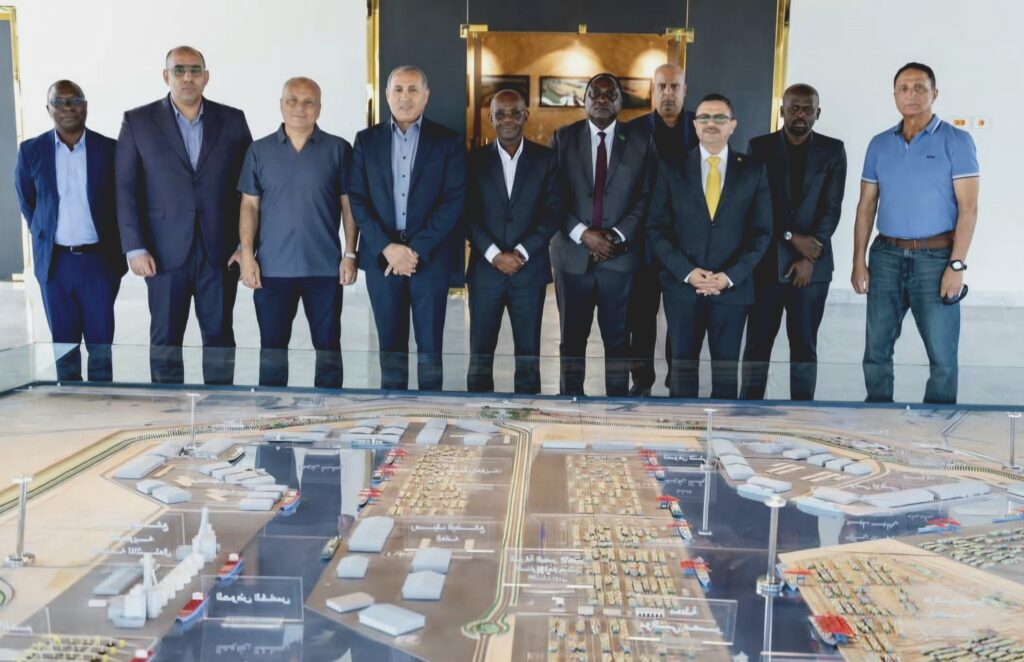
Shipping Arabia, October 16, 2026 – Egypt and Tanzania have explored opportunities for Sokhna–Dar es Salaam port cooperation to strengthen maritime transport, logistics connectivity and trade links between the two countries. The discussions took place during an official Tanzanian delegation’s visit to Sokhna Port, where both sides examined opportunities to expand transit trade and improve access to East African markets.
The delegation, led by Tanzania’s Minister of Transport, Prof. Makame Mbarawa, visited Sokhna Port, which operates under the Suez Canal Economic Zone (SCZONE). The visit focused on the port’s infrastructure development, operational capabilities and expanding role within Egypt’s multimodal transport network.
The Tanzanian delegation was received by Egypt’s Deputy Minister of Transport for Railways, the head of Sokhna Port’s Central Administration and the executive director of the Sokhna Port Development Project. Officials briefed the visitors on the port’s activities, operating terminals and ongoing infrastructure improvements.
Sokhna Port Expansion Strengthens Maritime and Logistics Capabilities
During the visit, Egyptian officials presented the major development and modernization projects undertaken at Sokhna Port. These investments aim to strengthen the port’s competitiveness and expand its ability to accommodate different vessel types and sizes.
The development program includes the addition of approximately 18 kilometers of quays, alongside cargo handling yards and logistics areas covering more than 9 million square meters. The project also involves extensive infrastructure improvements and the deepening of navigation channels, bringing water depths to 19 meters.
These upgrades are designed to enhance the port’s operational capabilities and its ability to handle a wider range of maritime traffic. The expansion of cargo handling and logistics facilities also supports Sokhna Port’s development as an integrated logistics hub serving international trade and investment.
The Tanzanian delegation also reviewed Sokhna Port’s connections with Egypt’s modern road network and high-speed electric railway project. The railway is designed to link Sokhna Port on the Red Sea with Alexandria Port on the Mediterranean, passing through industrial zones along the Sokhna–Alexandria Logistics Corridor.
This transport corridor is a key element of the port’s integration with Egypt’s wider multimodal logistics network. It aims to facilitate cargo movements between maritime gateways, industrial areas and inland transport infrastructure.
By combining maritime facilities with road and rail connectivity, the corridor is intended to strengthen Sokhna Port’s position as an integrated logistics center. It also supports the movement of goods, trade-related investment and the development of transit cargo operations.
The delegation received an overview of how these transport connections contribute to the port’s logistics capabilities and its role in facilitating trade flows.
Egypt and Tanzania Discuss Port Connectivity and East African Trade
A central focus of the visit was the potential for closer maritime and logistics cooperation between Egypt and Tanzania, particularly through connections between Sokhna Port and Tanzania’s Dar es Salaam Port.
The two sides discussed opportunities to establish stronger cooperation between the ports, with an emphasis on supporting bilateral trade and improving maritime transport and logistics links.
The proposed cooperation also aims to facilitate wider market access for products moving between Egypt and Tanzania. In addition, the discussions addressed opportunities to strengthen transit trade with East African countries through improved port and logistics connectivity.
The talks highlighted the potential role of Sokhna Port’s expanding infrastructure and multimodal transport connections in supporting future cooperation with Tanzania’s maritime sector.
The visit formed part of discussions aimed at identifying opportunities for practical cooperation in maritime transport and logistics, with particular attention to trade connectivity between Egypt, Tanzania and wider East African markets.
Shipping Arabia, October 15, 2026 – Yemen is accelerating preparations for the Qarma and Barum port projects in the Socotra Archipelago and Hadramout governorates, with government officials working to finalize technical, financial and administrative requirements ahead of tendering and construction.
The developments were discussed during a joint ministerial meeting at the Ministry of Transport headquarters in Aden. The meeting brought together Minister of Transport Mohsen Haidara Al-Amri, Minister of Planning and International Cooperation Mohammed Al-Faqmi, and Minister of Agriculture, Irrigation and Fisheries Salem Al-Soqotri.
The discussions focused on accelerating the remaining procedures needed to begin constructing Qarma Port in Socotra and Barum Port in Hadramout. Both projects are intended to strengthen maritime transport, support commercial activities and improve economic infrastructure in their respective governorates.
Qarma and Barum Port Projects Move Toward Implementation
During the meeting, officials reviewed updated procedures agreed upon in previous discussions concerning the two port developments.
These included updating essential project data and components, completing technical and engineering consultancy requirements, and reviewing existing studies and designs.
The ministries also discussed revisions to the estimated project costs and proposed implementation schedules. These updates form part of the outstanding preparations needed before the projects can advance to procurement and construction.
Minister of Transport Al-Amri emphasized the strategic importance of the two ports for maritime transport and commercial activities in Socotra and Hadramout.
He called for accelerating the remaining implementation procedures to enable construction to begin as soon as possible. He also stressed the importance of completing previously revised requirements to facilitate the transition to implementation and ensure that funding allocated to the projects can be utilized.
The minister highlighted the need for coordinated action among the relevant government bodies to prevent further delays in completing the necessary preparations.
Yemen to Seek Donor Support for Port Development
Financing formed another major component of the discussions, with the Ministry of Planning and International Cooperation outlining plans to seek additional international support for the projects.
Minister Mohammed Al-Faqmi emphasized the importance of Qarma and Barum ports in strengthening Yemen’s transport sector, improving services and developing economic infrastructure in Socotra and Hadramout.
He confirmed that the ministry intends to present both developments as priority projects during bilateral meetings with international donors on the sidelines of the World Bank’s Annual Meetings, scheduled to take place in Bangkok, Thailand.
The planned discussions will focus on mobilizing the financing required to advance the projects and complete the remaining activities and procedures associated with their implementation.
The government’s approach combines efforts to finalize technical preparations with parallel discussions aimed at securing the financial resources needed for construction.
New Ports Expected to Support Fisheries and Coastal Communities
The Qarma and Barum port projects are also expected to contribute to fisheries development and economic activity in their respective coastal regions.
Minister of Agriculture, Irrigation and Fisheries Salem Al-Soqotri highlighted the role of both developments in improving services for fishermen and supporting coastal communities in Socotra and Hadramout.
He explained that the proposed ports would help strengthen fisheries-related activities while encouraging investment and supporting the development of local economic resources.
The minister also stressed the importance of coordination and integration among the government entities responsible for the projects.
He called for completing outstanding technical and implementation requirements to accelerate construction in accordance with approved specifications and standards.
The fisheries and economic development objectives form an important part of the government’s plans for both ports, alongside their expected contribution to maritime transport and commercial connectivity.
Technical Committee to Finalize Documents Before Tendering
At the conclusion of the meeting, the participating ministers agreed to intensify the work of the joint technical committee responsible for coordinating the Qarma and Barum port projects.
The committee, which includes representatives of the relevant government entities, will focus on completing outstanding studies, technical documentation and financial requirements.
Officials also agreed on the importance of following the established procedures and implementation schedules to accelerate preparations for tendering.
Once the remaining requirements have been completed, the project files will be referred to the relevant tender committee to proceed with the procurement process in accordance with applicable laws and regulations.
The meeting also included senior officials from the Ministry of Transport, the Ministry of Planning and International Cooperation, the Arabian Sea Ports Corporation and the General Maritime Affairs Authority.
Among the participants were Captain Ali Al-Subhi, Undersecretary of the Ministry of Transport for Maritime Affairs and Ports; Fouad Al-Rabaki, Deputy Chairman of the Arabian Sea Ports Corporation; and Nabil bin Aifan, Director General of the General Maritime Affairs Authority’s Mukalla branch.
Other participants included representatives responsible for project management, maritime transport policy, engineering and administrative follow-up.
The agreement to accelerate technical preparations and move toward tendering represents the latest step in advancing the two planned ports. However, the government has not announced specific construction commencement dates or confirmed final investment values.
The projects remain a priority for the participating ministries, which aim to improve maritime infrastructure, strengthen commercial and fisheries activities, and support economic development in Socotra and Hadramout.