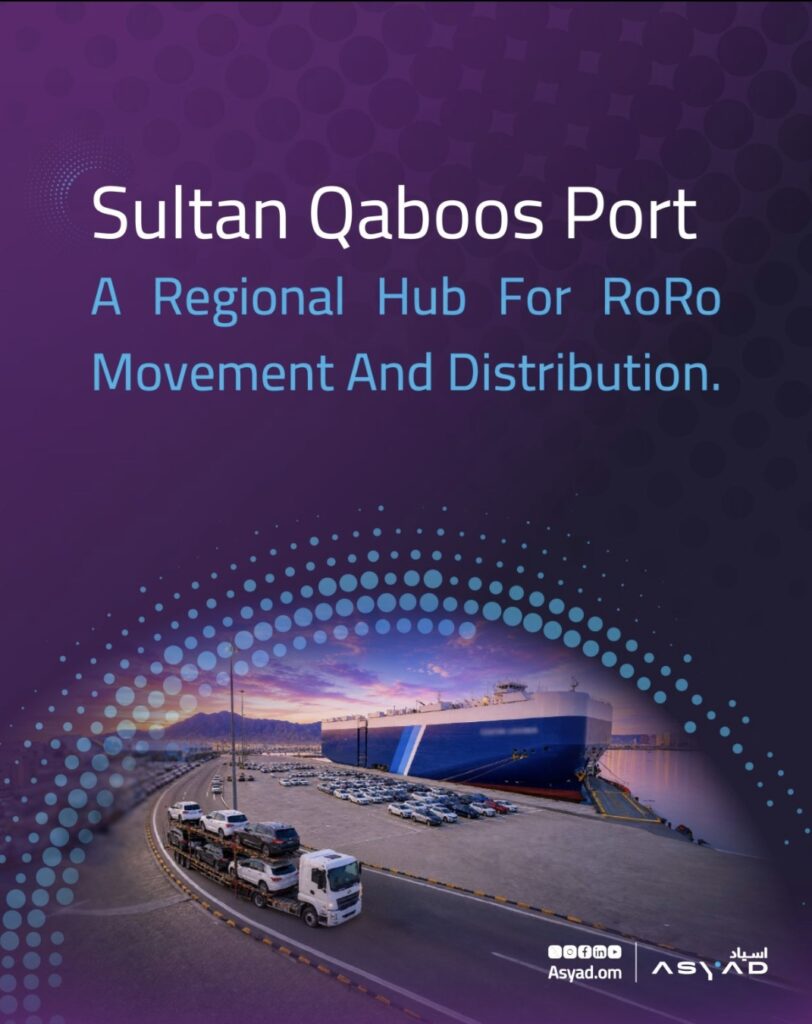
Shipping Arabia, October 10, 2026 – Asyad Ports is promoting an integrated RoRo Green Corridor in Oman that connects Port Sultan Qaboos with Khazaen Dry Port, creating an end-to-end vehicle logistics solution for importers and automotive manufacturers. The initiative aims to streamline vehicle movements from vessel discharge through inland storage, preparation and onward distribution to markets across Oman and the wider region.
The bonded logistics corridor combines maritime vehicle handling with inland logistics and distribution services. Through this model, Asyad Ports is positioning Port Sultan Qaboos as a regional gateway for roll-on/roll-off (RoRo) cargo, supported by Khazaen Dry Port’s storage and distribution capabilities.
The company highlighted the corridor’s potential to reduce waiting times, simplify customs procedures and facilitate vehicle transfers between the two facilities. It also emphasized Oman’s strategic position as a regional RoRo hub serving multiple Middle Eastern markets.
Integrated Vehicle Logistics from Port Sultan Qaboos to Khazaen Dry Port
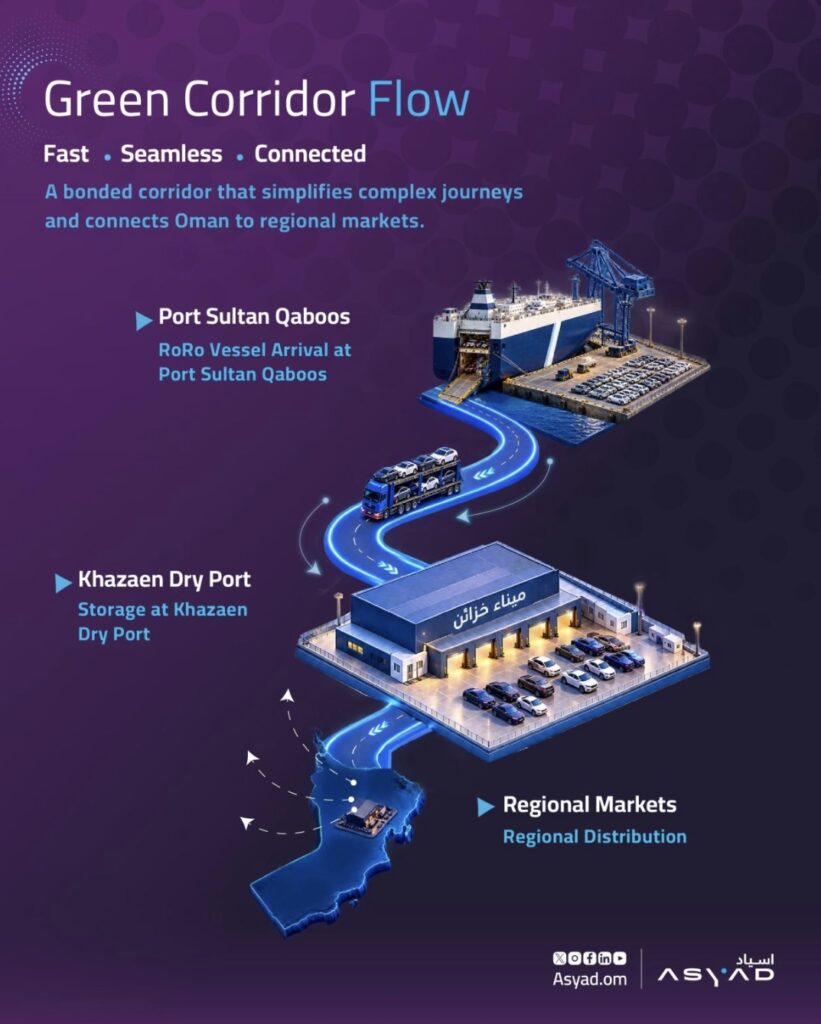
The RoRo Green Corridor in Oman establishes a connected logistics process linking vessel arrivals at Port Sultan Qaboos with inland vehicle handling at Khazaen Dry Port.
Under the model presented by Asyad Ports, vehicles arriving aboard RoRo vessels are discharged at Port Sultan Qaboos. They are then transferred through the bonded corridor to Khazaen Dry Port, where they can undergo storage and preparation before onward distribution.
This arrangement provides importers and manufacturers with an integrated logistics solution covering the movement of vehicles from the maritime gateway to inland distribution facilities.
Khazaen Dry Port serves as the inland component of the corridor, providing storage capabilities and supporting vehicle distribution to customers across Oman and regional markets.
By connecting these facilities, Asyad Ports aims to simplify the vehicle logistics process and facilitate movements between maritime and inland operations.
The model also supports the company’s efforts to establish Port Sultan Qaboos as a regional center for RoRo cargo movement and distribution.
Bonded Corridor Designed to Simplify Customs and Vehicle Transfers
A central feature of the Green Corridor is its bonded logistics framework, which is designed to simplify vehicle movements between Port Sultan Qaboos and Khazaen Dry Port.
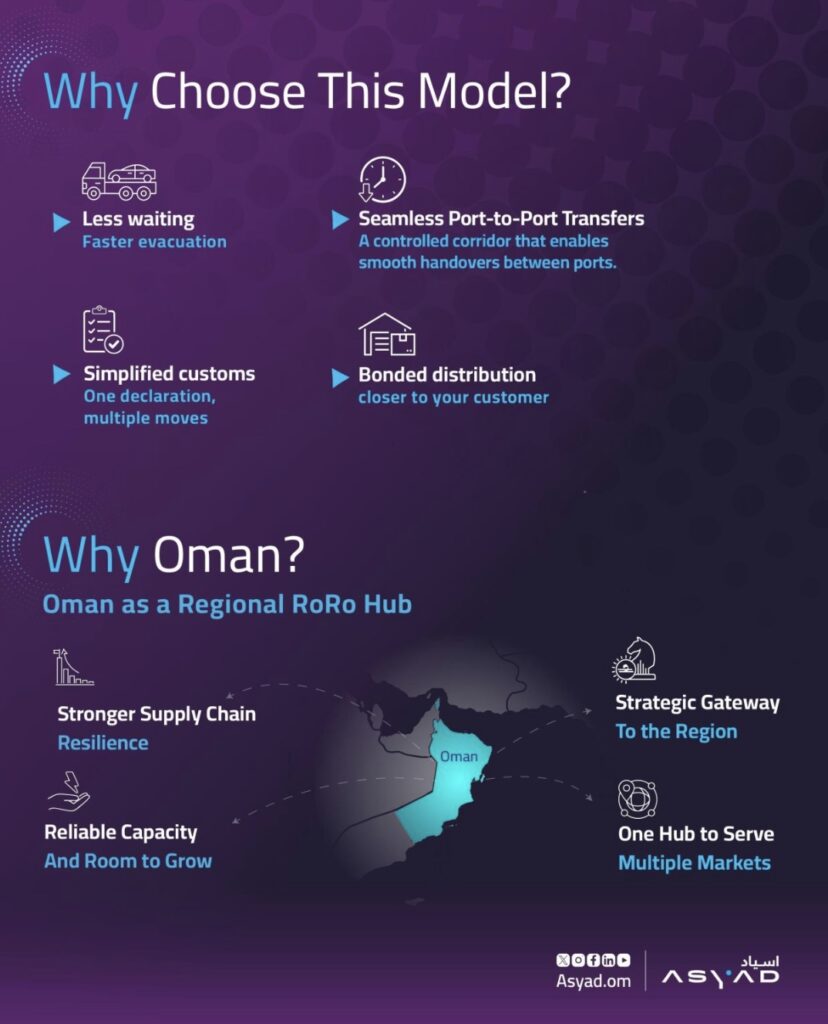
According to Asyad Ports, the model offers several operational advantages, including faster vehicle evacuation from the seaport and reduced waiting times.
The controlled corridor is also designed to facilitate smoother handovers between the two ports. This approach supports more coordinated vehicle movements across the maritime and inland logistics network.
Customs simplification represents another important element of the system. Asyad Ports highlighted a process that allows one customs declaration to cover multiple movements, reducing the complexity associated with transferring vehicles through the logistics corridor.
In addition, bonded distribution enables vehicles to be stored closer to their intended customers and markets before final delivery.
Together, these features are intended to create a more seamless logistics process, connecting vessel discharge, inland handling and regional distribution through a single integrated model.
Positioning Oman as a Regional RoRo and Automotive Distribution Hub
Beyond facilitating domestic vehicle movements, Asyad Ports is promoting the RoRo Green Corridor in Oman as a gateway for automotive distribution across the wider Middle East.
The company highlighted Oman’s strategic location and its potential to serve multiple regional markets through a single logistics hub.
This approach allows importers and automotive manufacturers to use Port Sultan Qaboos as a maritime entry point while relying on Khazaen Dry Port for inland storage and subsequent distribution.
Asyad Ports also identified supply chain resilience as a key advantage of the proposed logistics model. By linking maritime and inland facilities, the corridor is intended to support more reliable vehicle handling and distribution activities.
The company emphasized the availability of handling capacity and opportunities for future growth, presenting Oman as a location capable of supporting expanding regional vehicle logistics requirements.
The Green Corridor therefore forms part of Asyad Ports’ efforts to promote integrated logistics services that connect Oman’s maritime infrastructure with regional distribution networks.
Through the combination of Port Sultan Qaboos and Khazaen Dry Port, the company is seeking to strengthen Oman’s position as a strategic gateway for RoRo cargo and automotive logistics.
One Entry Point Serving Multiple Regional Markets
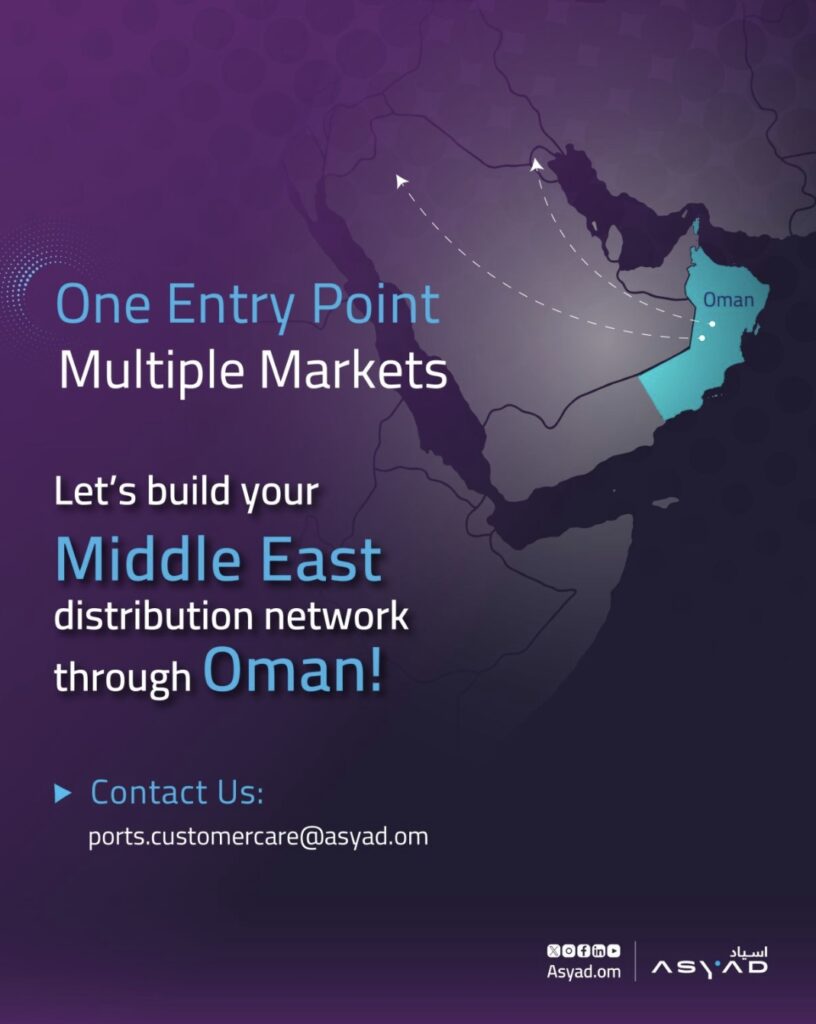
Asyad Ports is presenting the corridor as a solution for companies seeking to develop or strengthen their Middle Eastern vehicle distribution networks.
The model brings together port operations, bonded inland transfers, vehicle storage and onward distribution under a connected logistics framework.
For automotive importers and manufacturers, this creates an opportunity to organize vehicle movements through a single maritime entry point while serving different domestic and regional markets.
Asyad Ports is encouraging industry stakeholders to consider Oman as a regional distribution base, supported by the integrated capabilities of Port Sultan Qaboos and Khazaen Dry Port.
The initiative reflects the company’s focus on providing connected RoRo logistics services, simplifying vehicle supply chains and supporting Oman’s development as a regional automotive distribution hub.
Source: Asyad Ports