Emarat Maritime Newbuilding Program Reaches 22 Ships With Six LR1 Tankers
Shipping Arabia, October 18, 2026 – Dubai-based Emarat Maritime, part of Sharaf Group, has added six 74,000-dwt LR1 product tankers to its newbuilding program in China, bringing its total orderbook to 22 vessels. The latest additions will significantly expand the company’s presence in the product tanker segment while supporting a broader fleet expansion covering tankers, gas carriers and feeder container ships.
According to the company’s fleet records, the first two LR1 tankers are scheduled for delivery in 2029, followed by the remaining four in 2030. The six vessels represent a substantial addition to Emarat Maritime’s existing LR1 fleet, which currently consists of three older product tankers.
The contract value has not been disclosed. However, recent comparable LR1 tanker orders at Chinese shipyards have been priced at approximately $55 million per vessel, suggesting an indicative combined value of around $330 million for the six newbuildings.
Six New LR1 Tankers to Triple Existing Fleet
The latest Emarat Maritime newbuilding program will considerably strengthen the company’s position in the LR1 product tanker market.
Its current operational LR1 fleet comprises three vessels: Dubai Diamond and Dubai Gold, both built in 2007, and Dubai Green, which entered service in 2005.
The six newbuildings will increase the company’s LR1 fleet from three to nine vessels upon delivery, assuming the existing ships remain in service.
The investment adds newer tonnage to a segment where Emarat Maritime already has an established operating presence. With deliveries extending through 2030, the company is committing to a longer-term expansion of its product tanker fleet.
Emarat Maritime Newbuilding Program Expands Across Multiple Vessel Types
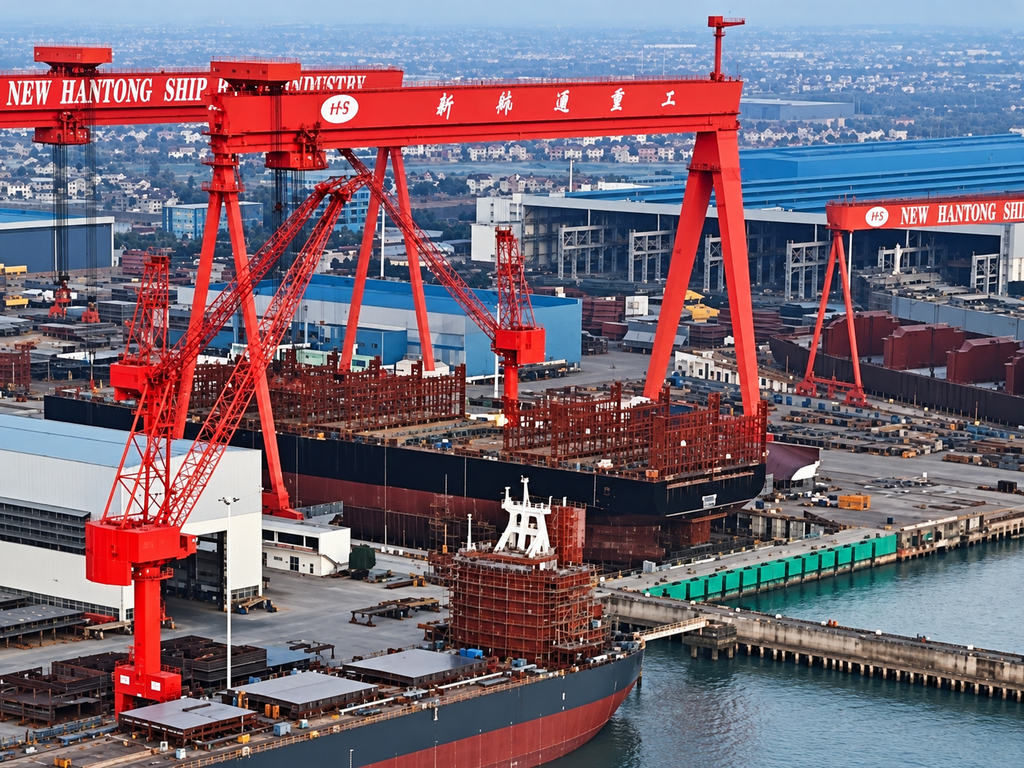
The six LR1 tankers form part of a much larger shipbuilding pipeline involving Chinese shipyards.
Emarat Maritime has also ordered six 114,000-dwt LR2 product tankers at Hengli Heavy Industries. One of these vessels is scheduled for delivery in 2026, while the remaining five are expected to join the fleet in 2027.
Together, the LR1 and LR2 orders account for 12 product tankers within the company’s current newbuilding portfolio.
The expansion is not limited to the tanker market. Emarat Maritime, which currently operates 19 vessels, is also developing its container shipping activities.
In June 2026, shipping research firm Alphaliner reported that the company had contracted three 930-TEU feeder container vessels at Hubei Guangji Xinneng Shipbuilding, with options for three additional ships.
The company’s updated fleet records now include six feeder container newbuildings. Four are scheduled for delivery in 2028, with the remaining two expected in 2029.
The complete 22-vessel newbuilding portfolio therefore comprises 12 product tankers, four large gas carriers and six feeder container ships.
This represents a significant expansion relative to Emarat Maritime’s existing operational fleet of 19 vessels. The investments also extend its newbuilding commitments across several shipping segments rather than concentrating exclusively on oil transportation.
Strong Secondhand LR1 Values Accompany Newbuilding Investment
Emarat Maritime’s latest tanker investment comes amid elevated secondhand vessel prices in the LR1 segment.
According to market information cited in the report, the 2016-built tankers Bluebird and Starling were reportedly sold to UAE interests for approximately $55 million each.
These reported transaction values are broadly comparable to recent Chinese shipbuilding prices for new LR1 product tankers, which have also been around $55 million per vessel.
The comparison highlights the substantial prices being achieved by existing LR1 tonnage alongside continued investment in new vessels.
For Emarat Maritime, the addition of six LR1 tankers represents a major increase in capacity within its established product tanker business. Alongside the company’s LR2, gas carrier and feeder container commitments, the latest additions bring its newbuilding pipeline to 22 ships, with scheduled deliveries extending through 2030.
Source: Al Mal