Suez Canal

  • Higher Asia Freight Rates Raise Cost Pressures on Egyptian Trade

    Shipping Arabia, September 27, 2026 – Rising container freight rates on services from Asia are adding further cost pressure to Egyptian trade, as shipping and operating expenses increase across supply chains, according to Amr El-Samdouni, Secretary-General of the International Transport and Logistics Division at the Cairo Chamber of Commerce.

    El-Samdouni said current freight quotations from Chinese ports to Damietta indicate elevated container transport costs. Rates vary significantly depending on the shipping line, route and sailing date.

    The cost of shipping a 20-foot container currently ranges from $3,350 to $4,075, while rates for a 40-foot container range from $5,100 to $5,375.

    China–Damietta freight rates remain elevated

    El-Samdouni said the published rates cover shipments from Ningbo, Shenzhen, Qingdao and Shanghai to Damietta.

    From Ningbo to Damietta, the rate on ONE’s direct service stands at around $3,350 for a 20-foot container and $5,100 for a 40-foot container.

    On YML services from Ningbo, the corresponding rates rise to approximately $3,950 for a 20-foot container and $5,150 for a 40-foot container.

    Rates from Shanghai vary more widely. A 20-foot container costs between $3,400 and $4,075, while a 40-foot container is quoted at between $5,175 and $5,375, depending on the carrier.

    Some services also include additional charges. These include an ENS fee of $35 per bill of lading, as well as overweight surcharges for containers exceeding specified weight thresholds.

    Depending on the shipment weight, overweight charges on some services can add as much as $600 to the cost of a 20-foot container.

    Higher freight costs spread through supply chains

    El-Samdouni said these freight levels directly affect the cost of Egyptian imports, particularly production inputs, raw materials and intermediate goods.

    He added that higher shipping costs can also affect the cost of Egyptian products destined for foreign markets, increasing the need for close monitoring of maritime freight market developments.

    The impact, he said, does not stop at the ocean freight rate itself. Higher transport costs can spread through the wider supply chain, affecting storage, inland transportation, insurance and port-related services.

    If elevated maritime transport costs continue for extended periods, the cumulative effect could raise the final cost of goods.

    Egypt’s ports and Suez Canal gain strategic importance

    El-Samdouni said higher maritime transport costs reinforce the importance of Egypt’s geographic position, the Suez Canal and the country’s ports.

    He said Egypt could use these advantages to attract more shipping lines and provide integrated logistics services for vessels and cargo.

    However, he stressed that improving the competitiveness of Egyptian ports depends on more than transit charges or the cost of individual services.

    According to El-Samdouni, a competitive port system also requires faster cargo clearance, improved logistics services, greater container-handling efficiency and stronger links between ports, industrial zones and distribution centers.

    Red Sea and routing decisions remain key freight factors

    El-Samdouni said marine fuel prices, developments affecting navigation in the Red Sea and the Suez Canal, and shipping lines’ decisions on vessel routing will remain important factors in determining freight rate trends during the coming period.

    He also said Egypt has an opportunity to make greater use of its strategic location by developing its ports and the Suez Canal into integrated centers for trade, logistics services and re-export activity.

    Such development, he said, could help reduce the impact of fluctuations in global transport costs while supporting the competitiveness of the Egyptian economy.

    Source: Erem Business
  • Suez Canal August Revenue Jumps 56.7% as Ship Traffic Continues Recovery

    Shipping Arabia, September 25, 2026 – Suez Canal traffic continued to recover in August, with 1,358 vessels carrying 68.3 million net tonnes through the waterway as monthly revenue climbed 56.7% year-on-year to $567.1 million.

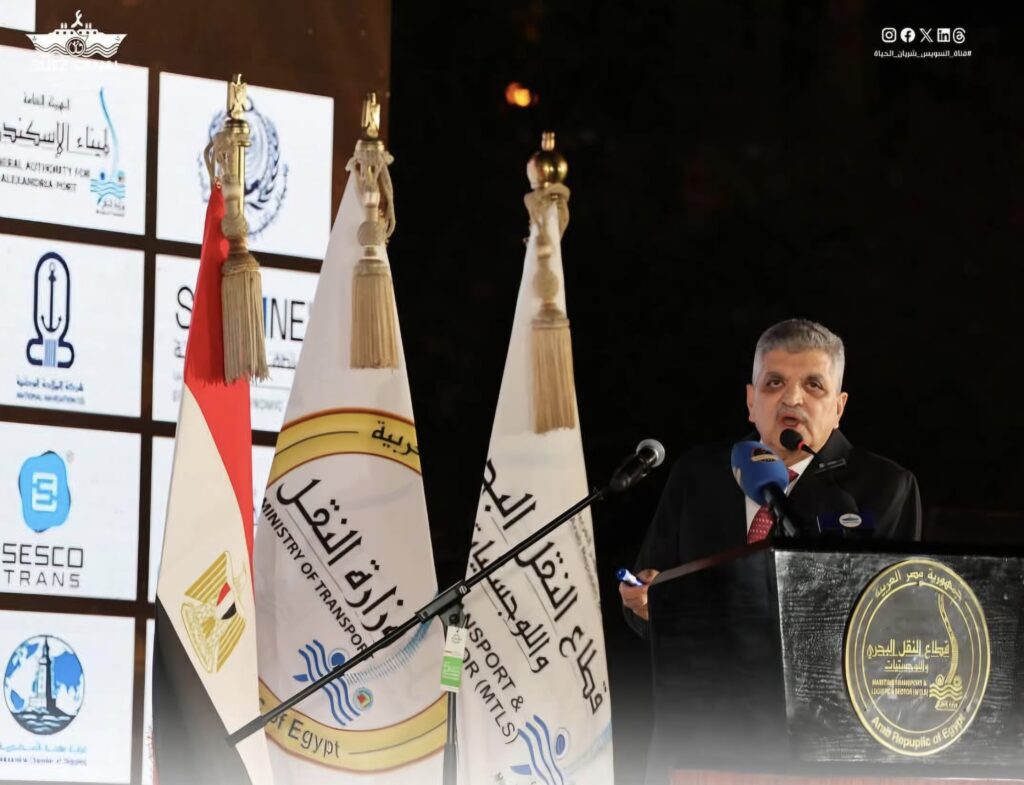
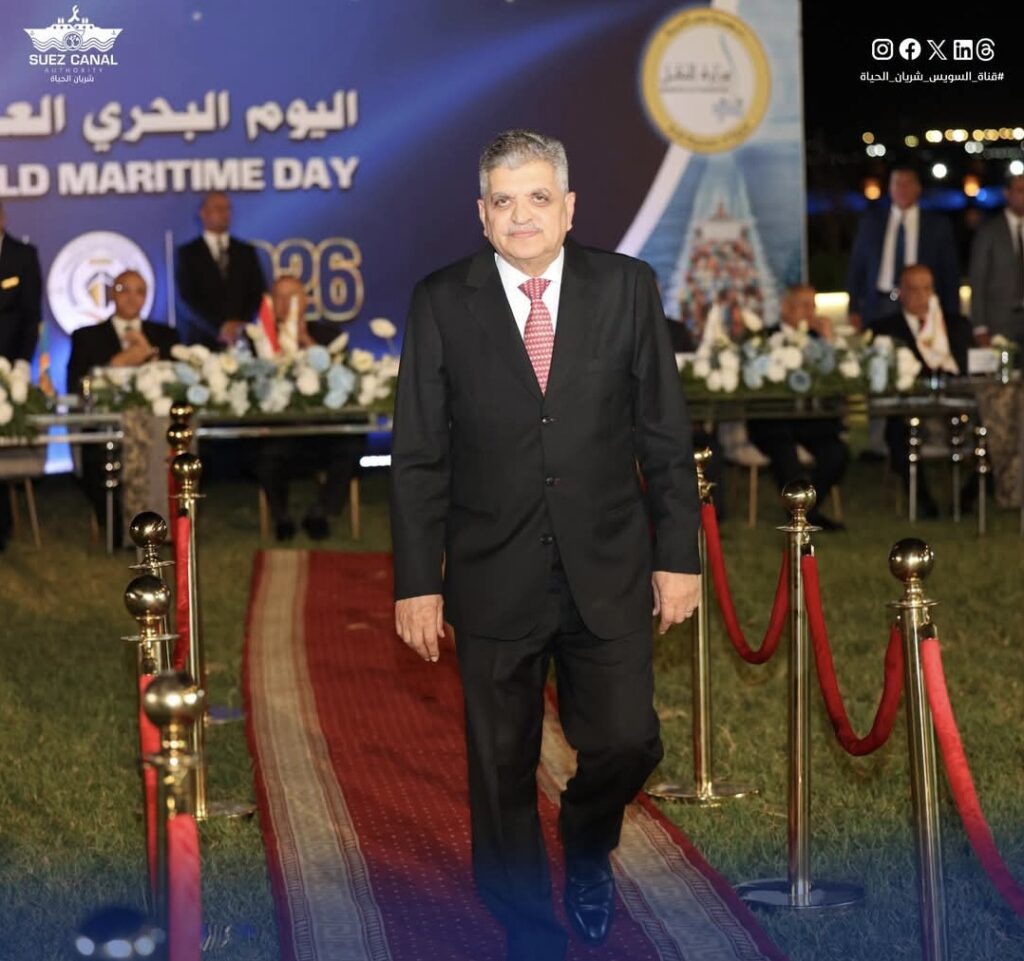
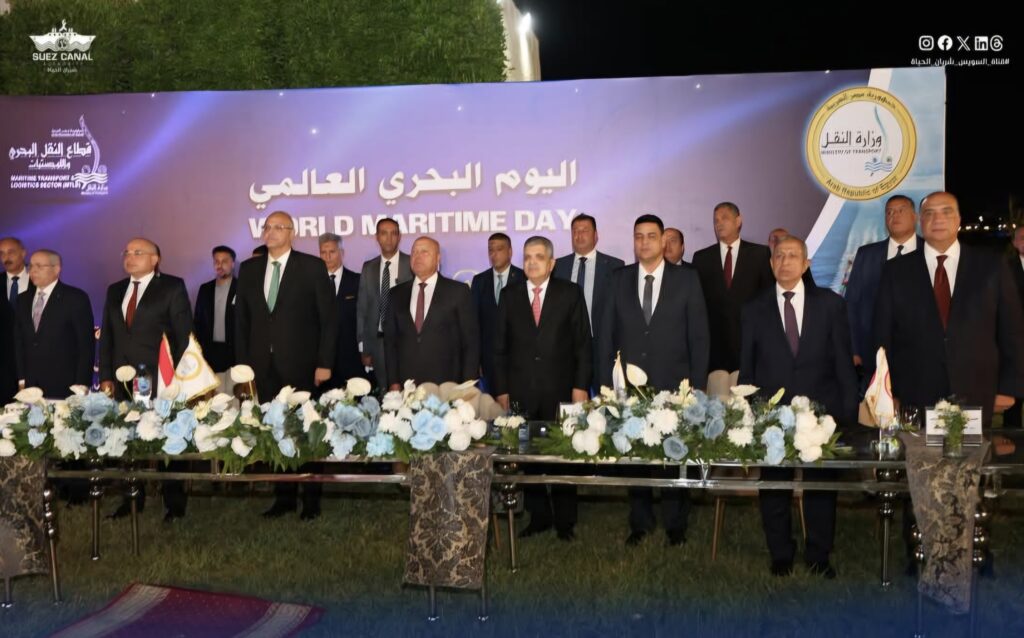
    Suez Canal Authority Chairman and Managing Director Adm. Ossama Rabiee announced the figures during Egypt’s World Maritime Day 2026 event in Alexandria, saying navigation through the canal remains regular and marine services are operating at full readiness.

    August vessel transits increased 27% from 1,070 ships a year earlier, while net tonnage rose 51.1% from 45.2 million tonnes. Revenue increased from $326 million in August 2025 to $567.1 million this year.

    Rabiee said recent navigational reports point to improving traffic levels following the disruption to global shipping and supply chains caused by regional and international developments in recent years.

    Alongside efforts to support the recovery of canal traffic, the SCA is expanding its maritime services and industrial activities as part of a strategy to diversify revenue beyond transit fees.

    The authority has been developing its shipyards and affiliated companies to expand the domestic construction of marine units while pursuing private-sector partnerships and international markets.

    Its growing portfolio of services includes shipbuilding and repair, bunkering, marine ambulance services and crew changes, providing additional support to vessels during their Suez transits.

    The SCA is also expanding its involvement in port development and maritime training outside Egypt. Rabiee highlighted the authority’s participation in the redevelopment and reopening of Sirte Port in Libya after 14 years of closure, while its Maritime Training and Simulation Academy has modeled Saudi Arabia’s Ras Al-Khair Port.

    The authority is also negotiating work involving the simulation of two ports in Namibia, alongside training programmes for pilots and tug masters.

    The latest traffic figures add to signs of a gradual recovery in Suez Canal activity as shipping lines reassess longer Cape of Good Hope diversions and selected services return to the Red Sea-Suez route.

    Source: Suez Canal Authority

  • MSC Expands Suez Return With Indusa Service Resumption

    Shipping Arabia, September 23, 2026 – Mediterranean Shipping Company (MSC) is expanding its gradual return to the Suez Canal and Red Sea, with the carrier restoring westbound sailings on its Indusa service as part of a broader, service-by-service resumption of East-West traffic through the region.

    The Indusa service, linking the Indian subcontinent with the United States and Mexico, will resume Red Sea routing for westbound cargo beginning with MSC Domna X, voyage IV637A, departing Colombo on September 23.

    Eastbound Indusa sailings will continue to operate around the Cape of Good Hope, reflecting MSC’s cautious approach as it continues to assess security and operational conditions in the Red Sea.

    The move follows MSC’s August decision to partially restore Suez Canal transits on selected East-West services. The carrier had identified sailings on its Jade, Albatros, Himalaya and Tiger services for the initial phase, covering Asia-Mediterranean, Asia-North Europe and India-Mediterranean trades.

    MSC said the transition is being implemented on a case-by-case basis, with individual booking confirmations and online schedules updated progressively as voyage plans change.

    The carrier is maintaining contingency arrangements that allow individual vessels to be rerouted if conditions require, while continuing to monitor developments with relevant authorities and security partners.

    The addition of Indusa represents another step in the progressive restoration of container services through Suez, as major carriers reassess Cape of Good Hope diversions and gradually return capacity to the shorter maritime corridor linking Asia, the Mediterranean, Europe and the Americas.

    Source: Almal News

  • Maersk, Hapag-Lloyd Return Four More Gemini Services to Suez Canal

    Shipping Arabia, September 21, 2026 – Maersk and Hapag-Lloyd are returning four additional Gemini Cooperation services to the Red Sea and Suez Canal, marking another significant step in the gradual restoration of Asia-Europe container shipping through the shorter trans-Suez corridor.

    The carriers announced that the AE5, AE11, AE12 and ME2 services — known respectively as NE4, SE2, SE1 and IEX in Hapag-Lloyd’s network — will shift from routing around the Cape of Good Hope to the Suez Canal following a further assessment of security conditions in the Red Sea.

    The changes expand the number of Gemini services returning to Suez following earlier resumptions. Maersk said the four services will join AE15 and AE19, which are already operating through the canal.

    The first westbound sailings include Antonia Maersk on AE11 and Cornelia Maersk on ME2, both departing their final Asian calls before Suez on September 19, followed by Marchen Maersk on AE5 on September 21. The first AE12 sailing will be announced separately.

    Eastbound implementation begins with Maastricht Maersk on AE5 on September 22, followed by Maersk Halifax on AE11 on September 28 and Cornelia Maersk on ME2 on October 31.

    The returning services connect major Asian gateways with Northern Europe and the Mediterranean, including London, Bremerhaven, Hamburg, Rotterdam, Algeciras, Valencia, Barcelona, La Spezia, Genoa, Koper and Rijeka.

    Maersk and Hapag-Lloyd said routing through the Red Sea and Suez Canal provides shorter and more efficient transit times between Asia and Europe compared with the diversion around the Cape of Good Hope.

    Both carriers stressed that further network decisions will remain dependent on security conditions in the region, with crew, vessel and cargo safety continuing to determine the pace of the return.

    The addition of four more Gemini services represents a further recovery of mainline container traffic through the Suez Canal, as carriers progressively restore capacity to the traditional Asia-Europe maritime corridor.

    Source: Almal News

  • Suez Canal Container Ship Tonnage Jumps 54.2% as COSCO Returns

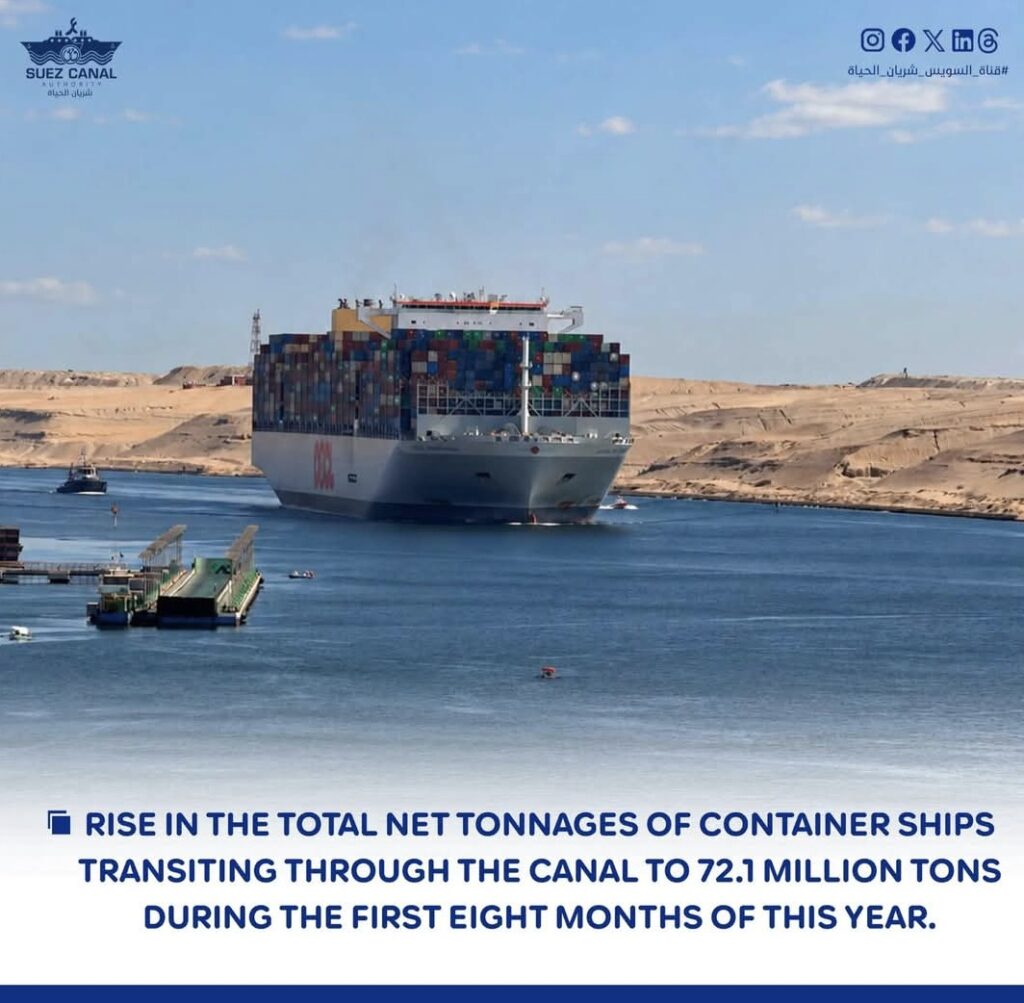
    Shipping Arabia, September 21, 2026 – Container ship traffic through the Suez Canal is showing a significant recovery, with total net tonnage rising 54.2% during the first eight months of 2026, as major carriers gradually restore services through the waterway.

    The Suez Canal Authority said container ships transiting the canal recorded approximately 72.1 million tonnes of net tonnage between January and August, compared with 46.7 million tonnes during the same period of 2025.

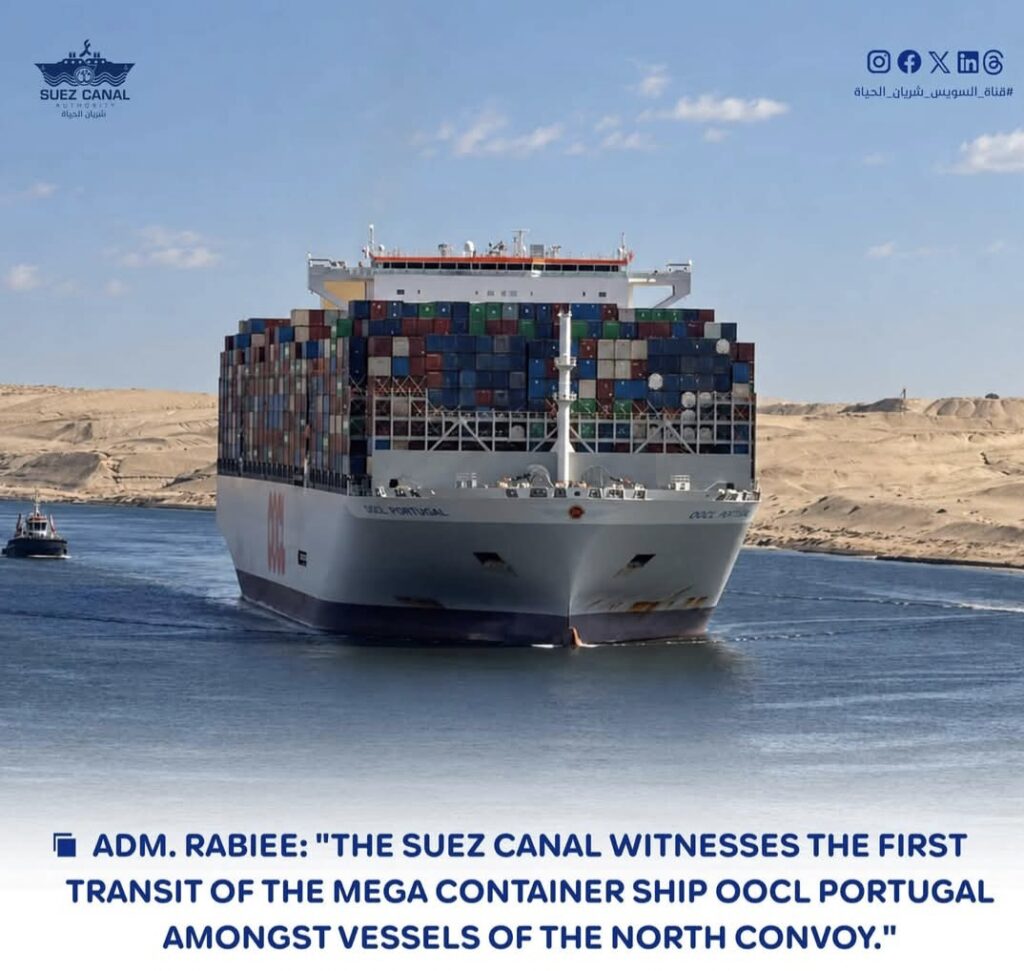
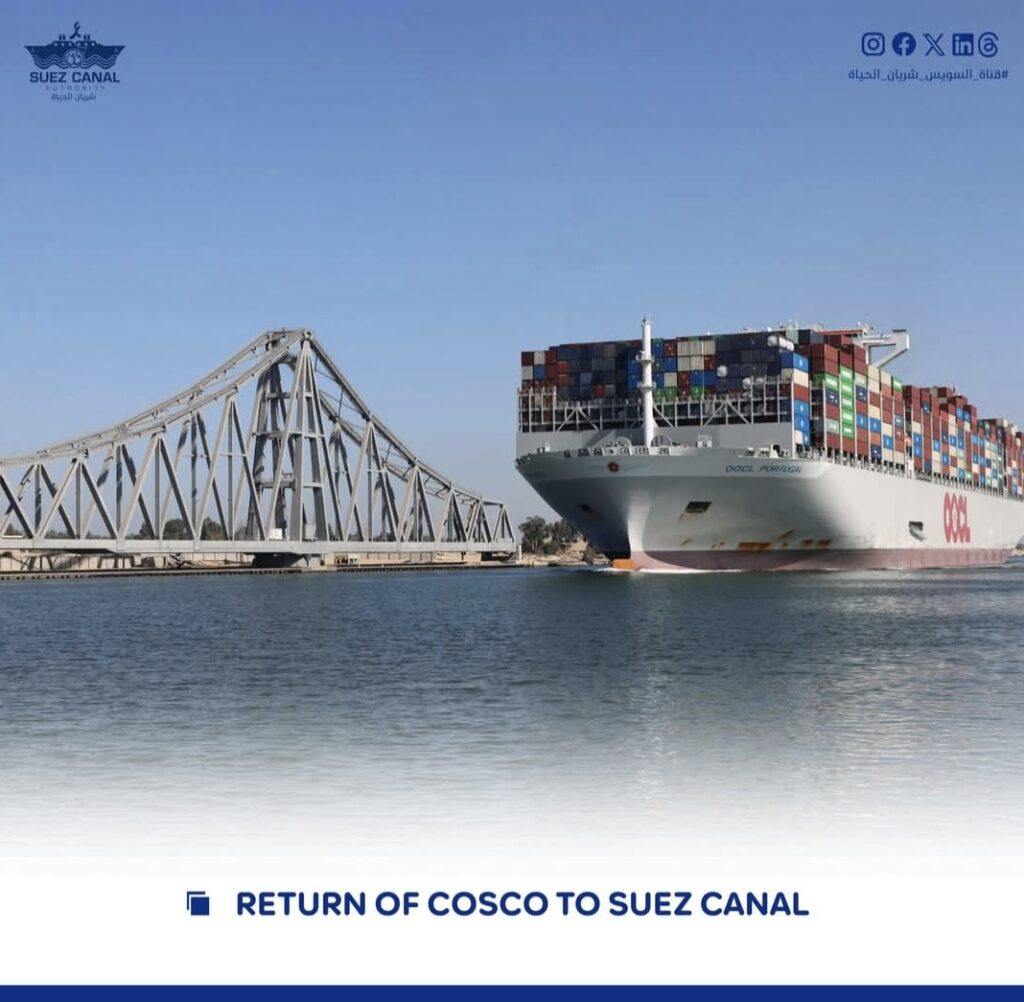
    The recovery was highlighted by the first Suez Canal transit of the 24,000-TEU OOCL Portugal, which sailed through the waterway on September 16 during a voyage from Belgium to China.

    The approximately 400-meter vessel, with a beam of 61.3 meters and gross tonnage of 247,000 tonnes, operates on the NEU2 service under the OCEAN Alliance, directly connecting major ports in the Far East and Northwest Europe.

    Suez Canal Authority Chairman and Managing Director Adm. Ossama Rabiee said the voyage was particularly significant as it marked COSCO SHIPPING Lines’ first southbound transit through the Suez Canal since the Red Sea and Bab el-Mandeb disruption.

    Rabiee said several major shipping lines have now restored maritime services through the canal on Asia-Europe trades, including CMA CGM, Maersk, MSC, Hapag-Lloyd and COSCO.

    The return of additional mainline services is beginning to translate into higher containership tonnage through Suez after prolonged diversions around the Cape of Good Hope disrupted traditional Asia-Europe routing.

    On September 16 alone, 39 vessels with combined net tonnage of 2.3 million tonnes transited the canal, according to the authority.

    The figures provide a further indication of the gradual recovery of Suez Canal container traffic as carriers reassess Red Sea operations and progressively return capacity to the shorter Asia-Europe route.

    Source: Suez Canal Authority

  • Asia-Mediterranean Container Rates Fall 12% as Red Sea Capacity Returns

    Shipping Arabia, September 20, 2026 – Container freight rates from Asia to the Mediterranean fell 12% to around $4,200 per FEU last week, as shipping lines continued restoring capacity through the Red Sea and Suez Canal despite renewed uncertainty around the Bab el-Mandeb.

    Latest estimates from Sea-Intelligence indicate that more than a quarter of Asia-Europe capacity will operate through the Red Sea during September. Around 35% of headhaul capacity from Asia to the Mediterranean and 50% to 60% of return capacity has been restored through the Suez Canal.

    The recovery has been slower on the Asia-North Europe trade, where only 6% of headhaul and 30% of backhaul capacity has returned to the route.

    According to Freightos, the additional capacity and shorter transit times provided by returning to the Red Sea, combined with easing demand following the peak season, are contributing to downward pressure on freight rates.

    Asia-Mediterranean rates dropped 12% to about $4,200 per FEU, while Asia-North Europe rates declined 3% to approximately $4,300. Daily rates on both trades have since fallen to around $3,800 per FEU.

    The Mediterranean market has recorded the sharper correction. Rates from Asia are now around $3,000 per FEU below their July peak, compared with a decline of about $2,000 on the North Europe trade, reflecting the faster restoration of Red Sea capacity.

    Rates nevertheless remain significantly above pre-peak-season levels, with congestion at Far East origin ports and North European hubs continuing to affect schedules and available capacity. Higher fuel costs and operational uncertainty could also influence carriers’ decisions over the pace of further Red Sea and Suez deployments.

    Transpacific rates, meanwhile, moved slightly higher as strong demand and congestion continued to support spot markets. US import volumes are expected to begin easing, with October shipments forecast to fall 9% from September before declining further in November.

    The contrasting trends underline how the gradual restoration of Red Sea and Suez Canal services is beginning to reshape capacity and freight-rate dynamics on Asia-Mediterranean trades, even as carriers continue to manage operational risks and congestion across major east-west networks.

    Source: Almal News

Back to top button