Suez Canal Container Terminal Renewable Energy Agreement to Cut 30,000 Tons of CO₂ Annually
Shipping Arabia, November 21, 2026 – Suez Canal Container Terminal (SCCT) has finalized an agreement with Egypt’s New and Renewable Energy Authority (NREA) to supply renewable electricity to its terminal at East Port Said Port. The initiative is expected to prevent approximately 30,000 tons of carbon dioxide emissions annually, supporting the terminal’s transition toward more sustainable operations.
The agreement will allow SCCT to replace conventional electricity with power generated from solar and wind energy. It also supports the company’s plans to electrify terminal equipment and operational vehicles, reducing reliance on conventional energy sources across its operations.
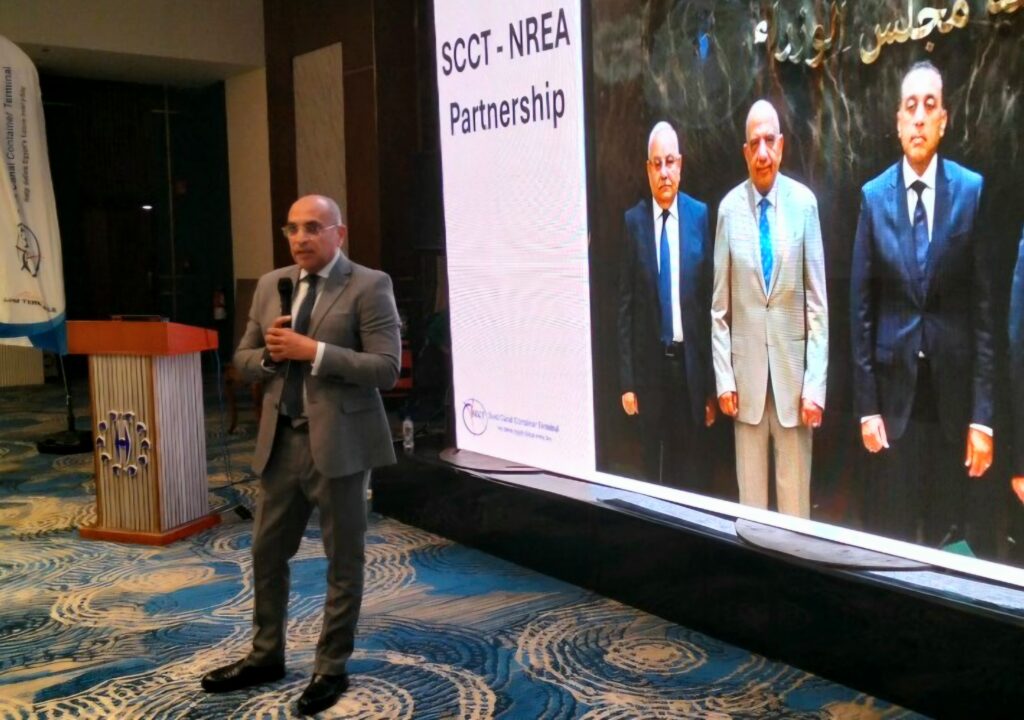
Mohamed Khattab, SCCT’s government relations director, said the transition represents an important development for container terminal operations in the Middle East. He explained that combining renewable electricity with equipment electrification would strengthen the terminal’s competitiveness and support its environmental performance.
Khattab made the remarks during a seminar titled “Your Safety Matters,” organized by SCCT in coordination with the Port Said Directorate of Labor.
Renewable Energy Agreement Supports East Port Said Operations
The renewable energy agreement was signed on July 1, 2026, in the presence of Egyptian Prime Minister Mostafa Madbouly, Minister of Electricity and Renewable Energy Mahmoud Esmat, and Suez Canal Economic Zone Chairman Waleid Gamal El-Dien.
The arrangement establishes a one-year renewable power purchase agreement, with an option for renewal. Under its terms, SCCT will receive electricity generated from renewable energy sources to support its container handling operations at East Port Said Port.
According to company estimates, replacing conventional electricity with solar- and wind-generated power will prevent approximately 30,000 tons of carbon dioxide emissions each year. This reduction is expected to lower the terminal’s carbon footprint and strengthen compliance with international environmental standards.
Khattab described the shift toward renewable electricity and electrically powered terminal equipment as a pioneering initiative among container terminals in the Middle East.
He added that the transition should positively influence SCCT’s environmental and operational assessments. Khattab also noted that the terminal had reached 15th place globally, highlighting its position as international assessments place increasing emphasis on sustainability and emissions reduction.
The initiative reflects the growing importance of environmental performance in the container terminal sector, particularly as operators work to reduce emissions associated with cargo handling and terminal equipment.
SCCT’s Transition Aligns With Maersk’s Decarbonization Strategy
The renewable energy initiative also aligns with the wider decarbonization strategy of A.P. Moller–Maersk, which is pursuing lower-emission operations across maritime transportation and container terminals.
According to Khattab, the group aims to achieve net-zero greenhouse gas emissions across its value chain by 2040. This strategy includes reducing dependence on fossil fuels and expanding the use of alternative energy sources throughout its operations.
At the terminal level, renewable electricity and equipment electrification form part of this transition. In maritime transportation, Maersk is pursuing alternative marine fuels, particularly green methanol, to reduce emissions from its container shipping fleet.
Khattab emphasized that the company’s approach addresses both ship operations and the infrastructure supporting maritime trade. The transition therefore extends beyond vessels to the ports and terminals that handle international cargo flows.
Maersk Expands Methanol-Capable Container Fleet
Alongside the renewable electricity initiative at East Port Said, Maersk continues to expand its investment in container vessels capable of operating on methanol.
Khattab explained that green methanol represents an alternative to conventional fossil-based marine fuels. It can be produced using green hydrogen and biogenic or recycled carbon dioxide, providing a potential pathway for reducing emissions from maritime transportation.
Dual-fuel vessel engines can operate using methanol alongside conventional marine fuels. This capability allows shipping companies to introduce alternative fuels progressively while retaining operational flexibility during the transition.
Maersk began deploying methanol-capable container vessels with Laura Maersk, which entered service in 2023 as the group’s first container ship equipped to operate on the fuel.
Since then, the company has continued developing its dual-fuel fleet through additional vessel investments.
According to figures cited by Khattab, Maersk’s methanol-capable fleet has reached approximately 40 vessels, representing around 15% of its fleet. The company also plans to introduce additional large container vessels with capacities exceeding 16,000 TEUs during 2028.
These investments form part of Maersk’s longer-term strategy to progressively replace fossil fuels with lower-emission alternatives. Khattab said the group ultimately aims to complete its transition to green fuels by 2040.
He also emphasized that the maritime industry’s shift toward alternative fuels will require ports and container terminals to develop infrastructure capable of supporting modern vessels and evolving environmental requirements.
For SCCT, the renewable electricity agreement represents a parallel development on the port operations side of that transition. By combining renewable power with electrically operated equipment, the terminal aims to reduce its environmental footprint while maintaining its competitiveness within the international container handling sector.
Source: Al Mal News