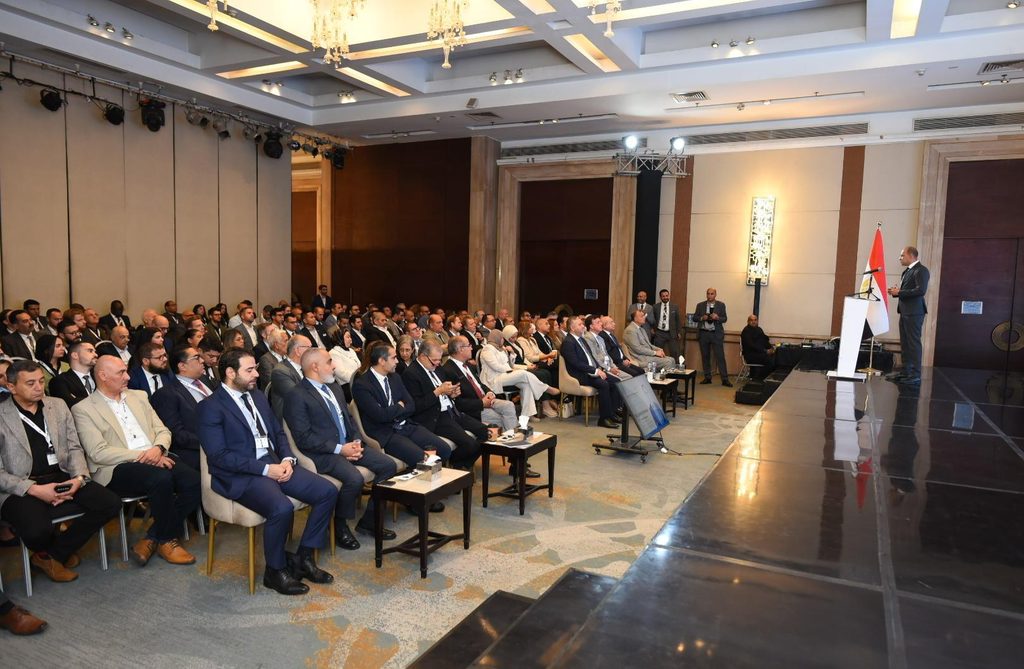
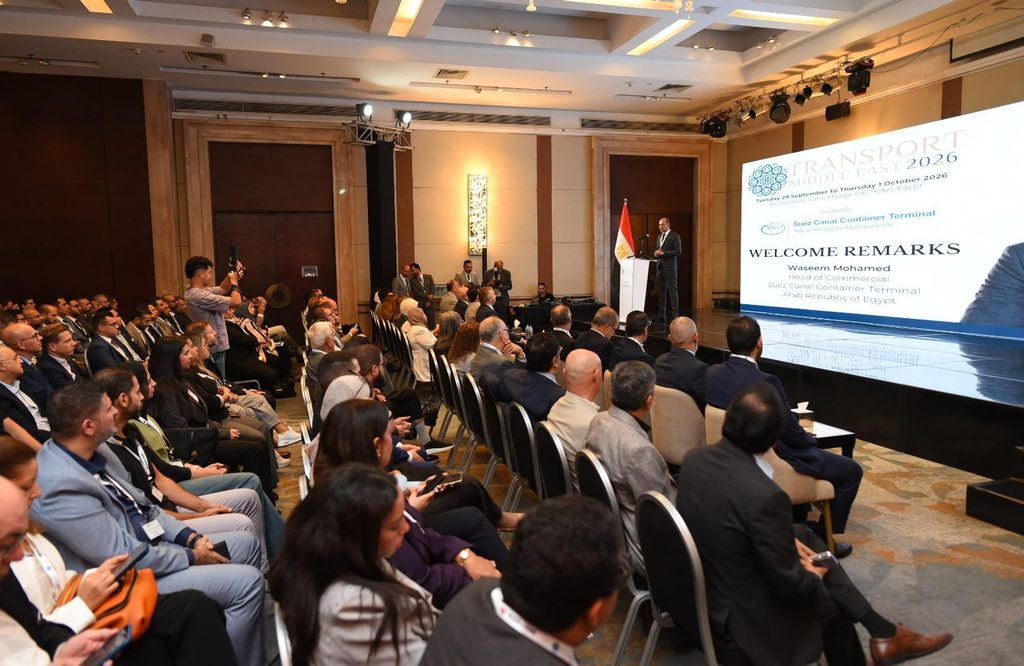
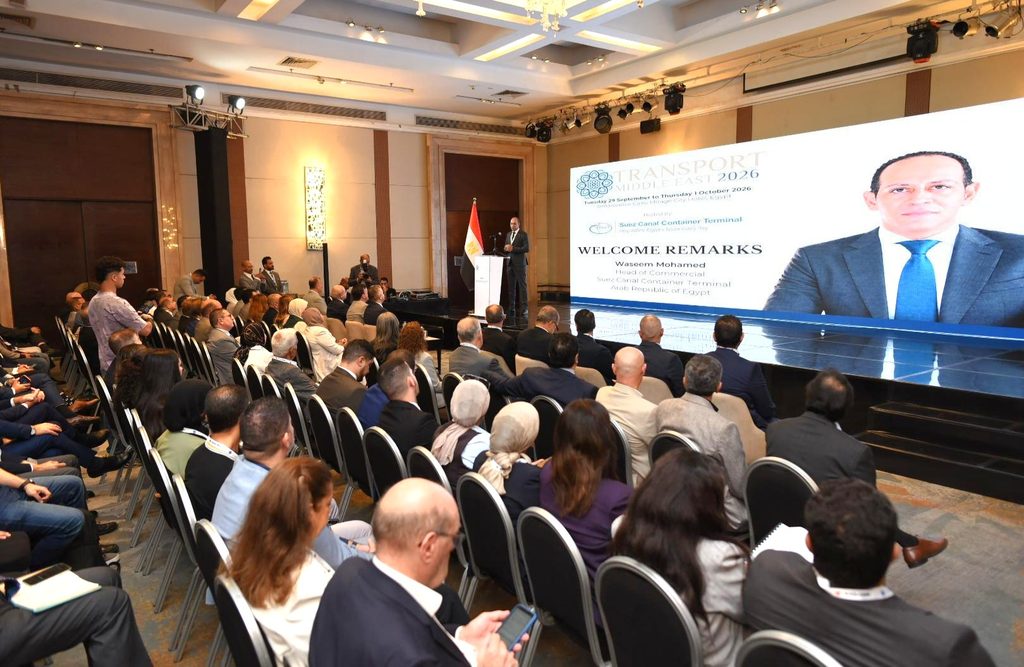
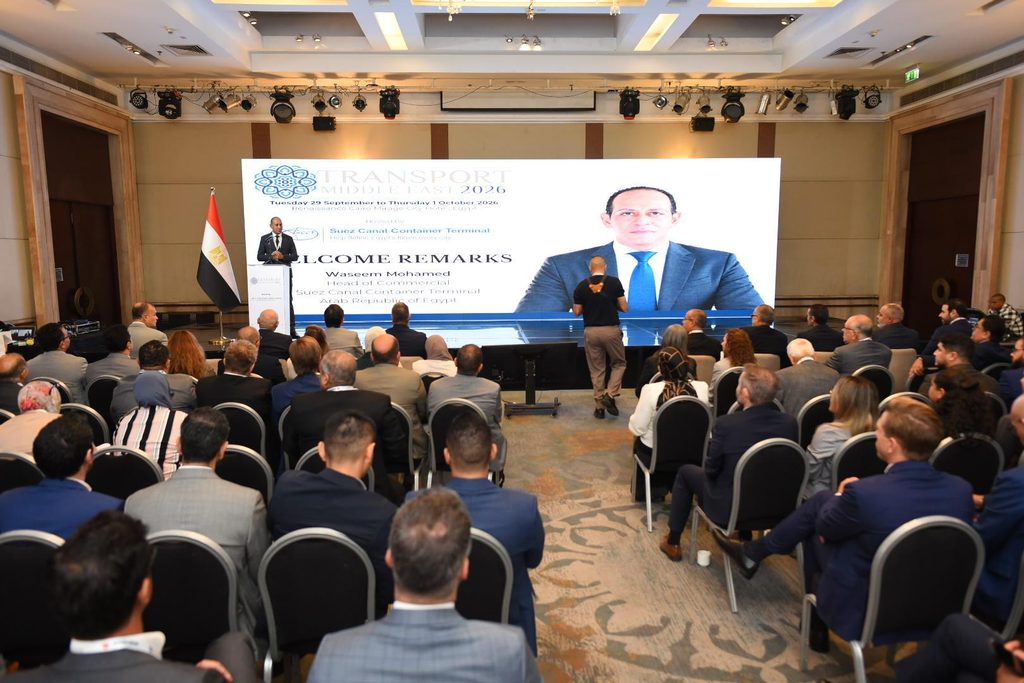
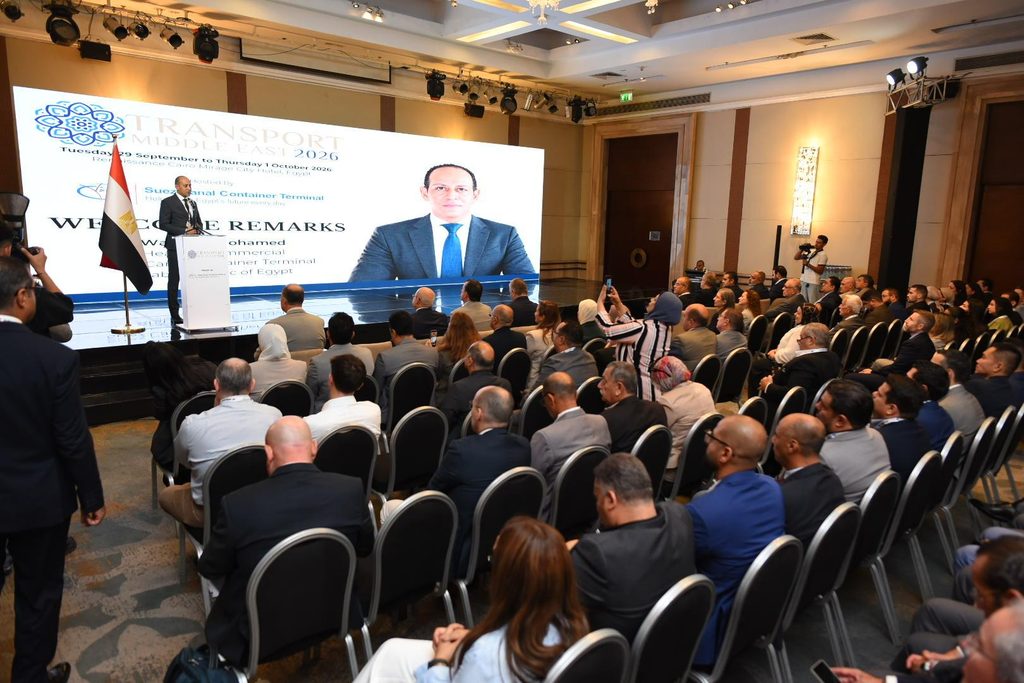
Shipping Arabia, October 1, 2026 – Suez Canal Container Terminal (SCCT) is hosting Transport Middle East 2026 in Cairo, bringing together government officials, senior industry decision-makers, customers, suppliers and logistics professionals from the Middle East, Africa, Europe and other international markets to discuss the trends, opportunities and challenges shaping global trade.
The three-day event opened on September 30 and is designed as a platform for knowledge sharing, industry discussion and collaboration across the global supply chain. Hosted by SCCT, Transport Middle East 2026 features an international program of expert speakers, networking opportunities, sector discussions and a technical site visit.
Hundreds of delegates and industry representatives are attending the conference, with discussions spanning the maritime, transport and logistics sectors.
Transport Middle East 2026 Focuses on Major Industry Priorities
The conference agenda covers several of the most prominent issues facing global trade and logistics, including supply chain resilience, digital transformation, smart port technologies, sustainability, maritime decarbonization, infrastructure investment and the future of international trade.
By bringing together government officials, industry executives and supply chain stakeholders, the event aims to support the exchange of perspectives across different parts of the logistics ecosystem.
SCCT Chief Executive Officer Keld Mosgaard Christensen said Transport Middle East 2026 provides an important forum for exchanging views on the future of global trade and supply chains.
He said the participation of government officials, industry leaders and supply chain stakeholders highlights the importance of collaboration in addressing shared challenges and opportunities.
Christensen also emphasized Egypt’s position as a strategic gateway connecting three continents and its role in facilitating global commerce.
He said collaboration and innovation can help build more resilient and sustainable trade networks while supporting SCCT’s ambition to become the Mediterranean’s most trusted trade hub, contribute to Egypt’s growth and create a sustainable legacy for future generations.
Christensen also thanked delegates, speakers and partners for contributing to the discussions taking place during the conference.
SCCT Highlights Collaboration Across the Logistics Ecosystem
Waseem Mohamed, Head of Commercial at SCCT, said Transport Middle East 2026 creates opportunities for customers, supply chain partners and other industry stakeholders to connect, share insights and examine practical solutions to common challenges.
He said collaboration across the logistics ecosystem is essential to improving efficiency, strengthening connectivity and creating value for customers.
Mohamed added that discussions during the event can contribute to stronger partnerships and support the development of more resilient supply chains.
As host of the conference, SCCT said the event reinforces its commitment to supporting international trade, facilitating connectivity and strengthening collaboration across the maritime and logistics community.
The event also highlights Egypt’s strategic position as a trade gateway connecting markets across three continents.
SCCT Connects Major East-West Trade Flows
Suez Canal Container Terminal is operated by APM Terminals and is located at Port Said East at the northern entrance of the Suez Canal.
SCCT is one of the leading transshipment hubs in the Eastern Mediterranean and sits on one of the world’s busiest maritime corridors. Its location enables connections across Asia, Europe, the Middle East and Africa.
The terminal has handling capacity of up to 7 million TEUs and operates with modern infrastructure and advanced equipment. According to SCCT, these capabilities support reliable, high-performance operations serving major East-West trade flows.
SCCT also offers zero-deviation access, allowing vessels to use the terminal without leaving their main shipping routes. The terminal said this helps reduce time, cost and emissions associated with deviations.
Beyond its role in container shipping, SCCT said it contributes to Egypt’s economy through approximately 4,000 direct and indirect jobs. The terminal also continues to receive international recognition for its operational efficiency and service performance.
APM Terminals Global Network
APM Terminals develops and operates container terminals around the world and is an independent division of A.P. Moller-Maersk.
The company has facilities in more than 60 key locations across 35 countries, with several additional facilities under development.
APM Terminals employs approximately 22,000 people. In 2025, its hub and gateway terminals recorded 27,000 vessel calls and handled 25.8 million moves.
Through SCCT, the company maintains a major presence at the northern entrance of the Suez Canal, connecting one of Egypt’s key container terminals with its wider global terminal network.
Source: Suez Canal Container Terminal (SCCT)