Maersk

  • Suez Canal Container Shipping Capacity Exceeds 50% of Pre-Crisis Levels for First Time

    Shipping Arabia, October 17, 2026 – Suez Canal container shipping capacity has exceeded half of its pre-Red Sea crisis levels for the first time, reaching its highest level since maritime disruptions began. The recovery follows a series of routing decisions by major container shipping lines, which have accelerated their return to the canal after nearly three years of widespread diversions around the Cape of Good Hope.

    According to BIMCO, citing data from Clarksons Research, average weekly container vessel capacity transiting the Suez Canal reached 753,000 TEUs during the first two weeks of October 2026. This compares with 1.46 million TEUs during the corresponding period in 2023, before the Red Sea disruptions significantly affected international shipping routes.

    The latest figures indicate a substantial recovery in container shipping activity through the waterway, although transit capacity remains below its pre-crisis level.

    Suez Canal Container Shipping Share Rises to 36%

    BIMCO reported that 36% of container shipping capacity routed through either the Suez Canal or the Cape of Good Hope used the canal during the first two weeks of October.

    This represents a considerable improvement from the average of just 8% recorded between 2024 and mid-2026. However, the figure remains significantly below the approximately 80% share recorded before the Red Sea attacks disrupted shipping operations.

    The increase reflects a gradual shift back toward the Suez Canal as container shipping lines revise their service networks. Nevertheless, the figures show that a substantial proportion of capacity continues to operate via the Cape of Good Hope.

    Major Shipping Lines Accelerate Return to Suez Canal

    The recovery in Suez Canal container shipping began accelerating in July 2026, when Maersk and Hapag-Lloyd announced that their AE15/SE3 Asia–Mediterranean service would return to the canal.

    Additional adjustments subsequently followed within the Gemini Cooperation network. Meanwhile, members of the Ocean Alliance and Premier Alliance, together with Mediterranean Shipping Company (MSC), announced revised vessel routings.

    According to BIMCO, container shipping lines have announced routing changes affecting a total of 16 services since the beginning of July 2026.

    These developments have contributed to the recovery in container vessel capacity transiting the Suez Canal, bringing more services back to the waterway after an extended period of diversions.

    The recovery has also become more balanced between northbound and southbound sailings.

    During the third quarter of 2026, northbound container shipping capacity represented approximately 75% of southbound capacity. That proportion increased to 81% during the first two weeks of October, indicating a narrowing difference between the two sailing directions.

    Return to Shorter Routes Could Affect Global Container Capacity

    Beyond the increase in canal transits, the return of container shipping services to shorter routes could have significant implications for global vessel capacity and the balance between shipping supply and demand.

    BIMCO estimates that widespread diversions around the Cape of Good Hope increased global demand for container shipping capacity by approximately 10%.

    The longer routes required additional vessel capacity to maintain shipping operations. However, as more services return to the Suez Canal, the additional capacity demand associated with those diversions is declining.

    Niels Rasmussen, Chief Shipping Analyst at BIMCO, highlighted the scale of this change, explaining that the approximately 10% increase in global container shipping capacity demand caused by Suez Canal diversions is now reversing rapidly.

    This development could influence the availability of container vessels as shipping lines progressively restore services through the canal.

    However, BIMCO cautioned that congestion at Asian ports could delay the full impact of shorter shipping routes on vessel availability and the overall balance between global container shipping supply and demand.

    Suez Canal Recovery Remains Incomplete

    Despite the improvement recorded during the first half of October, container shipping activity through the Suez Canal has not returned to its pre-disruption levels.

    The increase to 753,000 TEUs in average weekly transit capacity, together with the recovery in the canal’s share of container shipping routes, demonstrates the progress made since shipping lines began adjusting their networks in July.

    Nevertheless, the comparison with 2023 highlights the remaining gap between current traffic and the levels recorded before the Red Sea crisis.

    The latest BIMCO figures therefore point to a continuing recovery in Suez Canal container shipping, while confirming that the industry’s return to its traditional routing patterns remains incomplete.

    Source: Al Mal
  • CMA CGM Introduces $1,000 Peak Season Surcharge on Reefer Shipments to Arabian Gulf

    Shipping Arabia, October 11, 2026 – French container shipping company CMA CGM has announced a $1,000 peak season surcharge (PSS) on refrigerated container shipments from Northern Europe to Arabian Gulf destinations, effective from mid-October 2026. The additional charge will apply exclusively to reefer containers and will be levied on top of existing ocean freight rates.

    The carrier confirmed the new surcharge in an announcement outlining the upcoming adjustment to its freight charges. The measure specifically targets refrigerated cargo moving from Northern Europe to Arabian Gulf countries, rather than all containerized shipments on the trade route.

    The $1,000 charge represents an additional cost per refrigerated container, separate from the underlying ocean freight rate.

    CMA CGM Peak Season Surcharge Targets Reefer Cargo

    The CMA CGM peak season surcharge will take effect in mid-October, according to the company’s announcement.

    The carrier specified that the surcharge applies only to refrigerated containers. Other container types were not included in the announced measure.

    The additional fee will be applied separately from the original freight rate, increasing the total shipping charges for affected reefer shipments moving between Northern Europe and Arabian Gulf destinations.

    Maersk Ends Cooperation with CMA CGM on ASAS2 Service

    In a separate development, Maersk announced that it will terminate its cooperation with CMA CGM on the ASAS2 container shipping service connecting Asia with the East Coast of South America.

    The final sailing under the existing cooperation arrangement is scheduled to depart Shanghai on December 8, 2026, operating as voyage 650W.

    Following that departure, the ASAS2 service will be discontinued, bringing the current arrangement between the two container shipping companies on the trade route to an end.

    However, Maersk confirmed that it will maintain its presence in the Asia–East Coast South America trade through its existing ASAS service.

    Maersk to Maintain Asia–South America Shipping Connections

    According to Maersk, the ASAS service will continue operating normally as a product managed and controlled entirely by the Danish shipping company.

    Customers will remain able to book shipments between Asia and the East Coast of South America through the ASAS network without interruption following the termination of the ASAS2 cooperation.

    Maersk explained that retaining full operational control will allow it to manage and develop the service independently, responding directly to customer requirements and changing market conditions.

    The decision marks the end of the CMA CGM–Maersk cooperation on ASAS2 while preserving Maersk’s container shipping offering between Asia and the East Coast of South America.

    Source: Al Mal

  • Port of Salalah Container Throughput Sets Second Consecutive Monthly Record

    Shipping Arabia, October 11, 2026 – Port of Salalah container throughput reached a record 511,209 TEUs in September 2026, marking the second consecutive monthly high at the Omani port. The latest performance pushed combined container volumes for August and September above 1 million TEUs, extending the port’s growth following a major terminal expansion completed in 2025.

    September throughput increased 4.1% from August’s previous record of 491,114 TEUs. Container-handling moves also rose 3.7%, reaching 301,113 compared with 290,418 in August.

    Josh Surdin, Chief Operating Officer of the Port of Salalah Container Terminal, disclosed the September figures in a LinkedIn post. He described the result as the highest monthly container volume recorded in the port’s history.

    Port of Salalah Container Throughput Exceeds 1 Million TEUs in Two Months

    The combined throughput for August and September reached 1,002,323 TEUs, equivalent to approximately 23% of the port’s total container volume for 2025.

    The consecutive monthly records follow significant annual growth in container traffic. In 2025, Port of Salalah handled 4.325 million TEUs, representing a 31% increase from the 3.305 million TEUs recorded in 2024.

    Growth continued into 2026. During the first six months of the year, the port handled 2.331 million TEUs, compared with 2.031 million TEUs during the corresponding period of 2025. This represented a year-on-year increase of approximately 14.8%.

    The September record therefore follows a period of sustained growth in container volumes, with both annual and first-half figures showing increases before the consecutive monthly highs in August and September.

    Transshipment Dominates Container Traffic

    Transshipment remains the largest component of Port of Salalah’s container business. During the first half of 2026, transshipment volumes reached approximately 2.034 million TEUs, accounting for around 87% of total container throughput.

    These volumes reflect the port’s principal role as an international transshipment hub, where containers are transferred between vessels as part of global shipping networks.

    Import and export containers accounted for a smaller share of overall traffic. Combined import and export throughput reached 190,304 TEUs during the first six months of 2026, representing just over 8% of total volume.

    Meanwhile, container restows contributed a further 106,586 TEUs to first-half throughput.

    The breakdown highlights the dominance of international transshipment activity compared with container traffic directly associated with cargo entering or leaving Oman.

    $300 Million Terminal Expansion Supports Container Operations

    The consecutive monthly records follow the completion of a $300 million expansion of the Port of Salalah Container Terminal in 2025.

    The project involved upgrades to all six container berths, expansion of the container yard, and installation of new ship-to-shore cranes and supporting infrastructure.

    The investment expanded the terminal’s infrastructure and was designed partly to accommodate container traffic associated with the Gemini Cooperation shipping network operated by Maersk and Hapag-Lloyd.

    The Gemini Cooperation forms an important part of the port’s operating environment, with the upgraded terminal infrastructure developed in part to serve traffic moving through the network.

    APM Terminals, part of A.P. Moller-Maersk, operates Port of Salalah and holds a 30% ownership stake in Salalah Port Services Company.

    The operator’s parent group is also one of the two shipping companies behind the Gemini Cooperation, alongside Hapag-Lloyd.

    With the terminal expansion completed in 2025, Port of Salalah has recorded growth in first-half 2026 container throughput, followed by successive monthly records in August and September.

    Source: Oman Observer

  • Hapag-Lloyd Confirms First SE1 Sailings Through Red Sea and Suez Canal

    Shipping Arabia, October 8, 2026 – Hapag-Lloyd has confirmed the first westbound and eastbound sailings of the Gemini Cooperation’s SE1 service through the Red Sea and Suez Canal, marking another step in the gradual rerouting of selected Gemini services away from the Cape of Good Hope.

    The German carrier said the container ship Umm Qarn will operate the two sailings. The first westbound voyage is scheduled for October 27, while the second sailing is planned for December 5.

    The announcement follows an earlier decision by Hapag-Lloyd and Maersk to shift some Gemini Cooperation services from the Cape of Good Hope route to the Red Sea and Suez Canal.

    Hapag-Lloyd SE1 Suez Canal sailings follow initial transits

    Hapag-Lloyd said initial transits through the Bab el-Mandeb Strait proceeded according to plan. Those movements also provided operational experience ahead of the upcoming SE1 transits.

    The confirmed SE1 sailings form part of a gradual approach by the Gemini partners as selected services return to the Red Sea and Suez Canal route.

    Rather than applying the change across the entire network, Hapag-Lloyd is assessing the return on a service-by-service basis.

    Security assessments planned for each voyage

    Security remains a central element of the planned SE1 operations. Hapag-Lloyd said each voyage will undergo a detailed security assessment before transit.

    The company also said the vessels will transit under naval protection and in coordination with the relevant authorities and security partners.

    These arrangements will accompany the first confirmed SE1 sailings as the service begins using the Red Sea and Suez Canal route.

    No full Gemini network return yet

    Hapag-Lloyd emphasized that the development should not be interpreted as a complete strategic return of the Gemini Cooperation network to the Red Sea.

    Instead, the carrier described the move as a gradual process tailored to individual services. The approach allows Hapag-Lloyd and Maersk to reroute selected Gemini services while continuing to assess each operation separately.

    The first Umm Qarn sailing on October 27 and the second voyage scheduled for December 5 will therefore represent specific SE1 movements through the Red Sea and Suez Canal rather than a network-wide change in Gemini routing.

    Source: Al Mal

  • DCHC and Maersk Discuss Expanding Container Volumes at Damietta Terminal

    Shipping Arabia, October 6, 2026 – Damietta Container & Cargo Handling Co. (DCHC) hosted a senior delegation from Maersk on September 28 to discuss increasing container volumes at the Damietta terminal and expanding cooperation between the two companies during the coming period.

    The meeting focused on strengthening operational and commercial cooperation in response to changes affecting maritime transport and global trade. DCHC also highlighted its efforts to develop terminal services and improve its ability to meet the requirements of major international shipping lines.

    Senior Maersk delegation visits DCHC

    The Maersk delegation included Jur Glerum, Head of Procurement for Container Terminals – Europe; Oliver Abildsten, Regional Procurement Manager for Container Terminals – East Mediterranean; and Karim Ibrahim, Customer Experience Manager at Maersk Egypt.

    Rear Admiral Dr. Rafik Galal, Executive Managing Director of DCHC, received the delegation. He highlighted the long-standing cooperation between DCHC and Maersk and said the company remains focused on developing the operational and logistics services it provides to international carriers.

    During the discussions, DCHC delivered a presentation covering the terminal’s operational capabilities and the development initiatives currently being implemented to raise performance efficiency and enhance service quality.

    Maersk volumes show recent growth

    The presentation also included detailed data on the development of Maersk’s container volumes at the Damietta terminal.

    According to DCHC, Maersk volumes have recorded noticeable growth in the recent period. The number of Maersk vessels calling at the terminal has also increased, reflecting expanding business activity and cooperation between the two companies.

    Galal described Maersk as one of DCHC’s principal customers. He said the terminal intends to continue working with the carrier to support the interests of both parties and explore new opportunities for cooperation.

    DCHC also emphasized that the requirements of its shipping-line customers and partners remain a priority as it seeks to establish long-term relationships based on trust and integration.

    DCHC and Maersk explore further cooperation

    The company said it looks forward to continuing coordination with Maersk to identify additional opportunities for cooperation and further develop business volumes between the two sides.

    Following the meeting, Galal accompanied the Maersk delegation on a field tour of the terminal’s berths and yards. During the visit, the delegation reviewed DCHC’s operating system, terminal capabilities and ongoing development projects.

    DCHC said the visit formed part of its efforts to strengthen relationships with major global shipping lines and support its growth and expansion plans.

    The company linked these efforts to Egypt’s wider transport strategy, including plans to strengthen the country’s position as a regional and global center for maritime transport, logistics services and transit trade.

    Source: Damietta Container & Cargo Handling Co.

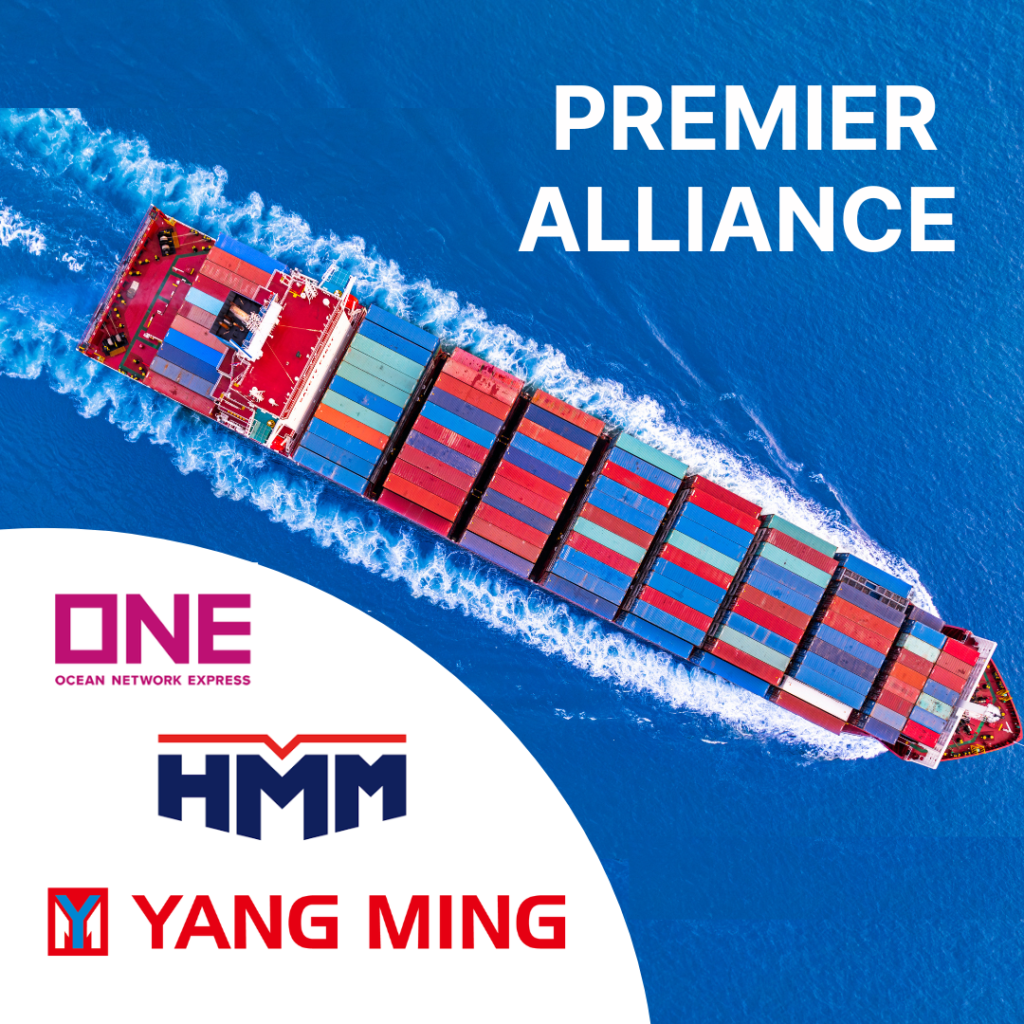
  • Premier Alliance Suez Canal Return Adds Momentum to Red Sea Reopening

    Shipping Arabia, October 4, 2026 – The Premier Alliance Suez Canal return is set to begin this month as ONE, HMM and Yang Ming restore their FE1 service between Southeast Asia and Northern Europe via the canal, adding further momentum to the container shipping sector’s gradual shift away from Cape of Good Hope diversions.

    According to consultancy Linerlytica, the move will mark Premier Alliance’s first departure from the Cape routing it adopted in January. The first sailing is expected to be operated by the 8,110-TEU ONE Continuity, which is scheduled to depart Laem Chabang on October 17.

    Premier Alliance had remained one of the more prominent holdouts from the Suez route while rival carriers gradually rebuilt services through the Red Sea. Its planned return now adds to the cumulative shift in container capacity back toward the canal.

    Premier Alliance Suez Canal Return Follows Other Service Changes

    The Gemini partners, Maersk and Hapag-Lloyd, are also increasing their use of the route. Hapag-Lloyd confirmed that its SE1 service will route the Umm Qarn toward Suez from Tanjung Pelepas on October 27.

    That change follows earlier route adjustments involving the NE4, SE2 and IEX services, according to the report.

    The scale of the broader return is becoming increasingly significant. Maritime Strategies International estimates that around 35% of Asia-Europe sailings are currently using the Red Sea.

    Meanwhile, Linerlytica calculates that more than 140 containerships representing over 2 million TEU of capacity have returned to Suez Canal routes since May.

    Security Remains Main Constraint on Faster Normalization

    Despite the accelerating return, security conditions remain the principal obstacle to a faster normalization of Red Sea shipping, according to Linerlytica.

    Demand for naval escorts through the southern Red Sea has risen to the point that the European Union’s Aspides mission has acknowledged that the available warships are insufficient to meet all escort requests.

    This security constraint continues to affect the pace at which carriers can restore services through the region, even as a growing share of Asia-Europe sailings returns to the Red Sea and Suez Canal.

    Suez Return Raises Container Capacity Concerns

    The gradual restoration of Suez routings is also increasing attention on the amount of vessel capacity that could return to the market.

    Cape of Good Hope diversions have helped absorb a substantial amount of containership capacity. Linerlytica said the containership orderbook has reached a record 15.6 million TEU, equivalent to more than 45% of the current fleet.

    As more services return to the shorter Suez routing, some of the effective capacity absorbed by longer voyages could be released back into the market.

    Freight markets are already showing early signs of pressure. Freightos reported that Asia-Northern Europe spot rates fell 9% in its latest weekly assessment to $3,376 per FEU.

    Asia-Mediterranean spot rates declined 7% to $3,620 per FEU. Part of the weakness was attributed to the gradual resumption of Red Sea shipping, which is restoring effective vessel capacity.

    MSI Flags Earnings Impact as Voyages Shorten

    Maritime Strategies International has also warned that a resumption of Suez Canal transits could weigh on earnings because shorter routings reduce vessel demand.

    However, its latest containership outlook continues to indicate strong charter markets through the first half of 2027, particularly for feeder and midsize vessels.

    Congestion is currently absorbing part of the potential capacity surplus. Linerlytica estimates that 3.76 million TEU, equivalent to 10.9% of the global fleet, is currently affected by congestion.

    Sea-Intelligence places the proportion at more than 8% and estimates that the disruption could take seven to 10 months to fully unwind.

    The Premier Alliance Suez Canal return, alongside other service restorations, therefore comes as the container shipping market faces a combination of easing route diversions, significant new vessel capacity and persistent congestion.

    Source: Al Mal News

  • Damietta Port Ship Calls Rise 18% in August as Cargo Throughput Grows

    Shipping Arabia, October 2, 2026 – Damietta Port ship calls increased 18% year on year in August 2026, reaching 316 vessels compared with 267 in the same month of 2025. The increase came alongside a 6% rise in total cargo throughput to about 3.54 million tons, according to Damietta Port Authority data reviewed by Al Mal.

    Container vessel calls rose 21% to 104 ships from 86 a year earlier. Dry bulk vessel calls increased 28% to 95 from 74, while general cargo vessel calls declined 17% to 35 from 42.

    Liquid bulk vessel calls remained unchanged at 14 ships, while RoRo calls were also stable at four vessels. Meanwhile, the category covering regular and service vessels increased 36% to 64 ships from 47 in August 2025.

    Damietta Port Ship Calls Accompany Higher Cargo Volumes

    Total cargo handled at Damietta Port reached approximately 3.54 million tons during August, up from 3.34 million tons in the corresponding month last year. Performance varied significantly across individual cargo segments.

    Traditional general cargo declined 44% to about 268,000 tons from 480,000 tons. In contrast, dry bulk cargo increased 11% to 1.62 million tons, compared with 1.46 million tons in August 2025.

    Liquid bulk recorded the strongest growth among the major cargo categories, rising 113% to approximately 405,000 tons from 190,000 tons. RoRo cargo also increased sharply, reaching about 15,900 tons compared with 6,300 tons a year earlier, representing growth of 152%.

    Containerized cargo by weight reached approximately 1.23 million tons, up 3% from 1.19 million tons in August 2025.

    Container Numbers Decline Despite Higher Containerized Cargo Weight

    Although containerized cargo tonnage increased, the number of containers handled by Damietta Port fell 13% year on year. The port handled about 130,000 containers during August, compared with approximately 148,600 in the same month of 2025.

    Import containers declined 26% to about 50,000 from 67,600. Export container volumes moved in the opposite direction, increasing 2% to approximately 74,800 from 73,200 containers.

    Other additional container movements totaled about 5,000 containers, compared with 8,700 in August 2025, a decline of 35%.

    Regional Shipping Developments Support Vessel Traffic

    A Damietta Port Authority official attributed the strong increase in vessel calls to developments around Bab el-Mandeb and the Strait of Hormuz. According to the source, those developments prompted a significant number of vessels carrying cargo from the Arabian Gulf region to pass through Damietta on voyages to and from Europe.

    The official said August recorded the port’s highest increase in vessel calls, at 18%, adding that changes affecting international shipping routes had influenced vessel traffic patterns at transshipment ports.

    The source also said Hapag-Lloyd and Maersk had recently increased the frequency of their calls at Damietta Port as relative calm returned to the Bab el-Mandeb area.

    According to the official, the additional calls contributed to Damietta Port’s inclusion in services operated by the two shipping lines and strengthened maritime connectivity between Asia and Europe through the Suez Canal. The source said this development supports Damietta Port’s position within international trade routes.

    Source: Al Mal

  • Major Shipping Lines Increase and Consider Return to Suez Canal Transits

    Shipping Arabia, September 30, 2026 – Major shipping lines are increasing or considering a return to Suez Canal transits as more maritime services resume using the waterway, according to discussions between the Suez Canal Authority and representatives of 20 major shipping lines and shipping agencies.

    Admiral Ossama Rabiee, Chairman and Managing Director of the Suez Canal Authority, said flexible pricing policies and effective communication with customers have contributed to the return of a significant number of maritime services operated by major shipping lines. He also stressed that readiness and preparedness levels across the Canal’s operational system have been elevated, while navigation continues to proceed smoothly.

    The meeting was held at the SCA’s headquarters in the Irshad Building in Ismailia. It was attended by senior Authority officials, including SCA deputy chairmen Admiral Ashraf Atwa and Admiral Ahmed Khaled, along with board members and senior officials.

    Suez Canal Transits Increase Among Major Carriers

    The meeting formed part of the SCA’s regular engagement with stakeholders across the maritime sector. These include international organizations, major shipping lines, international chambers of shipping, shipping agencies and other relevant entities.

    Rabiee described shipping line and agency representatives as important partners and a key link in maintaining communication with major carriers. He said the SCA remains ready to discuss ways of supporting its customers and has continued modernizing its navigational and maritime services to meet vessel requirements under both normal and emergency conditions.

    He also encouraged customers to provide feedback on the Authority’s new maritime and logistics services through evaluation channels available on the SCA website. The objective, he said, is to maintain high standards of service quality and operational efficiency.

    CMA CGM Group in Egypt and Sudan CEO Tarek Zaghloul said the carrier has continued transiting the Suez Canal since Red Sea tensions began. He reported that 60 CMA CGM vessels passed through the Canal during September, reflecting the carrier’s continued use of the route.

    A.P. Moller-Maersk Group Representative in the Middle East and North Africa Hany El Nady also highlighted an increase in the company’s Suez Canal activity. He said Maersk transits rose from eight vessels in September 2025 to 67 in September 2026 and expected yearly transits to reach 278 in the future.

    Yang Ming, OOCL and COSCO Consider More Canal Traffic

    Several other carriers indicated that they are considering renewed or increased Suez Canal transits.

    Ashraf Sami, General Manager of Branches at Yang Ming, praised the SCA’s infrastructure development, modernization of its maritime fleet and efforts to improve workforce efficiency. He said Yang Ming is seriously considering returning to Suez Canal transits in the near future.

    Abd El-Aziz Nabil, General Manager of maritime agency INCHCAPE, said OOCL intends to return to the Canal. He expected the carrier to conduct an experimental transit during October.

    COSCO General Manager Hany El-Sallamy said the carrier is considering increasing its voyages through the Canal following a successful transit by one of its container ships a few days earlier. He added that three further COSCO vessels are scheduled to transit the Canal during the coming period.

    Mohamed El-Alfy, General Manager of Gulf Agency Company, said the current period is showing positive signs as a number of maritime services operated by major shipping lines return. He also expressed expectations for higher traffic levels through the Canal in the coming period.

    SCA Highlights Readiness and Crisis Monitoring

    Rabiee emphasized the Canal’s operational readiness and said SCA pilots continue to demonstrate high levels of performance and preparedness.

    He also addressed the impact of geopolitical challenges on the maritime industry. According to Rabiee, regional developments have affected the sustainability of global supply chains and contributed to higher fuel prices, freight rates and insurance premiums, increasing pressure on global maritime transport.

    The SCA’s Crisis Management Center is monitoring regional developments around the clock and assessing their potential impact on Canal navigation. The Authority’s Economic Research Unit within the Planning Department is also evaluating these developments.

    Participants discussed the regional situation and its effects on navigation schedules and operational plans. They also explored ways to strengthen future cooperation between the Authority, shipping lines and maritime agencies.

    Shipping Agencies Back SCA Services and Shipyard Capabilities

    Rear Admiral Ehab El Banan, Chairman of Clarkson Shipping Agency Company, praised the SCA’s approach of consulting shipping lines and maritime agencies and exchanging views with them. He said this cooperation supports the development of a shared vision and decisions that serve mutual interests.

    El Banan also expressed hope for greater regional stability, which he said would support recovery and growth in Canal navigation. He described the Suez Canal as the shortest and most cost-effective maritime route.

    Adel Ellameey, a member of parliament and Chairman of the Port Said Navigation Chamber, praised the Authority’s crisis management efforts and the quality of its services, particularly ship maintenance and repair. He proposed exploring an expansion of navigational services through cooperation between the SCA and private shipping agencies.

    Ellameey also proposed that the Authority organize a global maritime conference bringing together major stakeholders from across the maritime community. The proposed event would also provide an opportunity to promote the SCA’s range of services.

    Wassim Shukri, Director of the Canal region at maritime agency WILHELMSEN, praised the Authority’s efforts to upgrade services offered to transiting ships. He highlighted mooring, maintenance and repair services and referred to maintenance and repair work carried out on the vessel RED ZED at Suez Shipyard Co.

    Wider Maritime Industry Participation

    The meeting also included representatives of SPHINX, LETH, NOATUM MARITIME, ARKAS, FENMAR, MEDLEVANT, Damanhour Shipping Agency and Assiut Shipping Agency. Representatives from shipping lines ONE and EVERGREEN also participated.

    The broad attendance formed part of the SCA’s ongoing engagement with shipping companies and maritime service providers as it seeks to maintain direct communication with Canal users.

    At the conclusion of the meeting, Rabiee reiterated the Suez Canal’s readiness to deal with difficult situations and emergencies. He also stressed the Authority’s ability to meet customer expectations and operational requirements as shipping lines reassess their routing through the Canal.

    Source: Suez Canal Authority

  • Maersk Peak Season Surcharge Set for Somalia and Tanzania Shipments

    Shipping Arabia, September 29, 2026 – Maersk will introduce a Maersk peak season surcharge on shipments from Northern Europe and the Mediterranean to Somalia and Tanzania from October 7, 2026, until further notice.

    The Danish container shipping company said the Peak Season Surcharge (PSS) will amount to $200 per 20-foot container and $300 per 40-foot or 45-foot container.

    The surcharge will not apply to SPOT bookings.

    Maersk Peak Season Surcharge Rates

    Under the announced pricing, shipments covered by the new surcharge will face a $200 PSS for each 20-foot container. The charge will rise to $300 for 40-foot and 45-foot containers.

    The measures cover cargo moving from Northern Europe and the Mediterranean to Somalia and Tanzania, with the new rates taking effect on October 7.

    Maersk said the Maersk peak season surcharge will remain in place until further notice.

    Pricing Calculation Date for Shipments

    Maersk also outlined how the Pricing Calculation Date (PCD) will apply to affected shipments.

    For cargo not regulated by the U.S. Federal Maritime Commission (FMC), the PCD refers to the scheduled departure date of the first ocean leg at the time of booking confirmation.

    For FMC-regulated shipments, the PCD refers to the date when the final container enters the port, known as the gate-in date.

    U.S. and Chinese Regulatory Requirements

    For shipments subject to the U.S. Shipping Act or Chinese maritime regulations, Maersk said quotations or surcharges that differ from the Maersk Line tariff are not binding unless they are included in an applicable service contract or an amendment to a service contract.

    Such contracts or amendments must be filed with the U.S. Federal Maritime Commission or the Shanghai Shipping Exchange, as applicable.

    Source: Al Mal

  • Maersk Sets $800 Heavy Weight Surcharge on Far East-Middle East Cargo

    Shipping Arabia, September 28, 2026 – Maersk will introduce an $800 Heavy Weight Surcharge (HWS) on 40-foot containers shipped from Far East Asia to selected Middle East markets when the container’s verified gross mass (VGM) exceeds 20 metric tons.

    The surcharge will take effect from the price calculation date of October 5, 2026. It will apply to contractual bookings for shipments destined for the UAE, Saudi Arabia, Bahrain, Iraq, Kuwait, Oman and Qatar.

    Maersk will apply the $800 charge to qualifying 40-foot containers originating from Brunei, China, Hong Kong, Indonesia, Japan, Cambodia, Mongolia, South Korea, Laos, Myanmar, Malaysia, the Philippines, Singapore, Taiwan, Thailand and Vietnam.

    Price Calculation Rules for the New Surcharge

    The applicable price calculation date will depend on the type of booking and whether the shipment falls under U.S. Federal Maritime Commission (FMC) regulations.

    For non-instant bookings outside trades regulated by the FMC, the applicable price calculation date will be the scheduled departure date of the first ocean leg as recorded when the booking is confirmed.

    For shipments subject to FMC regulations, the price calculation date will instead be based on the date when the final container enters the port.

    The new measure therefore introduces a specific weight threshold for 40-foot containers moving from the listed Far East origins to the seven Middle East destinations. Containers exceeding a VGM of 20 metric tons will be subject to the $800 HWS under the applicable contractual booking terms.

    Maersk Revises 20-Foot Container Threshold to Northern Europe

    Separately, Maersk has also revised the weight threshold that triggers its Heavy Weight Surcharge for shipments from the Far East to Northern Europe.

    From the price calculation date of September 30, 2026, the surcharge will apply to all types of 20-foot containers with a VGM exceeding 28 metric tons. Containers above that threshold will incur an additional charge of $400.

    The measure covers shipments originating from Brunei, China, Hong Kong, Indonesia, Japan, Cambodia, Mongolia, South Korea, Laos, Myanmar, Malaysia, the Philippines, Singapore, Taiwan, Thailand and Vietnam.

    The two measures establish different weight thresholds and surcharge levels according to container size and trade route. For Far East-Middle East contractual shipments, the $800 surcharge applies to 40-foot containers above 20 metric tons from October 5. For Far East-Northern Europe shipments, the $400 charge applies to 20-foot containers above 28 metric tons from September 30.

    Source: Al Mal

Back to top button