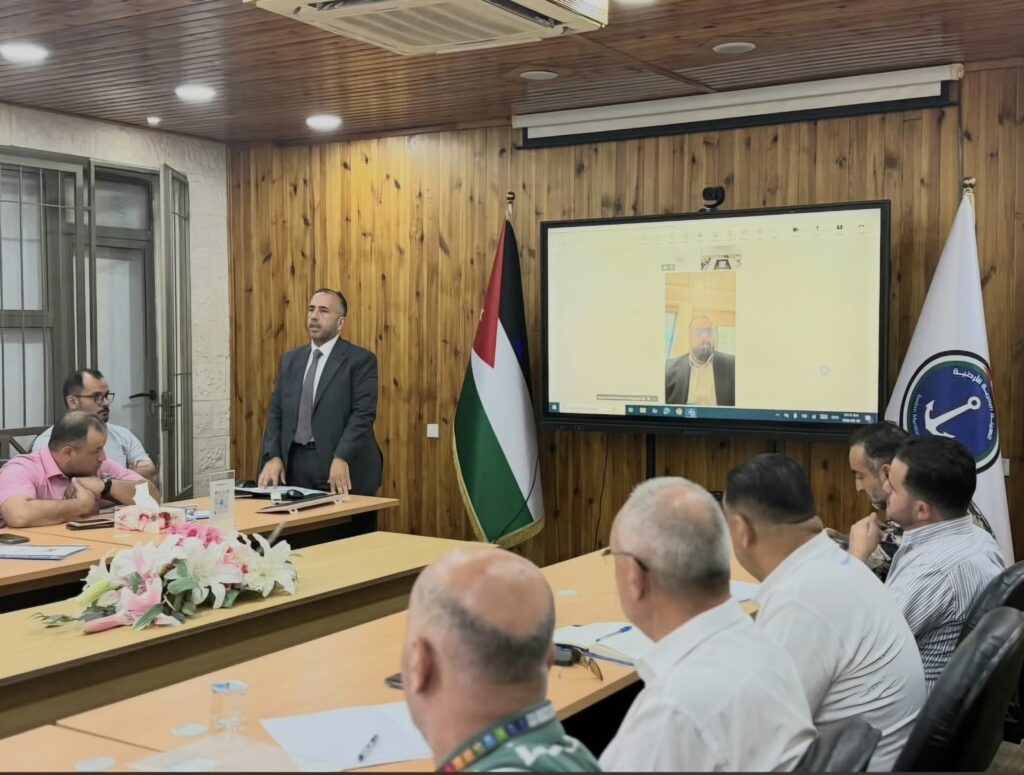
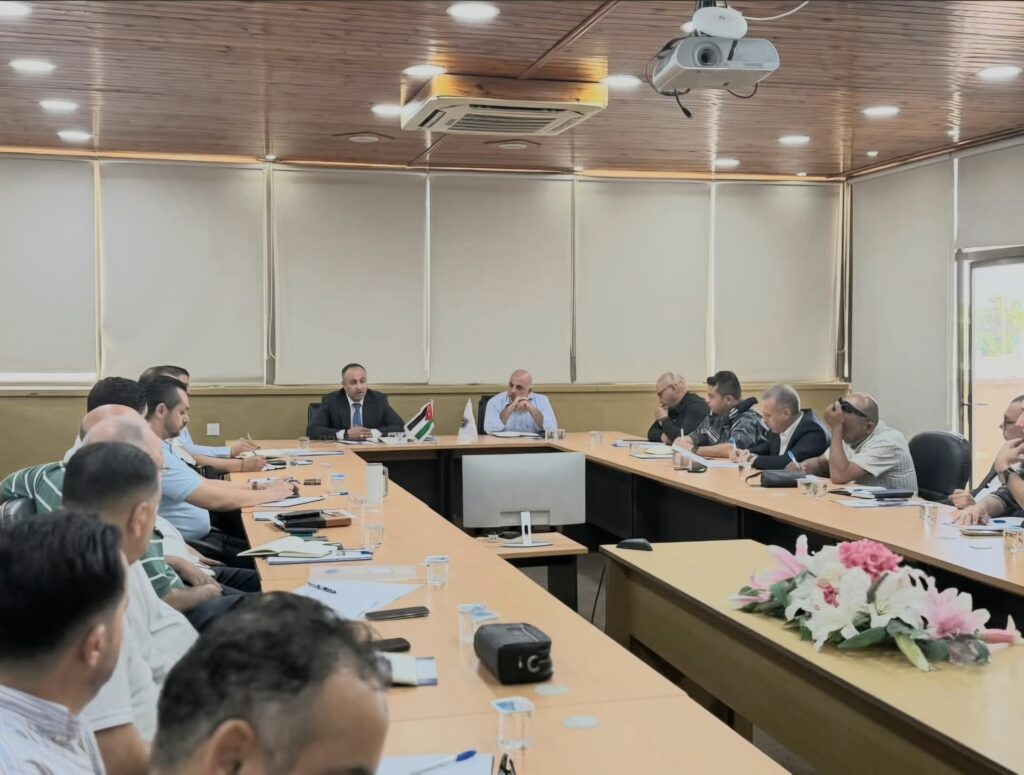
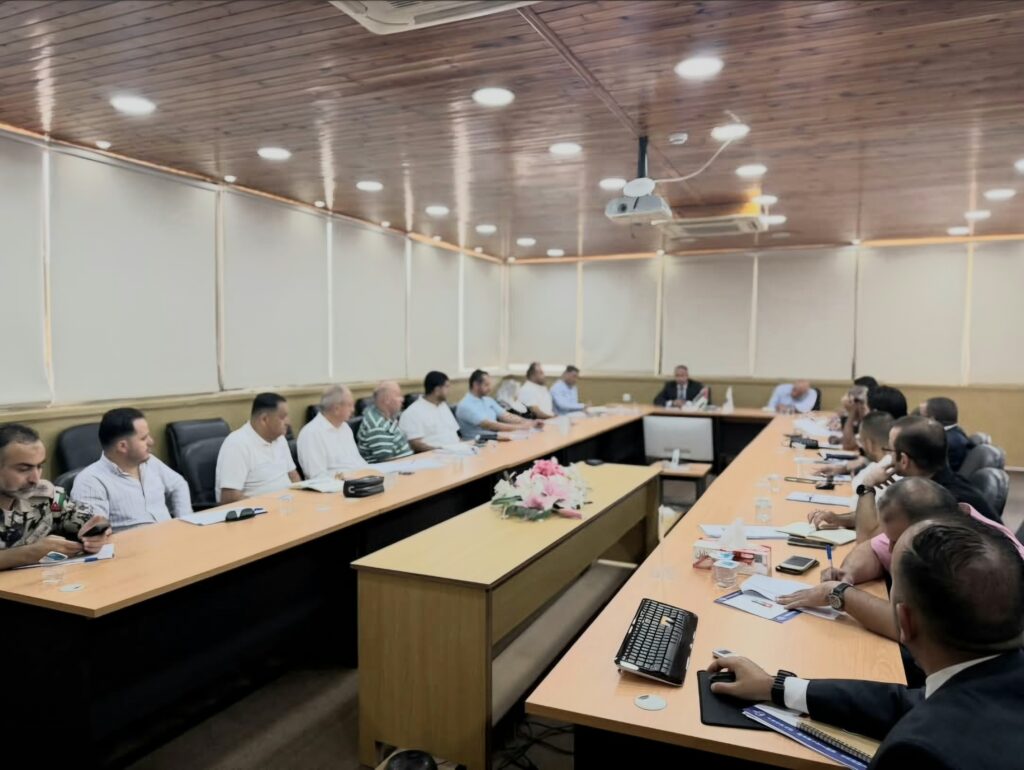
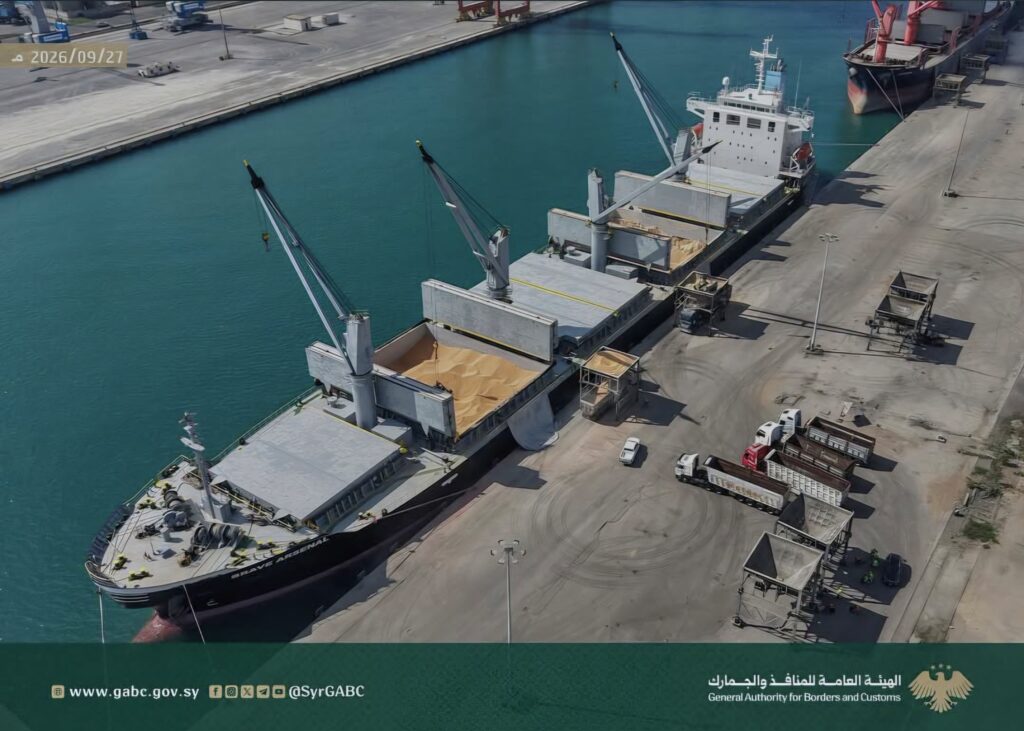
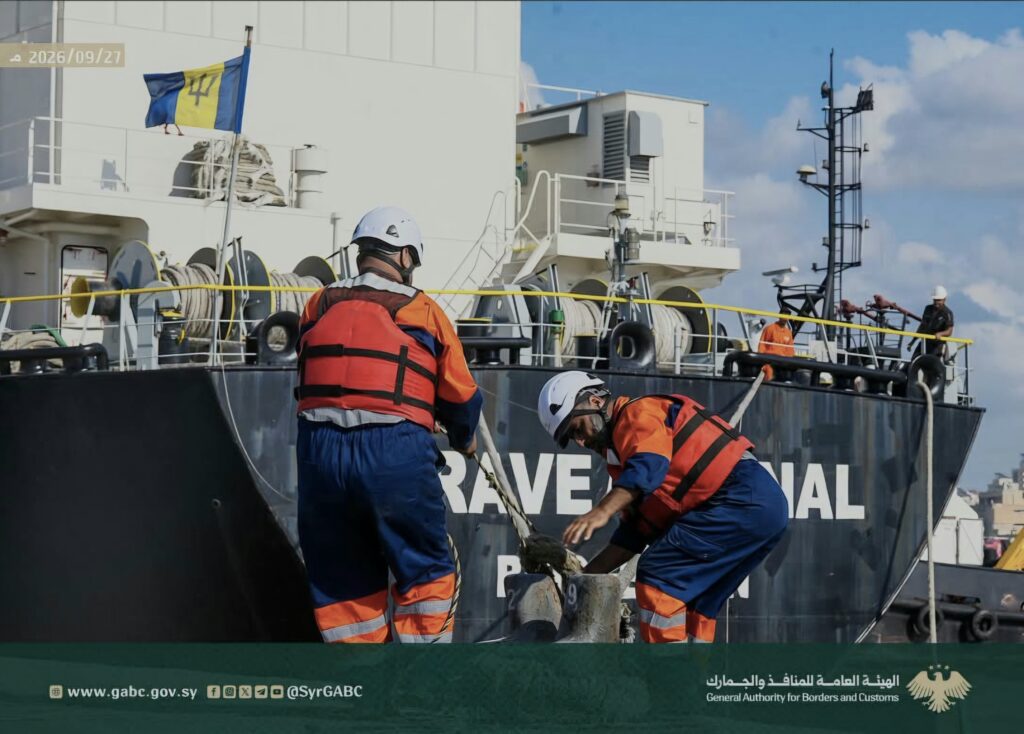
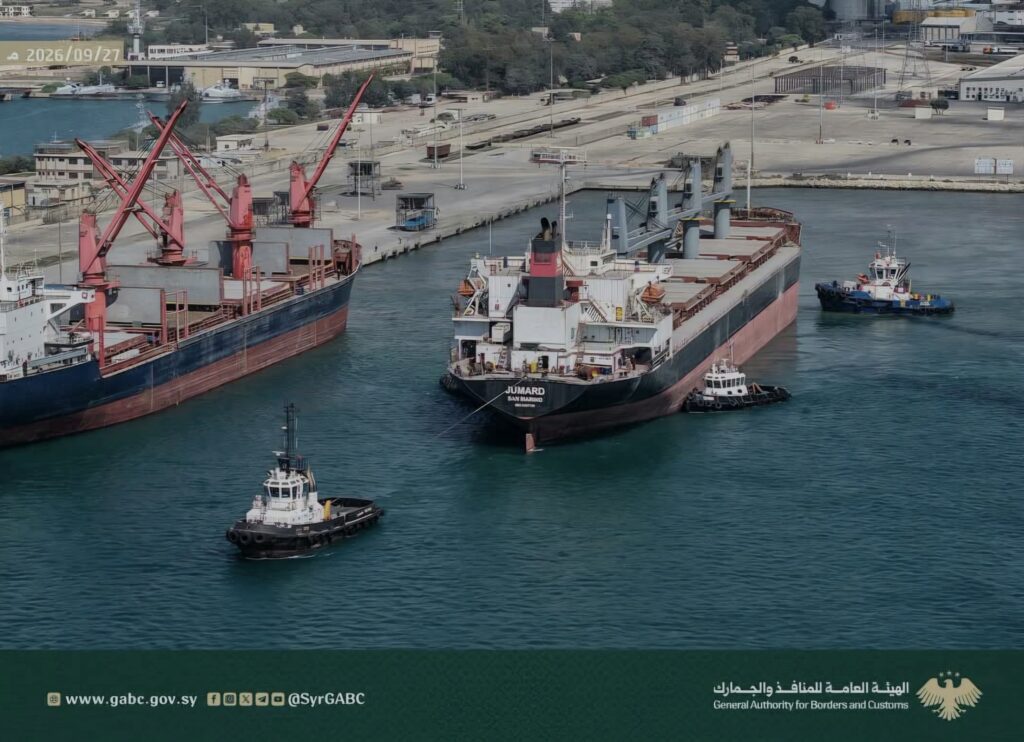
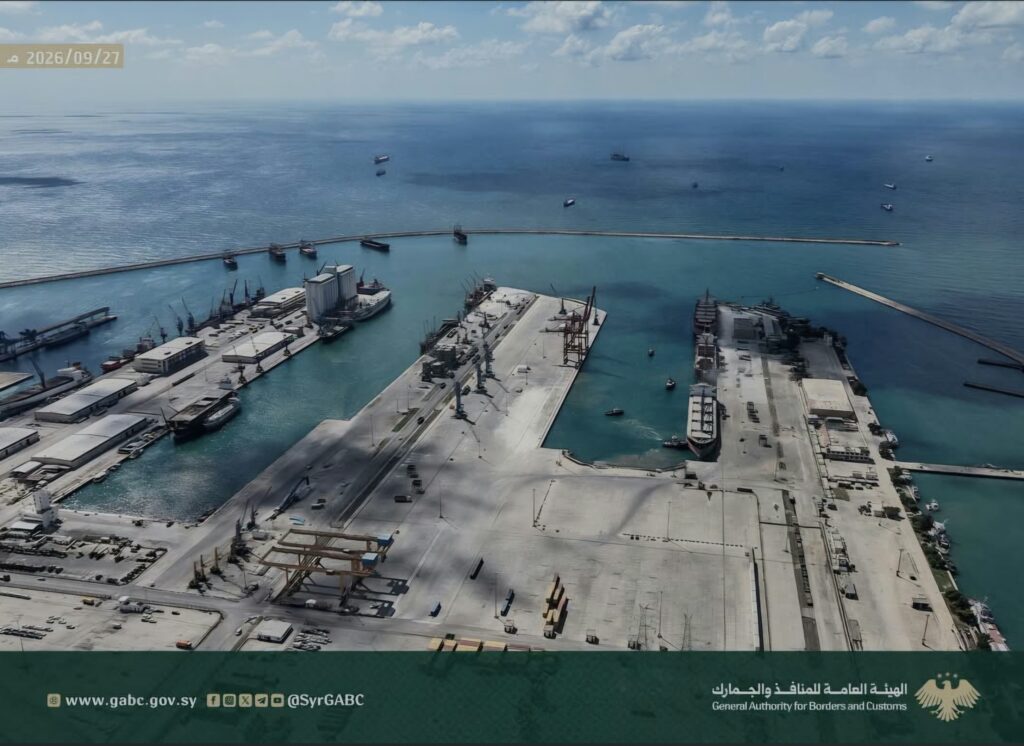
Shipping Arabia, October 14, 2026 – Syria’s General Authority for Borders and Customs (GABC) has held an extensive meeting at Latakia Port to review maritime operations, development plans and key operational challenges. The discussions focused on improving port services, advancing digital transformation and strengthening coordination among the authority’s affiliated entities.
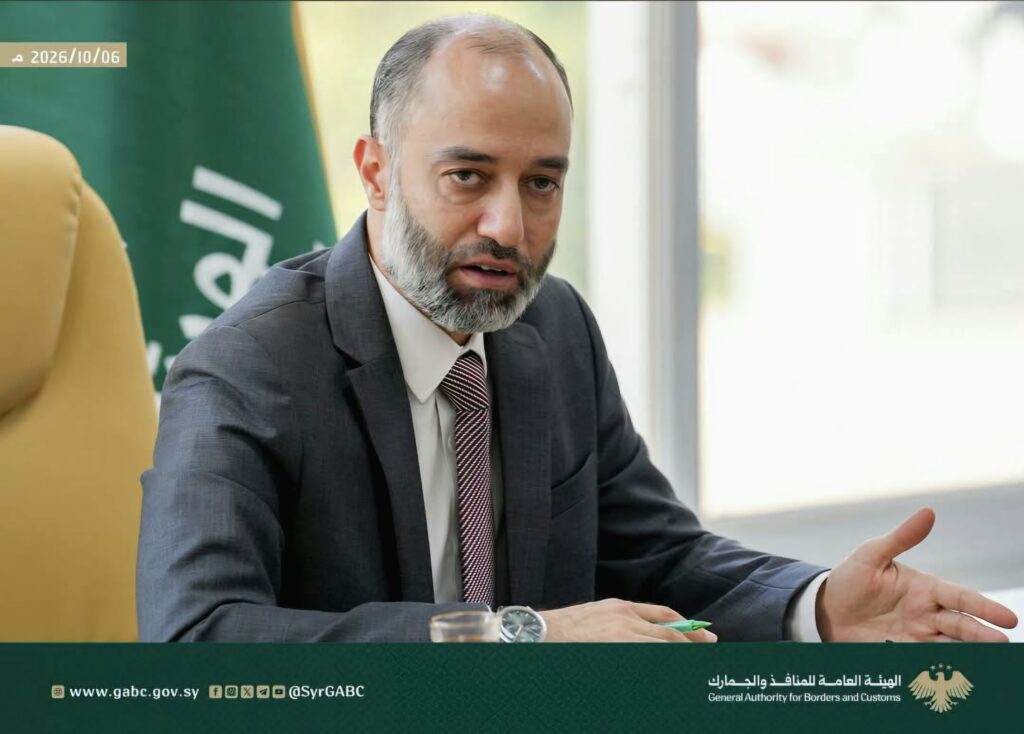
The meeting was chaired by Qutaiba Badawi, Head of the General Authority for Borders and Customs, with the participation of directors from the authority’s central departments and directorates.
Officials examined current operational conditions, identified challenges affecting various departments and discussed measures to improve institutional coordination and service efficiency across Syria’s maritime sector.
Port Operations and Maritime Service Development
A major focus of the meeting was the performance of Syrian ports and the development of services provided by the authority’s maritime entities.
Discussions covered port operations, Coast Guard activities, maritime transport and the Syrian Shipping Agencies Company. Officials reviewed opportunities to improve service delivery, increase operational efficiency and address challenges affecting these activities.
The meeting also examined the requirements of the Maritime Training and Qualification Establishment, particularly its role in preparing qualified personnel for the maritime sector.
Participants emphasized the importance of developing the workforce needed to support improvements in maritime services and strengthen the capabilities of institutions operating under the authority.
These discussions formed part of a broader review of how the authority’s various departments and affiliated organizations can coordinate their activities more effectively.
Digital Transformation and Administrative Modernization
Digital transformation was another central topic, with officials reviewing projects to modernize administrative and operational systems across the authority.
The discussions addressed measures to accelerate official correspondence, simplify working procedures and improve the efficiency of administrative processes.
Participants also examined the standardization of administrative forms and legal procedures to establish more consistent working practices across departments.
In addition, the meeting addressed staffing requirements and improvements to the working environment, reflecting the authority’s focus on ensuring that its departments have the personnel and organizational resources needed to perform their responsibilities.
Performance Monitoring and Service Quality
During the meeting, Badawi emphasized the importance of adopting clear action plans supported by measurable key performance indicators (KPIs).
He called for systematic monitoring of assigned tasks, closer follow-up on implementation and measures to overcome obstacles that could delay progress.
Badawi also directed the authority’s departments to prioritize improvements in service quality while strengthening confidence among customers and investors.
Furthermore, he stressed the importance of institutional working practices and closer integration among the authority’s different departments and affiliated entities.
The meeting brought together the operational, administrative and training priorities of Syria’s maritime sector, with an emphasis on coordinated development, improved performance monitoring and more efficient service delivery.
Shipping Arabia, October 13, 2026 – The Jordan Shipping Association (JSA) held a series of meetings in Aqaba to address operational challenges, customs procedures and developments affecting maritime trade through Aqaba Port. The discussions brought together customs officials, port stakeholders and representatives of Aqaba Development Corporation (ADC) to review current operating conditions and identify measures to improve cargo movements and port efficiency.
The meetings formed part of the association’s ongoing efforts to monitor developments in Jordan’s maritime transport and logistics sector. They also focused on addressing procedural challenges, strengthening coordination with government authorities and maintaining the smooth flow of trade amid changing geopolitical conditions.
The JSA delegation included Chairman Zaid Al-Kalaldeh, Board Member Mohammed Abdul Hadi and Assistant General Manager Raad Hakouz.
Aqaba Port Customs Procedures and Cargo Movements
During a meeting with Brigadier General Yahya Al-Faraheed, Director of the Aqaba Customs Directorate, the association discussed several customs and operational matters directly affecting shipping and logistics activities.
Key issues included the movement of vehicles out of port yards, permission to store transit cargo and electronic clearance procedures for outbound cargo manifests. The discussions also covered other customs-related procedures affecting the movement of goods and vehicles through Aqaba Port.
The association emphasized the importance of addressing these matters to facilitate cargo flows, reduce procedural challenges and improve coordination between shipping companies and customs authorities.
Al-Kalaldeh commended the efforts of the Jordan Customs Department in responding to challenges facing the transport and trade sectors. He noted that measures and facilitation procedures introduced by customs authorities had played an important role in mitigating the impact of existing difficulties on trade and transport activities.
The JSA chairman also stressed the importance of maintaining close cooperation between the association and the customs department. He highlighted the need for continued coordination to address sector requirements and improve the efficiency of customs procedures.
For his part, Al-Faraheed recognized the Jordan Shipping Association’s role in representing the interests of the maritime sector and maintaining constructive engagement with relevant authorities.
He praised the association’s ongoing coordination and its efforts to follow up on industry concerns, emphasizing the value of cooperation in resolving challenges and improving working procedures.
Aqaba Development Corporation Reviews Port Operating Conditions
In a separate engagement, the Jordan Shipping Association participated in a meeting hosted by Aqaba Development Corporation, attended by representatives of various stakeholders within the Aqaba port community.
The meeting reviewed measures already implemented across the port system and assessed current operational conditions. Participants also discussed recent changes affecting maritime transport and trade movements, particularly in light of geopolitical developments and their implications for the sector.
Discussions focused on operational matters requiring attention and the measures needed to respond to emerging challenges. Participants examined proposals, recommendations and possible actions to strengthen the port system’s ability to adapt to changing circumstances.
Maintaining the efficient movement of cargo through Aqaba Port was a central priority. Stakeholders considered how greater coordination and appropriate operational measures could help preserve cargo flows while addressing existing difficulties.
The discussions also provided an opportunity for representatives of the port community to review developments affecting their respective activities and identify areas requiring continued follow-up.
Strengthening Coordination Across Aqaba’s Maritime Sector
The series of meetings reflected the Jordan Shipping Association’s continued engagement with government institutions, customs authorities and the wider port community.
By raising issues related to vehicle movements, transit cargo storage and electronic customs procedures, the association sought to address operational and administrative matters that directly affect shipping and logistics activities.
The meeting at Aqaba Development Corporation complemented these discussions by examining broader port operating conditions and the implications of geopolitical developments for maritime trade.
Together, the engagements highlighted the importance of coordination between public authorities and private-sector stakeholders in responding to changing operating conditions.
The Jordan Shipping Association reaffirmed its commitment to monitoring developments affecting the maritime and logistics sectors, maintaining communication with relevant authorities and supporting efforts to resolve procedural and operational challenges.
These efforts aim to improve the efficiency of port operations, facilitate trade movements and support the continued flow of goods through Aqaba Port.
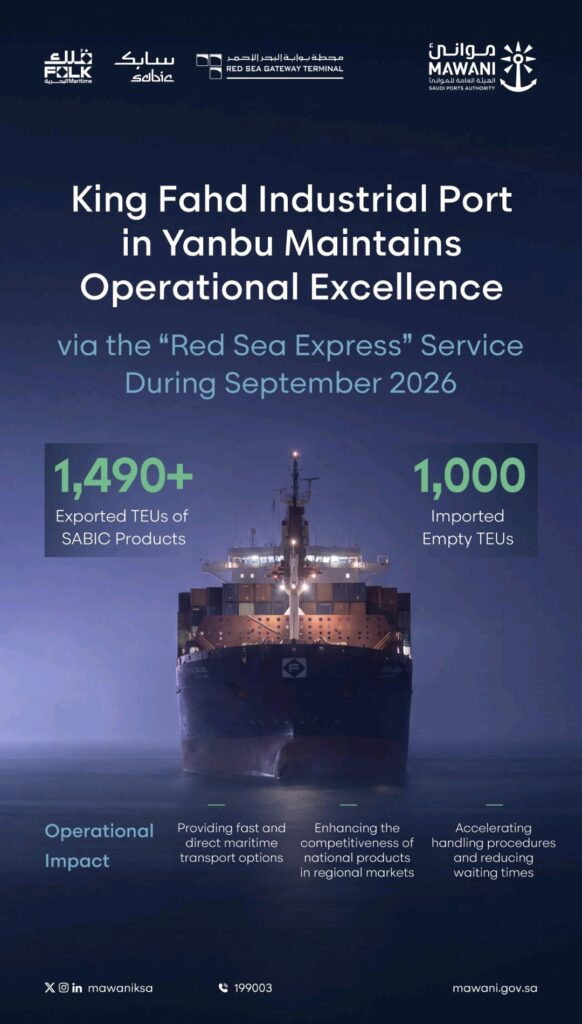
Shipping Arabia, October 12, 2026 – King Fahd Industrial Port in Yanbu, Saudi Arabia, exported more than 1,490 TEUs of SABIC products through the Red Sea Express shipping service in September 2026, according to the Saudi Ports Authority (Mawani). The port also handled the import of 1,000 TEUs of empty containers through the service during the same period.
The figures highlight container activity at King Fahd Industrial Port in Yanbu, with the Red Sea Express service supporting the maritime transportation of Saudi industrial products to regional markets.
Red Sea Express Supports SABIC Exports
The Red Sea Express service facilitated the export of more than 1,490 TEUs of SABIC products during September, alongside the inbound movement of 1,000 TEUs of empty containers.
According to Mawani, the service provides fast and direct maritime transport options, supporting the movement of Saudi products through King Fahd Industrial Port in Yanbu. The authority also highlighted its contribution to enhancing the competitiveness of national products in regional markets.
The combination of export cargo and imported empty containers reflects the service’s role in facilitating container movements through the industrial port.
Improving Cargo Handling and Operational Efficiency
Beyond container volumes, Mawani emphasized the operational benefits associated with the Red Sea Express service. These include accelerating cargo handling procedures and reducing waiting times at the port.
The authority identified improved operational efficiency and direct maritime transport options as important elements in supporting Saudi exports and strengthening their competitiveness in regional markets.
The September performance demonstrates the Red Sea Express service’s contribution to handling SABIC export shipments and supporting containerized maritime trade through King Fahd Industrial Port in Yanbu.
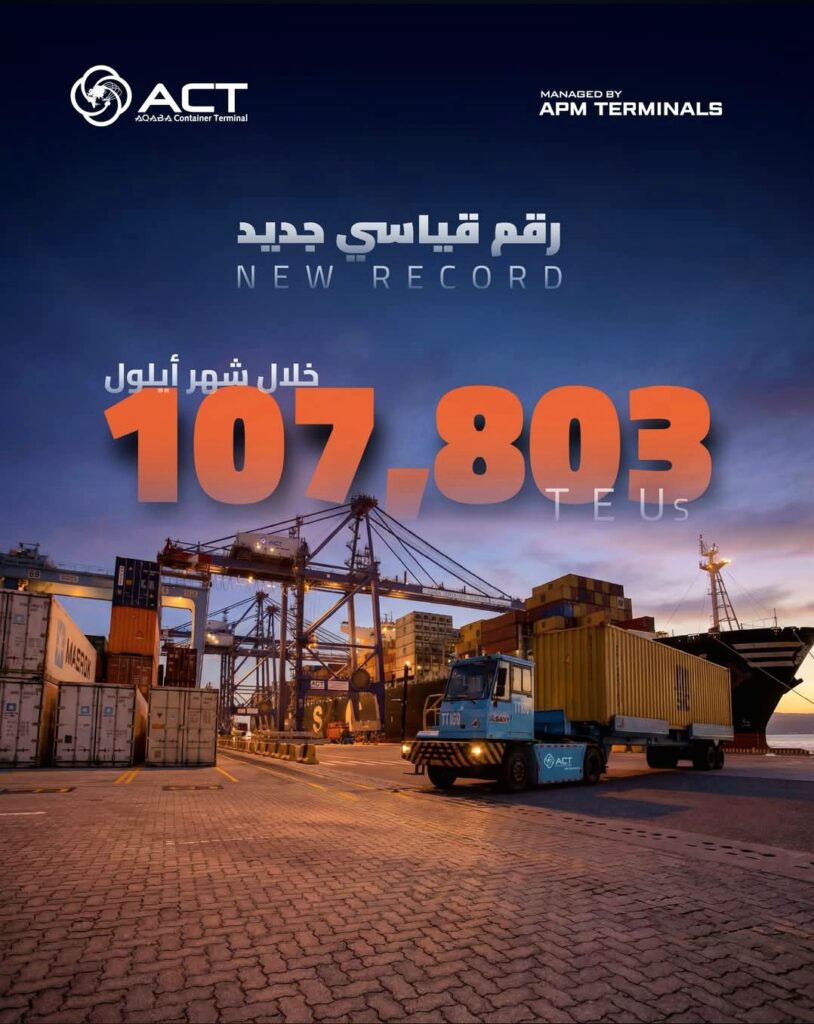
Shipping Arabia, October 12, 2026 – Aqaba Container Terminal (ACT) in Jordan achieved its third consecutive monthly throughput record in September 2026, handling 107,803 twenty-foot equivalent units (TEUs) across 53 vessels. The milestone marked the third straight month in which container volumes exceeded 100,000 TEUs, highlighting sustained operational momentum at Jordan’s principal container terminal.
The September performance followed record throughput levels in July and August, extending ACT’s run of consecutive monthly records. The results reflect the terminal’s continued role in facilitating Jordan’s international trade and supporting cargo movements between the country and regional markets.
Aqaba Container Terminal Throughput Maintains Record Levels
ACT’s September container throughput of 107,803 TEUs represented another milestone in a period of sustained high-volume operations. The terminal surpassed the 100,000-TEU threshold for the third consecutive month, maintaining the momentum established during July and August.
The latest figures also highlight the scale of marine activity at the terminal, with 53 vessels handled during September. ACT maintained its focus on accommodating sustained container volumes while delivering efficient and reliable services to shipping customers and supply chain partners.
The sequence of monthly records reflects the continued importance of Aqaba within regional maritime trade flows. It also demonstrates the terminal’s capacity to handle significant container volumes as it serves Jordan and the wider regional market.
Transit Cargo Reaches 14,712 TEUs as Truck Activity Remains Strong
Transit cargo continued to represent an important component of ACT’s operations during September. The terminal handled 14,712 TEUs of transit shipments, reinforcing its role in facilitating the movement of goods between Jordan and regional markets.
The transit figures highlight the importance of Aqaba’s connectivity to surrounding markets and its function as a maritime gateway for cargo moving beyond Jordan’s domestic market.
Meanwhile, landside operations maintained high activity levels. ACT recorded 45,901 truck visits at its terminal gates during September, reflecting the substantial flow of containers between the port and inland transport networks.
The combination of strong vessel activity, high container throughput and sustained truck movements demonstrated the terminal’s ability to manage cargo volumes across both marine and landside operations.
According to ACT, maintaining efficient and reliable services remains essential to supporting customers and supply chain partners as the terminal handles sustained operational demand.
ACT Reinforces Its Position as a Regional Logistics Gateway
Commenting on the September performance, José Rueda, Chief Executive Officer of Aqaba Container Terminal, said the three consecutive months of record throughput reflected the strength and resilience of Aqaba’s position within regional trade flows.
He emphasized that the terminal’s performance demonstrated its ability to accommodate those trade flows at scale, while maintaining the operational standards required by its customers and partners.
Rueda also highlighted ACT’s focus on strengthening its position as a trusted regional gateway as the logistics landscape continues to evolve.
The terminal aims to combine strong operational performance with improved connectivity, service reliability and consistent customer service standards. These priorities remain central to supporting the needs of shipping lines, logistics providers and other supply chain partners.
According to Rueda, the sustained performance provides a strong foundation for ACT to continue contributing to the growth and competitiveness of Jordan’s logistics sector.
The September results consolidate three consecutive months of record container throughput, reinforcing Aqaba Container Terminal’s role in facilitating regional trade and supporting Jordan’s maritime and logistics activities.
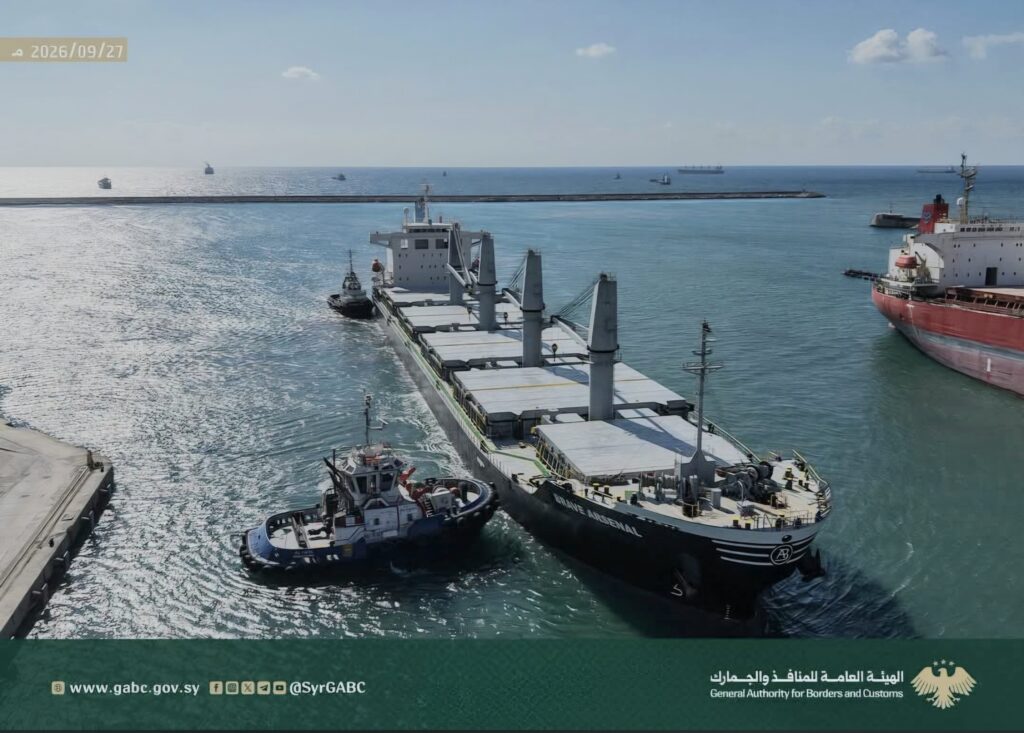
Shipping Arabia, October 11, 2026 – Latakia Port cargo throughput reached approximately 3.8 million tons during the first nine months of 2026, covering general and containerized cargo. The Syrian port also received 532 vessels between January and September, according to figures released by the General Authority for Borders and Customs.
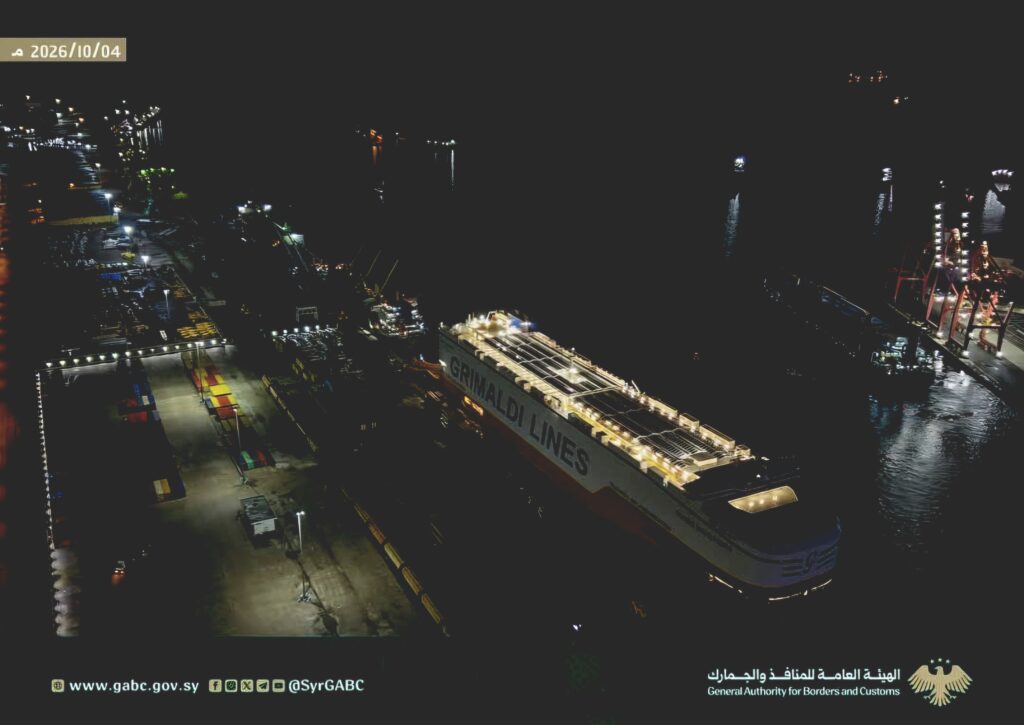
The port continues to maintain round-the-clock maritime and cargo handling operations, with vessels arriving and loading and unloading activities taking place across its berths and storage yards.
Latakia Port Cargo Throughput and Container Volumes
General cargo accounted for approximately 2 million tons of the total volume handled during the reporting period. Meanwhile, container traffic reached around 219,000 containers, carrying nearly 1.8 million tons of cargo.
Together, these figures brought Latakia Port cargo throughput to approximately 3.8 million tons through the end of September 2026.
Containerized cargo and general cargo operations continued throughout the reporting period, supported by ongoing loading and unloading activities at the port’s operational facilities.
Vessel Calls Reach 532 Across Different Maritime Activities
Latakia Port received 532 vessels during the first nine months of 2026, reflecting activity across several maritime service categories.
General cargo vessels accounted for 250 calls, while container ships represented another 247 calls. The remaining traffic included 22 vessels arriving for repair work and 13 passenger ships.
The breakdown highlights the variety of maritime activities taking place at the port, including commercial cargo handling, vessel repair services and passenger vessel operations.
Continuous Operations and Port Efficiency
Alongside its cargo handling and vessel reception activities, Latakia Port continues to focus on maintaining operational efficiency and improving service readiness.
Technical and operational teams are working to ensure the smooth movement of cargo and accelerate handling procedures across the port’s berths and storage areas.
These efforts include maintaining continuous operations, strengthening the port’s operational readiness and improving the efficiency of services provided to vessels and cargo operators.
The ongoing activities aim to support Latakia Port’s role in maritime transportation and commercial trade, while ensuring the continued movement of goods through one of Syria’s maritime gateways.
Shipping Arabia, October 9, 2026 – Syria is advancing Latakia Port infrastructure upgrades and operational improvements aimed at strengthening cargo-handling capabilities, accelerating cargo movements and simplifying administrative procedures. The ongoing rehabilitation program includes new port equipment, improvements to operational facilities and measures to facilitate trade-related transactions.
Tamim Sawaghi, Deputy Head of the General Authority for Borders and Customs for Port Affairs, conducted an inspection visit to Latakia Port to review ongoing development projects and assess operational performance.
The visit focused on infrastructure rehabilitation, cargo movement efficiency and procedures designed to improve services for traders and transport operators. Officials also reviewed measures to facilitate cargo reception, unloading and transportation within the port.
Latakia Port Infrastructure Upgrades and Cargo-Handling Equipment
During the inspection, Latakia Port Director Abdul Hamid Al-Wahb briefed Sawaghi on the rehabilitation and equipment modernization activities currently underway.
The projects include upgrading port infrastructure and introducing new machinery to support cargo-handling operations. These improvements aim to strengthen the port’s operational capacity and increase the efficiency of cargo reception, unloading and transportation.
The addition of handling equipment forms part of efforts to improve service quality and facilitate cargo movements through the port. The rehabilitation work also addresses the operational requirements of port facilities and cargo-handling areas.
Officials reviewed the organization of cargo yards and other port facilities during the visit. This assessment focused on maintaining orderly operations and improving the movement of goods through different sections of the port.
The General Authority for Borders and Customs is overseeing these improvements as part of its efforts to develop the performance of Syria’s maritime ports.
One-Stop Service System Aims to Accelerate Port Procedures
Administrative efficiency represents another important component of the operational improvements at Latakia Port.
During the inspection, Sawaghi reviewed the port’s one-stop service system and its role in simplifying procedures for traders and transport operators.
The system aims to improve coordination between the departments responsible for processing port-related transactions. By bringing together relevant administrative services, the initiative seeks to reduce processing times and facilitate the completion of required procedures.
Greater coordination between port departments is also intended to improve the flow of transactions associated with cargo movements. These measures complement the infrastructure and equipment improvements currently underway.
The inspection therefore addressed both the physical handling of cargo and the administrative processes that support commercial operations.
Strengthening Syria’s Maritime Port Operations
The inspection visit forms part of the General Authority for Borders and Customs’ ongoing field supervision of maritime port operations and rehabilitation activities.
Through these visits, the authority aims to monitor progress, assess operational requirements and support improvements in the quality of port services.
At Latakia Port, the current development efforts focus on improving cargo-handling efficiency, organizing operational areas and reducing administrative processing times.
Together, these measures are intended to strengthen the port’s ability to accommodate cargo movements and provide more efficient services to shipping-related businesses, traders and transport operators.
The authority emphasized that developing maritime port performance and improving service quality remain important objectives in supporting trade activity and meeting the needs of Syria’s economic sectors.
Source: General Authority for Borders and Customs – Syria
Shipping Arabia, October 7, 2026 – Saudi empty container return procedures have been standardized by the Saudi Ports Authority (Mawani) for designated storage yards at the Kingdom’s ports, with the measures aimed at improving operational efficiency, clarifying responsibilities and limiting additional costs resulting from changes to container return locations.
The procedures set out requirements for informing beneficiaries of where empty containers must be returned, documenting that information and managing any subsequent change to the designated location. They also define responsibility for additional costs when a return location differs from the location previously agreed.
Beneficiaries Must Receive Return Location in Advance
Under the Saudi empty container return procedures, the location and address for returning an empty container must be clearly specified when the delivery order is issued and before the beneficiary receives the container.
Mawani also requires clear and accurate information on the designated empty container return location and the storage yard assigned for the return. This is intended to give beneficiaries clear information before arranging the movement of the container.
For transit containers, the return location and city must be identified before the container is collected. According to the authority, providing this information in advance allows the beneficiary to arrange the required transportation beforehand.
Written Notice Required for Location Changes
If the designated container return location or storage yard changes, the beneficiary must be notified in writing before the scheduled return date.
Shipping agents are also required to retain documentation showing that the beneficiary was informed of the empty container return location. The same requirement applies to any subsequent update or change to that location.
These documentation requirements form part of Mawani’s effort to make the process clearer and establish a record of the information communicated to the beneficiary.
Shipping Agents Responsible for Additional Costs
The procedures also address additional costs that may arise when a previously agreed container return location changes.
Mawani stated that the shipping agent will bear additional costs resulting from changing the agreed location for the delivery or collection of the container. The measure is intended to limit the financial impact on beneficiaries when return arrangements are altered after the original location has been established.
The Saudi Ports Authority said the overall objective of the new procedures is to improve the efficiency of empty container returns, enhance clarity across the process and reduce additional costs caused by changes to designated return locations.
The measures form part of Mawani’s wider efforts to improve operational efficiency at Saudi ports by organizing the return of empty containers to designated storage yards and defining the responsibilities associated with those movements.
Shipping Arabia, October 5, 2026 – The Jordan Maritime Commission has convened a coordination meeting in Aqaba to address vessel waiting times at Aqaba ports and identify practical measures to improve cargo flow, accelerate handling operations and strengthen the efficiency of the maritime and logistics system.
The meeting was chaired at the Commission’s headquarters by Director General Ahmad Al-Assasleh. Representatives from the Ministry of Transport joined remotely, while participants also included the Aqaba Special Economic Zone Authority, Aqaba Development Corporation, the Royal Jordanian Navy, port and terminal operators, the Jordan Shipping Association, relevant security agencies and other stakeholders.
The discussions focused on current port operations, the causes behind vessel waiting cases and operational measures that could improve the movement and clearance of cargo. Participants emphasized that vessel delays have multiple causes and cannot be attributed to a single party or operational factor.
Follow-Up to August Ministerial Meeting
The meeting reviewed progress on recommendations from a ministerial meeting held in Aqaba on August 6, 2026, chaired by Minister of Transport and Minister of Labour Dr. Nidal Al-Qatamin and Minister of Industry, Trade and Supply Eng. Yarub Al-Qudah.
That meeting brought together government bodies, private-sector stakeholders and other parties involved in port operations to examine operational challenges and discuss measures aimed at improving efficiency and reducing congestion.
Participants at the latest meeting reviewed the implementation of those recommendations. They noted that a significant portion had already been put into effect through Cabinet decisions approving several of the proposed measures.
According to the meeting, these steps helped address a number of operational obstacles, ease pressure and congestion, improve cargo flow and support the continuity of supply chains.
The Ministry of Transport and other government entities will continue to follow up on implementation in coordination with port operators, the private sector and other stakeholders. The process will also focus on measuring the actual impact of measures already taken and identifying any further obstacles that may require additional action.
Aqaba Vessel Waiting Times Under Review
Participants examined the circumstances behind individual vessel waiting cases, including ships that had remained at anchor or in waiting areas for extended periods.
The meeting stressed the importance of identifying the specific cause of each case rather than treating vessel waiting as a single operational problem. It also called for greater advance readiness by vessels, agents, equipment providers, transport operators, storage yards and documentation teams before cargo operations begin.
Improving readiness before a vessel reaches the operational stage was identified as an important step toward reducing delays and improving berth utilization.
Participants also reviewed operational factors affecting the handling time of some ships, particularly vessels carrying several types of cargo or cargo covered by multiple bills of lading. In such cases, the meeting emphasized the need for detailed pre-planning covering cargo types, the sequence of handling operations and equipment requirements before work starts.
This approach is intended to reduce operational stoppages and improve the use of berths and cargo-handling equipment.
Faster Cargo and Vehicle Movement
The meeting discussed measures to increase yard turnover and accelerate the removal of vehicles and cargo from port areas.
Participants highlighted the need to ensure sufficient availability of trucks and car carriers in line with the scale and pace of discharge operations. Greater transport capacity would support faster evacuation of cargo from the port and reduce pressure on storage areas.
Transit cargo was another area of focus, particularly shipments moving through Aqaba toward Iraq. Participants discussed challenges affecting these cargo flows and the need to strengthen coordination among relevant authorities to improve their movement.
Efforts to increase port capacity were also reviewed. These include the development of additional yards for vehicles and other cargo to reduce pressure on existing storage areas and support more efficient operations.
The meeting also discussed studying the rehabilitation and reactivation of Mu’tah Port/Berth for handling vessels carrying vegetable oils. Any such move would follow the completion of technical studies, safety requirements and the necessary approvals.
Advance Planning and Operational Data Sharing
Participants emphasized the importance of planning for vessels before their arrival in Aqaba.
Regular sharing of vessel arrival schedules and operational information among relevant parties was identified as a key tool for detecting possible bottlenecks early and addressing them before they develop into congestion or extended vessel waiting times.
The meeting also considered proposals for managing the number of vessels present in waiting areas and reactivating anchorage areas in accordance with technical and regulatory requirements and approvals from the relevant authorities.
Greater advance coordination with shipping lines and agents was also discussed. The aim is to reduce situations in which vessels arrive in Aqaba before operational restrictions or other constraints have been identified and addressed.
The participants stressed that improved information exchange should form part of a broader shift from reacting to congestion after it occurs toward proactive operational planning.
This requires advance knowledge of expected vessels, their characteristics and operational requirements, combined with confirmation that port, yard, transport and logistics resources are ready before arrival.
Measuring the Impact of Port Measures
The Jordan Maritime Commission stressed that follow-up should extend beyond confirming whether recommendations and decisions have been implemented.
Participants agreed that their actual effect on port performance must also be measured through clear operational indicators. These include the average vessel waiting time, the number of waiting cases resolved and the number of newly arriving ships added to waiting lists.
Authorities will also monitor vessels that remain waiting beyond defined periods, allowing stakeholders to identify persistent cases and examine the reasons behind them.
The meeting emphasized that reducing vessel waiting times requires coordinated action across government entities, port operators, logistics providers and the private sector. Clear responsibilities and practical follow-up mechanisms will therefore remain central to the process.
The Jordan Maritime Commission said it will continue coordinating with the Ministry of Transport, government authorities, the private sector and other stakeholders to follow up on meeting outcomes, Cabinet decisions and operational measures.
These efforts are intended to improve the efficiency of Aqaba’s maritime and logistics system, support supply chain continuity and strengthen the operational performance of Aqaba ports and their role in regional trade and transport.
Shipping Arabia, October 4, 2026 – Cargo handling and unloading operations are continuing at an accelerated pace at Tartous Port Berth 4, with active movement of cargo-handling equipment supporting faster operations and smoother cargo flows within the Syrian port.
The ongoing activity follows the start of commercial operations at Berth 4 on August 11, when the berth received its first vessels. Its operation has added to the port’s handling and storage capabilities while supporting efforts to increase capacity and accelerate cargo movements.
Tartous Port Berth 4 Returns to Commercial Operations
The General Authority for Ports and Customs took over the commercial areas previously occupied by the Russian side at Tartous Port in August. The handover included Berth 4 as well as its associated facilities, installations and storage yards.
Commercial operations subsequently began at the berth on August 11. Since then, Tartous Port Berth 4 has been used for cargo-handling and unloading activities, with machinery and equipment deployed to move cargo and support the flow of operations within the port.
The additional berth capacity is intended to strengthen Tartous Port’s operational and storage capabilities. It also supports faster cargo handling and increases the port’s capacity to accommodate commercial activity.
Authority Targets Higher Port Readiness and Efficiency
The operation of Berth 4 forms part of the General Authority for Borders and Customs’ efforts to develop Syrian ports and improve their operational readiness.
The authority is also seeking to raise the efficiency of port services to meet the requirements of trade flows and support maritime transport activity.
The continuing cargo operations at Tartous Port Berth 4 therefore represent part of the wider effort to make greater use of the port’s infrastructure, storage areas and commercial facilities.
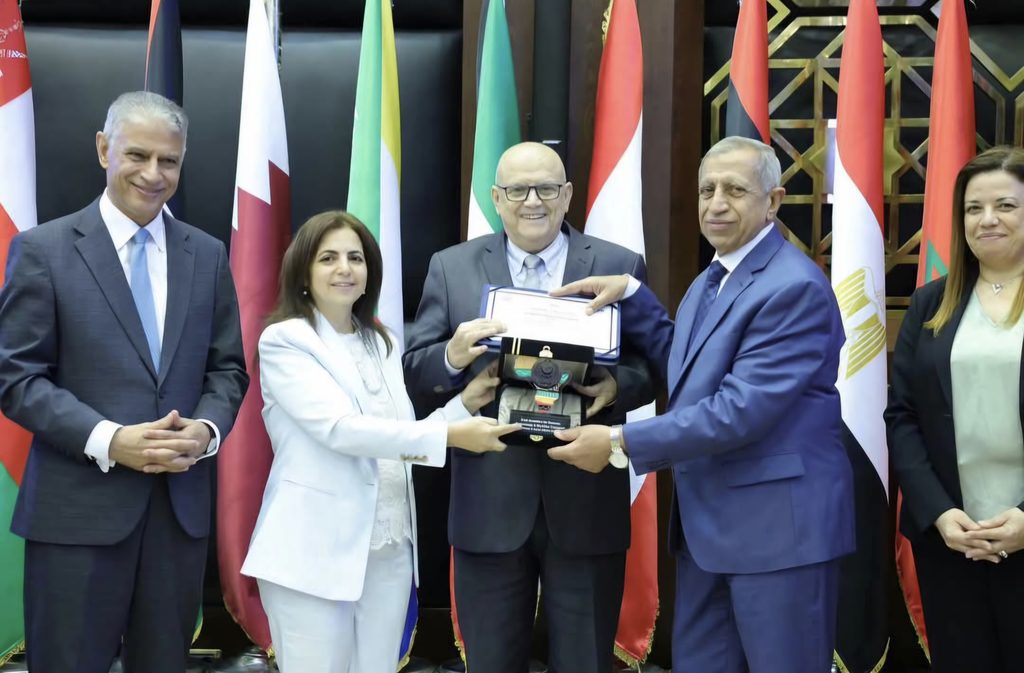
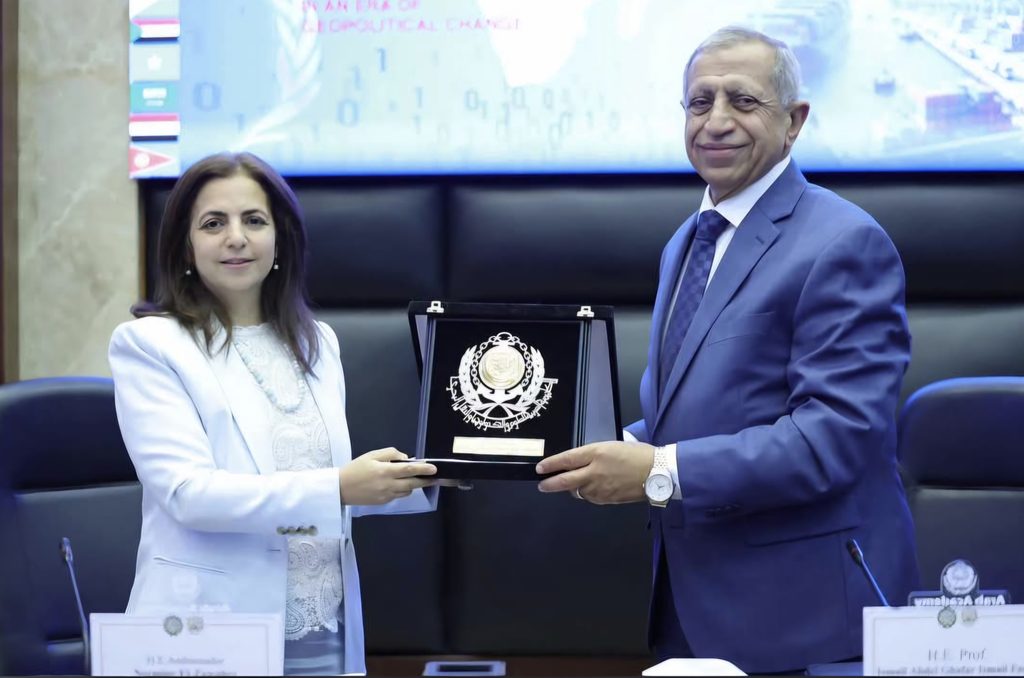
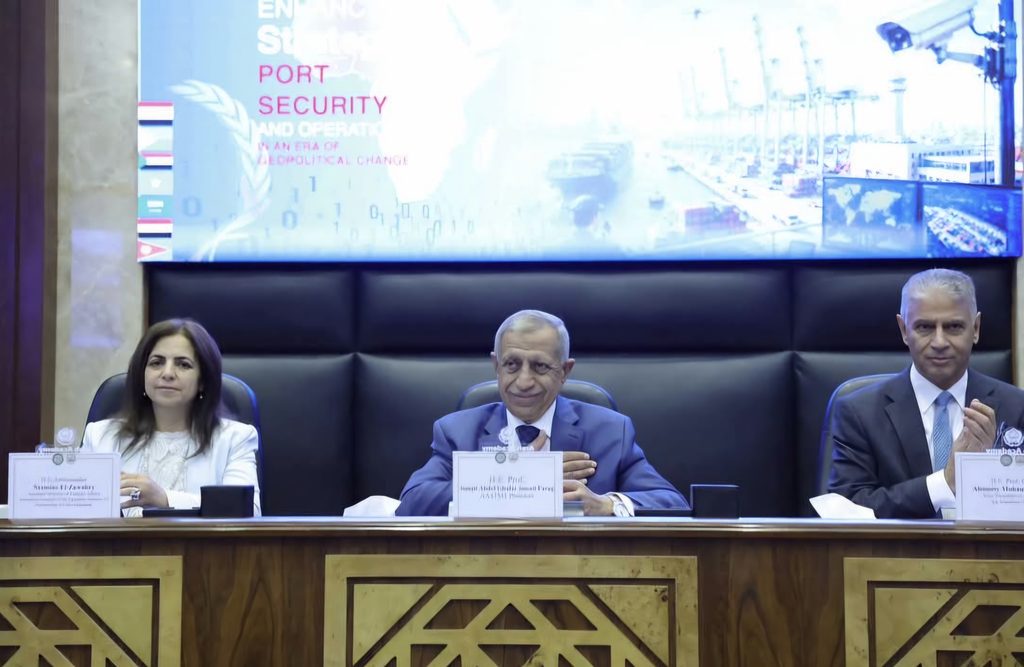
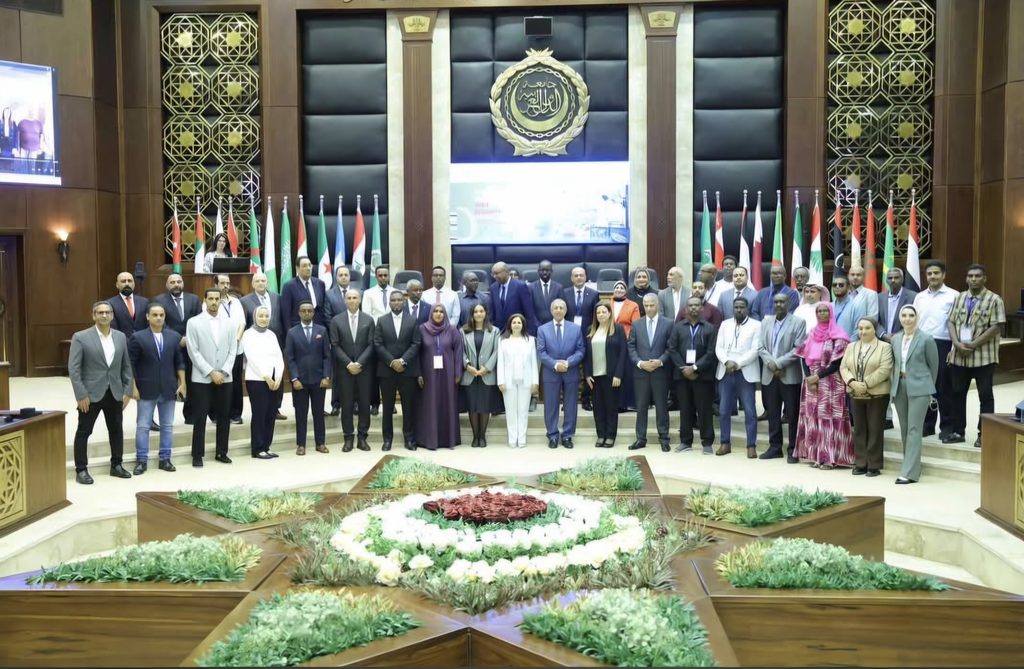
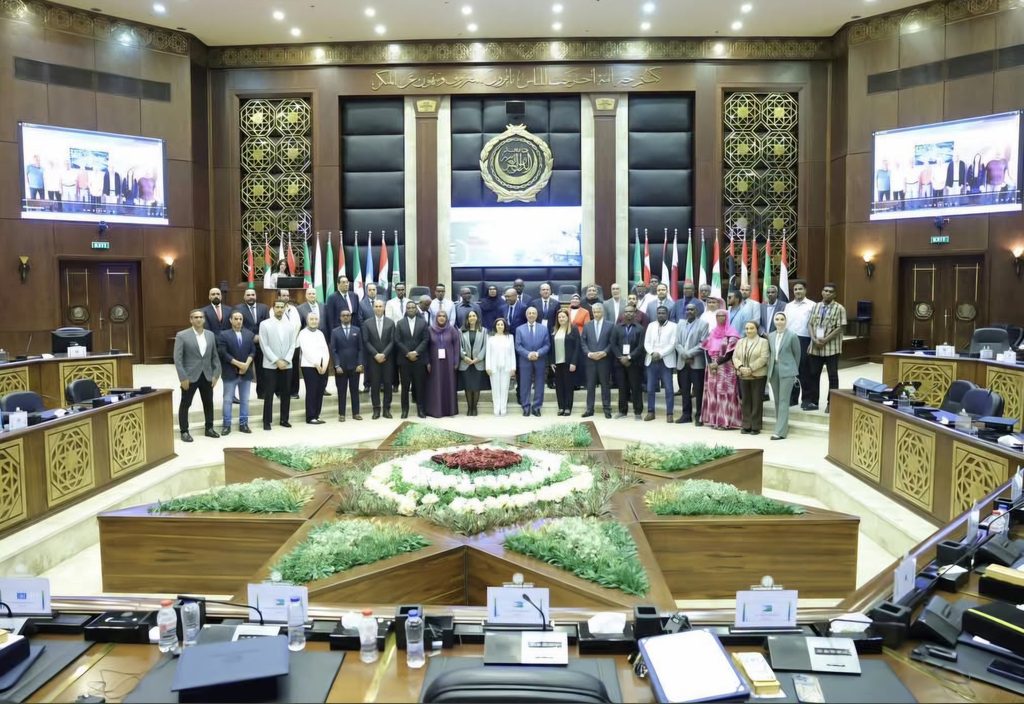
Shipping Arabia, October 4, 2026 – The Arab Academy for Science, Technology and Maritime Transport (AASTMT) has concluded a specialized port security and operations training program focused on strengthening the strategic security and operation of seaports amid geopolitical changes, with 30 participants from Saudi Arabia, Sudan, Djibouti and Somalia.
The program was organized in cooperation with the Egyptian Agency of Partnership for Development under the STREAM initiative launched by Egyptian President Abdel Fattah El-Sisi. It formed part of efforts to transfer expertise and build capacity across Arab and African countries, particularly those bordering the Red Sea.
AASTMT delivered the course as an integrated program combining theoretical instruction with practical training. The curriculum addressed operational and security challenges facing ports while introducing participants to technologies that can strengthen efficiency and preparedness.
Port security and operations training covers emerging risks
The training addressed several areas directly linked to the security and resilience of maritime ports. Key topics included risk and crisis management, cybersecurity and business continuity.
Participants also examined the use of automation and artificial intelligence in port operations. These technologies were presented in the context of improving operational efficiency and strengthening ports’ readiness to respond to emerging challenges.
The course reflected AASTMT’s focus on maritime transport and logistics training and its efforts to support capacity building among Arab and African countries.
Under the leadership of AASTMT President Prof. Ismail Abdel Ghafar Ismail Farag, the Academy structured the program to combine classroom-based learning with practical exposure to maritime training technologies and operational environments.
Practical training at AASTMT simulator facilities
As part of the practical component, participants visited AASTMT’s simulator and practical training complex. The visit allowed them to review advanced technologies used in the training and qualification of maritime personnel.
The practical exposure complemented the program’s theoretical modules and provided participants with a closer view of the technical capabilities used to develop maritime skills.
By combining instruction on risk, cybersecurity and operational continuity with exposure to simulation technology, the program sought to connect port security concepts with practical training tools.
The field program also included a visit to the Suez Canal Authority. Participants were introduced to stages in the Authority’s development as well as the logistics zone and its facilities and systems supporting trade flows and supply chains.
The visit also provided practical insight into the integration between ports and supporting infrastructure. Participants examined how this integration relates to safety requirements and operational security.
This element of the program broadened the port security and operations training beyond classroom instruction by exposing participants to infrastructure and logistics systems connected to maritime trade and supply chains.
AASTMT said the program forms part of its continued commitment to regional partnership and cooperation. The Academy also emphasized its role in providing training and consultancy for Arab and African professionals, with the aim of strengthening the strategic security of ports and supporting sustainable development across the region.
Source: Arab Academy for Science, Technology and Maritime Transport