Suez Canal

  • Three Hapag-Lloyd Suez Canal Services Resume as SCA Discusses Wider Cooperation

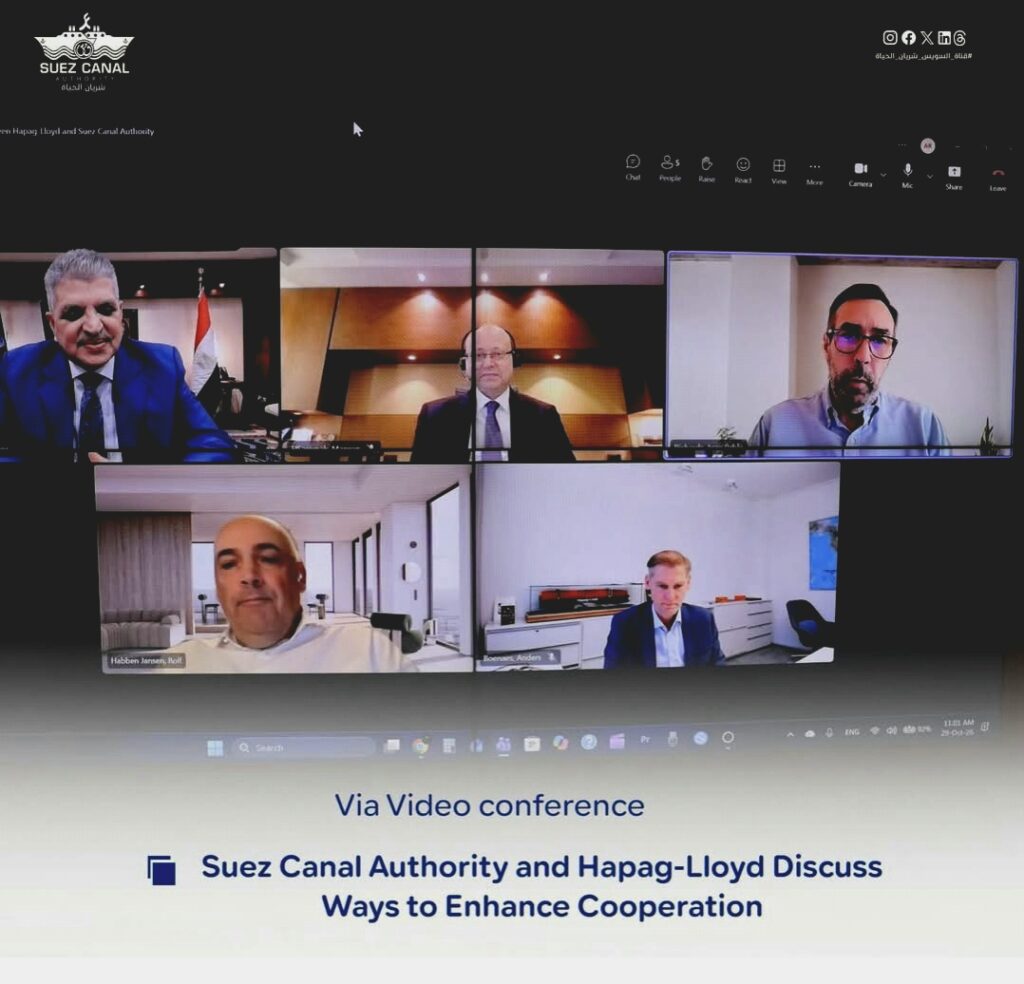
    Shipping Arabia, November 4, 2026 – Three Hapag-Lloyd Suez Canal services have resumed transiting the waterway, with additional Far East services expected to return in the coming period. The development emerged during discussions between the Suez Canal Authority (SCA) and Hapag-Lloyd on strengthening cooperation in maritime operations, pilot training and investment opportunities in Egypt.

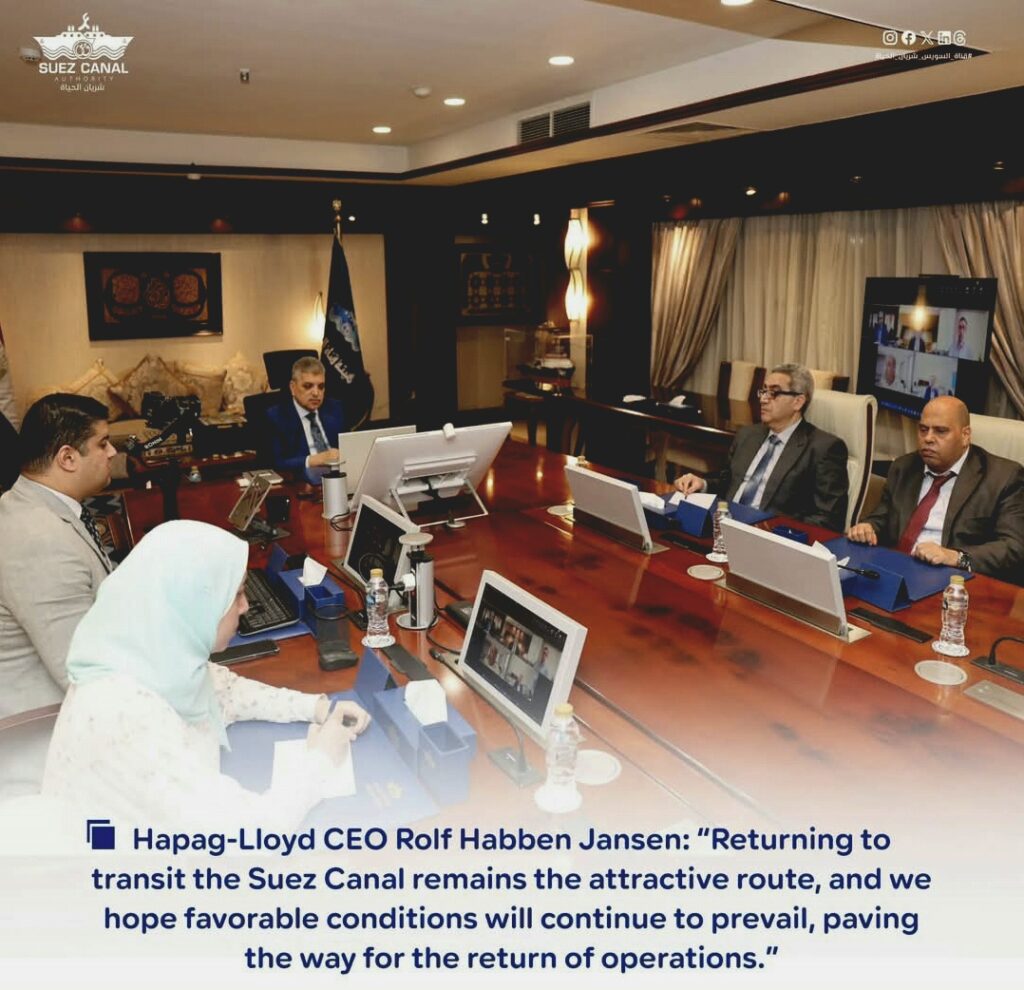
    SCA Chairman Admiral Ossama Rabiee and Hapag-Lloyd CEO Rolf Habben Jansen held the discussions via video conference. The meeting formed part of ongoing coordination between the two sides following the gradual resumption of Canal transits by several Hapag-Lloyd liner services.

    Hapag-Lloyd Suez Canal Services Gradually Return

    Hapag-Lloyd Chief Operating Officer Anders Boenaes confirmed that the company had already resumed transits through the Suez Canal on three liner services. He added that further services operating on the Far East trade route were expected to return in the coming period.

    Habben Jansen welcomed the resumption of the company’s Canal transits and reaffirmed the waterway’s attractiveness as a shipping route. He emphasized that the Suez Canal would remain an attractive option whenever circumstances permit.

    The Hapag-Lloyd CEO also expressed hope that favorable conditions would continue to prevail, paving the way for more services to resume operations through the Canal.

    For his part, Admiral Rabiee stressed that the return of major shipping lines to the Suez Canal represents the optimal choice under current market conditions. He pointed particularly to rising fuel prices and the absence of alternative routes offering comparable sustainability.

    The SCA Chairman expressed hope that all Hapag-Lloyd liner services would resume transiting the Canal in the coming period. He also reaffirmed the Authority’s readiness to provide transiting vessels with a comprehensive range of maritime and logistics services.

    Maritime Pilot Training Cooperation at Damietta Port

    Beyond the gradual restoration of Suez Canal transits, the discussions explored potential cooperation in maritime training and terminal operations.

    A key area involved cooperation between the SCA Maritime Training and Simulation Academy and Damietta Alliance Container Terminals (DACT), also known as Tahia Misr 1, at Damietta Port.

    The discussions focused particularly on opportunities for maritime pilot training. Hapag-Lloyd is a key investor in the Damietta terminal, providing a connection between the shipping line’s investment activities and the proposed training cooperation.

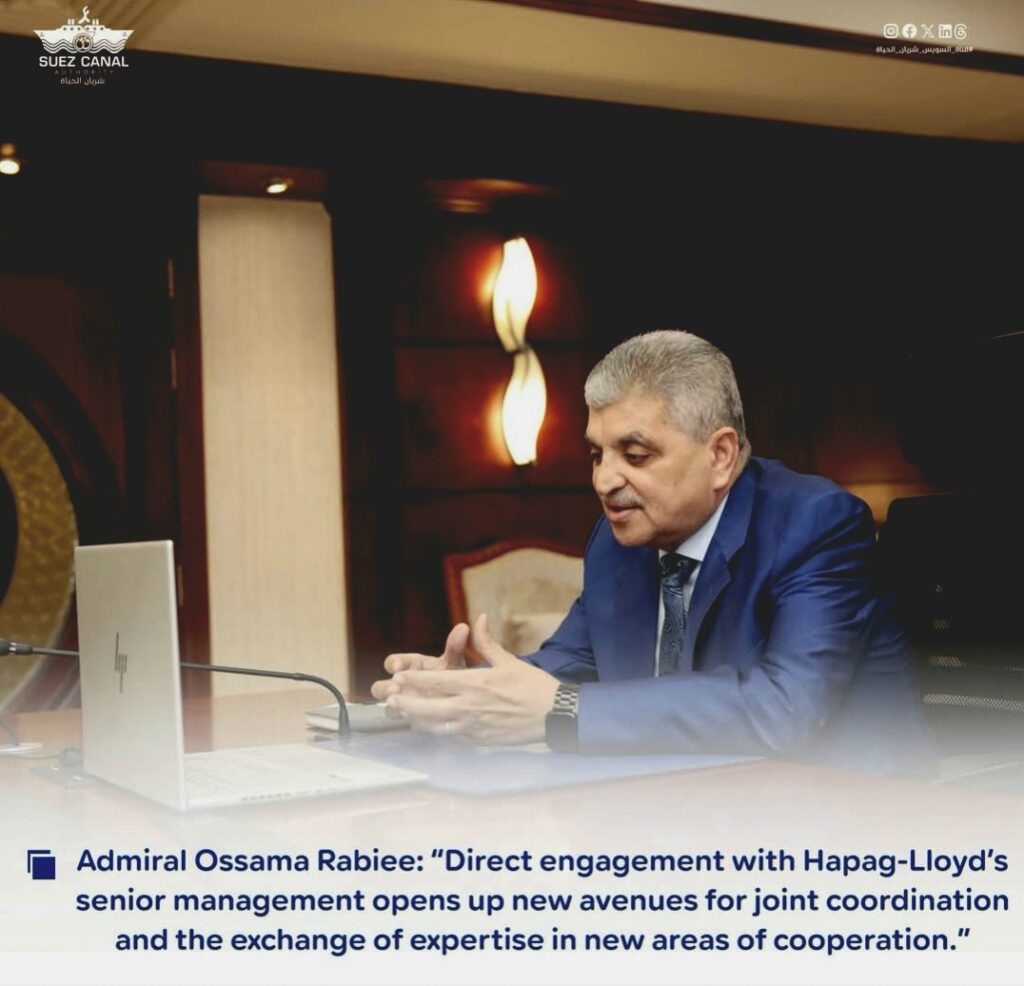
    Admiral Rabiee highlighted the importance of direct engagement with Hapag-Lloyd’s senior management in developing new areas of collaboration. He said such engagement could open additional opportunities for joint coordination and the exchange of expertise.

    The SCA Chairman also pointed to Hapag-Lloyd’s interest in expanding its investments and strengthening its presence in the Egyptian market.

    Joint Working Group to Explore Investment Opportunities

    Habben Jansen expressed Hapag-Lloyd’s willingness to deepen cooperation with the Suez Canal Authority beyond the resumption of vessel transits.

    He proposed establishing a joint working group to examine potential investment opportunities and develop new proposals that serve the mutual interests of both organizations.

    The proposed initiative would provide a framework for exploring areas of cooperation identified during the discussions, including opportunities linked to maritime services and investment.

    Juan Pablo Richards, Hapag-Lloyd’s Senior Managing Director of Region South Europe, also reaffirmed both parties’ commitment to strengthening bilateral relations through continued consultations on available investment opportunities.

    Richards praised the Suez Canal Authority’s ability to navigate successive challenges while maintaining its comprehensive development strategy for the waterway and its maritime fleet.

    Senior Executives Participate in Discussions

    The video conference brought together senior representatives from Hapag-Lloyd and the Suez Canal Authority, reflecting the operational and investment-related subjects under discussion.

    Hapag-Lloyd participants included Chief Operating Officer Anders Boenaes, Senior Managing Director of Region South Europe Juan Pablo Richards, and Hapag-Lloyd Egypt Chairman Marwan El-Sammak.

    Representing the Suez Canal Authority alongside Admiral Rabiee were Dr. Fathy Abdel Bary, Director of the SCA Planning and Research Department, and Dr. Hossam Abdel Karim, Deputy Director of the SCA Planning Department.

    The discussions highlighted two parallel areas of engagement between the organizations: the gradual return of Hapag-Lloyd liner services to the Suez Canal and the exploration of new cooperation opportunities in maritime training and investment.

    While three services have already resumed transits, the two sides are seeking to build on their existing relationship through further operational coordination and consultations on potential investments in Egypt.

    Source: Suez Canal Authority
  • Suez Canal Traffic Recovery Accelerates as Weekly Tonnage Rises 35%

    Shipping Arabia, November 2, 2026 – The Suez Canal traffic recovery has gained momentum, with 305 cargo vessels transiting the waterway during October 19–25, 2026, carrying a combined tonnage of 27.6 million tons. According to Lloyd’s List Intelligence, the latest figures represent a 35% increase over the average weekly tonnage recorded in October 2025.

    The data, released on October 29, indicates a significant improvement in shipping activity through the Egyptian waterway. However, despite the recovery, transit tonnage remained 36% below levels recorded before the Houthi-related Red Sea shipping crisis.

    The figures highlight the progress made in restoring vessel traffic through the Suez Canal while demonstrating that shipping activity has yet to return to pre-crisis levels.

    Ultra-Large Container Ships Lead Suez Canal Traffic Recovery

    One of the most notable developments has been the increase in transits by ultra-large and megamax container ships.

    According to Lloyd’s List Intelligence, more than 100 vessels in these categories have passed through the Suez Canal since the beginning of September 2026.

    This figure has already exceeded the combined 99 transits recorded by ultra-large and megamax container ships throughout 2025 and the first eight months of 2026.

    The increase represents a significant change in the movement of large container vessels through the Canal compared with the preceding 20-month period.

    The latest statistics also suggest that the Suez Canal traffic recovery is becoming more evident in the large container ship segment, although overall transit tonnage remains below pre-crisis levels.

    Europe-to-Asia Shipping Routes Support Recovery

    Lloyd’s List Intelligence reported that much of the shipping traffic currently transiting the Suez Canal consists of vessels traveling from Europe toward Asian ports.

    These vessels pass through the Mediterranean, Suez Canal and Red Sea before continuing toward their Asian destinations.

    This routing offers an alternative to services sailing from Europe around the Cape of Good Hope, across the Indian Ocean and onward to Asian ports.

    For container shipping operators, using the Suez Canal can provide operational advantages when passage through the Red Sea is considered safe.

    A safe return to the Suez route can reduce sailing distances, fuel consumption and voyage durations compared with the longer journey around southern Africa.

    However, Lloyd’s List Intelligence noted that individual shipping companies continue to determine their routing decisions according to their specific services and operational requirements.

    Suez Canal Tonnage Remains Below Pre-Crisis Levels

    Despite the improvement in weekly traffic and the increase in large container ship transits, the latest figures indicate that the Suez Canal has not yet fully recovered from the disruption associated with the Red Sea crisis.

    The 35% increase in weekly tonnage compared with October 2025 demonstrates the scale of the recent improvement. Nevertheless, the remaining 36% shortfall against pre-crisis levels underscores the difference between the current recovery and a complete return to previous traffic volumes.

    Future routing decisions by container shipping companies will remain an important factor in determining how much traffic continues to move through the Suez Canal rather than around the Cape of Good Hope.

    Source: Al Mal News

  • Egypt and Greece Explore Suez Canal Maritime Cooperation in Logistics and Industry

    Shipping Arabia, October 30, 2026 – The Suez Canal Authority (SCA) and Greece have discussed opportunities to expand Suez Canal maritime cooperation in industrial activities and logistics services, with a focus on attracting Greek investment to projects in the Canal region.

    The discussions took place during a meeting between SCA Chairman and Managing Director Adm. Ossama Rabiee and Greek Ambassador to Egypt Nikolaos Papageorgiou. The meeting was held at the authority’s headquarters, the Al-Irshad building in Ismailia.

    Both sides highlighted opportunities to strengthen economic and commercial relations through maritime industry partnerships, logistics development and the exchange of technical expertise.

    Suez Canal Authority Invites Greek Maritime Investment

    Rabiee emphasized the importance of building on the close relationship between Egypt and Greece to expand cooperation in maritime industries and logistics services. He expressed his interest in strengthening partnerships that would support the exchange of expertise between the two countries.

    The SCA chairman invited Greek companies operating in these sectors to explore cooperation opportunities with the authority. He highlighted the SCA’s development into an industrial base encompassing numerous affiliated shipyards and companies involved in maritime and industrial activities.

    These capabilities provide potential areas for cooperation with Greek businesses seeking opportunities in the Suez Canal region. The discussions also reflected the two countries’ shared interest in expanding their maritime and commercial relationships.

    Suez Canal Development and Maritime Competitiveness

    Rabiee outlined the authority’s efforts to strengthen the Suez Canal’s competitiveness through the introduction of new maritime services and activities. These initiatives form part of a comprehensive development strategy that also includes improvements to the waterway and modernization of the SCA’s fleet of marine units.

    He also highlighted the Canal’s ability to respond to successive crises and operational challenges. According to Rabiee, cooperation with organizations and stakeholders across the international maritime community has played an important role in maintaining the continuity of global supply chains.

    The SCA chairman emphasized that continued development of maritime services and industrial capabilities remains central to the authority’s strategy.

    Greece Reaffirms Suez Canal’s Importance to Global Trade

    For his part, Ambassador Papageorgiou praised the progress achieved in the Canal’s maritime and logistics services. He described its development as an ongoing success story despite unprecedented challenges and turbulent conditions affecting maritime transport.

    The ambassador reaffirmed that the Suez Canal remains a key pillar of the international maritime transport industry and an indispensable artery of global trade.

    He also stressed the importance of greater geopolitical stability in the region. According to Papageorgiou, stable regional conditions are essential for maintaining steady vessel traffic through the Canal and supporting the sustainability of global supply chains.

    Strengthening Egypt-Greece Economic Relations

    Papageorgiou emphasized that relations between Egypt and Greece are strategic and rooted in deep historical ties. He expressed his commitment to strengthening economic and commercial cooperation between the two countries in the coming period.

    A central priority, he explained, is attracting additional investment to projects in the Suez Canal region, particularly through closer engagement with businesses operating in relevant sectors.

    The discussions highlighted the potential for broader Suez Canal maritime cooperation between Egypt and Greece, particularly in maritime industries, shipyard activities and logistics services.

    Source: Suez Canal Authority

  • WEC Lines Launches Asia–Europe Shipping Service via Suez Canal

    Shipping Arabia, October 28, 2026 – Dutch shipping company WEC Lines has launched a new Asia–Europe shipping service connecting Pakistan, India and Sri Lanka with major ports in Northwest Europe via the Suez Canal. The service creates additional cargo transportation opportunities between South Asia and European markets as some container shipping lines gradually return to the canal following prolonged diversions around the Cape of Good Hope.

    According to a company announcement reported by Al Mal News, the new service provides connections between Karachi, Pakistan, and several major European ports. It also incorporates ports in India and Sri Lanka, expanding the shipping options available to customers trading between the two regions.

    The development comes amid signs of increasing Asia–Europe container vessel movements through the Suez Canal, despite continuing security concerns in the Middle East and Red Sea.

    WEC Lines Expands Asia–Europe Shipping Connections

    The new WEC Lines Asia–Europe service connects three major South Asian ports with seven ports across Northwest Europe.

    The South Asian ports included in the service are Mundra in India, Karachi in Pakistan and Colombo in Sri Lanka.

    In Europe, the service covers Felixstowe and London Gateway in the United Kingdom, Rotterdam in the Netherlands, Hamburg and Bremerhaven in Germany, Antwerp in Belgium, and Le Havre in France.

    According to WEC Lines, the service aims to create new shipping opportunities between Pakistan and major Northwest European ports.

    By incorporating several South Asian and European gateways, the service provides additional maritime connections across a trade corridor traditionally served by container shipping networks operating through the Suez Canal.

    The announcement comes as the Suez Canal Authority reports an increase in vessels operated by shipping lines serving Asia–Europe routes. This development has continued despite the regional security challenges affecting maritime transportation.

    Suez Canal Sees Gradual Return of Container Shipping Services

    Maritime research and consultancy firm Drewry recently reported that the Suez Canal has begun gradually regaining its position in global container shipping networks.

    According to Drewry, some container services are increasingly returning to the canal rather than continuing their extended voyages around the Cape of Good Hope.

    However, the consultancy cautioned that the return does not indicate that security risks in the Red Sea have disappeared. It also noted that the economic advantages of using the canal are more complex than the potential fuel and voyage distance savings might initially suggest.

    Drewry identified shorter transit times, improved vessel utilization and the need to maintain competitive shipping services as important factors influencing carriers’ routing decisions.

    These operational considerations are particularly relevant to container shipping networks, where vessel deployment and voyage duration influence the efficiency of shipping services.

    Nevertheless, Drewry emphasized that the financial attractiveness of returning to the Suez Canal remains highly sensitive to war-risk insurance premiums and canal transit fees.

    Consequently, the decision to resume canal transits involves balancing operational advantages against the additional costs and security risks associated with navigating the Red Sea.

    Drewry Estimates $1 Million in Round-Voyage Savings

    Drewry’s analysis provides an indication of the potential economic benefits of using the Suez Canal rather than the Cape of Good Hope.

    The consultancy estimates that a container vessel with a nominal capacity of 24,000 twenty-foot equivalent units (TEUs) could save approximately $1 million per round voyage by using the Suez Canal instead of sailing around southern Africa.

    This is equivalent to approximately $43 per TEU of the vessel’s nominal capacity.

    However, Drewry clarified that the figure represents a distribution of the estimated savings across the ship’s total capacity slots. It should not be interpreted as a guaranteed saving for every container actually transported.

    The consultancy’s September 2026 comparison of Asia–North Europe shipping services also highlighted the significant difference in voyage distances between the two routes.

    A round voyage via the Cape of Good Hope covers approximately 29,711 nautical miles, compared with 21,878 nautical miles through the Suez Canal.

    This represents a reduction of 7,833 nautical miles per round voyage when using the canal.

    The shorter distance can provide operational advantages, particularly through reduced voyage duration and improved vessel utilization. However, Drewry stressed that the overall financial benefits remain dependent on prevailing insurance costs and Suez Canal transit charges.

    Red Sea Security Remains a Key Consideration

    Although some container shipping services are returning to the Suez Canal, Drewry emphasized that the recovery remains gradual and does not eliminate the security risks affecting maritime navigation in the Red Sea.

    Shipping lines must continue evaluating the relationship between shorter voyages, operational efficiency, insurance expenses and transit costs when determining their preferred routes.

    The launch of the WEC Lines service adds another Asia–Europe shipping connection operating through the Suez Canal during this period of changing maritime routing decisions.

    Meanwhile, the increase in Asia–Europe vessel movements reported by the Suez Canal Authority provides further evidence of a gradual recovery in canal activity, even as regional security concerns continue to influence shipping operations.

    Source: Al Mal News

  • Suez Canal Authority Expands Ship Repair and Tugboat Manufacturing After $17 Billion in Red Sea-Related Losses

    Shipping Arabia, October 28, 2026 – The Suez Canal Authority (SCA) is expanding ship repair, tugboat manufacturing and marine services to diversify its revenue sources after Red Sea security disruptions caused an estimated $17 billion in losses over two and a half years. The strategy aims to reduce dependence on vessel transit fees while developing Egypt’s maritime industrial capabilities.

    SCA Chairman Osama Rabie outlined the plans during a session on foreign exchange resources and debt management at the Egypt 2026 Forum. He explained that the authority is pursuing two parallel priorities: developing the Suez Canal waterway and marine fleet while expanding commercial activities that generate revenue beyond vessel transit fees.

    Rabie said the authority is investing in shipyards, marine services and manufacturing facilities, with a particular focus on tugboats and ship repair. These activities form part of a broader effort to strengthen the SCA’s financial resilience during periods of reduced shipping traffic.

    Suez Canal Revenue Declines Amid Red Sea Disruptions

    Rabie revealed that Suez Canal revenue fell from $10.2 billion in 2023 to approximately $3.9 billion in 2024, following escalating regional tensions and attacks on commercial shipping. Revenue subsequently reached around $4.1 billion in 2025, remaining significantly below pre-crisis levels.

    The security situation in the Red Sea and Bab el-Mandeb has prompted shipping companies to redirect vessels away from the canal. As a result, daily vessel transits declined from approximately 75–80 ships before the crisis to around 30 during the disruptions.

    Rabie estimated that the cumulative impact of the crisis had cost the authority approximately $17 billion over two and a half years. The reduction in shipping traffic has also affected foreign currency inflows into Egypt.

    The SCA has consequently intensified discussions with shipping lines, maritime agents, industry representatives and international organizations. These consultations focus on the implications of the crisis and the conditions necessary to restore traffic through the Red Sea and Bab el-Mandeb.

    According to Rabie, the authority has emphasized that alternative routes, particularly the passage around the Cape of Good Hope, do not represent a sustainable replacement for the Suez Canal. He highlighted the canal’s competitive advantages in transit time and cost, while stressing that improved regional security would support the return of vessels.

    The authority is also exploring additional services for shipping companies that continue operating through the region despite the security challenges.

    Expanding Marine Services and Ship Repair Operations

    A central element of the Suez Canal revenue diversification strategy involves expanding the range of services available to commercial vessels. The SCA is developing capabilities in maritime salvage, towage, maintenance, ship repair, crew changes, marine ambulance services and waste collection.

    Rabie said these activities provide opportunities to generate additional income while strengthening the authority’s ability to respond to maritime emergencies.

    He highlighted the case of the Greek-owned bulk carrier ZOGRAFIA, which sustained damage following a missile attack near Bab el-Mandeb. The authority deployed salvage and towing resources to assist the vessel and transfer it to Suez Shipyard for repair.

    The operation demonstrated how the SCA can use its existing maritime assets and technical capabilities to support vessels facing emergencies in the region. Rabie also emphasized the importance of such services in strengthening the canal’s reputation among international shipping companies.

    Beyond the Suez Canal, the authority has undertaken marine infrastructure and ship repair assignments in other markets.

    One example involved the rehabilitation of Libya’s Port of Sirte. The SCA deployed dredging equipment to undertake clearance and dredging operations, helping reopen the port after approximately 14 years of closure.

    The authority has also carried out ship repair work for vessels belonging to companies operating in the Arab region. Some of these activities have led to annual contracts for repair services.

    Discussing the financial contribution of activities outside vessel transit fees, Rabie cited returns of approximately $928 million and EGP 141 billion during the period addressed in his remarks.

    Shipyard Development and Tugboat Export Manufacturing

    The SCA is expanding its maritime industrial operations through shipyard development, new manufacturing facilities and cooperation with private-sector partners.

    Rabie said the authority has worked to establish six new companies as part of its industrial and service development plans. These include partnerships with private businesses, government entities and specialized companies.

    The initiative supports efforts to localize maritime manufacturing, strengthen domestic production and create additional sources of foreign currency revenue.

    Shipyard development is underway at facilities in Port Said, Suez and Safaga. The investments aim to improve Egypt’s capabilities in shipbuilding, vessel maintenance, repair operations and tugboat construction.

    The authority is also developing manufacturing facilities for tugboats, yachts and other maritime-related products. These projects are intended to increase local industrial content while opening opportunities to serve international markets.

    Rabie announced that the SCA had exported two tugboats to an Italian company, each with a bollard pull of 90 tons. He described the exports as evidence of the potential for Egyptian maritime manufacturing to become a source of foreign currency revenue.

    In addition, the authority plans to establish a factory specifically dedicated to manufacturing tugboats for export. Once completed, the facility is expected to target annual production of approximately 30 tugboats.

    The proposed factory forms part of the authority’s strategy to increase maritime industrial exports and expand its international customer base.

    Previous Crises Shape the SCA’s Diversification Strategy

    Rabie placed the current Red Sea disruption within the context of several major challenges that have affected the canal in recent years.

    During the COVID-19 pandemic, the authority introduced a flexible marketing policy that included transit fee discounts ranging from 45% to 75% for selected vessel categories.

    The incentives targeted ships that did not ordinarily use the canal, including certain liquefied natural gas carriers and vessels operating on alternative routes. The objective was to attract additional traffic and offset some of the effects of the slowdown in global maritime trade.

    Rabie also referred to the grounding of the container ship EVER GIVEN in March 2021, which blocked the canal for six days and generated estimated losses of approximately $90 million.

    He said the authority used a combination of dredging and maritime salvage techniques to refloat the vessel. The operation avoided a potentially much longer disruption, with initial estimates suggesting that the salvage process could take several months.

    Following the reopening, the SCA reorganized the passage of approximately 422 vessels that had accumulated in the Mediterranean and Red Seas. Working around the clock, the authority cleared the backlog in approximately four days.

    These experiences, Rabie explained, demonstrated the importance of operational flexibility and the ability to respond quickly to unexpected developments affecting maritime traffic.

    Continued Investment in Canal Infrastructure and Maritime Industries

    Despite the decline in transit volumes, the SCA intends to continue developing the canal waterway and renewing its marine fleet.

    Rabie said these investments remain essential to improving operational efficiency and maintaining the canal’s competitiveness. At the same time, expanding industrial production and marine services will help the authority manage fluctuations in global shipping activity.

    The approach combines traditional canal operations with shipbuilding, repair services, towage, salvage and other maritime activities that can generate revenue independently of transit volumes.

    Rabie emphasized that the authority’s strategy is not limited to waiting for vessel traffic to recover. Instead, it seeks to make better use of existing assets, develop local maritime industries and establish additional commercial activities.

    The recovery of Red Sea and Bab el-Mandeb shipping remains closely linked to improvements in regional security. Meanwhile, the authority is pursuing broader maritime revenue streams to reduce its exposure to geopolitical disruptions and fluctuations in canal traffic.

    Source: Al Mal News

  • ONE to Resume Suez Canal Transits on MD1 and MS2 Services in November

    Shipping Arabia, October 27, 2026 – Ocean Network Express (ONE) has announced plans to resume Suez Canal transits on its MD1 and MS2 container shipping services under the Premier Alliance, beginning with selected sailings in November 2026. The decision follows a review of regional security conditions and aims to reduce transit times between Asia and the Mediterranean.

    In a customer advisory issued on October 22, ONE outlined revised port rotations for both services, confirming their planned return to the Red Sea and Suez Canal corridor. The changes will affect scheduled voyages linking major Asian container ports with destinations in Egypt, Türkiye and the wider Mediterranean.

    The carrier said it will continue monitoring security developments in the Middle East and adjusting its operations when necessary. Crew safety, vessel security and the protection of customer cargo remain central to its routing decisions.

    MD1 Service to Resume Suez Canal Route via Sokhna and Damietta

    The MD1 service will introduce its revised rotation with the vessel YM Trust, scheduled to depart Ningbo, China, on November 10, 2026. The vessel is expected to arrive at Egypt’s Damietta Port on December 7.

    Under the revised schedule, the service will connect several major Asian ports with Egypt and Türkiye through the Suez Canal.

    The planned MD1 port rotation includes:

    Ningbo – Shanghai – Shekou – Singapore – Sokhna – Suez Canal – Damietta – Istanbul – Izmit – Mersin – Damietta – Suez Canal – Singapore – Kaohsiung.

    The inclusion of Sokhna and Damietta places two Egyptian ports on the revised Asia-Mediterranean service. Following its Mediterranean calls, the service will return through Damietta and the Suez Canal before continuing toward Asia.

    The revised routing is intended to shorten transit times between Asia and the Mediterranean compared with the alternative routing.

    MS2 Service to Connect Asia and Mediterranean Ports via Suez Canal

    ONE also confirmed that its MS2 service will resume Suez Canal transits with the vessel ONE Synergy. The vessel is scheduled to depart Qingdao, China, on November 16, 2026, with an expected arrival at Piraeus, Greece, on December 28.

    The revised MS2 rotation will connect a network of major Asian container ports with destinations in the Mediterranean. Its Asian calls include Qingdao, Busan, Shanghai, Ningbo, Kaohsiung, Shekou and Singapore.

    After transiting the Suez Canal, the service will continue to Piraeus, Valencia, Barcelona, Genoa, La Spezia and Fos. The return voyage will pass through the Suez Canal toward Singapore before continuing to ports in Southeast Asia.

    The routing change will restore the Suez Canal corridor to the specified MS2 sailings, supporting ONE’s objective of reducing transit times between the two regions.

    ONE Maintains Flexible Routing Amid Regional Security Concerns

    Although ONE has announced the return of both services to the Red Sea and Suez Canal, the carrier emphasized that its routing plans remain subject to security and operational conditions.

    The company will continue assessing developments in the Middle East and may revise vessel routes if circumstances change. These assessments will prioritize the safety of crews, vessels and customer shipments.

    ONE also confirmed that it will update sailing schedules and booking confirmations to reflect the revised service rotations. However, the carrier cautioned that service details may change without prior notice in response to evolving security or operational developments.

    The planned November sailings therefore mark the next scheduled step in restoring Suez Canal transits for the MD1 and MS2 services, while ONE retains the flexibility to adjust operations as conditions require.

    Source: Al Mal

  • Hapag-Lloyd SE5 Service Leads Gemini Asia–Europe Network Restructuring

    Shipping Arabia, October 26, 2026 – Hapag-Lloyd has announced a restructuring of its Asia–Europe container shipping network under the Gemini Cooperation, introducing the new Asia–South Europe 5 (SE5) service alongside revisions to five existing services connecting Asia with Northern Europe and the Mediterranean.

    The Hapag-Lloyd SE5 service forms part of a wider network adjustment scheduled to begin in mid-November 2026. The changes cover six services and include revised port rotations, additional calls and improved connections through major Mediterranean hubs.

    The restructuring will affect four existing South Europe services, SE1, SE2, SE3 and SE4, as well as the North Europe Express 1 (NE1) service. Implementation will take place progressively, with each service transitioning according to its published sailing schedule.

    Hapag-Lloyd SE5 Service to Connect Asia and the Western Mediterranean

    The new Hapag-Lloyd SE5 service will establish direct connections between central and southern China and the western Mediterranean. Its rotation will operate through the Suez Canal, calling at Algeciras in Spain and Tanger Med in Morocco.

    The service will also provide onward connections to West Africa through Tanger Med, extending access to additional markets through the Moroccan transshipment hub.

    The announced port rotation will begin in Shanghai, followed by Xiamen and Tanjung Pelepas. Vessels will then transit the Suez Canal before calling at Algeciras and Tanger Med. The return leg will include a second call at Algeciras, another Suez Canal transit and Xiamen.

    The first scheduled vessel will be Maersk Edirne, operating voyage 647W, with a planned call at Shanghai on November 22, 2026.

    The new service adds another connection between Asian export markets and western Mediterranean ports within the Gemini Cooperation network, while incorporating both Algeciras and Tanger Med into its operating rotation.

    Four South Europe Services Undergo Port Rotation Changes

    Alongside the SE5 launch, Hapag-Lloyd will revise its existing SE1, SE2, SE3 and SE4 services. The adjustments will change port coverage across the Mediterranean, including several calls at Egyptian ports and additional connections through Salalah and Colombo.

    Under the revised SE1 rotation, Algeciras will be replaced by calls at East Port Said and West Port Said in Egypt. Colombo will also be added to the eastbound rotation, strengthening connections between the Adriatic region, Sri Lanka and the wider Asian network.

    The SE2 service will replace its westbound Tanger Med call with Port Said. Hapag-Lloyd will also introduce a westbound call at Salalah in Oman, while maintaining coverage of Valencia, Barcelona, La Spezia, Genoa and Vado Ligure.

    Meanwhile, the SE3 service will operate a simplified Mediterranean rotation through Port Said and Damietta in Egypt. As part of the adjustment, the service will discontinue its eastbound call at Colombo.

    Further changes will affect SE4, which will add Nansha in southern China while removing Shanghai from its rotation. The service will also introduce a westbound call at Damietta, complementing its existing call at Port Said.

    Together, the revised Mediterranean services will alter connections between Asian export markets and Mediterranean ports, with Port Said and Damietta featuring in several of the updated rotations.

    The changes also expand the role of regional connecting ports within the network, with additional calls in Egypt and Oman forming part of the revised service structure.

    Rotterdam Becomes First European Call on Revised NE1 Service

    Hapag-Lloyd will also restructure its North Europe Express 1 (NE1) service, changing the sequence of port calls between Asia and Northern Europe.

    Under the revised arrangement, Rotterdam will become the first European port of call, replacing the previous rotation that included Tanger Med. The Moroccan port will be removed from the NE1 service.

    The updated rotation will connect Ningbo, Shanghai and Tanjung Pelepas with Rotterdam, Wilhelmshaven and Bremerhaven. The service will then continue through Salalah and Singapore.

    The first vessel affected by the revised NE1 schedule will be Moscow Maersk, operating voyage 646W. The vessel is scheduled to arrive at Ningbo on November 13, 2026, ahead of the wider network transition.

    The NE1 adjustment forms part of the same restructuring program affecting the Mediterranean services, with changes to both the European port sequence and the service’s regional calls.

    Phased Implementation From Mid-November

    Hapag-Lloyd plans to introduce the network revisions progressively from mid-November 2026 rather than implementing all changes simultaneously.

    Each affected service will transition according to its announced sailing schedule, beginning with the revised NE1 rotation and followed by the launch of SE5 later in November.

    The overall restructuring combines the introduction of a new Asia–western Mediterranean service with modifications to existing connections across Northern Europe, the Mediterranean and regional transshipment hubs.

    Source: Al Mal

  • Hapag-Lloyd Expects More Suez Canal Services to Return as SCA Discusses Expanded Cooperation

    Shipping Arabia, October 25, 2026 – Hapag-Lloyd expects additional shipping services to return to the Suez Canal in the coming period, beyond the two Asia-Europe services already operating through the waterway. The carrier is closely monitoring Red Sea security conditions and maritime safety indicators as it evaluates further adjustments to its sailing schedules.

    The development emerged during a meeting on October 20 between Suez Canal Authority (SCA) Chairman Adm. Ossama Rabiee and Juan Pablo Richards, Hapag-Lloyd’s Senior Managing Director for Region South Europe. The meeting took place at the Authority’s headquarters in the Irshad Building in Ismailia, where both sides discussed strengthening cooperation and the potential return of more shipping services.

    The discussions also addressed the SCA’s ongoing development of navigation services, fleet modernization and opportunities for future cooperation in maritime training.

    Hapag-Lloyd Expects Additional Suez Canal Services to Return

    During the meeting, Richards confirmed that Hapag-Lloyd continues to monitor developments in the Red Sea region and maritime safety indicators. These assessments will guide the shipping line’s decisions on adjusting and updating its sailing schedules.

    He indicated that the gradual return of vessel transits through the Bab el-Mandeb Strait and the Suez Canal could support further changes to the carrier’s service network.

    According to Richards, additional Hapag-Lloyd Suez Canal services are expected to return in the coming period. These would complement the two existing Asia-Europe services already operating through the waterway.

    However, the discussions did not establish a specific timetable for the return of additional services.

    Richards also expressed appreciation for the longstanding cooperation between Hapag-Lloyd and the Suez Canal Authority. He acknowledged the notable improvements in services provided by the SCA to the maritime transport industry and expressed hope that navigation indicators would continue to improve.

    His remarks reflected the importance of maritime safety conditions in determining the pace at which Hapag-Lloyd adjusts its operations through the Red Sea and Suez Canal.

    Suez Canal Authority Reaffirms Readiness for Returning Shipping Services

    Adm. Rabiee reaffirmed the Suez Canal’s readiness to accommodate shipping services seeking to resume transits through the waterway.

    He highlighted the Authority’s continued efforts to develop navigation services and modernize its fleet to meet the operational requirements of shipping lines and other maritime customers.

    The SCA Chairman also expressed hope for the full return of Hapag-Lloyd’s services to the Canal.

    Rabiee emphasized the importance of the Suez Canal to the sustainability of global supply chains, particularly amid geopolitical challenges and rapid changes affecting the international shipping industry.

    His remarks underscored the Authority’s commitment to maintaining the Canal’s operational capabilities and service standards as shipping lines reassess their transit arrangements.

    The meeting provided an opportunity for both parties to review the prospects for additional Hapag-Lloyd Suez Canal services while discussing the Authority’s preparations to accommodate returning traffic.

    SCA and Hapag-Lloyd Explore Maritime Training Cooperation in Damietta

    Beyond vessel transits, the meeting explored opportunities to expand cooperation between the Suez Canal Authority and Hapag-Lloyd into new areas.

    Richards highlighted a potential collaboration between the SCA’s Maritime Training and Simulation Academy and the Damietta Alliance Container Handling “Tahya Misr 1” Terminal at Damietta Port.

    The proposed cooperation would focus on providing training for ship masters, drawing on the Academy’s maritime training and simulation capabilities.

    Hapag-Lloyd is a major investor in the Damietta Alliance Terminal, creating an opportunity to explore training cooperation involving the terminal and the SCA’s specialized maritime training facilities.

    The discussions identified maritime training as a possible additional area of cooperation between the shipping line and the Authority. No specific implementation arrangements or timetable for the proposed initiative were announced.

    Senior Officials Attend Cooperation Discussions

    The meeting was attended by Eng. Marwan El-Sammak, Chairman of Hapag-Lloyd’s Egypt operations, alongside senior officials from the Suez Canal Authority.

    SCA representatives included Dr. Fathy Abdel Bary, Director of the Planning, Research and Studies Department, and Eng. Abdel Rahman Ramadan, Director of the Transit Department.

    Their participation brought together officials responsible for commercial relations, planning and vessel transit operations as the two organizations examined opportunities to strengthen their cooperation.

    The discussions covered both the potential return of additional Hapag-Lloyd shipping services and future collaboration in maritime training, reflecting the broader scope of the relationship between the Suez Canal Authority and the carrier.

    Source: Suez Canal Authority

  • Maersk Gemini Network Expansion Adds AE18 Service and Revises Six Routes Through Suez Canal

    Shipping Arabia, October 25, 2026 – Maersk has announced a major expansion of its Gemini Cooperation network with Hapag-Lloyd, introducing the new AE18 service and revising five existing services across Asia, Europe and the Middle East. The changes follow the previously announced rerouting of Asia-Mediterranean services through the Suez Canal.

    The Maersk Gemini network expansion will reshape connections serving Northern Europe, the Mediterranean, the Middle East, Sri Lanka and the Adriatic. The adjustments cover six services: AE18, AE2, AE11, AE19, ME2 and AE12, with implementation scheduled between November 2026 and January 2027.

    The revised network will strengthen coverage at major Mediterranean hubs, introduce new port connections and reorganize existing services. It will also support additional shipping connections from Asia to West Africa and the east coast of Latin America.

    Maersk Launches AE18 to Strengthen Western Mediterranean Coverage

    The new AE18 service will operate alongside AE19, consolidating Gemini’s existing Western Mediterranean hub coverage. It will replace connections to Tangier and Algeciras previously provided by AE2, AE11 and AE12, while introducing a direct connection from Xiamen, China.

    The service will connect Shanghai and Xiamen with Tanjung Pelepas, Algeciras and Tangier before returning through Algeciras and Xiamen.

    The full AE18 rotation will be:

    Shanghai – Xiamen – Tanjung Pelepas – Algeciras – Tangier – Algeciras – Xiamen.

    Maersk Edirne, operating voyage 647W, will inaugurate the new service with a scheduled departure from Shanghai on November 22, 2026.

    The introduction of AE18 forms a central part of the network restructuring, allowing Maersk and Hapag-Lloyd to reorganize their existing Mediterranean coverage while maintaining connections through the Gemini network.

    AE2, AE11 and AE19 Introduce New Port Connections

    Alongside the introduction of AE18, Maersk will revise three established Asia-Europe services, with the first changes taking effect in mid-November.

    AE2: Additional Rotterdam Connection

    The AE2 service will replace its westbound Tangier call with Rotterdam, providing an additional connection from Ningbo and Shanghai to the Dutch port.

    Moscow Maersk, operating voyage 646W, will be the first vessel affected by the revised rotation. Its departure from Ningbo is scheduled for November 15, 2026.

    AE11: Salalah and Port Said Added to Westbound Coverage

    The AE11 service will introduce a westbound call at Salalah, Oman, while replacing its westbound Tangier call with Port Said, Egypt.

    The changes will establish additional shipping connections to and from Salalah while strengthening the service’s coverage through Port Said.

    Estelle Maersk, voyage 647W, will operate the first affected sailing, departing Shanghai on November 17, 2026.

    AE19: Nansha Replaces Shanghai as Damietta Joins the Rotation

    The AE19 service will replace its Shanghai call with Nansha, introducing new coverage between the Chinese port and Europe.

    In addition, Maersk will add Damietta, Egypt, to the service rotation, expanding the network’s Eastern Mediterranean connections.

    The revised arrangements will begin with Ane Maersk, voyage 647W, scheduled to depart Xingang on November 18, 2026.

    Together, these adjustments will redistribute existing port coverage across the Gemini network while introducing alternative connections through Rotterdam, Salalah, Port Said and Damietta.

    ME2 Adds Jeddah to Connect Northern Europe With Saudi Arabia

    Another significant element of the Maersk Gemini network expansion is the addition of Jeddah Islamic Port to the eastbound rotation of the ME2 service.

    The change will establish a direct shipping connection between Northern Europe and Saudi Arabia, serving cargo moving from Rotterdam, London Gateway and Hamburg to Jeddah.

    The revised ME2 rotation will be:

    Ennore – Colombo – Suez Canal – Algeciras – Rotterdam – London Gateway – Hamburg – Tangier – Suez Canal – Jeddah – Colombo.

    Maersk Tukang, operating voyage 649E, will be the first vessel affected by the revised service. Its scheduled arrival at Jeddah is December 20, 2026.

    The inclusion of Jeddah expands the service’s eastbound coverage and provides an additional direct connection to Saudi Arabia from three major Northern European ports.

    AE12 Restores Colombo Connection to Adriatic Ports Through East Port Said

    Maersk will also transfer its Colombo call from AE15 to AE12, establishing a shipping connection between Sri Lanka and the Adriatic ports of Koper and Rijeka.

    The revised AE12 service will operate through the Suez Canal and East Port Said, connecting Asian origins with the Adriatic before continuing eastbound toward Colombo and Singapore.

    The full revised AE12 rotation will be:

    Ningbo – Shanghai – Tanjung Pelepas – Suez Canal – Port Said East – Koper – Rijeka – Port Said East – Suez Canal – Colombo – Singapore.

    Alva Maersk, voyage 652E, will be the first vessel to operate the revised rotation. The ship is expected to arrive at Colombo on January 12, 2027.

    The transfer of Colombo to AE12 will create a connection between Sri Lanka and the Adriatic while providing onward shipping options from Colombo to destinations in southern India and Bangladesh.

    The revised rotation will also reinforce the role of East Port Said in connecting Asian cargo flows with Mediterranean and Adriatic destinations through the Suez Canal.

    Phased Implementation Across the Gemini Network

    The network changes will take effect through a series of scheduled vessel departures and arrivals.

    The first adjustments will begin with AE2 on November 15, followed by AE11 on November 17 and AE19 on November 18. The new AE18 service will launch on November 22, completing the initial phase of the Western Mediterranean network restructuring.

    The changes will then extend to ME2, with the first affected Jeddah arrival scheduled for December 20, 2026. Finally, the revised AE12 rotation will take effect with the first affected Colombo arrival on January 12, 2027.

    The wider network configuration will also support connections from Asia to West Africa and the east coast of Latin America.

    Together, the six service adjustments represent a substantial reorganization of Gemini’s Asia-Europe and Middle East network following the rerouting of Asia-Mediterranean services through the Suez Canal.

    Source: Al Mal News

  • Maersk Suez Canal Services Expected to Fully Return by March 2027

    Shipping Arabia, October 24, 2026 – A.P. Moller-Maersk is working to accelerate the return of its shipping services to the Suez Canal, with the Group anticipating that all its services could resume transiting the waterway by March 2027. The development follows discussions with the Suez Canal Authority (SCA) on the gradual restoration of Maersk’s shipping network through the Egyptian waterway.

    The discussions took place on October 20 during a video conference between SCA Chairman and Managing Director Adm. Ossama Rabiee and senior Maersk executives. Participants included Rabab Boulos, Chief Operating Officer and Executive Board member of A.P. Moller-Maersk; Ahmed Hassan, Vice President of Operations; and Hani El-Nady, the Group’s representative in the Middle East and North Africa.

    The meeting focused on strengthening cooperation between the two organizations and reviewing Maersk’s navigation plans and sailing schedules through the Suez Canal during the coming months.

    Maersk Suez Canal Transits Rise Sharply in 2026

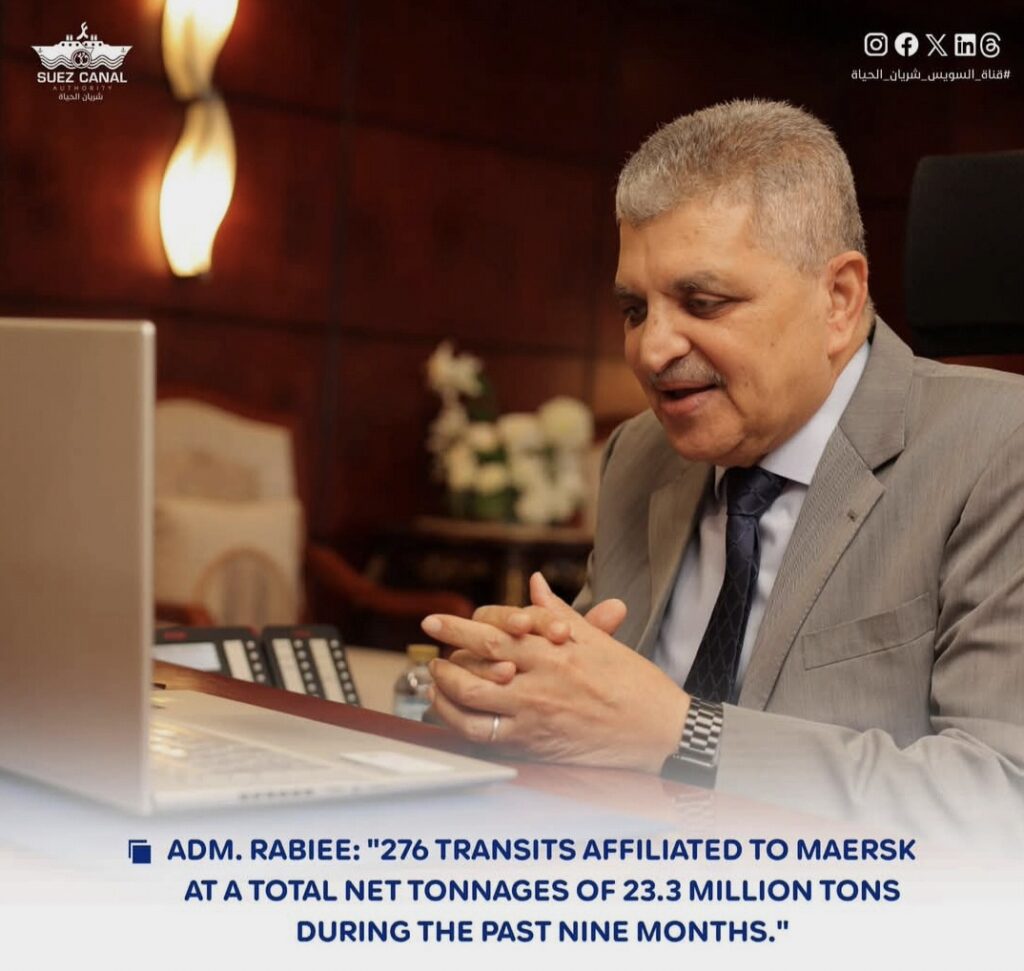
    According to figures presented by the Suez Canal Authority, Maersk-affiliated vessels completed 276 transits through the waterway between January and September 2026, generating a combined net tonnage of 23.3 million tons.

    During the corresponding period in 2025, the Canal recorded 146 Maersk-affiliated transits, representing a total net tonnage of 7 million tons.

    These figures indicate an approximately 89% year-on-year increase in vessel transits. Meanwhile, the combined net tonnage more than tripled, reflecting a substantial increase in Maersk-affiliated shipping activity through the Canal.

    Rabiee highlighted the increase as evidence of the ongoing return of Maersk’s shipping services. He also emphasized the longstanding strategic partnership between the Suez Canal Authority and the shipping group.

    The figures reflect the progress achieved during the first nine months of 2026, while discussions continue over the return of additional Maersk services in the coming period.

    Maersk Anticipates Full Service Restoration by March 2027

    During the meeting, Boulos praised the longstanding relationship between Maersk and the Suez Canal Authority. She highlighted the return of several shipping services affiliated with the Group to the Suez Canal route.

    Boulos expressed her expectation that all Maersk shipping services could return to the Suez Canal by March 2027. She also reaffirmed that the waterway remains the Group’s preferred navigation route, emphasizing the strategic relationship between both organizations.

    Meanwhile, Hassan confirmed that Maersk continues to update its navigation schedules. These adjustments are intended to accommodate the return of additional shipping services through the Canal in the coming period.

    El-Nady also stressed that Maersk is working to accelerate the restoration of its shipping services to the Suez Canal route.

    The statements underline the Group’s intention to increase its use of the waterway while continuing to review its operational schedules.

    Suez Canal Highlights Economic and Navigational Advantages

    Rabiee also addressed the impact of current geopolitical developments on international shipping, particularly their influence on fuel prices and freight rates.

    He emphasized that these developments reinforce the strategic importance of the Suez Canal for global maritime transportation.

    According to Rabiee, the Canal offers significant savings for large container vessels compared with navigating around the Cape of Good Hope. He also highlighted the navigational safety advantages associated with using the Suez Canal route.

    The SCA chairman presented these factors as important considerations for shipping lines reviewing their route choices amid changing geopolitical and commercial conditions.

    The discussions also reflected the strategic importance both organizations attach to their longstanding cooperation, particularly as Maersk continues adjusting its service network.

    SCA and Maersk Agree to Continue Discussions

    At the conclusion of the meeting, the Suez Canal Authority and Maersk agreed to hold further bilateral discussions to strengthen cooperation.

    The continued dialogue will focus on supporting the return of additional Maersk shipping services and coordinating future navigation arrangements through the Canal.

    With Maersk-affiliated transits already showing substantial year-on-year growth, the Group’s anticipated return of all services by March 2027 represents the next objective in its ongoing discussions with the Suez Canal Authority.

    Source: Suez Canal Authority

Back to top button