Suez Canal

  • Suez Canal Transit Fee Settlement Rules Revised With Six-Month Limit

    Shipping Arabia, October 23, 2026 – The Suez Canal Authority (SCA) has revised its transit fee settlement rules, introducing a six-month eligibility period and requiring vessels to submit missing documentation no later than their third transit through the canal. The amendment establishes clearer conditions for recalculating fees from previous passages based on Suez Canal Net Tonnage (SCNT).

    The changes amend Clause 3 of Article 92 of the Suez Canal Rules of Navigation and Transit, issued in December 2020. They specifically address vessels that complete outstanding documentation during subsequent transits and seek settlement of charges relating to earlier passages.

    Suez Canal Transit Fee Settlement Based on Net Tonnage

    Under the amended provisions, vessels may have previous transit fees recalculated based on Suez Canal Net Tonnage when they submit documents that were not provided during earlier passages. However, the settlement remains subject to the conditions established under the revised regulations.

    The amendment sets the third transit as the latest opportunity for submitting outstanding documentation. Consequently, vessels seeking to settle charges from previous passages must complete the required documentation within this limit.

    The revised provision also establishes a specific period covering earlier transits eligible for settlement. This creates a defined regulatory framework for handling fee adjustments when the necessary documents become available after an initial passage.

    Two Conditions Govern Transit Fee Settlements

    The SCA has established two requirements that vessels must meet to qualify for settlement under the amended rules.

    First, vessels must submit all outstanding required documentation no later than their third transit through the Suez Canal.

    Second, the previous transits covered by the settlement must fall within a six-month period beginning on the day after the vessel’s first transit through the canal.

    Both conditions must be satisfied for the settlement provisions to apply. The amendment therefore links eligibility to the number of canal passages and the time elapsed since the vessel’s first transit.

    Revised Rules Clarify Documentation and Settlement Procedures

    The changes aim to regulate how transit fees are settled when vessels complete missing documentation during subsequent passages.

    By establishing a maximum transit limit for document submission and a defined six-month settlement window, the SCA has clarified the conditions governing the recalculation of previous transit charges.

    The amendment forms part of the authority’s regulatory framework for vessels navigating the Suez Canal. These regulations govern transit procedures, documentation requirements, and the calculation and settlement of canal transit fees.

    Source: Al Mal
  • Suez Canal Container Ship Transits Surge as CMA CGM Reaffirms Commitment to Route

    Shipping Arabia, October 19, 2026 – Suez Canal container ship transits recorded a sharp increase between July and September 2026, with 166 medium-sized and mega vessels passing through the waterway, compared with just 16 during the same period in 2025. The figures were announced by the Suez Canal Authority (SCA) as senior officials held discussions with CMA CGM on strengthening cooperation and encouraging the return of international shipping services.

    The vessels generated a combined net tonnage of 29 million tons during the three-month period, compared with 2.4 million tons a year earlier. According to the SCA, the increase reflects higher transit volumes among medium-sized and mega container vessels, including ships exceeding 130,000 tons.

    Suez Canal Container Ship Transits Show Strong Growth

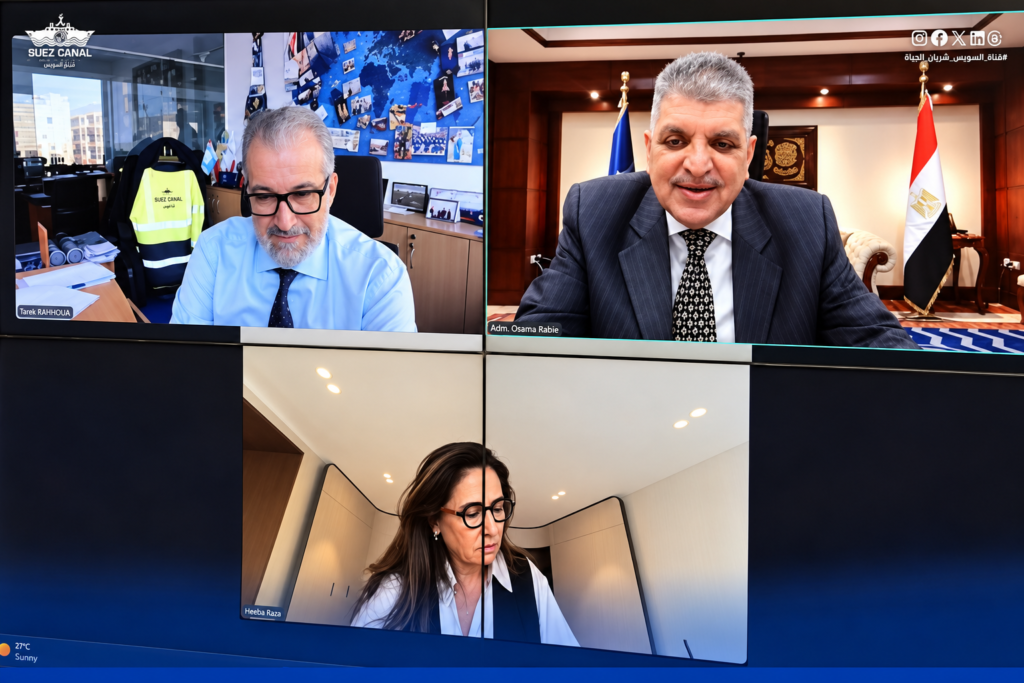
    SCA Chairman and Managing Director Adm. Ossama Rabiee presented the latest navigation figures during a video conference with Christine Cabau, CMA CGM Executive Vice President for Assets and Operations, and Tariq Zaghloul, CMA CGM Egypt and Sudan Cluster CEO.

    The meeting, held on October 13, formed part of ongoing consultations between the Authority and the French shipping group. Discussions focused on CMA CGM’s navigation policies through the Suez Canal, opportunities for future cooperation, and efforts to encourage international shipping lines to fully restore their services through the waterway.

    Rabiee emphasized the Suez Canal’s strategic importance to containerized trade, highlighting the operational savings achieved through shorter sailing distances and reduced transit times. He also stressed the Canal’s role in supporting economies of scale for container vessels.

    According to Rabiee, the Suez Canal can accommodate 100% of the global container ship fleet, reinforcing its importance to international container shipping operations.

    CMA CGM Reaffirms Long-Term Commitment to Suez Canal

    During the discussions, Cabau reaffirmed CMA CGM’s long-standing strategic partnership with the Suez Canal Authority and expressed the group’s commitment to strengthening future cooperation.

    She stated that CMA CGM continues to resume its maritime operations through the Canal, viewing the waterway as a permanent and sustainable shipping route.

    Meanwhile, Rabiee highlighted the growing pressures facing global supply chains and their direct effects on fuel prices and freight rates. He emphasized the importance of maintaining efficient maritime transport routes amid these challenges.

    The SCA Chairman also reaffirmed the Authority’s commitment to supporting shipping customers through an integrated package of maritime and logistics services. He described the Canal as the fastest, shortest, most efficient, and most sustainable shipping route, emphasizing its operational advantages for international trade.

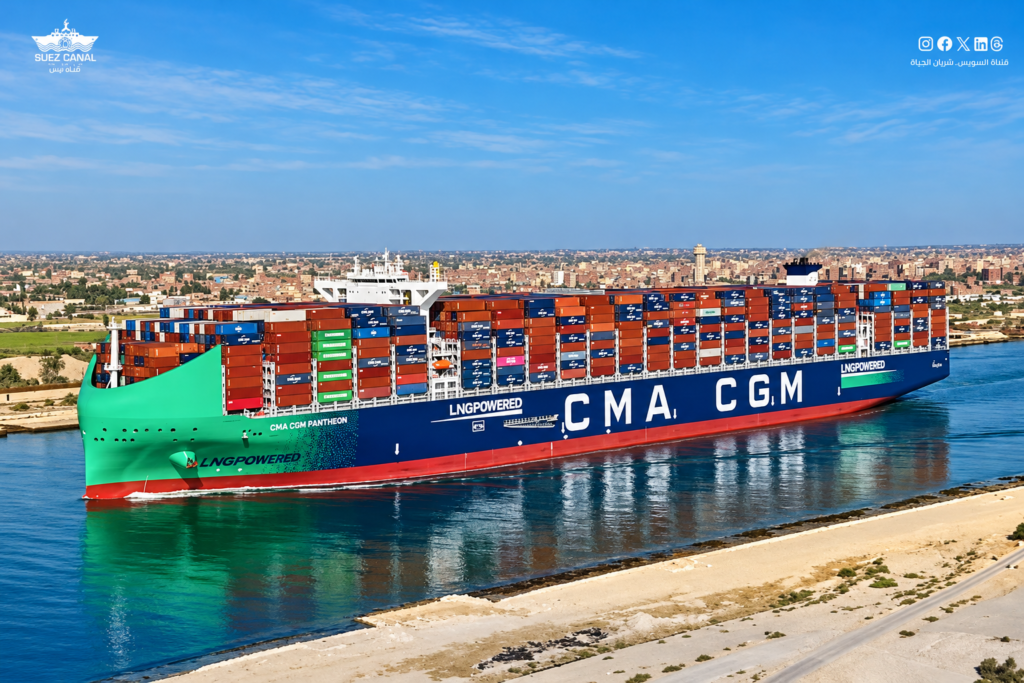
    CMA CGM PANTHEON Completes Maiden Suez Canal Transit

    The discussions coincided with the maiden Suez Canal transit of the mega container ship CMA CGM PANTHEON, which passed through the waterway on October 13 as part of the north convoy.

    The vessel was sailing from Morocco to Malaysia and recorded a net Suez Canal tonnage of 221,000 tons.

    Another CMA CGM container ship, CMA CGM MONTE CRISTO, also transited the Canal as part of the same convoy.

    The latest vessel movements come as the Suez Canal Authority continues its consultations with major shipping lines to strengthen cooperation and encourage the full restoration of international shipping services through the Canal.

    Source: Suez Canal Authority

  • Suez Canal Container Shipping Capacity Exceeds 50% of Pre-Crisis Levels for First Time

    Shipping Arabia, October 17, 2026 – Suez Canal container shipping capacity has exceeded half of its pre-Red Sea crisis levels for the first time, reaching its highest level since maritime disruptions began. The recovery follows a series of routing decisions by major container shipping lines, which have accelerated their return to the canal after nearly three years of widespread diversions around the Cape of Good Hope.

    According to BIMCO, citing data from Clarksons Research, average weekly container vessel capacity transiting the Suez Canal reached 753,000 TEUs during the first two weeks of October 2026. This compares with 1.46 million TEUs during the corresponding period in 2023, before the Red Sea disruptions significantly affected international shipping routes.

    The latest figures indicate a substantial recovery in container shipping activity through the waterway, although transit capacity remains below its pre-crisis level.

    Suez Canal Container Shipping Share Rises to 36%

    BIMCO reported that 36% of container shipping capacity routed through either the Suez Canal or the Cape of Good Hope used the canal during the first two weeks of October.

    This represents a considerable improvement from the average of just 8% recorded between 2024 and mid-2026. However, the figure remains significantly below the approximately 80% share recorded before the Red Sea attacks disrupted shipping operations.

    The increase reflects a gradual shift back toward the Suez Canal as container shipping lines revise their service networks. Nevertheless, the figures show that a substantial proportion of capacity continues to operate via the Cape of Good Hope.

    Major Shipping Lines Accelerate Return to Suez Canal

    The recovery in Suez Canal container shipping began accelerating in July 2026, when Maersk and Hapag-Lloyd announced that their AE15/SE3 Asia–Mediterranean service would return to the canal.

    Additional adjustments subsequently followed within the Gemini Cooperation network. Meanwhile, members of the Ocean Alliance and Premier Alliance, together with Mediterranean Shipping Company (MSC), announced revised vessel routings.

    According to BIMCO, container shipping lines have announced routing changes affecting a total of 16 services since the beginning of July 2026.

    These developments have contributed to the recovery in container vessel capacity transiting the Suez Canal, bringing more services back to the waterway after an extended period of diversions.

    The recovery has also become more balanced between northbound and southbound sailings.

    During the third quarter of 2026, northbound container shipping capacity represented approximately 75% of southbound capacity. That proportion increased to 81% during the first two weeks of October, indicating a narrowing difference between the two sailing directions.

    Return to Shorter Routes Could Affect Global Container Capacity

    Beyond the increase in canal transits, the return of container shipping services to shorter routes could have significant implications for global vessel capacity and the balance between shipping supply and demand.

    BIMCO estimates that widespread diversions around the Cape of Good Hope increased global demand for container shipping capacity by approximately 10%.

    The longer routes required additional vessel capacity to maintain shipping operations. However, as more services return to the Suez Canal, the additional capacity demand associated with those diversions is declining.

    Niels Rasmussen, Chief Shipping Analyst at BIMCO, highlighted the scale of this change, explaining that the approximately 10% increase in global container shipping capacity demand caused by Suez Canal diversions is now reversing rapidly.

    This development could influence the availability of container vessels as shipping lines progressively restore services through the canal.

    However, BIMCO cautioned that congestion at Asian ports could delay the full impact of shorter shipping routes on vessel availability and the overall balance between global container shipping supply and demand.

    Suez Canal Recovery Remains Incomplete

    Despite the improvement recorded during the first half of October, container shipping activity through the Suez Canal has not returned to its pre-disruption levels.

    The increase to 753,000 TEUs in average weekly transit capacity, together with the recovery in the canal’s share of container shipping routes, demonstrates the progress made since shipping lines began adjusting their networks in July.

    Nevertheless, the comparison with 2023 highlights the remaining gap between current traffic and the levels recorded before the Red Sea crisis.

    The latest BIMCO figures therefore point to a continuing recovery in Suez Canal container shipping, while confirming that the industry’s return to its traditional routing patterns remains incomplete.

    Source: Al Mal

  • Suez Canal Authority Explores Maritime Cooperation With Sri Lanka in Shipbuilding and Logistics

    Shipping Arabia, October 16, 2026 – The Suez Canal Authority (SCA) and Sri Lanka have discussed opportunities to strengthen maritime cooperation with Sri Lanka across shipbuilding, port operations, marine construction, logistics and specialized training. The discussions also covered potential partnerships between SCA-affiliated companies and Sri Lankan maritime businesses, alongside investment opportunities in the Suez Canal region.

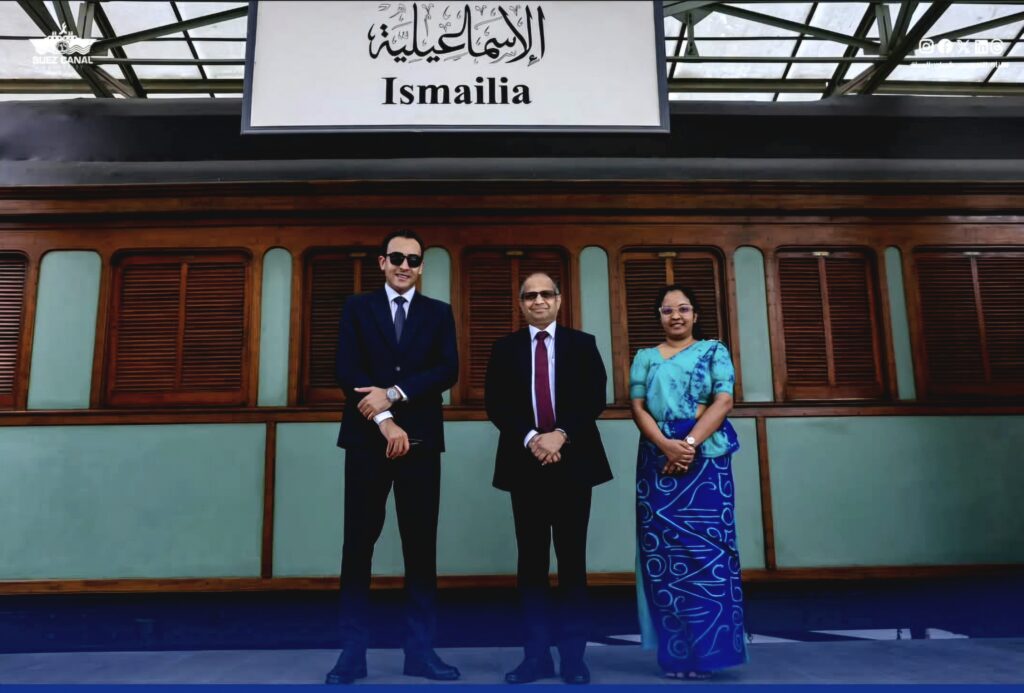
    SCA Chairman Adm. Ossama Rabiee met with Sri Lanka’s Ambassador to Egypt, Sisira Senavirathne, on October 7 at the authority’s Pilotage Building in Ismailia. The meeting focused on expanding bilateral cooperation and exchanging expertise in areas of mutual interest.

    Rabiee welcomed the growing ties between Egypt and Sri Lanka, noting that both countries share a strong interest in maritime affairs. He said this common focus creates opportunities for collaboration in maritime industries, logistics, training and other related activities.

    Expanding Maritime Cooperation With Sri Lanka

    During the meeting, Rabiee confirmed that the SCA’s affiliated companies and shipyards are ready to explore cooperation with Sri Lankan maritime companies and institutions. Potential areas include marine construction, port works, the construction of different types of marine vessels and units, fishing activities and logistics services.

    The SCA chairman also highlighted the capabilities of the authority’s Maritime Training and Simulation Academy. He identified maritime training and specialized consultancy services as additional areas where Egyptian and Sri Lankan organizations could exchange expertise and develop cooperation.

    These opportunities form part of wider discussions aimed at strengthening institutional and commercial links between the two countries’ maritime sectors. The talks addressed both industrial activities and services supporting maritime operations.

    Suez Canal Strategy Focuses on Maritime Industries and Logistics

    Rabiee outlined the SCA’s strategy to diversify revenue sources and improve the canal’s competitiveness. He said the authority has significantly expanded its activities and services as part of an integrated approach to developing its maritime business.

    The strategy focuses on localizing maritime industries while developing and modernizing marine and logistics services. According to Rabiee, these initiatives aim to broaden the authority’s activities and strengthen the range of services available within the Suez Canal sector.

    He also addressed the geopolitical challenges affecting maritime trade in the region. The SCA continues to engage with stakeholders across the shipping industry to coordinate efforts and reduce the impact of regional tensions on trade passing through the canal.

    Rabiee emphasized that these efforts also support the continuity of global supply chains. Maintaining communication and cooperation with the maritime community remains part of the authority’s approach to addressing current challenges.

    Sri Lanka Eyes Investment Opportunities and Maritime Partnerships

    Ambassador Senavirathne expressed appreciation for Egypt’s efforts to manage the Suez Canal efficiently despite the challenges affecting the region. He also acknowledged the canal’s important role in facilitating international maritime trade.

    The ambassador emphasized Sri Lanka’s interest in opening new channels for maritime cooperation and exchanging expertise with Egyptian institutions and businesses. He also highlighted his country’s interest in exploring investment opportunities associated with development projects in the Suez Canal region.

    Senavirathne pointed to Egypt’s strategic geographical location and developing infrastructure as factors supporting its investment attractiveness. He noted that these advantages contribute to the country’s important position in global trade.

    As part of efforts to strengthen business connections, the ambassador invited the SCA and its affiliated companies and shipyards to participate in Sri Lanka Expo 2027, scheduled for mid-January 2027.

    The exhibition, focused on exports, international trade and industry, was presented as an opportunity for Egyptian and Sri Lankan companies to establish partnerships and exchange technical and commercial expertise.

    At the conclusion of the meeting, Rabiee presented the Suez Canal Shield to the Sri Lankan ambassador. He also invited Senavirathne to take a maritime tour of the New Suez Canal and visit the Suez Canal Museum to learn more about the canal’s development achievements.

    Source: Suez Canal Authority

  • CMA CGM TROCADERO Calls at RSCT Sokhna With 23,104 TEU Capacity

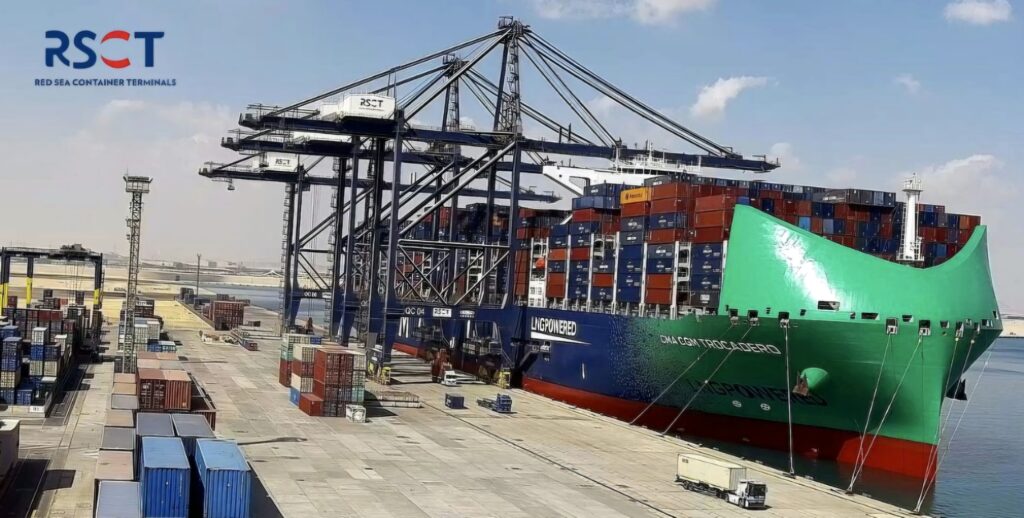
    Shipping Arabia, October 14, 2026 – Red Sea Container Terminals (RSCT) has welcomed the ultra-large container vessel CMA CGM TROCADERO at its Sokhna terminal in Egypt, marking another significant vessel call and demonstrating the terminal’s ability to accommodate some of the world’s largest container ships.

    Measuring 400 meters in length and offering a capacity of 23,104 TEU, CMA CGM TROCADERO is among the largest container vessels to call at RSCT Sokhna. The vessel’s arrival highlights the terminal’s operational capabilities and readiness to handle Ultra Large Container Vessels (ULCVs) safely and efficiently.

    According to RSCT, the call reinforces the terminal’s position as a strategic maritime gateway supporting Egypt’s role in international trade and major East–West cargo flows through the Red Sea and Suez Canal.

    RSCT Sokhna Demonstrates Ultra-Large Container Vessel Handling Capabilities

    The arrival of CMA CGM TROCADERO represents another demonstration of RSCT Sokhna’s capacity to receive ultra-large container vessels. With a carrying capacity exceeding 23,000 TEU, the vessel is among the largest container ships handled at the terminal.

    RSCT emphasized that accommodating vessels of this size reflects its operational readiness to serve large-capacity container ships while maintaining safe and efficient terminal operations.

    The terminal also highlighted the importance of continuing to welcome some of the world’s largest container vessels, underlining its focus on supporting shipping lines operating large-capacity fleets.

    Supporting East–West Maritime Trade Through the Red Sea

    Beyond the vessel’s dimensions and carrying capacity, RSCT views calls of this scale as important to strengthening its position within international maritime trade networks.

    The terminal identified its strategic role in supporting cargo movements between major East–West markets through the Red Sea and Suez Canal. It also emphasized the contribution of large container vessel calls to Egypt’s growing role in global trade.

    As shipping lines assess their maritime networks and vessel deployment strategies, RSCT has expressed its readiness to explore opportunities for future vessel calls and provide terminal services that support their operational requirements.

    The arrival of CMA CGM TROCADERO adds to the terminal’s experience in accommodating ultra-large container vessels and reflects its continued focus on serving major international shipping operations through Sokhna.

    Source: Red Sea Container Terminals (RSCT)

  • Suez and Panama Canals Explore Closer Cooperation on Marketing, Training and Information Exchange

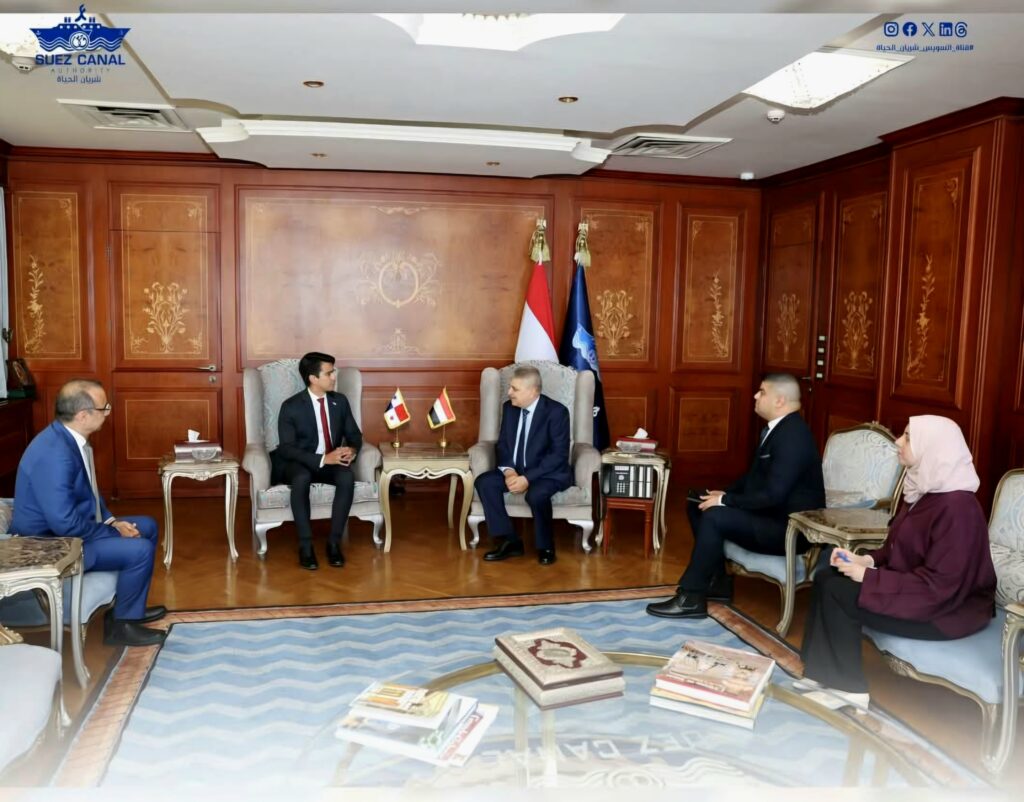
    Shipping Arabia, October 13, 2026 – The Suez Canal Authority (SCA) and Panama are exploring closer cooperation in maritime marketing, training and information exchange as geopolitical and environmental challenges continue to affect global shipping and supply chains. The discussions aim to strengthen coordination between the Suez and Panama canals and support the continuity of international maritime trade.

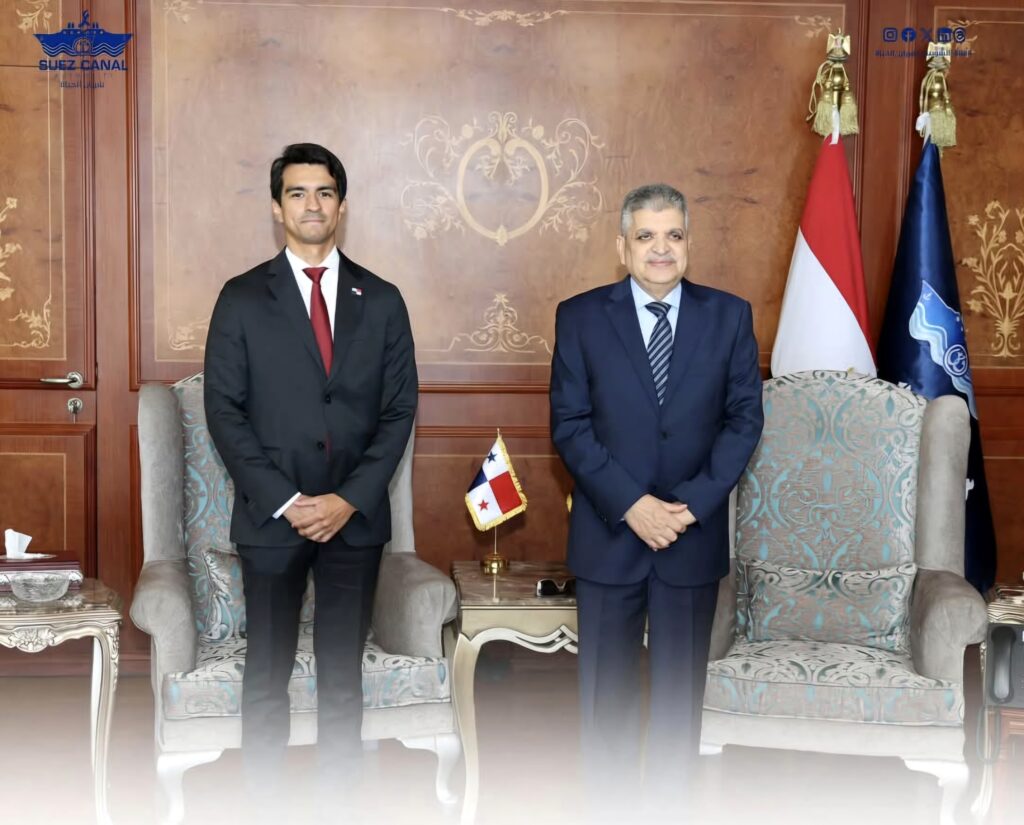
    SCA Chairman Admiral Osama Rabie met with Panama’s Ambassador to Egypt, Ricardo Isaza, on October 5 at the authority’s Pilotage Building in Ismailia. The meeting focused on opportunities to expand cooperation between the two waterways and address challenges affecting the sustainability of global supply chains.

    Suez and Panama Canal Cooperation Targets Maritime Challenges

    During the meeting, Rabie emphasized the importance of collective action among stakeholders in the maritime industry to ensure the regular movement of vessels through international waterways. He stressed that closer coordination is essential to maintaining reliable navigation and supporting sustainable global supply chains.

    The SCA chairman expressed his readiness to strengthen the authority’s partnership with the Panama Canal. He highlighted the shared characteristics and interests of the two waterways as a foundation for closer institutional cooperation, knowledge exchange and collaboration in new areas.

    Rabie also addressed the growing importance of crisis management in the SCA’s institutional strategy. He explained that successive regional and international challenges have made crisis management an integral part of the authority’s operations, particularly given their direct impact on international trade passing through the Suez Canal.

    The discussions also considered the effects of current geopolitical and environmental challenges on global supply chains. Both sides recognized the importance of cooperation between major international shipping corridors in responding to developments affecting maritime transport.

    Suez Canal Diversifies Revenue Through Shipbuilding and Maritime Services

    Rabie highlighted the Suez Canal Authority’s efforts to diversify its revenue sources beyond traditional canal operations. He explained that the authority has achieved progress by localizing the construction of various types of marine vessels and units at SCA shipyards and affiliated companies.

    The authority has also introduced a new range of maritime and logistics services as part of its strategy to strengthen the Suez Canal’s competitive position.

    According to Rabie, these initiatives reflect the authority’s efforts to adapt to changing conditions in the global maritime industry. They form part of a broader approach to addressing operational challenges while developing additional activities and services within the SCA’s existing capabilities.

    The chairman reiterated his interest in expanding cooperation with the Panama Canal through the exchange of practical expertise and the exploration of new areas of collaboration. He emphasized that the common interests of the two waterways provide opportunities for greater coordination and integration.

    Panama Seeks Stronger Partnerships in Marketing, Training and Information Exchange

    For his part, Ambassador Isaza expressed appreciation for the longstanding cooperation between Panama and the Suez Canal. He reaffirmed his country’s commitment to expanding bilateral engagement, particularly in maritime marketing, professional training, information exchange and the sharing of institutional expertise.

    The ambassador also welcomed Egyptian diplomatic and governmental efforts to strengthen cooperation between the Suez and Panama canals. He expressed confidence that the coming period would bring further constructive collaboration, reflecting the interest of both countries in deepening their relationship.

    Isaza emphasized the Suez Canal’s importance to global supply chain sustainability, describing it as a major component of international maritime transport that continues to attract considerable attention from the shipping community.

    He also highlighted the need for greater integration and cooperation between the two canals as the maritime transport industry faces a range of challenges. According to the ambassador, the alignment of fundamental principles underpinning the strategies of both waterways provides a strong basis for developing their relationship.

    The discussions underscored the mutual interest of Egypt and Panama in expanding maritime cooperation through institutional partnerships, shared expertise and closer coordination between their respective canal authorities.

    Source: Suez Canal Authority

  • Hapag-Lloyd Confirms First SE1 Sailings Through Red Sea and Suez Canal

    Shipping Arabia, October 8, 2026 – Hapag-Lloyd has confirmed the first westbound and eastbound sailings of the Gemini Cooperation’s SE1 service through the Red Sea and Suez Canal, marking another step in the gradual rerouting of selected Gemini services away from the Cape of Good Hope.

    The German carrier said the container ship Umm Qarn will operate the two sailings. The first westbound voyage is scheduled for October 27, while the second sailing is planned for December 5.

    The announcement follows an earlier decision by Hapag-Lloyd and Maersk to shift some Gemini Cooperation services from the Cape of Good Hope route to the Red Sea and Suez Canal.

    Hapag-Lloyd SE1 Suez Canal sailings follow initial transits

    Hapag-Lloyd said initial transits through the Bab el-Mandeb Strait proceeded according to plan. Those movements also provided operational experience ahead of the upcoming SE1 transits.

    The confirmed SE1 sailings form part of a gradual approach by the Gemini partners as selected services return to the Red Sea and Suez Canal route.

    Rather than applying the change across the entire network, Hapag-Lloyd is assessing the return on a service-by-service basis.

    Security assessments planned for each voyage

    Security remains a central element of the planned SE1 operations. Hapag-Lloyd said each voyage will undergo a detailed security assessment before transit.

    The company also said the vessels will transit under naval protection and in coordination with the relevant authorities and security partners.

    These arrangements will accompany the first confirmed SE1 sailings as the service begins using the Red Sea and Suez Canal route.

    No full Gemini network return yet

    Hapag-Lloyd emphasized that the development should not be interpreted as a complete strategic return of the Gemini Cooperation network to the Red Sea.

    Instead, the carrier described the move as a gradual process tailored to individual services. The approach allows Hapag-Lloyd and Maersk to reroute selected Gemini services while continuing to assess each operation separately.

    The first Umm Qarn sailing on October 27 and the second voyage scheduled for December 5 will therefore represent specific SE1 movements through the Red Sea and Suez Canal rather than a network-wide change in Gemini routing.

    Source: Al Mal

  • MSC Far East Freight Rates Updated for Europe, Mediterranean and North Africa

    Shipping Arabia, October 7, 2026 – MSC Far East freight rates will be updated from October 19, 2026, covering shipments from ports across the Far East to Northern Europe, the Mediterranean, North Africa and the Black Sea. The new Freight All Kinds (FAK) rates will remain valid until further notice, but no later than October 31, 2026.

    The scope of origin covers all Far East ports, including those in Japan, South Korea and Southeast Asia. MSC has set different rates for 20-foot and 40-foot containers across the covered destination regions.

    MSC Far East Freight Rates to Europe and the Mediterranean

    For shipments from the Far East to Northern Europe, MSC has set the new FAK rate at $3,150 for a 20-foot container and $4,500 for a 40-foot container.

    West Mediterranean destinations will carry rates of $3,750 for a 20-foot container and $4,500 for a 40-foot container. The same rates will apply to Adriatic ports.

    For the East Mediterranean, MSC has set rates at $3,800 for a 20-foot container and $4,800 for a 40-foot container.

    Shipments from the Far East to Black Sea ports will be priced at $3,900 for a 20-foot container and $5,000 for a 40-foot container.

    North Africa Rates Cover Algeria, Libya, Morocco and Tunisia

    MSC’s updated pricing also covers several North African markets, with rates varying by destination.

    For Algeria, the new freight rate will be $5,550 for a 20-foot container and $6,900 for a 40-foot container. Shipments to Libya will be priced at $5,500 for a 20-foot container and $6,500 for a 40-foot container.

    For Morocco, via Casablanca, MSC has set rates of $4,550 for a 20-foot container and $5,500 for a 40-foot container.

    Tunisia-bound cargo will carry rates of $5,550 for a 20-foot container and $6,500 for a 40-foot container.

    These rates form part of the broader MSC Far East freight rates update taking effect on October 19 across the covered European, Mediterranean, Black Sea and North African destinations.

    Fuel, Emissions and Suez Canal Surcharges

    In addition to the announced FAK rates, MSC specified a series of surcharges applicable to the covered shipments.

    The Global Fuel Surcharge for October 2026 will be $253 per TEU. An Emission Control Area surcharge of $15 per TEU will apply to Mediterranean destinations and selected destinations in Northern Europe.

    For other destinations in the Nordic and Baltic countries, the Emission Control Area surcharge will be $52 per TEU.

    MSC will also apply a carbon-related surcharge of $20 per TEU. Carbon review charges will amount to $88 per TEU for Northern Europe and $128 per TEU for the Mediterranean.

    Services transiting the Suez Canal will additionally be subject to a piracy risk surcharge of $55 per TEU and a Suez Canal surcharge of $36 per TEU.

    The revised pricing structure takes effect on October 19, with the announced rates valid until further notice and, at the latest, through October 31, 2026.

    Source: Al Mal News

  • Egyptian Maritime Society Examines Geopolitical Risks to Maritime Corridors

    Shipping Arabia, October 6, 2026 – The Egyptian Maritime Society held a seminar examining geopolitical risks to maritime corridors and their impact on global supply chains, with discussions focusing on the Suez Canal, Strait of Hormuz and Bab el-Mandeb amid heightened tensions affecting international shipping and trade flows.

    The seminar, titled “Global Maritime Corridors and Straits, Geopolitical Tensions and Their Impact on Supply Chain Flows,” was chaired by Rear Adm. Essam El-Din Badawy, President of the Egyptian Maritime Society.

    Senior maritime officials and specialists participated in the event, including Rear Adm. Hussein El Geziry, Head of Egypt’s Maritime Transport & Logistics Sector, and Rear Adm. Dr. Ashraf El Assal, Chairman of the Egyptian Authority for Maritime Safety.

    The seminar also brought together logistics and maritime experts, including Dr. Medhat El-Qadi, President of the Alexandria Businessmen Association, and logistics expert Dr. Ahmed El-Fawaz, alongside specialists in international law, navigation and maritime transport.

    Suez Canal, Hormuz and Bab el-Mandeb in Focus

    The discussions addressed some of the world’s most important maritime passages, particularly the Suez Canal, Strait of Hormuz and Bab el-Mandeb.

    Participants examined the geopolitical developments affecting these corridors and their direct implications for international trade and the movement of global supply chains.

    Rear Adm. Ahmed Reda Ismail, Vice President of the Egyptian Maritime Society, highlighted the importance of the seminar amid increasingly complex geopolitical conditions. He said these developments are contributing to changes in the maritime transport map and increasing the need to examine possible alternative routes for global trade.

    The discussions therefore focused not only on the immediate effects of geopolitical tensions but also on how maritime transport patterns could change when key corridors face disruption or heightened risk.

    Maritime Law and Freedom of Navigation

    The seminar included several specialized themes covering the legal and operational dimensions of maritime corridors and straits.

    One session addressed international maritime law governing straits and maritime passages. Rear Adm. Dr. Ashraf El Assal, Chairman of the Egyptian Authority for Maritime Safety, presented this theme.

    The program also examined freedom of navigation and the different forms of passage through international waterways. Prof. Abdel Moneim Mohamed Dawood, professor of international law, addressed this subject during the seminar.

    These discussions formed part of a broader examination of the legal frameworks governing navigation through strategically important waterways at a time when geopolitical tensions are placing increased pressure on maritime trade routes.

    Geopolitics and Supply Chain Flows

    Another key theme focused on the relationship between geography, geopolitical tensions and global supply chains.

    Dr. Hatem Abdel Gawad, from the Planning Department at the Suez Canal Authority, discussed how geography and geopolitical developments can influence the flow of supply chains.

    The seminar addressed what it described as the impact of “forced geography” and geopolitical tensions on supply chain movements, linking physical maritime chokepoints with the operational challenges facing shipping and international trade.

    The discussions also considered potential alternative routes available to global trade when disruptions affect major maritime corridors.

    Egyptian Maritime Society Highlights Need for Clear Response

    Rear Adm. Essam El-Din Badawy emphasized the need to address geopolitical crises affecting maritime corridors with clarity, particularly developments related to the Suez Canal.

    The seminar brought together expertise in maritime transport, logistics, navigation and international law to examine how geopolitical pressures on key waterways can affect shipping routes and supply chain continuity.

    By focusing on the Suez Canal, Strait of Hormuz and Bab el-Mandeb, the Egyptian Maritime Society placed three major strategic maritime passages at the center of its discussion on the changing global shipping environment.

    Source: Maritime Transport & Logistics Sector

  • Premier Alliance Suez Canal Return Adds Momentum to Red Sea Reopening

    Shipping Arabia, October 4, 2026 – The Premier Alliance Suez Canal return is set to begin this month as ONE, HMM and Yang Ming restore their FE1 service between Southeast Asia and Northern Europe via the canal, adding further momentum to the container shipping sector’s gradual shift away from Cape of Good Hope diversions.

    According to consultancy Linerlytica, the move will mark Premier Alliance’s first departure from the Cape routing it adopted in January. The first sailing is expected to be operated by the 8,110-TEU ONE Continuity, which is scheduled to depart Laem Chabang on October 17.

    Premier Alliance had remained one of the more prominent holdouts from the Suez route while rival carriers gradually rebuilt services through the Red Sea. Its planned return now adds to the cumulative shift in container capacity back toward the canal.

    Premier Alliance Suez Canal Return Follows Other Service Changes

    The Gemini partners, Maersk and Hapag-Lloyd, are also increasing their use of the route. Hapag-Lloyd confirmed that its SE1 service will route the Umm Qarn toward Suez from Tanjung Pelepas on October 27.

    That change follows earlier route adjustments involving the NE4, SE2 and IEX services, according to the report.

    The scale of the broader return is becoming increasingly significant. Maritime Strategies International estimates that around 35% of Asia-Europe sailings are currently using the Red Sea.

    Meanwhile, Linerlytica calculates that more than 140 containerships representing over 2 million TEU of capacity have returned to Suez Canal routes since May.

    Security Remains Main Constraint on Faster Normalization

    Despite the accelerating return, security conditions remain the principal obstacle to a faster normalization of Red Sea shipping, according to Linerlytica.

    Demand for naval escorts through the southern Red Sea has risen to the point that the European Union’s Aspides mission has acknowledged that the available warships are insufficient to meet all escort requests.

    This security constraint continues to affect the pace at which carriers can restore services through the region, even as a growing share of Asia-Europe sailings returns to the Red Sea and Suez Canal.

    Suez Return Raises Container Capacity Concerns

    The gradual restoration of Suez routings is also increasing attention on the amount of vessel capacity that could return to the market.

    Cape of Good Hope diversions have helped absorb a substantial amount of containership capacity. Linerlytica said the containership orderbook has reached a record 15.6 million TEU, equivalent to more than 45% of the current fleet.

    As more services return to the shorter Suez routing, some of the effective capacity absorbed by longer voyages could be released back into the market.

    Freight markets are already showing early signs of pressure. Freightos reported that Asia-Northern Europe spot rates fell 9% in its latest weekly assessment to $3,376 per FEU.

    Asia-Mediterranean spot rates declined 7% to $3,620 per FEU. Part of the weakness was attributed to the gradual resumption of Red Sea shipping, which is restoring effective vessel capacity.

    MSI Flags Earnings Impact as Voyages Shorten

    Maritime Strategies International has also warned that a resumption of Suez Canal transits could weigh on earnings because shorter routings reduce vessel demand.

    However, its latest containership outlook continues to indicate strong charter markets through the first half of 2027, particularly for feeder and midsize vessels.

    Congestion is currently absorbing part of the potential capacity surplus. Linerlytica estimates that 3.76 million TEU, equivalent to 10.9% of the global fleet, is currently affected by congestion.

    Sea-Intelligence places the proportion at more than 8% and estimates that the disruption could take seven to 10 months to fully unwind.

    The Premier Alliance Suez Canal return, alongside other service restorations, therefore comes as the container shipping market faces a combination of easing route diversions, significant new vessel capacity and persistent congestion.

    Source: Al Mal News

Back to top button