Aqaba Port

  • Jordan Shipping Association Discusses Aqaba Port Operational Challenges and Customs Procedures

    Shipping Arabia, October 13, 2026 – The Jordan Shipping Association (JSA) held a series of meetings in Aqaba to address operational challenges, customs procedures and developments affecting maritime trade through Aqaba Port. The discussions brought together customs officials, port stakeholders and representatives of Aqaba Development Corporation (ADC) to review current operating conditions and identify measures to improve cargo movements and port efficiency.

    The meetings formed part of the association’s ongoing efforts to monitor developments in Jordan’s maritime transport and logistics sector. They also focused on addressing procedural challenges, strengthening coordination with government authorities and maintaining the smooth flow of trade amid changing geopolitical conditions.

    The JSA delegation included Chairman Zaid Al-Kalaldeh, Board Member Mohammed Abdul Hadi and Assistant General Manager Raad Hakouz.

    Aqaba Port Customs Procedures and Cargo Movements

    During a meeting with Brigadier General Yahya Al-Faraheed, Director of the Aqaba Customs Directorate, the association discussed several customs and operational matters directly affecting shipping and logistics activities.

    Key issues included the movement of vehicles out of port yards, permission to store transit cargo and electronic clearance procedures for outbound cargo manifests. The discussions also covered other customs-related procedures affecting the movement of goods and vehicles through Aqaba Port.

    The association emphasized the importance of addressing these matters to facilitate cargo flows, reduce procedural challenges and improve coordination between shipping companies and customs authorities.

    Al-Kalaldeh commended the efforts of the Jordan Customs Department in responding to challenges facing the transport and trade sectors. He noted that measures and facilitation procedures introduced by customs authorities had played an important role in mitigating the impact of existing difficulties on trade and transport activities.

    The JSA chairman also stressed the importance of maintaining close cooperation between the association and the customs department. He highlighted the need for continued coordination to address sector requirements and improve the efficiency of customs procedures.

    For his part, Al-Faraheed recognized the Jordan Shipping Association’s role in representing the interests of the maritime sector and maintaining constructive engagement with relevant authorities.

    He praised the association’s ongoing coordination and its efforts to follow up on industry concerns, emphasizing the value of cooperation in resolving challenges and improving working procedures.

    Aqaba Development Corporation Reviews Port Operating Conditions

    In a separate engagement, the Jordan Shipping Association participated in a meeting hosted by Aqaba Development Corporation, attended by representatives of various stakeholders within the Aqaba port community.

    The meeting reviewed measures already implemented across the port system and assessed current operational conditions. Participants also discussed recent changes affecting maritime transport and trade movements, particularly in light of geopolitical developments and their implications for the sector.

    Discussions focused on operational matters requiring attention and the measures needed to respond to emerging challenges. Participants examined proposals, recommendations and possible actions to strengthen the port system’s ability to adapt to changing circumstances.

    Maintaining the efficient movement of cargo through Aqaba Port was a central priority. Stakeholders considered how greater coordination and appropriate operational measures could help preserve cargo flows while addressing existing difficulties.

    The discussions also provided an opportunity for representatives of the port community to review developments affecting their respective activities and identify areas requiring continued follow-up.

    Strengthening Coordination Across Aqaba’s Maritime Sector

    The series of meetings reflected the Jordan Shipping Association’s continued engagement with government institutions, customs authorities and the wider port community.

    By raising issues related to vehicle movements, transit cargo storage and electronic customs procedures, the association sought to address operational and administrative matters that directly affect shipping and logistics activities.

    The meeting at Aqaba Development Corporation complemented these discussions by examining broader port operating conditions and the implications of geopolitical developments for maritime trade.

    Together, the engagements highlighted the importance of coordination between public authorities and private-sector stakeholders in responding to changing operating conditions.

    The Jordan Shipping Association reaffirmed its commitment to monitoring developments affecting the maritime and logistics sectors, maintaining communication with relevant authorities and supporting efforts to resolve procedural and operational challenges.

    These efforts aim to improve the efficiency of port operations, facilitate trade movements and support the continued flow of goods through Aqaba Port.

    Source: Jordan Shipping Association

  • Arab Bridge Maritime Profits Exceed $40 Million as Fleet Expands to 11 Vessels and New Red Sea Routes Planned

    Shipping Arabia, October 9, 2026 – Arab Bridge Maritime profits exceeded $40 million in the first nine months of 2026, marking the company’s highest earnings since its establishment. The record performance comes as the company expands its fleet to 11 marine units and prepares to introduce new shipping services, including the Safaga–Duba route connecting Egypt and Saudi Arabia.

    The results were presented during the company’s 88th General Assembly meeting, attended by Egyptian Transport Minister Kamel El-Wazir, Jordanian Transport and Labor Minister Nedal Katamine, and Hazem Al-Hafazi, representing Iraqi Transport Minister Wahb Al-Hasani. Members of the company’s Board of Directors also participated in the meeting.

    Director General Adnan Al-Abadleh outlined the company’s financial and operational achievements through September 30, 2026. He also presented its fleet modernization program, new route preparations and investment strategy for 2027.

    Arab Bridge Maritime Profits Reach Historic High

    Arab Bridge Maritime profits surpassed $40 million during the nine-month period ending September 30, 2026. According to Al-Abadleh, the company also recorded historic highs in revenue, assets, capital and shareholders’ equity.

    Operational performance improved alongside the financial results. The number of trucks transported increased by 15%, while passenger volumes aboard the company’s vessels continued to grow.

    Al-Abadleh emphasized that the results provide more than a financial milestone. They establish a stronger foundation for fleet modernization, entry into new markets and diversification of revenue sources.

    The company plans to use its expanding financial and operational capabilities to pursue investments in maritime infrastructure, supporting services and additional shipping activities. These initiatives form part of its strategy to maintain sustainable growth and strengthen its competitive position in regional maritime transport.

    Fleet Expansion Brings Capacity to 11 Marine Units

    Fleet modernization represents a central component of Arab Bridge Maritime’s expansion strategy. The company announced the addition of two vessels and the completion of procedures to introduce another passenger and cargo ferry.

    The newly added passenger and cargo ferry Al Jisr can accommodate 85 trucks and 254 passengers. Meanwhile, the high-speed craft Ashur has a passenger capacity of 312.

    The company has also finalized procedures to add another passenger and cargo ferry with capacity for 110 trucks and 253 passengers. With the new additions, Arab Bridge Maritime’s fleet will comprise 11 marine units.

    Al-Abadleh explained that expanding the fleet will improve operational flexibility and provide greater capacity to manage existing services and future routes. It will also support the company’s efforts to diversify its operations and strengthen its presence in the Red Sea maritime transport market and beyond.

    The additional vessels are expected to support more frequent and reliable services for passengers and commercial vehicles. They will also provide greater flexibility as the company develops new maritime connections.

    Safaga–Duba Route Leads New Red Sea Expansion Plans

    Arab Bridge Maritime has begun preparations to operate its vessels on additional shipping routes, with the Safaga–Duba service between Egypt and Saudi Arabia identified as a priority.

    The proposed connection will serve passenger, truck and cargo movements across the Red Sea. It forms part of the company’s broader plan to expand its geographical coverage and strengthen maritime connectivity between regional markets.

    Egyptian Transport Minister Kamel El-Wazir confirmed the ministry’s support for introducing the Safaga–Duba service. He emphasized the importance of deploying modern vessels on the route to improve maritime transport services and support trade with Saudi Arabia and the wider region.

    El-Wazir also highlighted the route’s significance within Egypt’s emerging logistics network. According to the minister, the service will support the southern Arab trade corridor linking Europe, Egypt and the Gulf countries.

    He explained that Egypt continues to develop its seaports and improve their operational efficiency. The government is also connecting ports with road networks, railways and dry ports through integrated international logistics corridors.

    These initiatives form part of Egypt’s strategy to become a regional hub for transport, logistics and transit trade.

    The minister added that increasing Arab Bridge Maritime’s fleet capacity could improve sailing frequency and service regularity. Better passenger and truck transport services would also facilitate cargo movements and strengthen the competitiveness of Egyptian exports in Arab markets.

    El-Wazir reaffirmed support for the company’s plans to operate additional maritime routes serving international trade among Egypt, Jordan and Iraq.

    New Investments in Sharm El-Sheikh and Aqaba Port

    Beyond fleet expansion and new routes, Arab Bridge Maritime plans to broaden its activities through infrastructure projects and marine services.

    The company’s 2027 business strategy seeks to gradually transform its operating model from one primarily focused on maritime transport into a more diversified maritime business. Its planned activities include infrastructure development, marine services, maritime industries and supporting operations.

    Two investment projects form a central part of this strategy.

    The first involves developing, operating and managing a boat maintenance and repair facility, known as a slipway, in Sharm El-Sheikh. Arab Bridge Maritime is pursuing the project in partnership with Egypt’s Red Sea Ports Authority.

    El-Wazir said the facility will contribute to the development of supporting maritime services and industries at Red Sea ports.

    He also linked the project to Egypt’s wider maritime development objectives, including upgrading national ports, expanding ship repair and maintenance capabilities, and strengthening the country’s position as a center for yacht tourism.

    The second major project involves developing, managing and operating the passenger terminal at Aqaba Port in partnership with Aqaba Development Corporation.

    The Aqaba terminal project aims to improve passenger services on the Aqaba–Nuweiba maritime route. It will also support Aqaba’s role in regional transport, trade and transit movements.

    Jordanian Transport and Labor Minister Nedal Katamine highlighted the project’s importance for improving service quality and strengthening connectivity between the Arab Mashreq and North Africa.

    Alongside these investments, Arab Bridge Maritime is expanding its adoption of digital solutions and technologies. The company aims to improve operational efficiency, modernize its services and enhance the experience of passengers and freight customers.

    The digitalization program will also help the company adapt to developments across the maritime transport and marine services sectors.

    Egypt, Jordan and Iraq Support Further Expansion

    During the General Assembly meeting, representatives of the three founding countries expressed support for the company’s development strategy and investment plans.

    El-Wazir said Arab Bridge Maritime’s results demonstrate progress beyond financial performance. He pointed to the company’s transition toward a broader business model combining fleet modernization, new maritime routes and diversified activities.

    The Egyptian minister praised the company’s management and employees while emphasizing the continued cooperation among Egypt, Jordan and Iraq. He described Arab Bridge Maritime as a successful example of joint Arab economic cooperation and integration.

    Katamine said the company’s performance demonstrates the ability of a jointly owned Arab maritime enterprise to grow on sustainable commercial and operational foundations.

    He noted that profits exceeding $40 million in nine months provide a strong financial base for further investment. However, he also stressed that fleet and route expansion should proceed alongside improvements in maritime infrastructure and related services.

    The Jordanian minister highlighted the company’s record results for the third consecutive year. He attributed the performance to the efforts of its executive management and employees and called for continued investment to sustain growth.

    Representing Iraq’s transport minister, Hazem Al-Hafazi welcomed the company’s progress in expanding beyond its traditional maritime transport activities.

    He said the development of infrastructure projects, marine industries and supporting services reflects the strategic direction adopted by the General Assembly.

    Al-Hafazi also emphasized that stronger financial performance, fleet modernization and new maritime routes create opportunities to enhance links between the Arab Mashreq and North Africa. These developments could help the company benefit from regional trade and maritime connectivity opportunities.

    A Broader Maritime Strategy for 2027

    Arab Bridge Maritime’s 2027 plans place fleet expansion, service diversification and infrastructure investment at the center of its next development phase.

    The company intends to build on its financial performance to establish a more integrated maritime business, combining passenger and freight transport with investments in port facilities, maintenance services and supporting maritime activities.

    Al-Abadleh expressed appreciation for the continued support of the governments and transport ministries of Egypt, Jordan and Iraq, as well as the company’s General Assembly and Board of Directors.

    He also acknowledged cooperation with the Red Sea Ports Authority and Aqaba Development Corporation, describing the joint projects as promising examples of Arab investment in the maritime sector.

    The director general reaffirmed the company’s commitment to implementing its expansion strategy, drawing on more than four decades of experience in regional maritime transport operations.

    Source: Egyptian Ministry of Transport

  • AROYA Cruise Ship Brings 3,400 Tourists to Aqaba as Regional Cruise Tourism Expands

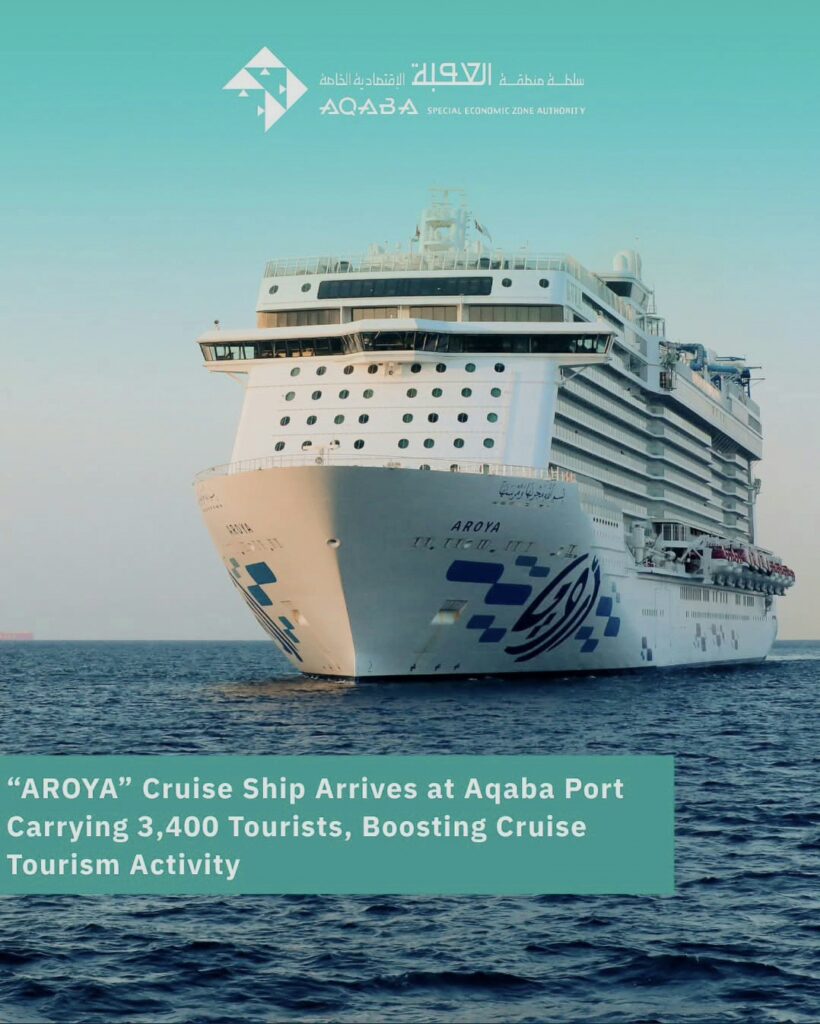
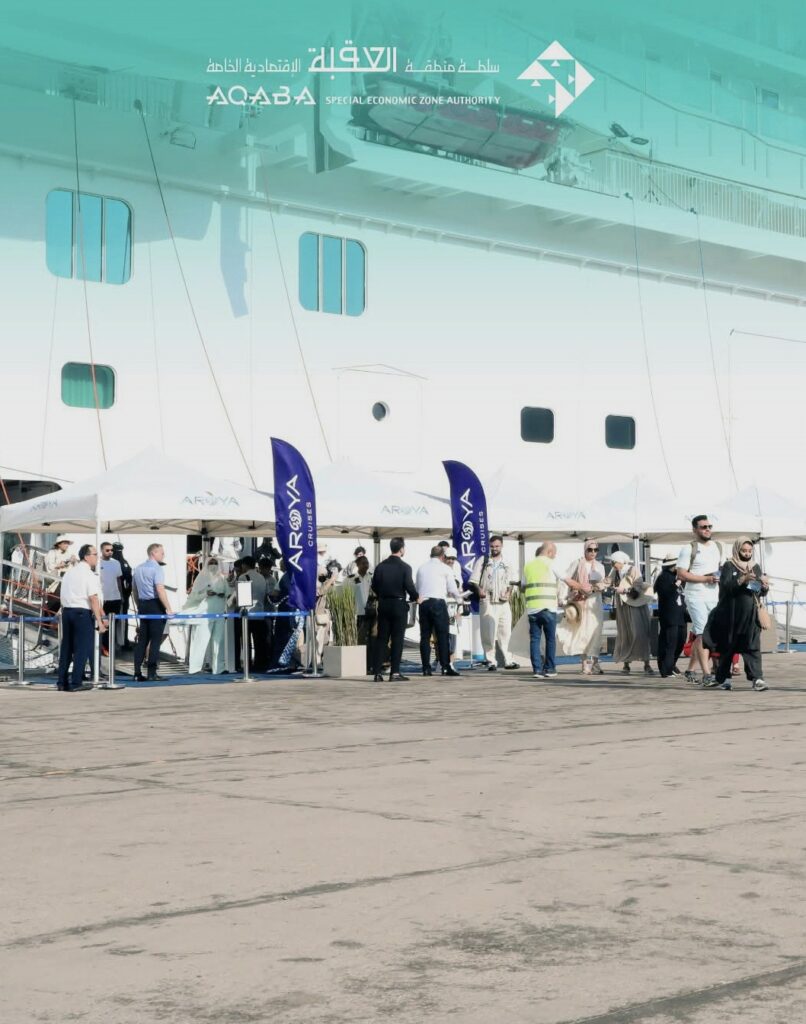
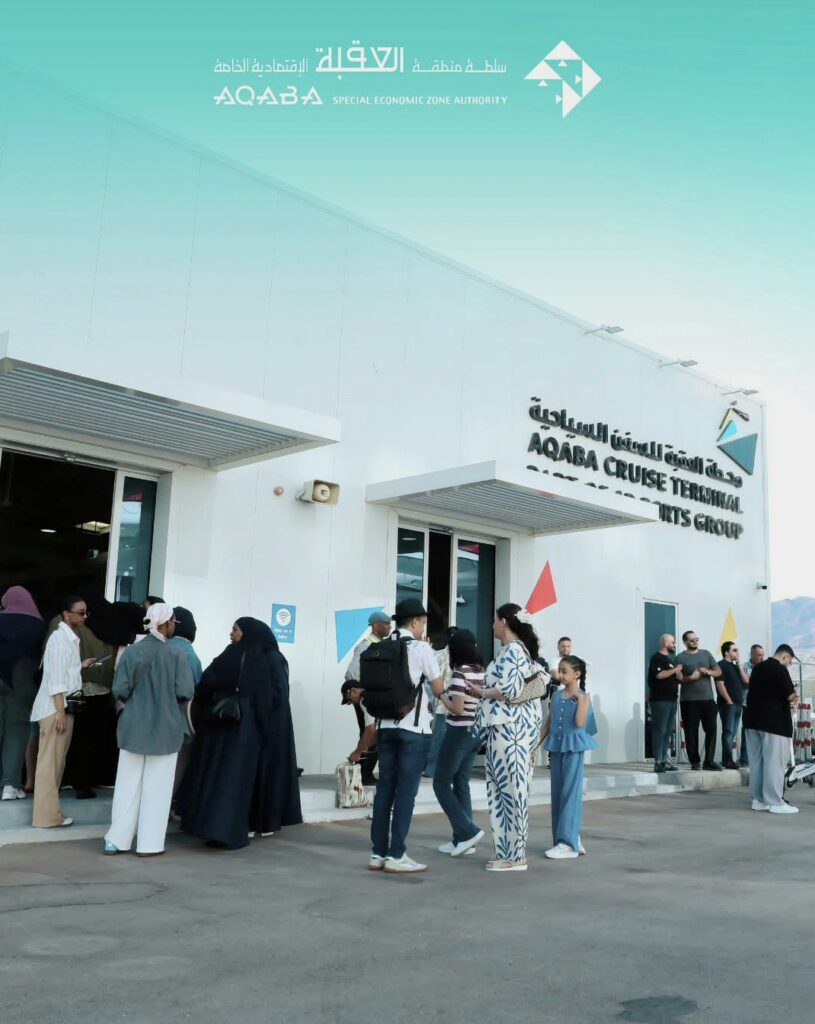
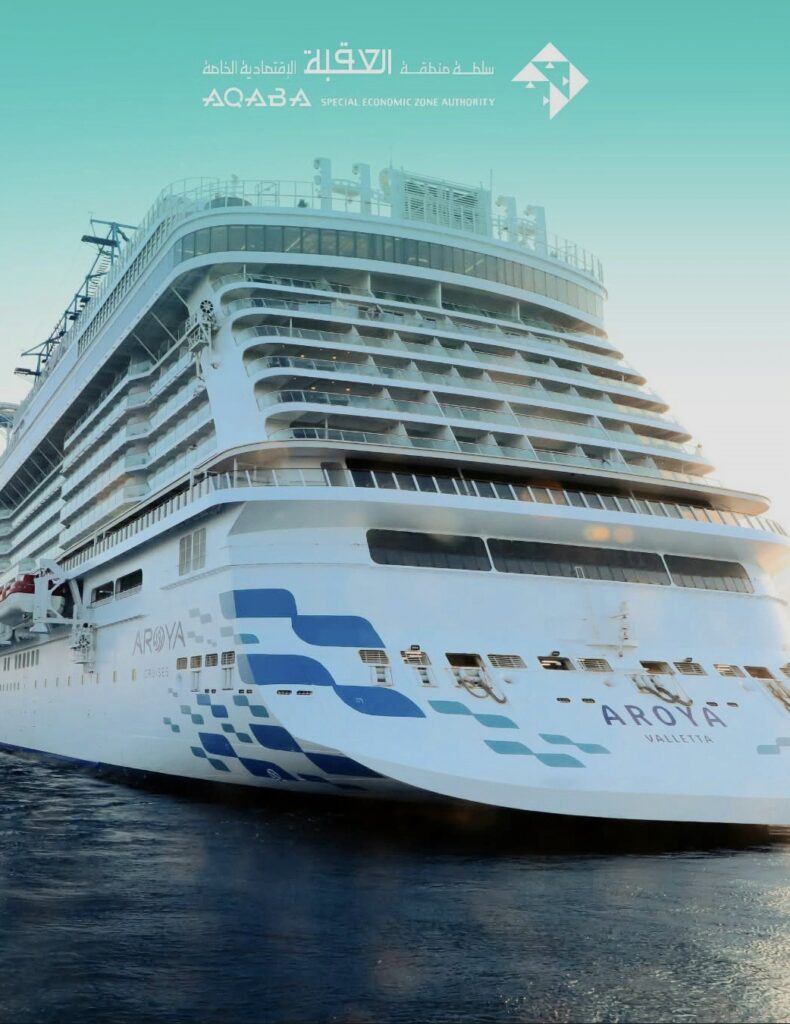
    Shipping Arabia, October 4, 2026 – Aqaba Port welcomed the AROYA cruise ship from Jeddah with approximately 3,400 tourists and around 1,200 crew members on board, supporting the continued growth of Aqaba cruise tourism and the city’s position within the regional cruise network.

    The ship’s arrival forms part of growing cruise activity connecting destinations across the Red Sea region. AROYA operates a regular itinerary beginning in Jeddah, calling at Sharm El Sheikh in Egypt and Aqaba before returning to Jeddah.

    The route enhances tourism connectivity between regional ports and creates additional opportunities for the development of cruise tourism across the region.

    Aqaba Cruise Tourism Connects Regional Destinations

    AROYA’s regular itinerary links Saudi Arabia, Egypt and Jordan through a multi-destination cruise route. The ship’s Aqaba call gives passengers access to some of Jordan’s major tourism attractions while strengthening Aqaba’s role as a cruise destination.

    During the visit, passengers joined tourism programs covering key attractions in Aqaba, Petra and Wadi Rum. Relevant authorities provided the required facilities and coordinated transportation services and guided tours to support smooth operations throughout the call.

    The arrangements were designed to facilitate passenger movements and provide visitors with access to the destinations included in the tourism program.

    ASEZA Seeks to Attract More Cruise Calls

    Dr. Thabet Al-Nabulsi, Commissioner for Tourism and Youth Affairs at the Aqaba Special Economic Zone Authority (ASEZA), said welcoming cruise ships forms part of the authority’s efforts to strengthen the cruise tourism sector and attract additional cruise voyages.

    According to Al-Nabulsi, increased cruise activity also contributes to commercial and service sectors linked to tourism and supports the local economy.

    ASEZA continues to develop the Aqaba cruise tourism ecosystem by improving the readiness of facilities and services. These efforts are intended to reinforce Aqaba’s position as an integrated tourism destination and strengthen its role within the regional cruise network.

    Regional Cruise Activity Supports Aqaba’s Tourism Position

    The AROYA call highlights Aqaba’s role within a regional cruise itinerary connecting Jeddah, Sharm El Sheikh and Aqaba. The route provides cruise passengers with access to destinations across the three countries while strengthening tourism connectivity between their ports.

    For Aqaba, cruise calls also connect maritime tourism activity with the wider tourism offering in Petra and Wadi Rum. ASEZA’s continued focus on facilities, services and operational coordination supports its efforts to attract more cruise voyages and expand Aqaba’s participation in regional cruise tourism.

    Source: Aqaba Special Economic Zone Authority

Back to top button