Maersk Introduces Heavy Weight Surcharge on Asia-Europe and Mediterranean Shipments
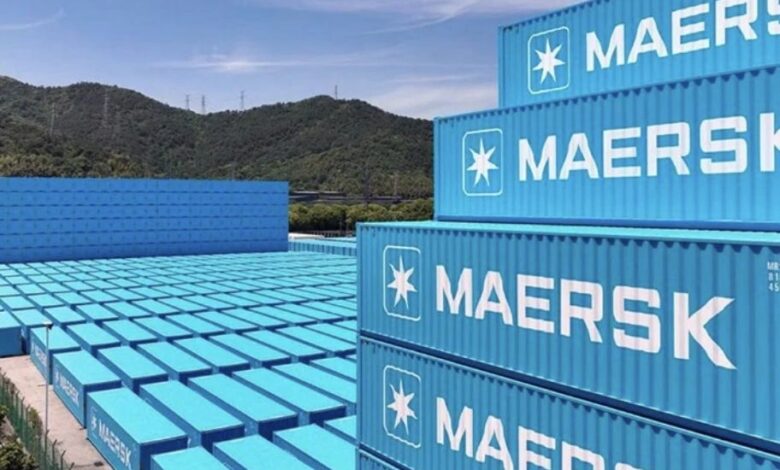
Shipping Arabia, May 17, 2026 – Maersk has announced the introduction of a Heavy Weight Surcharge (HWS) on container shipments moving from Far East origins to Northern Europe and the Mediterranean, as ongoing geopolitical tensions continue to disrupt global shipping networks.
According to the carrier, the surcharge will take effect from May 25, 2026, and will apply to cargo originating from several Asian markets, including China, Hong Kong, Japan, South Korea, Singapore, Vietnam, Thailand, Indonesia, Malaysia, Taiwan, the Philippines, Cambodia, Laos, Myanmar, Brunei, and Mongolia.
The new surcharge will amount to $400 per 20-foot container exceeding a gross cargo weight of 25 tons.
Maersk stated that shipping markets across the Asia-Pacific region continue to face significant uncertainty, primarily driven by the evolving security situation in the Middle East. The company noted that recent developments have continued to impact key global trade corridors, forcing ongoing network adjustments and operational changes.
The carrier also confirmed that the planned gradual return of vessels to Suez Canal transits has been suspended due to recent regional developments, resulting in affected services continuing to reroute via the Cape of Good Hope.
According to Maersk, instability in the Red Sea and Gulf region continues to place pressure on global shipping networks and supply chains, reinforcing the need for flexible routing strategies and contingency planning across long-haul trade lanes.
The company highlighted several alternative logistics solutions introduced to support cargo flows, including expanded access through Khor Fakkan Port with rail connectivity to Jebel Ali Port, as well as inland transport solutions linking Jeddah with Dammam and Riyadh. Some specialized cargo segments, however, remain under operational review.
On the air cargo side, Maersk said Asia-Pacific air freight markets remain generally stable despite operational complexities linked to Middle East developments affecting airlines, fuel markets, and global aviation networks.
The company noted that changes to certain air corridors and flight paths are impacting long-haul routes connecting Asia with Europe and the Middle East, leading to longer transit times and reduced schedule predictability.
Maersk added that organizations such as the International Air Transport Association (IATA) expect geopolitical tensions, including the Middle East conflict, to continue affecting global air cargo performance and supply chain stability in the near term.
Despite these challenges, the carrier said Asia-Pacific airlines recorded year-on-year demand growth at the start of 2026, reflecting the region’s continued importance as a major global air freight source market.
Source: Almal News