Qatar Ports Record 56% Increase in Vessel Calls as Cargo Volumes Rise in October 2026
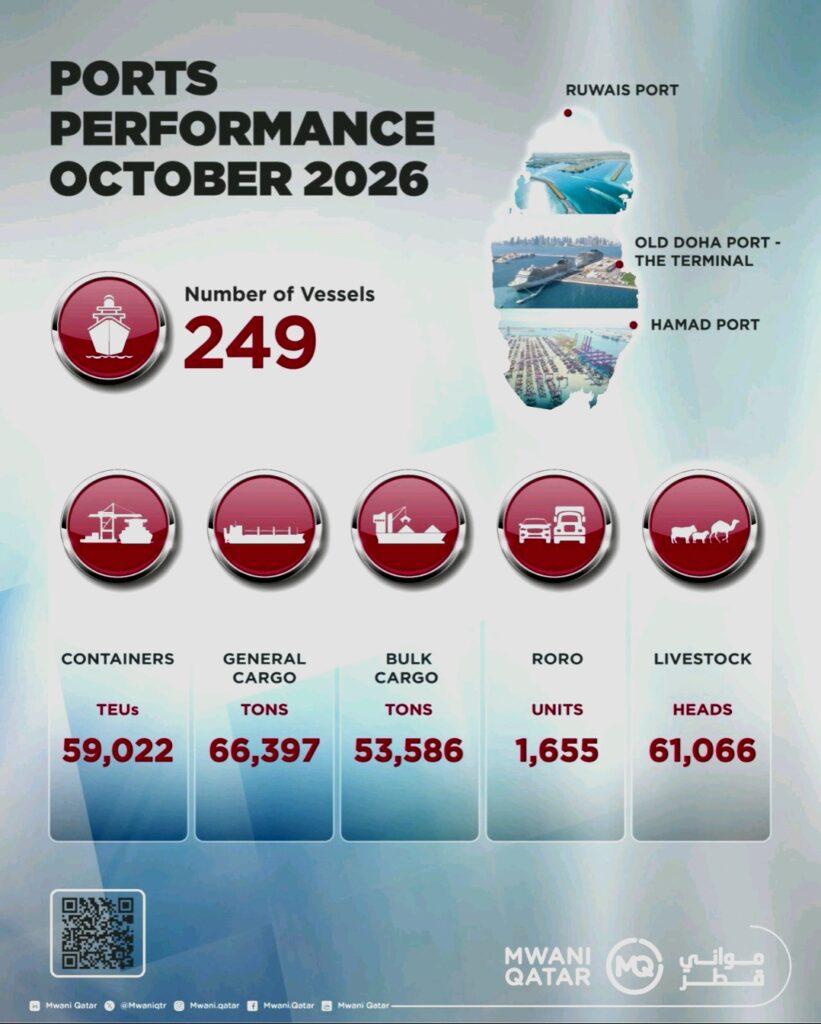
Shipping Arabia, November 5, 2026 – Qatar’s ports recorded a 56% month-on-month increase in vessel calls during October 2026, receiving 249 vessels compared with approximately 160 in September, according to figures released by Mwani Qatar. The growth was accompanied by higher container throughput and significant increases in general cargo, bulk cargo and livestock handling across the country’s port network.
The latest figures highlight increased maritime activity at Qatar’s ports, with several cargo categories recording substantial monthly gains. However, the growth rates reflect comparisons with September 2026 rather than the corresponding period of the previous year.
Qatar Ports Vessel Calls and Cargo Throughput Increase
Qatar ports vessel calls increased to 249 in October, representing a 56% rise from approximately 160 vessels in September. The increase coincided with higher cargo handling volumes across several segments of the maritime transport sector.
Container throughput reached 59,022 twenty-foot equivalent units (TEUs), up 9% from approximately 54,086 TEUs in September. The figures indicate an increase in container handling activity during the month, alongside the broader rise in vessel arrivals.
General cargo volumes also recorded strong growth, increasing 64% to 66,397 tons compared with 40,513 tons in September. This represented one of the largest monthly increases among the principal cargo categories handled by Qatar’s ports.
Meanwhile, bulk cargo throughput surged 211% to reach 53,586 tons. The increase substantially exceeded the growth rate recorded in container handling, highlighting differences in monthly performance across cargo segments.
The simultaneous rise in vessel calls and cargo volumes reflects increased activity across Qatar’s maritime transport network. Nevertheless, changes in vessel numbers do not necessarily correspond directly to cargo volume growth, as vessel sizes and carrying capacities vary.
Livestock Handling Surges 641% as RoRo Traffic Reaches 1,655 Units
Livestock handling recorded the largest percentage increase among the reported categories in October. Volumes surged 641% to 61,066 head, compared with 8,239 in September.
The substantial increase highlights a sharp month-on-month change in livestock movements through Qatar’s ports. Livestock shipping forms part of the wider food supply chain, involving maritime transport, veterinary services and distribution activities.
However, the monthly increase alone does not establish a sustained rise in livestock demand or indicate potential changes in domestic meat prices. Such assessments would require additional information on consumption, inventories and market conditions.
RoRo cargo handling also contributed to October’s activity, with Qatar’s ports processing 1,655 vehicles and equipment units during the month.
Mwani Qatar did not provide a corresponding month-on-month percentage change for RoRo traffic in the reported figures.
Hamad Port and Qatar’s Maritime Trade Network
The October performance figures cover Qatar’s port network, which includes Hamad Port, Ruwais Port and Old Doha Port.
Hamad Port serves as one of the country’s principal maritime gateways, handling containerized cargo alongside general and bulk shipments. Its facilities support commercial vessel operations and connect Qatar with international shipping networks.
Ruwais Port supports maritime trade and services in northern Qatar, while Old Doha Port contributes to maritime and tourism-related activities.
Together, these facilities support different segments of Qatar’s maritime transport sector, providing infrastructure for commercial cargo movements and other marine activities.
During the first nine months of 2026, Qatar’s ports handled approximately 648,000 TEUs and received 1,277 vessels. These figures provide additional context for the increase in vessel traffic and cargo volumes recorded in October.
October Growth Highlights Stronger Monthly Maritime Activity
The latest results show that Qatar ports vessel calls increased alongside cargo handling activity across several major categories. General cargo, bulk cargo and livestock volumes recorded particularly substantial gains, while container throughput also advanced.
Higher vessel arrivals and cargo movements can increase demand for port handling, storage and inland transportation services. These activities form important components of the logistics networks connecting maritime trade with domestic and regional supply chains.
However, the October figures do not establish that Qatar’s imports increased by the same percentages. Port throughput can include imports, exports and transshipment activities, and the published data did not provide a breakdown of their respective contributions.
Similarly, the sharp monthly increases do not necessarily indicate a sustained upward trend. Port activity can fluctuate according to vessel schedules, shipment timing, cargo demand and changes in regional and international trade flows.
The October performance therefore provides a snapshot of stronger operational activity compared with September, rather than a confirmed indication of annual growth.
Figures for November and subsequent months will offer a clearer picture of whether the increases in vessel calls and cargo handling volumes continue.
For now, Mwani Qatar’s October results demonstrate higher activity across the country’s maritime gateways, with growth spanning containerized cargo, general cargo, bulk shipments and livestock movements.
Source: Arabian Business