Global Shipping Adapts to Middle East Disruptions as Suez Return Remains Gradual
Shipping Arabia, October 1, 2026 – Global container shipping has adapted to prolonged disruptions across the Middle East, maintaining cargo flows through alternative routes and operational adjustments, but the industry’s return to normal conditions is expected to be considerably more gradual.
Shipping companies have spent months adjusting their networks in response to disruptions affecting the Red Sea and the Strait of Hormuz. While those measures have allowed global trade to continue, they have come at the expense of higher operating costs, longer voyages and reduced network efficiency.
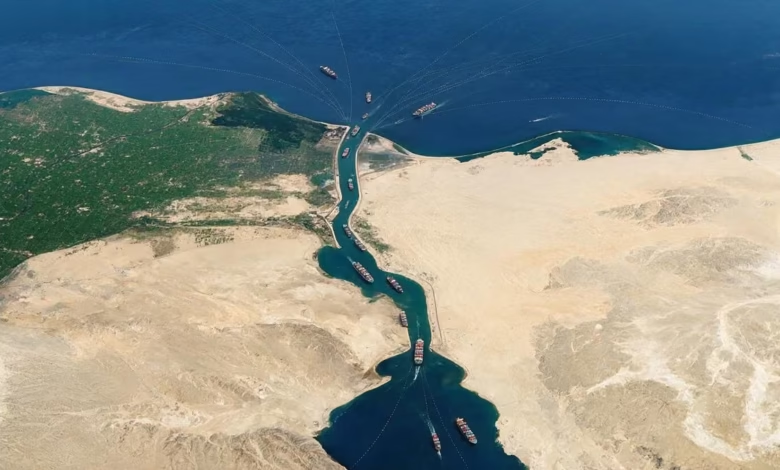
Several Maersk services have now returned to the Red Sea and Suez Canal route after earlier diversions prompted by regional security concerns, providing one of the clearest indications that carriers are gradually restoring some of their traditional routing.
Maersk’s global head of chemicals, Patrick Hore, said the container shipping system had adapted to disruption in the Middle East, although vessel availability and irregular trade flows continued to present significant challenges. The carrier has been increasing the number of services operating through the Red Sea and Suez Canal, including six major Asia-Europe services as well as services connecting the Middle East with Europe and North America.
For the wider industry, however, adaptation should not be confused with a complete return to normal operating conditions.
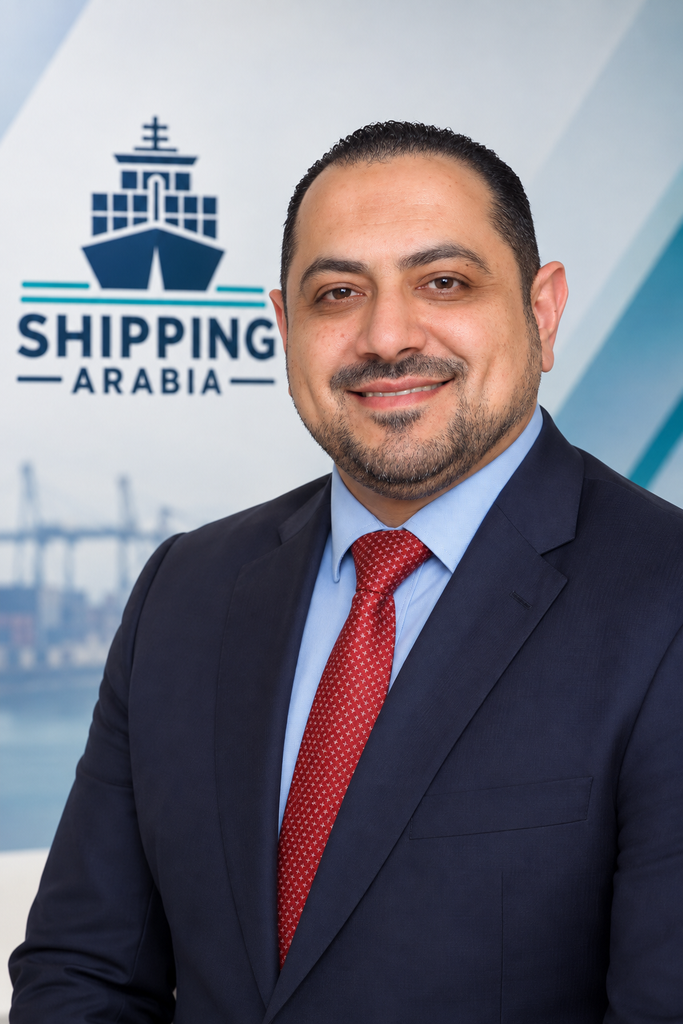
AbdulRahman Taleb Ali, a maritime specialist and researcher, board member of the Jordan Shipping Association and founder of Shipping Arabia, a leading maritime news platform covering the Middle East and North Africa, told CNN Business Arabic that the global maritime shipping system had successfully adjusted to disruptions in both the Red Sea and Strait of Hormuz, but that this adjustment had come at a cost to efficiency and operating expenses.
Shipping companies have maintained the movement of cargo by introducing alternative routes, particularly around the Cape of Good Hope, but longer voyages have increased fuel consumption, security-related expenses and other operating costs.
The gradual return to the Suez Canal represents another part of that adaptation process rather than an immediate restoration of pre-disruption shipping patterns.
Ali said carriers continue to assess security risks, market demand and costs as they determine when and how to restore services through the canal. Suez nevertheless remains the shortest and most efficient maritime connection between Asia and Europe.
A broader return to the Suez route could reduce both transit times and transportation costs for cargo moving from China and other Asian markets into Europe, while helping shipping networks regain some of the efficiency lost during prolonged diversions around southern Africa.
The transition is taking place against a backdrop of continued pressure on global container shipping capacity.
DHL Global Forwarding data cited by CNN Business Arabic showed that global freight rates continued to rise during September, with particularly strong upward pressure on eastbound trans-Pacific services.
Carriers are also gradually increasing their use of the Suez Canal. Around 18% of relevant Asia-Europe services are now planned to operate through the route, according to the report.
Capacity constraints, meanwhile, are not necessarily being driven by stronger cargo demand alone. ICIS reported that Maersk was operating at around 96% of capacity, with slower vessel movements through ports and inland distribution networks absorbing available ships and equipment.
Equipment availability has also evolved as shipping networks adjust.
Ali said shortages of empty containers were no longer the industry’s primary challenge, with the gradual return of services through the Suez Canal helping improve equipment availability. However, the continued use of the Cape of Good Hope by some carriers is contributing to imbalances in the distribution of empty containers between export ports.
Longer voyages around the Cape also require additional vessel capacity to maintain scheduled services. The consequences extend beyond the additional distance, with carriers facing higher fuel consumption, insurance premiums and war-risk costs, as well as increased seafarer wages and risk allowances.
These pressures are being compounded by strong demand for shipping capacity and limited routing alternatives in parts of the global network.
A larger shift back toward the Red Sea and Suez Canal could ultimately ease some of these pressures by shortening voyages and releasing vessel capacity. In the short term, however, the transition itself could create a new operational challenge for European ports.
Ships travelling through the Suez Canal reach Europe considerably faster than vessels continuing around the Cape of Good Hope. As carriers gradually restore Suez routings, faster vessels using the canal could therefore arrive at European ports at approximately the same time as slower ships that departed earlier via southern Africa.
This convergence could temporarily increase congestion at some European terminals.
DHL data showed that global port congestion was approaching capacity equivalent to 4 million containers, highlighting the pressure already affecting parts of the international logistics network.
Ali said any congestion resulting from the overlapping arrival patterns should be viewed as a transitional challenge rather than a permanent condition. As shipping lines progressively restore traditional routes, ports and shipping networks will need time to realign vessel schedules, equipment flows and capacity.
The developments illustrate how the global shipping industry has demonstrated its ability to adapt to prolonged geopolitical disruption, but also how difficult it is to reverse those adjustments once networks have been reorganized around alternative routes.
The return to Suez is therefore likely to remain progressive. Even as more services resume passage through the Red Sea, carriers will continue balancing security, cost and operational considerations while global shipping networks work through the consequences of months of altered vessel schedules and longer voyages.
Source: CNN Business Arabic